Semicírculo de cinco etapas de iconos de negocios Flat Powerpoint Design
Try Before you Buy Download Free Sample Product
Audience
Editable
of Time
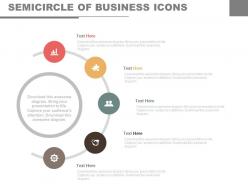
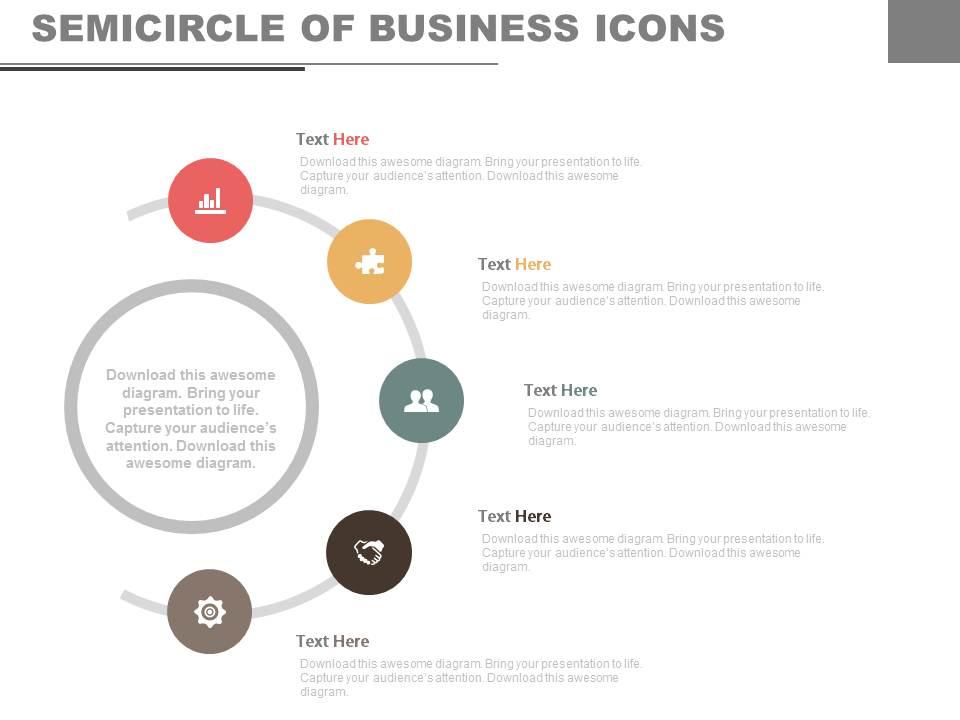
SlideTeam presenta este semicírculo de cinco etapas de Business Icons Flat PowerPoint Design PPT. Esta presentación en PowerPoint de diagrama circular consta de cinco iconos distribuidos en forma de semicírculo. Esta plantilla de negocios circular se puede utilizar para expresar sus ideas en cualquier campo de negocios. Podrías ser un profesional de negocios, un estudiante, un empleado o cualquier persona. Puede utilizar este diagrama de ciclo circular para representar un plan de negocios, una estrategia, un análisis de planificación y un trabajo relacionado con las finanzas. Este diagrama de plantilla de PowerPoint se ha elaborado con gráficos de cinco semicírculos y diagramas de iconos en etapas. Este diagrama PPT contiene el concepto de representación de datos comerciales. Esta plantilla empresarial se puede utilizar para mostrar fácil y sin esfuerzo el funcionamiento y el mecanismo de un proceso que se está llevando a cabo. Puede utilizar fácilmente este paquete de cinco diapositivas de PowerPoint diseñado profesionalmente con solo hacer clic en descargar y disfrutar de sus beneficios sin ningún obstáculo. Ejerza un control efectivo a través de nuestro Semicírculo de Cinco Etapas de Iconos de Negocios Planos Diseño de PowerPoint. Demuestre capacidad para manejar eventos.
Características de estas diapositivas de presentación de PowerPoint:
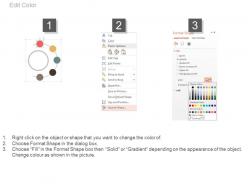
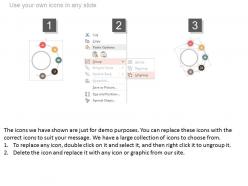
Este diagrama circular es muy personalizable, ya que puede cambiar fácilmente las formas, el color y la orientación de las diferentes representaciones gráficas y figuras que se han utilizado en las diapositivas. El texto utilizado en las plantillas es editable, por lo que puede renovar el tamaño de fuente, el estilo de fuente y también el color de fuente fácilmente. Dado que este PPT empresarial es compatible con Google, su uso no es muy complejo. Puede cambiar el formato de esta presentación de diapositivas de PowerPoint a PDF o JPG sin ninguna dificultad.
People who downloaded this PowerPoint presentation also viewed the following :
Semicírculo de cinco etapas de iconos de negocios Diseño plano de PowerPoint con las 5 diapositivas:
Nuestro semicírculo de cinco etapas de iconos de negocios Flat Powerpoint Design es deliciosamente asequible. Garantizado para traer una sonrisa a su cara.
FAQs for Five staged semicircle of business icons
Honestly, business icons today need to nail three things. First - tell real stories that actually connect with people, not corporate BS. Markets change crazy fast now, so you've got to roll with it. And here's the thing that separates the good from the great: they genuinely give a damn about something bigger than money. Musk's a perfect example - polarizing as hell, but he's got that formula down. The leaders who stick around? They're transparent about screwing up, not just bragging about wins. If you're building your brand, share the messy real stuff and why you make certain calls.
So basically, good icons make people instantly recognize your brand and feel something about it. Our brains are crazy fast at processing visuals compared to reading text, which speeds up how customers make decisions. Look at Apple - that simple apple logo screams innovation before you even think about it. Icons can trigger emotions too, like how those little lock symbols make banking apps feel safer. You'll want to pick ones that actually match what your brand stands for though. Oh, and use them everywhere consistently - your website, social media, all that stuff. It's honestly one of those small details that makes a huge difference in looking professional.
Dude, icons are getting crazy smart now. They actually *do* stuff instead of just sitting there. Look at Slack - that notification badge pulses at you. Mobile apps buzz when you tap them. Some apps are even using AI to create different icons for each user, which feels a bit much honestly? But the cool part is icons now show real-time info. They change colors based on data, animate when something's happening, or morph depending on what you're doing. It's like they're finally talking back instead of being these dead little pictures. Your designs should probably think beyond just "this button looks nice" and more "what's this button actually telling people right now?"
Look, storytelling is what separates memorable business leaders from forgettable ones. People connect with narratives, not corporate speak. Elon's Mars mission or Sara Blakely cutting up pantyhose - those stick because they're human stories that actually mean something. Your company probably does cool stuff, but nobody cares until you explain why it matters and how you got there. Find your real story (not some made-up BS) and tell it everywhere. Interviews, speeches, social media - whatever. Stories make you memorable when a fancy mission statement won't.
Honestly, visual branding is huge for startups. Look at Apple's bitten apple or Nike's swoosh - instant recognition, right? Start with a super simple logo that works everywhere, then plaster it consistently across all your stuff. Social media's basically free advertising, so use it. The whole game is repetition and quality. People need to see your icon so much they start thinking "oh yeah, these guys are legit." Make sure it looks good tiny on business cards and massive on billboards too. Then just get it out there constantly - kinda obsessively, but in a good way.
Oh man, the worst thing is clinging to whatever made you big in the first place. Like, I get it - if something worked amazingly, why change it? But then you miss all the new stuff happening around you. Plus these people always end up hiring a bunch of cheerleaders instead of anyone who'll actually push back on their ideas. That's deadly. Also seen tons of icons try to be everything to everyone and just... lose themselves completely. The ones who stay relevant? They're constantly getting outside input and willing to shake things up while keeping what actually matters. It's tricky but doable.
Cultural background totally changes how people read business icons. Red means good luck in China but screams "warning" here in the West - I actually saw a company mess this up once, it was painful. Animals, hand gestures, religious stuff... they all hit different depending on where you are. You'll want to dig into your specific markets before you lock anything down. Oh, and those focus groups with local people? Worth every penny. Don't skip that step or you might accidentally offend half your audience.
Dude, social media has totally changed the game for becoming a business icon. We're talking months now, not decades. Just post valuable stuff consistently on LinkedIn, Twitter, or TikTok and you can build massive influence. Gary Vaynerchuk basically did this whole thing, same with Sara Blakely. No more waiting around for traditional media to notice you - you've got direct access to millions of people. Honestly, the speed of it all still blows my mind sometimes. Pick one platform and commit to posting good content for at least six months. That's really all it takes to get started.
Honestly, brand collabs are like borrowing each other's street cred - you get their audience, they get yours. The buzz factor is real too since people eat up those unexpected partnerships. I've seen tiny brands blow up just from one solid collab with the right company. You'll crack into demographics that would take years to reach solo. Just make sure your values match but your audiences don't totally overlap (otherwise what's the point?). Start by making a list of brands you actually respect and think about what kind of partnership would make sense naturally.
Look, ethics totally shape how business leaders get remembered. Build whatever empire you want, but if you're shady, that becomes your whole story. Enron's executives? Perfect example - their "success" means nothing now because of the fraud mess. Reputations can tank so fast it's honestly scary. Leaders who actually do the right thing though? They build legacies that make their business wins even more impressive. I know it sounds preachy, but the ethical choices you're making right now - that's what people will remember about you way down the line.
Steve Jobs got booted from Apple, then returned to turn a dying company into today's tech empire. Oprah went from talk show host to media mogul. Branson jumped from music to airlines to literally space travel - that guy's nuts. Martha Stewart? Prison didn't stop her from coming back stronger. What's interesting is they all used what they were already good at, just in totally different industries. That's honestly the secret sauce right there.
Honestly, just be yourself - sounds cheesy but most people are trying so hard to be "professional" they come off fake. Share the real stuff, even when you screwed up. That's what actually connects with people. Pick maybe two things you want to be known for and stick with them. I see so many people jumping around trying to cover everything and it's exhausting to follow. Oh, and actually talk TO your audience, not at them. Like, respond to comments and stuff. The whole "consistent authentic voice" thing really does work, but you gotta mean it.
Honestly? Success makes companies stupid. Kodak literally invented digital cameras but wouldn't ditch film because it was their cash cow. Blockbuster saw Netflix coming and just... shrugged? When you're winning, that's exactly when you should get paranoid. Question everything, even your best ideas. I'd probably do monthly "how could we get screwed" meetings with my team - sounds dramatic but those blind spots will wreck you. Don't get emotionally attached to how you make money today. The market doesn't care about your feelings.
Dude, it's crazy how globalization basically makes every local business scramble to keep up or die. Your neighborhood coffee shop suddenly has to compete with Starbucks-level quality and presentation. Most of them end up copying whatever works internationally - same aesthetic, similar tech, global business models. Smart local places figure out how to mix that polished global stuff with what makes them actually unique to the area. Honestly, once you notice it, you'll see these influences everywhere. Even that family restaurant you love probably uses ordering systems or menu designs they borrowed from bigger chains.
Honestly? Pick something specific you're actually good at - not just "business stuff" but like, a real niche where you can help people. Then stick to your story everywhere. I see so many people who sound totally different on LinkedIn vs when they're actually talking, and it's weird. Your whole vibe should match across platforms. Oh, and don't chase followers - build actual relationships instead. The people who really make it are generous with what they know. They help others first without expecting anything back. That's what gets you remembered, not some perfectly crafted personal brand strategy.
-
Much better than the original! Thanks for the quick turnaround.
-
Enough space for editing and adding your own content.