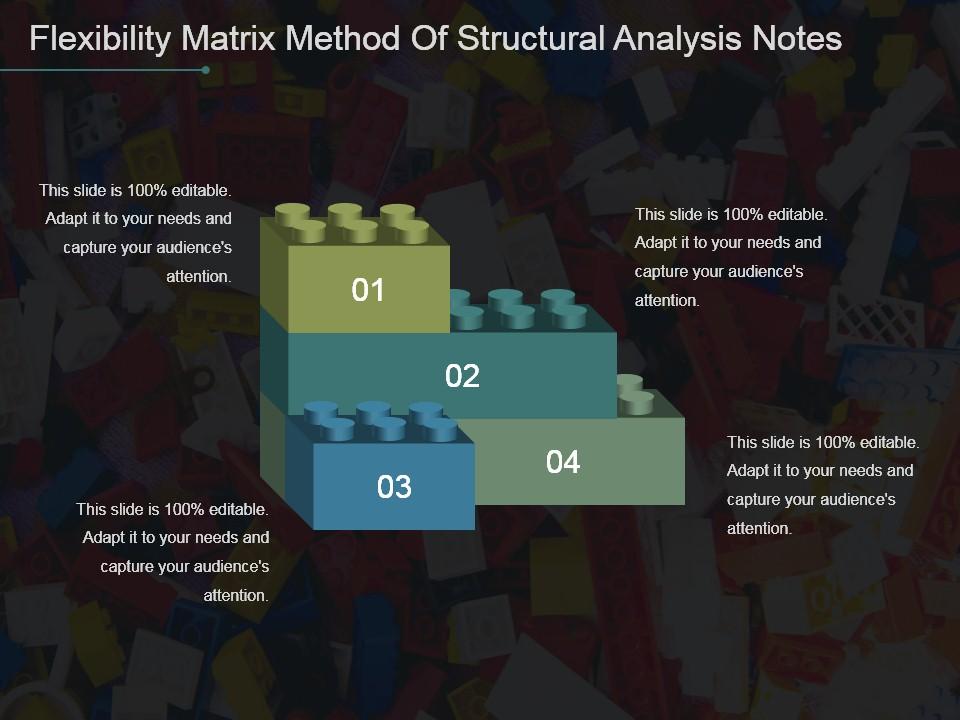
Flexibility matrix method of structural analysis notes powerpoint slide backgrounds
Try Before you Buy Download Free Sample Product
Audience
Editable
of Time
Address the cause of illogical conclusions with our Flexibility Matrix Method Of Structural Analysis Notes Powerpoint Slide Backgrounds. Focus on irrational beliefs.
People who downloaded this PowerPoint presentation also viewed the following :
Flexibility matrix method of structural analysis notes powerpoint slide backgrounds with all 5 slides:
Guarantee abundance with our Flexibility Matrix Method Of Structural Analysis Notes Powerpoint Slide Backgrounds. Ensure growth far exceeding expectations.
FAQs for Flexibility matrix method of structural analysis notes
The Flexibility Matrix Method is a dynamic project management approach that maps project variables against adaptability requirements, enabling teams to identify which elements can be adjusted when changes occur. Unlike traditional rigid methodologies that follow fixed timelines and scope definitions, this method prioritizes responsiveness through systematic flexibility planning, ultimately delivering better outcomes in increasingly volatile business environments.
The Flexibility Matrix Method proves most beneficial in complex, multi-stakeholder projects like software development, construction, and organizational change initiatives where requirements frequently evolve. These projects benefit from the method's ability to systematically evaluate adaptation options, resource reallocation scenarios, and risk mitigation strategies, with many organizations finding that it enables faster decision-making and ultimately delivers improved project outcomes.
The Flexibility Matrix Method enhances adaptability by systematically mapping project variables against response strategies, enabling rapid reconfiguration when conditions change. Through structured risk assessment, resource reallocation protocols, and contingency planning frameworks, project managers can pivot efficiently while maintaining deliverable quality, with organizations in consulting, software development, and manufacturing finding that this approach reduces project delays by up to 40%.
Financial services, healthcare systems, manufacturing companies, retail chains, and technology firms have successfully implemented the Flexibility Matrix Method to optimize resource allocation and operational adaptability. These organizations streamline decision-making processes, enhance workforce deployment, and improve response times to market changes, with many finding that this strategic approach delivers significant competitive advantages and operational efficiency gains.
Key components of a Flexibility Matrix include flexibility dimensions, assessment criteria, weighting factors, scoring mechanisms, and performance indicators. These components are constructed by identifying organizational flexibility requirements, establishing measurable criteria for each dimension, assigning strategic weights based on business priorities, and creating scoring frameworks that enable systematic evaluation, ultimately delivering enhanced adaptability and competitive positioning.
Stakeholder engagement ensures the Flexibility Matrix reflects diverse perspectives, operational realities, and strategic priorities through collaborative input gathering, validation sessions, and iterative refinement processes. By involving key stakeholders from different departments, organizations enhance matrix accuracy, gain broader buy-in, and identify flexibility opportunities that might otherwise be overlooked, ultimately delivering more robust strategic planning and smoother implementation across teams.
Risk management serves as a foundational pillar in the Flexibility Matrix Method, enabling organizations to identify potential disruptions, assess vulnerability levels, and develop adaptive response strategies across different operational scenarios. Through systematic risk evaluation, companies can prioritize flexibility investments in critical areas like supply chains, workforce planning, and technology infrastructure, ultimately building resilience that transforms potential threats into competitive advantages.
The Flexibility Matrix Method improves resource allocation by systematically mapping resource dependencies, identifying critical path alternatives, and enabling dynamic reallocation based on project constraints and priorities. Through this structured approach, project managers in sectors like construction, software development, and manufacturing can optimize workforce deployment, minimize bottlenecks, and maintain project momentum, ultimately delivering enhanced efficiency and reduced costs.
Organizations transitioning from rigid frameworks to the Flexibility Matrix Method often encounter resistance to change, difficulty adapting established processes, and initial confusion around dynamic resource allocation. While these challenges present learning curves, many companies in manufacturing, consulting, and project management find that structured change management, comprehensive training, and phased implementation enable smoother transitions, ultimately delivering enhanced adaptability and competitive advantage.
The Flexibility Matrix Method facilitates better decision-making by mapping project variables against uncertainty levels, enabling teams to identify adaptable pathways and contingency options before challenges arise. Through systematic risk assessment and scenario planning, organizations in manufacturing, software development, and consulting can pivot strategies quickly, allocate resources efficiently, and maintain project momentum despite changing requirements, ultimately delivering stronger outcomes.
Yes, the Flexibility Matrix Method integrates seamlessly with Agile methodologies by enhancing sprint planning, risk assessment, and adaptive capacity evaluation within iterative development cycles. This strategic combination enables Agile teams to systematically identify flexibility requirements, prioritize backlog items based on adaptability needs, and make data-driven decisions during retrospectives, ultimately delivering more resilient products and improved stakeholder responsiveness.
The Flexibility Matrix aids in prioritizing by categorizing tasks based on their adaptability requirements and strategic importance, enabling project managers to identify which activities need rigid structure versus flexible approaches. This systematic evaluation streamlines resource allocation, minimizes bottlenecks, and enhances timeline management, with many organizations finding that strategic task categorization ultimately delivers improved project outcomes and competitive advantage.
Tools for creating and managing a Flexibility Matrix include Microsoft Excel, Google Sheets, Tableau, Power BI, and specialized workforce management platforms like Workday or SAP SuccessFactors. These solutions streamline matrix development by automating data collection, enabling real-time updates, and providing visual dashboards, with many organizations finding that integrated platforms deliver enhanced workforce planning and strategic resource allocation.
The Flexibility Matrix Method promotes collaboration by creating transparent role definitions, establishing clear communication channels, and enabling dynamic task redistribution based on team strengths and availability. Through structured flexibility frameworks, teams streamline decision-making processes, enhance cross-functional coordination, and maintain consistent project momentum, with many organizations finding that this systematic approach ultimately delivers improved team cohesion and accelerated project outcomes.
Metrics for evaluating Flexibility Matrix Method effectiveness include adaptation speed, resource reallocation efficiency, stakeholder satisfaction scores, timeline variance reduction, and cost optimization ratios. These measurements enable organizations to track how successfully teams pivot between project phases, with many companies finding that systematic flexibility tracking delivers improved project completion rates and enhanced client outcomes.
-
Very unique and reliable designs.
-
Editable templates with innovative design and color combination.