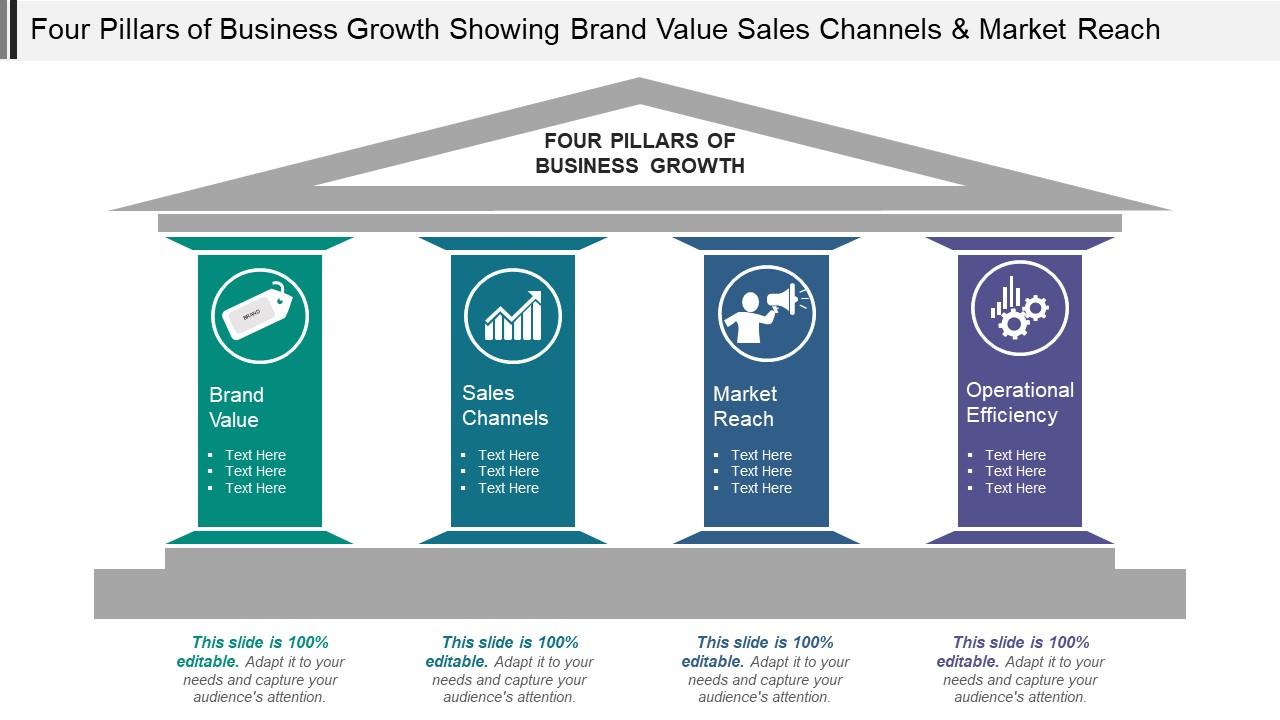
Quatre piliers de la croissance des entreprises montrant les canaux de vente de la valeur de la marque et la portée du marché
Try Before you Buy Download Free Sample Product
Audience
Editable
of Time
Assurez-vous que les gens agissent de manière éthique avec nos quatre piliers de la croissance de l'entreprise montrant les canaux de vente de la valeur de la marque et la portée du marché. Faites-leur respecter leur conscience.
Caractéristiques de ces diapositives de présentation PowerPoint :
Présentation de cet ensemble de diapositives avec le nom - Quatre piliers de la croissance de l'entreprise montrant les canaux de vente de la valeur de la marque et la portée du marché. Il s'agit d'un processus en quatre étapes. Les étapes de ce processus sont quatre piliers, quatre tours.
People who downloaded this PowerPoint presentation also viewed the following :
Quatre piliers de la croissance de l'entreprise montrant les canaux de vente de la valeur de la marque et la portée du marché avec les 5 diapositives :
La gloire n'est qu'à quelques clics avec nos quatre piliers de la croissance de l'entreprise montrant les canaux de vente de la valeur de la marque et la portée du marché. Ils vous invitent en toute confiance.
FAQs for Four pillars of business growth showing brand value sales channels
Honestly, you've gotta focus on what actually makes you different - and I mean *really* different, not just "we have great service" because literally everyone claims that. Keep your existing customers happy first since getting new ones costs a fortune when everyone's fighting for the same people. Oh, and partnerships can open doors you'd never get to otherwise. The scrappy approach works too - big companies move slow, so you can probably outmaneuver them if you're quick. Start by figuring out your actual unique thing, then build everything around that. Sometimes being small is the advantage.
Honestly, digital marketing is a game changer for growth. You'll reach way more people without blowing your budget on traditional ads. Social media lets you target your exact audience, and the real-time data is kind of addictive once you get into it. Content marketing helps build actual relationships with customers too. Start small though - pick maybe one or two platforms instead of spreading yourself thin everywhere. I made that mistake early on. You can always scale up once you figure out what's working. Plus you're meeting people where they're already hanging out online anyway.
Honestly, customer feedback is like having a cheat sheet for growing your business. You get to see what people actually want instead of just guessing. Use that info to fix the right things first and find opportunities your competitors are totally missing. The customers who feel heard? They become your biggest fans - way better than any paid ads, trust me. Don't just wait for complaints though. Set up regular check-ins with your best customers and ask what would make them spend more with you. Those conversations are gold.
Honestly, I'd start with ROI and payback period - they'll tell you if your growth stuff is actually working or just bleeding money. Revenue growth rate matters too, obviously. Customer acquisition cost is huge because you want to make sure you're not overpaying for customers. Oh, and definitely watch customer lifetime value - there's nothing worse than spending a ton to get customers who just bounce after a month. Gross margin trends are worth tracking too since some growth tactics can tank your profitability even when sales look good. Check these monthly so you can pivot before things get messy.
Partnerships can be a total game-changer for growth, honestly. You get instant access to new markets and customers without spending a fortune upfront. Why build everything yourself when you can team up with someone who already has what you need? Maybe they've got the distribution network you're missing, or you have tech skills they want. The trick is finding companies where your strengths fill their gaps - not where you're competing for the same stuff. I'd start by figuring out what you need most, then look for businesses that have those things but could use what you bring. It's like trading strengths.
Start with automation tools - seriously, they're lifesavers when you're trying to grow without hiring 50 people. Map out your workflows first though, find where things get stuck. Standardizing processes is boring but necessary because scaling messy systems is a nightmare. I'd outsource the stuff that isn't your main thing and maybe partner up instead of building everything yourself. Cross-train your team so you're not screwed if someone's out. Oh, and actually look at your data when making decisions instead of just winging it. Focus on the biggest bottlenecks first - that's where you'll see real results.
Honestly, automation's been a total lifesaver for me. Start with whatever's eating most of your time - for me it was social media scheduling, but could be customer emails or inventory stuff. Chatbots handle basic questions so you're not constantly putting out fires. The data analytics part is where it gets interesting though - you'll spot patterns in customer behavior that you'd totally miss otherwise. Best part? Once you set it up, it handles way more volume without needing extra staff. I'd pick one annoying task first and automate that, then build from there.
Dude, market research is like having a GPS instead of driving around lost. It shows you actual customer pain points and where competitors are screwing up. Honestly, I've watched so many startups blow their budget on ideas that seemed brilliant in brainstorms but bombed in reality. The data tells you which customers to chase, what to build, and how to stand out. My old boss used to say "assumptions are expensive" - he wasn't wrong. Do the research first, then spend your money. Way better than pivoting later when you're already broke.
Okay so three main things to nail down: killer customer service, making it personal, and actually delivering value consistently. Your team needs to jump on problems fast and go the extra mile when they can. The personalization stuff is where most businesses totally suck - use what you know about their buying habits to suggest things they'd actually want. Loyalty programs should reward people for engaging, not just spending money. Oh, and definitely do regular check-ins and surveys to see how you're doing. I'd start by looking at your whole customer journey first though - find where people are getting frustrated or confused.
So basically, scroll through your comments and DMs - people literally tell you what they want. I check mine way too much anyway lol. Your competitors' accounts are pure gold too. See what's getting engagement that you're totally missing. Most people just ignore all this free insight sitting there. Grab a social listening tool to track keywords in your industry. The trick isn't just hoarding data though. You've gotta actually do something with what you find. It's wild how many businesses collect all this info then never act on it.
Dude, aggressive growth can really mess you up if you're not careful. Cash flow gets tight, quality starts slipping, and your team burns out fast. It's like trying to run before you can walk properly - hiring tons of people without training them right or jumping into new markets when you haven't even figured out your current one yet. Build up some cash reserves first, that's huge. Then focus on getting your systems down solid and don't budge on quality standards. Honestly, the biggest thing is just taking it step by step instead of going crazy all at once. Test stuff out, see what works, then scale gradually.
Dude, engaged employees are honestly the secret sauce for growth. They stick around longer, work harder, and actually give a damn about your goals. Compare that to disengaged people who are basically zombies collecting paychecks - huge difference. Your engaged team becomes your best marketing too, plus they're way more creative when solving problems. I learned this the hard way at my last job. Measuring engagement regularly is clutch though. Even small bumps in engagement scores can mean serious revenue increases down the line. Don't sleep on this one.
So organic growth is basically building your business from within - boosting sales, rolling out new products, expanding into fresh markets with your current team and money. Inorganic means buying other companies or merging to grow faster. Yeah, organic takes longer but you keep total control and it's generally safer money-wise. Acquisitions can explode your growth but honestly, they're a nightmare to manage (and pricey). Most smart companies mix both approaches - they'll buy competitors for instant market share, then focus internally to make everything work together. I'd definitely start organic first to nail your basics, then maybe look at buying others once you're running smooth.
Honestly, you really don't want all your income riding on just one thing. Diversifying gives you backup plans - if one product flops, the others can save your ass. You'll reach totally different customers too, which is huge. I always think it's smarter to have multiple shots at making money rather than going all-in on something that might not work. Just make sure whatever new stuff you add actually makes sense with what you're already doing. Maybe start with testing one new product first? See how that goes before you get crazy with it.
Track both sides - leading indicators (website traffic, conversion rates, acquisition costs) show what's happening right now. Lagging ones like revenue and customer lifetime value reveal your actual results. Most people get obsessed with vanity metrics that look impressive but mean nothing. I learned this the hard way tbh. Focus on numbers that actually connect to your business goals. Set up monthly or quarterly reviews to stay consistent. When the data screams that something's broken, don't ignore it - pivot fast.
-
Graphics are very appealing to eyes.
-
Very unique and reliable designs.