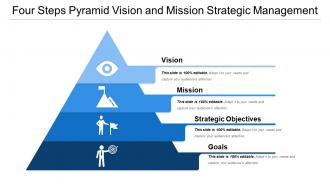
Vier Schritte Pyramide Vision und Mission Strategisches Management
Try Before you Buy Download Free Sample Product
Audience
Editable
of Time
Übertragen Sie die Freude, die sich in Ihnen aufbaut, mit unserer Vier-Schritte-Pyramide, Vision und Mission Strategic Management. Seien Sie in der Lage, Jubel auszudrücken.
Merkmale dieser PowerPoint-Präsentationsfolien:
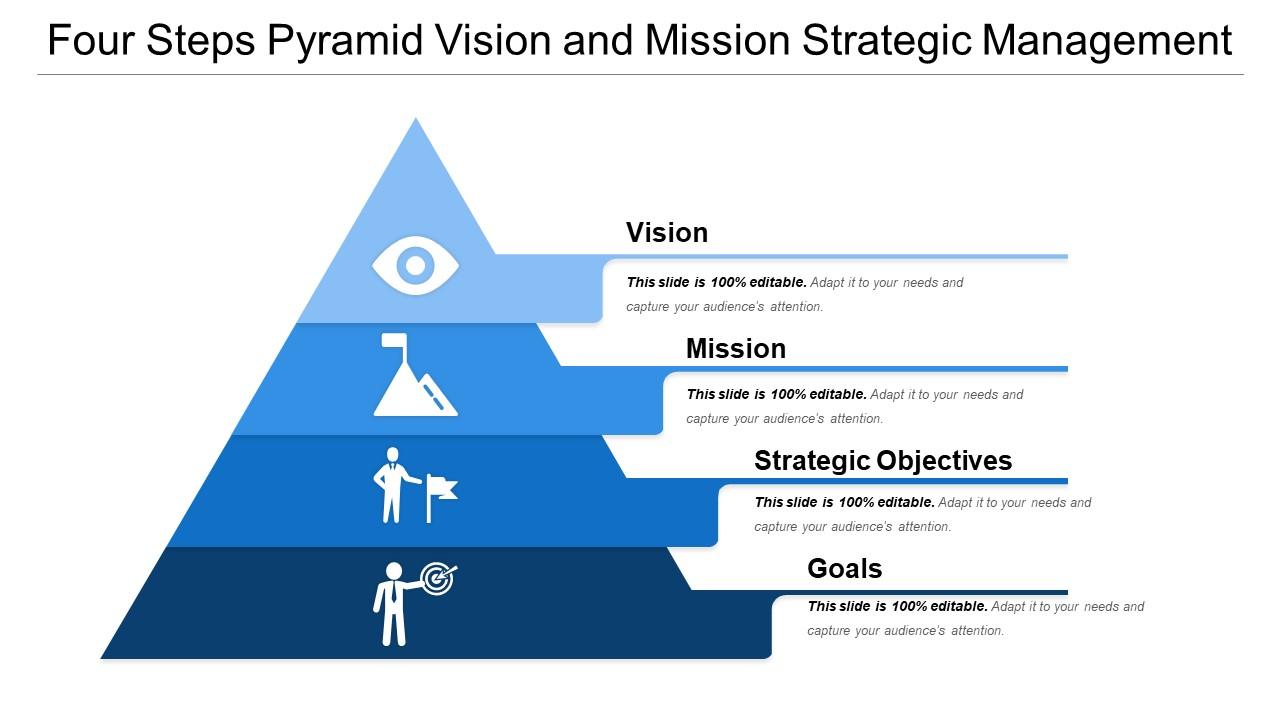
Diesen Foliensatz mit Namen präsentieren - Four Steps Pyramid Vision And Mission Strategic Management. Dies ist ein vierstufiger Prozess. Die Phasen in diesem Prozess sind Vision und Mission Strategisches Management, Vision Mission Statement, Ziele und Zielsetzungen.
People who downloaded this PowerPoint presentation also viewed the following :
Vier Schritte Pyramide Vision und Mission Strategisches Management mit allen 5 Folien:
Verknüpfen Sie Ihre Gedanken mit unserer Vier-Schritte-Pyramide Vision und Mission Strategisches Management. Ihre Botschaft wird laut und deutlich hervorstechen.
FAQs for Four steps pyramid vision and
Look, you'll need the basics first - vision/mission stuff, plus analyzing what's happening internally and externally. Strategic objectives are crucial too. But honestly? The implementation part is where most people screw up. You need solid KPIs and someone actually checking on progress regularly. I can't tell you how many companies I've seen create amazing strategies then just... ignore them. Resource allocation has to match your priorities, and leadership needs to be all in. The whole thing falls apart if these pieces don't connect properly. Start by figuring out what you're already doing well, then tackle your biggest weaknesses.
Look, stuff happens that's completely out of your control - economic crashes, new laws, competitors doing something crazy. COVID proved that pretty brutally. Your original plan? Probably needs tweaking every few months whether you like it or not. Smart companies build in wiggle room from the start. I'd say scan your industry regularly and have backup plans ready. Customer preferences shift fast these days too. The whole "set it and forget it" approach just doesn't work anymore. Something's gonna blindside you eventually, so might as well prepare for it.
So competitive analysis is like having eyes on what everyone else is doing in your space. You can't make good calls on pricing or positioning if you're flying blind, you know? Check out their strengths, weaknesses, and recent moves regularly - not just once and forget about it. Set up Google alerts for their company names, stalk their social accounts (in a professional way lol), and peek at financials every quarter. The whole point is spotting opportunities they missed or seeing threats coming before they hit you. It's honestly one of those things that feels tedious but saves your butt later.
Look, first thing - be brutally honest about what you actually have vs what your plan needs. Skills, money, time, whatever. Write it down. Then figure out which gaps will totally kill your strategy and which ones are just "would be nice." I've watched so many companies try to fix everything simultaneously and just burn out completely. Pick maybe 2-3 critical things to tackle first. Either go get what's missing - hire people, find partners, spend the money - or scale back your goals to match reality. It sucks but you can't do everything with nothing. The hardest part is actually being honest about both sides instead of just hoping it'll work out.
Honestly, the worst thing you can do is set these fuzzy goals that sound nice but mean nothing measurable. Companies also love copying what worked somewhere else - terrible idea since your situation is totally different. Don't ignore when the market shifts on you either. Build in monthly check-ins (or at least quarterly) to see if you're actually doing what you planned. Stay tight with customer feedback too. Make sure someone owns each piece and has real deadlines. Strategy isn't this big annual thing - treat it more like an ongoing conversation. Oh, and separate your planning from execution at your own risk.
So basically, your board sets the big direction and holds everyone accountable. Strategic management is actually executing those plans. Think of the board as guardrails - they make sure your strategy doesn't go completely sideways and still serves stakeholders. They'll approve major decisions, watch how things are going, and jump in if needed. Honestly, boards can be a pain but they're there for good reason. Here's the thing though - before you develop any strategy, you better understand your governance structure first. Those are the people you'll be answering to when things get messy.
Honestly, I'd start with SWOT analysis - it's super straightforward and covers your basics. Maps out your strengths/weaknesses plus what's happening outside your company. Porter's Five Forces is solid too if you need to really dig into competitive stuff. BCG matrix works for portfolio decisions, though it feels kinda old-school now? For weird complex situations, scenario planning helps. But here's the thing - I've seen people get stuck researching frameworks forever instead of just picking one. SWOT first, then add Porter's if needed. Don't overcomplicate it.
Honestly, the biggest game-changer is having real-time data at your fingertips - makes decisions way faster and smarter. Analytics tools help you catch market trends early and predict what customers want before your competition even notices. AI handles all the boring number-crunching stuff, which frees you up for the actual strategic thinking. Plus digital platforms make it super easy to share your strategy with the whole team and see if you're hitting your targets. Oh, and don't just grab every new tech toy that pops up - only pick what actually helps your specific goals. Sometimes feels like cheating honestly!
Your company culture will totally make or break whatever strategy you're trying to pull off. Like, if everyone's used to waiting for approval from three levels up, good luck getting them to be "agile" - it just won't happen. Teams that actually talk to each other? They'll crush those cross-department projects. Competitive cultures are great for beating the competition but terrible at working together internally. There's this saying that culture eats strategy for breakfast, and honestly it's so true. I'd figure out what your culture actually is first, then either pick a strategy that fits or prepare for a long culture change process.
Look, you gotta figure out who's gonna love or hate your strategy before you dive in. Map out all the players - employees, customers, investors, regulators, the works. What do they actually care about? How will they react? I learned this the hard way after a few epic fails, honestly. Do this stuff early or you're just guessing. Then use what you learn to tweak your approach and how you talk to people. It's basically your insurance policy against getting blindsided by someone you forgot about.
Track your financials obviously - ROI, revenue growth, that stuff. But honestly? The numbers only tell half the story. Customer satisfaction and how engaged your team is matter just as much, maybe more. I'd set up quarterly check-ins to see what's actually working. The balanced scorecard thing is pretty solid since it covers all angles - financial, customer, internal ops, and learning. Oh, and definitely nail down your KPIs upfront. Nothing worse than scrambling later trying to figure out if you're winning or not. If something's clearly not working, just pivot.
Dude, honestly the ESG stuff is probably the biggest shift right now - went from optional to mandatory so fast it made my head spin. AI decision-making tools are everywhere now, which is actually pretty cool once you get used to them. Also seeing tons of companies move toward stakeholder capitalism instead of just caring about shareholders. Oh and agile strategy frameworks - basically being able to change direction without everything falling apart. Real-time analytics help with that too. The whole ecosystem thinking thing is interesting, like viewing your company as connected to everything else rather than isolated. My take? Pick one area first, maybe try some AI market analysis tools, then expand. Don't go crazy trying to do it all.
Honestly, it comes down to resources and how complex things get. Small businesses usually have the owner making quick calls with maybe 2-3 people involved. Big corporations? They've got whole departments, committees, endless meetings - kinda makes me glad I'm not in corporate anymore lol. Your small business can change direction way faster, but you're working with less data and expertise. Large companies have all the analytics but take forever to actually DO anything. Just match whatever approach works for your size. Don't try copying what Amazon does if you're running a local shop.
Look, innovation totally changes what strategies you can even consider. New products or processes? They create competitive advantages you didn't have before. Think of it like suddenly seeing shortcuts your competitors miss completely. Here's the thing though - your innovation skills decide what moves are actually possible for your company. Without that creative edge, you end up just copying what everyone else does instead of setting the pace. Pretty limiting if you ask me. So build innovation right into your planning from day one, not as some bonus feature later.
Honestly, scenario planning is like your strategy's insurance policy. Pick 3-4 realistic futures - your best case, worst case, maybe some curveball that could happen. Then see how your current plan holds up in each one. The sweet spot? Finding moves that'll work no matter what happens. I usually start with whatever big decision is keeping me up at night and just sketch out how the market might shift. It's way better than crossing your fingers and hoping you guessed right. Plus you'll spot problems before they actually hit you.
-
Illustrative design with editable content. Exceptional value for money. Highly pleased with the product.
-
Innovative and Colorful designs.