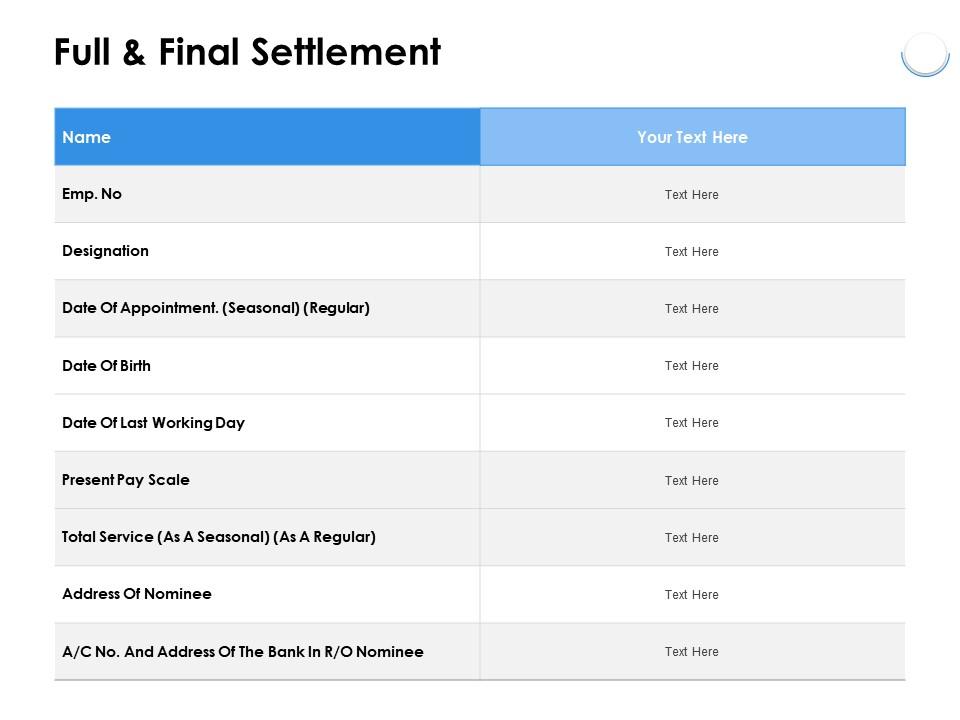
Full and final settlement ppt powerpoint presentation pictures graphics template
Try Before you Buy Download Free Sample Product
Audience
Editable
of Time
Avoid being irrelevant with our Full And Final Settlement Ppt Powerpoint Presentation Pictures Graphics Template. Adhere to the facts that are applicable.
People who downloaded this PowerPoint presentation also viewed the following :
Full and final settlement ppt powerpoint presentation pictures graphics template with all 5 slides:
Adhere to facts that are applicable with our Full And Final Settlement Ppt Powerpoint Presentation Pictures Graphics Template. Avoid being irrelevant.
FAQs for Full and final settlement ppt powerpoint presentation
So basically it's when you negotiate to pay less than what you owe and they agree to call it even. Like if you owe $5k but settle for $2k - boom, debt's gone forever. They can't come back later asking for that other $3k. Here's the thing though - get it in writing first! Don't just take their word for it over the phone. You want that paper trail saying "full and final settlement" so there's zero confusion later. I've seen people get burned on this before. Once you have the written agreement and make the payment, you're officially done with that debt.
So basically, full and final means you're totally done - no going back for more money or bringing up anything related later. Other settlements? You can still negotiate more stuff down the road. Picture it like this: selling your car "as is" vs. letting someone make payments over time. Once you sign that full and final paperwork, you've closed that chapter completely. Partial settlements leave wiggle room for future claims. Honestly, I'd be super careful with the "full and final" stuff - once you sign, there's literally no take-backs. Make sure you're actually okay walking away forever before putting pen to paper.
So these settlements pop up in a few situations mainly. Job stuff is big - when you're getting fired or laid off and they want to avoid any lawsuits over discrimination or whatever. Debt collection too, where companies will take like 60% of what you owe just to be done with it. Then there's general legal disputes where everyone's tired of fighting and wants out. Oh, and divorces sometimes but that's a whole other mess. Just heads up though - once you sign, you can't come back later claiming they screwed you over on that same issue.
Get everything in writing first - seriously, don't let any money move until you have a solid settlement agreement. Both parties need to sign it (I know, sounds obvious but people mess this up constantly). The document should spell out the exact payment amount, what claims you're releasing, and include "full and final settlement" language. Don't forget payment deadlines and terms. If there's a lawsuit going on, you'll probably need dismissal papers filed with the court too. Confidentiality stuff might be relevant depending on your situation. Have a lawyer look it over if we're talking serious money.
Get all your paperwork together first - payment records, bank statements, proof you're struggling financially. Start low, like 10-20% of what you owe. Creditors usually take way less than you'd think because getting something beats getting nothing, you know? Tell them it's a one-time lump sum and be upfront about your money situation. When they counter (and they will), don't jump on it right away. There's always wiggle room. Oh, and this is crucial - get everything written down before you pay anything. Make sure it says the debt's completely settled.
Ugh, settlement taxes are messy. So the person paying usually can't deduct it (unless it's business-related). For you receiving it - depends what it's for. Lost wages? Yeah, that's taxable income. Personal injury or property damage settlements are typically tax-free though, which is honestly one of the few breaks the IRS gives us. Punitive damages get taxed. Any interest or penalties tacked on? Definitely taxable. Make sure you get paperwork showing what each chunk of money is for - trust me, you'll want that breakdown if the IRS starts poking around later.
Yeah so once you sign that thing, you're pretty much done - can't go back asking for more money or reopening the same fight. Courts will totally enforce it too. The settlement has all this release language that basically says "nobody can sue anybody else about this mess anymore." Honestly, some of these agreements are way broader than you'd think, so definitely read through it carefully first. I mean, there's usually no going back once you've signed. Short version: make sure you're actually okay with the terms because you'll be stuck with whatever you agreed to.
So mediation is basically structured negotiation but without the courtroom drama. A neutral person sits between you and the other side, which honestly cuts down on all the toxic back-and-forth. They help spot compromises you probably wouldn't think of yourself. Everything stays confidential too - you can throw out wild ideas without worrying they'll bite you later. The mediator might even suggest creative solutions that work for everyone. Just make sure whatever you agree to gets written down properly as binding. That becomes your final settlement and you're done.
So jurisdiction decides which court can actually enforce your settlement and what laws you're stuck with. Here's the thing - if you settle in one state but they live somewhere else, enforcing it becomes a total pain. Some states are way more business-friendly than others too. You absolutely need a clause specifying which jurisdiction handles disputes and where you can file enforcement stuff. Skip that and you'll be dealing with conflicting state laws or hunting around for the best court. Trust me, add that jurisdiction clause from the start. It'll save you so much headache down the road.
Honestly, the scariest part is you can't go back once you sign - like, ever. Say your medical bills end up being way higher than expected, or you miss more work than you thought? Too bad, you already settled. That door's closed forever. I get wanting to just wrap this whole mess up quickly, but settling too fast usually means settling for less. My advice? Really think through what this might cost you down the road first. Maybe bounce the numbers off someone who's not emotionally invested in it.
Dude, templates will literally save your life on settlement agreements. You're not starting from scratch every time, which is huge. They keep your language consistent so nobody can come back later saying "well this was confusing." Cover the basics - release language, payment stuff, confidentiality, compliance requirements. Just don't get lazy and treat them like mad libs, you know? Each case is different so you gotta tweak things. I learned this the hard way when I first started - spent way too many late nights writing these from blank documents like an idiot.
Just be super direct upfront - tell them the exact dollar amount and call it "full and final settlement." Add a quick summary of what claims you're covering. The timeline thing is tricky... I usually say 30 days because it's fair but still pushes them to decide. Honestly, people don't always get that they're giving up future claims, so really hammer that point home. Everything needs to be in writing (obviously), and maybe get them to confirm they received it. The whole thing comes down to being clear as hell about what they're agreeing to so nobody's confused later.
Emotions totally mess up negotiations if you don't watch out. People get so angry or desperate they make terrible choices - like taking way too little just to end it, or saying no to good offers because they're pissed. I watched one case go on forever because the guy felt insulted by their first lowball offer. Honestly, some people need thicker skin. Take breaks when things get heated. Try to step back and look at the actual numbers instead of how you're feeling. You'll make way smarter decisions that way.
Hey! So the biggest myth is that these settlements are only for messy departures - totally wrong, they're super common for normal resignations too. Most people think the first number they offer is set in stone, but honestly? That's just their opening bid. You've got 21 days to mull it over, which is plenty of time to push back on salary AND other stuff like your reference. Another thing - signing doesn't actually waive every possible claim forever (like if you get sick later from workplace exposure). Just make sure you actually read through everything carefully before putting pen to paper.
First thing - map out every single liability you can find. Employee stuff, vendor bills, tax headaches, lawsuits, the works. There's always some random invoice buried somewhere that'll bite you later (learned that one the hard way). Get your legal and finance people to dig deep, then hammer out really clear settlement terms about what's covered. Document everything obsessively. Make sure everyone signs off that this closes the books for good. Oh, and set aside enough cash to actually pay what you've agreed to - your integration team needs to know what's been settled so they don't accidentally poke sleeping bears.
No Reviews