Exemplo de apresentação de Ppt de estratégia de Go To Market

Rating:
87%
Slide 1 of 5
Favourites Favourites

Try Before you Buy Download Free Sample Product

Audience Impress Your
Audience
Editable 100%
Editable
Time Save Hours
of Time
The Biggest Sale is ending soon in
0
0
:
0
0
:
0
0
Rating:
87%

Recursos desses slides de apresentação do PowerPoint:

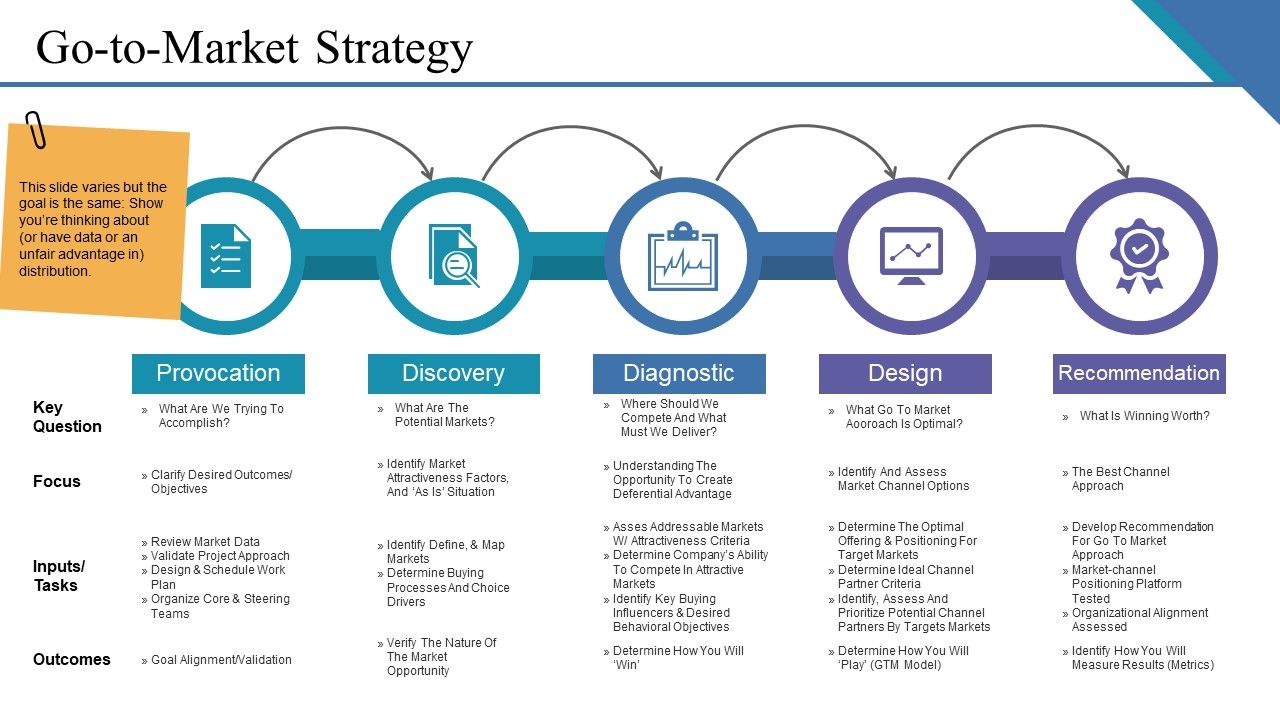
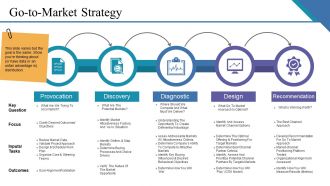
Apresentando este conjunto de slides com o nome - Vá para a Estratégia de Mercado Exemplo de Apresentação Ppt. Este é um processo de cinco estágios. As etapas neste processo são Provocação, Descoberta, Diagnóstico, Projeto, Recomendação.

FAQs for Go to market strategy

Okay so there's basically five things you need to figure out for your go-to-market plan. First - and this is where everyone screws up - really nail down who you're actually selling to. Like, get super specific about your ideal customer. Then work out what makes you different and how you'll price against competitors. Distribution comes next - direct sales, partners, online, whatever makes sense for your business. Oh and obviously you need a realistic timeline with actual milestones you can hit. I know it sounds like a lot but honestly once you get that customer profile locked down, the rest starts falling into place way easier.

Look, you can't be everything to everyone - it just doesn't work. Segmentation lets you actually focus where it matters. Why pitch a startup the same way you'd approach some massive enterprise? That's setting yourself up for meh results. When you nail your segments, your messaging hits different because you're speaking directly to what each group actually cares about. Their specific problems, what motivates them - all that stuff. Pick your top 2-3 segments first and build separate value props for each one. Way more effective than that generic spray-and-pray approach most people do.

Dude, you HAVE to nail down your customer personas first - everything else builds from there. Your messaging, pricing, even which channels you use all depend on knowing who you're actually talking to. I've watched teams completely bomb because they just guessed at this stuff instead of doing the work upfront. Go interview real customers, not just look at demographics (that's surface level). When you actually understand them, you can create value props that hit different instead of boring generic nonsense. Your whole sales approach should change based on these insights too.

Look, you really don't want to skip competitive analysis and market research - I've watched too many startups crash because they thought they knew better. Market research shows you what customers actually need (spoiler: it's usually different than what you assume). Meanwhile, checking out your competition reveals where they're screwing up so you can swoop in. You'll figure out proper pricing, find the right messaging that clicks, and honestly? It saves you from those expensive "oops we built the wrong thing" moments. Do both before you lock in your positioning. Trust me on this one.

Track your conversion rates at each funnel stage first - that's your bread and butter. Customer acquisition cost and time-to-close matter too. Revenue stuff like monthly recurring revenue and average deal size are obvious wins. Honestly, people sleep on brand awareness metrics but they're huge for long-term growth. Customer satisfaction scores will save your butt because angry customers kill everything fast. Oh, and market penetration data helps a ton. Set up some kind of weekly dashboard so you can catch problems early. Nothing worse than realizing you've been bleeding money for months without noticing.

Get both teams in a room to nail down who your ideal customer actually is - can't have marketing and sales working off different playbooks. Honestly, shared metrics are a game changer here. Yeah, you'll need more meetings (I know, I know), but the cross-team ones actually move the needle. Make sure everyone's speaking the same language to prospects too. The handoff between marketing qualified leads and sales is where things usually fall apart, so get that process bulletproof. Oh, and set up a dashboard both sides can see - nothing worse than flying blind. Celebrate the wins together because it's really one team anyway.

Honestly, the biggest pain is just getting noticed when everyone's screaming for attention. Pricing gets messy too - there's always someone willing to go cheaper. But saturated markets aren't death sentences, you just gotta be sneakier about it. Look for the gaps - who's getting ignored by the big players? Maybe partner up with brands that complement yours, or hit distribution spots others are sleeping on. I'd start by really digging into which customers aren't happy with what's out there. Sometimes the best opportunities hide in plain sight.

Think of digital marketing as what fuels your entire go-to-market strategy. Map out your channels - social, email, content, paid ads - against each customer journey stage. Consistency across touchpoints is crucial, though honestly it's a pain to manage with everything going on. Your digital stuff needs to back up your positioning, not fight it. Oh, and this is huge - track everything properly from the start. You want to see what actually brings in money, not just pretty engagement numbers that make you feel good but don't pay the bills.

Look, distribution channels are literally how your customers find and buy your stuff. Pick bad ones and you're screwed - doesn't matter if your product is amazing. Your margins, how people see your brand, the whole buying experience... it all comes down to this choice. I learned this the hard way tbh. You wouldn't sell enterprise software at Target, right? Same logic applies everywhere. Figure out where your people already hang out and shop, then meet them there. Short sentences work. But you also need to think about whether those channels actually make sense for scaling later on.

Look, treat that feedback like it's actually telling you something important about what's broken. I'd bucket it into pricing, features, messaging, and where you're selling - then figure out what's killing your conversions vs just annoying people. Most companies try fixing everything at once which is honestly stupid. Hit the stuff that's messing with your acquisition costs first. Maybe your messaging sucks, or you're targeting the wrong people, or hell - you might need totally different channels. The trick is moving quickly but not being random about what you change and when.

Dude, pricing can literally make or break your whole launch. Look at what competitors are charging first - that's your baseline. You can't go premium positioning then slap on discount pricing, it just looks weird and confuses people. Test different price points with your early customers too. Find what actually makes sense for their budgets and your positioning. Your sales team needs to be able to work with whatever you pick, and honestly? The wrong price point can totally mess up which sales channels even work for you. It's all connected.

Honestly, stories beat feature lists every single time. People forget stats like "40% efficiency boost" but they'll totally remember how you saved some startup from going under. Connect emotionally instead of just rattling off what your product does. Pick 3-4 real customer wins and turn them into proper narratives - the struggle, the breakthrough, all that good stuff. Then weave these same stories through your sales decks, website, demos, whatever. Focus on transformation journeys or origin stories your prospects can actually relate to. Trust me, "relatable struggle turned success" sticks way better than boring feature bullets ever will.

Here's what I'd do - work on your marketing stuff while you're still building the product. Don't wait for development to finish completely. Launch with just the core features first, then add more based on what users actually tell you. Way better than spending forever trying to make everything perfect upfront. Maybe try a beta program or soft launch to test things out? I've honestly seen teams cut their timeline by months just doing this. The whole "good enough now beats perfect later" thing is so true, especially when competitors are breathing down your neck.

Oh man, culture affects literally everything when you're selling internationally. Your messaging has to change, pricing strategies shift, even which sales channels work. What kills it in direct-sales cultures? Total disaster in relationship-first markets. You've got to research local payment methods, decision-making styles (some cultures are super individualistic, others need group consensus), plus all the regulatory stuff. Honestly, I'd skip trying to figure it out alone - find local partners who actually get the subtle cultural things you'll miss. Way easier than learning the hard way.

Oh man, the worst thing you can do is try to sell to everyone. Like, I get it - bigger market sounds better, right? But you'll just hemorrhage money. Pick one super specific group first and really nail that messaging. Also definitely scope out your competition before you think you've found some magical gap in the market. Can't tell you how many people I know who thought they were being revolutionary only to find three other companies doing the exact same thing. B2B sales cycles are brutal too - way longer than you think. Test everything small first.

Ratings and Reviews

87% of 100
Review Form
Write a review
Most Relevant Reviews
  1. 100%

    by zhuo bufan

    looks amazing and it covers all factors where "GTM" should go !
  2. 80%

    by Davis Mason

    Perfect template with attractive color combination.
  3. 80%

    by Jake Smith

    Easy to edit slides with easy to understand instructions.

3 Item(s)

per page: