Good better best emblem having circle shaped

Rating:
90%
Good better best emblem having circle shaped
Slide 1 of 5
Favourites Favourites

Try Before you Buy Download Free Sample Product

Audience Impress Your
Audience
Editable 100%
Editable
Time Save Hours
of Time
The Biggest Sale is ending soon in
0
0
:
0
0
:
0
0
Rating:
90%
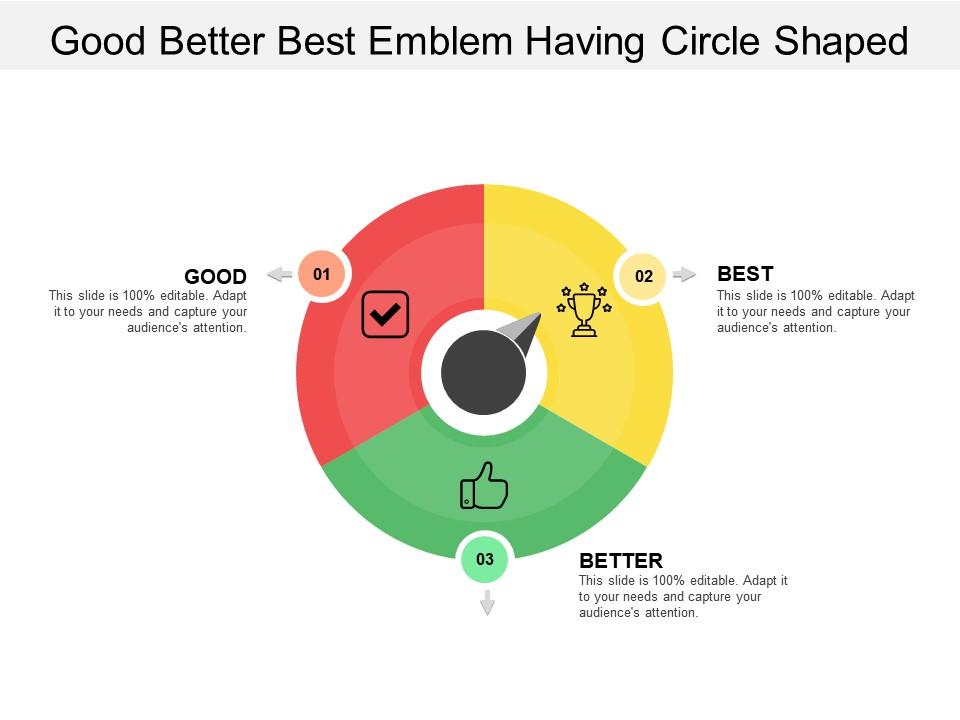
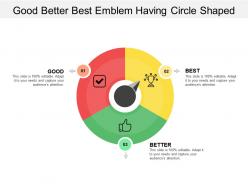
Presenting this set of slides with name - Good Better Best Emblem Having Circle Shaped. This is a three stage process. The stages in this process are Good Better Best, Good Great Superb, Good Great Excellent.

FAQs for Good better best emblem

Effective emblem design requires considering visual simplicity, scalability across different sizes, memorable symbolism that reflects brand values, appropriate color schemes, and versatility for various applications. These elements work together by ensuring instant recognition, maintaining clarity in digital and print formats, and creating emotional connections with audiences, ultimately delivering stronger brand identity and competitive differentiation across all marketing channels.

Color theory significantly influences emblem perception by affecting emotional responses, brand recognition, and cultural associations through strategic use of hue, saturation, and contrast. Red conveys energy and urgency for brands like Coca-Cola, while blue suggests trust and reliability for financial institutions, with many organizations finding that consistent color application across emblems enhances brand recall by up to 80%.

Industry-specific emblem design requires considering sector conventions, target audience expectations, regulatory requirements, brand positioning needs, and cultural sensitivities. Financial services typically favor conservative, trust-building elements, while tech companies embrace modern, innovative aesthetics, and healthcare organizations prioritize clarity and professionalism, ultimately ensuring emblems resonate authentically within their competitive landscape.

An emblem conveys a brand's values and mission through strategic use of color psychology, symbolic imagery, typography choices, and cultural references that resonate with target audiences. These design elements work together by creating emotional connections, establishing visual hierarchy, and communicating core messages instantly, with many organizations finding that well-crafted emblems enhance brand recognition and customer loyalty significantly.

Typography serves as the verbal foundation of an emblem's message, establishing tone, personality, and brand positioning through carefully selected fonts, spacing, and letterform treatments. Strategic typography choices enhance readability across scales while reinforcing brand values, with many organizations finding that custom lettering or refined typefaces significantly strengthen message clarity, emotional connection, and overall brand recognition in competitive markets.

Simplicity enhances an emblem's communicative power by ensuring instant recognition, clear message delivery, and memorable visual impact across all platforms and sizes. When organizations streamline their emblems to essential elements, they achieve greater brand recall, versatile application from business cards to billboards, and stronger emotional connections, ultimately delivering more effective communication and competitive brand advantage.

Essential design principles for achieving balance in emblem creation include symmetrical or asymmetrical composition, strategic color distribution, proportional element sizing, visual weight management, and harmonious spacing. These principles work together by creating focal hierarchy, ensuring readability across different scales, and establishing memorable brand recognition, with many organizations finding that balanced emblems enhance professional credibility and audience engagement.

Cultural factors significantly influence emblem design through color symbolism, religious iconography, historical references, typography choices, and visual metaphors that resonate with specific audiences. These cultural elements shape how emblems communicate identity and values, with organizations increasingly adapting designs for global markets while maintaining local relevance, ultimately ensuring brand recognition and emotional connection across diverse cultural contexts.

Common emblem design mistakes include overcomplicated details, poor scalability, inappropriate color choices, weak typography integration, and lack of versatility across applications. These design flaws undermine brand recognition by creating confusion in digital platforms, print materials, and merchandise, with many organizations finding that simpler, strategically crafted emblems deliver stronger visual impact and broader market appeal.

Scalability is crucial in emblem design as it ensures visual clarity and brand recognition across diverse applications, from business cards to billboards, digital platforms to merchandise. Through vector-based design and simplified elements, organizations maintain consistent brand identity while adapting to different sizes, with many companies finding that scalable emblems enhance professional credibility and marketing effectiveness.

**INPUT**: What techniques can be used to ensure an emblem is memorable? **OUTPUT**: Memorable emblem techniques include bold simplicity, distinctive color combinations, symbolic relevance, scalable typography, and unique geometric shapes that reflect brand identity. These design elements work by creating instant recognition, enhancing visual recall, and establishing emotional connections, with many organizations finding that streamlined emblems deliver stronger brand recognition and competitive differentiation across marketing materials.

Stakeholder feedback enhances emblem design by identifying brand alignment issues, cultural sensitivities, and target audience preferences early in the process. Through structured review sessions, designers can refine concepts based on marketing teams' strategic insights, customer focus groups' emotional responses, and leadership's vision clarity, ultimately delivering emblems that resonate authentically and avoid costly revisions.

Current emblem design trends include minimalist geometries, gradient overlays, vintage-inspired typography, sustainable color palettes, and adaptive responsive formats. These approaches streamline brand recognition by enhancing digital versatility, improving cross-platform consistency, and delivering memorable visual impact, with many organizations finding that simplified emblems significantly increase customer engagement and brand recall across increasingly diverse digital touchpoints.

Logos evolve into emblems by maintaining core visual elements like color palette, typography style, and symbolic imagery while adding traditional emblem features such as shields, banners, and ornate borders. Through strategic redesign, brands like Harley-Davidson and universities successfully transformed their logos into emblems, preserving brand recognition while enhancing heritage appeal and premium positioning in competitive markets.

Designers can access diverse inspiration resources including design galleries like Dribbble and Behance, historical emblem archives, typography collections, cultural symbol databases, and industry-specific showcases. These platforms enable creative exploration through vintage heraldry, contemporary brand identities, and sector-specific designs, with many designers finding that combining traditional symbolism with modern aesthetics delivers distinctive, memorable emblems.

Ratings and Reviews

90% of 100
Review Form
Write a review
Most Relevant Reviews
  1. 100%

    by Michael Clark

    Good research work and creative work done on every template.

  2. 80%

    by Charles Nguyen

    Good research work and creative work done on every template.

2 Item(s)

per page: