


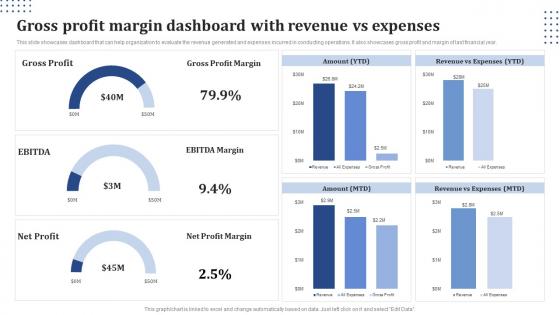
Gross Profit Margin Dashboard With Revenue Vs Expenses




Try Before you Buy Download Free Sample Product
 Impress Your
 Audience
 100%
100% Editable
 Save Hours
 of Time


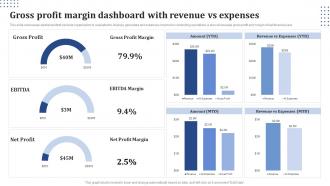
This slide showcases dashboard that can help organization to evaluate the revenue generated and expenses incurred in conducting operations. It also showcases gross profit and margin of last financial year.
People who downloaded this PowerPoint presentation also viewed the following :
Gross Profit Margin Dashboard With Revenue Vs Expenses with all 7 slides:
Use our Gross Profit Margin Dashboard With Revenue Vs Expenses to effectively help you save your valuable time. They are readymade to fit into any presentation structure.





FAQs for Gross Profit Margin Dashboard With
Ok so gross profit margin is just: (Revenue - Cost of Goods Sold) ÷ Revenue × 100. Take your total sales, subtract what you actually paid to make/buy the stuff, divide by revenue and boom - multiply by 100 for the percentage. The annoying part though? You've gotta be careful about what counts as COGS. Only direct costs like materials and labor - not your rent or marketing spend, that's different. I always forget this but you should probably check it monthly. Catches problems early and you can tweak pricing before things get weird.
So basically, gross profit margin just looks at your direct costs - stuff like materials and labor. Net profit margin? That's after you've paid for literally everything else too - rent, marketing, taxes, all that overhead stuff. I always think of gross as "how efficient is my actual production" while net shows if the business actually makes money. You can have killer gross margins but still lose money if your other expenses are nuts. Honestly, both matter but net margin is what really counts at the end of the day. Check them monthly if you can.
Gross profit margin is like a health check for your main business - shows how well your money-making operations actually work. Track it over time and you'll catch pricing problems or cost spikes before they wreck everything. We totally missed a supplier increase last year, ugh. Short periods don't tell the whole story though. Look at trends instead of just one quarter. If it keeps dropping, dive into your costs and pricing fast. Also helps you see how you stack up against competitors, which is honestly pretty eye-opening most of the time.
Your cost of goods sold is the biggest culprit - raw materials, labor, all that manufacturing stuff adds up fast. Pricing strategy can totally make or break you though. I've seen so many businesses just guess at their prices instead of actually calculating what works. Different products have wildly different margins, so your product mix matters way more than people think. Then there's competition forcing you to slash prices, which sucks but happens. Oh, and don't forget supplier costs changing on you - that hits directly. Track which products actually make you money because some might be total duds you didn't realize.
Honestly, you've got two main moves here - bump up prices or slash what it costs to make your stuff. Price increases are the quick win, but obviously your customers can't hate you for it. For costs, I'd start hunting for cheaper suppliers or see if you can negotiate better bulk deals. Production efficiency is huge too - like, you'd be surprised how much waste there is in most processes once you actually look. Oh, and track this stuff regularly because even tiny tweaks on either side really do add up. My buddy saved like 15% just by switching packaging suppliers.
So software/tech companies crush it with margins - like 70-90% because once you build the thing, each new customer barely costs anything extra. SaaS is honestly kind of insane money once it scales. Luxury brands and pharma do great too since they can charge premium prices. Manufacturing and retail though? They're stuck dealing with inventory, shipping, all that physical stuff that eats into profits. Oh and here's the thing - you gotta compare companies within their own industry. A 15% margin sucks for software but it's actually solid for grocery stores.
So gross profit margin is basically how much cushion you've got between what you pay for stuff and what you sell it for. When you're sitting pretty with like 50%+ margins, you can afford to get aggressive with discounts without totally screwing yourself over. Thin margins though? That's where things get sketchy. I've seen people tank their whole business because they didn't realize how razor-thin their profits were. Even tiny price cuts can completely wipe you out. The whole point is knowing your numbers so you're not just throwing darts at a board when you set prices.
Oh totally, gross profit margin can be super misleading. Like if your company has massive fixed costs, you might look profitable on paper but actually be hemorrhaging money. Different industries make comparisons weird too - tech vs manufacturing, you know? Accounting tricks with inventory valuation can mess with the numbers as well. Honestly, I learned this the hard way at my last job. You've gotta look at operating margin and net profit margin together. Don't just rely on gross margin alone or you'll get burned.
Honestly, seasonality can be brutal for margins. Peak times are great - high demand means you can charge more and margins look healthy. But then off-season hits and you're basically forced to discount everything just to clear inventory. Market trends are where it gets messy though. Raw materials suddenly cost 20% more? Your margins tank even if you're selling the same volume. Plus competitors can come out of nowhere and undercut you. I've learned to track these cycles religiously. Once you see the patterns, you can actually plan ahead - maybe adjust pricing early or stock up when costs are low.
Your inventory management basically controls your gross profit since it's tied directly to cost of goods sold. Good management cuts down waste - you know, spoilage, theft, stuff going obsolete. That keeps costs low and margins higher. Honestly, bad inventory control can tank your profits faster than almost anything else. Also helps to turn inventory quickly so you're not stuck with cash tied up in products that'll just sit there (and probably get marked down later). Track your turnover ratio and try just-in-time ordering when you can swing it.
So you'll subtract cost of goods sold from revenue, then divide by revenue - that's your gross profit margin. Honestly, doing this for each product separately will blow your mind because the differences are crazy. I just throw everything in a basic spreadsheet: product name, revenue, COGS, margin percentage. Check margins against similar products to find the weird outliers, and do it monthly so you catch changes fast. Here's the good part though - rank everything by both margin AND sales volume. Focus on your high-margin winners and seriously question if those low-margin products are even worth the headache.
Looking at your gross profit margin vs competitors tells you if you're pricing right and keeping costs in check. Low margins? You're probably underpricing or your operations are messy. High margins might mean you've got solid pricing power - or you just hit a lucky streak that won't stick around. Either way, it helps you spot where the industry's heading and whether you're falling behind. I'd use that info to tweak your prices or go hunting for ways to cut costs. It's honestly one of the better ways to figure out what needs fixing first.
Ugh, so basically your main business is bleeding money - costs are going up faster than you can raise prices, or you're stuck cutting prices just to compete. Really sucks because it means less cash for everything else - paying bills, growing the company, actually making profit. The scary part is figuring out if this is just a rough patch or if something's fundamentally broken with your supply chain or pricing strategy. I'd honestly panic a little and start digging into the numbers ASAP. You need to either slash costs somehow or find a way to convince customers your stuff is worth more money.
So operating expenses don't touch your gross profit margin at all - that's just revenue minus COGS. But here's where it gets weird: you can have an amazing 60% gross margin while hemorrhaging money on bloated overhead costs. Investors hate that disconnect. Your production efficiency looks great on paper, but if you're blowing cash elsewhere, they'll question everything. It's honestly like being a great cook but trashing the entire kitchen in the process. Always show your gross margin alongside operating context so people get the complete picture, not just half the story.
Honestly, just get some decent accounting software - QuickBooks or Xero will calculate your margins automatically as you input sales and costs. Way better than those late-night spreadsheet disasters we've all been through! If your inventory's complicated, an ERP system tracks everything in real-time, but that might be overkill depending on your setup. Google Sheets works fine too for smaller stuff. The main thing is finding something that actually talks to your sales system and sends you alerts when margins start tanking. I'd start simple and upgrade later if you need to.
-
Amazing slides! Unique, attractive, and easy to understand.
-
My search for complete decks ended with SlideTeam. Such a surplus collection of HD PowerPoints. Moreover, their standard and widescreen formats have helped me in delivering bullseye presentations.