

Ebitda graph with gross profit and margin




Try Before you Buy Download Free Sample Product
 Impress Your
 Audience
 100%
100% Editable
 Save Hours
 of Time


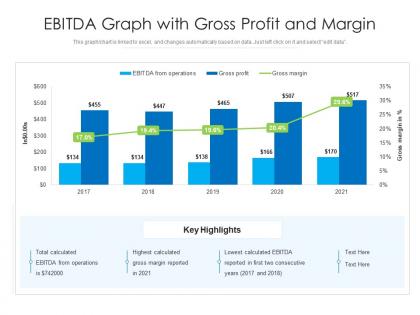
This graph or chart is linked to excel, and changes automatically based on data. Just left click on it and select edit data.
People who downloaded this PowerPoint presentation also viewed the following :
Ebitda graph with gross profit and margin with all 2 slides:
Use our EBITDA Graph With Gross Profit And Margin to effectively help you save your valuable time. They are readymade to fit into any presentation structure.
FAQs for Ebitda graph with gross
EBITDA? It's Earnings Before Interest, Taxes, Depreciation, and Amortization. Basically shows how your actual business operations are doing without all the accounting stuff muddying the waters. Start with net income, then add back interest, taxes, depreciation and amortization. Or honestly, some people just grab operating income and add back depreciation/amortization - whatever's easier with your statements. The whole point is seeing how much cash your core business actually spits out. Perfect for comparing companies or tracking your own performance over time since you're ignoring financing decisions and non-cash expenses. Way cleaner picture of operational health.
So EBITDA basically takes your net income and adds back interest, taxes, depreciation, and amortization - all the stuff that's either non-cash or related to how you finance things. Net income? That's your actual bottom line after everything gets taken out. EBITDA's better for comparing how companies actually run their operations since you're not getting thrown off by different debt levels or accounting tricks. Like, Company A might look worse just because they have more loans, you know? Net income tells you what shareholders really made (or didn't make). I personally think EBITDA's way more useful when you're trying to figure out if a business is actually good at what it does.
EBITDA cuts through all the accounting BS to show you what a business actually makes from operations. Really useful when you're comparing companies because you don't get tripped up by different depreciation methods or tax situations. It's like seeing the raw cash flow before management does their financial wizardry. Honestly, I use it all the time for quick comps - way cleaner than net income. Sure, it ignores capex which can bite you, but paired with other metrics it gives you a solid read on how the core business performs. Just don't rely on it alone or you'll miss important stuff.
Honestly, EBITDA's main problem is it totally ignores cash flow - like, you're pretending depreciation and taxes aren't real expenses when they obviously are. Makes sketchy companies look way healthier than they actually are. Companies push it hard because the numbers look prettier than net income (surprise surprise). It also skips over capital expenditures, which is kinda huge since companies need those to keep running. Working capital changes? Nope, not included. My take: always check free cash flow alongside it. Don't let the fancy acronym fool you.
So EBITDA basically strips away all the accounting BS - taxes, interest, depreciation stuff that makes comparing companies super messy. You get to see who's actually good at their core business without all that noise getting in the way. Like, Company A might have way more debt than Company B, but EBITDA shows you which one runs operations better. The margins tell you everything about efficiency across competitors. Obviously it's not bulletproof since it ignores how much they're spending on equipment and whatnot, but honestly? For a quick industry comparison, nothing beats it. Just grab 3-4 competitors and compare their EBITDA margins.
So basically you want to strip out all the weird one-time stuff that makes the numbers look wonky. Restructuring costs, legal settlements, asset write-downs - toss 'em. Stock compensation and acquisition costs too since they don't show real cash flow. The tricky part is some companies go nuts with this and start removing everything under the sun, which honestly just makes their "adjusted" numbers look fake. Stick to stuff that's actually non-recurring and big enough to matter. You're trying to see what the business normally makes, not create some fantasy version that'll fool nobody.
Yeah so EBITDA is like a rough estimate of your operating cash flow, but don't treat them as the same thing. It strips out depreciation and other non-cash stuff, which is helpful. But here's what trips people up - working capital changes aren't in there at all. So if your customers start paying slower or you're building up inventory, that's actual cash walking out the door that EBITDA totally misses. I usually start with EBITDA then add back all the working capital moves and capex to see what's really happening with cash. Way more accurate picture that way.
Yeah so EBITDA totally glosses over the stuff that actually hits your wallet - like interest payments and taxes. Companies with huge debt or constant equipment upgrades (think factories, utilities) look way better than they really are. It's kinda annoying how it ignores working capital changes too. Different tax setups between companies make comparisons wonky. You'll want to check free cash flow at the same time - that shows you what's left for shareholders after all the real expenses. Honestly saved me from some sketchy investments before.
EBITDA's the gold standard in M&A because it cuts through all the accounting BS. Different companies have wildly different debt loads, depreciation methods, tax rates - EBITDA ignores all that so you can actually compare apples to apples. When buyers say "we paid 8x EBITDA," that's what they mean. Shows the real cash-generating power before balance sheet complications mess things up. Honestly, I've never seen a deal presentation that didn't lead with EBITDA multiples. It's just how everyone talks in this space - your universal translator for company values.
So you'll want to look at a couple key ratios here. Debt-to-EBITDA shows how many years it'd take to pay off debt with current earnings - anything over 4x is getting sketchy for most companies. Then check EBITDA-to-Interest Coverage to see if they're actually generating enough cash to handle interest payments without sweating. I always compare these to what's normal in their industry, plus how they've been trending historically. Sometimes a company looks fine until you realize their debt load has been creeping up for three straight years.
That's the whole point of EBITDA - depreciation and amortization get completely stripped out. You're not actually cutting checks for depreciation each month, it's just bookkeeping stuff. So EBITDA shows what cash your business is really making from operations. Super useful when you're comparing companies that have totally different asset situations. I mean, why should a capital-heavy manufacturer look worse than a software company just because of accounting? But yeah, don't get so caught up in EBITDA that you forget you'll eventually need to replace equipment and stuff.
So PE guys are obsessed with EBITDA because it shows pure operational cash flow without all the messy accounting stuff. They don't care about interest since they'll redo the debt structure anyway. Tax rates are different everywhere, and depreciation? That's pretty much made up half the time. EBITDA basically answers "how much cash does this thing actually spit out?" Makes it super easy to compare a tech company to a manufacturing business or whatever. Though honestly, you still gotta look past the headline numbers - I've seen some creative EBITDA math that'll make your head spin.
So EBITDA margin basically tells you what percentage of revenue becomes operating cash flow before debt payments and accounting stuff mess with the numbers. Think of it as the company's raw earning power - how much profit they squeeze out of each dollar before financial wizardry kicks in. Higher margins mean they're keeping more money from sales, which is obviously better. You can actually compare different companies fairly since it ignores their debt loads and tax situations. Honestly, it's one of the cleaner ways to see if a business is genuinely getting more efficient over time or just looks good on paper.
So trailing EBITDA is just the last 12 months of actual numbers—what really happened. Forward EBITDA? That's projections for the next year. Most people stick with trailing since it's real data, not wishful thinking. But honestly, management always seems way too bullish on their forecasts lol. Forward numbers work better for growth companies though, especially when their past performance doesn't tell the whole story. I'd probably show both if you can. Gives you the full picture without having to pick sides.
EBITDA's great for forecasting because it cuts through all the accounting BS - no depreciation or interest payments messing with your numbers. Your core business trends become way clearer to spot and project forward. When you're running different scenarios, it's much easier to tweak the actual business drivers without getting lost in capital structure stuff. Year-over-year comparisons don't get weird when your debt situation changes either. Honestly, I always start with historical EBITDA margins by business line, then just build up from there with growth rates and cost changes. Way cleaner than trying to forecast net income directly.
-
Very well designed and informative templates.
-
Content of slide is easy to understand and edit.