


Guide To Islamic Banking Powerpoint Presentation Slides Fin CD V




Try Before you Buy Download Free Sample Product
 Impress Your
 Audience
 100%
100% Editable
 Save Hours
 of Time


Islamic Banking is a financial system based on Islamic principles and values. Grab our Guide to Islamic Banking template. It offers an alternative way of banking that promotes social and ethical responsibility while avoiding interest-based transactions. Islamic Banking is based on profit and loss sharing, making it a more equitable financial system. Our Islamic Banking Deck is an essential tool for anyone interested in understanding the principles and practices of Islamic Banking. It provides a comprehensive overview of the key concepts, regulations, and instruments used in Islamic Banking. Our Sharia-compliant banking PPT covers various topics, like the prohibition of interest, risk-sharing, and the role of ethics in financial transactions. It also explains the different modes of financing in Islamic Banking, including Mudarabah, Musharakah, and Murabaha, among others. Additionally, our Ethical banking module with clear and concise explanations, is perfect for anyone seeking a better understanding of Islamic Banking. Whether you are an aspiring Banking professional, an entrepreneur, or simply curious about this growing field, the Islamic Banking Deck is an essential resource that will deepen your understanding and knowledge of Islamic Banking. Get access now.
People who downloaded this PowerPoint presentation also viewed the following :
Content of this Powerpoint Presentation
Slide 1: This slide introduces Guide to Islamic Banking. Commence by stating Your Company Name.
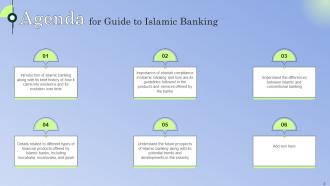
Slide 2: This slide depicts the Agenda of the presentation.
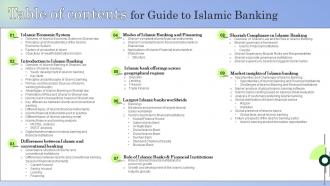
Slide 3: This slide includes the Table of contents.
Slide 4: This slide highlights the Title for the Topics to be discussed further.
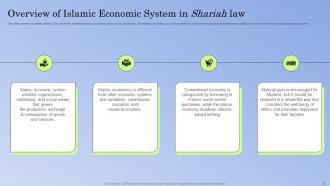
Slide 5: This slide presents the Overview of Islamic Economic System in Shariah law.
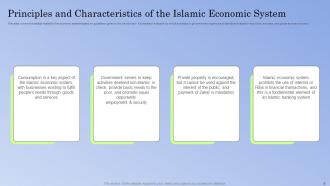
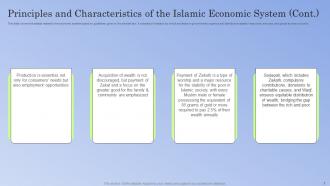
Slide 6: This slide states the Principles and Characteristics of the Islamic Economic System.
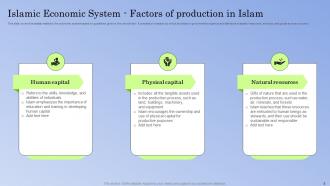
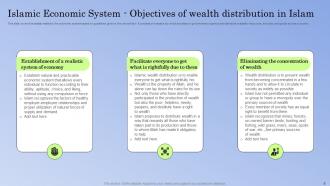
Slide 7: This slide covers the details related to the economic system based on guidelines given in the shariah law.
Slide 8: This slide shows the economic system based on guidelines given in the shariah law.
Slide 9: This slide contains the Heading for the Contents to be discussed further.
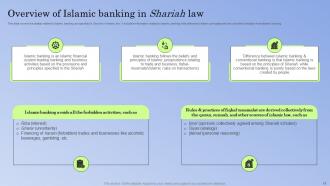
Slide 10: This slide depicts the Overview of Islamic banking in Shariah law.
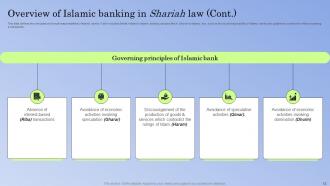
Slide 11: This slide continues the Overview of Islamic banking in Shariah law.
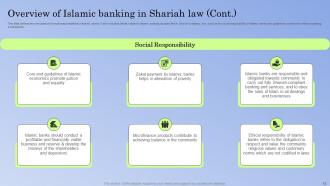
Slide 12: This slide defines the principles and social responsibilities of Islamic banks.
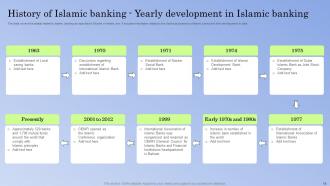
Slide 13: This slide reveals the History of Islamic banking.
Slide 14: This slide covers the details related to Islamic banking as specified in Shariah or Islamic law.
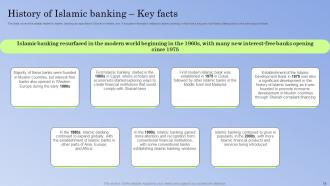
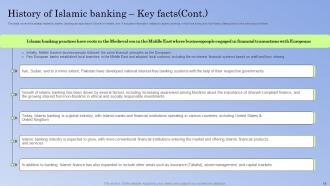
Slide 15: This slide continues the History of Islamic banking.
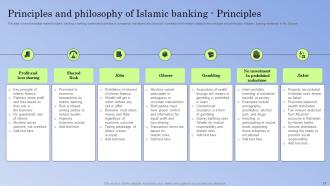
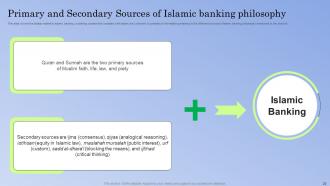
Slide 16: This slide showcases the Principles and philosophy of Islamic banking.
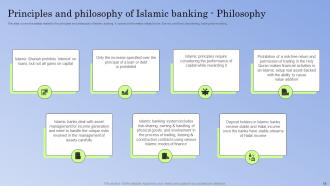
Slide 17: This slide exhibits the Principles and philosophy of Islamic banking.
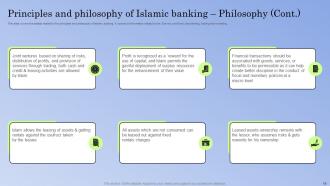
Slide 18: This slide continues the Principles and philosophy of Islamic banking.
Slide 19: This slide covers the details related to Islamic banking, a banking system that complies with Islamic law (shariah).
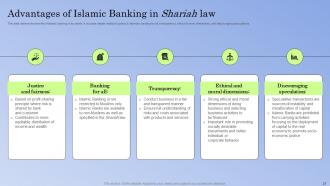
Slide 20: This slide defines the benefits of Islamic banking to its clients.
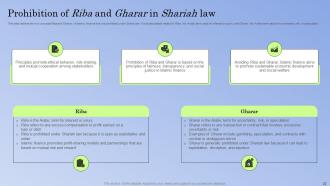
Slide 21: This slide defines the two concepts Riba and Gharar, of Islamic finance that are prohibited under Sharia law.
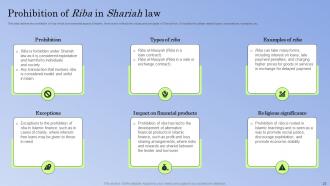
Slide 22: This slide talks about the Prohibition of Riba in Shariah law.
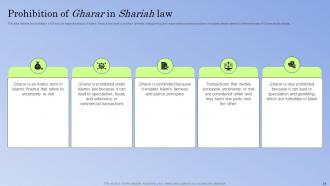
Slide 23: This slide defines the prohibition of Gharar, an essential aspect of Islamic finance that aims to promote fairness, transparency, and responsible business practices.
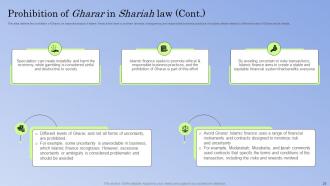
Slide 24: This slide continues the Prohibition of Gharar in Shariah law.
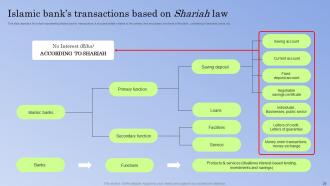
Slide 25: This slide depicts a flowchart representing Islamic banks’ transactions.
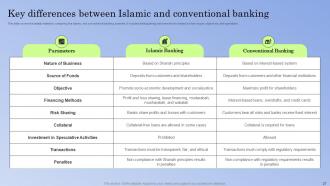
Slide 26: This slide highlights the Key differences between Islamic and conventional banking.
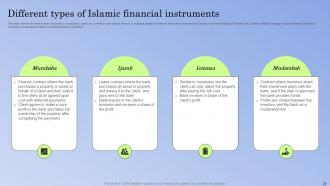
Slide 27: This slide states the Different types of Islamic financial instruments.
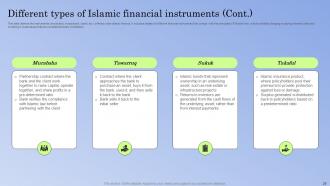
Slide 28: This slide continues the Different types of Islamic financial instruments.
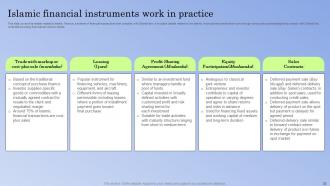
Slide 29: This slide covers the details related to Islamic finance, a system of financial transactions that complies with Shariah law.
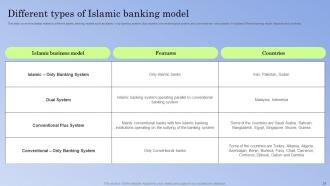
Slide 30: This slide portrays the Different types of Islamic banking model.
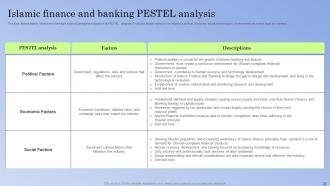
Slide 31: This slide defines Islamic finance and banking's external atmosphere based on the PESTEL analysis.
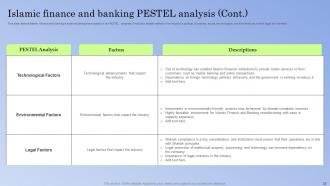
Slide 32: This slide continues the Islamic finance and banking PESTEL analysis.
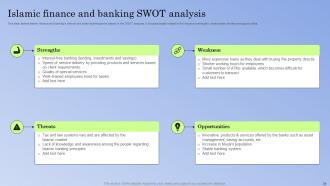
Slide 33: This slide defines Islamic finance and banking’s internal and external atmosphere based on the SWOT analysis.
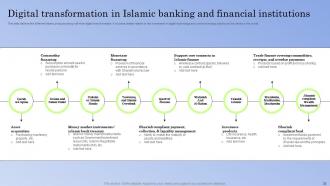
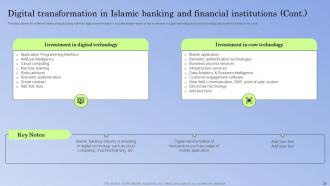
Slide 34: This slide talks about the Digital transformation in Islamic banking and financial institutions.
Slide 35: This slide continues the Digital transformation in Islamic banking and financial institutions.
Slide 36: This slide highlights the Title for the Ideas to be covered further.
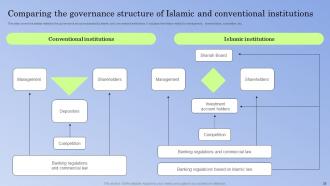
Slide 37: This slide focuses on Comparing the governance structure of Islamic and conventional institutions.
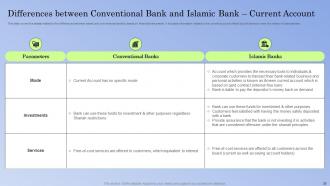
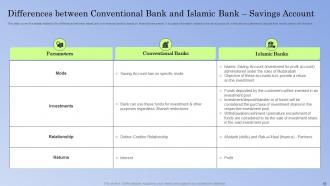
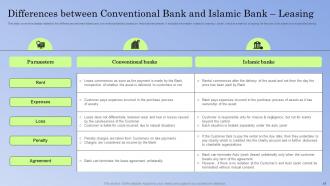
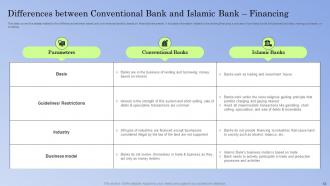
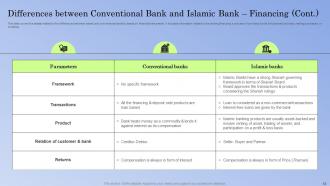
Slide 38: This slide states the Differences between Conventional Bank and Islamic Bank.
Slide 39: This slide highlights the Differences between Conventional Bank and Islamic Bank.
Slide 40: This slide covers the details related to the differences between Islamic and conventional banking based on financial instruments.
Slide 41: This slide states the Differences between Conventional Bank and Islamic Bank.
Slide 42: This slide continues the Differences between Conventional Bank and Islamic Bank.
Slide 43: This slide portrays the Heading for the Ideas to be discussed next.
Slide 44: This slide exhibits the Modes of Islamic banking and financing in Shariah law.
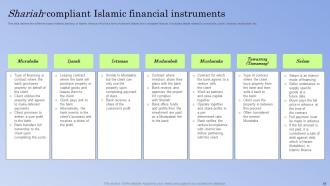
Slide 45: This slide defines the different types of Islamic banking or Islamic finance which is a form of shariah (Islamic law)-compliant finance.
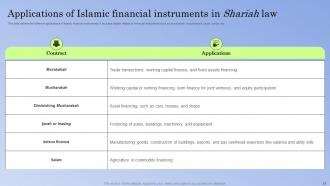
Slide 46: This slide presents the Applications of Islamic financial instruments in Shariah law.
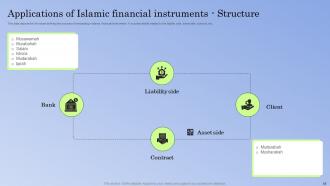
Slide 47: This slide depicts the flowchart defining the process of transacting in Islamic financial instruments.
Slide 48: This slide states the Title for the Contents to be covered in the Upcoming template.
Slide 49: This slide covers the details related to the different categories of financial contracts offered by Islamic banks.
Slide 50: This slide shows the details related to the different categories of financial contracts offered by Islamic banks.
Slide 51: This slide presents the different categories of financial contracts offered by Islamic banks.
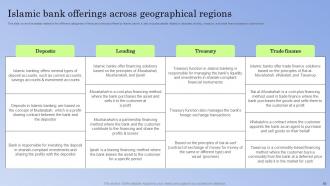
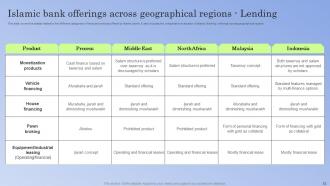
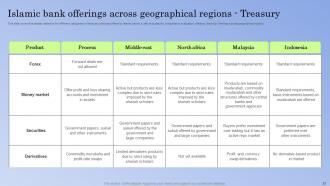
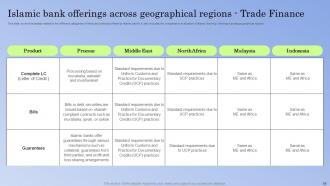
Slide 52: This slide displays the Islamic bank offerings across geographical regions.
Slide 53: This slide covers the details related to the different categories of financial contracts offered by Islamic banks.
Slide 54: This slide continues the different categories of financial contracts offered by Islamic banks.
Slide 55: This slide presents the details related to the different categories of financial contracts offered by Islamic banks.
Slide 56: This slide shows the different categories of financial contracts offered by Islamic banks.
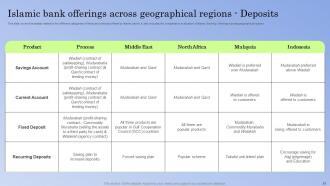
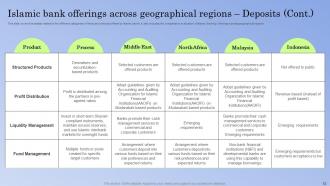
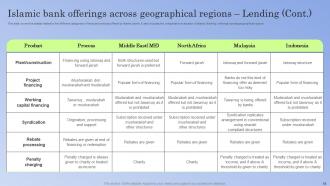
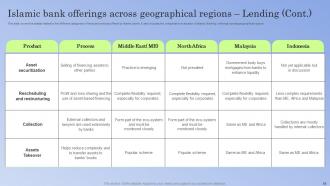
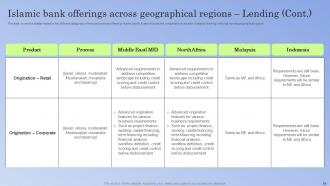
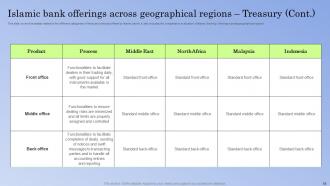
Slide 57: This slide continues the Islamic bank offerings across geographical regions.
Slide 58: This slide portrays the different categories of financial contracts offered by Islamic banks.
Slide 59: This slide exhibits the Heading for the Topics to be discussed further.
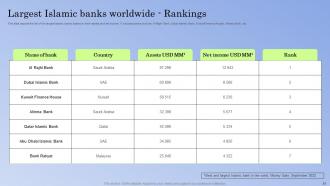
Slide 60: This slide depicts the list of the largest Islamic banks based on their assets and net income.
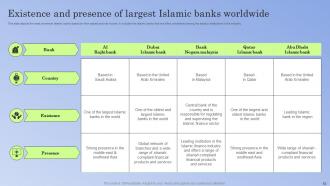
Slide 61: This slide talks about the existence and presence of largest Islamic banks worldwide.
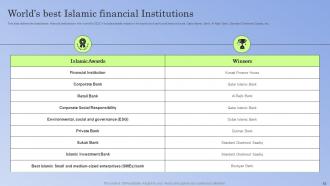
Slide 62: This slide defines the best Islamic financial institutions in the world for 2022.
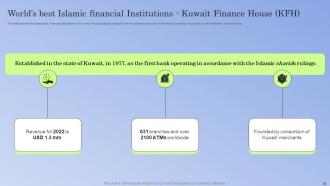
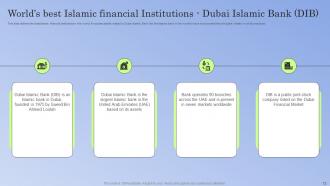
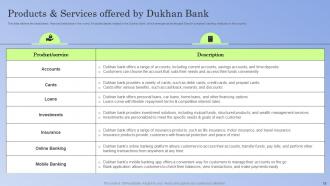
Slide 63: This slide represents the best Islamic financial institutions in the world.
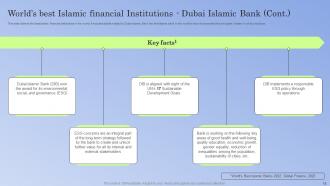
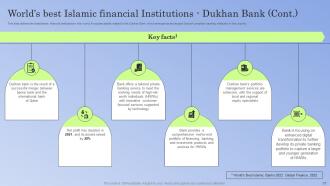
Slide 64: This slide continues the World’s best Islamic financial Institutions.
Slide 65: This slide defines the best Islamic financial institutions in the world.
Slide 66: This slide defines the best Islamic financial institutions in the world.
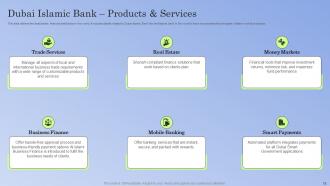
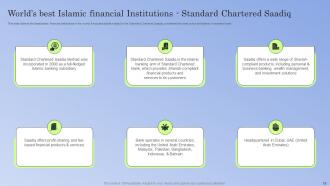
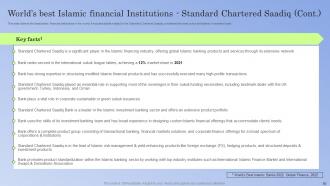
Slide 67: This slide continues the World’s best Islamic financial Institutions.
Slide 68: This slide presents the best Islamic financial institutions in the world.
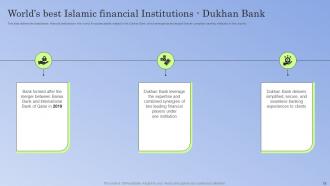
Slide 69: This slide showcases the World’s best Islamic financial Institutions.
Slide 70: This slide continues the best Islamic financial institutions in the world.
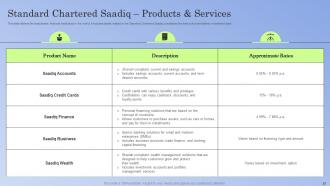
Slide 71: This slide defines the best Islamic financial institutions in the world.
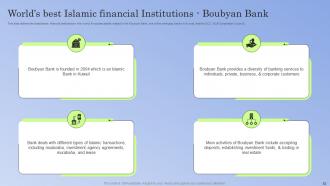
Slide 72: This slide states the best Islamic financial institutions in the world.
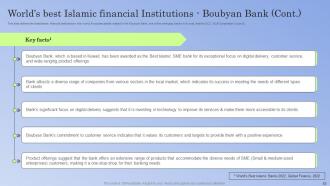
Slide 73: This slide continues the World’s best Islamic financial Institutions.
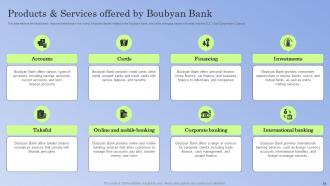
Slide 74: This slide defines the best Islamic financial institutions in the world.
Slide 75: This slide talks about the World’s best Islamic financial Institutions.
Slide 76: This slide continues the World’s best Islamic financial Institutions .
Slide 77: This slide defines the best Islamic financial institutions in the world.
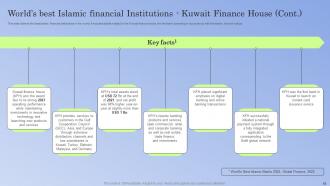
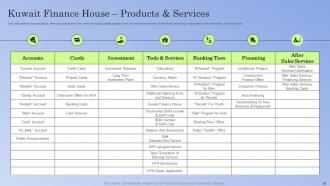
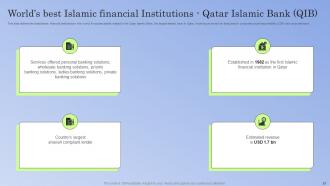
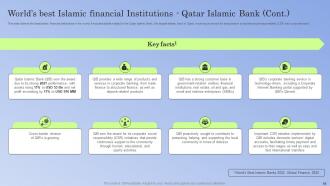
Slide 78: This slide shows the World’s best Islamic financial Institutions.
Slide 79: This slide continues the World’s best Islamic financial Institutions.
Slide 80: This slide defines the best Islamic financial institutions in the world.
Slide 81: This slide presents the best Islamic financial institutions in the world.
Slide 82: This slide continues the best Islamic financial institutions in the world.
Slide 83: This slide defines the best Islamic financial institutions in the world.
Slide 84: This slide highlights the Title for the Topics to be covered in the upcoming template.
Slide 85: This slide exhibits the Role of Islamic banking and financial institutions.
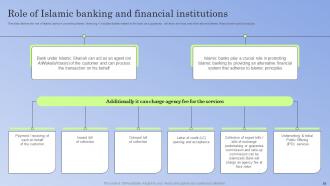
Slide 86: This slide defines the role of Islamic banks in promoting Islamic financing.
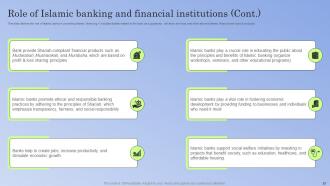
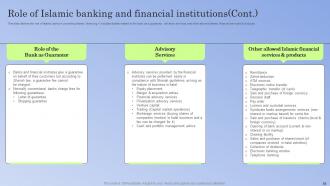
Slide 87: This slide continues the Role of Islamic banking and financial institutions.
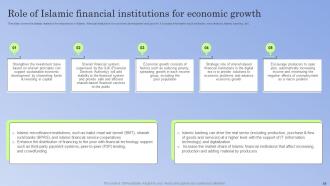
Slide 88: This slide presents the Role of Islamic financial institutions for economic growth.
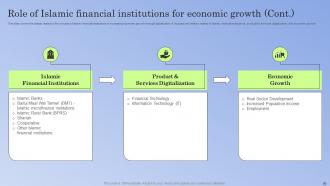
Slide 89: This slide continues the Role of Islamic financial institutions for economic growth.
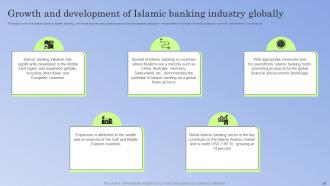
Slide 90: This slide covers the details related to Islamic banking.
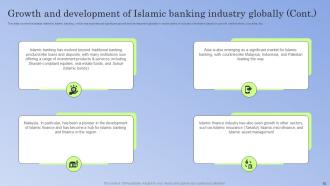
Slide 91: This slide continues the Growth and development of Islamic banking industry globally.
Slide 92: This slide includes the Heading for the Contents to be discussed further.
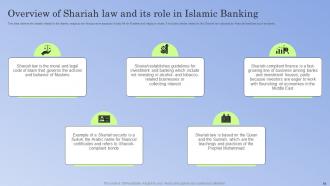
Slide 93: This slide displays the Overview of Shariah law and its role in Islamic Banking.
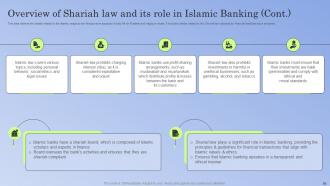
Slide 94: This slide continues the Overview of Shariah law and its role in Islamic Banking.
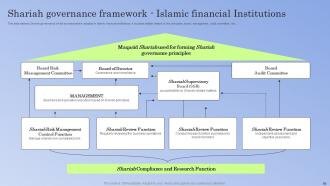
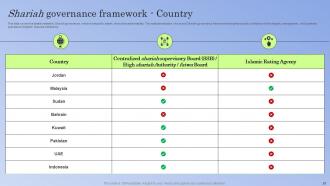
Slide 95: This slide defines Shariah governance which is a mechanism adopted in Islamic financial institutions.
Slide 96: This slide covers the details related to Shariah governance, which is integral to Islamic financial system stability.
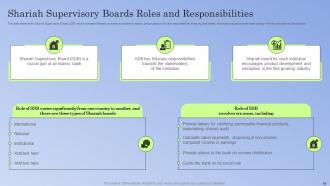
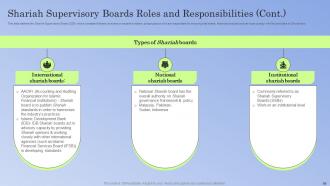
Slide 97: This slide presents Shariah Supervisory Boards Roles and Responsibilities.
Slide 98: This slide continues Shariah Supervisory Boards Roles and Responsibilities.
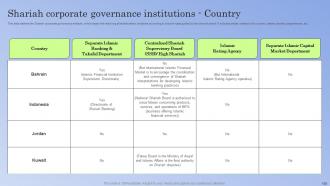
Slide 99: This slide defines the Shariah corporate governance institute.
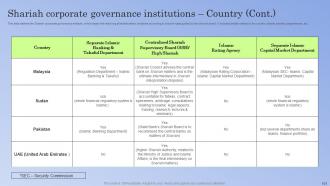
Slide 100: This slide continues Shariah corporate governance institutions.
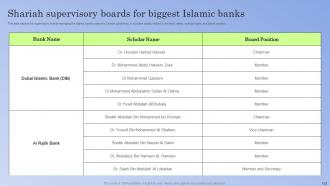
Slide 101: This slide depicts the supervisory boards managing the Islamic banks under the Shariah guidelines.
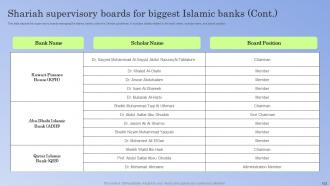
Slide 102: This slide shows the supervisory boards managing the Islamic banks under the Shariah guidelines.
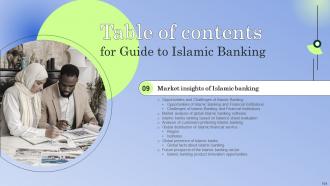
Slide 103: This slide includes the Heading for the Contents to be covered in the next template.
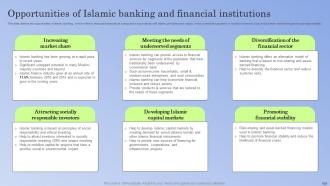
Slide 104: This slide defines the opportunities of Islamic banking.
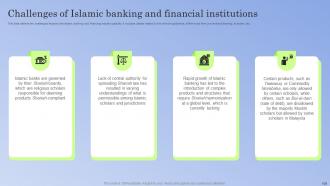
Slide 105: This slide exhibits the Challenges of Islamic banking and financial institutions.
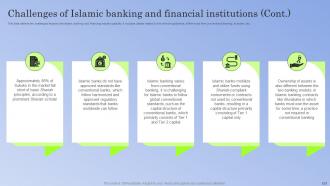
Slide 106: This slide continues the Challenges of Islamic banking and financial institutions.
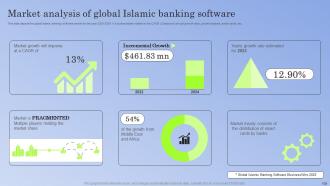
Slide 107: This slide depicts the global Islamic banking software market for the year 2020-2024.
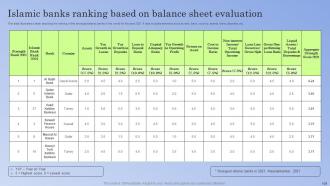
Slide 108: This slide illustrates a table depicting the ranking of the strongest Islamic banks in the world for the year 2021.
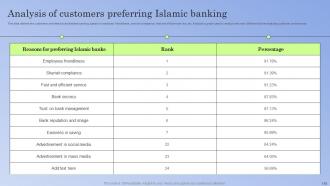
Slide 109: This slide defines the customers’ priorities towards Islamic banking.
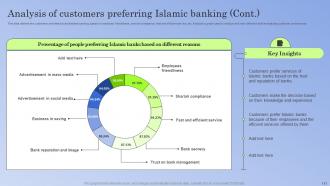
Slide 110: This slide continues the Analysis of customers preferring Islamic banking.
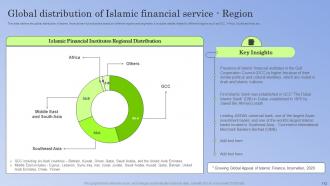
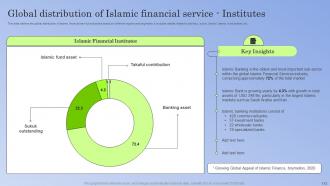
Slide 111: This slide highlights the Global distribution of Islamic financial service.
Slide 112: This slide defines the global distribution of Islamic financial service industries based on different regions and segments.
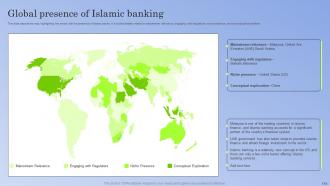
Slide 113: This slide depicts the map highlighting the areas with the presence of Islamic banks.
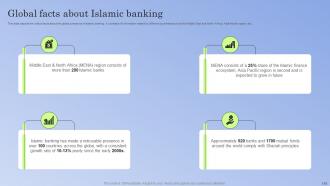
Slide 114: This slide mentions the Global facts about Islamic banking.
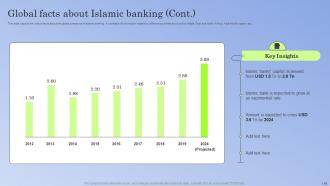
Slide 115: This slide continues the Global facts about islamic banking.
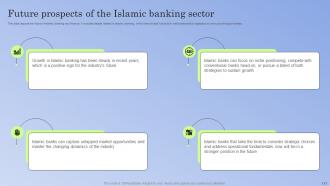
Slide 116: This slide displays the future of Islamic banking and finance.
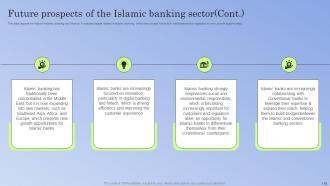
Slide 117: This slide continues the Future prospects of the islamic banking sector.
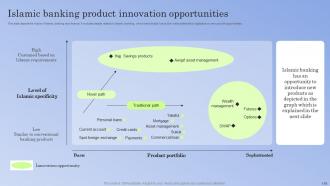
Slide 118: This slide shows the future of Islamic banking and finance.
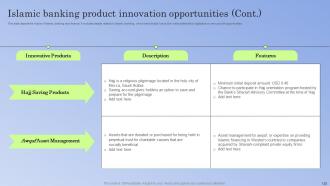
Slide 119: This slide continues the Islamic banking product innovation opportunities.
Slide 120: This is the Thank You slide for acknowledgement.
Guide To Islamic Banking Powerpoint Presentation Slides Fin CD V with all 130 slides:
Use our Guide To Islamic Banking Powerpoint Presentation Slides Fin CD V to effectively help you save your valuable time. They are readymade to fit into any presentation structure.










FAQs for Guide To Islamic Banking Powerpoint Presentation Slides
Islamic banking operates on Sharia-compliant principles including prohibition of riba (interest), gharar (excessive uncertainty), haram investments, and requirements for asset-backed transactions and risk-sharing partnerships. These principles fundamentally restructure financial services through profit-sharing models, tangible asset financing, and ethical investment screening, with many institutions finding that this approach delivers sustainable growth while serving increasingly diverse customer bases seeking values-aligned banking solutions.
Islamic banking ensures Sharia compliance through dedicated Sharia supervisory boards, profit-and-loss sharing structures, asset-backed financing, and strict prohibition of interest-based transactions. These institutions implement rigorous oversight mechanisms, halal investment screening, and risk-sharing partnerships, with many banks finding that transparent Islamic financial products ultimately deliver ethical investment opportunities and strengthen customer trust in increasingly diverse markets.
Profit-sharing mechanisms form the foundation of Islamic finance, including mudarabah partnerships, musharakah joint ventures, and sukuk investments that distribute returns based on actual business performance rather than predetermined interest rates. These structures enable banks, investment firms, and corporate entities to align investor returns with real economic outcomes, ultimately delivering greater transparency, risk-sharing equity, and Sharia-compliant wealth creation.
Islamic banks manage risk through Sharia-compliant methods like asset-backed financing, profit-and-loss sharing arrangements, and diversified investment portfolios rather than interest-based lending. These approaches emphasize tangible asset backing and ethical screening, with many financial institutions finding that Islamic risk management delivers enhanced stability, reduced speculative exposure, and stronger community-focused outcomes.
Islamic banks commonly offer Murabaha (cost-plus financing), Ijara (leasing), Musharaka (partnership financing), Mudaraba (profit-sharing), and Sukuk (Islamic bonds). These Sharia-compliant products enhance financial inclusion by providing ethical alternatives to conventional banking, with many institutions finding that they attract both Muslim and non-Muslim customers seeking transparent, asset-backed financing solutions.
Islamic banks address riba by replacing interest-based transactions with Sharia-compliant alternatives like profit-sharing (mudarabah), cost-plus financing (murabaha), and asset-backed leasing (ijara). These structures enable banks to generate revenue through trade, partnerships, and tangible asset transactions, ultimately delivering ethical financial services while maintaining competitive returns for both institutions and customers.
Islamic banks face regulatory complexity, limited liquidity management options, standardization issues across jurisdictions, higher operational costs, and competitive pressures from conventional banks. These institutions navigate challenges by developing Sharia-compliant alternatives, building specialized expertise, and leveraging growing demand for ethical finance, with many finding strategic opportunities in underserved markets seeking values-based banking solutions.
Islamic banking contributes to economic development by promoting financial inclusion, supporting Sharia-compliant investments, and encouraging ethical business practices through profit-sharing models like Mudarabah and Musharakah. These approaches enable broader access to capital, foster entrepreneurship in sectors like infrastructure and manufacturing, while delivering sustainable growth that aligns with Islamic values, ultimately strengthening local economies.
Islamic banking differs from other ethical banking models through its foundation in Sharia law, which prohibits interest (riba), excessive uncertainty (gharar), and investments in forbidden sectors like alcohol or gambling. While both Islamic and ethical banking prioritize social responsibility, Islamic banking requires profit-sharing arrangements, asset-backed transactions, and religious compliance certification, with many financial institutions finding that these Sharia-compliant structures deliver stable returns while serving diverse global markets.
Gharar significantly influences Islamic financial contracts by prohibiting excessive uncertainty, ambiguous terms, and speculative elements that could lead to disputes or unfair outcomes. Islamic banks structure products through transparent pricing, clearly defined obligations, and risk-sharing mechanisms, with many financial institutions finding that these gharar-compliant approaches ultimately enhance customer trust and regulatory compliance.
Regulatory frameworks governing Islamic banking include Shariah compliance boards, central bank guidelines, international standards from AAOIFI and IFSB, capital adequacy requirements, and consumer protection measures. These frameworks vary significantly across regions, with Malaysia and UAE establishing comprehensive regulations, while Western markets like the UK and US integrate Islamic banking within existing financial regulations, ultimately delivering standardized practices and enhanced credibility for institutions operating globally.
Technology has revolutionized Islamic banking by enabling digital Sharia-compliant products, automated compliance monitoring, and seamless mobile banking platforms that maintain religious authenticity. Through AI-powered risk assessment and blockchain-based trade finance, Islamic banks streamline Murabaha transactions, enhance Sukuk issuances, and deliver faster customer services while ensuring strict adherence to Islamic principles, ultimately providing competitive advantages in Muslim-majority markets.
Islamic banking creates ethical investment opportunities by prohibiting interest (riba), speculation (gharar), and investments in harmful industries like alcohol or gambling, while promoting risk-sharing and asset-backed transactions. These principles enable investors and consumers to align financial decisions with moral values, with many finding that Sharia-compliant banking delivers transparency, social responsibility, and sustainable economic growth.
Islamic banks promote financial inclusion by offering Sharia-compliant microfinance, mobile banking solutions, and asset-backed financing that aligns with religious principles while serving unbanked populations. Through partnerships with community organizations and technology platforms, these institutions deliver accessible financial services to rural communities, small businesses, and low-income households, ultimately expanding economic participation while maintaining ethical banking standards.
Islamic banking presents significant expansion potential in Western markets through growing Muslim populations, increasing ethical finance demand, and regulatory acceptance across major financial centers. While initial market penetration requires navigating complex regulatory frameworks and cultural adaptation, many Western institutions increasingly recognize Islamic finance's stability principles and diversification benefits, ultimately delivering new revenue streams and competitive positioning in an increasingly globalized financial landscape.
-
Placing an order on SlideTeam is very simple and convenient, saves you a lot of your time.
-
I have just started downloading templates for my presentations and I must say this is a great design. It helped accelerate my presentation design process and made it more visually appealing.