Hackathon the solution we provide ppt infographic template slides
Try Before you Buy Download Free Sample Product
Audience
Editable
of Time
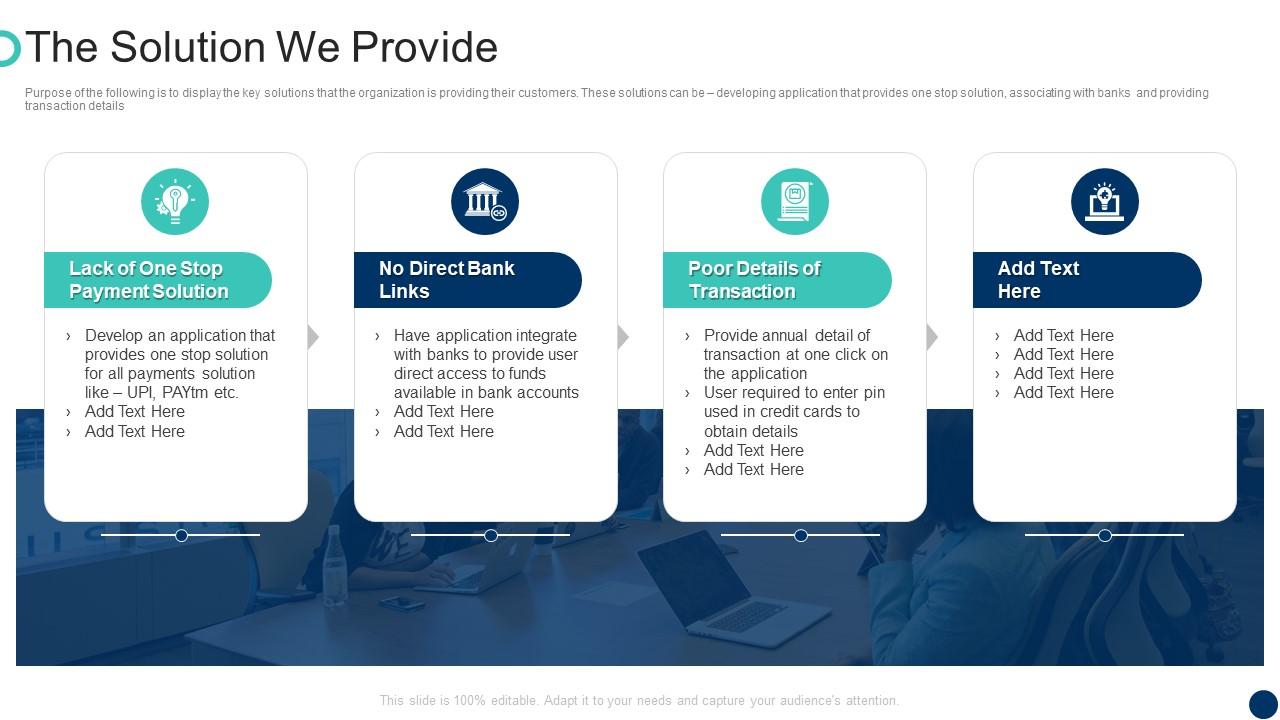
Purpose of the following is to display the key solutions that the organization is providing their customers. These solutions can be developing application that provides one stop solution, associating with banks and providing transaction details.
People who downloaded this PowerPoint presentation also viewed the following :
Hackathon the solution we provide ppt infographic template slides with all 6 slides:
Use our Hackathon The Solution We Provide Ppt Infographic Template Slides to effectively help you save your valuable time. They are readymade to fit into any presentation structure.
FAQs for Hackathon the solution we provide ppt
Honestly, some crazy cool stuff has come out of recent hackathons. There's these AI code review tools that catch security flaws instantly - big tech companies are actually using them now. Healthcare projects blew my mind though - teams built diagnostic tools with just smartphone cameras that work as well as those crazy expensive hospital machines. Oh, and blockchain supply chain tracking is finally moving beyond just prototypes. What's wild is most winners aren't reinventing the wheel, they're just mixing existing tech in ways nobody thought of before. You should totally look up MIT's recent hackathon winners - they break down each project and it's honestly great inspiration fuel.
Honestly, hackathons are pretty effective because teams partner straight with nonprofits and local groups - so they're solving actual problems, not made-up ones. The whole thing moves crazy fast. You can literally go from identifying an issue to having a working prototype in two days. Most focus on super practical stuff like food access or making government services less of a nightmare to navigate. Teams are usually pretty diverse too, which helps. Oh and definitely look for ones that already have community connections set up - those tend to be way more productive than the random "build whatever" events.
Start with the problem you're solving - investors want to know what pain point you're hitting. Demo your solution next, even if it's janky (that's totally normal at hackathons). Got any user feedback or early traction? Throw that in there. Business model is where everyone stumbles, but honestly just keep it simple and don't overthink it. Talk up your team's strengths and why you're the ones who can actually pull this off. Oh, and end with what you're actually asking for - funding, mentorship, whatever. Don't leave them guessing what you need.
Dude, collaboration makes or breaks hackathons. You've got like 48 hours to go from zero to pitch-ready, so you need people who can code, design, present - the whole thing. When everyone's strengths actually complement each other? That's when you can build something legitimately cool instead of just throwing together basic stuff. The best ideas come from bouncing thoughts around anyway. Oh and definitely spend your first hour figuring out who's doing what. I've seen teams waste half their time because nobody knew their role. Trust me, it's worth the upfront planning.
Honestly, most hackathon projects crash and burn because people get caught up in that weekend hype. First thing - test your idea with real users outside the event. Figure out who'd actually pay for this thing and what your core value is. I know market research sounds boring af, but it's what separates real startups from dead prototypes. Build something super focused that solves one problem well, then mess around with pricing early. Those mentors you met? Keep talking to them. Your hack is just the starting point, not some finished product. Oh, and definitely look into accelerators if you're serious about this.
Set up roles early but make sure people actually work together on stuff. Your dev and designer need to chat about what's realistic. Business person should be out talking to users, not just theorizing. Honestly, I've watched teams implode when the marketing person just sits there twiddling thumbs waiting for something to exist. Mix people up instead - have your UX person hang out during coding sessions, or get your data scientist to walk everyone through what they found. Everyone should help with the final pitch too. Different viewpoints make it way less boring.
Dude, hackathons are wild - you get thrown into this creative chaos with crazy tight deadlines. When you only have like 24-48 hours, you can't overthink stuff so your brain just jumps to weird solutions that actually work. Working with random people who have totally different skills is honestly the best part. Some of my coolest ideas happened during those delirious 2am conversations (probably fueled by way too much Red Bull). The time pressure kills your perfectionism which is amazing - you just build something, test it, watch it fail, then try again. Seriously, find a local one and sign up. You'll shock yourself with what you can create.
Honestly, I'd track a few different things. Code quality matters - does your stuff actually work and solve the problem? User feedback is probably the biggest indicator though. If people aren't using it after demo day, what's the point? Business stuff like cost savings or revenue potential helps too, especially if you want to keep building it later. Team learning is worth measuring since that's half the reason to do hackathons anyway. Pick maybe 2-3 metrics before you start so you're not frantically trying to justify everything afterward.
Don't just throw up a post and hope diverse people show up - that never works. Hit up coding bootcamps, student orgs, and professional groups where underrepresented folks actually hang out. Your judges and mentors should look diverse too, obviously. Food's weirdly crucial (learned this the hard way). Cover different dietary needs and cultural stuff. Virtual options help tons of people participate. Childcare if you can swing it. Actually enforce your anti-harassment policies - don't just have them for show. Plan this whole thing early though, not when you're already opening registration.
Discord's your best bet for team chat - those voice channels actually make it feel like you're working in the same room. GitHub for code stuff obviously, and Figma if anyone's doing design work. You'll probably want Zoom breakout rooms too for the initial team mixing and mentor check-ins. Miro's solid for brainstorming sessions when teams need to map things out visually. Honestly though, don't go crazy with tools - I've seen hackathons where people spent half their time just figuring out the platforms. Stick to maybe 3-4 max and test everything beforehand so you're not scrambling on day one.
Dude, definitely grab mentors early at hackathons. They'll save you from building something completely pointless (learned this the hard way lol). Most teams waste hours going down rabbit holes that mentors can spot in like 2 minutes. Plus they're clutch for the practical stuff - how to pitch without sounding awkward, whether your idea actually makes sense business-wise, technical decisions you probably haven't thought about. The biggest thing though? You'll catch major problems before demo time instead of bombing in front of judges. Just come with real questions, not vague "what do you think" stuff.
Honestly? Most teams bite off way more than they can chew. They'll plan this massive app then panic when they can't even get basic functionality working by Sunday. API integrations always break at the worst moment, or someone's using React while everyone else picked Vue - total nightmare. Sleep deprivation makes everything worse too. Winners usually laser-focus on ONE thing and actually finish it instead of having ten half-broken features. Oh, and communication falls apart fast when you're all running on fumes. Seriously though, spend your first 30 minutes defining the bare minimum viable thing, then don't budge from that plan no matter what.
Honestly, you'll probably need to rebuild most of it from scratch. Hackathon code is basically held together with energy drinks and prayers. First thing - figure out what features actually matter vs the flashy demo stuff that wowed the judges. Your database, APIs, auth system? They're gonna need real foundations now since hackathons skip all that boring infrastructure work. Security audit everything because hackathon code is... well, let's just say it's not production-ready. Oh and performance testing is huge - going from 10 users to thousands will break things you didn't even know existed. Map out your current setup, find the worst bottlenecks first. Budget like 6-12 months for this rebuild.
Get your next meeting on the calendar before you walk out the door - seriously, do it right there. Within 48 hours max, figure out who's owning what pieces and be honest about your team. Some people crush hackathons but suck at the boring week-to-week grind (totally normal btw). Set up a Discord or Slack immediately. Make a simple roadmap with tiny weekly goals - doesn't matter how small. Bi-weekly check-ins are your lifeline. The whole thing dies without that "we're really doing this" momentum, so don't let it fade.
Dude, hackathons are perfect for trying crazy stuff without any real risk. You literally have like 24-48 hours max, so there's zero time to overthink or make things perfect - just build whatever and ship it. Everyone else is doing equally weird experiments, which somehow makes your wild ideas seem totally reasonable. Judges actually care more about creativity than having polished code anyway. Honestly? The projects that completely fail in spectacular ways are usually the most fun to watch. My advice - just pick whatever bizarre idea gets you excited instead of going safe.
-
Very unique and reliable designs.
-
Easily Editable.