


Saúde e segurança dos funcionários na organização Apresentação em Powerpoint Slides
Segurança no local de trabalho refere-se ao fornecimento de um ambiente de trabalho seguro, com a limitação de elementos que podem causar danos, lesões e outros resultados negativos no local de trabalho. Confira nossa apresentação em PowerPoint de Saúde e Segurança dos Funcionários na Organização projetada profissionalmente. Primeiro, este deck cobre os problemas relacionados a incidentes no local de trabalho, que incluem doenças ocupacionais, ocupação de funcionários fatais e feridos e violações de segurança por parte dos funcionários. Além disso, abrange as causas dos acidentes e o impacto dos acidentes nos funcionários e nas organizações. Também destaca por que há necessidade de segurança no local de trabalho com objetivos detalhados. Além disso, este deck aborda como examinar riscos e perigos, também enfatiza a identificação de perigos e suas medidas de controle, que incluem perigos de compressores de ar e diretrizes de segurança, riscos de incêndio e diretrizes de segurança, Lesões causadas por ferramentas elétricas com diretrizes de segurança, riscos químicos com segurança diretrizes e abuso de drogas e álcool com diretrizes de segurança. Por fim, inclui as práticas recomendadas para a gestão da segurança, penalidades por descumprimento e o impacto positivo da segurança do trabalho em uma organização. Baixe este baralho agora.

















-

- Google Slides is a new FREE Presentation software from Google.
- All our content is 100% compatible with Google Slides.
- Just download our designs, and upload them to Google Slides and they will work automatically.
- Amaze your audience with SlideTeam and Google Slides.
-

Want Changes to This PPT Slide? Check out our Presentation Design Services
-

- WideScreen Aspect ratio is becoming a very popular format. When you download this product, the downloaded ZIP will contain this product in both standard and widescreen format.
-

- Some older products that we have may only be in standard format, but they can easily be converted to widescreen.
- To do this, please open the SlideTeam product in Powerpoint, and go to
- Design ( On the top bar) -> Page Setup -> and select "On-screen Show (16:9)” in the drop down for "Slides Sized for".
- The slide or theme will change to widescreen, and all graphics will adjust automatically. You can similarly convert our content to any other desired screen aspect ratio.
Compatible With Google Slides

Get This In WideScreen
You must be logged in to download this presentation.


Do you want to remove this product from your favourites?
Recursos desses slides de apresentação em PowerPoint:
Entregue esta apresentação completa para os membros de sua equipe e outros colaboradores. Abrangedo com slides estilizados apresentando vários conceitos, esta saúde e segurança dos funcionários na apresentação de slides do Powerpoint da organização é a melhor ferramenta que você pode utilizar. Personalize seu conteúdo e gráficos para torná-lo único e instigante. Todos os slides do Fifty Six são editáveis e modificáveis, portanto, sinta-se à vontade para ajustá-los ao seu ambiente de negócios. A fonte, a cor e outros componentes também vêm em um formato editável, tornando este design PPT a melhor escolha para sua próxima apresentação. Então, baixe agora.

People who downloaded this PowerPoint presentation also viewed the following :
Conteúdo desta apresentação em Powerpoint
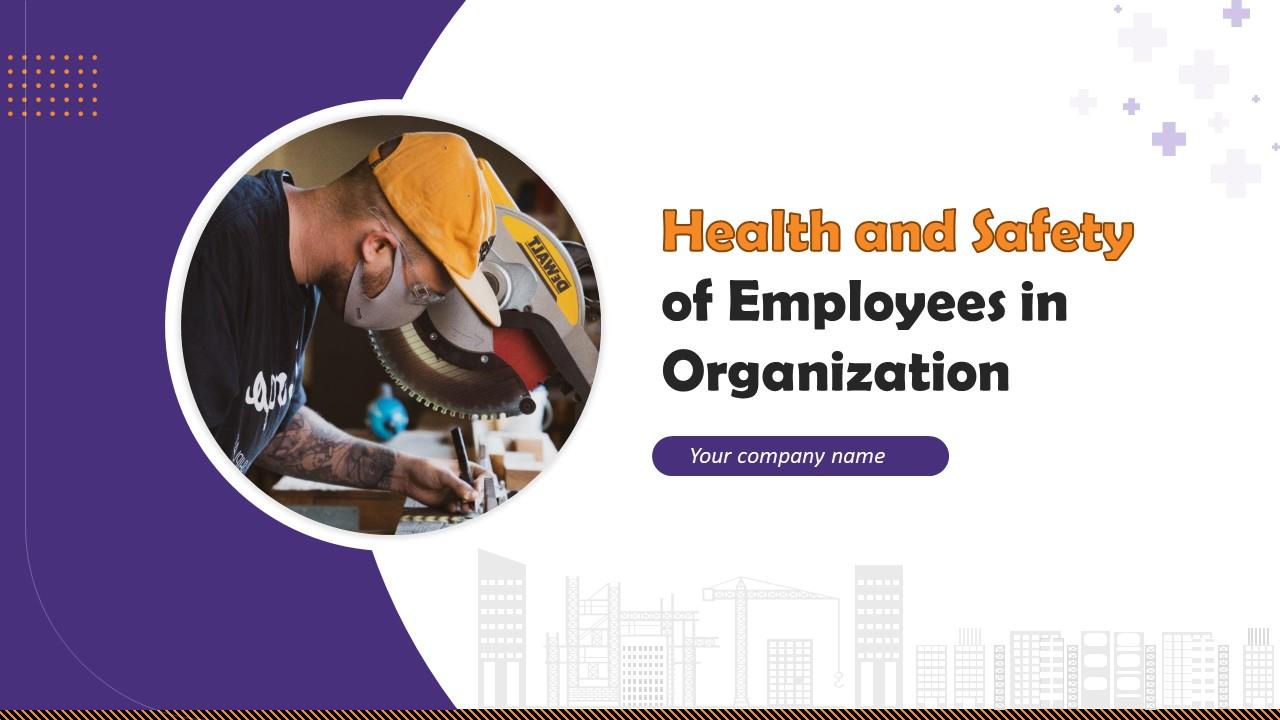
Slide 1 : Este slide exibe o título Saúde e Segurança dos Funcionários na Organização.
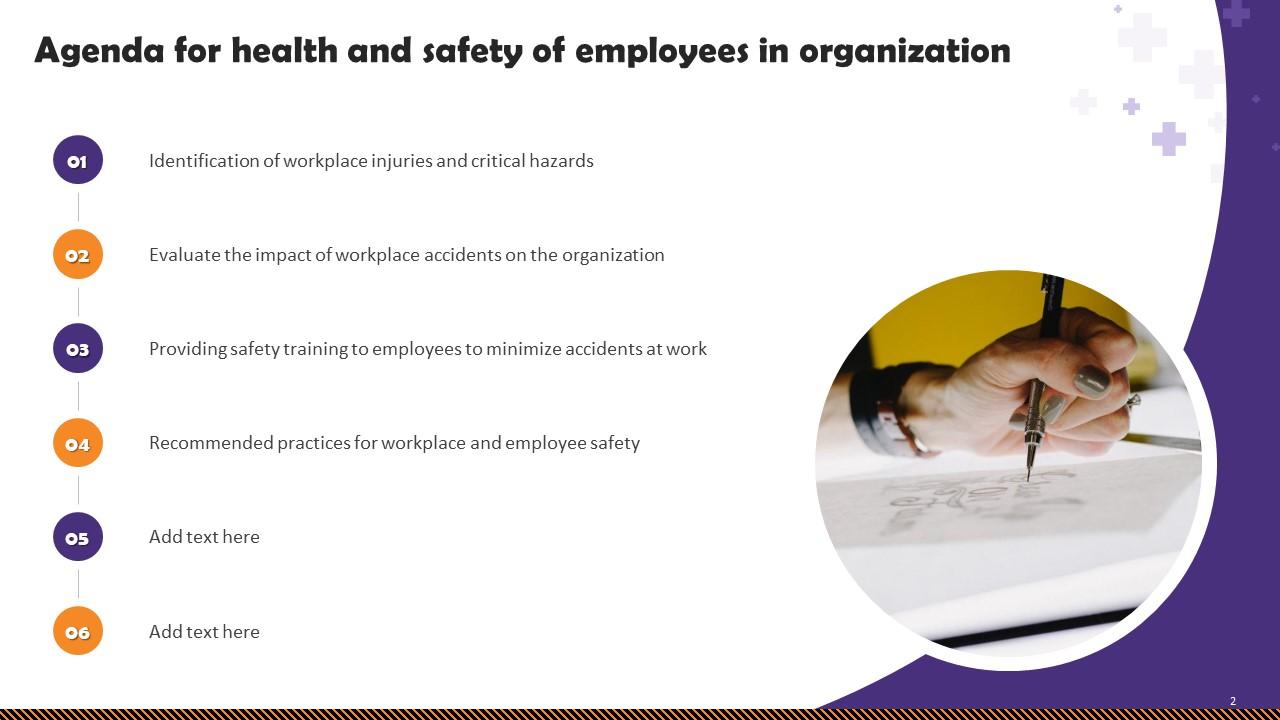
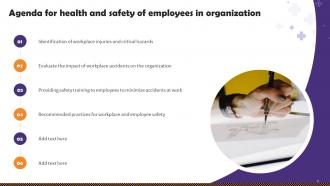
Slide 2 : Este slide exibe o título Agenda para saúde e segurança dos funcionários na organização.
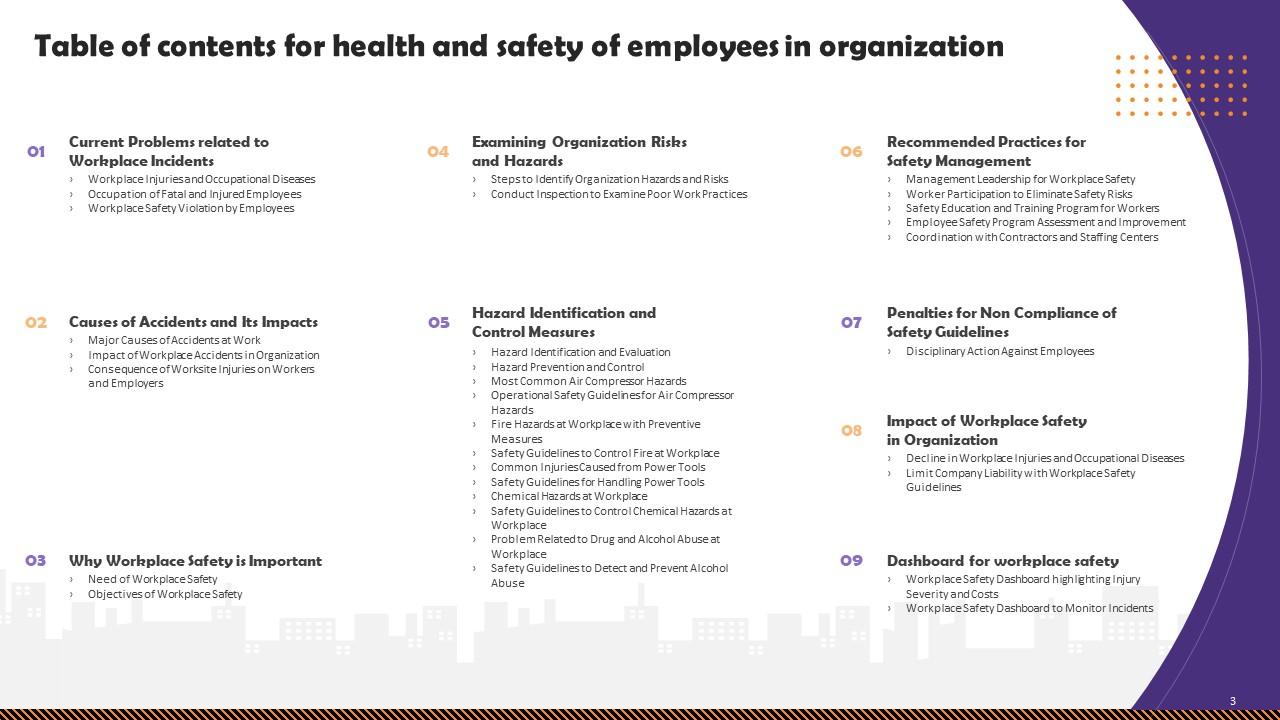
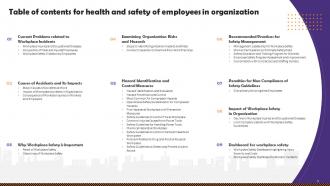
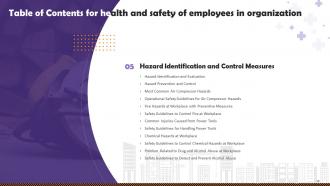
Slide 3 : Este slide exibe o sumário.
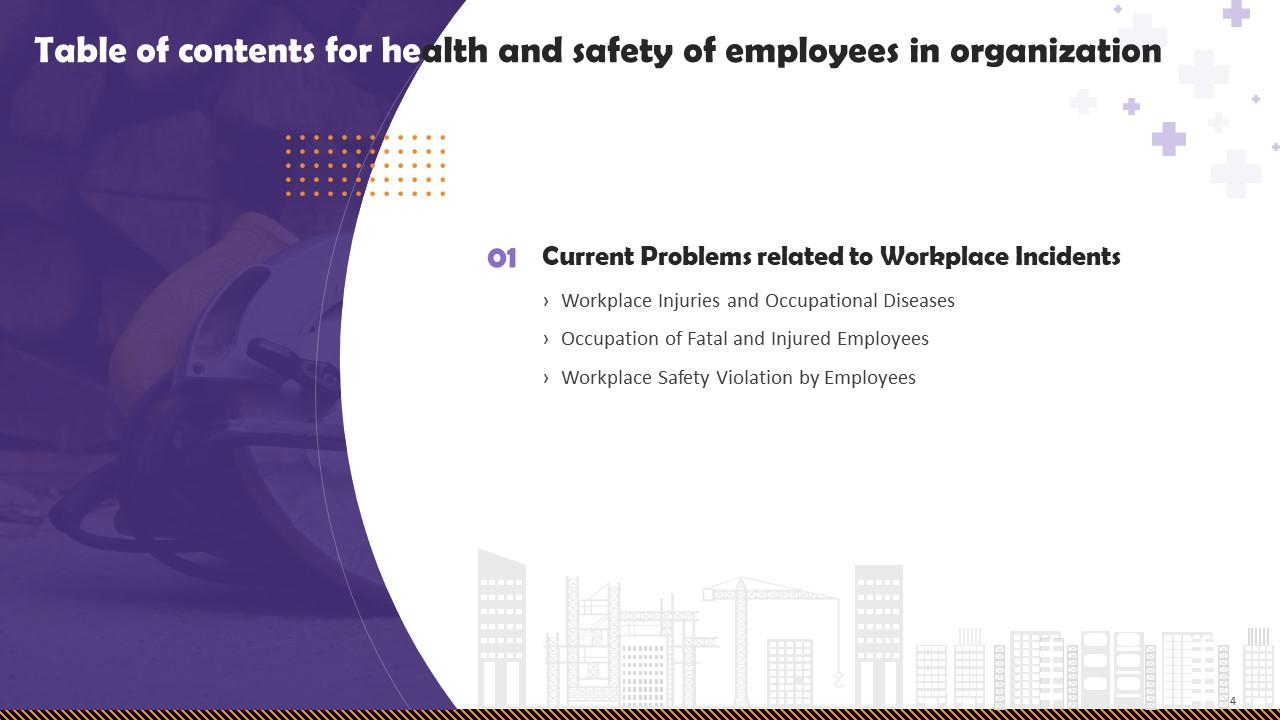
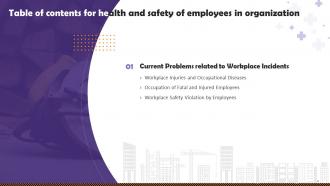
Slide 4 : Este slide exibe a tabela de conteúdo - Problemas atuais relacionados a incidentes no local de trabalho.
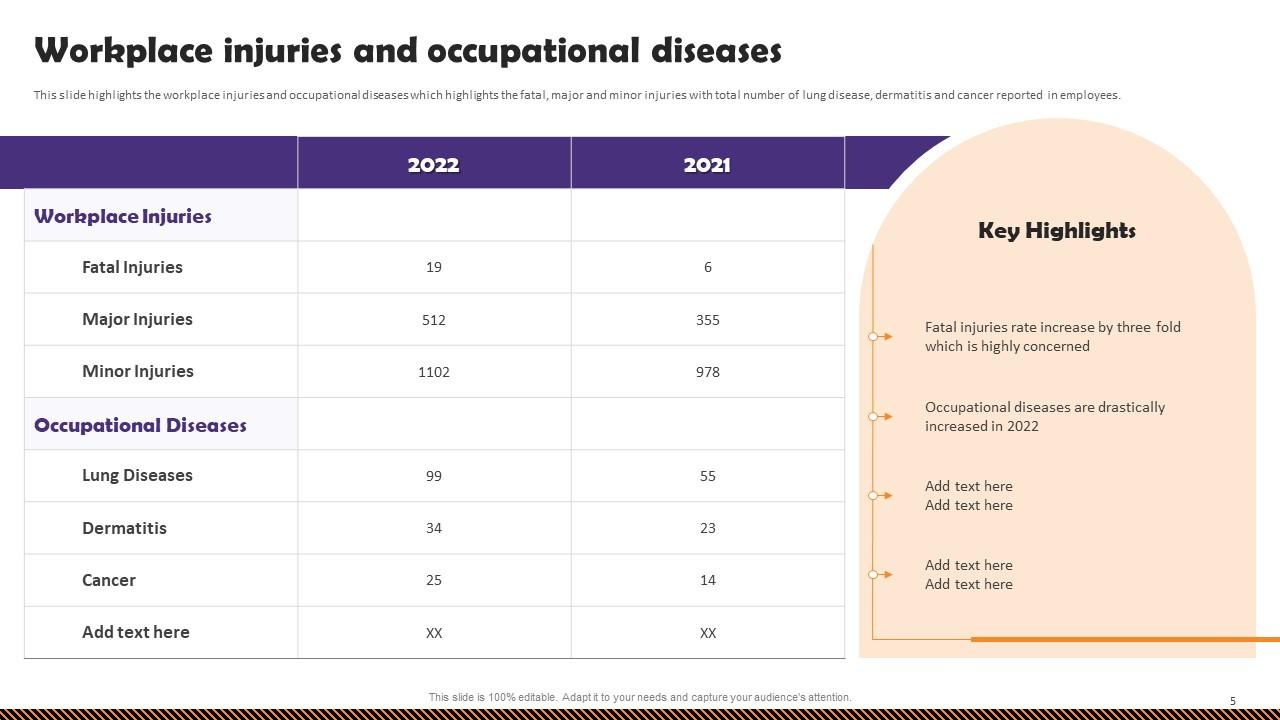
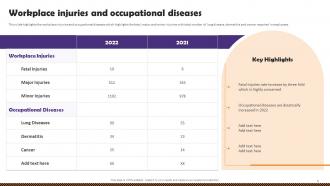
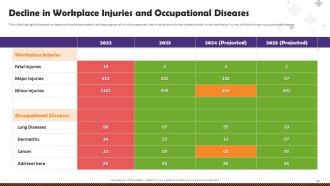
Slide 5 : Este slide destaca os acidentes de trabalho e as doenças ocupacionais.
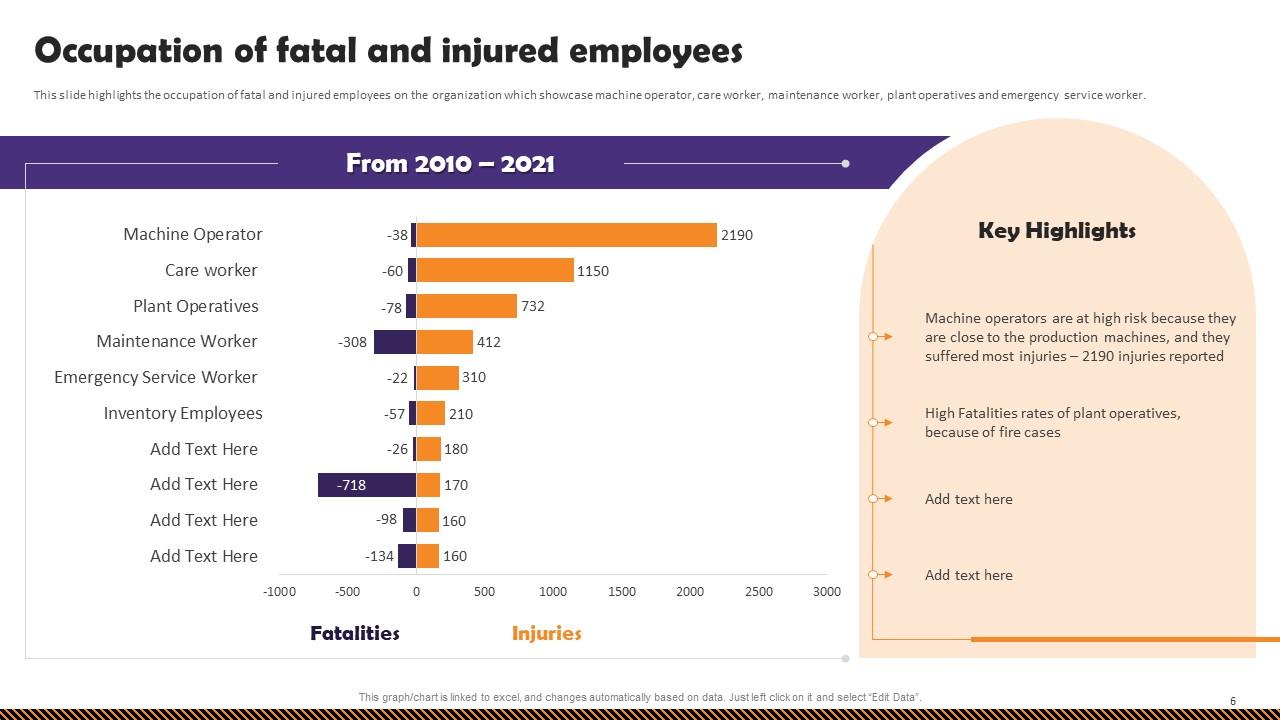
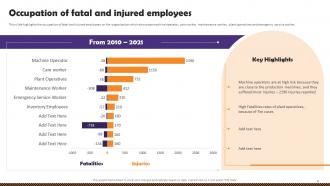
Slide 6 : Este slide destaca a ocupação de funcionários fatais e feridos na organização.
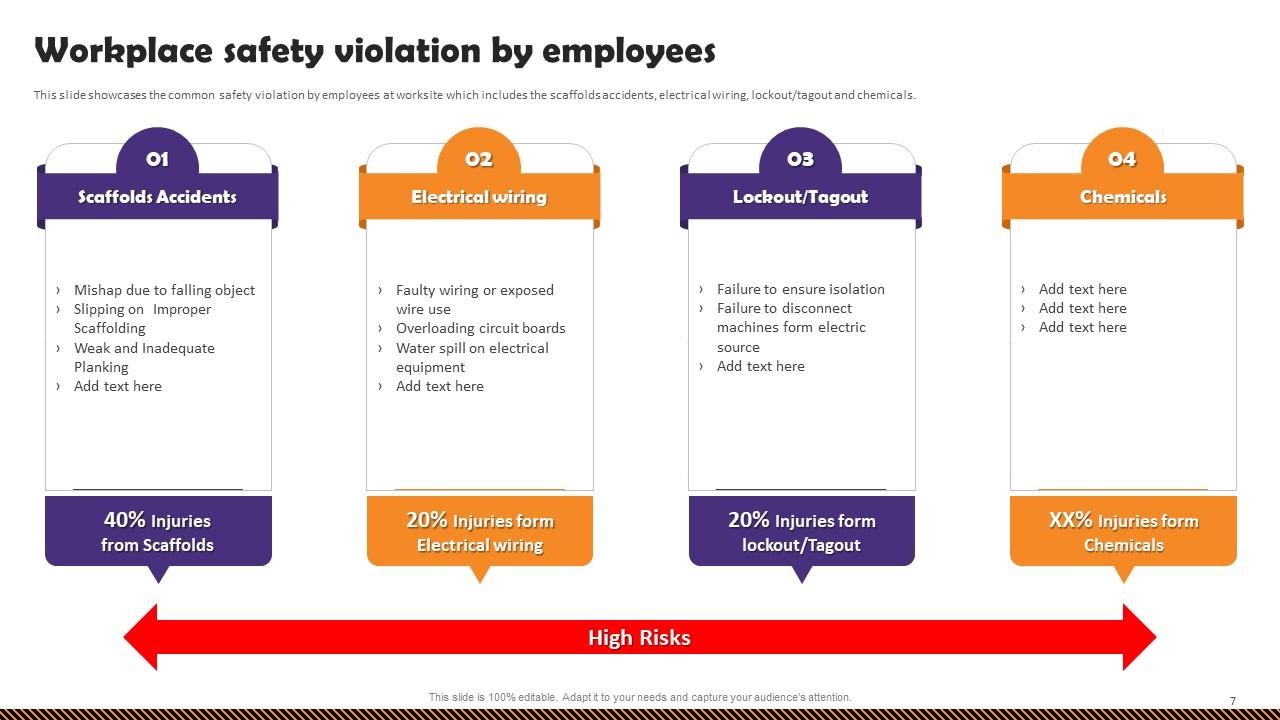
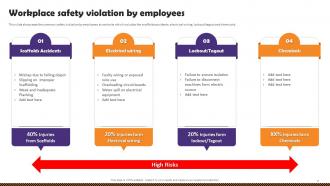
Slide 7 : Este slide mostra a violação de segurança comum por funcionários no local de trabalho, que inclui acidentes com andaimes, fiação elétrica, bloqueio/sinalização e produtos químicos.
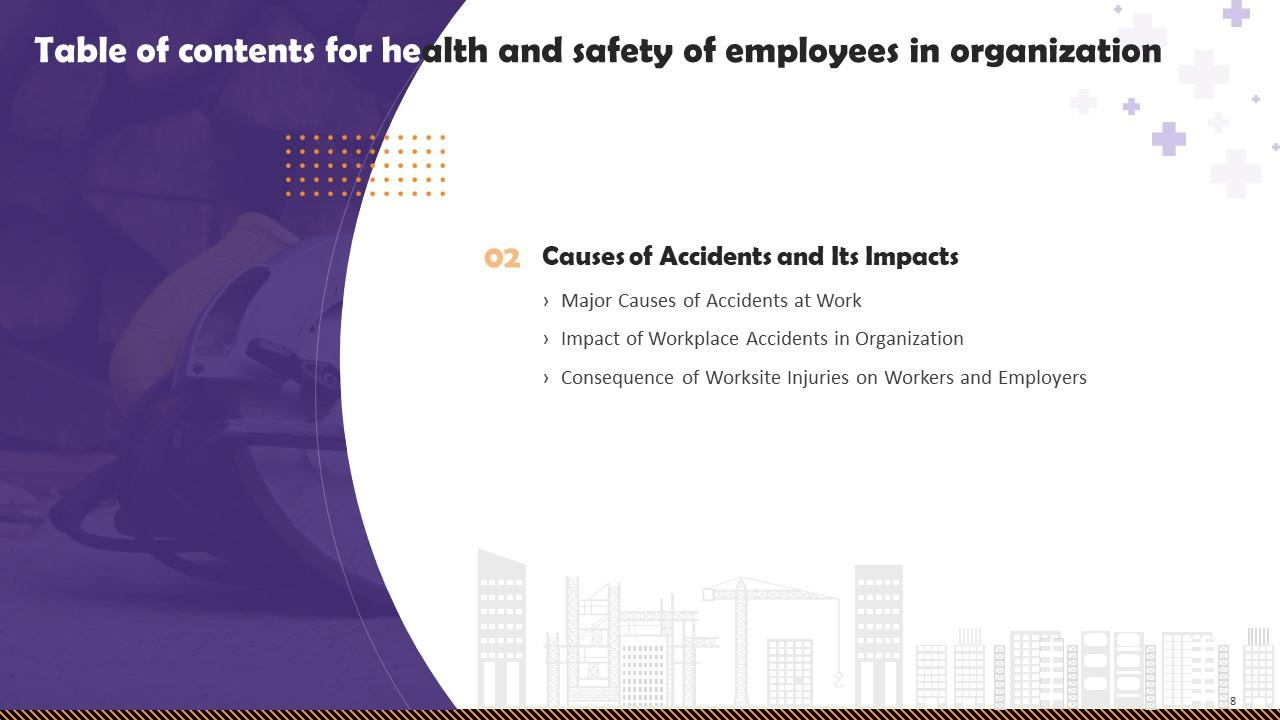
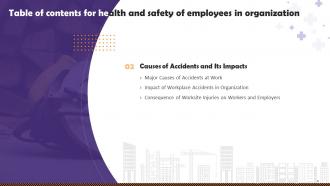
Slide 8 : Este slide exibe o índice - Causas de Acidentes e seus Impactos.
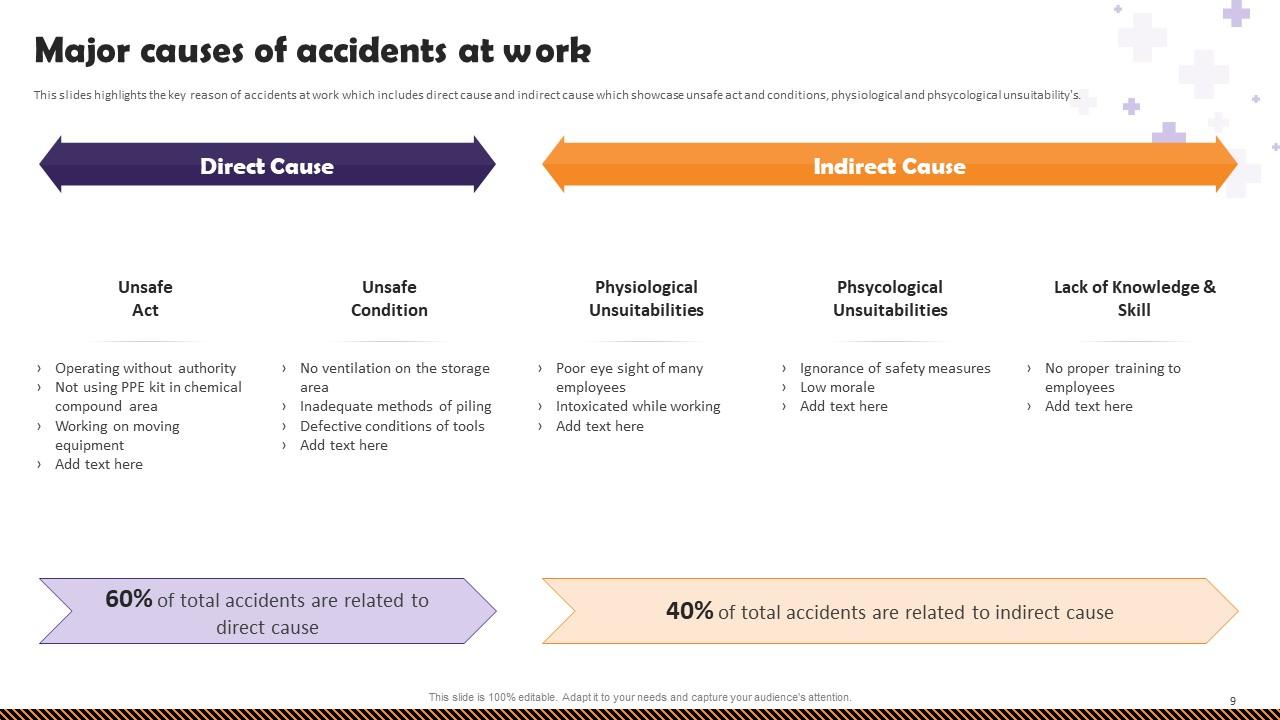
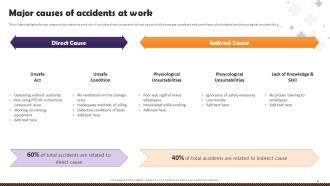
Slide 9 : Este slide destaca o principal motivo dos acidentes de trabalho.
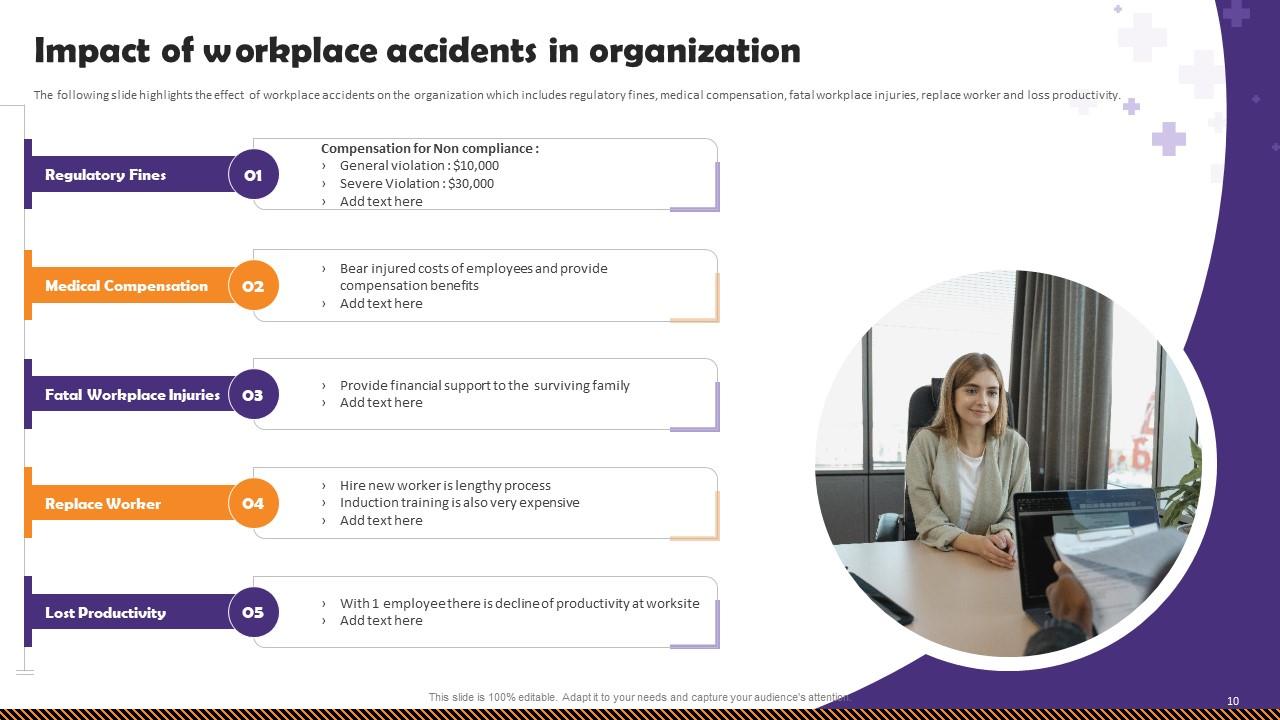
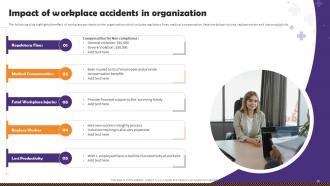
Slide 10 : O slide a seguir destaca o efeito dos acidentes de trabalho na organização.
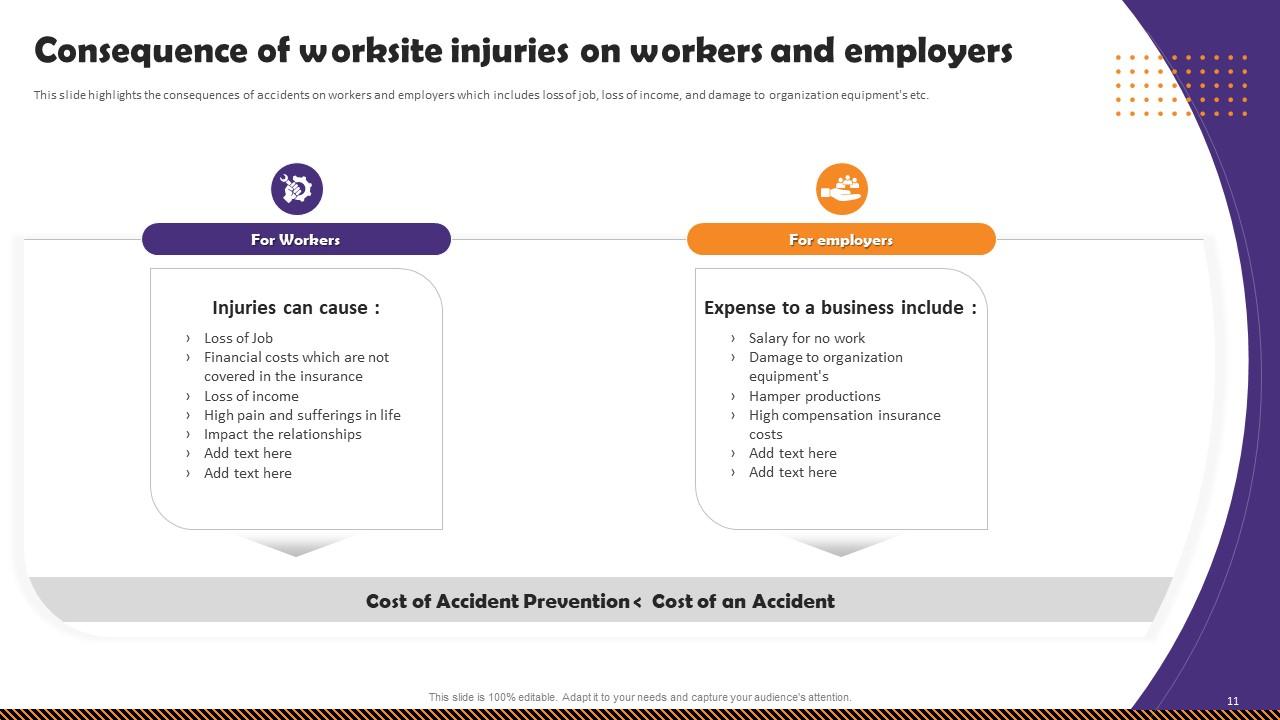
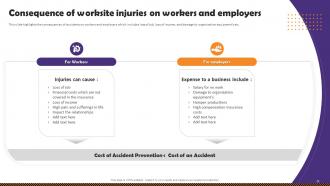
Slide 11 : Este slide destaca as consequências de acidentes para trabalhadores e empregadores, incluindo perda de emprego, perda de renda e danos aos equipamentos da organização, etc.
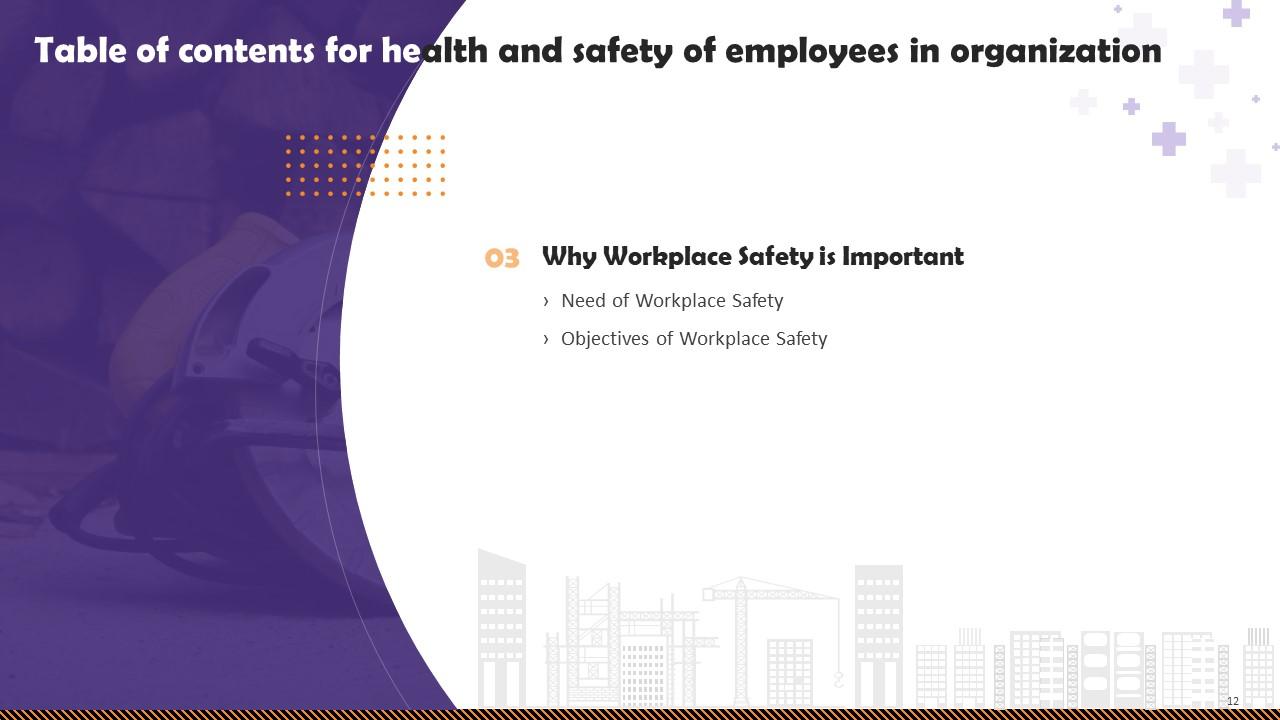
Slide 12 : Este slide exibe o índice - Por que a segurança no local de trabalho é importante.
Slide 13 : Este slide destaca a necessidade ou importância da segurança do trabalho na organização.
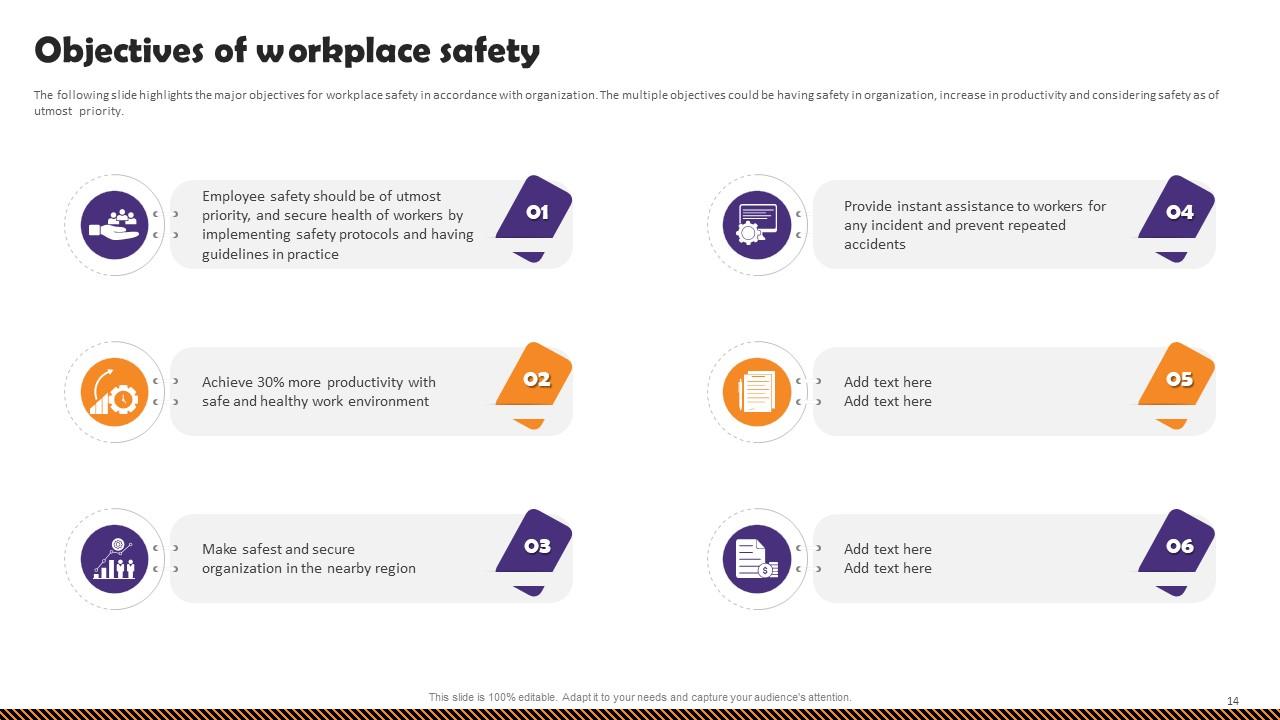
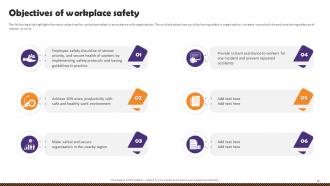
Slide 14 : O slide a seguir destaca os principais objetivos para a segurança do trabalho de acordo com a organização.
Slide 15 : Este slide exibe a tabela de conteúdo - Examinando riscos e perigos da organização.
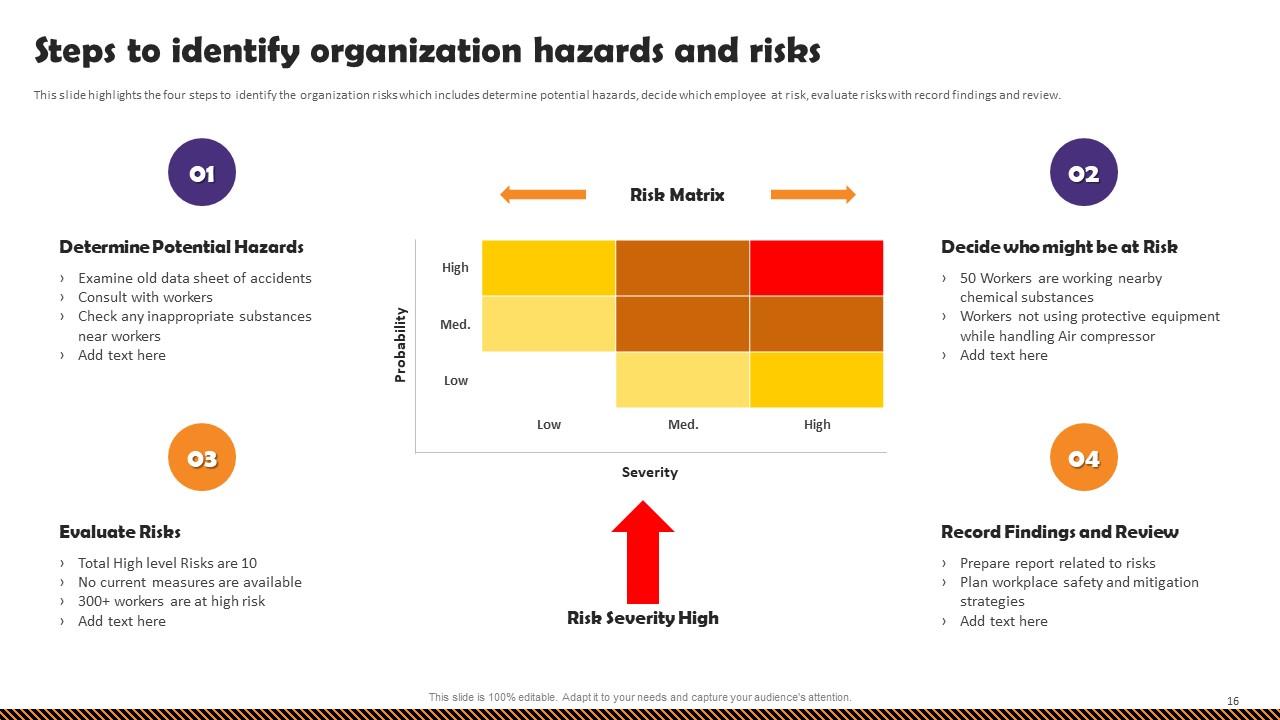
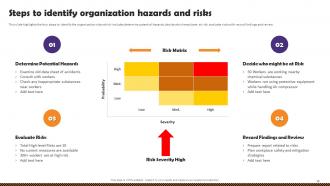
Slide 16 : Este slide destaca as quatro etapas para identificar os riscos da organização.
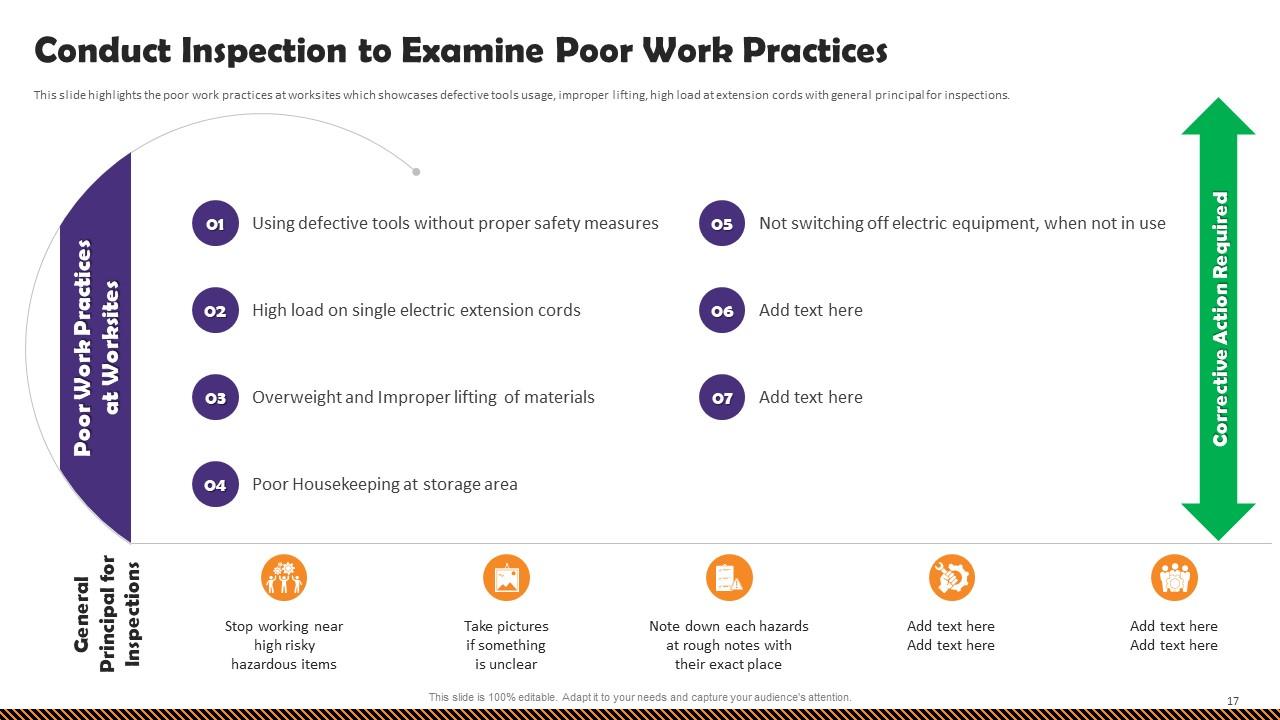
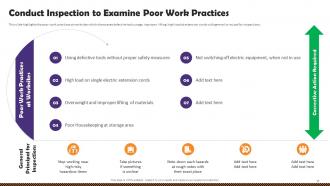
Slide 17 : Este slide destaca as más práticas de trabalho nos locais de trabalho.
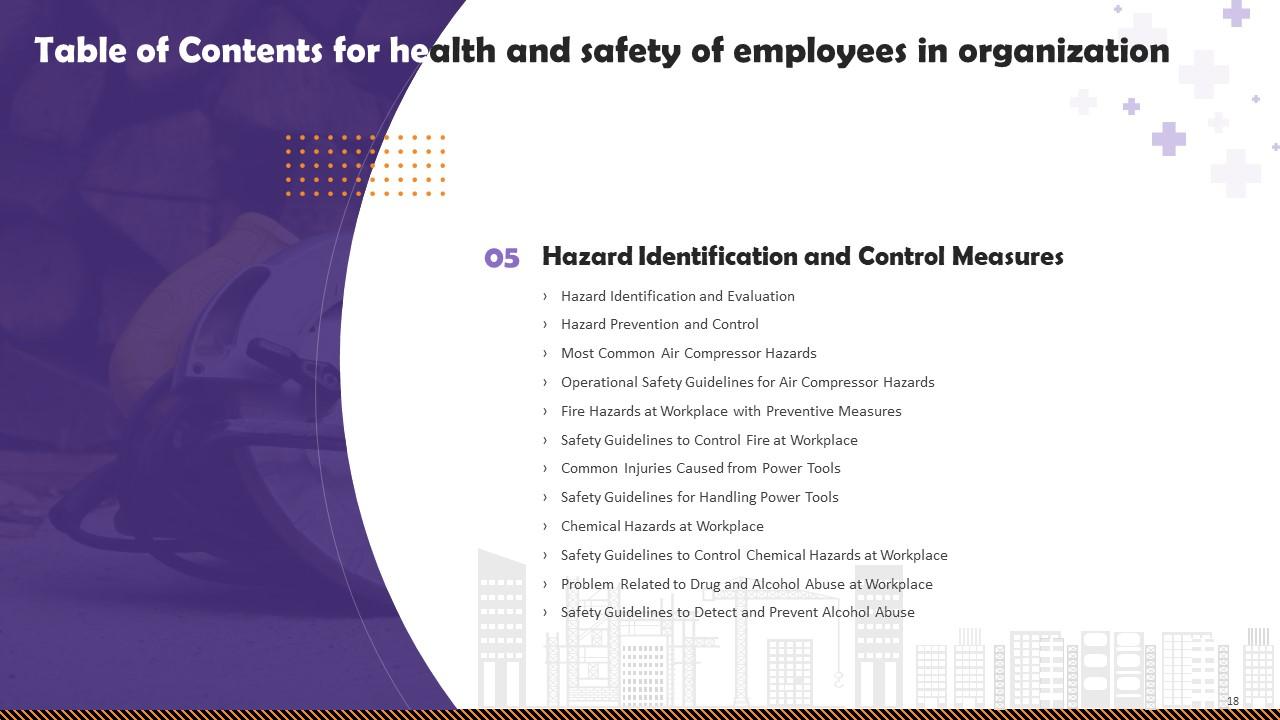
Slide 18 : Identificação de perigos e medidas de controle.
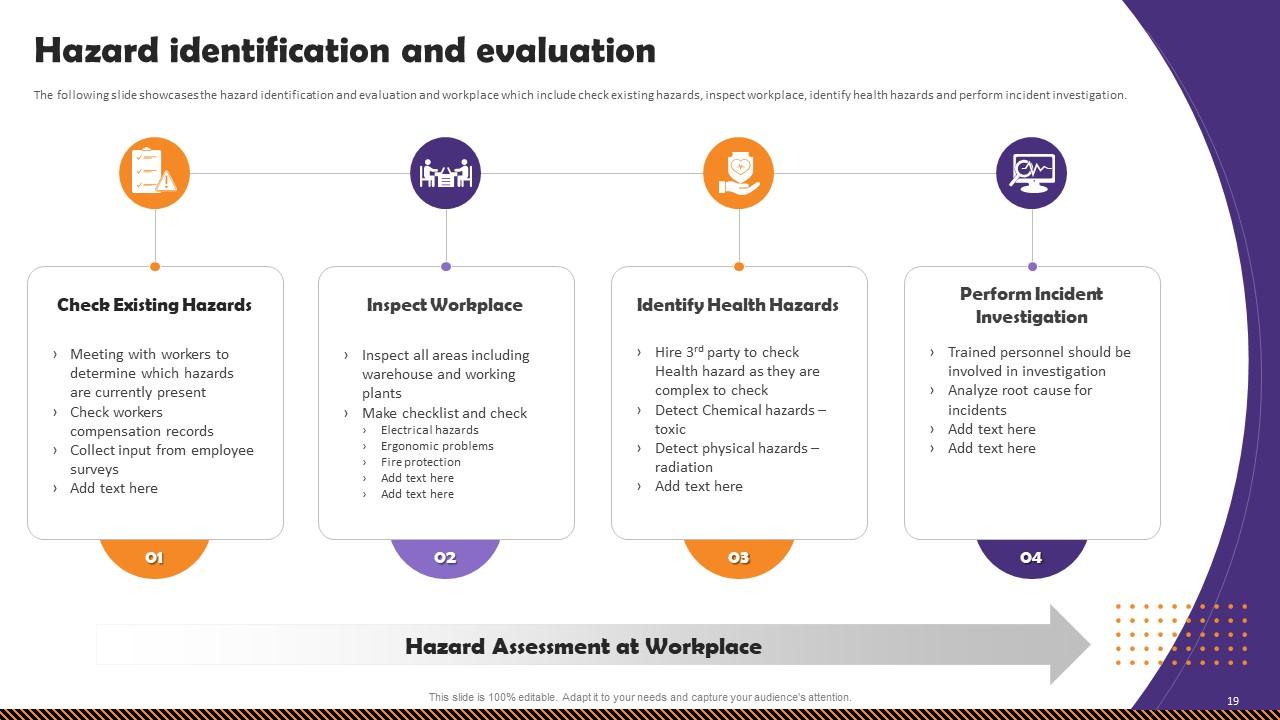
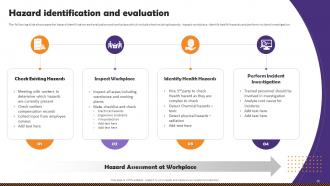
Slide 19 : O slide a seguir mostra a identificação e avaliação de perigos e o local de trabalho.
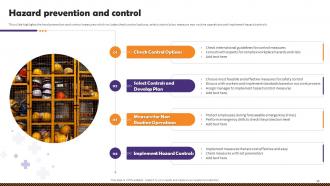
Slide 20 : Este slide destaca as duras medidas de prevenção e controle.
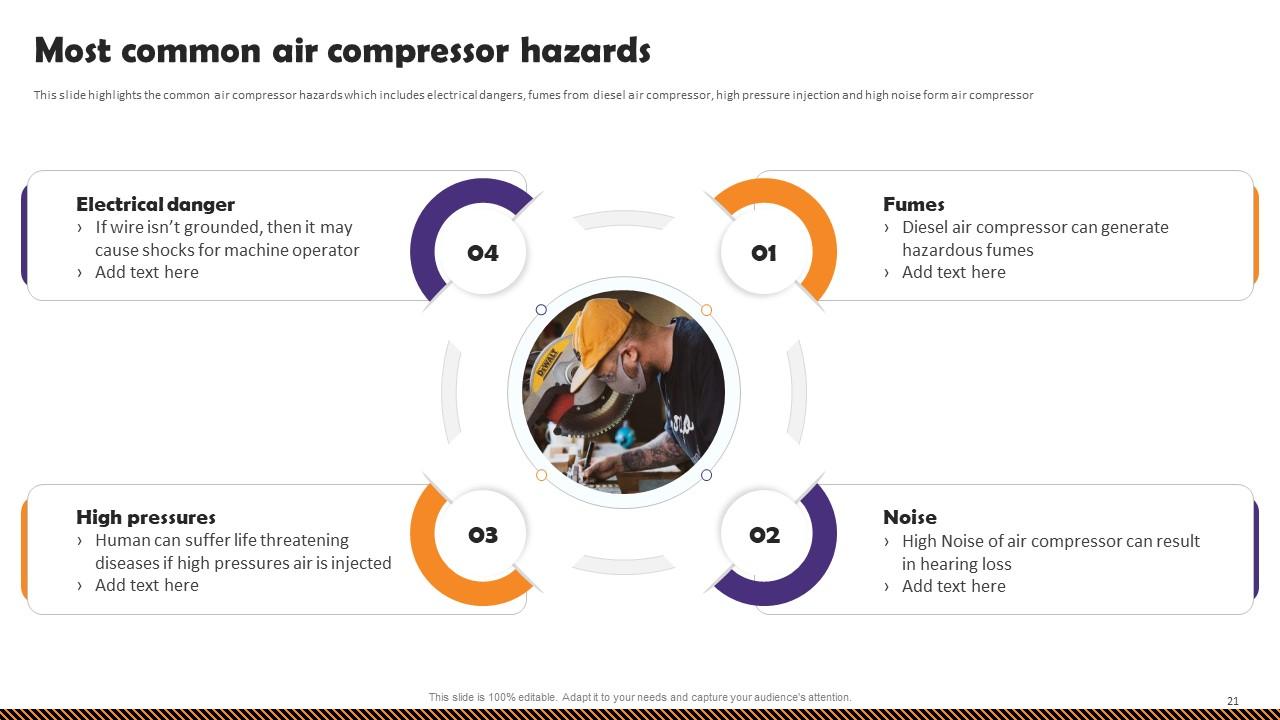
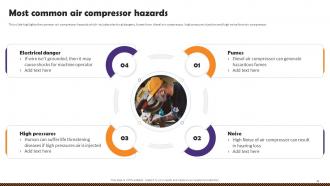
Slide 21 : Este slide destaca os perigos comuns do compressor de ar.
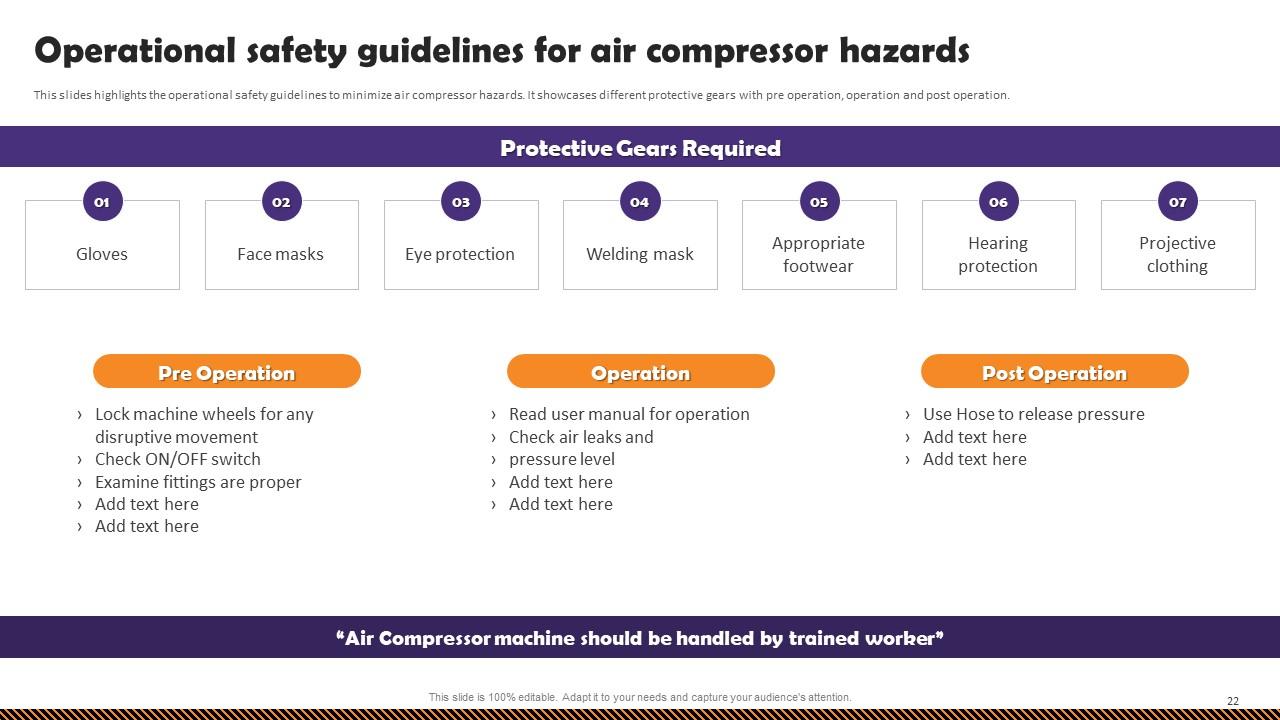
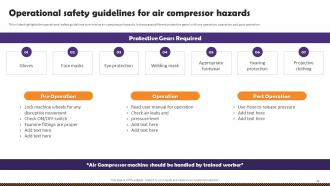
Slide 22 : Este slide destaca as diretrizes de segurança operacional para minimizar os riscos do compressor de ar.
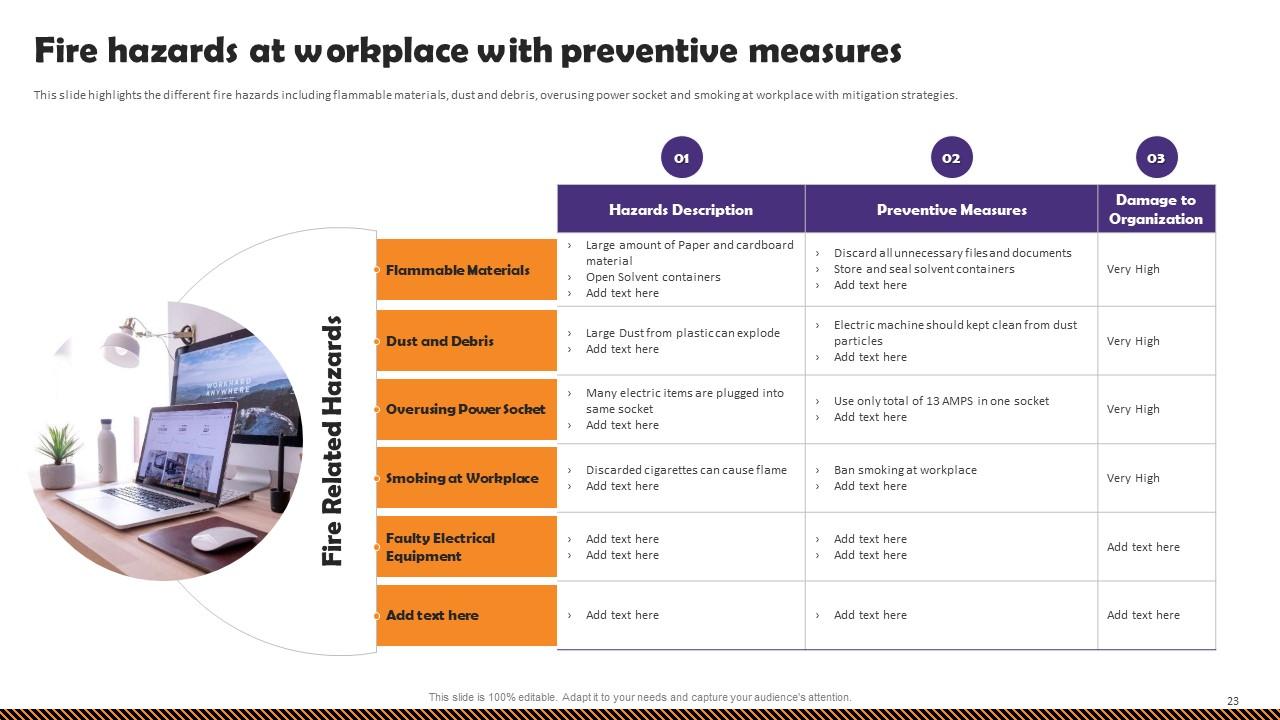
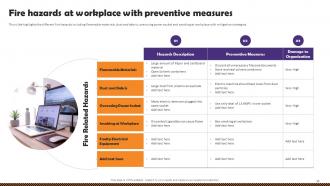
Slide 23 : Este slide destaca os diferentes riscos de incêndio, incluindo materiais inflamáveis, poeira e detritos, uso excessivo de tomadas elétricas.
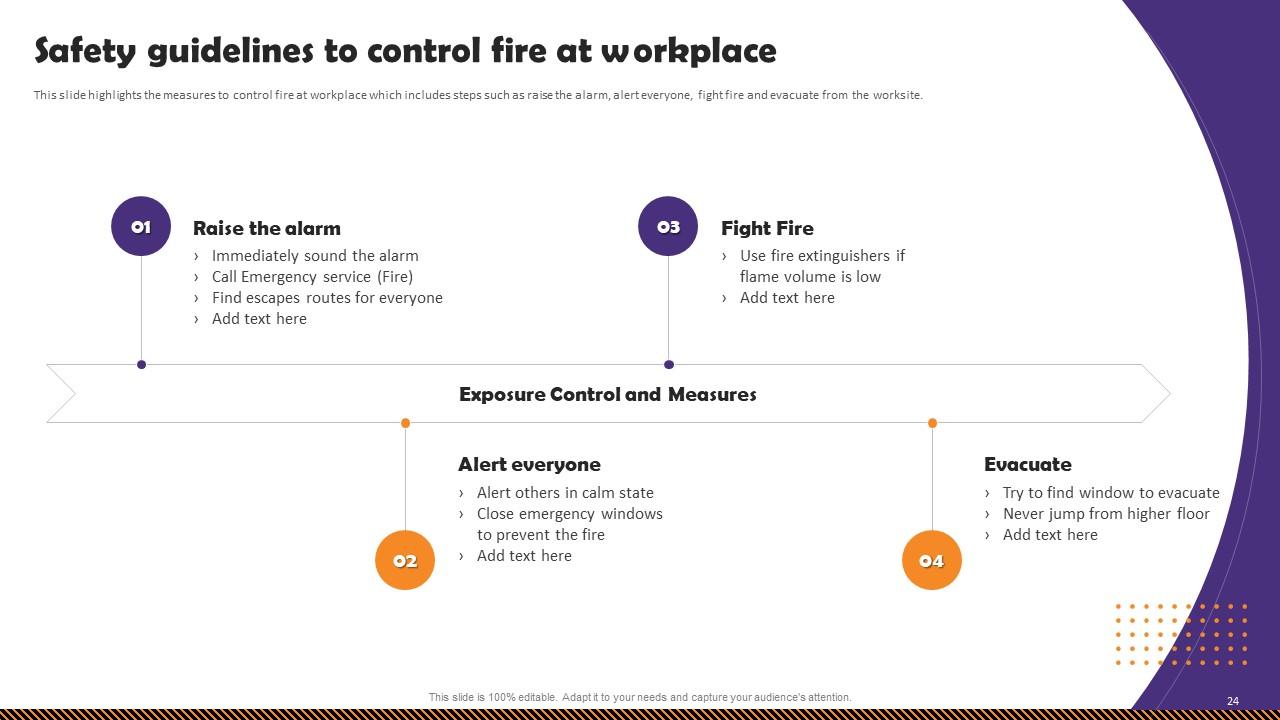
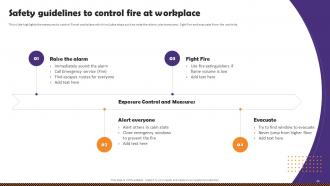
Slide 24 : Este slide destaca as medidas de controle de incêndio no local de trabalho.
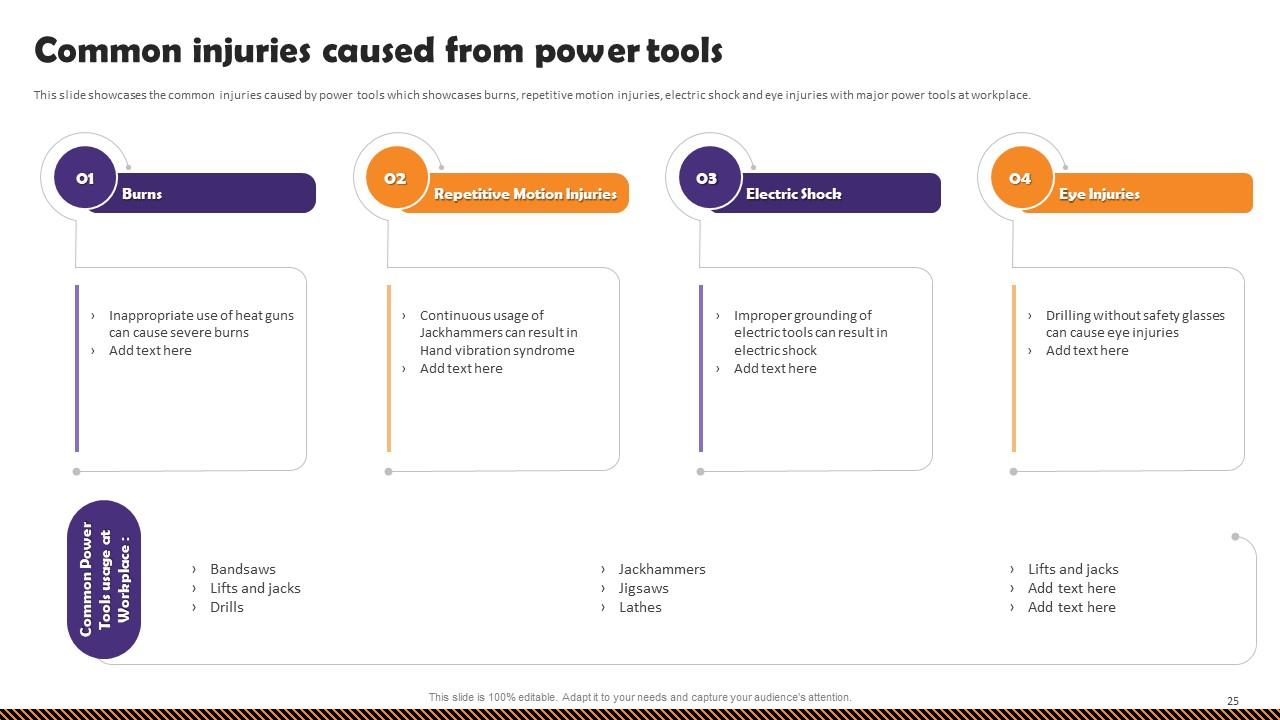
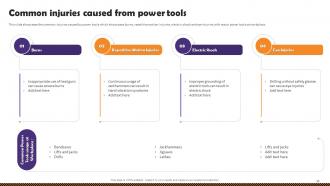
Slide 25 : Este slide mostra as lesões comuns causadas por ferramentas elétricas.
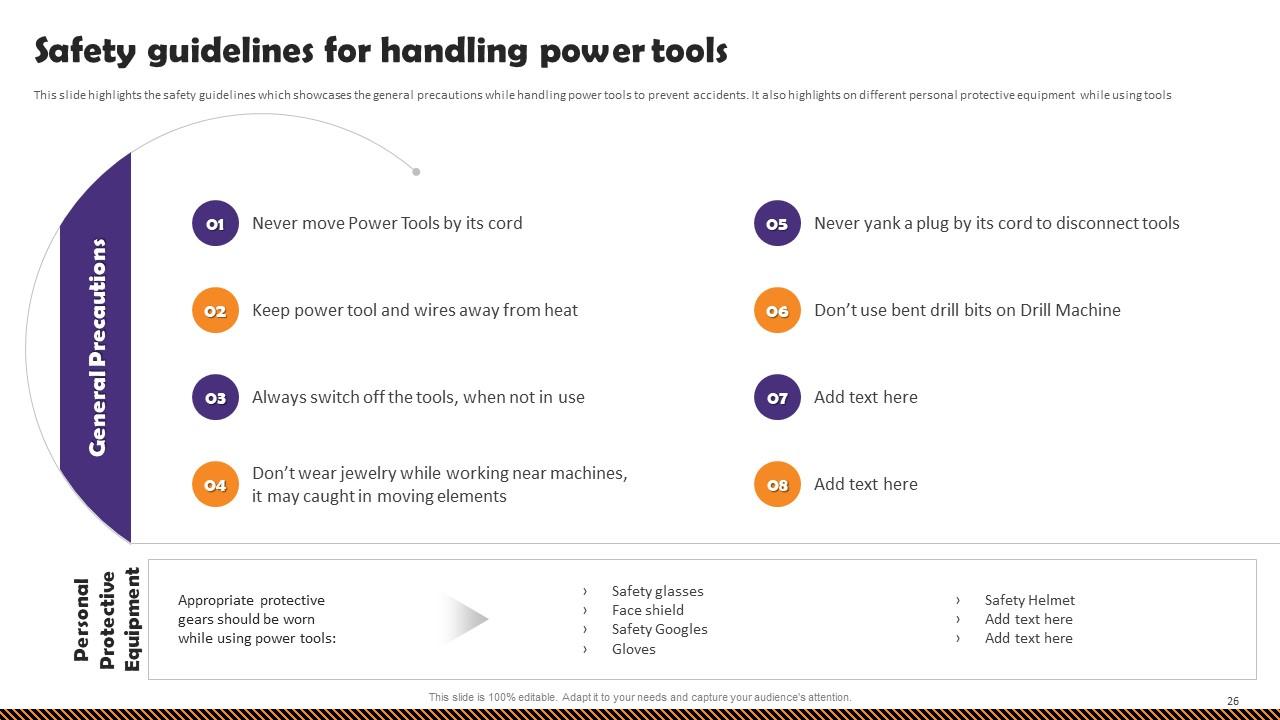
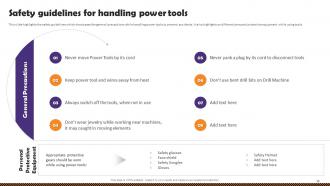
Slide 26 : Este slide destaca as diretrizes de segurança que mostram as precauções gerais ao manusear ferramentas elétricas para evitar acidentes.
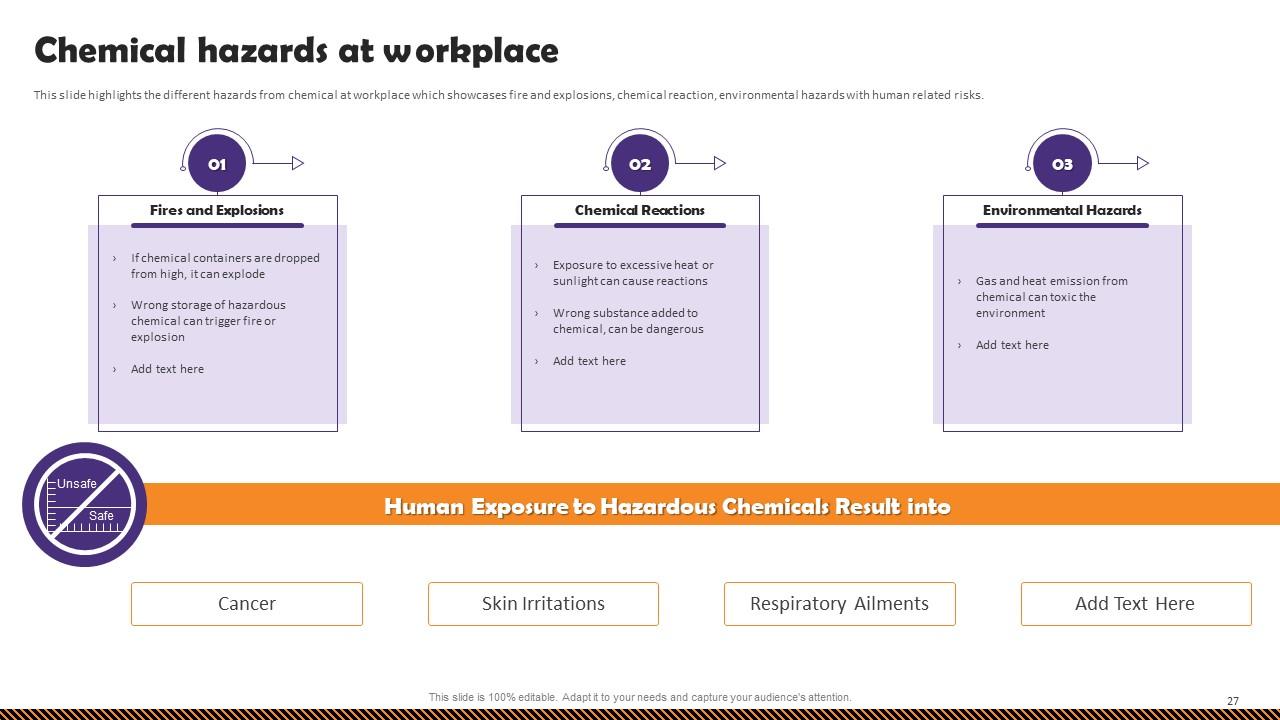
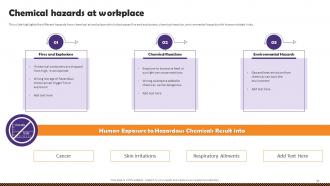
Slide 27 : Este slide destaca os diferentes riscos de produtos químicos no local de trabalho.
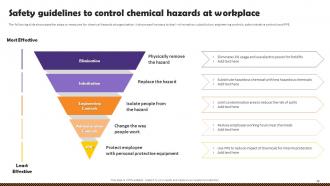
Slide 28 : O slide a seguir mostra as etapas ou medidas para riscos químicos na organização.
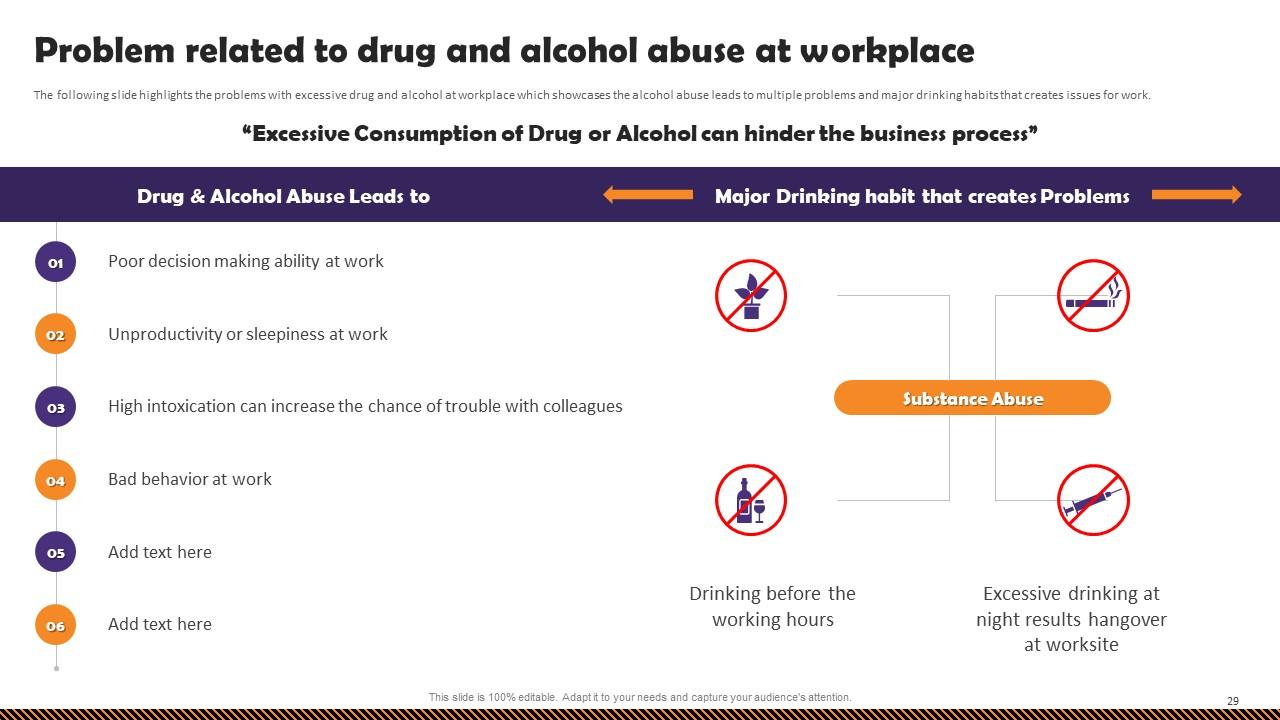
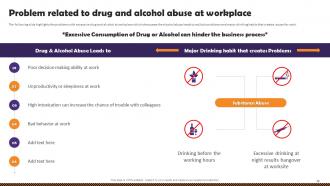
Slide 29 : O slide a seguir destaca os problemas com uso excessivo de drogas e álcool no local de trabalho.
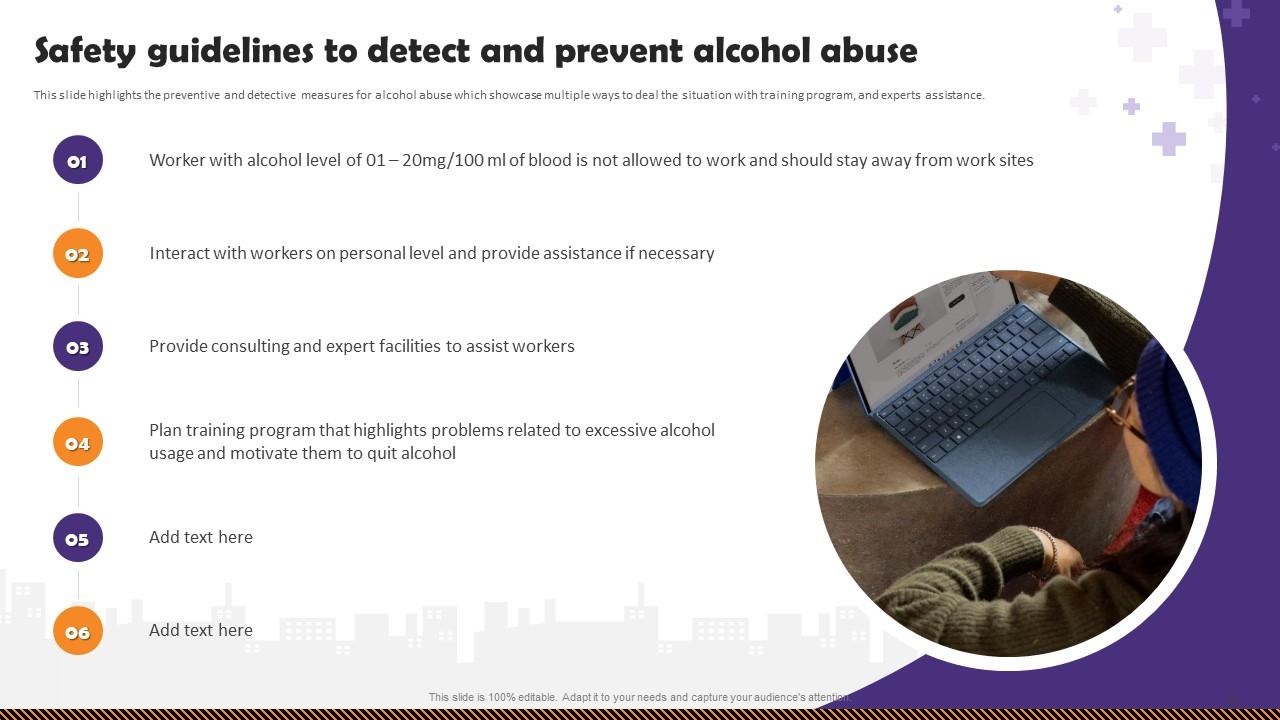
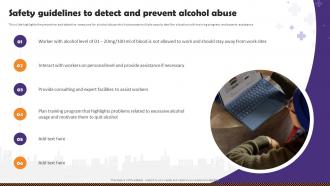
Slide 30 : Este slide destaca as medidas preventivas e de detecção do abuso de álcool, que mostram várias maneiras de lidar com a situação.
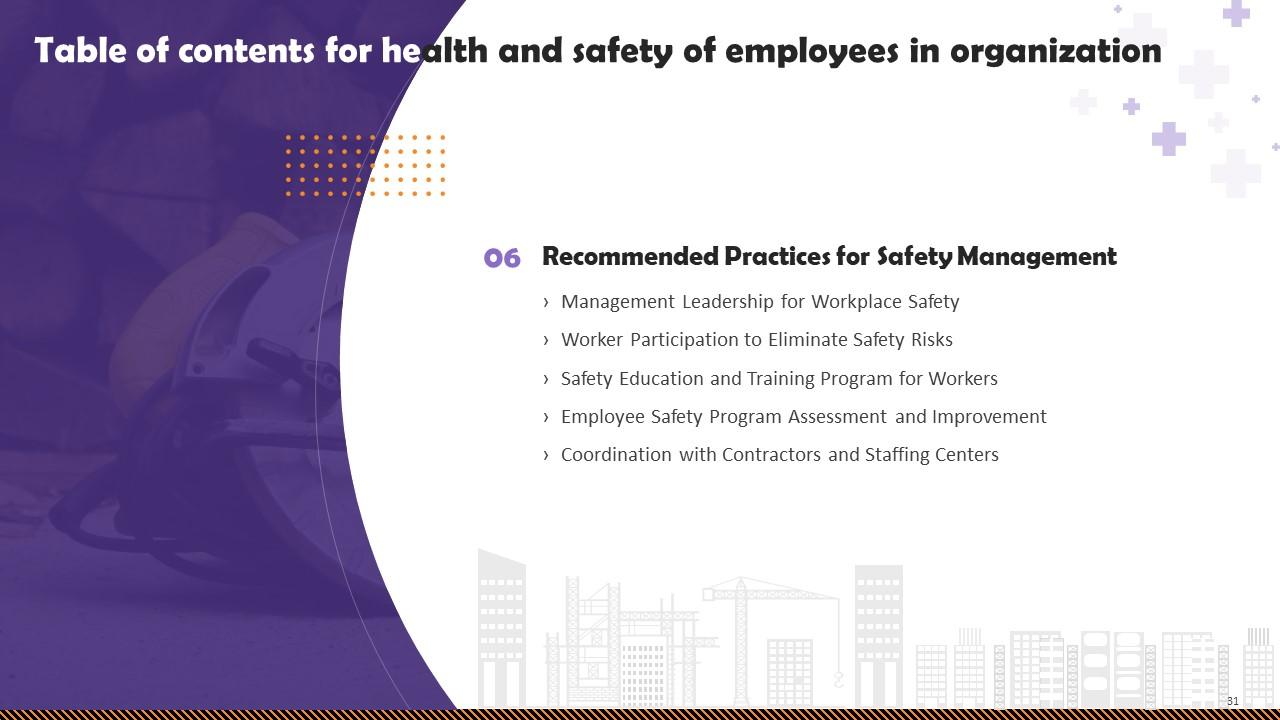
Slide 31 : Este slide exibe o índice de práticas recomendadas para gerenciamento de segurança.
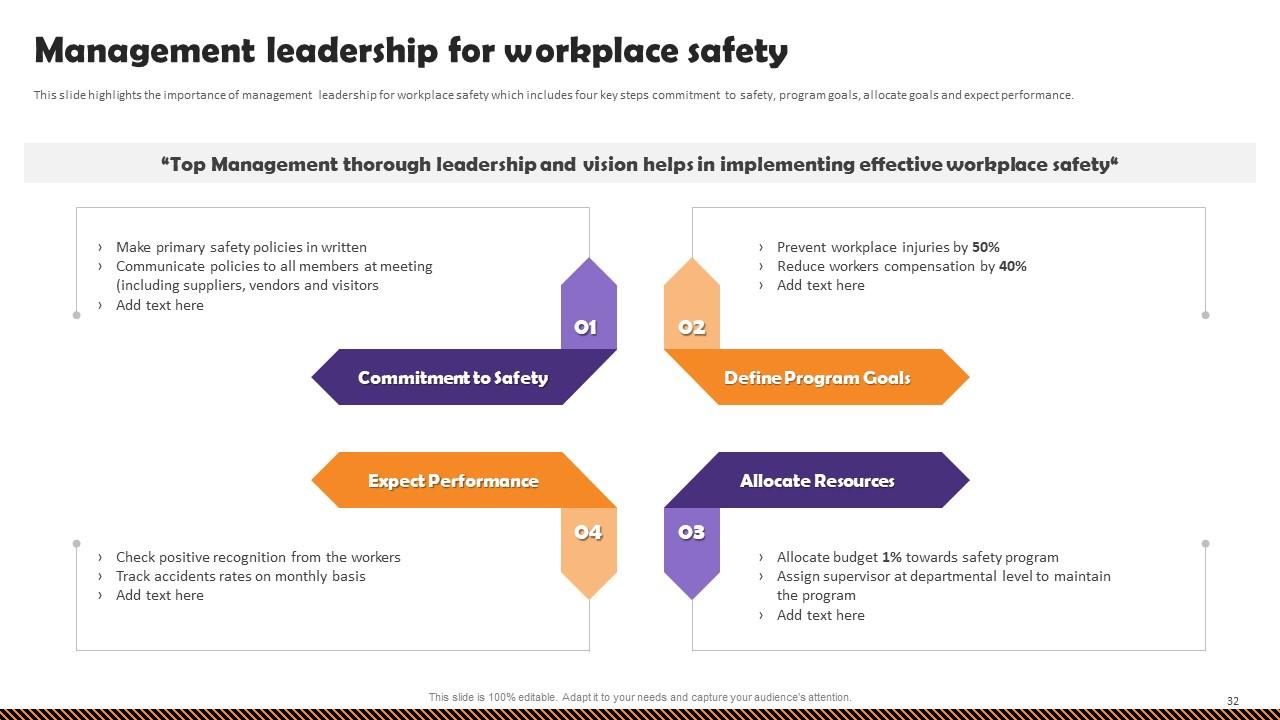
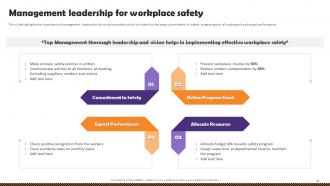
Slide 32 : Este slide destaca a importância da liderança gerencial para a segurança no local de trabalho.
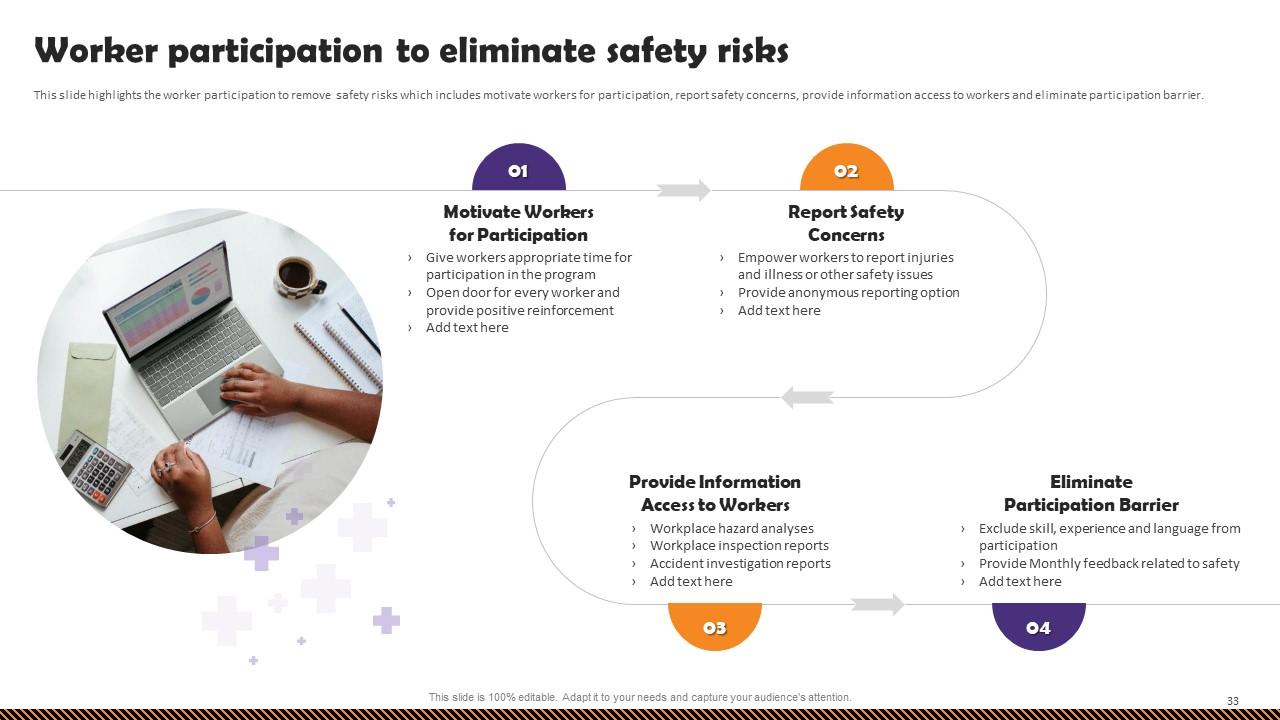
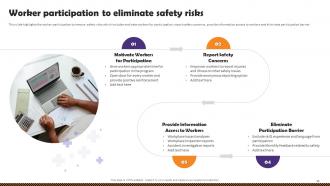
Slide 33 : Este slide destaca a participação do trabalhador para remover os riscos de segurança.
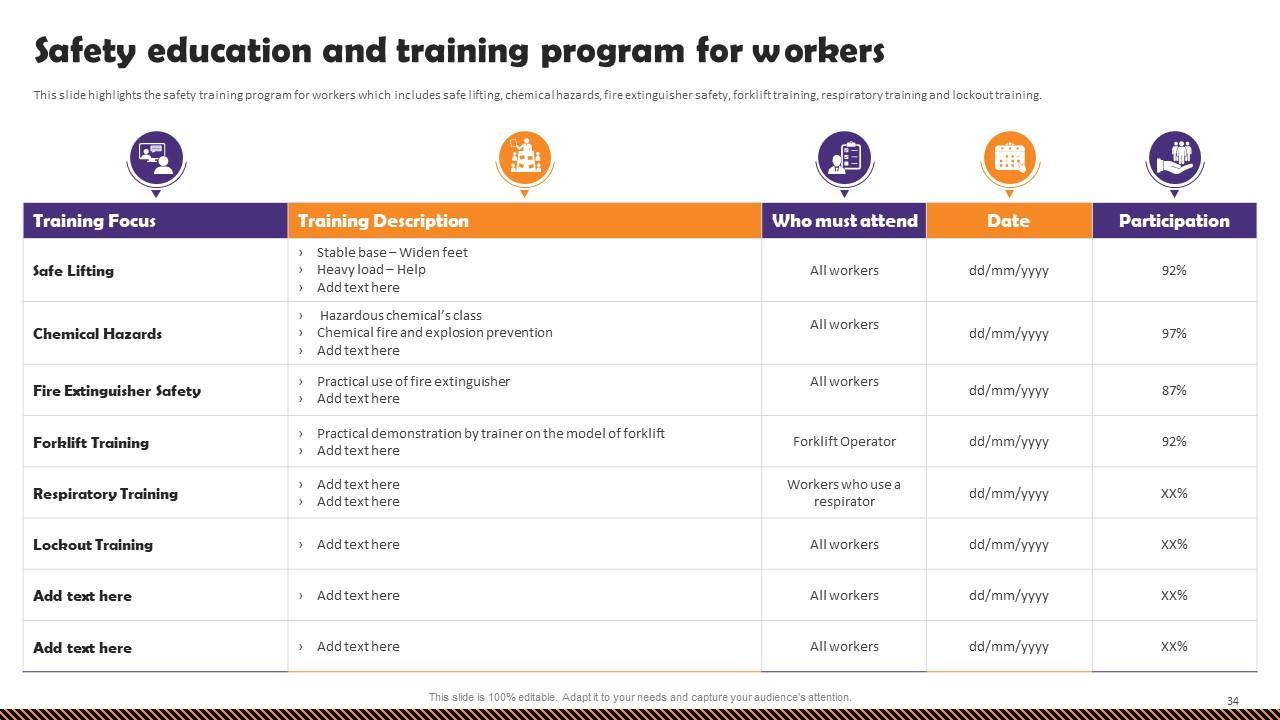
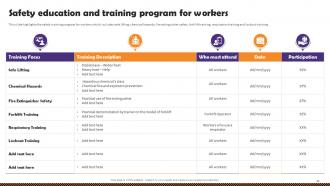
Slide 34 : Este slide destaca o programa de treinamento de segurança para trabalhadores.
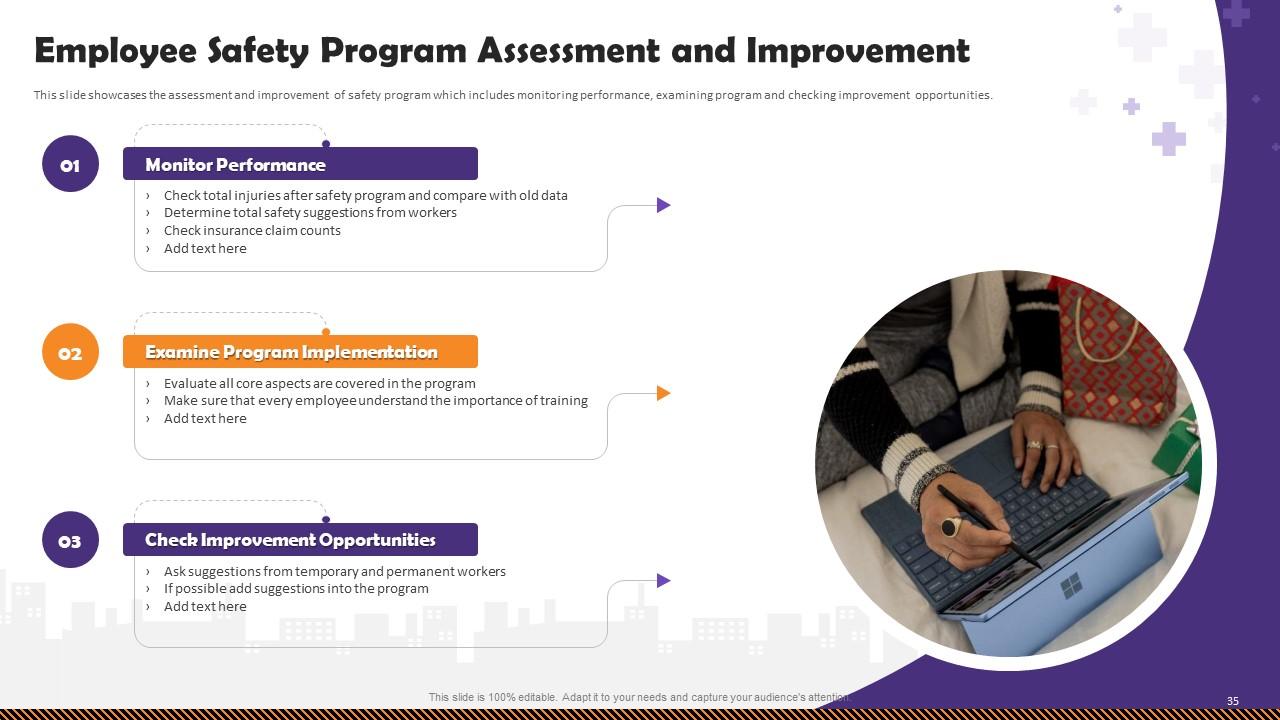
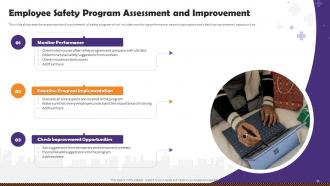
Slide 35 : Este slide mostra a avaliação e melhoria do programa de segurança.
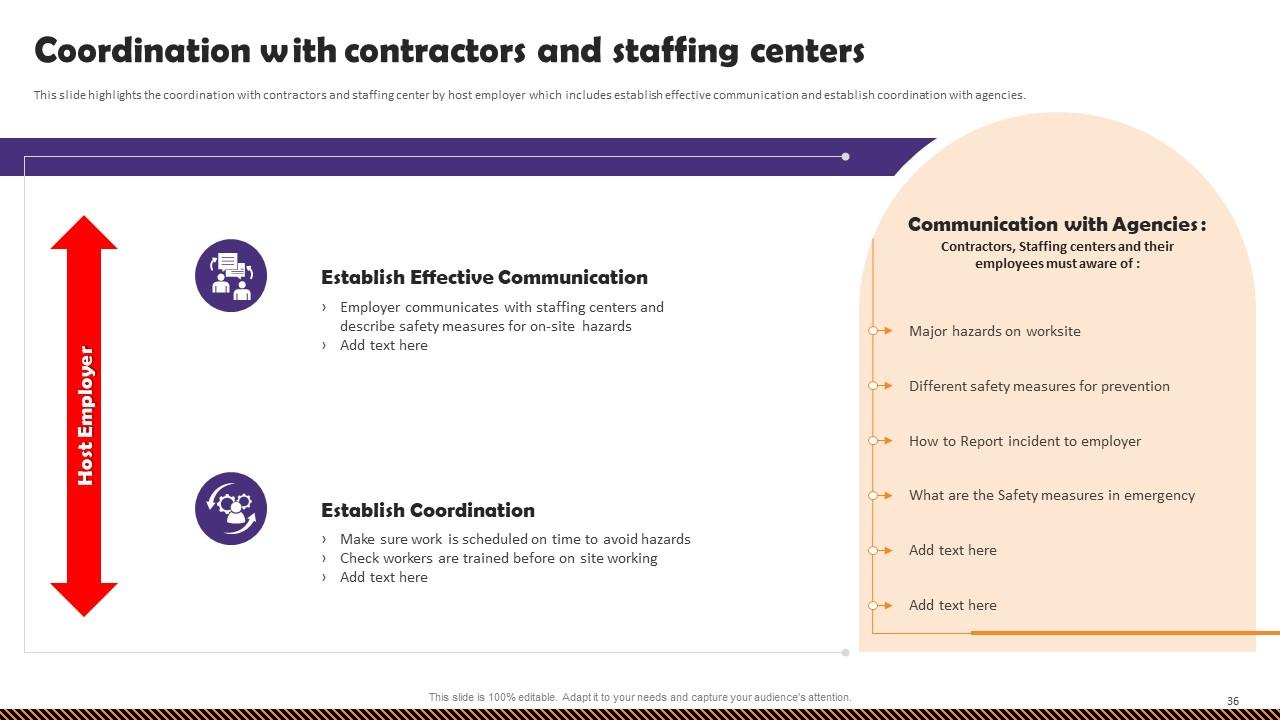
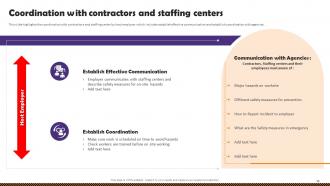
Slide 36 : Este slide destaca a coordenação com contratados e centro de pessoal pelo empregador anfitrião.
Slide 37 : Este slide exibe o índice de penalidades por não conformidade com as diretrizes de segurança.
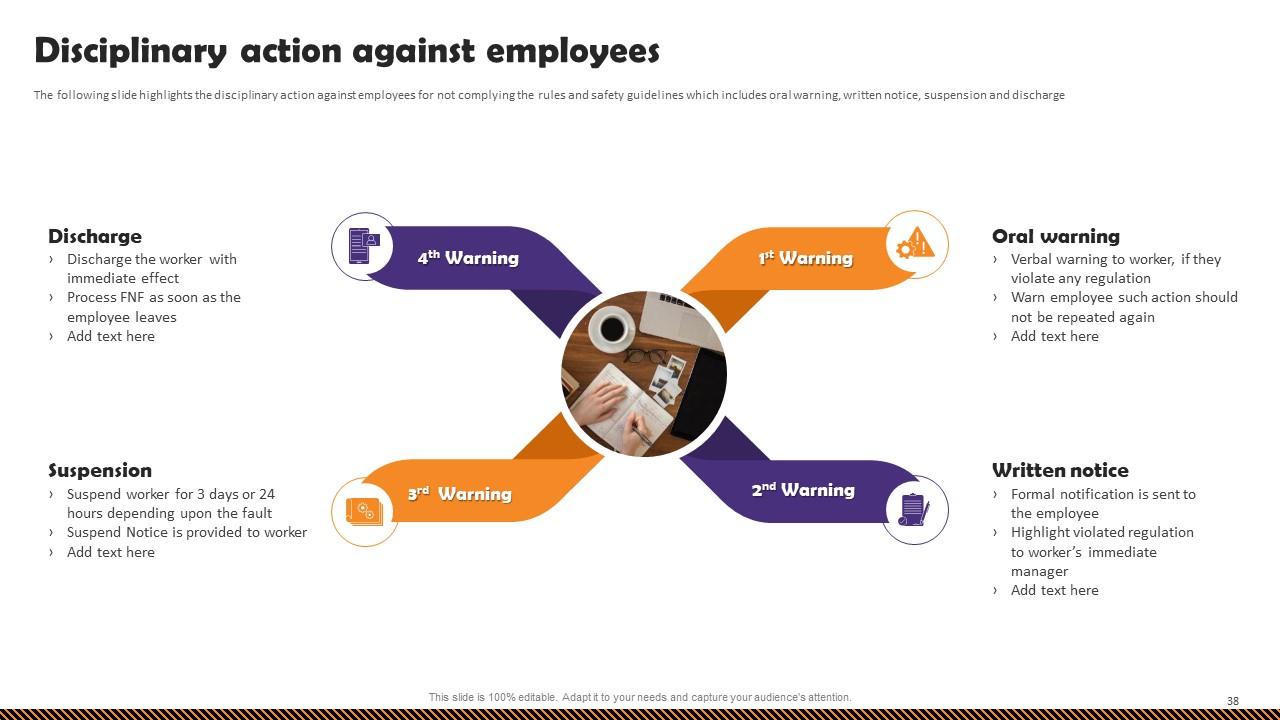
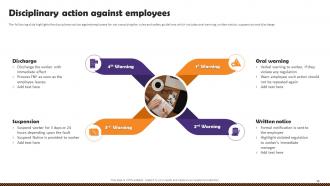
Slide 38 : O slide a seguir destaca a ação disciplinar contra os funcionários por descumprimento das normas e orientações de segurança.
Slide 39 : Este slide exibe o índice - Painel para segurança no local de trabalho.
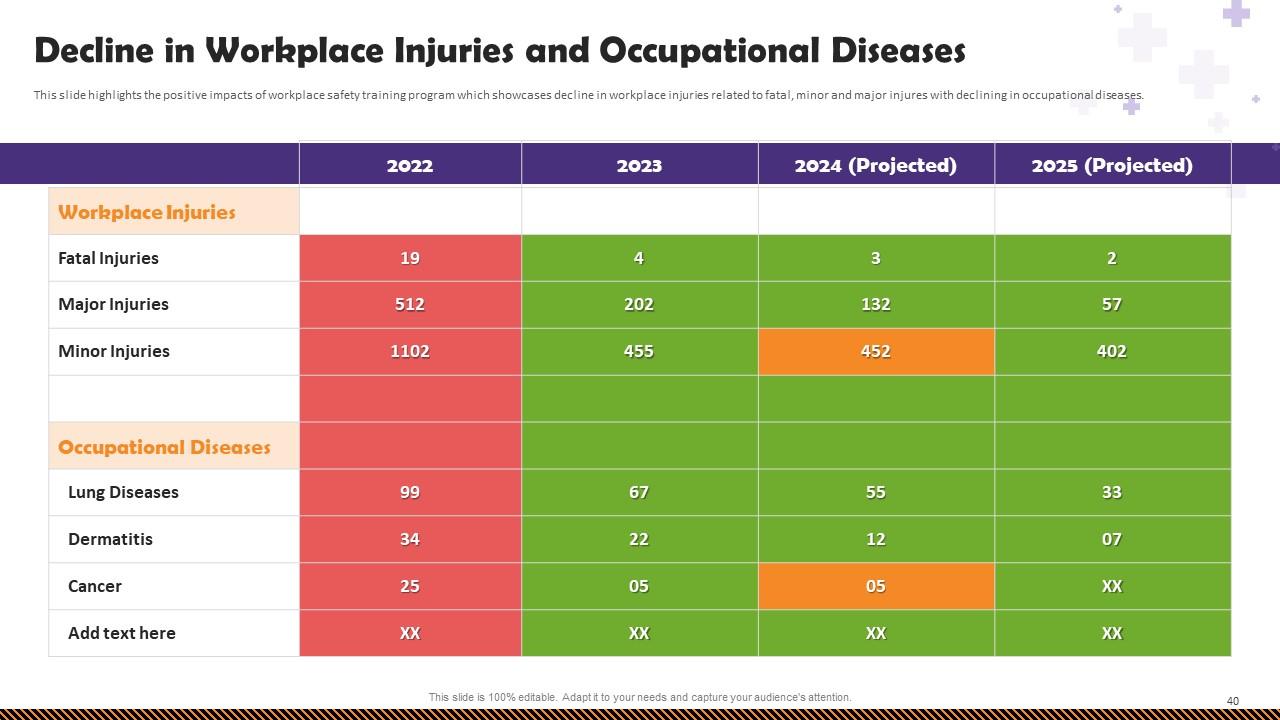
Slide 40 : Este slide destaca os impactos positivos do programa de treinamento em segurança do trabalho.
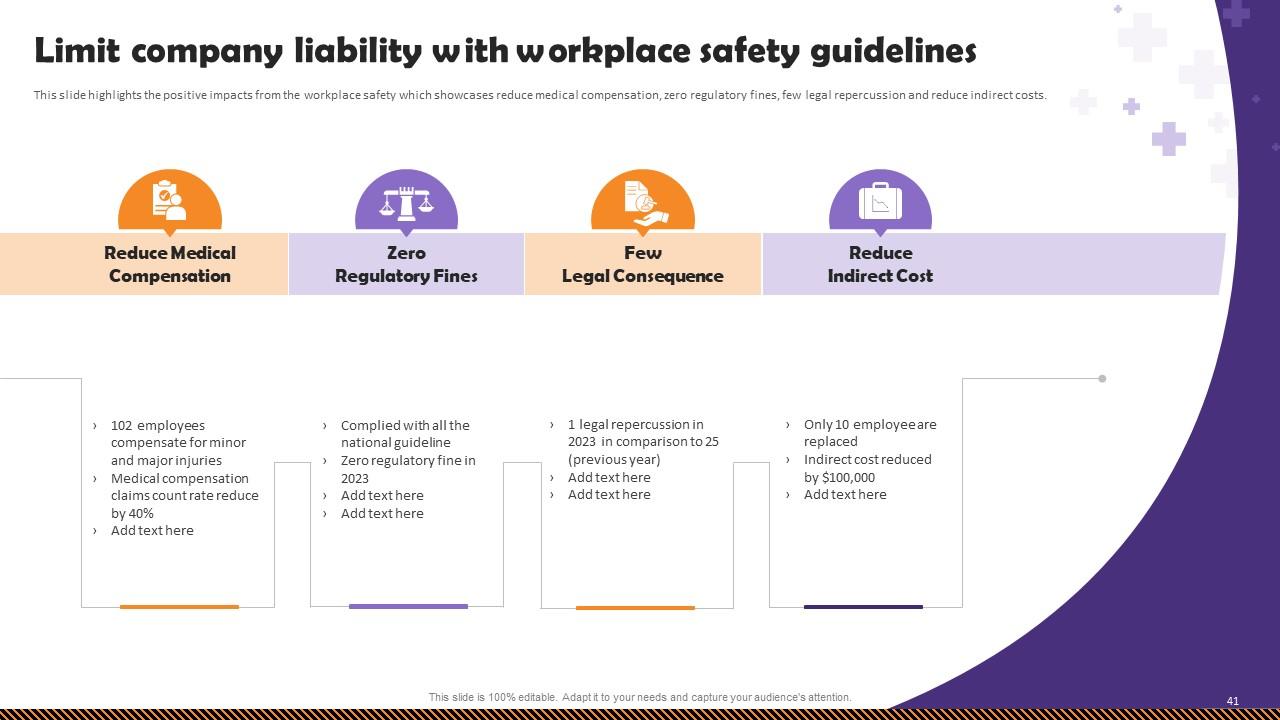
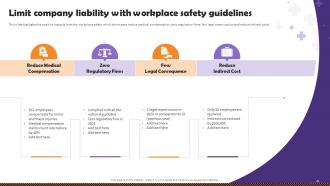
Slide 41 : Este slide destaca os impactos positivos da segurança do trabalho.
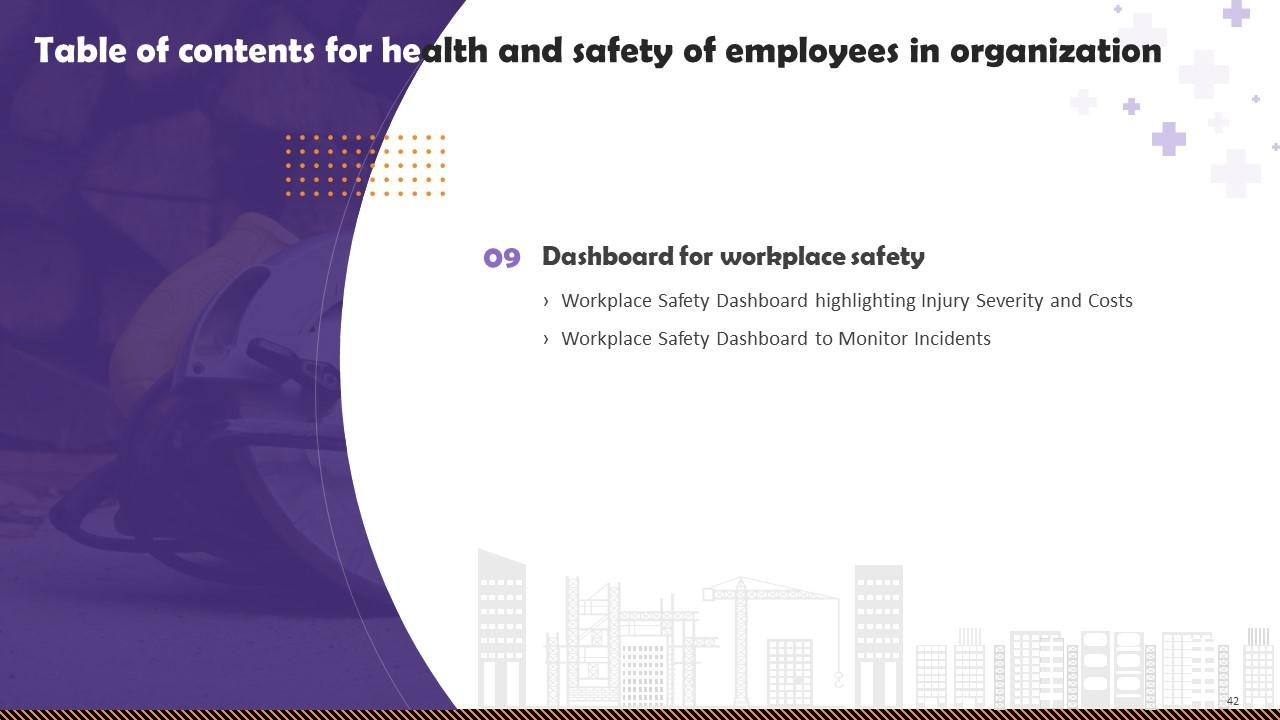
Slide 42 : Este slide exibe o índice - Painel para segurança no local de trabalho.
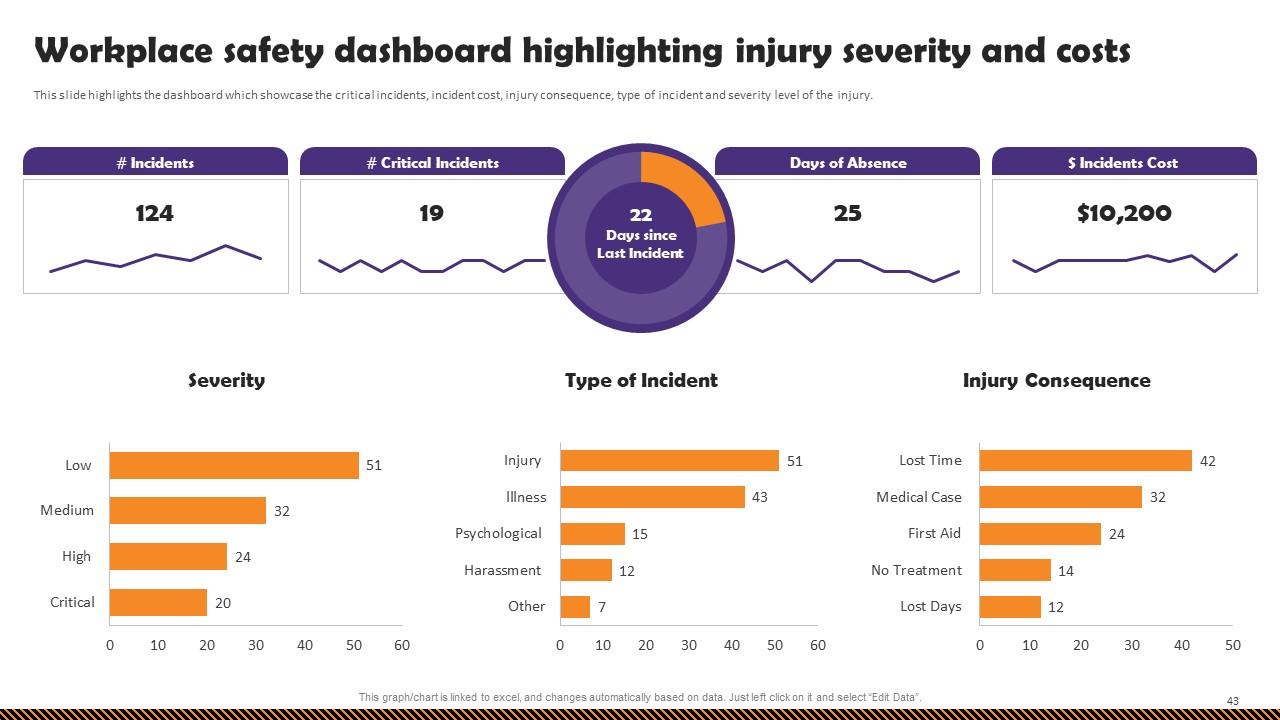
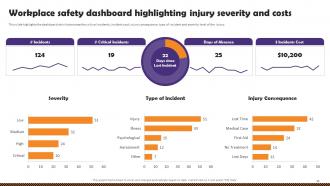
Slide 43 : Este slide destaca o painel que mostra os incidentes críticos, custo do incidente, consequência da lesão, tipo de incidente e nível de gravidade da lesão.
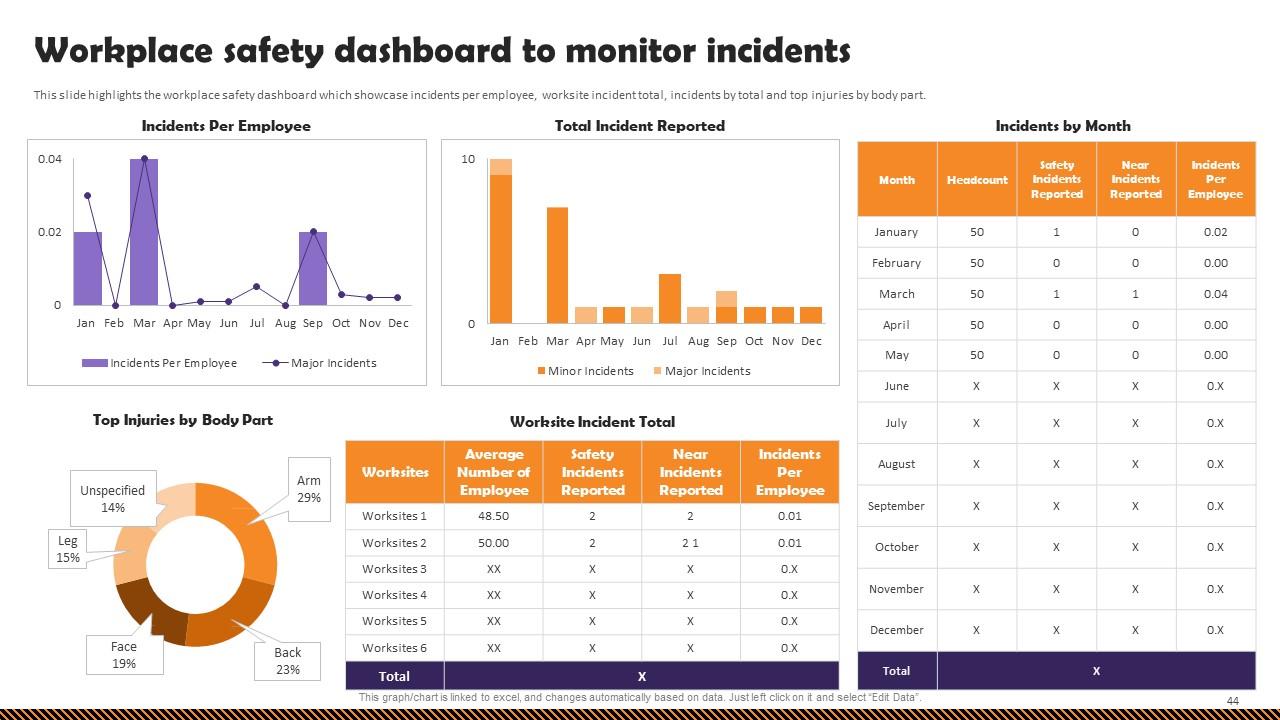
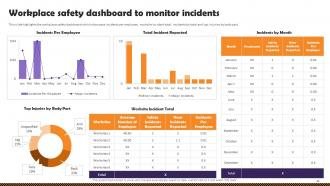
Slide 44 : Este slide destaca o painel de segurança no local de trabalho, que mostra os incidentes por funcionário, o total de incidentes no local de trabalho.
Slide 45 : Este é o slide dos ícones.
Slide 46 : Este slide apresenta o título para slides adicionais.
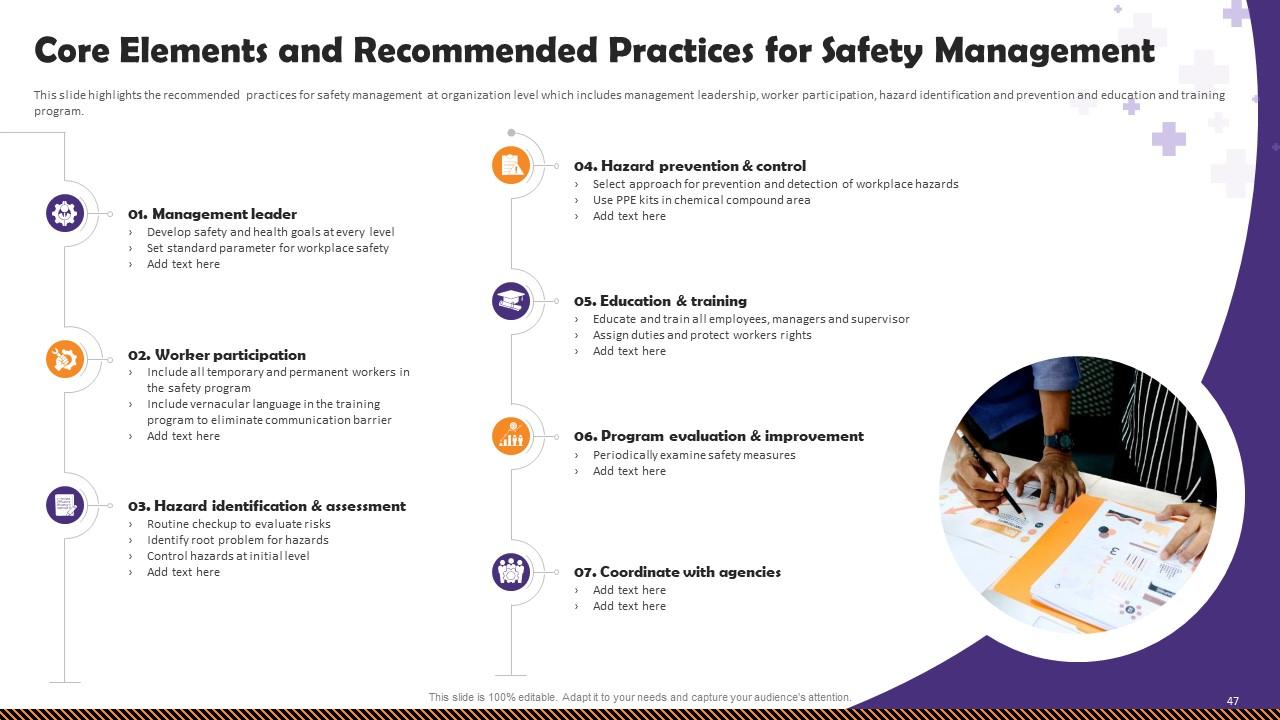
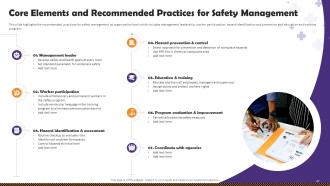
Slide 47 : Este slide destaca as práticas recomendadas para gerenciamento de segurança no nível da organização.
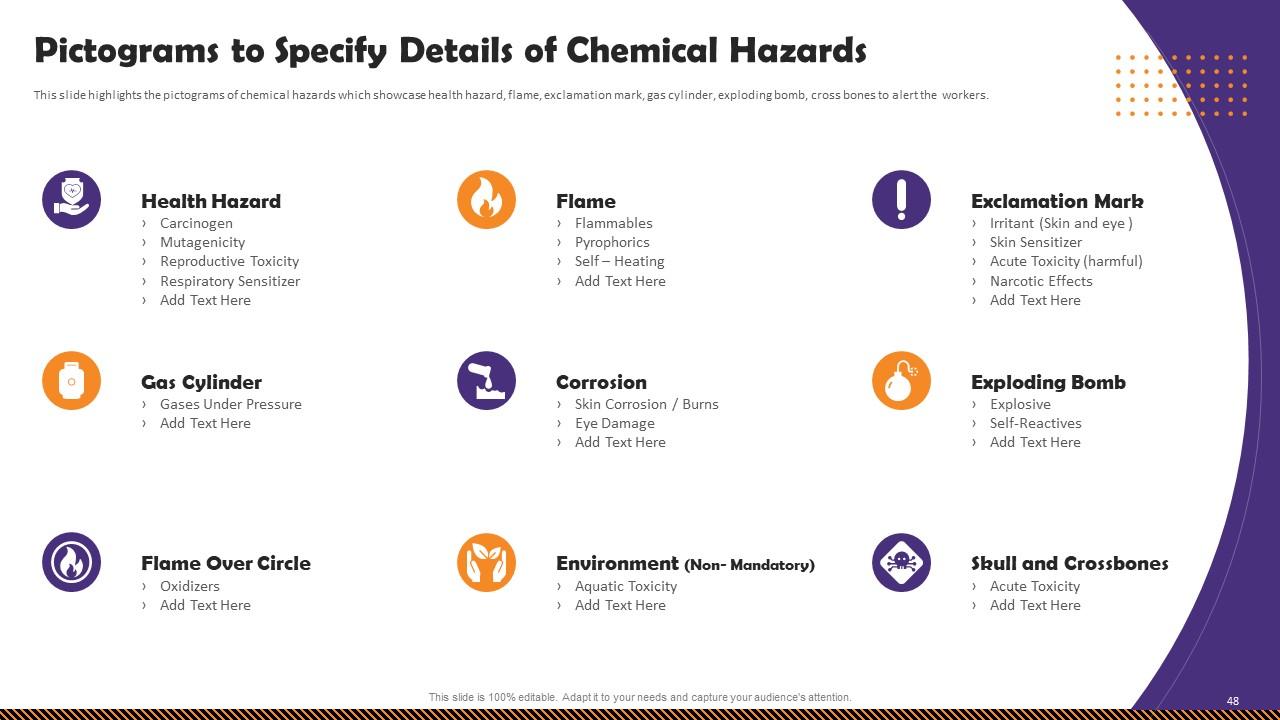
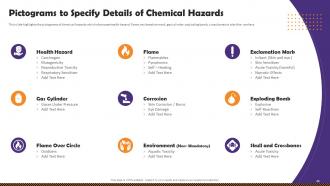
Slide 48 : Este slide destaca os pictogramas de perigos químicos que mostram risco à saúde, chama, ponto de exclamação, cilindro de gás, explosão de bomba.
Slide 49 : Este slide descreve o plano de 30-60-90 dias para projetos.
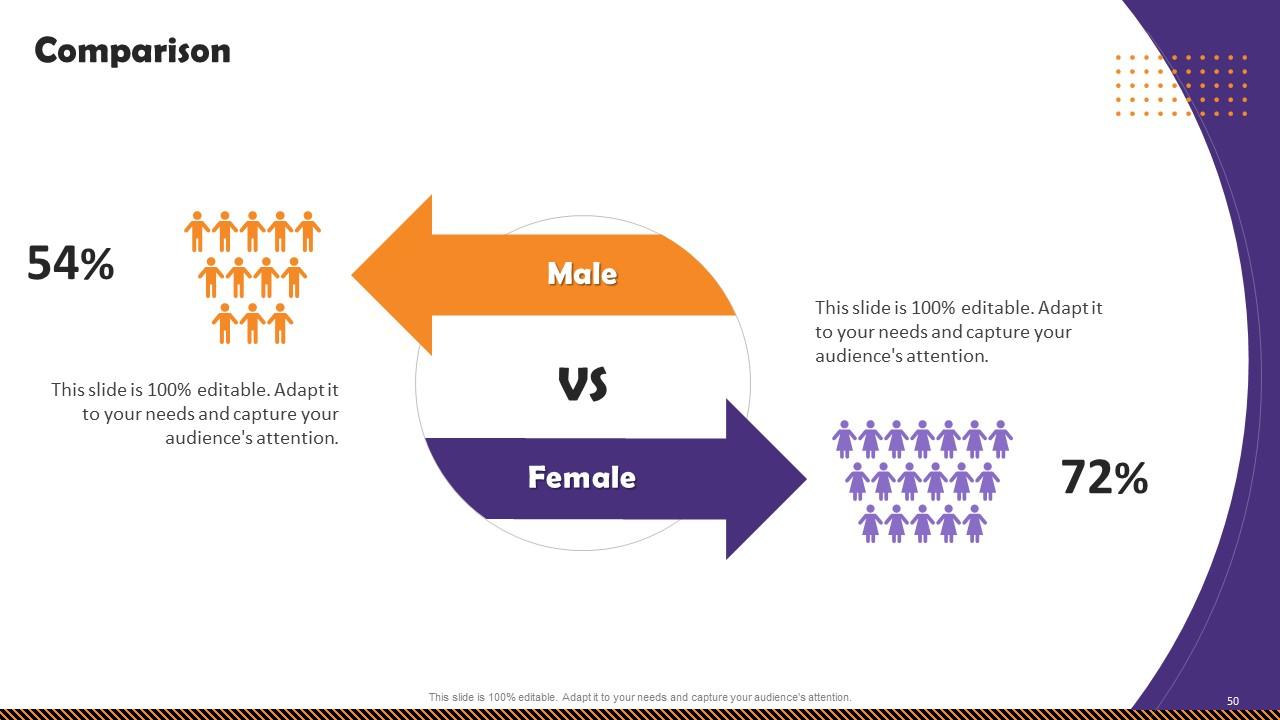
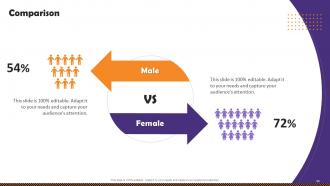
Slide 50 : Este slide mostra a Comparação.
Slide 51 : Este slide mostra o roteiro para o fluxo do processo.
Slide 52 : Este slide mostra postagens de experiências passadas de clientes.
Slide 53 : Este slide mostra o quebra-cabeça para exibir os elementos da empresa.
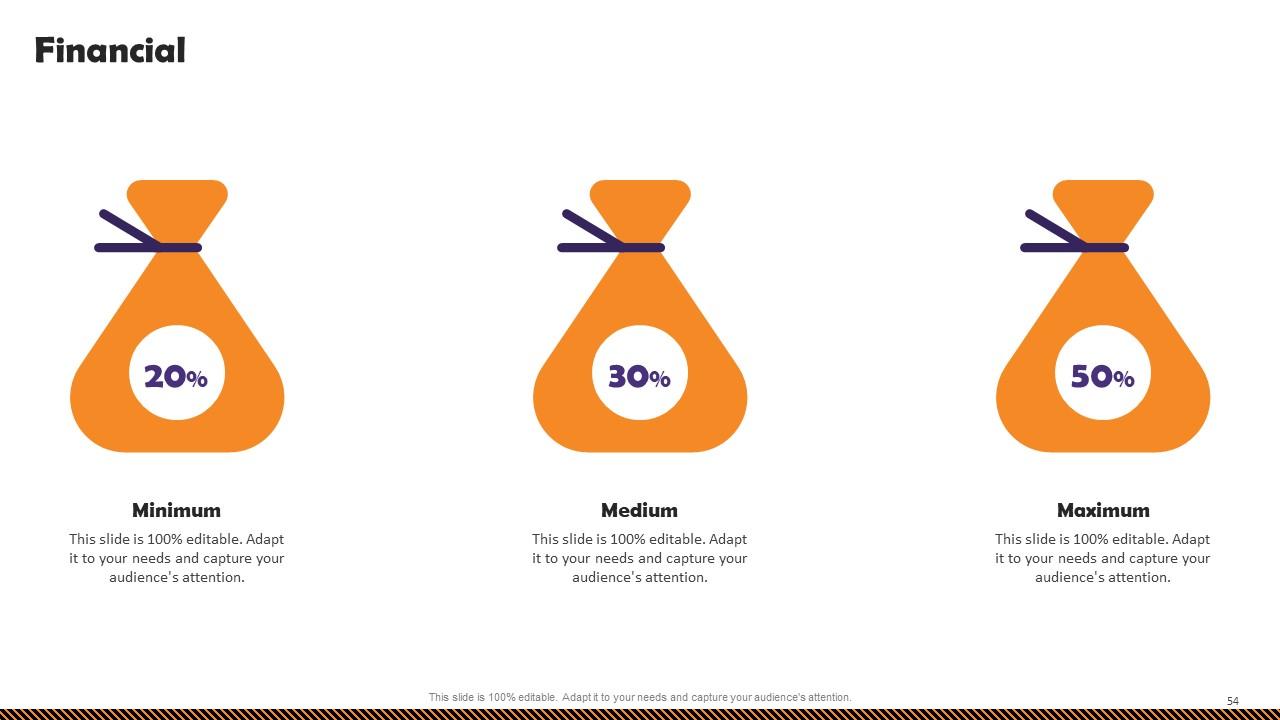
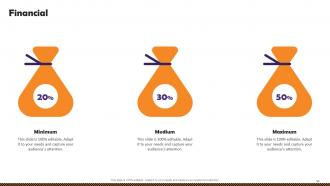
Slide 54 : Este slide mostra as finanças da empresa.
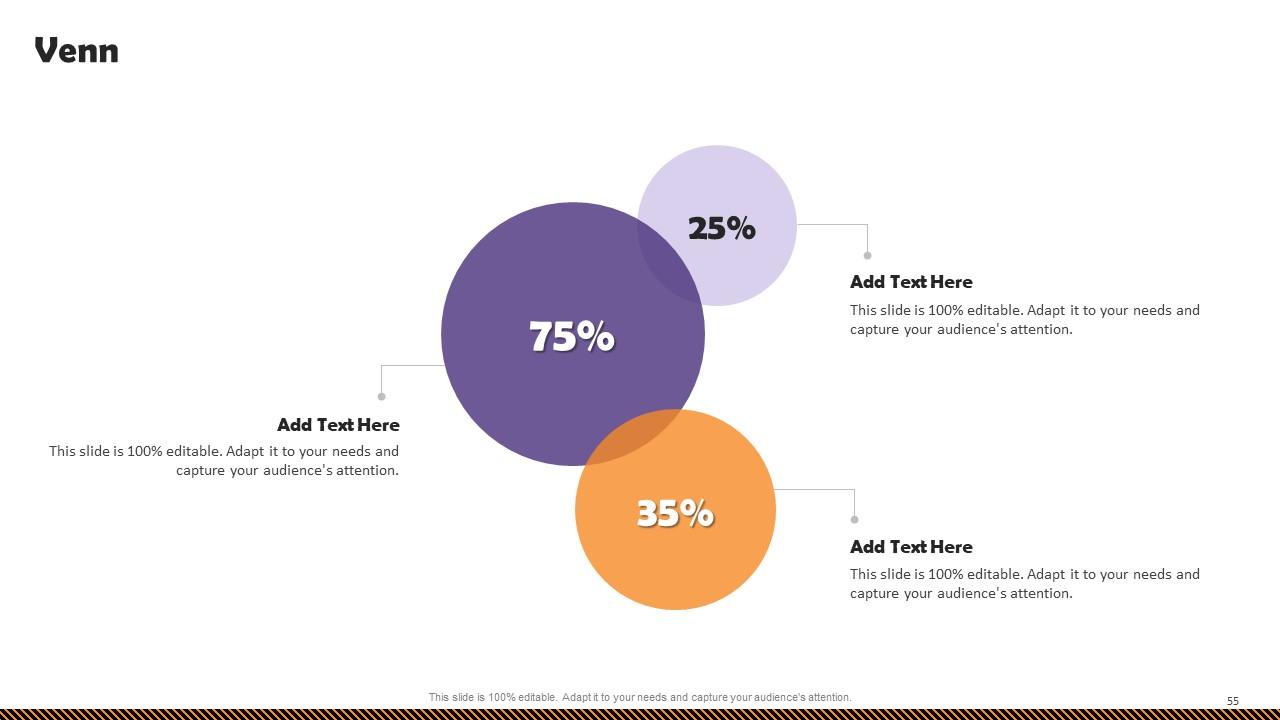
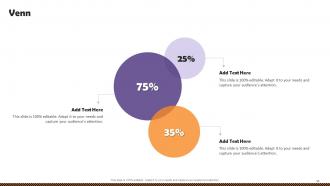
Slide 55 : Esta exibição de slides Venn.
Slide 56 : Este é o slide de agradecimento e contém detalhes de contato da empresa, como endereço do escritório, número de telefone, etc.
Saúde e segurança dos funcionários na organização Apresentação em Powerpoint Slides com todos os 61 slides:
Use nossos slides de apresentação do Powerpoint sobre saúde e segurança dos funcionários na organização para ajudá-lo a economizar seu valioso tempo. Eles estão prontos para caber em qualquer estrutura de apresentação.
-
The designs by SlideTeam are honestly the best I have seen so far. Will be definitely coming back for more.
-
Visually stunning presentation, love the content.
