


Heroku SaaS Platform Implementation Guide PowerPoint PPT Template Bundles CL MM
Heroku, founded in 2007, is a leading cloud platform that simplifies app deployment and management. Based in the United States, its headquarters is in San Francisco. Acquired by Salesforce in 2010. Heroku offers developers a flexible and user-friendly environment to build, deploy, and scale applications seamlessly. Heroku SaaS Platform Implementation Guide is the ultimate solution for businesses seeking seamless cloud integration. Our virtual cloud infrastructure ensures flexible scalability and secure data management. Embrace the Digital Transformation journey with confidence, as our expert guide helps in smooth transitions from on-premise systems to Herokus advanced cloud environment. Accelerate innovation, improve collaboration, and drive efficiency, with low IT complexities. Maximize your companys productivity and success with the unmatched capabilities of the Heroku SaaS Platform Implementation Guide. Unlock your true potential in the cloud-driven era.
Heroku, founded in 2007, is a leading cloud platform that simplifies app deployment and management. Based in the United Sta..










-

- Google Slides is a new FREE Presentation software from Google.
- All our content is 100% compatible with Google Slides.
- Just download our designs, and upload them to Google Slides and they will work automatically.
- Amaze your audience with SlideTeam and Google Slides.
-

Want Changes to This PPT Slide? Check out our Presentation Design Services
-

- WideScreen Aspect ratio is becoming a very popular format. When you download this product, the downloaded ZIP will contain this product in both standard and widescreen format.
-

- Some older products that we have may only be in standard format, but they can easily be converted to widescreen.
- To do this, please open the SlideTeam product in Powerpoint, and go to
- Design ( On the top bar) -> Page Setup -> and select "On-screen Show (16:9)” in the drop down for "Slides Sized for".
- The slide or theme will change to widescreen, and all graphics will adjust automatically. You can similarly convert our content to any other desired screen aspect ratio.
Compatible With Google Slides

Get This In WideScreen
You must be logged in to download this presentation.


Do you want to remove this product from your favourites?
PowerPoint presentation slides
Deliver a credible and compelling presentation by deploying this Heroku SaaS Platform Implementation Guide PowerPoint PPT Template Bundles CL MM. Intensify your message with the right graphics, images, icons, etc. presented in this complete deck. This PPT template is a great starting point to convey your messages and build a good collaboration. The twenty slides added to this PowerPoint slideshow helps you present a thorough explanation of the topic. You can use it to study and present various kinds of information in the form of stats, figures, data charts, and many more. This Heroku SaaS Platform Implementation Guide PowerPoint PPT Template Bundles CL MM PPT slideshow is available for use in standard and widescreen aspects ratios. So, you can use it as per your convenience. Apart from this, it can be downloaded in PNG, JPG, and PDF formats, all completely editable and modifiable. The most profound feature of this PPT design is that it is fully compatible with Google Slides making it suitable for every industry and business domain.

People who downloaded this PowerPoint presentation also viewed the following :
Content of this Powerpoint Presentation
Slide 1: This slide introduces Heroku Cloud SaaS Platform Implementation Guide. State Your Company Name and begin.
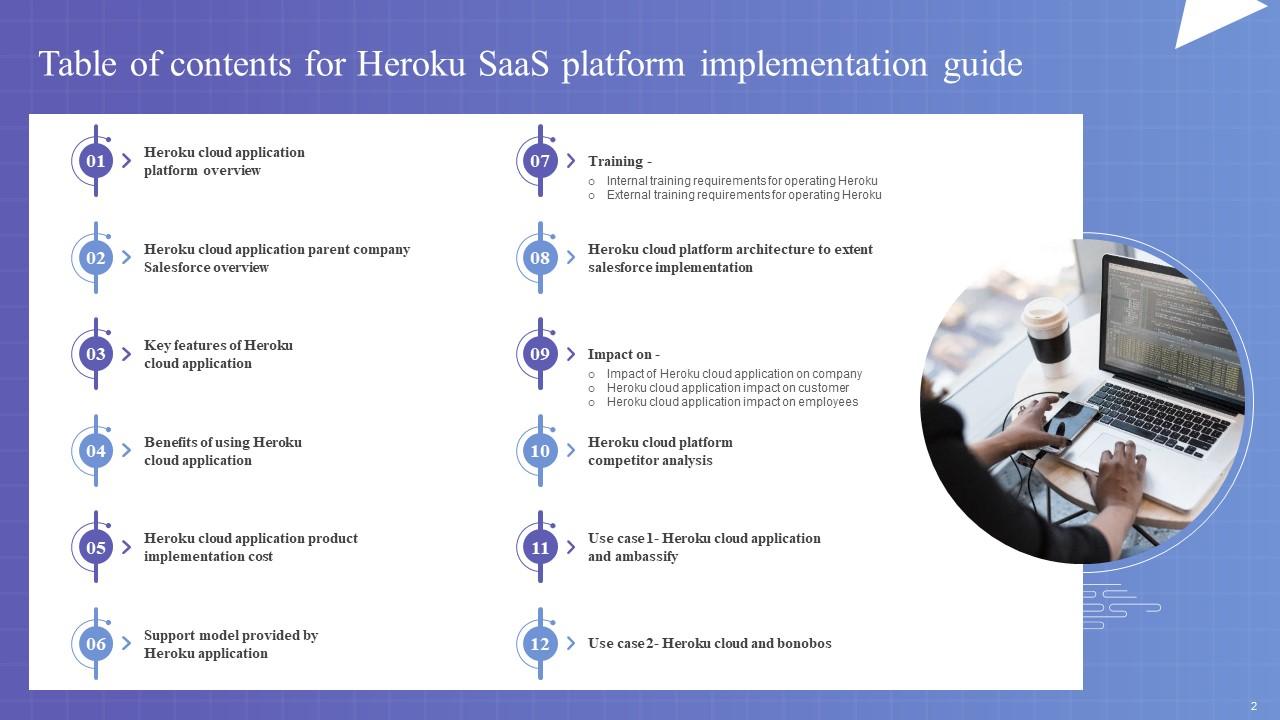
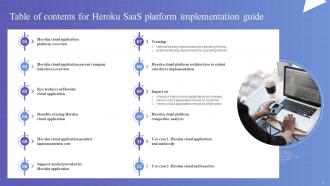
Slide 2: This slide shows a Table of Contents for the presentation.
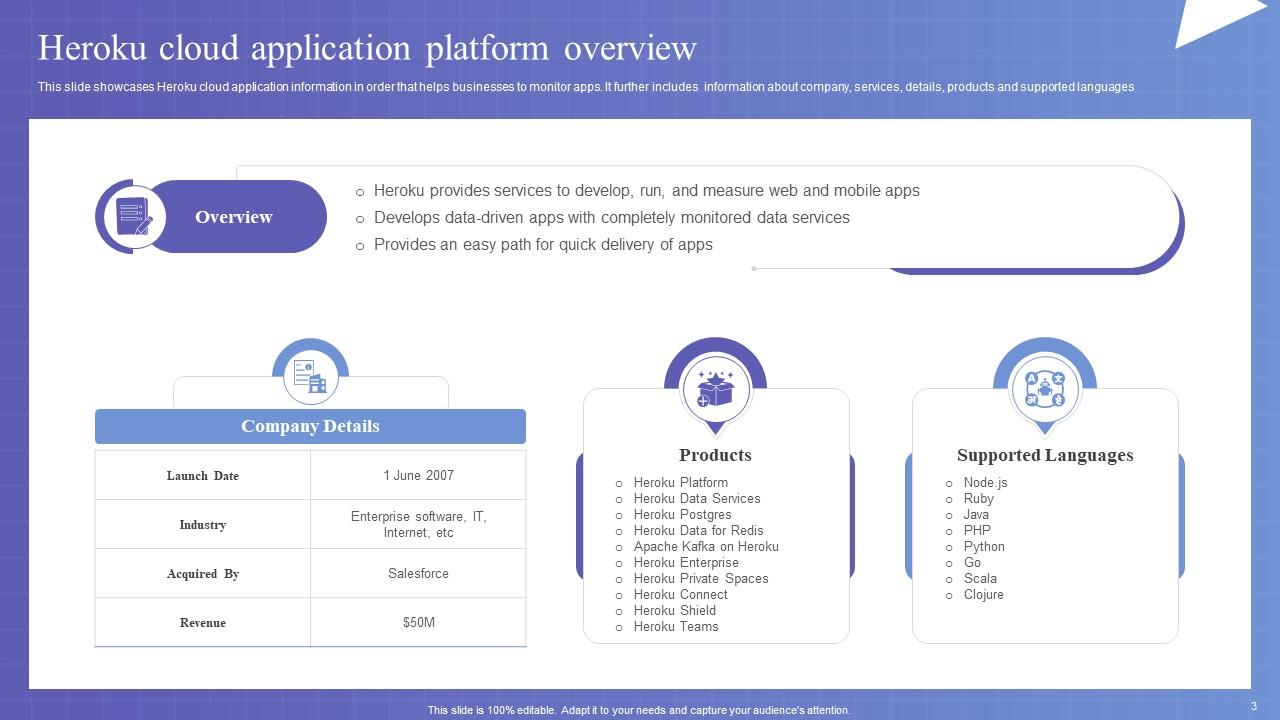
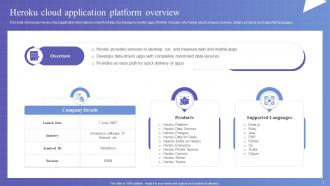
Slide 3: This slide showcases Heroku cloud application platform overview.
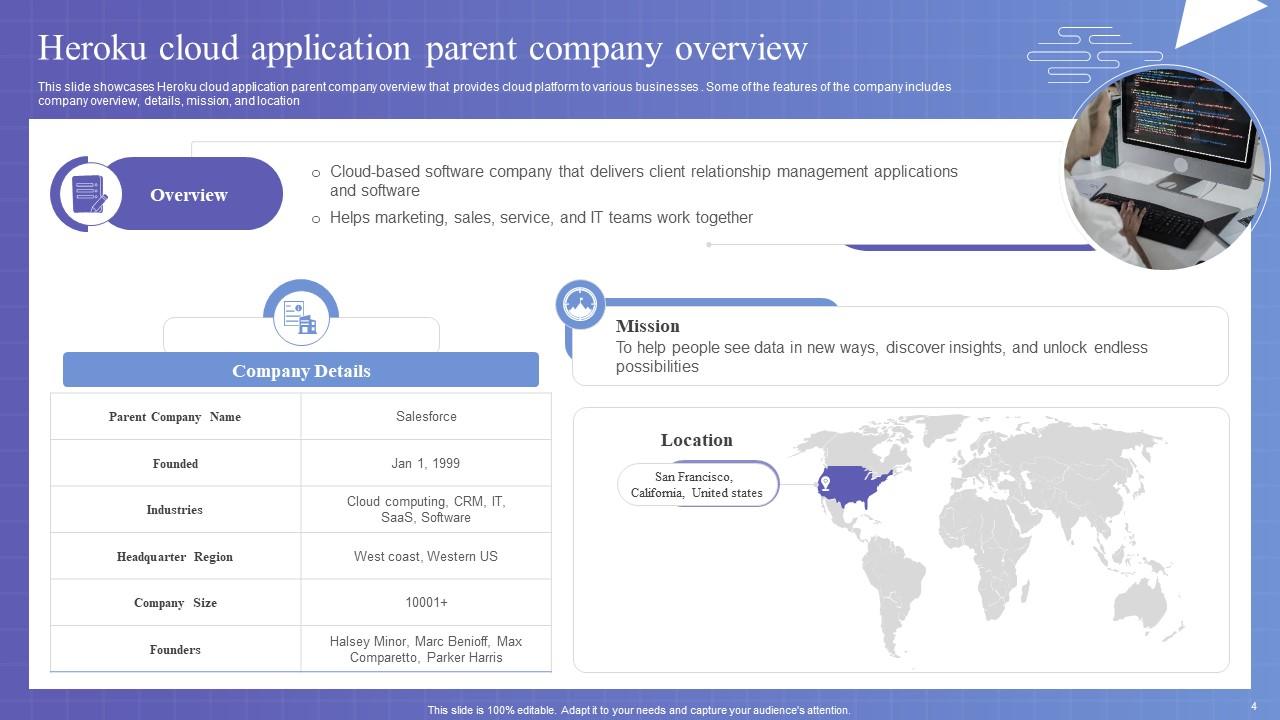
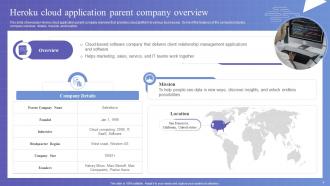
Slide 4: This slide describes Heroku cloud application parent company overview.
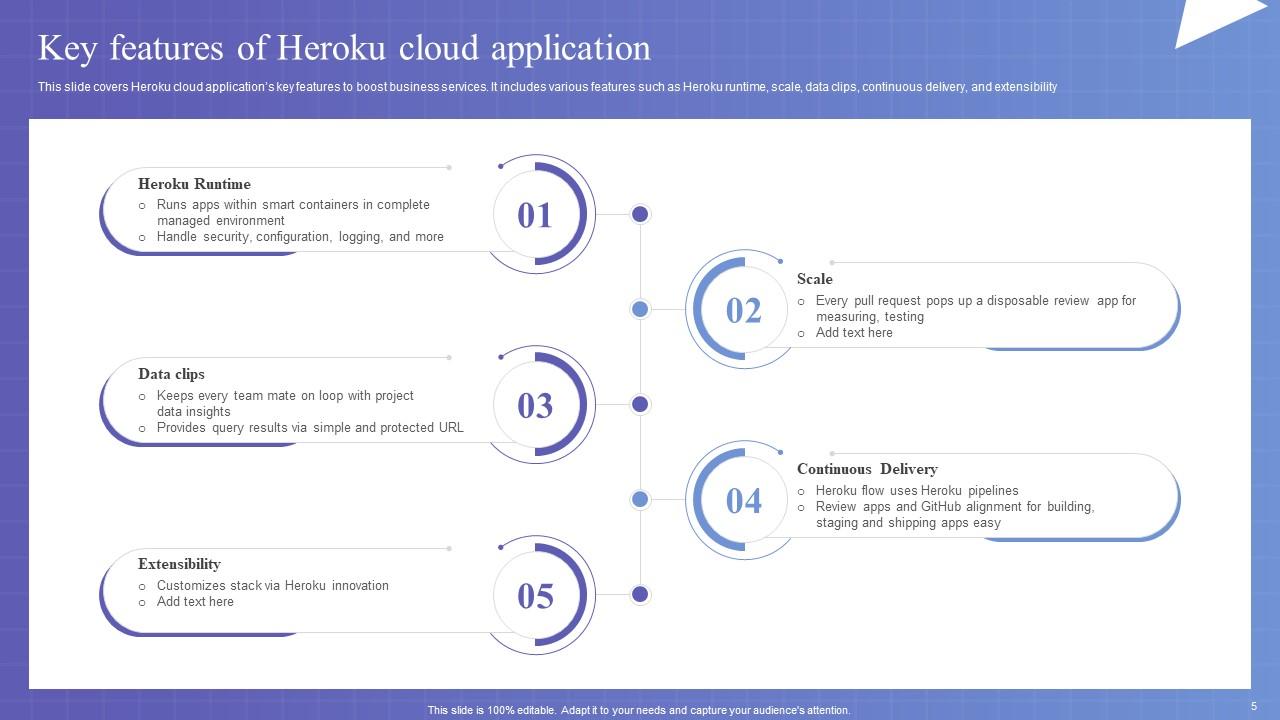
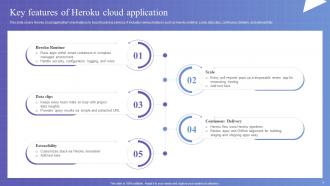
Slide 5: This slide covers Heroku cloud application’s key features to boost business services.
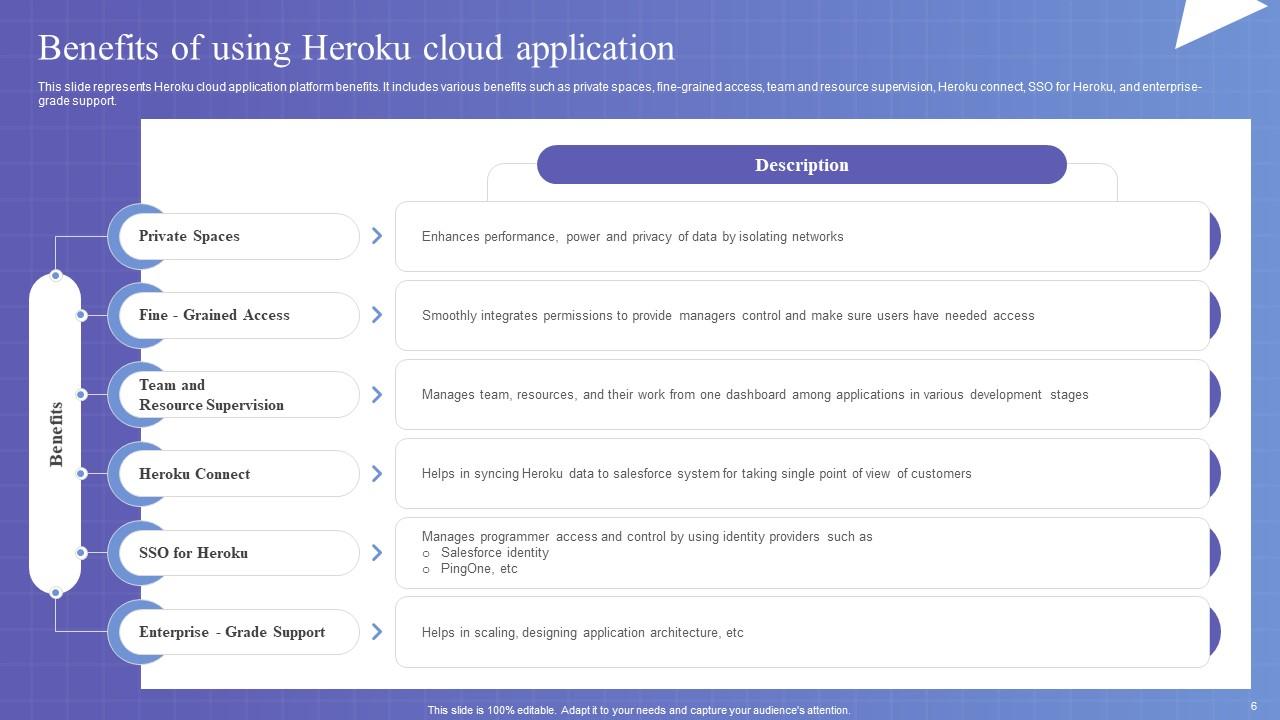
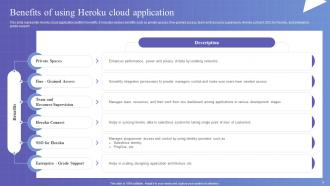
Slide 6: This slide shows Heroku cloud application platform benefits.
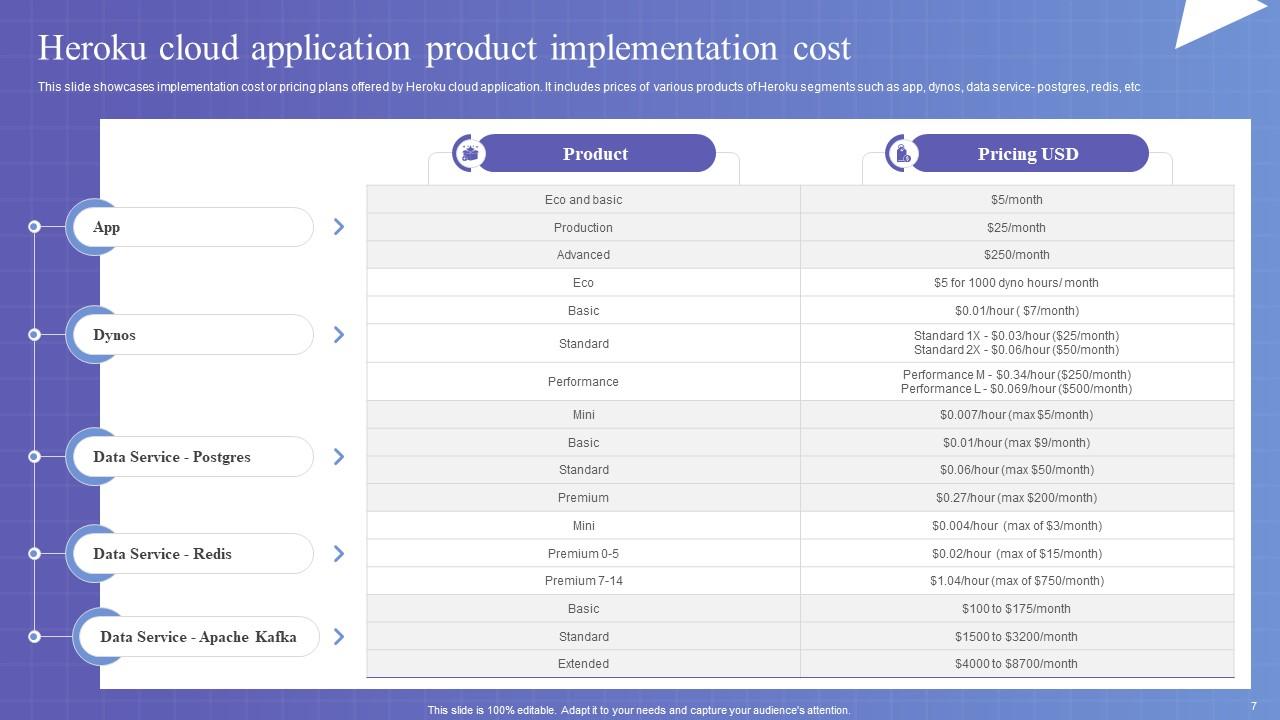
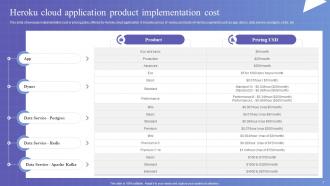
Slide 7: This slide showcases implementation cost or pricing plans offered by Heroku cloud application.
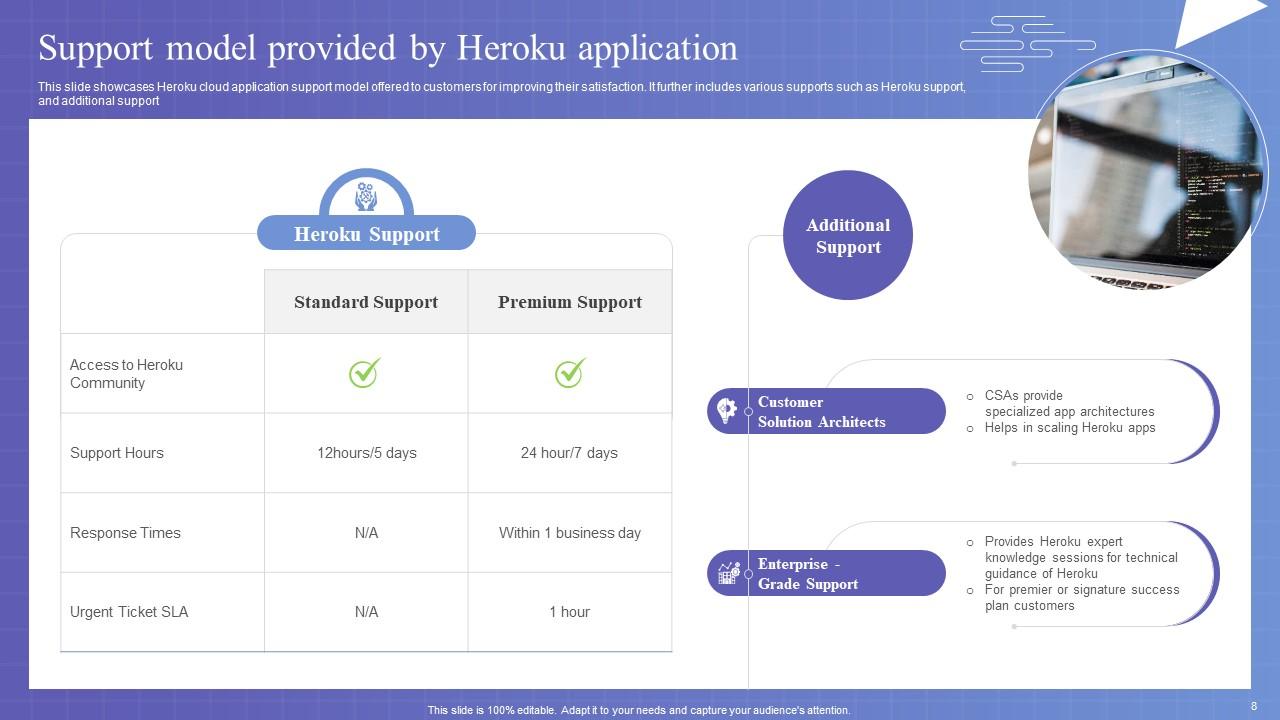
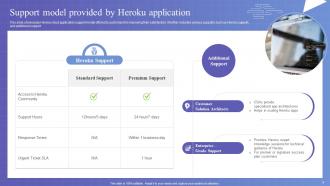
Slide 8: This slide presents Heroku cloud application support model offered to customers for improving their satisfaction.
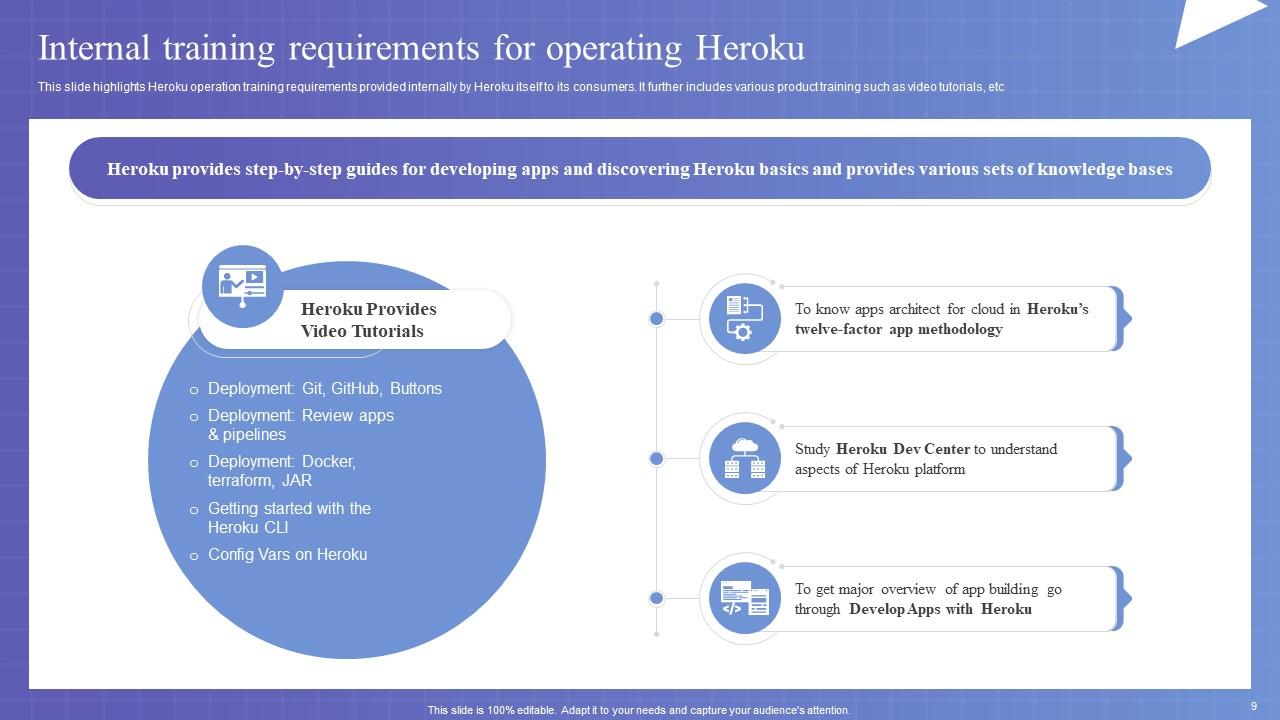
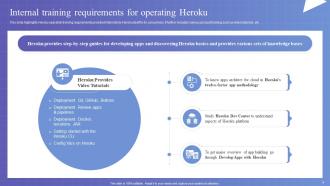
Slide 9: This slide caters Heroku operation training requirements provided internally by Heroku itself to its consumers.
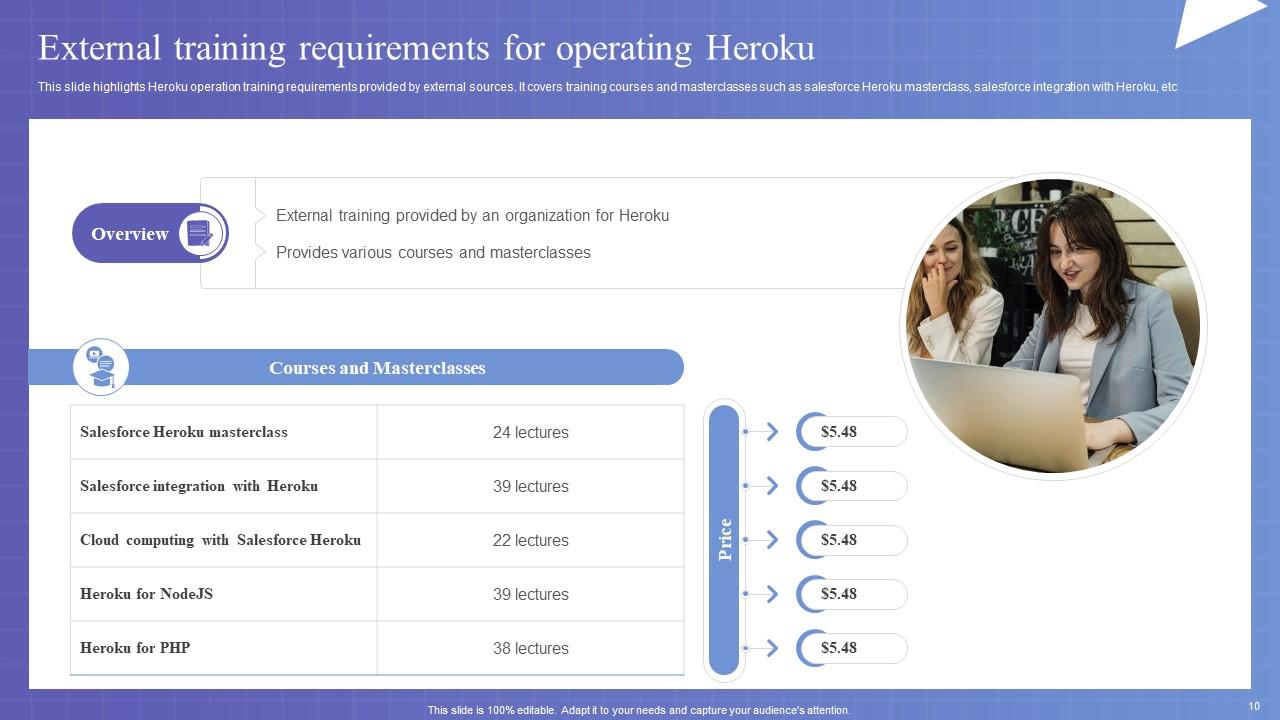
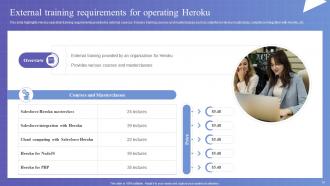
Slide 10: This slide shows Heroku operation training requirements provided by external sources.
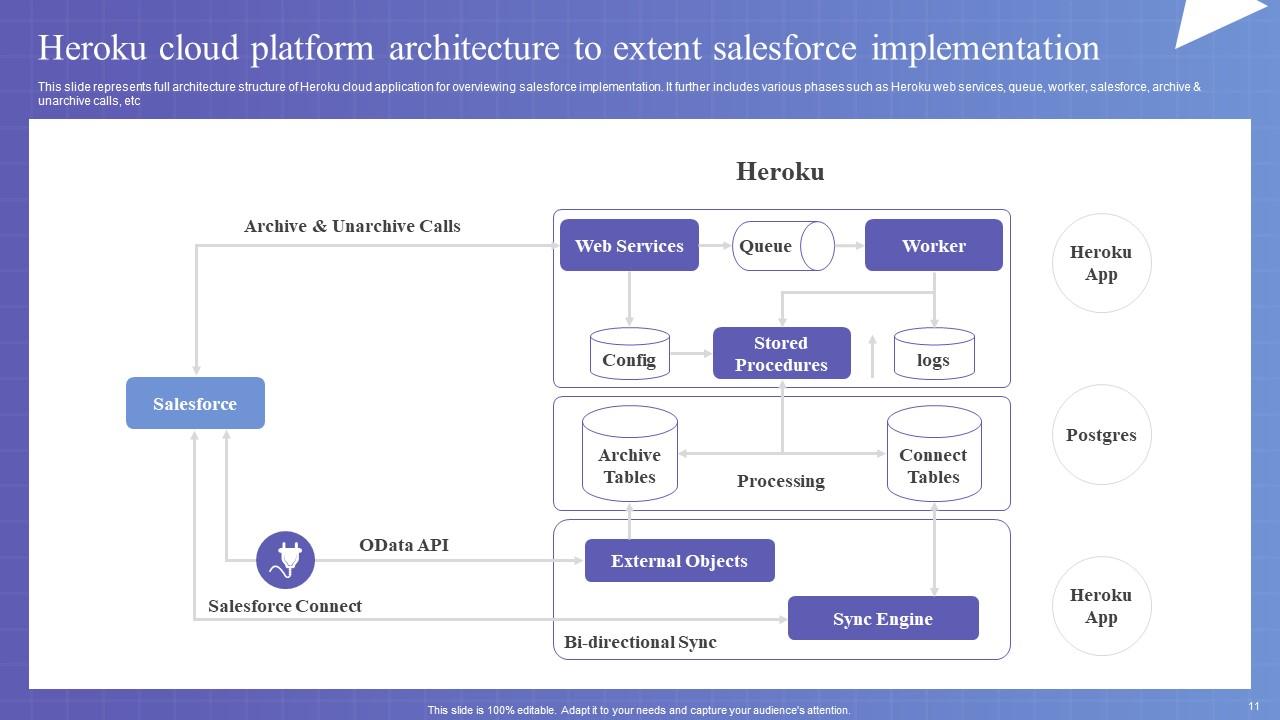
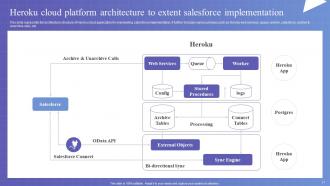
Slide 11: This slide gives the full architecture structure of Heroku cloud application for overviewing salesforce implementation.
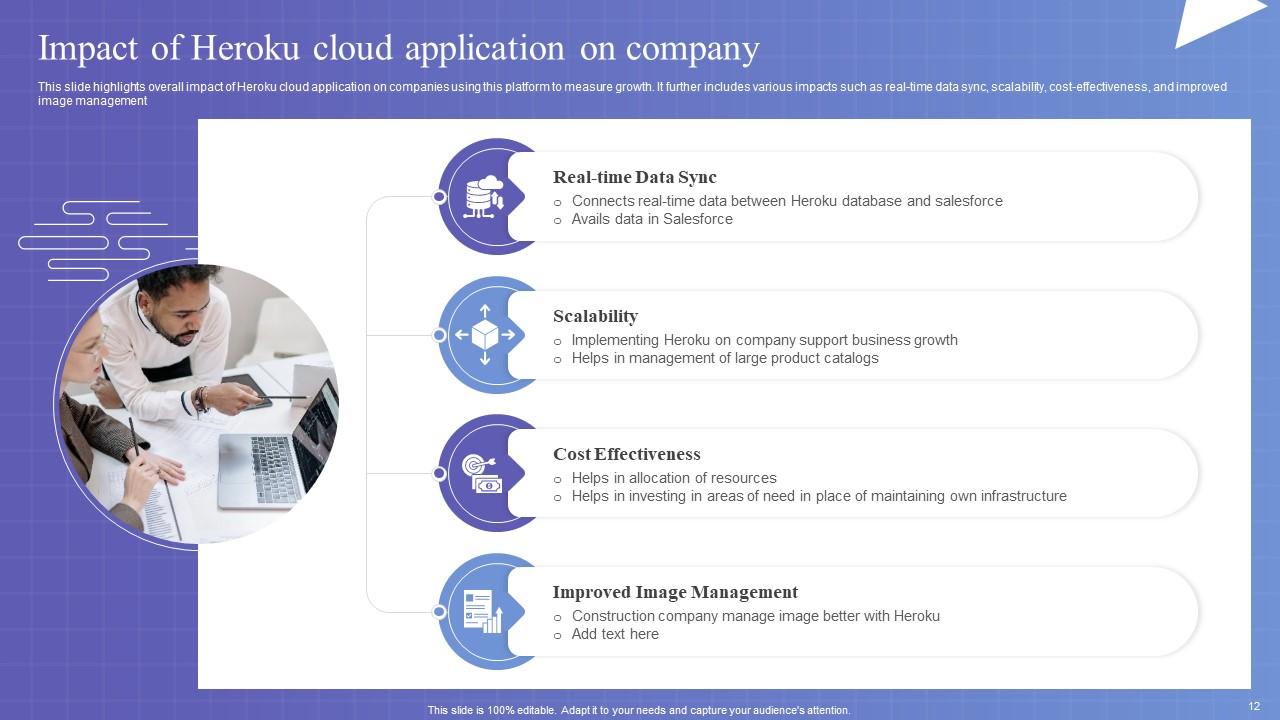
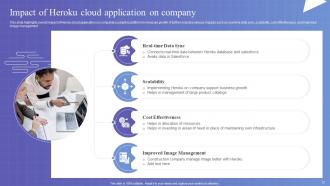
Slide 12: This slide depicts the overall impact of Heroku cloud application on companies.
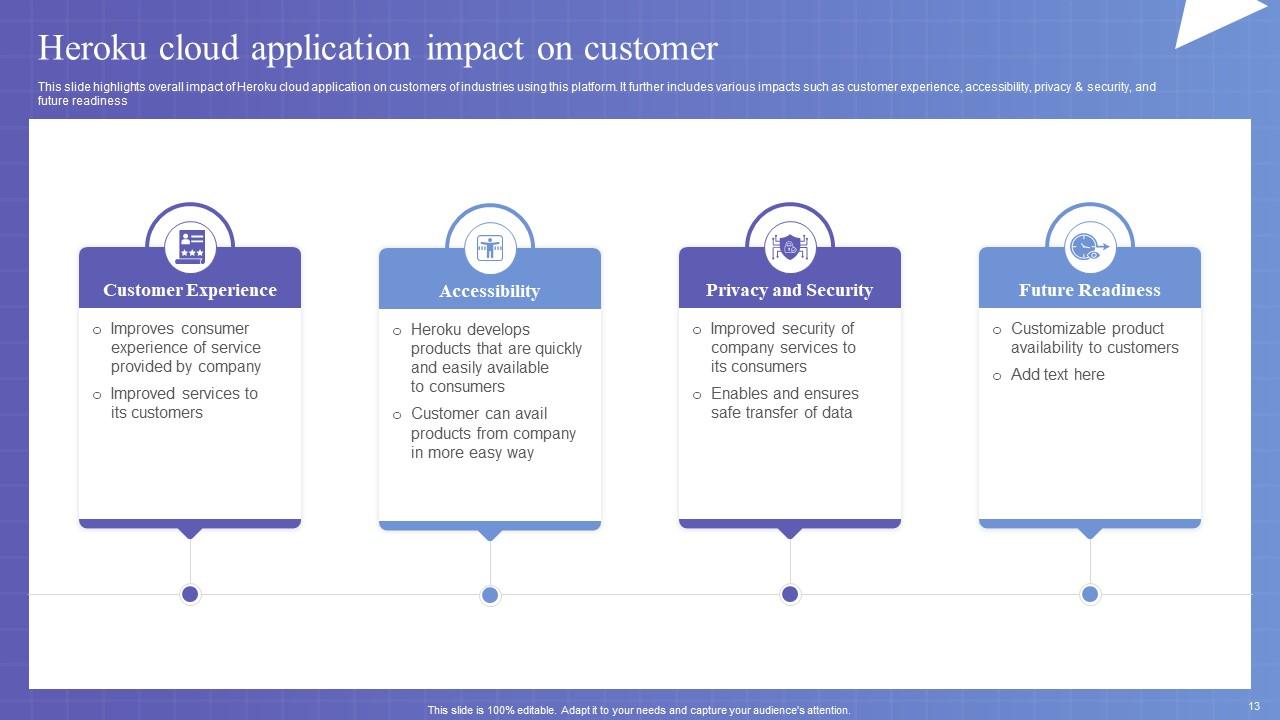
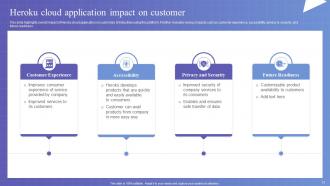
Slide 13: This slide contains am overall impact of Heroku cloud application on customers of industries.
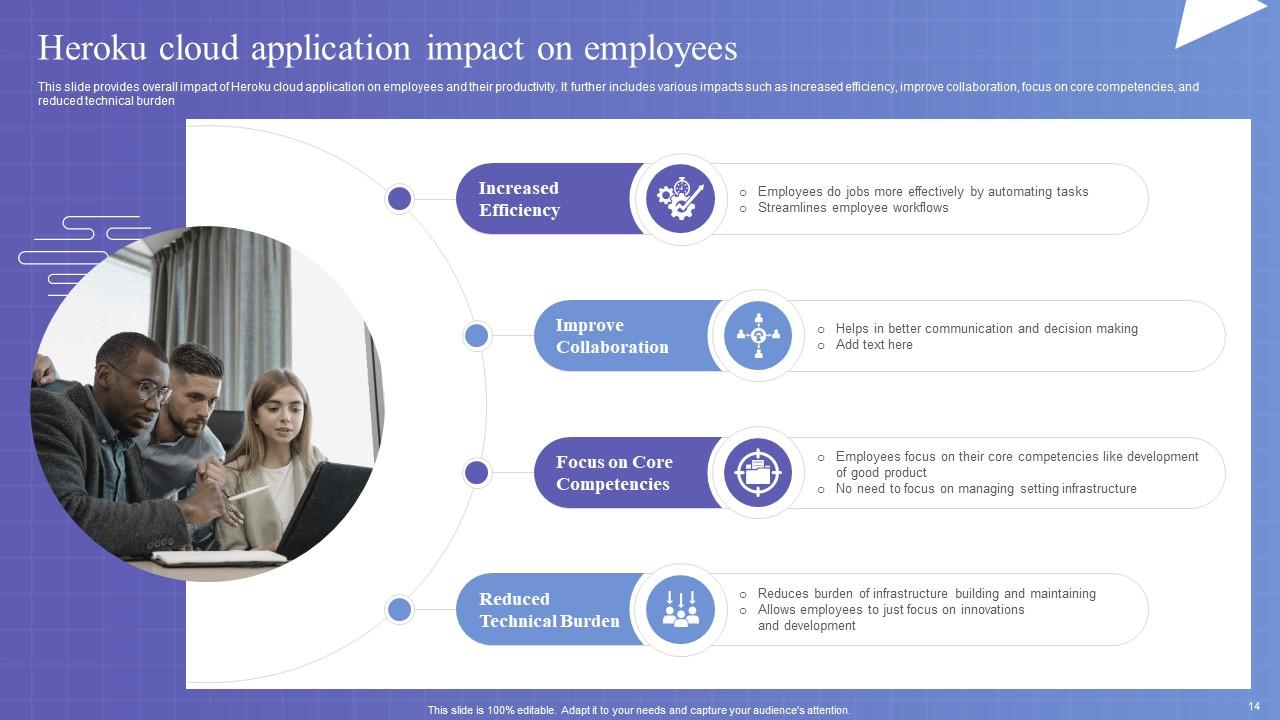
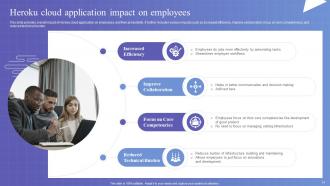
Slide 14: This slide provides the overall impact of Heroku cloud application on employees and their productivity.
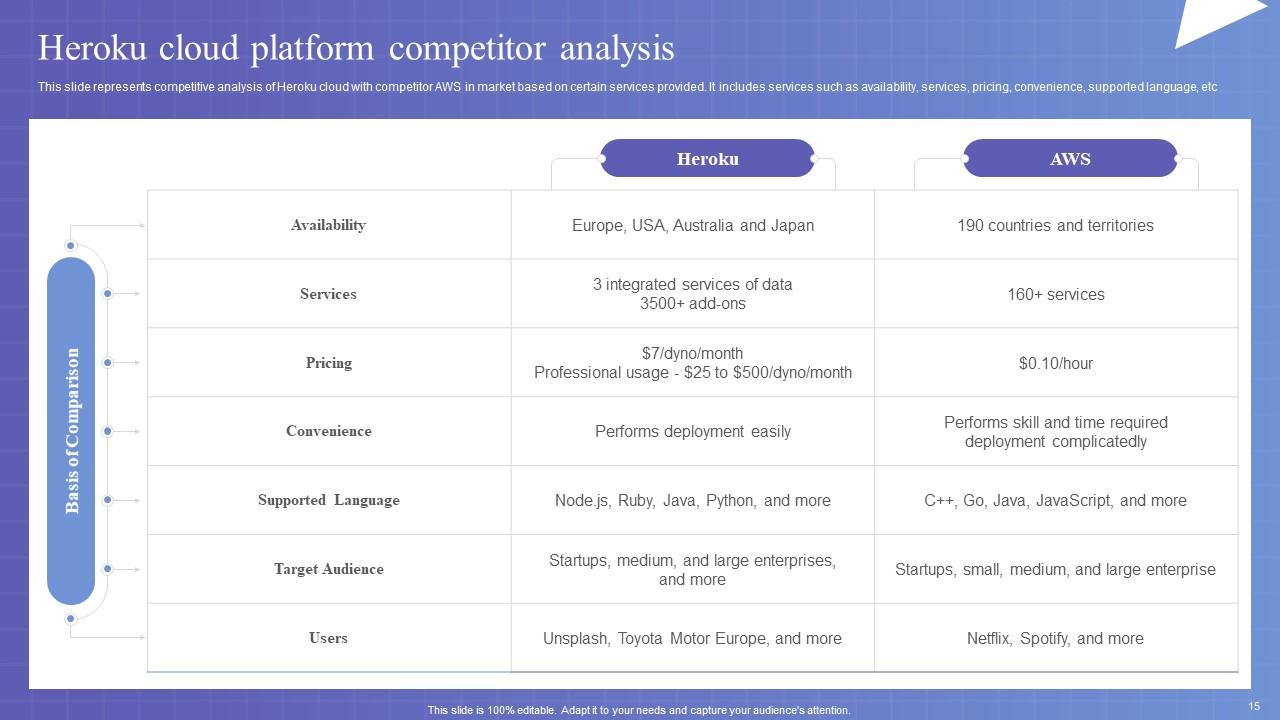
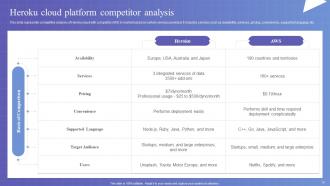
Slide 15: This slide represents a competitive analysis of Heroku Cloud with competitor AWS in the market based on certain services provided.
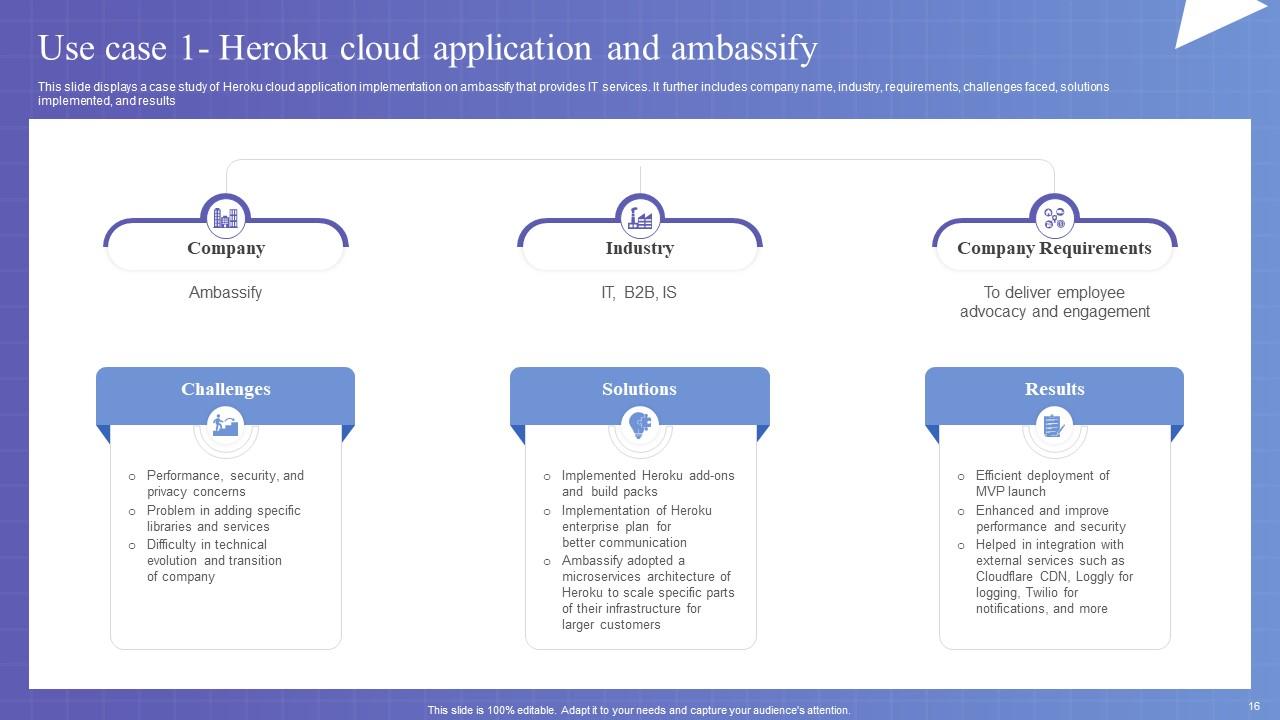
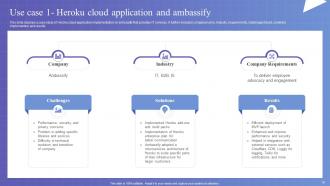
Slide 16: This slide displays a case study of Heroku cloud application implementation on Ambassify which provides IT services.
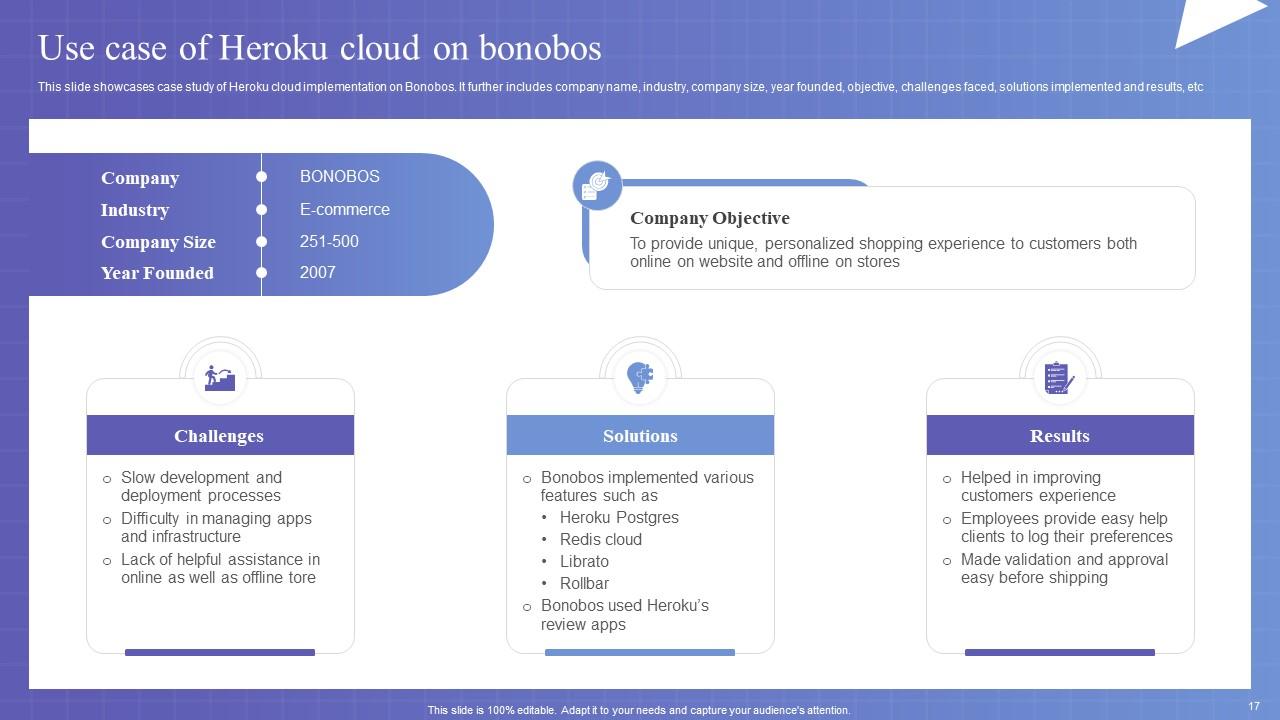
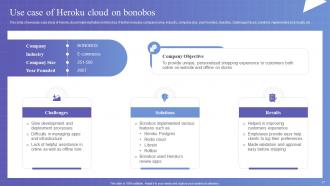
Slide 17: This slide displays a case study of Heroku cloud implementation on Bonobos.
Slide 18: This slide shows all the icons included in the presentation.
Slide 19: This slide is a thank-you slide with address, contact numbers, and email address.
Heroku SaaS Platform Implementation Guide PowerPoint PPT Template Bundles CL MM with all 24 slides:
Use our Heroku SaaS Platform Implementation Guide PowerPoint PPT Template Bundles CL MM to effectively help you save your valuable time. They are readymade to fit into any presentation structure.
-
I've been looking for a good template source for some time. I'm happy that I discovered SlideTeam. Excellent presentations must try!
-
SlideTeam’s readymade presentations have landed my unique images with my bosses in the past and it continues to reward me.
