Heroku SaaS Platform Implementation Guide PowerPoint PPT Template Bundles CL MM
Try Before you Buy Download Free Sample Product
Audience
Editable
of Time
Heroku wurde 2007 gegründet und ist eine führende Cloud-Plattform, die die App-Bereitstellung und -Verwaltung vereinfacht. Das in den Vereinigten Staaten ansässige Unternehmen hat seinen Hauptsitz in San Francisco. 2010 von Salesforce übernommen. Heroku bietet Entwicklern eine flexible und benutzerfreundliche Umgebung zum nahtlosen Erstellen, Bereitstellen und Skalieren von Anwendungen. Der Heroku SaaS Platform Implementation Guide ist die ultimative Lösung für Unternehmen, die eine nahtlose Cloud-Integration suchen. Unsere virtuelle Cloud-Infrastruktur sorgt für flexible Skalierbarkeit und sicheres Datenmanagement. Begeben Sie sich mit Zuversicht auf die Reise der digitalen Transformation, denn unser fachkundiger Leitfaden hilft Ihnen bei reibungslosen Übergängen von On-Premise-Systemen zur fortschrittlichen Cloud-Umgebung von Herokus. Beschleunigen Sie Innovationen, verbessern Sie die Zusammenarbeit und steigern Sie die Effizienz bei geringer IT-Komplexität. Maximieren Sie die Produktivität und den Erfolg Ihres Unternehmens mit den unübertroffenen Funktionen des Heroku SaaS Platform Implementation Guide. Schöpfen Sie Ihr wahres Potenzial im Cloud-basierten Zeitalter aus.
People who downloaded this PowerPoint presentation also viewed the following :
Inhalt dieser Powerpoint-Präsentation
Folie 1 : Auf dieser Folie wird der Implementierungsleitfaden für die Heroku Cloud SaaS-Plattform vorgestellt. Geben Sie Ihren Firmennamen an und beginnen Sie.
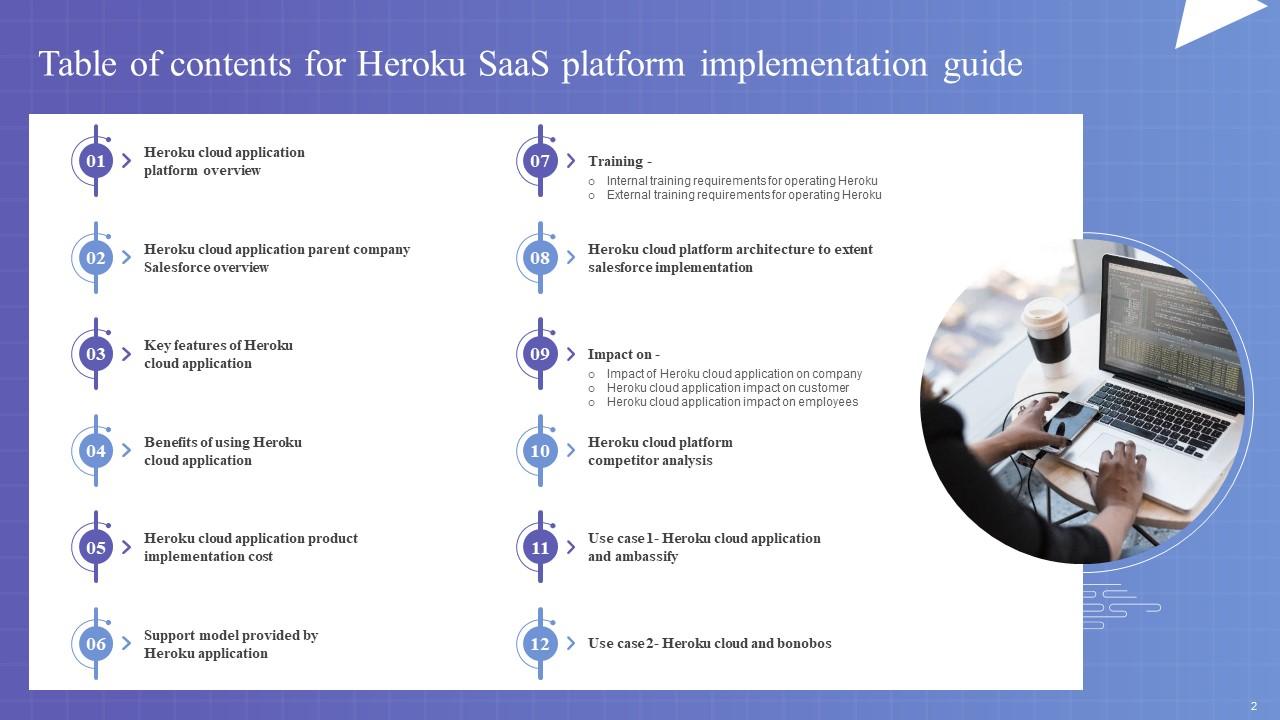
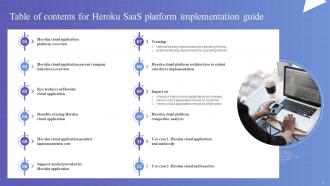
Folie 2 : Diese Folie zeigt ein Inhaltsverzeichnis für die Präsentation.
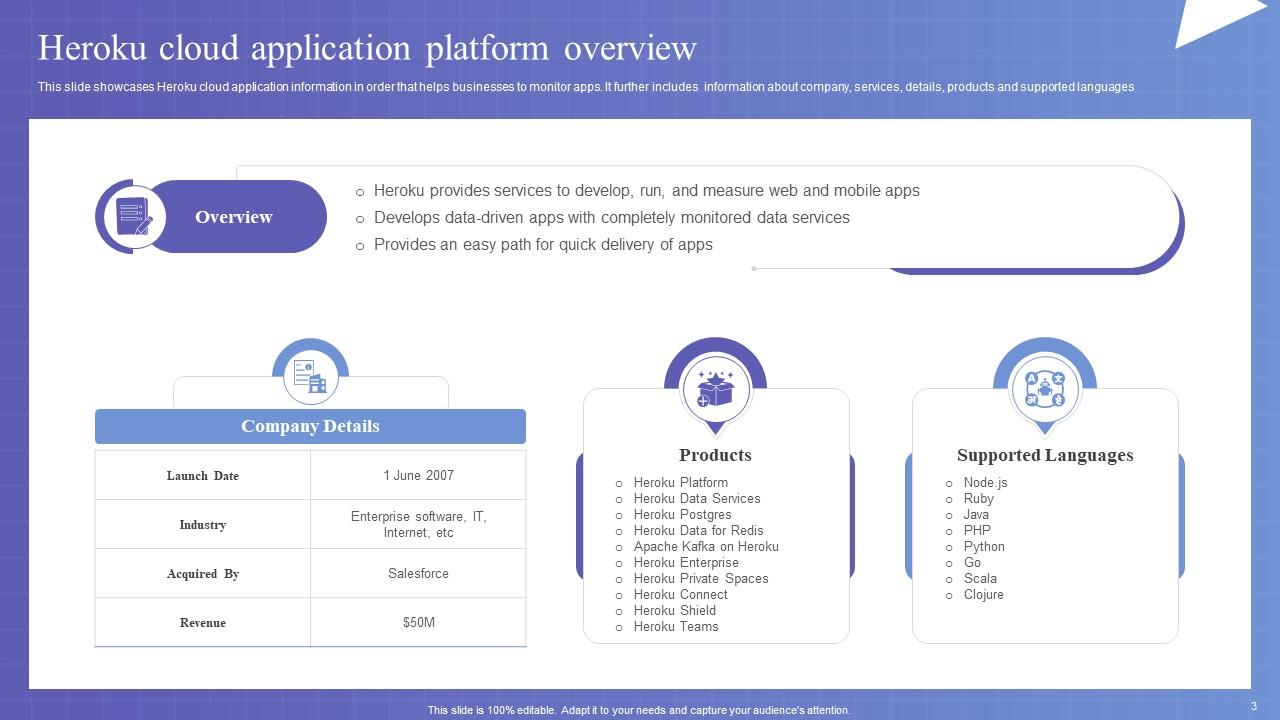
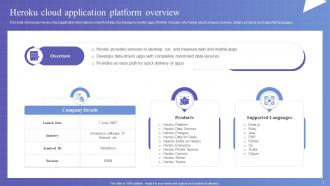
Folie 3 : Diese Folie zeigt einen Überblick über die Heroku-Cloud-Anwendungsplattform.
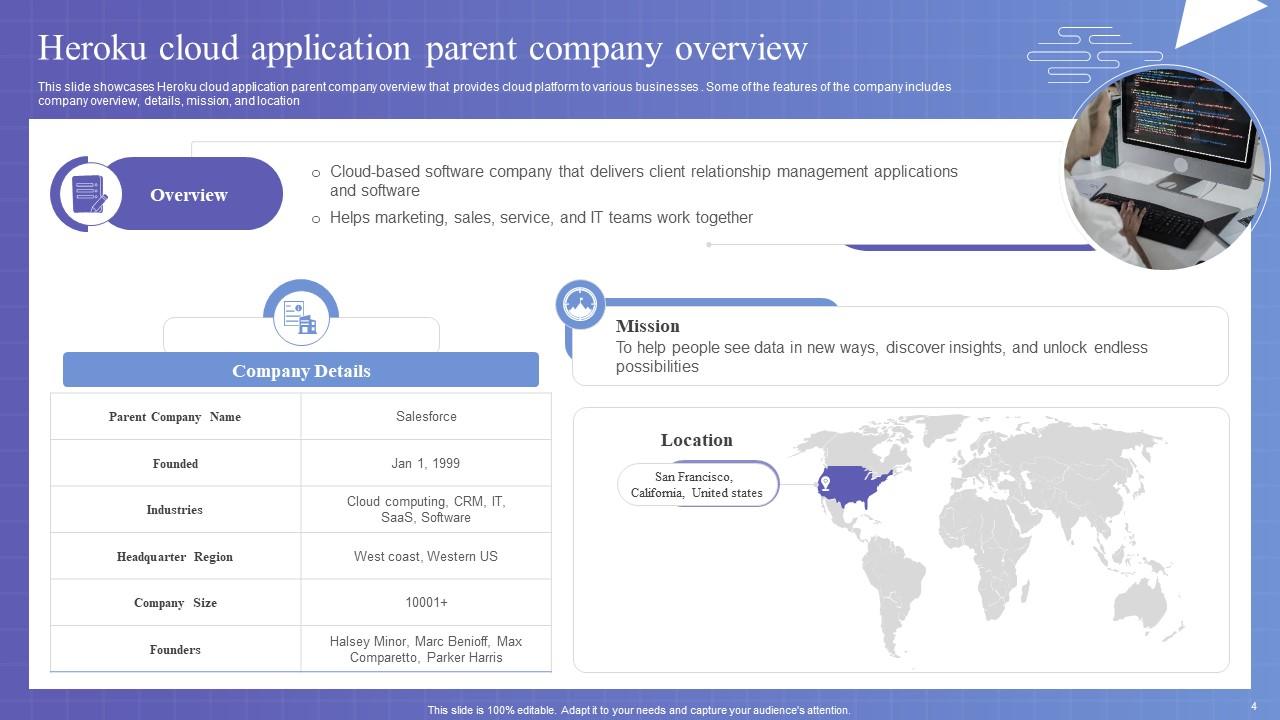
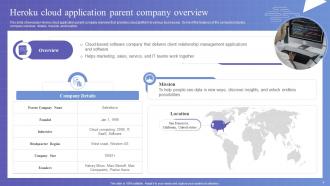
Folie 4 : Diese Folie beschreibt den Überblick über die Muttergesellschaft der Heroku-Cloud-Anwendung.
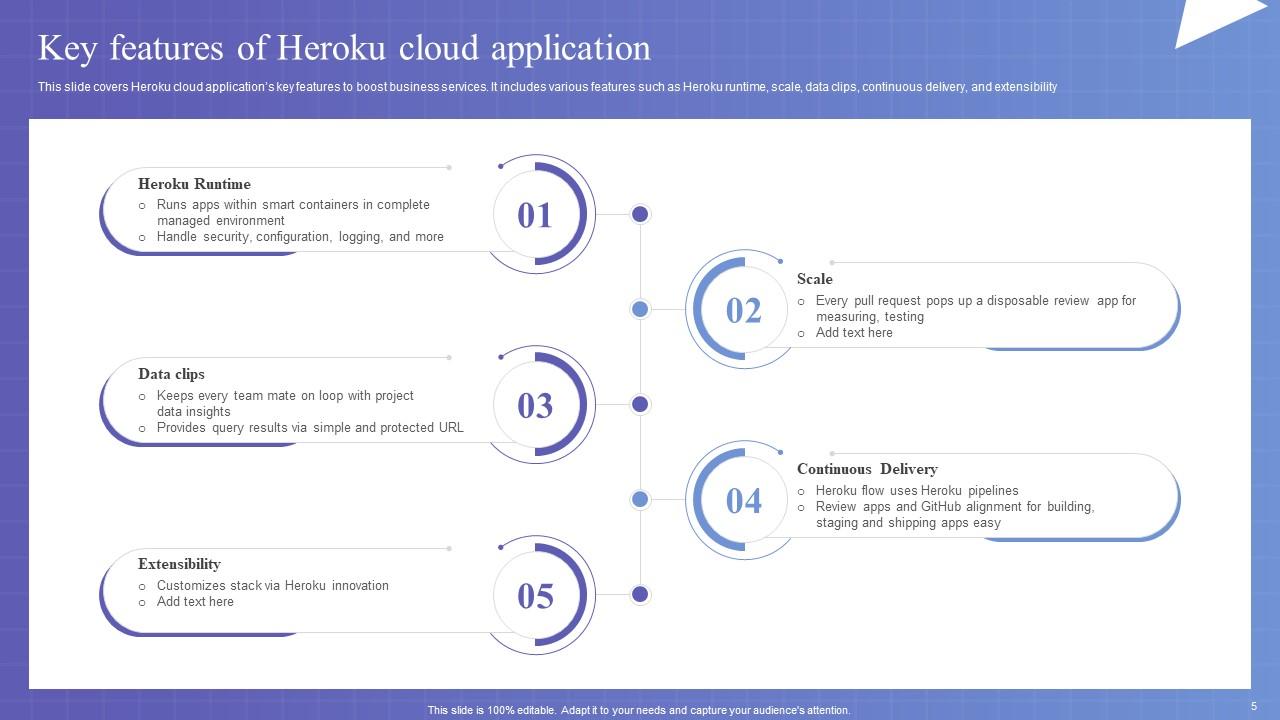
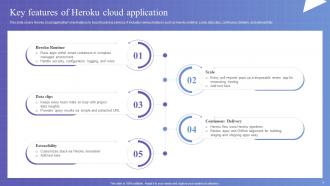
Folie 5 : Diese Folie behandelt die wichtigsten Funktionen der Heroku-Cloud-Anwendung zur Verbesserung von Unternehmensdiensten.
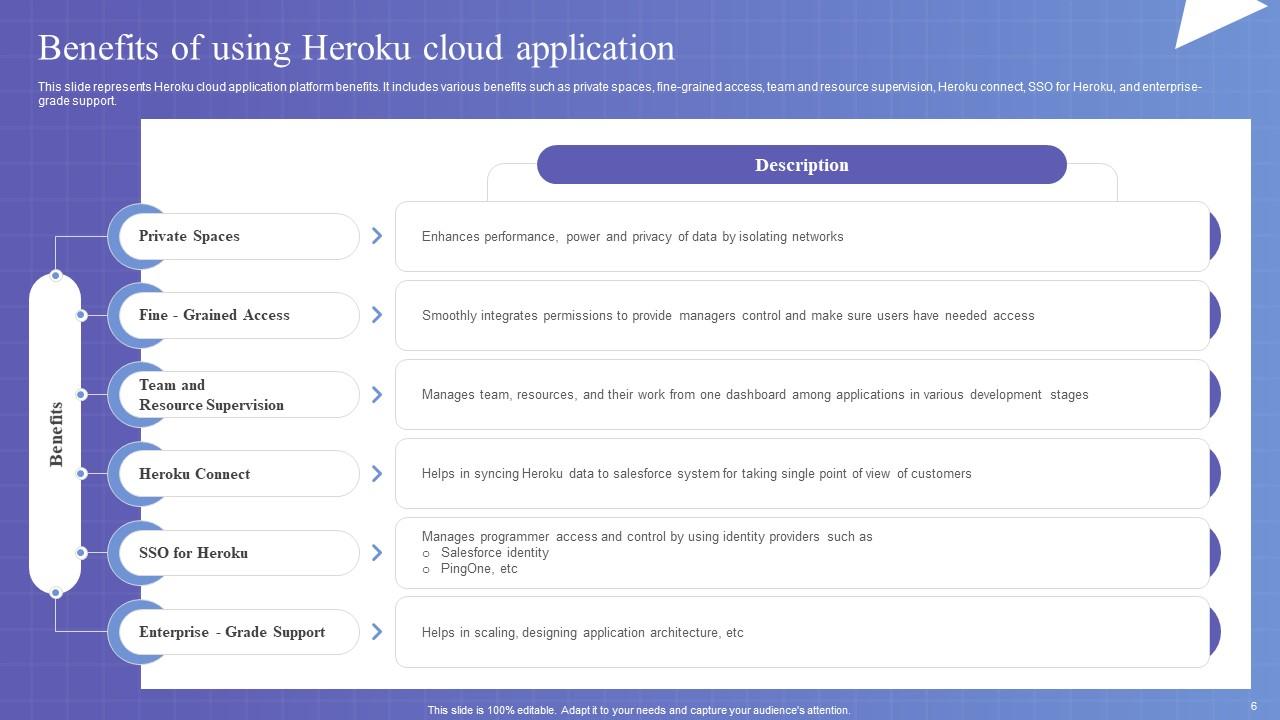
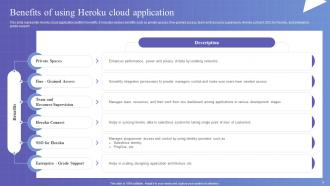
Folie 6 : Diese Folie zeigt die Vorteile der Heroku-Cloud-Anwendungsplattform.
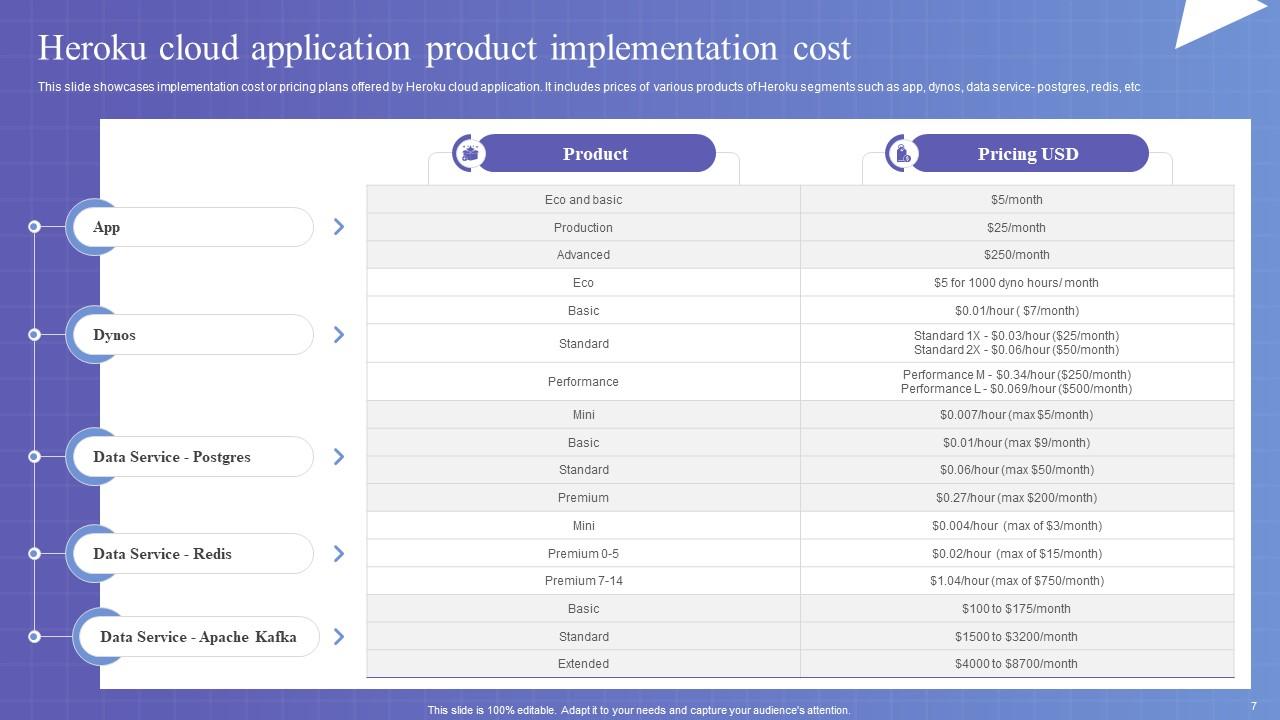
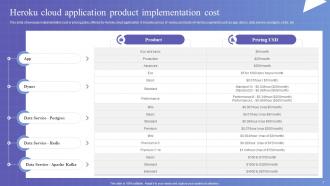
Folie 7 : Diese Folie zeigt die Implementierungskosten oder Preispläne, die von der Heroku-Cloud-Anwendung angeboten werden.
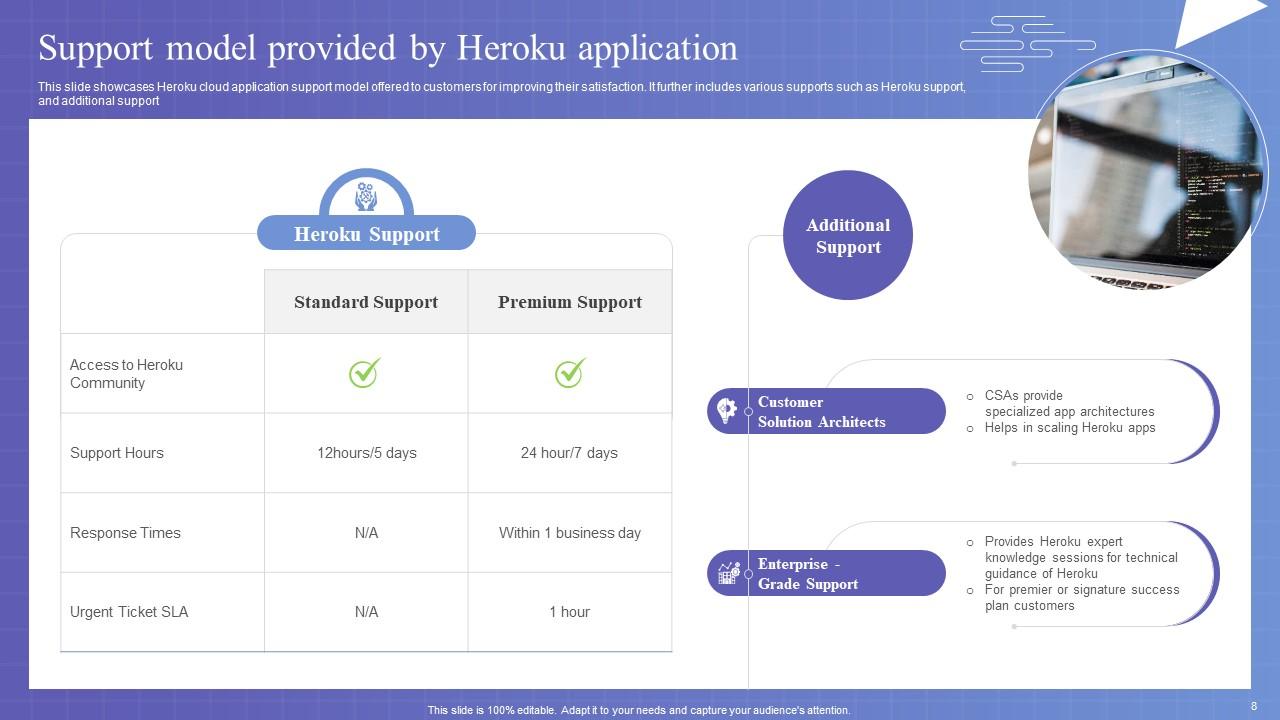
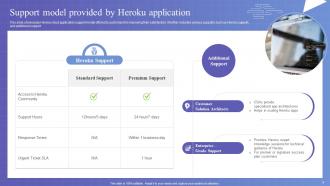
Folie 8 : Auf dieser Folie wird das Heroku-Cloudanwendungs-Supportmodell vorgestellt, das Kunden zur Verbesserung ihrer Zufriedenheit angeboten wird.
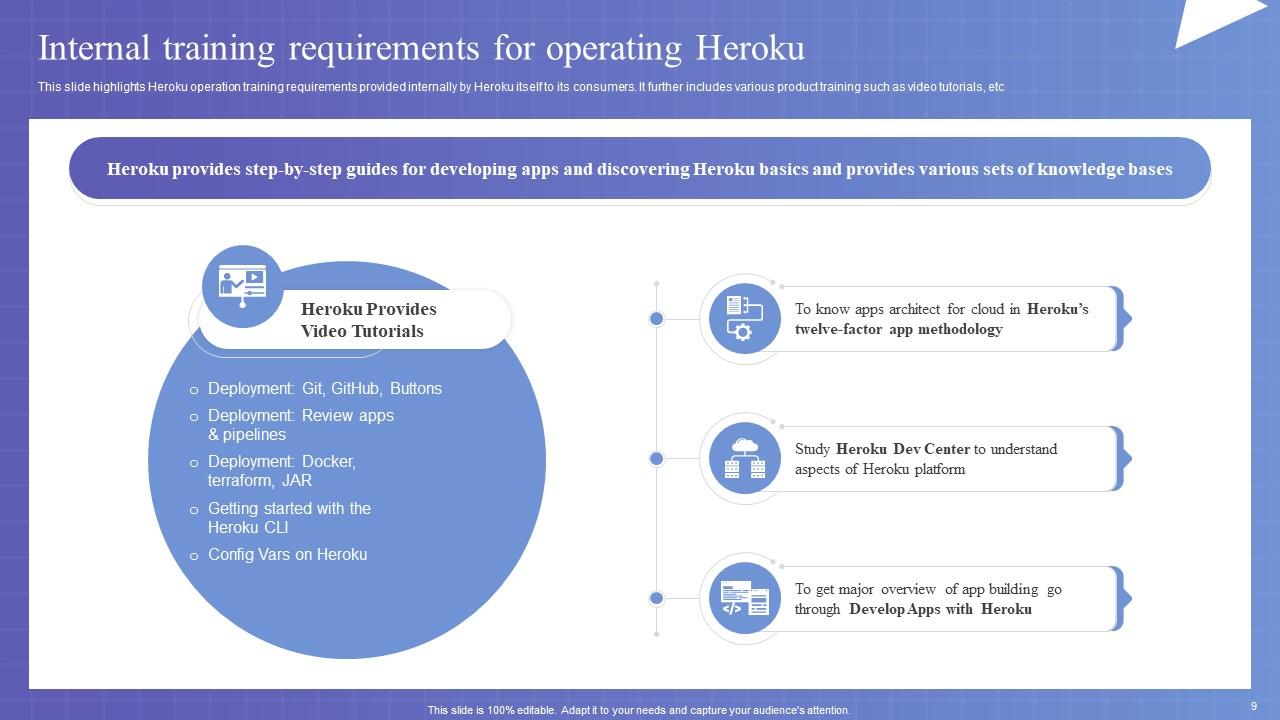
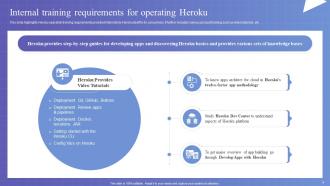
Folie 9 : Diese Folie geht auf die Schulungsanforderungen für die Heroku-Bedienung ein, die Heroku selbst seinen Kunden intern anbietet.
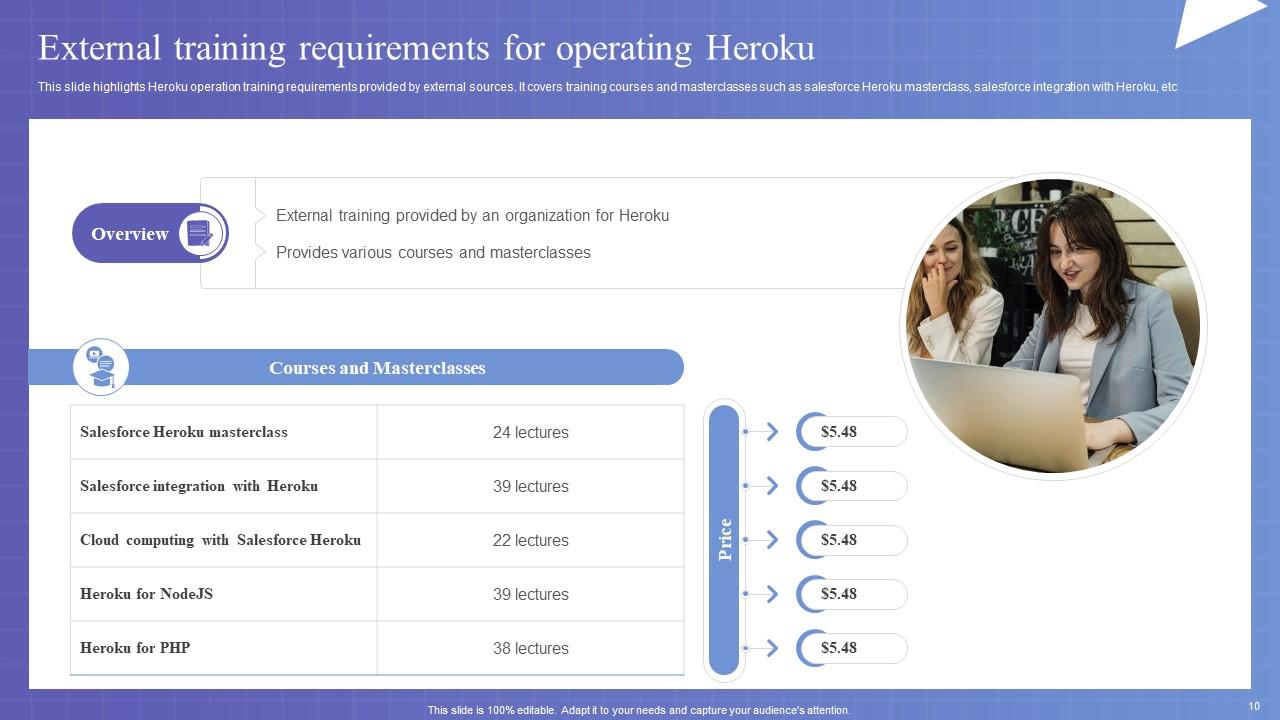
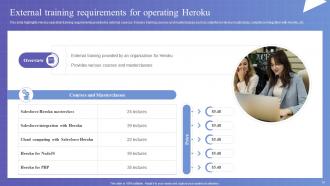
Folie 10 : Diese Folie zeigt die von externen Quellen bereitgestellten Schulungsanforderungen für den Heroku-Betrieb.
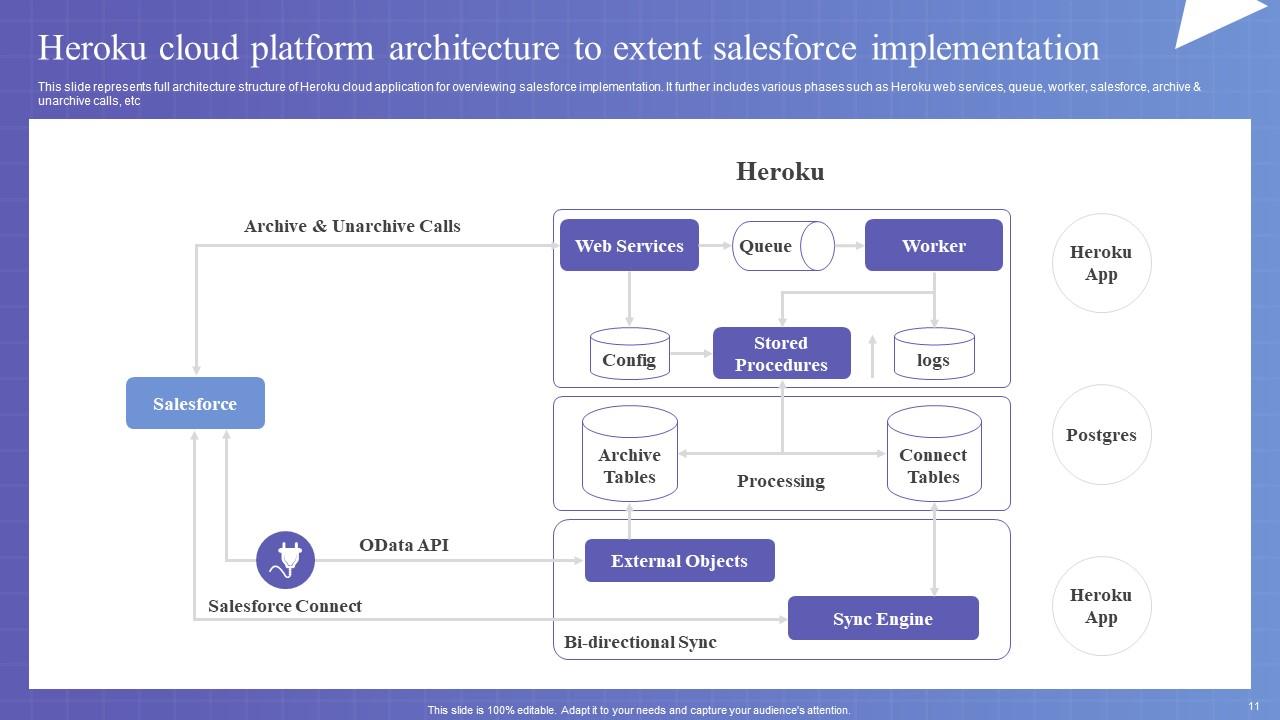
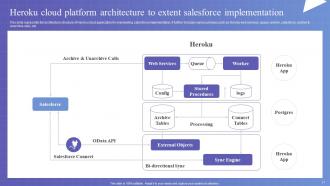
Folie 11 : Diese Folie bietet die vollständige Architekturstruktur der Heroku-Cloud-Anwendung für einen Überblick über die Salesforce-Implementierung.
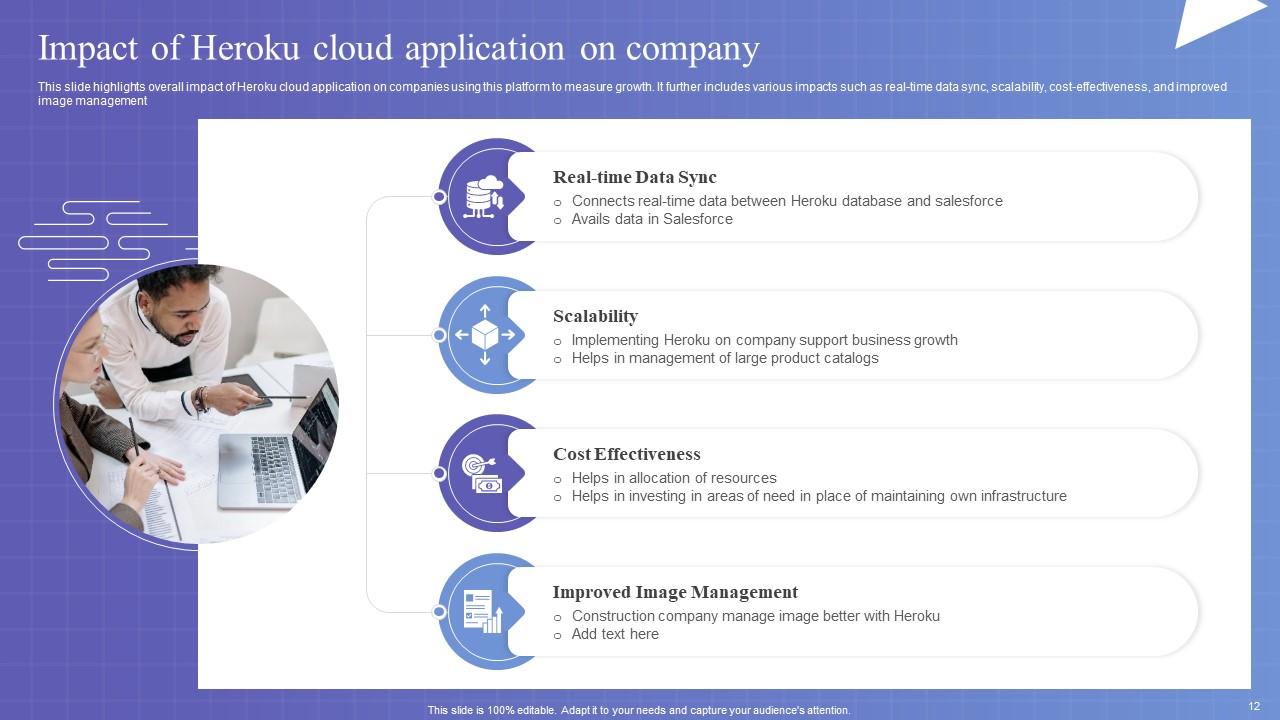
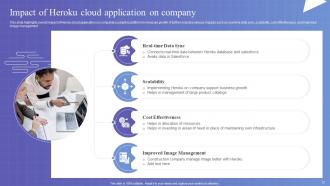
Folie 12 : Diese Folie zeigt die Gesamtauswirkungen der Heroku-Cloud-Anwendung auf Unternehmen.
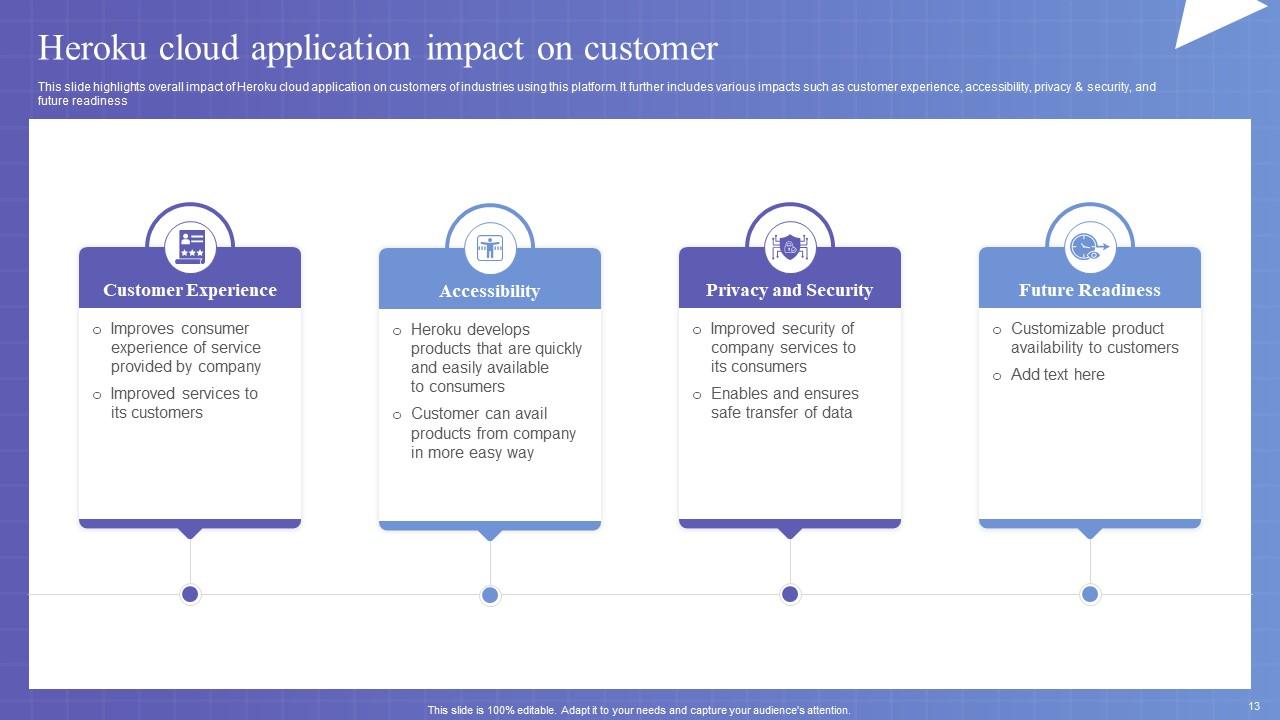
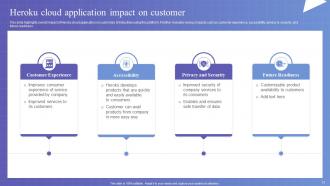
Folie 13 : Diese Folie enthält die Gesamtauswirkungen der Heroku-Cloud-Anwendung auf Kunden verschiedener Branchen.
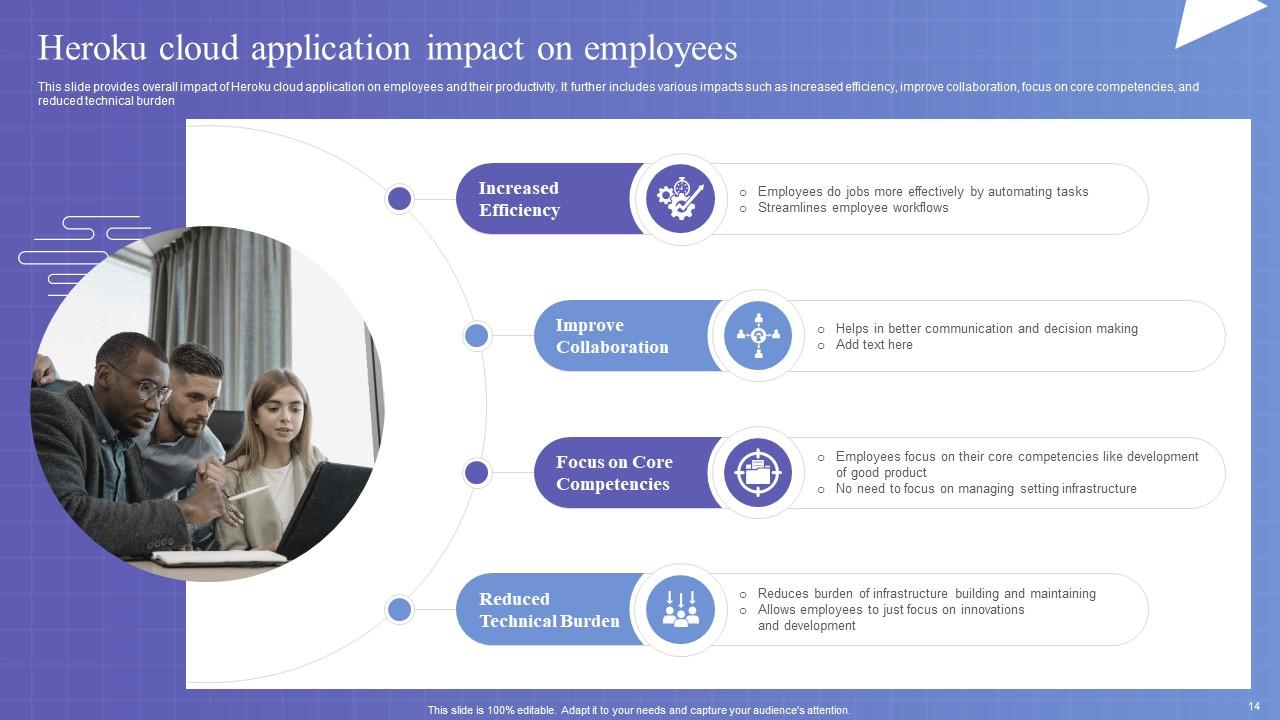
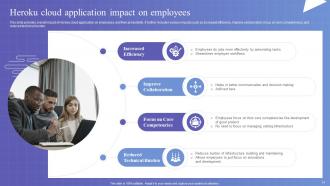
Folie 14 : Diese Folie zeigt die Gesamtauswirkungen der Heroku-Cloud-Anwendung auf Mitarbeiter und deren Produktivität.
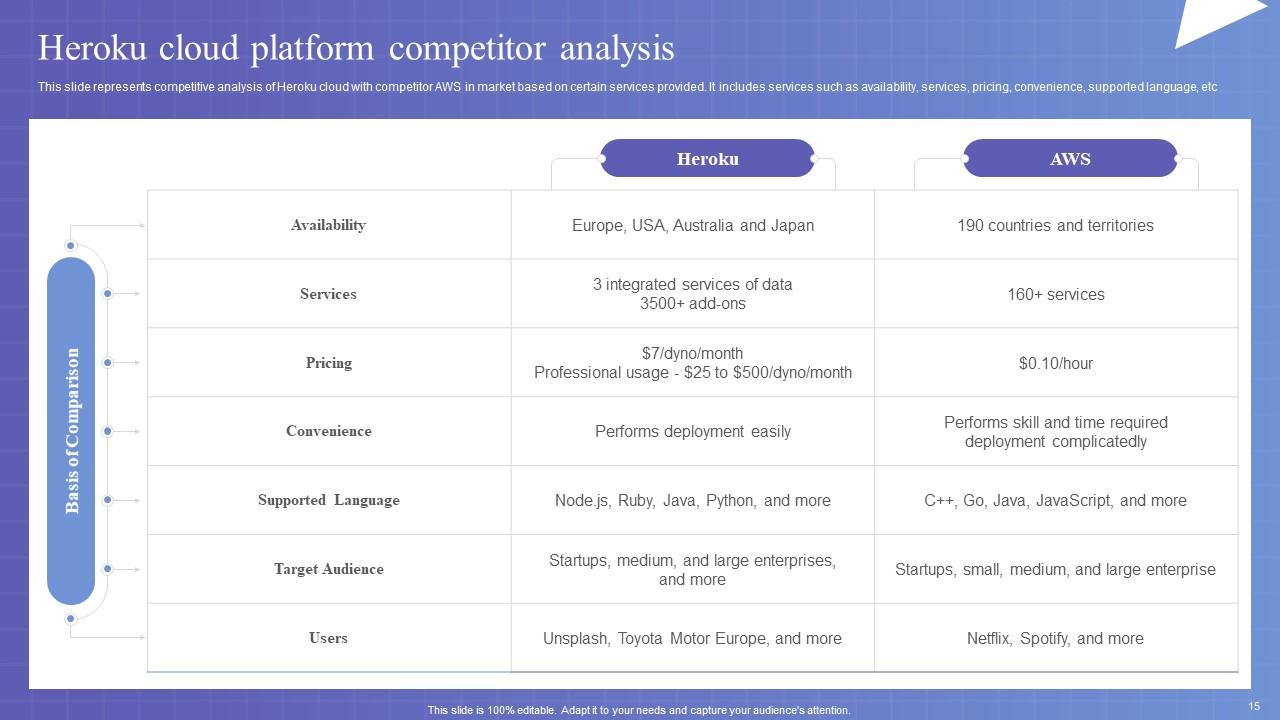
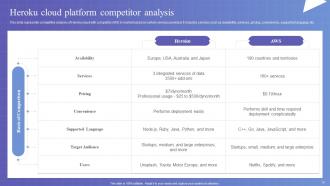
Folie 15 : Diese Folie stellt eine Wettbewerbsanalyse von Heroku Cloud mit dem Konkurrenten AWS auf dem Markt dar, basierend auf bestimmten bereitgestellten Diensten.
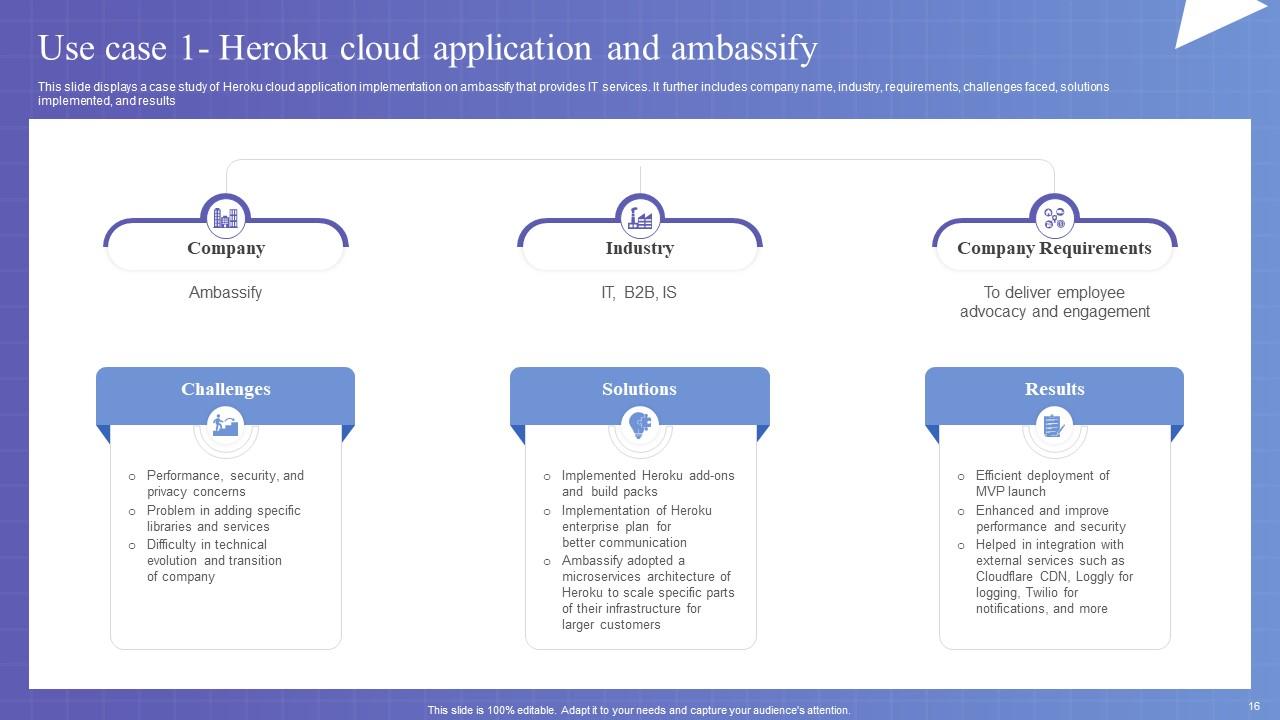
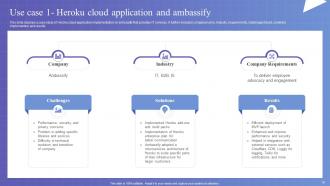
Folie 16 : Diese Folie zeigt eine Fallstudie zur Implementierung der Heroku-Cloudanwendung auf Ambassify, das IT-Dienste bereitstellt.
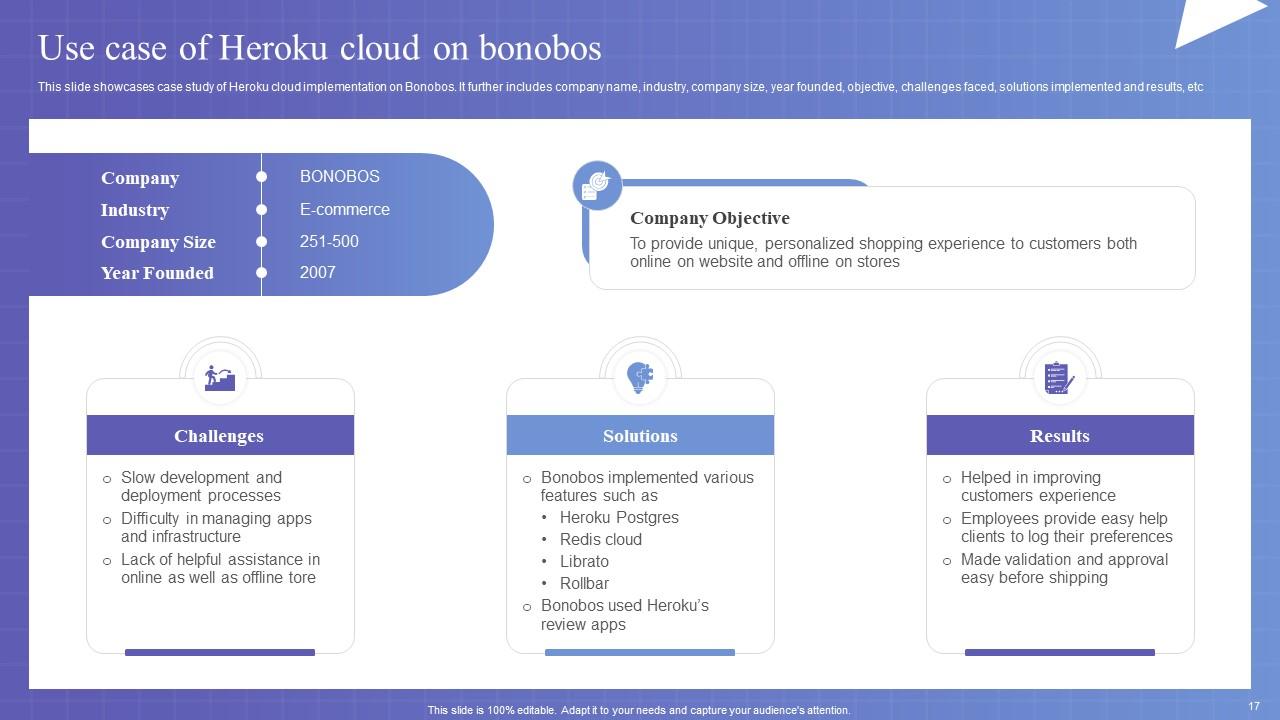
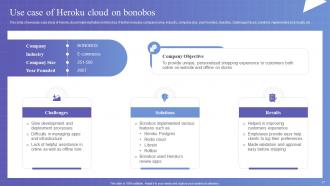
Folie 17 : Diese Folie zeigt eine Fallstudie zur Heroku-Cloud-Implementierung auf Bonobos.
Folie 18 : Diese Folie zeigt alle in der Präsentation enthaltenen Symbole.
Folie 19 : Diese Folie ist eine Dankesfolie mit Adresse, Kontaktnummern und E-Mail-Adresse.
Heroku SaaS Platform Implementation Guide PowerPoint PPT Template Bundles CL MM mit allen 24 Folien:
Nutzen Sie unseren Heroku SaaS Platform Implementation Guide PowerPoint PPT Template Bundles CL MM, um effektiv wertvolle Zeit zu sparen. Sie sind gebrauchsfertig und passen in jede Präsentationsstruktur.
FAQs for Heroku SaaS Platform Implementation Guide PowerPoint PPT Template
Heroku's core SaaS development features include automated deployment pipelines, scalable dyno containers, extensive add-on marketplace, seamless database integration, and built-in monitoring tools. These capabilities streamline application development by enabling rapid prototyping, automatic scaling, and simplified infrastructure management, with many technology companies finding that Heroku's platform-as-a-service approach accelerates time-to-market while reducing operational overhead.
Heroku's pricing model significantly impacts SaaS cost structures by offering usage-based dyno pricing, add-on services, and automatic scaling capabilities that align expenses with actual resource consumption. This approach enables startups to minimize initial infrastructure costs while scaling predictably, though established applications may find dedicated servers more economical, ultimately delivering operational flexibility and reduced DevOps overhead for growing businesses.
Heroku SaaS scaling best practices include implementing horizontal scaling with dynos, utilizing database connection pooling, optimizing caching strategies, monitoring application performance metrics, and leveraging add-ons for enhanced functionality. These approaches streamline resource management, minimize response times, and enhance user experiences, with many growing SaaS companies finding that strategic scaling ultimately delivers competitive advantage and operational efficiency.
Developers can leverage Heroku add-ons to enhance their SaaS offerings by integrating specialized services like databases, monitoring tools, caching solutions, analytics platforms, and security services directly into their applications. These add-ons streamline development workflows, reduce infrastructure complexity, and enable rapid scaling, with many SaaS companies finding that this approach accelerates time-to-market while delivering enhanced functionality and reliability.
CI/CD in Heroku SaaS implementation automates code integration, testing, and deployment processes, enabling seamless application updates, reduced manual errors, and faster release cycles. Through Heroku's integrated pipeline features and Git-based workflows, development teams streamline collaboration, enhance code quality, and accelerate time-to-market, ultimately delivering more reliable services and competitive advantage.
Heroku handles data security and compliance through encryption at rest and in transit, automated security updates, network isolation, and compliance with SOC 2, HIPAA, and PCI standards. Through Heroku Shield and Private Spaces, organizations can deploy applications with enhanced security controls, dedicated infrastructure, and comprehensive audit logging, ultimately delivering enterprise-grade protection while maintaining development agility.
Migration challenges include application architecture compatibility, database restructuring, dependency management, configuration adjustments, and potential downtime during transition. While these present initial complexity, many organizations find that Heroku's streamlined deployment processes, automatic scaling capabilities, and integrated add-on ecosystem ultimately deliver enhanced operational efficiency and reduced infrastructure management overhead.
Heroku supports multi-tenancy through database isolation techniques, application-level tenant separation, and add-on services that enable shared infrastructure while maintaining data security. Through Postgres row-level security, environment variables, and routing configurations, organizations can efficiently serve multiple clients on single deployments, reducing operational costs and complexity while ensuring tenant isolation and scalable resource allocation.
Heroku supports numerous programming languages including Ruby, Python, Node.js, Java, PHP, Go, and Scala, with frameworks like Rails, Django, Express.js, and Spring Boot being particularly effective. These technologies streamline SaaS development by offering built-in scalability, rapid deployment capabilities, and extensive add-on integrations, ultimately enabling faster time-to-market and reduced infrastructure complexity.
Heroku's dynos are lightweight containers that run application processes, automatically scaling up or down based on traffic demands, resource utilization, and performance requirements. These dynos enable SaaS platforms to optimize performance through horizontal scaling, load distribution, and resource allocation strategies, with many technology companies finding that dyno-based architecture delivers enhanced reliability, faster response times, and cost-effective scalability for their growing user bases.
Heroku provides comprehensive monitoring tools including Heroku Metrics for real-time performance insights, log aggregation systems, application performance monitoring integrations, database analytics, and third-party add-ons like New Relic and Datadog. These monitoring solutions enable SaaS businesses to track user engagement, optimize resource allocation, and identify performance bottlenecks proactively, ultimately delivering enhanced customer experiences and operational efficiency.
Heroku's global data center network enhances SaaS applications by reducing latency, improving user experience across regions, and enabling strategic geographic expansion with built-in compliance capabilities. This infrastructure delivers faster response times, seamless scaling during traffic spikes, and localized data storage, with many enterprises finding that distributed deployment significantly boosts customer satisfaction and competitive advantage.
Heroku SaaS high availability strategies include multi-region deployments, automated scaling, database replication, load balancing, and comprehensive monitoring systems. These approaches streamline disaster recovery by enabling rapid failover, data backup automation, and service redundancy, with many organizations finding that strategic deployment across multiple availability zones ultimately delivers enhanced uptime and customer experience resilience.
Heroku integrates with third-party services through its extensive add-ons marketplace, APIs, and webhooks, enabling seamless connections to databases, monitoring tools, payment processors, and analytics platforms. These integrations streamline development workflows, enhance application functionality, and deliver comprehensive solutions, with many SaaS companies finding that strategic add-on combinations ultimately reduce operational complexity while accelerating time-to-market.
Common pitfalls include inadequate scaling configuration, insufficient database optimization, poor add-on selection, inadequate monitoring setup, and improper environment management. Organizations often underestimate resource requirements and overlook security configurations, with many finding that proper planning for traffic spikes, database performance tuning, and comprehensive logging ultimately delivers smoother deployments and enhanced operational efficiency.
-
I've been looking for a good template source for some time. I'm happy that I discovered SlideTeam. Excellent presentations must try!
-
SlideTeam’s readymade presentations have landed my unique images with my bosses in the past and it continues to reward me.