


How To Build A High Performing Workplace Culture Powerpoint Presentation Slides




Try Before you Buy Download Free Sample Product
 Impress Your
 Audience
 100%
100% Editable
 Save Hours
 of Time


Employee experience is the sum of all experiences employees have in the Organization across the employee lifecycle shaped by the Organizations culture. Companies that invest in employee experience report more profitability, less attrition, and workplace satisfaction. Here is a professionally designed template on How to Build a High Performing Workplace Culture that will guide HR practitioners and stakeholders to realize the significance of developing a long term EX strategy. The PowerPoint presentations guide HR professionals to focus on improving the experience across all stages of the employee lifecycle recruitment, onboarding, development, retention, and exit. Employee Experience involves building favorable conditions for all three environments- cultural, physical, and technological. The deck covers useful, fully editable templates on employee personas, employee journey map, employee empathy mam, perks, and benefits to help you outline and execute the EX strategy seamlessly and efficiently. Book a free demo with our research team and customize this 100 percent editable template based on your business requirements through their assistance. Get access now.
People who downloaded this PowerPoint presentation also viewed the following :
Content of this Powerpoint Presentation
Slide 1: This slide introduces How to Build a High-Performing Workplace Culture. State your company name and begin.
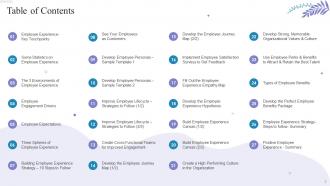
Slide 2: This slide presents Table of Content for the presentation.
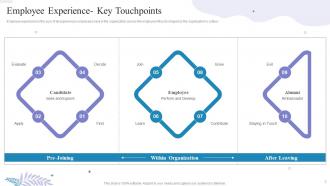
Slide 3: This slide represents Employee Experience- Key Touchpoints.
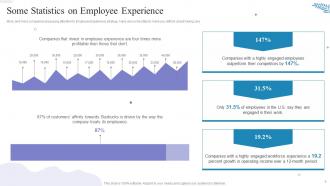
Slide 4: This slide showcases Some Statistics on Employee Experience.
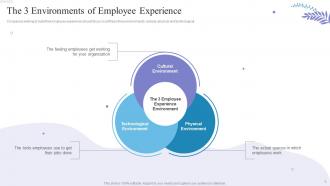
Slide 5: This slide presents The 3 Environments of Employee Experience.
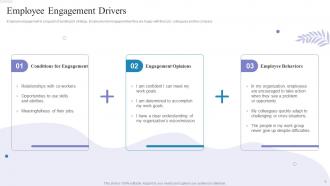
Slide 6: This slide displays Employee Engagement Drivers with additional textboxes.
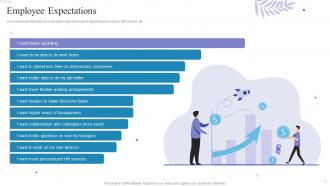
Slide 7: This slide represents Employee Expectations with related imagery.
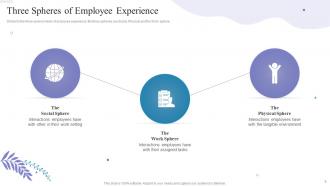
Slide 8: This slide showcases Three Spheres of Employee Experience.
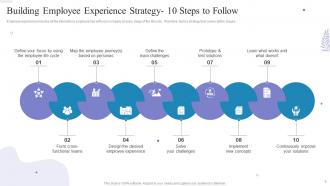
Slide 9: This slide shows Building Employee Experience Strategy- 10 Steps to Follow.
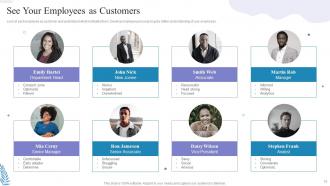
Slide 10: This slide presents See Your Employees as Customers.
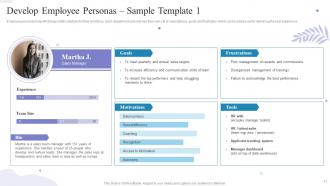
Slide 11: This slide displays Develop Employee Personas – Sample Template 1 describing- Goals, Motivations, Data/numbers, etc.
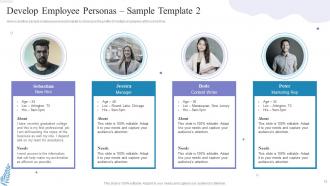
Slide 12: This slide presents sample employee persona template to showcase the profile of multiple employees.
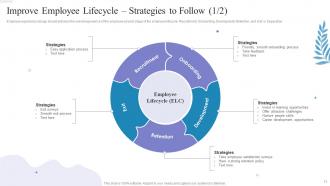
Slide 13: This slide displays Improve Employee Lifecycle – Strategies to Follow.
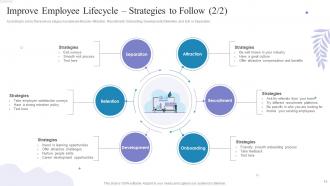
Slide 14: This is another slide continuing Improve Employee Lifecycle – Strategies to Follow.
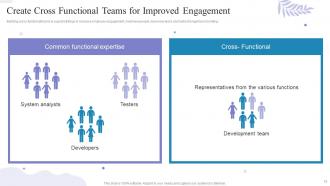
Slide 15: This slide represents Create Cross Functional Teams for Improved Engagement.
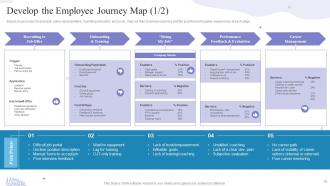
Slide 16: This slide showcases Develop the Employee Journey Map.
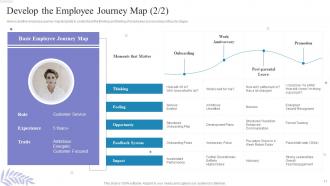
Slide 17: This is another slide continuing employee journey map template.
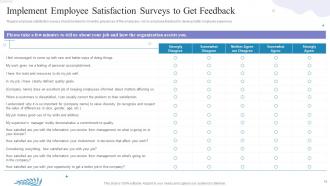
Slide 18: This slide showcases Implement Employee Satisfaction Surveys to Get Feedback.
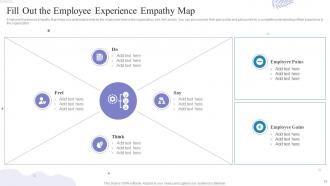
Slide 19: This slide shows Fill Out the Employee Experience Empathy Map.
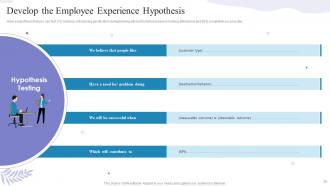
Slide 20: This slide presents Develop the Employee Experience Hypothesis.
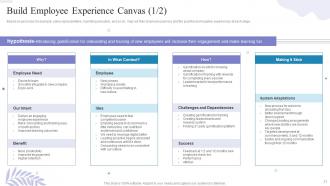
Slide 21: This slide presents Build Employee Experience Canvas describing- sales representative, marketing executive, and so on.
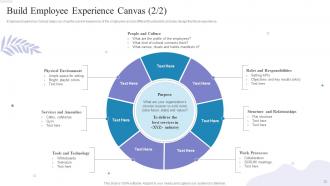
Slide 22: This is another slide continuing Build Employee Experience Canvas.
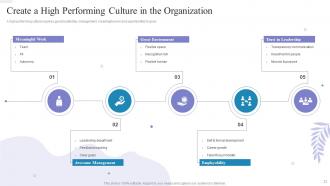
Slide 23: This slide displays Create a High Performing Culture in the Organization.
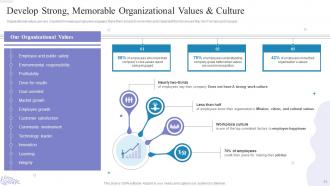
Slide 24: This slide represents Develop Strong, Memorable Organizational Values & Culture.
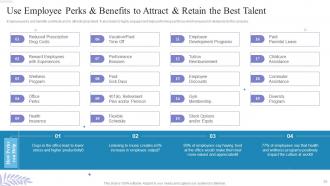
Slide 25: This slide showcases Use Employee Perks & Benefits to Attract & Retain the Best Talent.
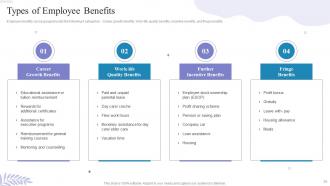
Slide 26: This slide shows Types of Employee Benefits describing- Career Growth Benefits, Educational assistance or tuition reimbursement, Rewards for additional certificates, etc.
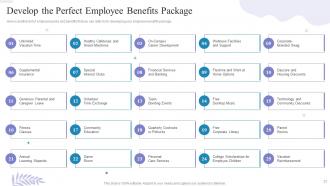
Slide 27: This slide presents Develop the Perfect Employee Benefits Package.
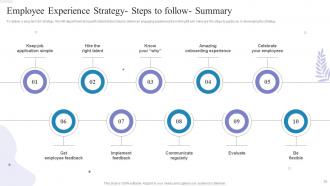
Slide 28: This slide displays Employee Experience Strategy- Steps to follow- Summary.
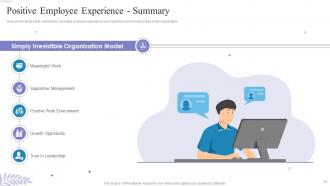
Slide 29: This slide represents Positive Employee Experience - Summary.
Slide 30: This slide contains all the icons used in this presentation.
Slide 31: This slide is titled as Additional Slides for moving forward.
Slide 32: This is About Us slide to show company specifications etc.
Slide 33: This slide depicts Venn diagram with text boxes.
Slide 34: This slide provides 30 60 90 Days Plan with text boxes.
Slide 35: This is Our Goal slide. State your firm's goals here.
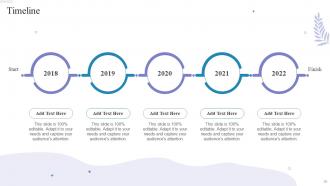
Slide 36: This is a Timeline slide. Show data related to time intervals here.
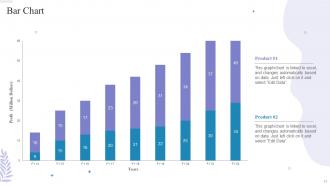
Slide 37: This slide presents Bar chart with two products comparison.
Slide 38: This slide showcases Magnifying Glass to highlight information, specifications, etc.
Slide 39: This slide shows Post It Notes. Post your important notes here.
Slide 40: This is a Thank You slide with address, contact numbers and email address.
How To Build A High Performing Workplace Culture Powerpoint Presentation Slides with all 45 slides:
Use our How To Build A High Performing Workplace Culture Powerpoint Presentation Slides to effectively help you save your valuable time. They are readymade to fit into any presentation structure.





FAQs for How To Build A High Performing Workplace Culture
High-performing workplace cultures are defined by clear communication channels, strong leadership accountability, employee empowerment and autonomy, continuous learning opportunities, and collaborative team dynamics. These characteristics work together to create environments where organizations consistently deliver exceptional results, enhance employee engagement and retention, and maintain competitive advantages in increasingly demanding markets.
Leadership fosters trust and transparency by maintaining consistent communication, acknowledging mistakes openly, sharing decision-making rationale, and following through on commitments reliably. These practices create psychological safety where team members feel valued and informed, with many organizations finding that transparent leaders ultimately enhance employee engagement, reduce turnover, and accelerate collaborative problem-solving across departments.
Employee engagement serves as the foundation of high performing workplace culture by driving productivity, retention, innovation, and collaboration across teams. Engaged employees demonstrate stronger commitment to organizational goals, contribute more creative solutions, and foster positive team dynamics, with companies like Google and Microsoft finding that highly engaged workforces deliver significantly better financial performance and customer satisfaction.
Organizations can measure workplace culture impact through employee engagement surveys, retention rates, productivity metrics, customer satisfaction scores, and financial performance indicators. These assessment methods enable companies to track cultural effectiveness across departments, identify improvement areas, and demonstrate direct correlations between positive workplace environments and business outcomes, ultimately delivering competitive advantage and sustainable growth.
Strategies include mentorship programs, cross-functional project assignments, dedicated learning budgets, regular skill assessments, and knowledge-sharing sessions. These approaches enhance employee engagement and retention by providing clear growth pathways, building internal expertise, and fostering innovation, with many organizations finding that continuous development cultures deliver stronger performance and competitive advantage.
Diversity and inclusion enhance workplace culture by bringing varied perspectives, experiences, and problem-solving approaches that drive innovation, improve decision-making, and better reflect customer demographics. Through inclusive practices, organizations streamline collaboration, accelerate creative solutions, and deliver stronger financial performance, with many companies finding that diverse teams ultimately outperform homogeneous groups by significant margins.
Effective recognition methods include performance bonuses, public acknowledgment, career advancement opportunities, flexible work arrangements, and personalized rewards tailored to individual preferences. These approaches enhance employee motivation and retention by addressing both financial and emotional needs, with many organizations finding that combining monetary incentives with meaningful recognition creates stronger engagement and ultimately drives sustained high performance across teams.
Feedback mechanisms can be optimized through regular one-on-ones, 360-degree reviews, real-time digital platforms, peer recognition systems, and goal-aligned performance discussions. These approaches enhance workplace culture by fostering transparency, accelerating professional development, and strengthening manager-employee relationships, with many organizations finding that consistent, constructive feedback ultimately delivers higher engagement and measurable performance improvements.
Collaboration serves as the foundation for high-performing workplace culture by breaking down silos, accelerating innovation, enhancing problem-solving capabilities, and improving decision-making processes across teams. Organizations with strong collaborative frameworks experience significantly higher productivity, faster project completion rates, and better employee engagement, with many companies finding that cross-functional teamwork ultimately delivers competitive advantage and sustainable growth.
Remote work transforms high performing culture development by requiring intentional communication systems, digital collaboration frameworks, and structured performance measurement approaches. While it presents challenges in spontaneous interaction and relationship building, many organizations find that remote environments actually enhance focus, accountability, and results-driven cultures, ultimately delivering greater flexibility and expanded talent access for competitive advantage.
Practices include regular feedback sessions, anonymous suggestion systems, inclusive team meetings, conflict resolution training, and leadership modeling vulnerability. These approaches streamline communication by removing hierarchical barriers, encouraging diverse perspectives, and fostering trust-based relationships, with many organizations finding that psychological safety ultimately delivers higher innovation rates, reduced turnover, and enhanced collaborative problem-solving across departments.
A strong workplace culture significantly influences talent retention and attraction by creating an environment where employees feel valued, engaged, and aligned with organizational values. Companies with robust cultures, like Google and Salesforce, experience lower turnover rates, attract top-tier candidates more easily, and build stronger employer brands, ultimately delivering competitive advantages through reduced recruitment costs and enhanced productivity.
Best practices for aligning organizational values with employee behaviors include clear communication of expectations, consistent leadership modeling, performance metrics integration, regular feedback mechanisms, and recognition programs that reward value-driven actions. These approaches enhance alignment by embedding values into hiring processes, daily operations, and career development pathways, with many organizations finding that consistent reinforcement ultimately delivers stronger employee engagement and improved organizational performance.
Performance metrics influence workplace culture by establishing clear expectations, promoting accountability, and driving goal alignment across teams and departments. When implemented thoughtfully with regular feedback and recognition systems, these metrics enhance employee engagement and motivation, with many organizations finding that transparent, fair measurement approaches ultimately foster collaborative environments and boost overall morale.
Organizations face resistance to change, misaligned leadership behaviors, inadequate communication systems, unclear performance metrics, and insufficient employee engagement strategies when shifting toward high-performing cultures. These transformation challenges require sustained commitment, with many companies finding that inconsistent messaging, lack of accountability frameworks, and competing priorities can derail cultural initiatives, ultimately requiring comprehensive change management approaches that address both structural and behavioral elements across all organizational levels.
-
Easy to use and customize templates. Helped me give a last minute presentation.
-
Thrilled to see several customizable templates catering various verticals and industries.