Roteiro do Plano de Ação de RH Ppt Powerpoint Apresentação Resumo Outfit

Hr action plan roadmap ppt powerpoint presentation summary outfit
Slide 1 of 2
Favourites Favourites

Try Before you Buy Download Free Sample Product

Audience Impress Your
Audience
Editable 100%
Editable
Time Save Hours
of Time
The Biggest Sale is ending soon in
0
0
:
0
0
:
0
0

Características destes slides de apresentação do PowerPoint:

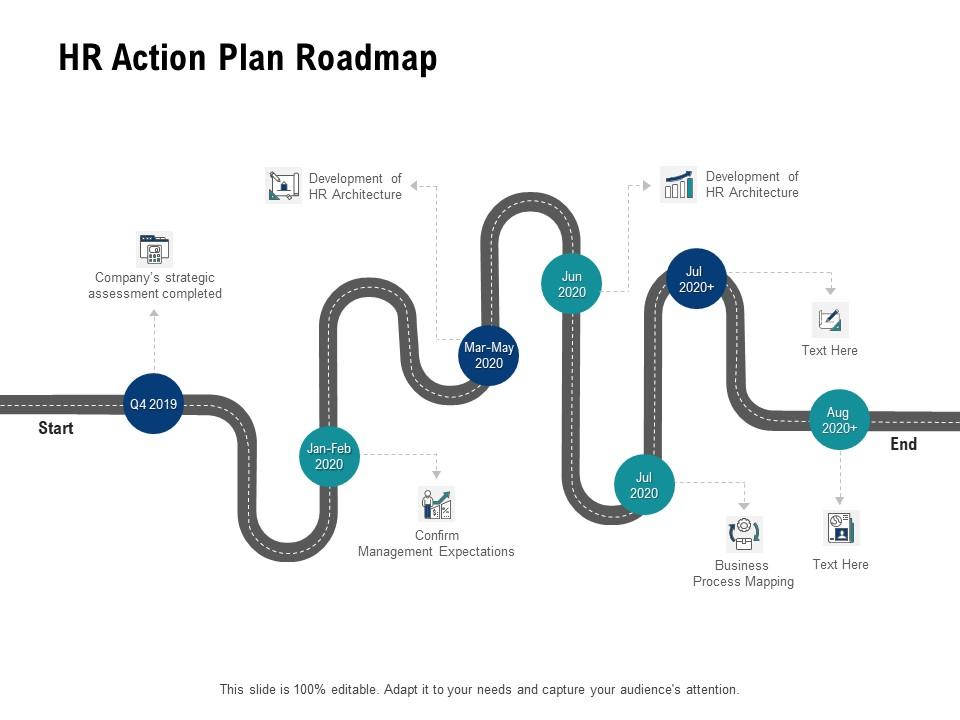
Apresentando este conjunto de slides com o nome Plano de Ação de RH Roteiro Ppt Powerpoint Apresentação Resumo Outfit. Este é um processo de sete etapas. As etapas deste processo são Desenvolvimento da Arquitetura de RH, Mapeamento de Processos de Negócios, Confirmação das Expectativas de Gestão, Avaliação Estratégica da Empresa Concluída. Esta é uma apresentação PowerPoint completamente editável e está disponível para download imediato. Baixe agora e impressione seu público.

People who downloaded this PowerPoint presentation also viewed the following :

FAQs for Hr action plan roadmap ppt powerpoint

Key components include strategic objectives alignment, workforce analysis, talent acquisition strategies, performance management frameworks, and employee development programs. These elements work together by identifying organizational needs, streamlining recruitment processes, and enhancing retention rates, with many companies finding that comprehensive roadmaps deliver improved productivity and competitive advantage.

Organizations align their HR Action Plan with business objectives by establishing clear performance metrics, integrating talent strategies with operational goals, and ensuring workforce capabilities support strategic priorities. Through regular stakeholder consultations and data-driven assessments, companies in sectors like manufacturing and financial services streamline resource allocation, enhance productivity, and ultimately deliver competitive advantage while maintaining organizational agility.

Data analytics plays a crucial role in developing HR action plans by identifying workforce trends, measuring performance metrics, predicting turnover risks, and uncovering skill gaps through comprehensive data examination. Through predictive modeling and performance dashboards, organizations can make evidence-based decisions about recruitment, retention strategies, and talent development, ultimately enabling more targeted interventions and measurable outcomes.

HR Action Plans should be reviewed quarterly and updated annually, with more frequent assessments during organizational changes, mergers, or significant business pivots. Many organizations find that quarterly reviews enable timely adjustments to recruitment strategies, performance initiatives, and compliance requirements, while annual updates ensure alignment with evolving business goals, ultimately delivering improved workforce management and competitive advantage.

HR teams can implement regular communication updates, collaborative goal-setting sessions, recognition programs, and feedback loops to maintain engagement throughout action plans. These strategies enhance participation by creating transparency, involving employees in decision-making processes, and celebrating milestones, with many organizations finding that consistent acknowledgment and two-way communication ultimately delivers higher commitment levels and sustainable behavioral change.

Technology tools and platforms amplify HR Action Plan Roadmaps by automating routine processes, providing real-time analytics, and enabling seamless collaboration across departments and locations. Through integrated HRIS systems, performance management software, and communication platforms, organizations streamline talent acquisition, enhance employee engagement tracking, and accelerate decision-making processes, ultimately delivering improved operational efficiency and strategic workforce outcomes.

HR Action Plan success metrics include employee retention rates, time-to-fill positions, employee engagement scores, training completion rates, and performance improvement indicators. These measurements enable organizations to track operational efficiency and workforce development, with many companies finding that combining quantitative data like turnover costs with qualitative feedback delivers comprehensive insights into strategic HR initiatives' effectiveness.

Legal considerations significantly reshape HR Action Plans across regions through varying employment laws, data privacy regulations, termination procedures, and compliance requirements. Organizations operating globally must adapt their action plans to accommodate region-specific labor standards, with companies in Europe navigating GDPR constraints while those in Asia-Pacific face diverse cultural employment practices, ultimately requiring flexible frameworks that maintain legal compliance while delivering consistent employee outcomes.

Common pitfalls include setting vague objectives without measurable outcomes, lacking stakeholder buy-in from leadership and employees, underestimating resource requirements, and failing to establish realistic timelines for implementation. Organizations often struggle with insufficient data analysis during planning phases, poor communication strategies, and inadequate progress monitoring systems, ultimately finding that successful roadmaps require strategic alignment, clear accountability measures, and flexible adaptation mechanisms.

HR teams can foster cross-departmental collaboration by establishing joint task forces, implementing shared communication platforms, creating interdisciplinary project teams, and scheduling regular alignment meetings throughout implementation. These approaches streamline coordination by breaking down silos, enhancing transparency, and ensuring consistent messaging, with many organizations finding that collaborative frameworks ultimately deliver faster execution and stronger employee engagement across all departments.

Organizations should handle resistance by implementing transparent communication strategies, involving resistant employees in planning processes, providing comprehensive training programs, and establishing feedback mechanisms to address concerns proactively. Through regular town halls, peer mentoring systems, and phased rollouts, companies can transform skeptics into advocates while maintaining operational continuity, ultimately delivering smoother transitions and higher adoption rates.

HR professionals implementing new action plans need comprehensive training on change management principles, data analytics tools, stakeholder communication strategies, performance measurement frameworks, and conflict resolution techniques. Through workshops, mentoring programs, and digital learning platforms, organizations can equip their teams with project management certifications, policy interpretation skills, and leadership development resources, ultimately enabling smoother transitions and higher success rates across diverse organizational contexts.

Leaders can effectively communicate HR Action Plans through multi-channel approaches including town halls, team meetings, digital dashboards, email updates, and interactive workshops that ensure consistent messaging across all organizational levels. By combining face-to-face discussions with accessible digital platforms, organizations streamline information flow and enhance employee engagement, with many companies finding that transparent, regular communication ultimately delivers higher buy-in and smoother implementation outcomes.

Best practices for integrating employee feedback into HR Action Plan development include conducting anonymous surveys, hosting focus groups, implementing suggestion systems, establishing regular one-on-ones, and creating cross-functional feedback committees. These approaches streamline plan relevance by ensuring alignment with actual employee needs, enhancing buy-in through participatory planning, and delivering more targeted solutions, with many organizations finding that employee-driven insights significantly improve implementation success rates.

Organizations ensure diversity and inclusion priorities by embedding specific metrics, targeted recruitment strategies, inclusive leadership training, bias-free promotion processes, and regular climate assessments throughout their HR Action Plan Roadmap. These strategic initiatives streamline equitable workforce development while delivering enhanced innovation, broader talent pools, and improved employee engagement, with many companies finding that systematic inclusion approaches ultimately drive competitive advantage and organizational performance.

Ratings and Reviews

0% of 100
Review Form
Write a review
Most Relevant Reviews

No Reviews