


HR Recruiting Handbook Best Practices And Strategies Powerpoint Presentation Slides




Try Before you Buy Download Free Sample Product
 Impress Your
 Audience
 100%
100% Editable
 Save Hours
 of Time


Unlock the potential of our comprehensive HR Recruiting Handbook Best Practices and Strategies template, designed to assist HR managers and recruiters create successful talent acquisition plans. This essential Guide for Hiring PPT covers various aspects of employee acquisition, including the best methods for finding, hiring, interviewing, and onboarding top talent. Moreover, Our Employee Acquisition Manual deck offers valuable insights and strategies to enhance the caliber of prospects brought into the organization and streamline the talent acquisition process. Additionally, the Acquisition Instructions PowerPoint presentation also provides tried-and-true methods for attracting and retaining top candidates. Also, Human Resource Management template emphasizes the importance of creating a positive candidate experience to differentiate your organization from competitors. Lastly, our Guide for Hiring deck covers critical areas such as the responsibilities of HR managers, identifying vacancies within the organization, and exploring various sources of recruitment. Take advantage of instant access to this invaluable resource that will enhance your employee acquisition strategies, improve talent retention, and optimize your overall human resource management. Get access now.
People who downloaded this PowerPoint presentation also viewed the following :
Content of this Powerpoint Presentation
Slide 1: This slide introduces HR Recruiting Handbook: Best Practices and Strategies.
Slide 2: This slide depicts the Agenda of the presentation.
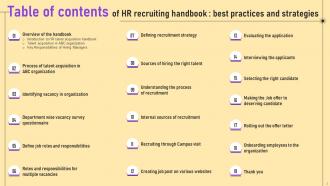
Slide 3: This slide incorporates the Table of contents.
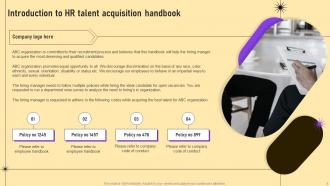
Slide 4: This slide reveals the Introduction to HR talent acquisition handbook.
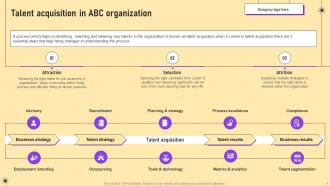
Slide 5: This slide displays the Talent acquisition in ABC organization.
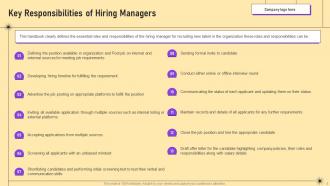
Slide 6: This slide exhibits the Key responsibilities of hiring managers.
Slide 7: This slide presents the Process of talent acquisition in ABC organization.
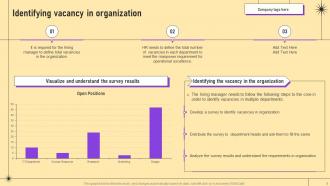
Slide 8: This slide focuses on Identifying vacancy in organization.
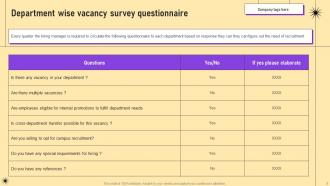
Slide 9: This slide depicts the Department wise vacancy survey questionnaire.
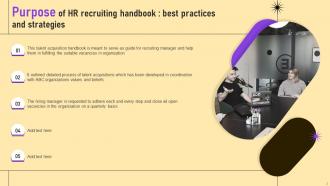
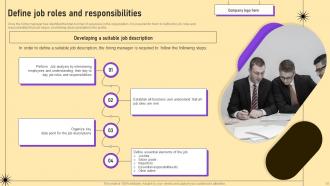
Slide 10: This slide deals with Defining job roles and responsibilities.
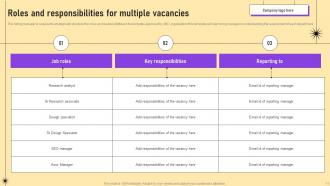
Slide 11: This slide exhibits the Roles and responsibilities for multiple vacancies.
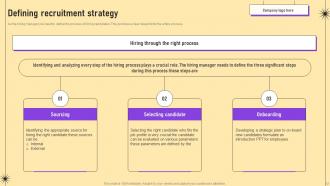
Slide 12: This slide focuses on Defining recruitment strategy.
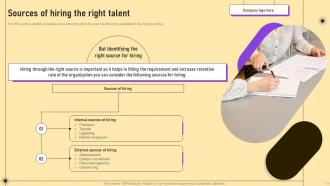
Slide 13: This slide exhibits the Sources of hiring the right talent.
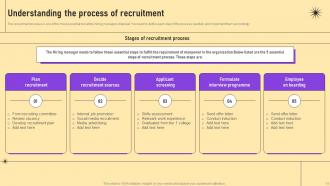
Slide 14: This slide talks about Understanding the process of recruitment.
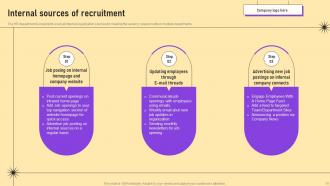
Slide 15: This slide emphasizes on the Internal sources of recruitment.
Slide 16: This slide mentions about Recruiting through campus visit.
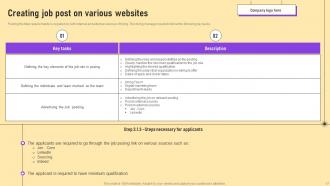
Slide 17: This slide deals with Creating job post on various websites.
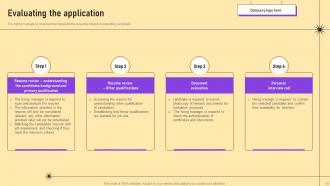
Slide 18: Thhis slide focuses on Evaluating the application.
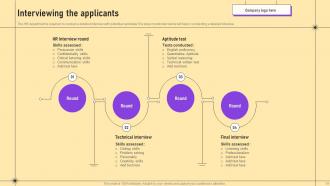
Slide 19: This slide talks about Interviewing the applicants.
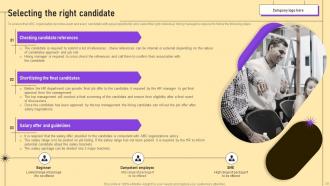
Slide 20: This slide focuses on Selecting the right candidate.
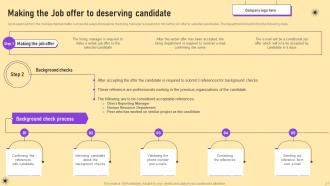
Slide 21: This slide emphasizes on Making the job offer.
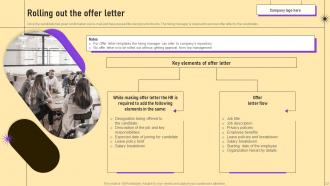
Slide 22: This slide displays Rolling out the offer letter.
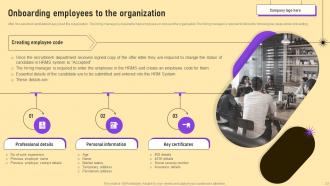
Slide 23: This slide indicates Onboarding employees to the organization.
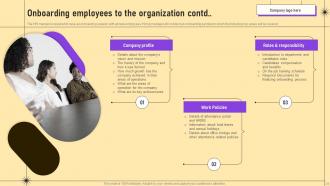
Slide 24: This slide continues the Onboarding employees to the organization.
Slide 25: This slide reveals the company information.
Slide 26: This slide is used for depicting the Additional information.
Slide 27: This is the Icons slide containing all the Icons used in the plan.
Slide 28: This slide elucidates the SWOT analysis.
Slide 29: This slide illustrates the Timeline infographic with related imagery.
Slide 30: This is the Venn diagram slide.
Slide 31: This is the Target slide. State your organizational targets here.
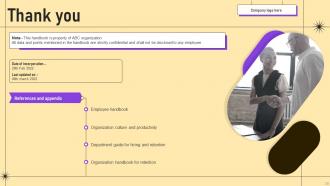
Slide 32: This is the Thank You slide for acknowledgement.
HR Recruiting Handbook Best Practices And Strategies Powerpoint Presentation Slides with all 37 slides:
Use our HR Recruiting Handbook Best Practices And Strategies Powerpoint Presentation Slides to effectively help you save your valuable time. They are readymade to fit into any presentation structure.








FAQs for HR Recruiting Handbook Best Practices And Strategies
Okay so first thing - ditch all that corporate BS nobody understands. "Synergistic solutions"? Come on. Be super specific about what they'll actually DO every day, not just vague stuff. Honestly, most companies mess this up by listing twenty "must-have" skills when they really only need like five. Separate your dealbreakers from your wishlist so good people don't get scared off. Show some personality! What's cool about working there? Throw in salary range if you can, plus real benefits people actually want. Oh and use bullet points - everyone's skimming anyway.
Skip the fake "we're all family here" garbage - people see right through it. Start by googling your own company to see what candidates actually find. Share real employee stories and behind-the-scenes stuff on social media. Your careers page should show genuine workplace moments, not stock photos of people pointing at whiteboards. Honestly, the best thing you can do is get current employees posting about their actual experiences on LinkedIn. Real growth opportunities and day-to-day culture beat generic corporate speak every time. You want people excited to apply before they even see the job posting.
Look, you can't just slap diversity stuff onto your hiring at the last minute - it needs to be built in from day one. Start hunting in different talent pools and check your job posts for biased language (there are free tools for this, super helpful). Structure interviews to cut down on unconscious bias, and honestly? Mix up your interview panels too. The thing that bugs me is when companies just talk about it without tracking actual data. Are you really making progress or just patting yourself on the back? Audit those job descriptions first - you'll be surprised what you find.
Dude, start with resume screening - that's where you'll save the most time. AI can blast through hundreds of resumes in minutes while you grab coffee. Most ATS systems now post to multiple job boards automatically (seriously, why did we ever do that manually?). The boring stuff like scheduling interviews and follow-ups? Totally automated. Some AI tools even help write job descriptions and predict which candidates might actually say yes to your offer. You're looking at saving hours each week once you get it set up. Just don't expect it to be perfect right away.
Look, just keep talking to them! Quick updates even when nothing's happening. Respond fast - like 24 hours max or they'll think you're not interested. Make interviews feel like actual conversations instead of some weird interrogation thing (I hate those). Give them real expectations about timing and next steps. Oh, and always give feedback at the end, even rejections. We lost this amazing candidate last month because she thought we were ignoring her. Honestly, check how long you're taking to respond right now - it's probably worse than you think. Treat people like people, not just paper.
Honestly, this stuff matters way more than people think. Bad candidate experiences spread like wildfire - someone has a crappy interview and suddenly their whole LinkedIn network knows about it. You want people excited about your company even when you reject them (weird but true). Quick responses are huge. Don't leave people hanging for weeks wondering what's happening. Streamline whatever you can - nobody wants to fill out the same info five times. Clear timelines help too. Bottom line: make it stupid easy for good people to say yes to you instead of your competition.
Honestly, start with the basics - time-to-fill and cost-per-hire are pretty straightforward to track. Quality of hire is where it gets interesting though. Look at how your new people are doing in reviews after 6 months or so, plus retention rates. Candidate experience scores matter too (people talk, you know?). I'd definitely track which sources bring you the best hires - some job boards are total duds. Oh, and offer acceptance rates! If tons of people are saying no, that's telling you something. These will give you a decent snapshot of what's actually working vs. what's just burning budget.
Honestly, start with LinkedIn since that's where most professionals hang out, but Instagram and Twitter are clutch for younger candidates. Post about your company culture and share real employee stories - that behind-the-scenes stuff works way better than boring job descriptions. Targeted ads help you reach specific skill sets too. Oh, and join industry groups where you can actually talk to people before throwing job offers at them. I'd audit whatever social presence you have now and maybe create some kind of posting schedule? The key is showing what actually makes your workplace cool, not just saying it is.
Don't rush through them - that's the
-
Professional and unique presentations.
-
The PPT layout is great and it has an effective design that helps in presenting corporate presentations. It's easy to edit and the stunning visuals make it an absolute steal!