HR-Roadmap-Design-Ideen Präsentationsbilder
Try Before you Buy Download Free Sample Product
Audience
Editable
of Time
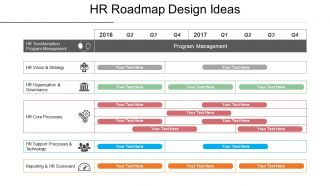
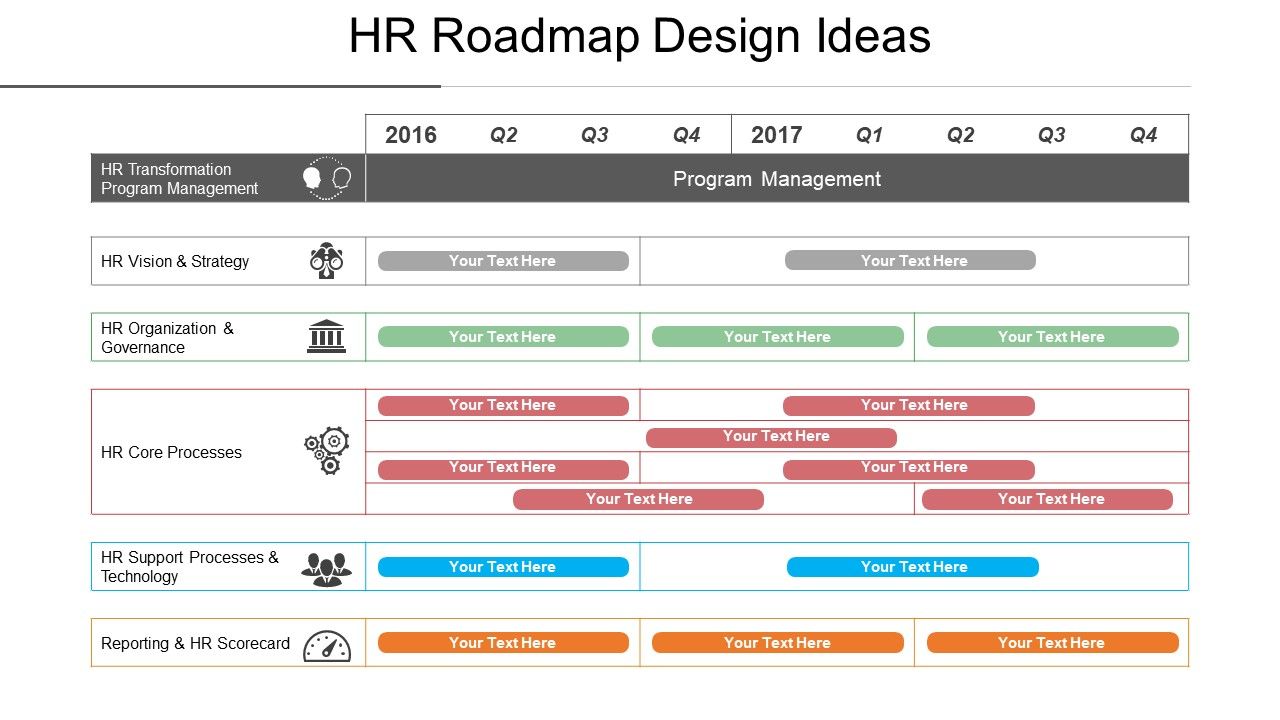
Erstellen Sie innovative Roadmaps mit unserer PPT-Vorlage für HR-Roadmap-Design-Ideen und erstellen Sie einzigartige PPT-Folien für Ihre Geschäftsanforderungen. Diese Folie ist perfekt, damit Sie Ihre HR-Ideen und -Strategien effektiv und effizient darstellen können. Dies ist eine der erstaunlichsten PowerPoint-Geschäftsgrafiken aus unserem gesamten Angebot an Roadmap-PowerPoint-Foliendesigns, da sie über ein wunderbares Zeitleistenformat verfügt, in dem Sie Ihre Aspekte vierteljährlich und jährlich hervorheben können. Die farbenfrohen Balken zeigen die Dauer jedes Elements an und sind für Ihre Manager und Mitarbeiter leicht verständlich. Dieses PPT-Diagramm kann für Ihre geschäftlichen und marketingbezogenen Präsentationen verwendet werden. Alle Grundfunktionen der Personalabteilung, z. B. Planen, Organisieren, Besetzen, Führen und Steuern usw., können durch Anzeigen von Inhalten mithilfe unserer PPT-Diashow ausgeführt werden. Sie können diese PowerPoint-Grafik für das Roadmap-Design herunterladen, um eine Reihe von Aufgaben zu präsentieren, die nacheinander ausgeführt werden, um eine gute HR-Praxis zu gewährleisten. Beginnen Sie einfach mit der Initialisierung unserer PowerPoint-Vorlage, um Ihre HR-Prozesse und -Ziele aufzulisten, und planen Sie, diese zu erreichen, um Ihren Geschäftserfolg zu erzielen. Laden Sie es jetzt herunter und teilen Sie es Ihrem Team mit, um effektive Präsentationen zu erstellen. Zertifizieren Sie zukünftiges Wachstum mit unseren Präsentationsbildern zu Hr Roadmap Design Ideas. Stellen Sie sicher, dass Ihre aktuellen Aktionen korrekt sind.
Funktionen dieser PowerPoint-Präsentationsfolien:
Vollständig bearbeitbare Ideen für die Gestaltung von HR-Roadmaps PPT-Folie. Einfach, Ihren Firmennamen und Ihr Logo in die Folie zu integrieren. Sie können den Schrifttyp, die Schriftgröße, die Farben der Folie und die Hintergrundfarbe gemäß Ihren Anforderungen anpassen. Hochauflösende und qualitativ hochwertige PowerPoint-Folien. Hochwertige Grafiken und Symbole sorgen dafür, dass sich die Qualität beim Vergrößern nicht verschlechtert. Schneller Download per Knopfdruck. Kompatibel mit mehreren Softwareoptionen, die sowohl online als auch offline verfügbar sind. Weit verbreitet bei Vertriebsleitern, Vermarktern, Geschäftsleuten, Analysten, Strategen usw. Kann sowohl im JPG- als auch im PDF-Format gespeichert werden.
People who downloaded this PowerPoint presentation also viewed the following :
Hr Roadmap Design Ideas Präsentationsbilder mit allen 5 Folien:
Unsere Präsentationsbilder für HR-Roadmap-Designideen ermöglichen Ihnen die Wahl in jedem Bereich. Sie versichern Ihnen Alternativen in Hülle und Fülle.
FAQs for Hr roadmap design
Okay so first figure out where you're at now vs where you want to be - that gap analysis is everything. Then map out the big stuff: hiring strategy, training programs, pay reviews, tech upgrades if you need them. Timeline milestones are crucial though, otherwise it's just a fancy to-do list that sits in a drawer. Budget and resources matter too - be realistic about what you can actually pull off. I'd honestly start with whatever's causing you the biggest headaches right now. Oh and leave some wiggle room because things always change halfway through these projects anyway. Track your wins so you can prove it's working.
So basically, pick an ATS first for hiring stuff, then grab an HRIS for employee data. After that, look into workflow tools for onboarding and reviews - saves you tons of time. The biggest thing though? Make sure everything connects. I've seen companies with like 5 different systems that don't talk to each other and it's a nightmare. Start automating the boring repetitive tasks, then add some dashboards so you can actually see if you're hitting your goals. Oh, and don't go crazy buying everything at once - begin with one system and build from there. Way less overwhelming that way.
Data analytics is like having a crystal ball for your HR planning - shows you where to actually focus instead of just winging it. You'll spot turnover patterns and catch skill gaps before they become disasters. Plus you can see which programs actually work for engagement stuff. Honestly, building roadmaps on gut feelings is kinda risky these days. Pull your basic metrics first - retention rates, hiring timelines, whatever you've got. Even simple data reveals your biggest bottlenecks. The numbers don't lie about whether your current initiatives are moving the needle or just burning budget.
Honestly, you've gotta flip your thinking on this one. Don't start with HR stuff - start with where the business is headed in the next few years. Growing fast? Your roadmap better focus on hiring and getting people up to speed quickly. Going digital? Skills training and helping people adapt to change should be your priority. I know it feels weird at first, like you're ignoring actual HR problems. But trust me, this approach works way better. Set up quarterly check-ins with leadership to make sure you're still on track - things change fast and your roadmap should too.
Okay so first thing - figure out who all your stakeholders are. Leadership, managers, regular employees, union folks if you have them. Start talking to people early because trust me, surprising executives later is a nightmare. Regular check-ins are huge, and actually listen when people complain. I'd do surveys, focus groups, maybe some one-on-ones too. Be upfront about your plans and explain what's in it for them specifically. Finance guys want to hear about ROI. Operations cares about efficiency stuff. Write everything down and circle back to show how you used their input. People love seeing their feedback actually mattered.
Honestly, feedback loops are everything - build them straight into your roadmap from the start. Do quarterly pulse surveys but mix in casual check-ins too (people get survey fatigue real quick). Get input from employees, managers, leadership - whoever will talk to you. Then actually USE what they tell you to tweak your priorities and timelines. Here's the thing though - you've got to close the loop. Show people how their feedback changed your plans, or they'll just stop bothering to give you input. It's basically your sanity check system.
Pick 5-7 metrics that actually connect to your roadmap goals - don't try tracking everything. I'd focus on the basics: engagement scores, retention, time-to-hire, internal promotions. Manager effectiveness ratings matter too, plus diversity numbers if that's a priority. Honestly, people are so burned out on surveys right now, so keep it simple. Set up a basic dashboard and check it monthly. That way you can pivot fast if something's not working. Oh, and make sure whatever you pick ties directly back to what you're trying to accomplish - otherwise you're just collecting data for no reason.
Don't treat D&I like some add-on checkbox thing. Weave it into your entire HR strategy from day one. Set actual targets - like boosting underrepresented folks in leadership by X% over two years. Too many places just slap a diversity bullet point on their plan and think they're done (spoiler: they're not). Build inclusive practices right into performance reviews, succession planning, compensation - all of it. Track metrics that actually matter, not just basic headcount stuff. Oh, and here's the thing - make every HR leader accountable for D&I outcomes. Can't just dump it all on the D&I team and walk away.
Honestly, the biggest pain points are always resistance to change, messy priorities, and executives who aren't actually committed. Makes sense though - nobody wants their daily routine blown up! Get leadership to show they're serious about it first, then break everything into smaller chunks so people don't freak out. Find those naturally influential people in each team who can help sell the vision (you know the ones). Oh, and definitely plan for quick wins early - nothing builds momentum like success people can actually see. Stay flexible too because you'll probably need to pivot when reality hits your perfect plan.
Check your HR roadmap every quarter, then do the big overhaul once a year. I used to think twice yearly was fine but learned that was a mistake - things change way too fast. Quarterly reviews help you spot new compliance stuff or budget shifts before they mess up your plans. The yearly review is when you really dig into whether your strategy still makes sense. Oh, and if something huge happens like a merger or new leadership? Forget the schedule and update it right away. Trust me on that one.
Honestly, start by actually asking your employees what wellness means to them - surveys work great for this. Don't just guess or copy what other companies do. Then weave those insights right into your HR roadmap with real quarterly goals, not just vague promises. Too many places I've worked just downloaded some random meditation app and acted like they solved everything (eye roll). Connect your wellness stuff to retention metrics and engagement scores. Short programs are fine, but longer initiatives usually stick better. Make it measurable so you can prove it's actually helping people, not just burning budget on feel-good nonsense that doesn't work.
First thing - figure out what skills you'll actually need 6-12 months from now, not just what's missing today. Most people screw this up and end up hiring for yesterday's problems (been there). Work backwards from those future needs to plan your timeline and sourcing. Your job descriptions and interview process should match what your roadmap says you'll need. Oh, and definitely do quarterly check-ins because things change fast. I'd start by picking one critical role and auditing it this week. Just get the ball rolling.
Honestly, don't treat succession planning like a one-time thing - build it into your quarterly routine. Map out which roles are critical first, then figure out who's got potential. I can't tell you how many places I've seen scramble when someone unexpectedly bails! Update your charts every quarter and tie everything to your existing programs - mentoring, leadership stuff, cross-department projects. The goal? Have 2-3 people ready internally for each key position within 12-18 months. Regular talent reviews help you track who's actually progressing.
Look, leadership development is honestly what makes or breaks your whole HR strategy. Most companies screw this up by treating it like some side project. Start by figuring out who you've got on your current leadership bench - then work backwards from there. Map out succession plans and identify the skills gaps you're dealing with. This stuff should drive everything else: who you hire, how you train people, even your performance reviews. I mean, you can't build a solid pipeline if you don't know what you're working with first. It's way more foundational than people realize.
Think of your HR roadmap as a game plan for rolling out changes without causing chaos. You don't want to dump new performance reviews on people the same week they're learning a new system - that's just cruel. Plot your big changes on a timeline first, then figure out what training and communication you'll need to support each one. The roadmap helps you spot potential pushback early and keeps stakeholders on the same page. Plus, having visible milestones makes everyone feel like progress is actually happening. Oh, and work backwards from your end goals - it's way easier to see what you're missing that way.
-
Awesomely designed templates, Easy to understand.
-
Great quality slides in rapid time.