


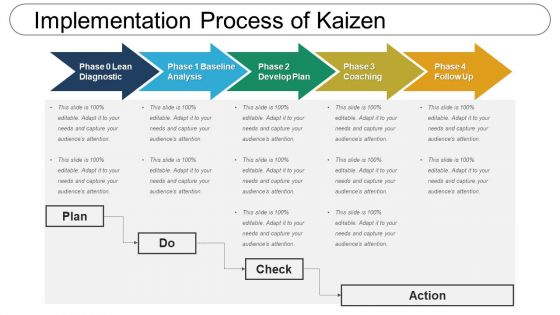
Implementation process of kaizen





Try Before you Buy Download Free Sample Product
 Impress Your
 Audience
 100%
100% Editable
 Save Hours
 of Time


Entrepreneurial abilities evolve with our Implementation Process Of Kaizen. Your business grows bigger by the day.
People who downloaded this PowerPoint presentation also viewed the following :
Implementation process of kaizen with all 5 slides:
Cut out the static with our Implementation Process Of Kaizen. Let your message go through loud and clear.




FAQs for Implementation
So kaizen is basically about making tiny improvements all the time instead of waiting for some massive overhaul. Get everyone involved - not just the bosses making decisions from their ivory towers. Question everything, cut out waste, and actually listen when people suggest better ways to do stuff. The whole point is building a culture where improving things becomes second nature. Oh, and use data to back up your decisions - gut feelings only go so far. Pick one small process your team does and ask "how do we make this just 1% better?" That shift in thinking is honestly half the battle right there.
Honestly, skip the classroom stuff and jump straight into hands-on workshops with real work processes. Way more effective. Train your team leaders first - they'll coach everyone else better than any consultant could. The whole point is tiny improvements, not some massive company transformation (I've watched too many places mess this up by overthinking it). Teach them basic tools like 5 Why analysis and how to spot waste. Quick wins need to be celebrated loudly so people stay excited. Oh, and this is crucial - let people experiment and screw up small things. That's literally how they'll learn best.
Honestly, leadership can totally make or break this stuff. Your bosses need to actually show up and participate in kaizen events, not just send an email saying "great job team" and call it a day. They've got to give people real time and resources to make changes happen. I've seen too many companies where good ideas just die because management pays lip service but doesn't back it up. The best leaders I've worked with treat continuous improvement like it's part of their DNA - they're on the floor talking to people, celebrating wins. Short version: if your leadership thinks kaizen is just another flavor-of-the-month program, you're screwed.
Honestly, the biggest pain is getting people to actually change - everyone gets stuck in their ways even when stuff isn't working great. Leadership buy-in is crucial too, like they need to actually participate not just nod along. I'd start super small with quick wins so people can see results right away. Communication matters a ton - explain why you're doing this and get employees involved in spotting the problems themselves. Oh and definitely celebrate the small victories! Training helps obviously. Don't try to flip everything at once though, that never works. Build momentum slowly.
Track the obvious stuff first - cycle time, defect rates, cost savings. Leadership eats that data up. But honestly? The softer metrics matter just as much. How engaged are people? Are they actually submitting suggestions? Baseline everything before you start, then check progress monthly. Oh, and definitely celebrate the small wins - sounds cheesy but it really keeps people motivated. I've seen too many good initiatives die because teams felt like their work didn't matter. Monthly reviews work better than quarterly if you can swing it.
Start with value stream mapping - that's gonna show you where all your bottlenecks are hiding. You'll want the 5 Whys for digging into root causes, plus standardized work docs. PDCA cycles are huge for testing stuff out before you commit. Oh, and gemba walks - literally just go watch people do the actual work. Sounds basic but most managers never do it! 5S keeps everything organized (trust me, cluttered workspaces kill productivity), and A3 problem-solving gives you a solid template. Honestly, the value stream map should be your first move since it reveals the biggest opportunities right away.
Make it everyone's thing, not just something management pushes down. Celebrate the small stuff publicly - even tiny wins matter because people need to see you're actually listening. Give your team basic problem-solving tools so they don't feel helpless when suggesting changes. Here's the big one though: actually use their good ideas. Ignored suggestions kill motivation faster than anything. Maybe add 15 minutes to team meetings for improvement chat? Oh, and respond quickly to ideas. People need to see that making things better helps them too, not just the company's profits.
So Kaizen is all about tiny daily improvements that everyone can do - like the opposite of death by a thousand cuts, but in a good way. Six Sigma brings out the big guns with heavy data analysis for major problems. Honestly, Kaizen's way easier to start with since your regular employees can jump in right away. Six Sigma? You'll need specialists and it takes forever. I always tell people to go Kaizen first - builds that improvement mindset before you dive into the complicated statistical stuff. Plus frontline workers actually know where the real problems are anyway.
Honestly, Kaizen's perfect for small businesses because you don't need some expensive consultant. Just pick one annoying thing - like your checkout process or how you handle inventory. Get your team to brainstorm three simple fixes since they deal with the headaches daily. The whole point is making tiny tweaks consistently instead of massive changes that'll stress everyone out. I'd say start with whatever bugs you most this week. Track what actually works (some ideas will flop, trust me). Your employees probably have way better solutions than you think - they're the ones dealing with broken processes every day.
Dude, this is huge - employee involvement literally makes or breaks Kaizen. Your frontline people are the ones actually doing the work every day, so they see problems you'd never notice from up top. When they help create the solutions, they actually care about making them work instead of just going through the motions. I've seen so many initiatives die because management just imposed changes without asking anyone. Start by finding out what bugs your team most - that's where you'll get the biggest wins. Oh, and actually follow through on their ideas or they'll stop participating real quick.
Make it part of your regular routine instead of treating it like some big special thing. Weekly team meetings work great - people share what they tried and what actually worked. Honestly, celebrating those tiny wins is huge because everyone gets discouraged without recognition. Your leadership team needs to stay visible and give people actual work time for this stuff. Don't dump it on top of their already crazy workload. A simple tracking board where everyone can see progress helps a lot, and rotate who runs the meetings so you get different perspectives flowing.
Focus on quick wins people can actually see - stuff like cutting wait times or fixing those bottlenecks everyone's always griping about. Real success stories work way better than some generic case study from another company (honestly, who cares about their results?). Set up visual dashboards showing before/after numbers. Celebrate the small wins publicly. Those lunch-and-learns where your own team shares what worked? Pure gold. But here's the thing - connect every benefit to what actually matters to them personally. Less overtime, smoother workflows, fewer headaches. Make it about their daily reality, not some corporate buzzword fest.
Oh, Kaizen's actually perfect for this! Basically you're fixing tiny problems before they blow up on customers. Your frontline people spot stuff management totally misses since they're dealing with customers all day. Small process tweaks mean fewer defects and faster responses - it's like the opposite of death by a thousand cuts, you know? All those little improvements stack up into something customers genuinely feel. Honestly, I'd just have your customer-facing teams write down one annoying thing they notice weekly, then work through that list. Way easier than you'd think.
Honestly, treat each tech rollout like a bunch of small experiments instead of going all-in at once. Start with pilots, get constant feedback from actual users, then tweak things fast. I've watched so many companies crash and burn trying to digitize everything overnight - it's painful to see. Pick one process, involve the people who'll actually use it, and don't forget to celebrate those little victories. Weekly retrospectives with your team help catch issues early. The real trick? Making continuous improvement feel natural, not forced. Oh, and users will surprise you with insights you'd never think of.
Honestly, you can't do Kaizen without good data - it's like trying to fix something blindfolded. Look at your process times, defect rates, all that stuff to find the real problems. Sometimes the biggest issues are things everyone's just accepted as "how we do it here" (which drives me crazy). Your metrics will show you exactly where time disappears or quality tanks. Oh, and definitely measure your baseline first before changing anything. Walking around the floor helps, but the numbers tell the actual story about what's broken.
-
Excellent design and quick turnaround.
-
Professional and unique presentations.