


Implementing Big Data Analytics In Supply Chain Management CRP CD
Supply chain analytics is a process of analyzing supply chain data and developing important business insights to enhance logistics operations. Check out our meticulously crafted PowerPoint Presentation titled Implementing Big Data Analytics in Supply Chain Management providing a comprehensive overview of major supply chain challenges faced by companies with analytics solutions to overcome these barriers. Additionally, our Supply Chain Analytics Deck includes understanding the fundamentals of big data analytics in the supply chain, its benefits, roles in enhancing logistics operations. It also provides information regarding supply chain analytics market overview with prevailing trend analysis. Furthermore, the Big Data Analytics Techniques Presentation discusses various analytical techniques used in supply chain management such as descriptive, predictive, and prescriptive analytics, and their applications in business. Moreover, the Procurement Analytics PPT showcases steps for implementing data analytics in the supply chain with focus areas such as inventory management, procurement analysis, and demand planning. Lastly, our Demand Forecasting module showcases the influence of data analytics on supply chain operations with business performance dashboards and case studies. Get access now.




























































You must be logged in to download this presentation.


Do you want to remove this product from your favourites?
 Impress your
 audience
 100%
100% Editable
 Save Hours
 of Time
PowerPoint presentation slides
This complete presentation has PPT slides on wide range of topics highlighting the core areas of your business needs. It has professionally designed templates with relevant visuals and subject driven content. This presentation deck has total of ninety seven slides. Get access to the customizable templates. Our designers have created editable templates for your convenience. You can edit the color, text and font size as per your need. You can add or delete the content if required. You are just a click to away to have this ready-made presentation. Click the download button now.

People who downloaded this PowerPoint presentation also viewed the following :
Content of this Powerpoint Presentation
Slide 1: This slide introduces Implementing Big Data Analytics in Supply Chain Management. State Your Company Name and begin.
Slide 2: This slide is an Agenda slide. State your agendas here.
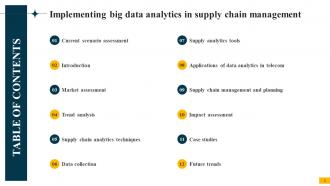
Slide 3: This slide shows a Table of Contents for the presentation.
Slide 4: This slide is an introductory slide.
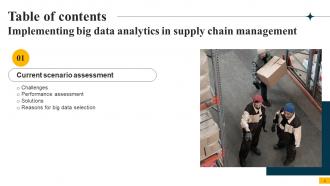
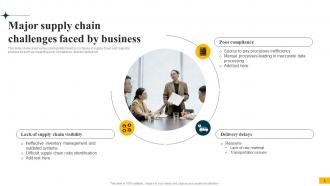
Slide 5: This slide showcases various pain points faced by company in supply chain and logistics processes such as regarding poor compliance, delivery delays etc.
Slide 6: This slide shows analysis of company supply chain and logistics operational performance using KPI’s such as on time delivery, lead time, carrying cost etc.
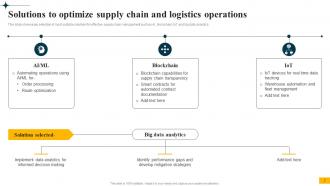
Slide 7: This slide presents selection of most suitable solutions for effective supply chain management such as AI, blockchain, IoT and big data analytics.
Slide 8: This slide represents reasons to choosing big data analytics for product traceability, inventory management and real time order tracking etc.
Slide 9: This slide is an introductory slide.
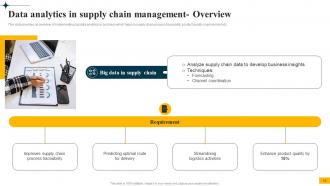
Slide 10: This slide provides an overview of implementing big data analytics in business.
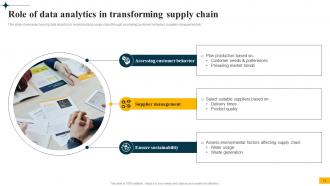
Slide 11: This slide entails how big data analytics in revolutionizing supply chain through assessing customer behaviors, supplier management etc.
Slide 12: This slide puts integration of big data with product and logistics data which includes planning, provisioning, performance, delivery and logistics.
Slide 13: This slide denotes characteristics of big data analytics in supply chain which includes elements such as volume, velocity , variety, value and veracity.
Slide 14: This slide demarcates steps involved in supply chain data analysis which includes data collection, storage, data mining, data analysis and analyzing results.
Slide 15: This slide demonstrates various challenges faced in implementing supply chain analytics such as data silos, poor data quality and ineffective data management.
Slide 16: This slide is an introductory slide.
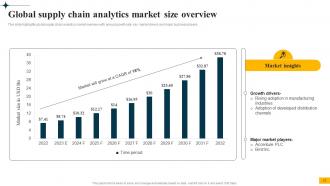
Slide 17: This slide highlights global supply chain analytics market overview with annual growth rate, key market drivers and major business players.
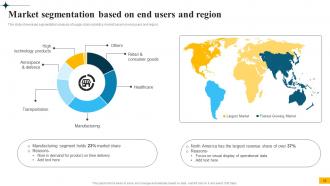
Slide 18: This slide illustrates segmentation analysis of supply chain analytics market based on end users and region.
Slide 19: This slide contains various stats related to supply chain analytics solutions which includes stock inventory, logistic operations, optimal supply chains etc.
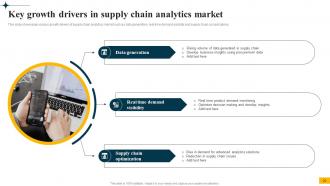
Slide 20: This slide constitutes various growth drivers of supply chain analytics market.
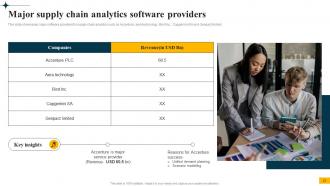
Slide 21: This slide caters to major software providers for supply chain analytics such as Accenture, aera technology, Birst Inc., Capgemini SA and Genpact limited
Slide 22: This slide puts recent technological development in business analytics market which are software intelligence platform, analytics suite etc.
Slide 23: This slide is an introductory slide.
Slide 24: This slide showcases emerging trend of rise in adoption of demand planning software with growth drivers such as supply chain issues, edge computing etc.
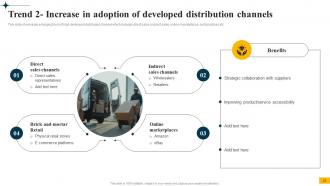
Slide 25: This slide shows emerging trend of high developed distributed channel which includes direct sales, indirect sales, online marketplaces, best practices etc.
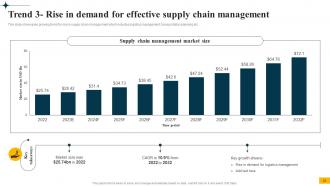
Slide 26: This slide highlights growing trend for rise in supply chain management which includes logistics management, transportation planning etc.
Slide 27: This slide is an introductory slide.
Slide 28: This slide highlights various data analytics techniques used for supply chain management such as descriptive, predictive and prescriptive analytics.
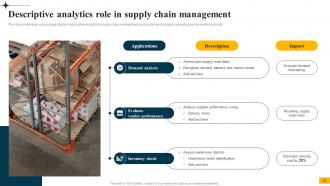
Slide 29: This slide illustrates various applications of descriptive analytics in supply chain management such as demand analysis, evaluating vendor performance etc.
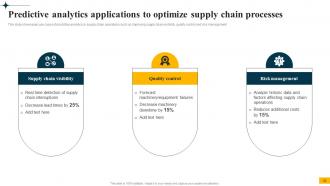
Slide 30: This slide presents use cases of predictive analytics in supply chain operations such as improving supply chain visibility, quality control and risk management.
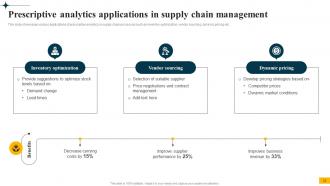
Slide 31: This slide pertains to various applications of prescriptive analytics in supply chain processes such as inventory optimization, vendor sourcing, dynamic pricing etc.
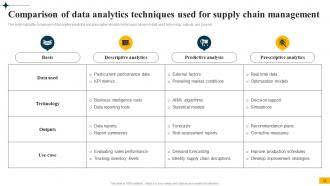
Slide 32: This slide highlights comparison of descriptive predictive and prescriptive analytics techniques based on data used, technology, outputs, use case etc.
Slide 33: This slide is an introductory slide.
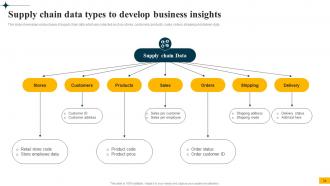
Slide 34: This slide puts various types of supply chain data which are collected such as stores, customers, products, sales, orders, shipping and delivery data.
Slide 35: This slide showcases classification of supply chain data sources based on operations such as EDI purchase orders, ERP &CRM transaction data etc.
Slide 36: This slide is an introductory slide.
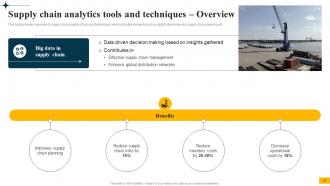
Slide 37: This slide provides overview of supply chain analytics tools and techniques which includes elements such as distribution networks, supply chain planning etc.
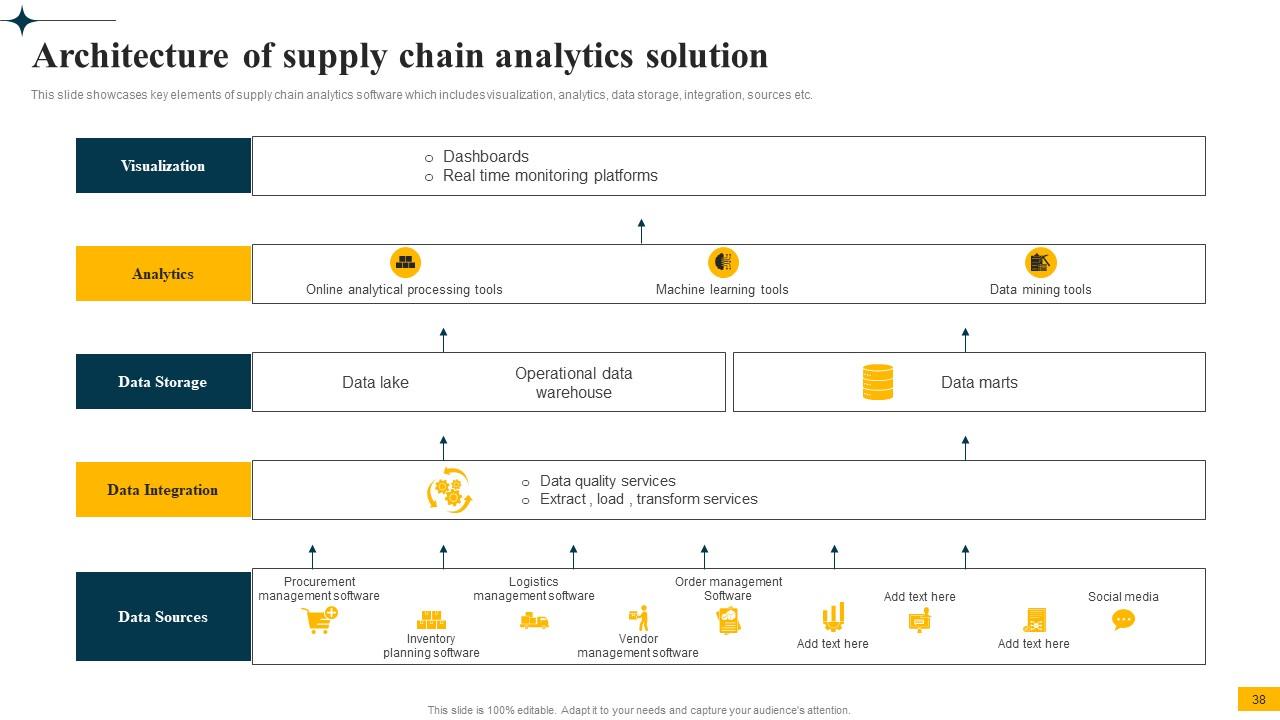
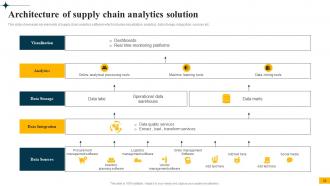
Slide 38: This slide shows key elements of supply chain analytics software which includes visualization, analytics, data storage, integration, sources etc.
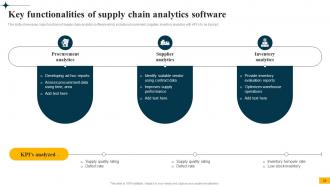
Slide 39: This slide elaborates major functions of supply chain analytics software which includes procurement, supplier, inventory analytics with KPI’s to be tracked.
Slide 40: This slide entails valuable insights gathered due to integration of supply chain analytics which includes prediction reports, trend analysis etc.
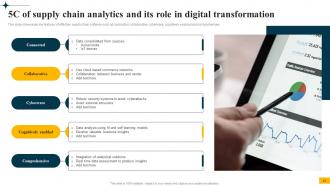
Slide 41: This slide showcases key features of effective supply chain software such as connected, collaborative, cyberware, cognitively enabled and comprehensive.
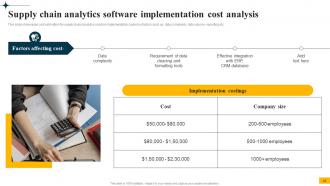
Slide 42: This slide shows cost estimation for supply chain analytics solution implementation based on factors such as, data complexity, data volume, reporting etc.
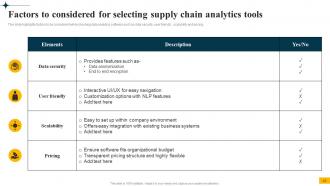
Slide 43: This slide highlights factors to be considered while choosing data analytics software such as data security, user friendly , scalability and pricing.
Slide 44: This slide provides overview of supply chain analytics tools which includes elements such as data preparation, supply chain data reports, data ingestion etc.
Slide 45: This slide marks features of supply chain analytics software which includes supplier forecasting, demand planning, supply chain management etc.
Slide 46: This slide projects overview of supply chain analytics tool which includes elements such as manufacturing scorecard, supplier rating system, tracking reports etc.
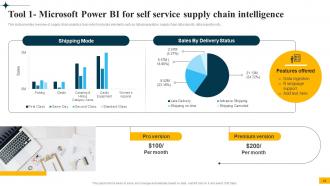
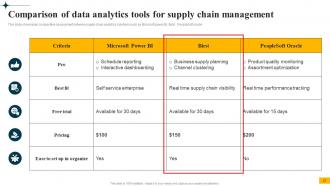
Slide 47: This slide pertains to comparative assessment between supply chain analytics solutions such as Microsoft power BI, Birst , PeopleSoft oracle.
Slide 48: This slide is an introductory slide.
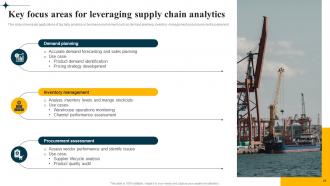
Slide 49: This slide showcases applications of big data analytics in business environment such as demand planning, inventory management and procurement assessment.
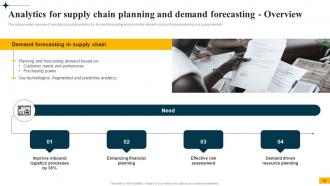
Slide 50: This slide contains overview of leveraging big data analytics for demand forecasting which includes elements such as financial planning, risk assessment etc.
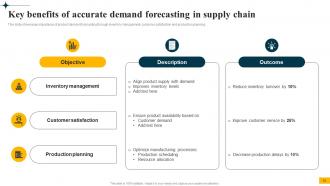
Slide 51: This slide caters to importance of product demand forecasting through inventory management, customer satisfaction and production planning.
Slide 52: This slide concludes demand forecasting framework which helps generating insights based on social media patterns, competitor analysis, sales numbers etc.
Slide 53: This slide entails various techniques used in supply chain planning such as regarding macro, micro, short term and long term demand forecasting methods.
Slide 54: This slide puts steps for effective demand forecasting in supply chain such as data collection, assessing factors, recording demand trends, take action etc.
Slide 55: This slide demarcates various strategies adopted by business to improve demand forecast accuracy such as collaborative prediction, market research etc.
Slide 56: This slide is an introductory slide.
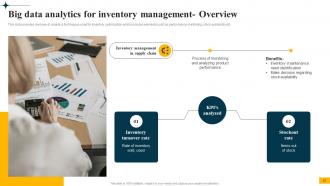
Slide 57: This slide denotes overview of analytics techniques used for inventory optimization which includes elements such as performance monitoring, stock availability etc.
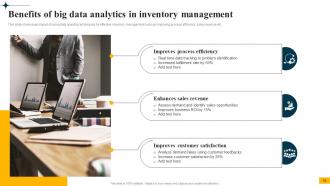
Slide 58: This slide demarcates impact of using data analytics techniques for effective inventory management such as improving process efficiency, sales revenue etc.
Slide 59: This slide entails dashboard to track sales and inventory turnover which includes elements such as sales, inventory turnover, account payable etc.
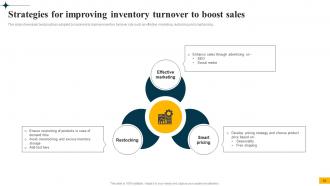
Slide 60: This slide elaborates best practices adopted by business to improve inventory turnover rate such as effective marketing, restocking and smart pricing.
Slide 61: This slide embarks dashboard to monitor product stockout levels and identify reasons such as ineffective forecasting, late delivery, product quality issues etc.
Slide 62: This slide showcases various tips to prevent stockouts and improve inventory accuracy such as creating reorder points, determining lead times and demand planning.
Slide 63: This slide shows dashboard to track sales orders which includes KPI’s such as inventory turnover ratio, average inventory, perfect order rate etc.
Slide 64: This slide is an introductory slide.
Slide 65: This slide provides overview of procurement analytics which is used in supply chain with elements such as supplier assessment, supplier defect rate, lead time etc.
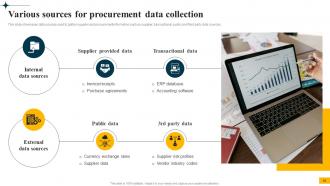
Slide 66: This slide shows data sources used to gather supplier and procurement information such as supplier, transactional, public and third party data sources.
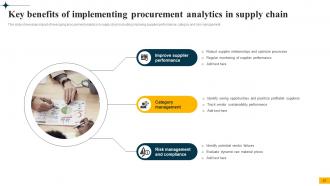
Slide 67: This slide entails impact of leveraging procurement analytics in supply chain including improving supplier performance, category and risk management.
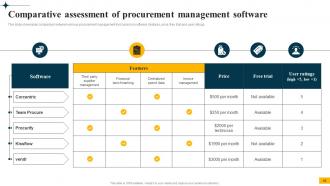
Slide 68: This slide presents comparison between various procurement management tool based on software, features, price, free trial and user ratings.
Slide 69: This slide represents dashboard for tracking total defected quantity per supplier which includes elements such as rejected products rate, poor material quality etc.
Slide 70: This slide elucidates various initiatives to improve supplier quality such as supplier quality management, quality control measures and staff trainings.
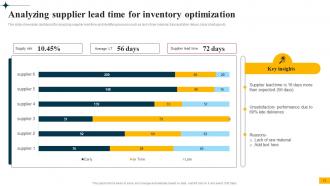
Slide 71: This slide contains dashboard for analyzing supplier lead time and identifying reasons such as lack of raw material, transportation delays, labor shortage etc.
Slide 72: This slide caters to best practices to reduce lead times and improve cash flow such as prioritizing domestic vendors, increasing order frequency etc.
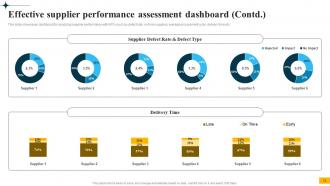
Slide 73: This slide concludes dashboard for analyzing supplier performance with KPI’s such as defect rate, on time supplies, average procurement cycle, delivery time etc.
Slide 74: This slide is in the continuation.
Slide 75: This slide highlight benefits of implementing strategies to decrease supplier defect rates such as real time tracking, supplier quality check, supplier scorecards etc.
Slide 76: This slide is an introductory slide.
Slide 77: This slide showcases roles and responsibilities of supply chain management team which includes supply chain manager, supply chain analyst and materials manager.
Slide 78: This slide shows comparative assessment of supply chain management software based on features, price, user ratings and best fit.
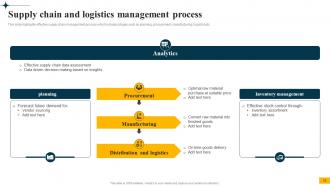
Slide 79: This slide illustrates effective supply chain management process which includes stages such as planning, procurement, manufacturing, logistics etc.
Slide 80: This slide mentions strategies effective supply chain planning such as demand planning, supplier assessment, production and inventory management.
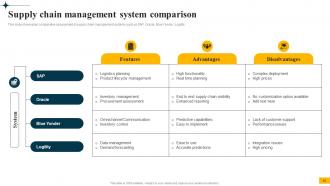
Slide 81: This slide puts comparative assessment of supply chain management systems such as SAP, Oracle, Blue Yonder, Logility.
Slide 82: This slide showcases supply chain management plan which includes objectives such as strategic planning, procurement, quality control and effective reporting.
Slide 83: This slide is an introductory slide.
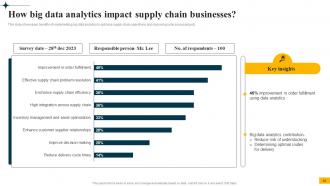
Slide 84: This slide puts benefits of implementing big data analytics to optimize supply chain operations and improving order processing etc.
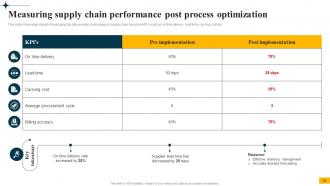
Slide 85: This slide elucidates impact of leveraging big data analytics techniques in supply chain based on KPI’s such as on time delivery, lead time, carrying cost etc.
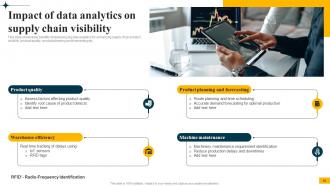
Slide 86: This slide illustrates benefits of deploying big data analytics for enhancing supply chain product visibility, product quality, product planning and forecasting etc.
Slide 87: This slide is an introductory slide.
Slide 88: This slide puts case study for supplier performance improvement which includes objectives, challenges, initiative and potential impact.
Slide 89: This slide provides case studying showcasing use of predictive analytics to develop internal logistics platform.
Slide 90: This slide is an introductory slide.
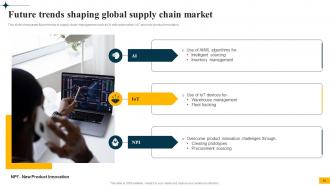
Slide 91: This slide showcases future trends in supply chain management such as AI with automation, IoT and new product innovation.
Slide 92: This slide shows future stats related to adoption of supply chain analytics.
Slide 93: This slide shows all the icons included in the presentation.
Slide 94: This slide is titled Additional Slides for moving forward.
Slide 95: This slide showcases supply chain planning processes based on production phases such as procurement, production, distribution, sales, return and support.
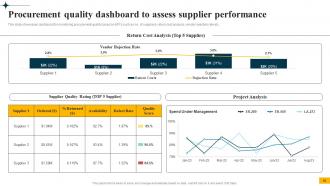
Slide 96: This slide shows dashboard for monitoring procurement quality based on KPI’s such as no. of suppliers, return cost analysis, vendor rejection rate etc.
Slide 97: This slide is a thank-you slide with address, contact numbers, and email address.
Implementing Big Data Analytics In Supply Chain Management CRP CD with all 106 slides:
Use our Implementing Big Data Analytics In Supply Chain Management CRP CD to effectively help you save your valuable time. They are readymade to fit into any presentation structure.
-
I’m not a design person, so I couldn’t make a presentation to save my life. Thankfully, they have all kinds of templates that I regularly use for my work.
-
Editable, diversified, compatible with MS PPT and Google Slides, and on top of that finest graphics!! I mean in the words of the famous Ross Geller, “What more do you want!”
