


Implementing Effective Quality Improvement Strategies to Improve Customer Satisfaction deck Strategy CD
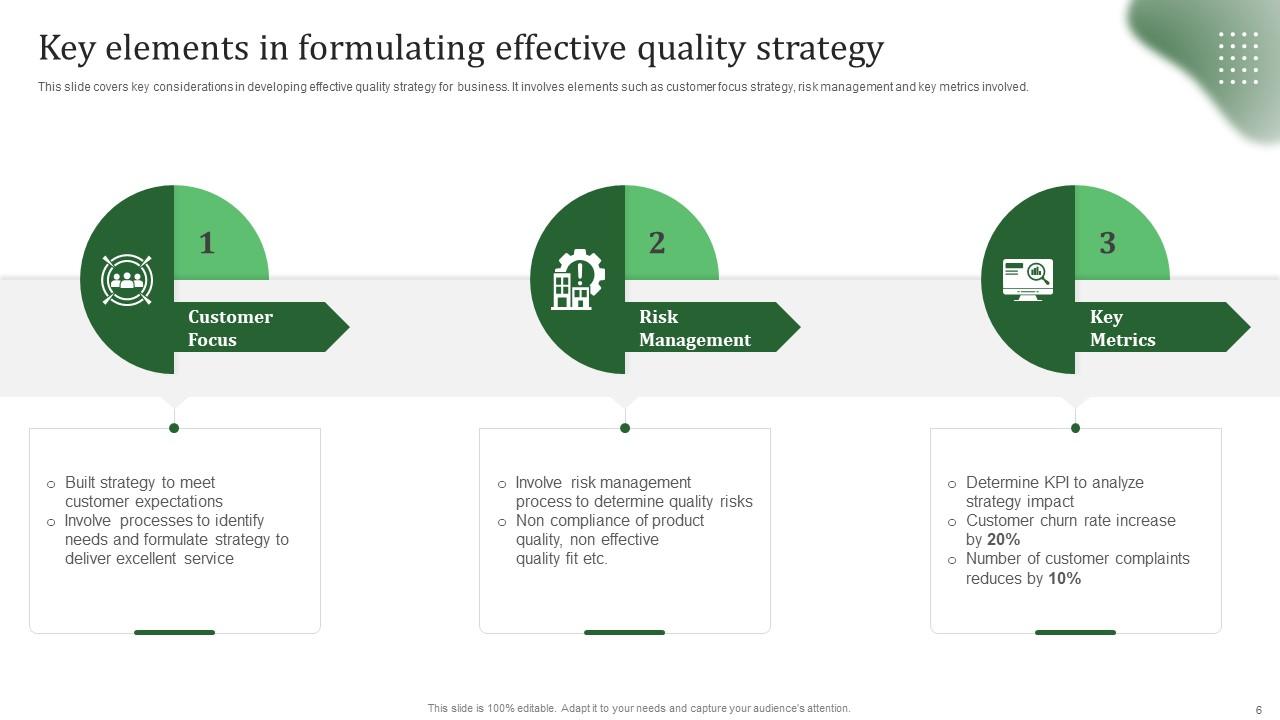
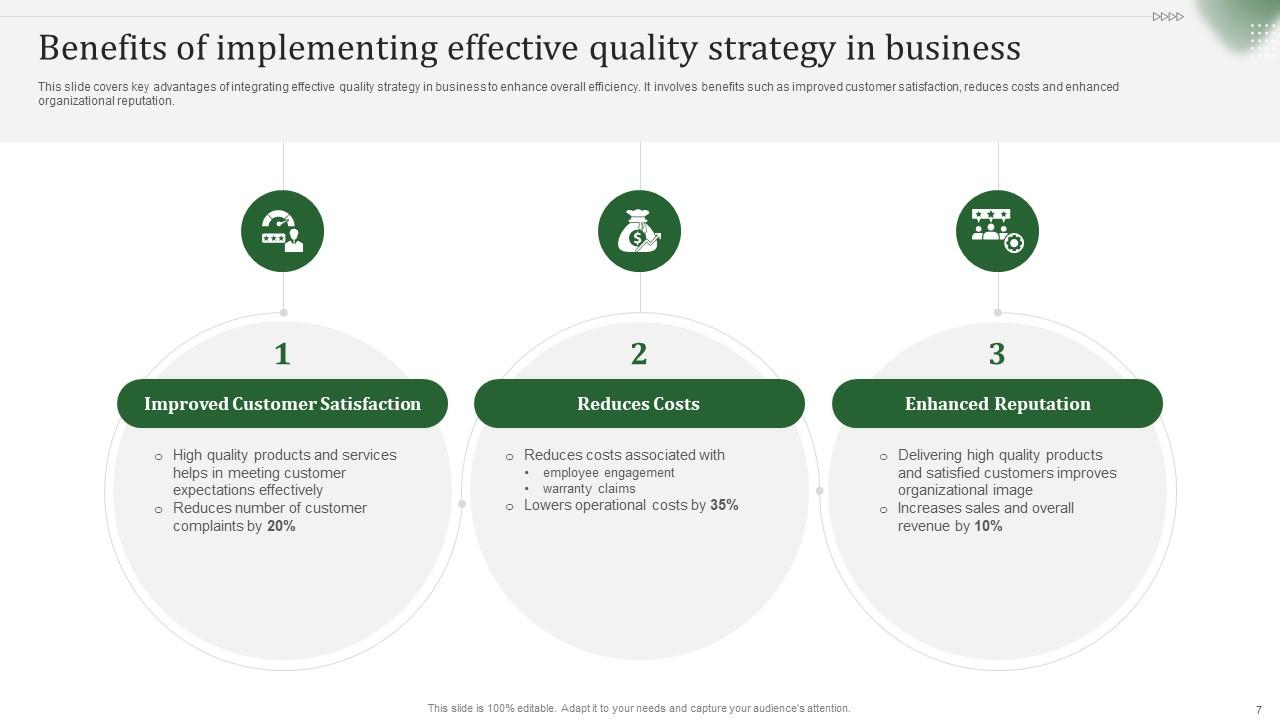
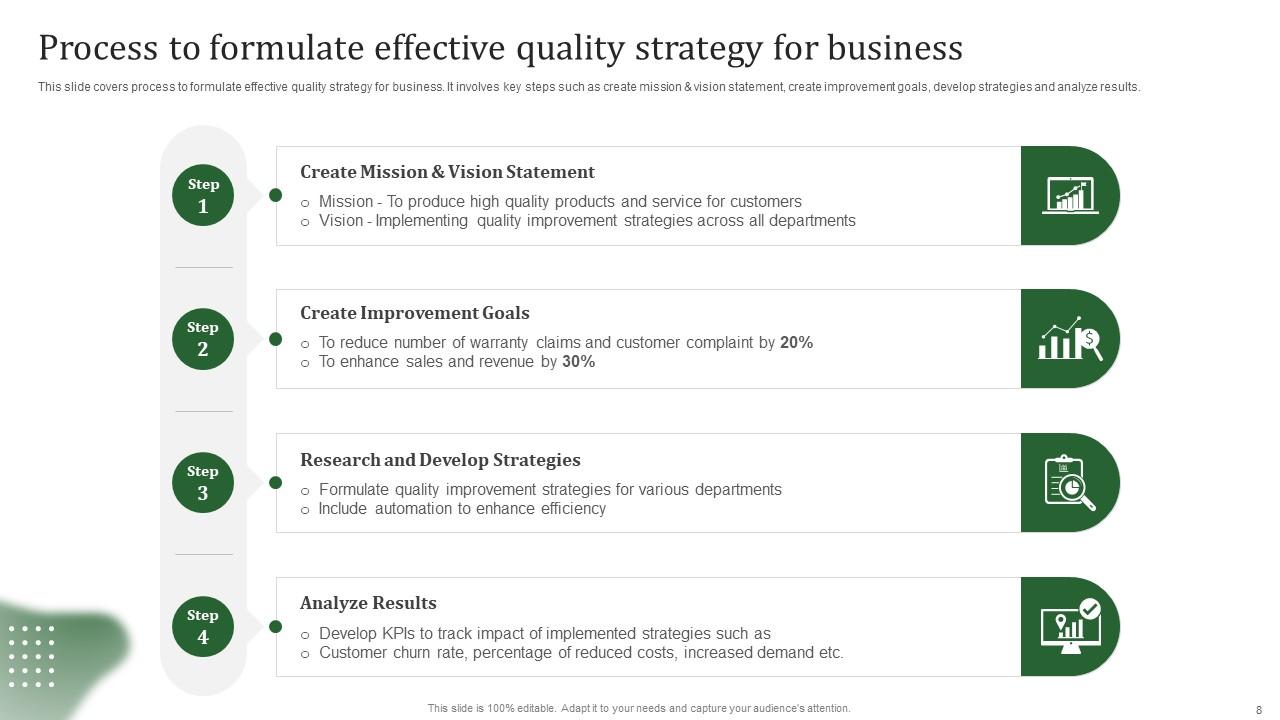
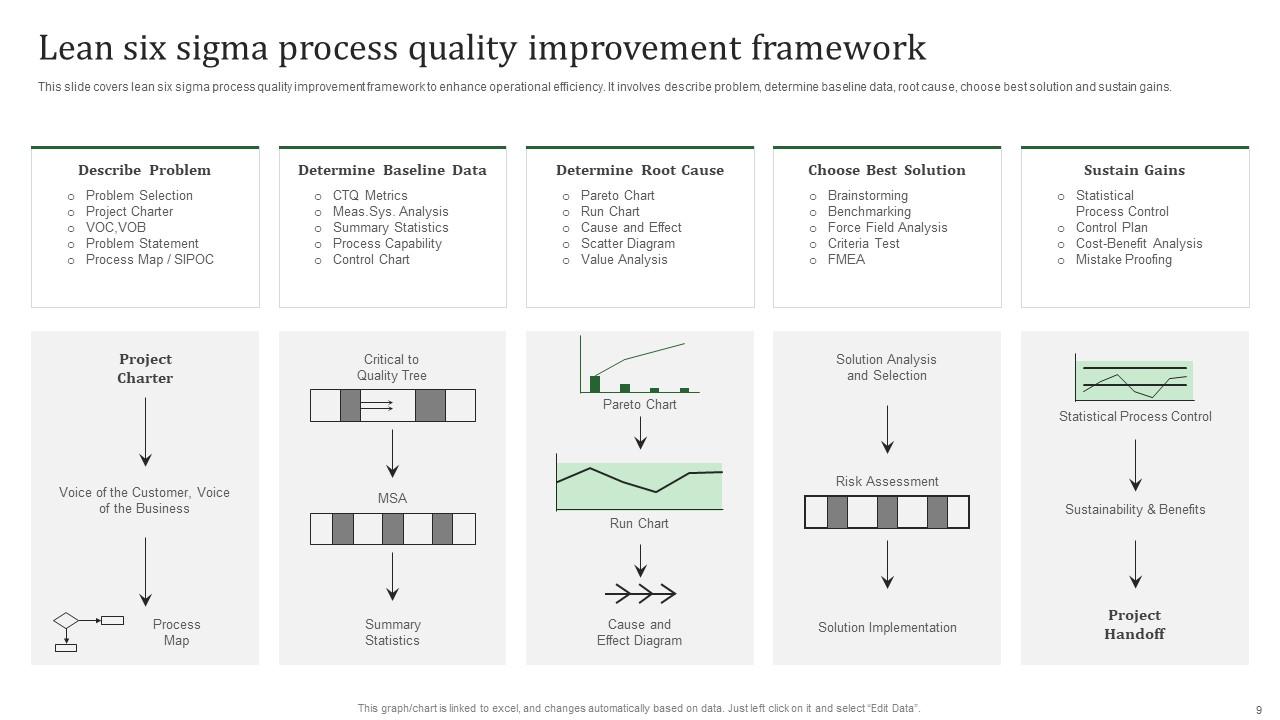
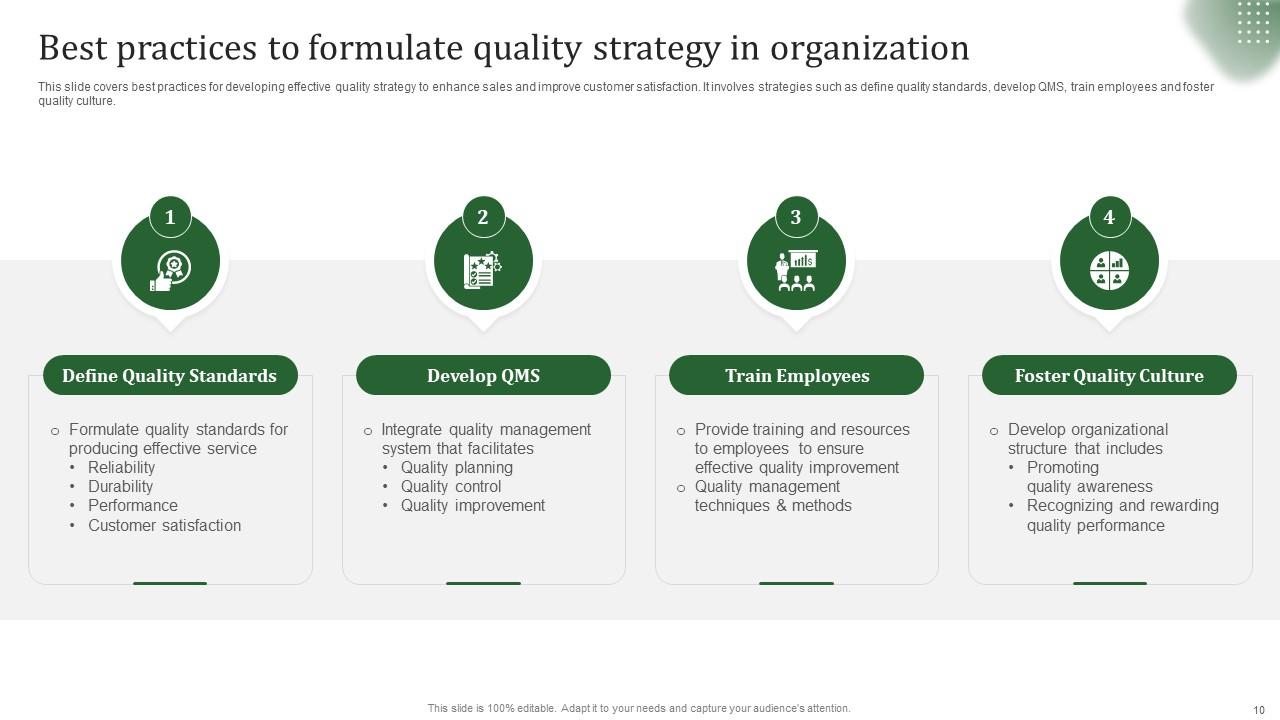
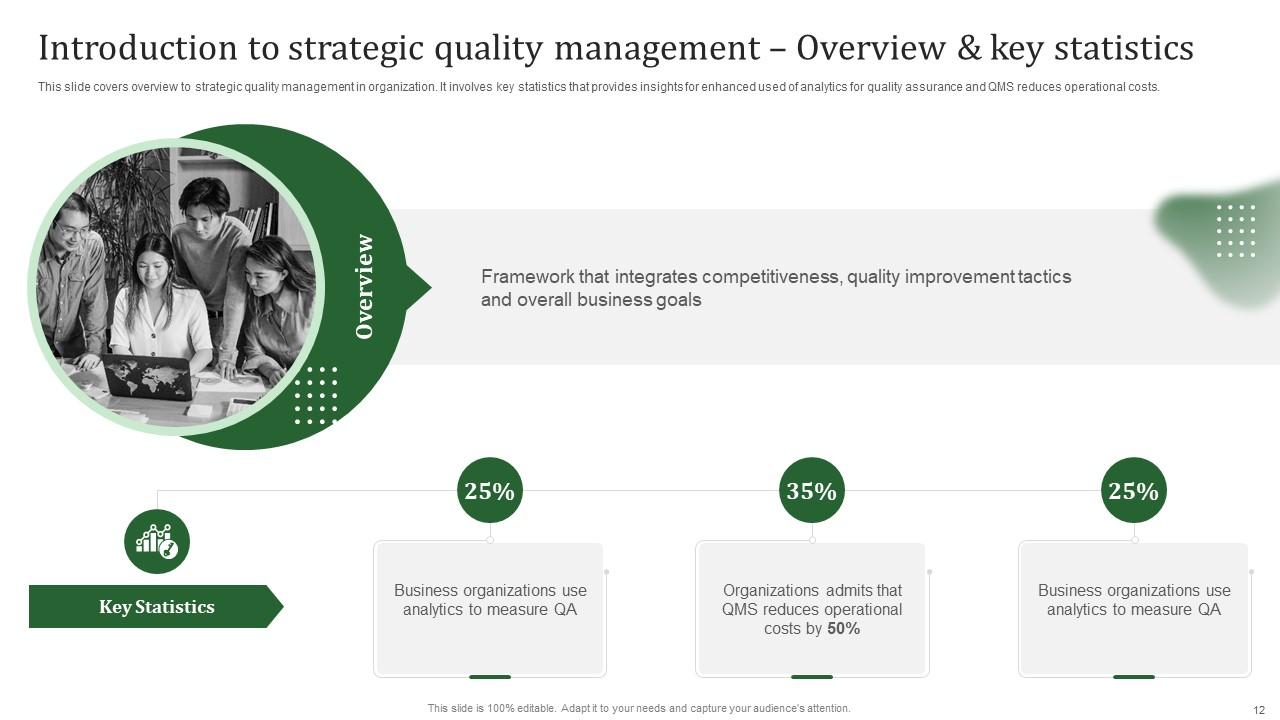
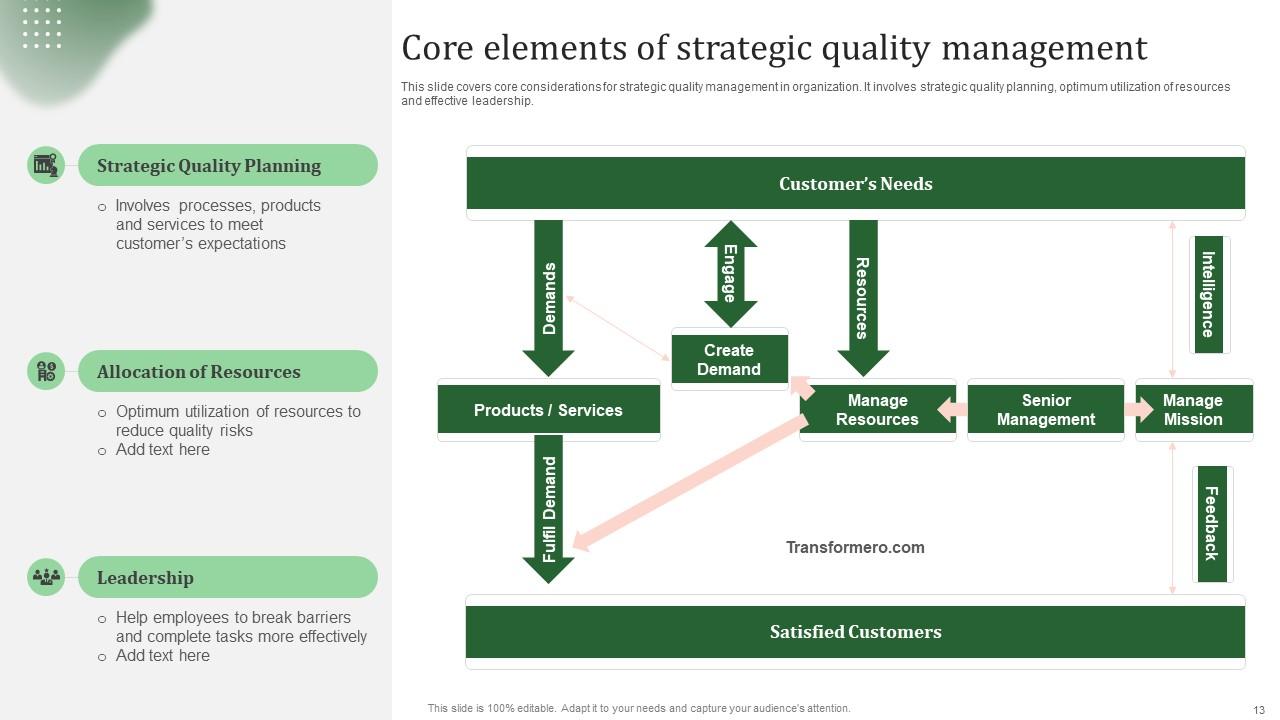
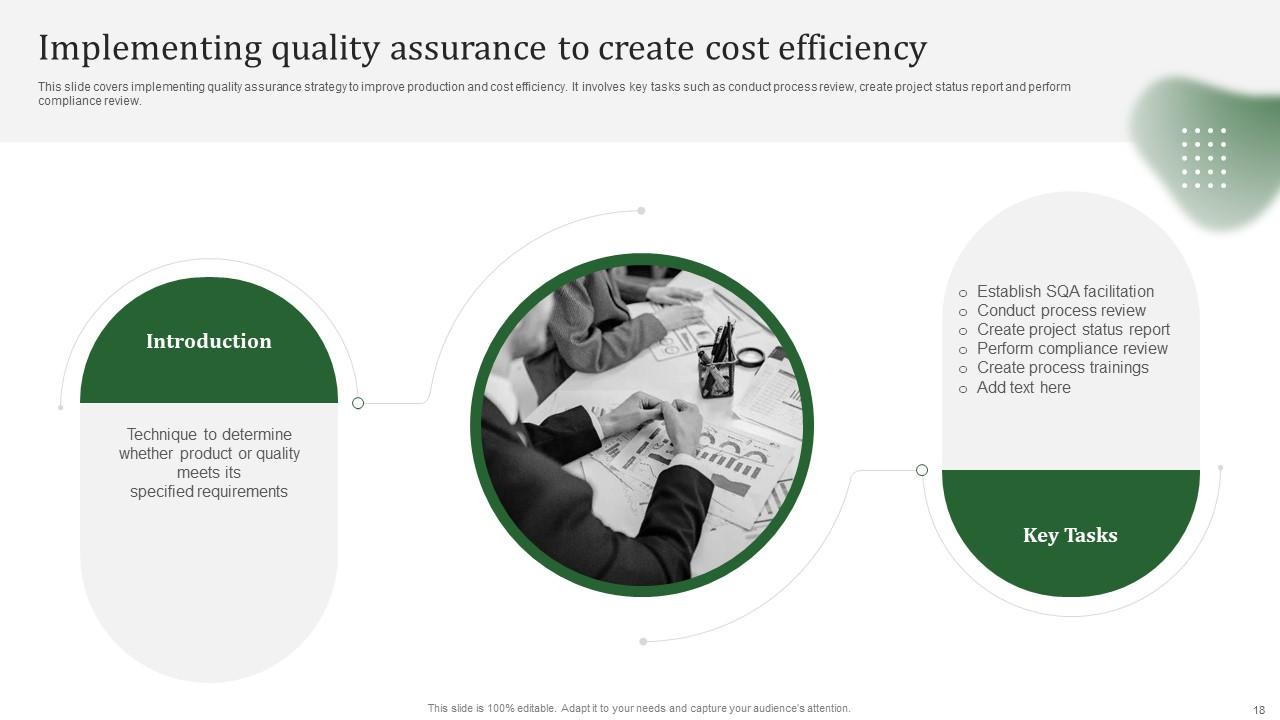
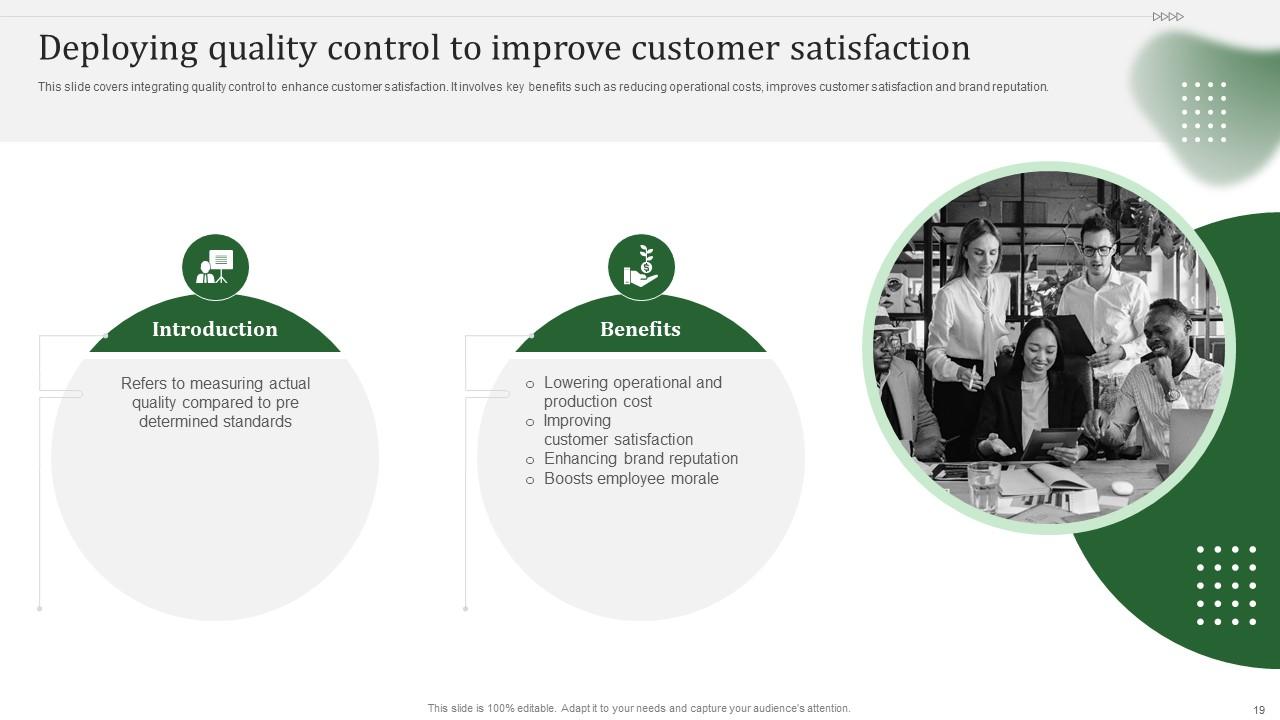
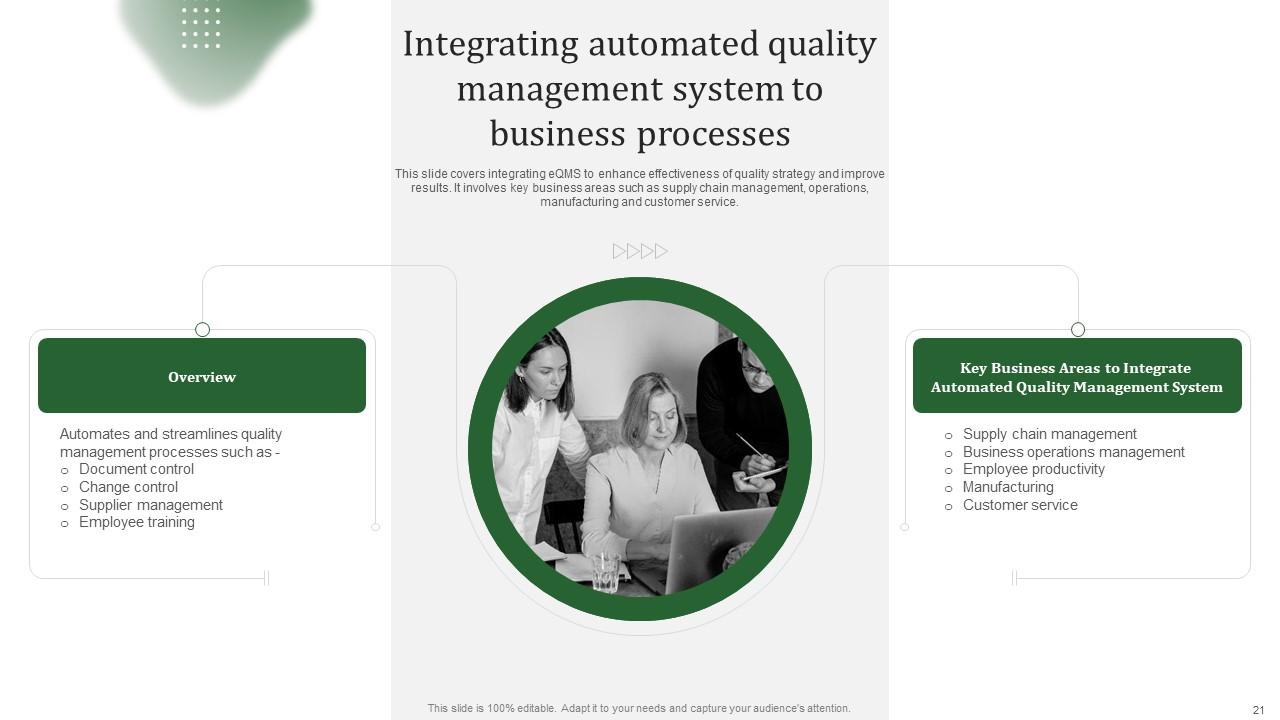
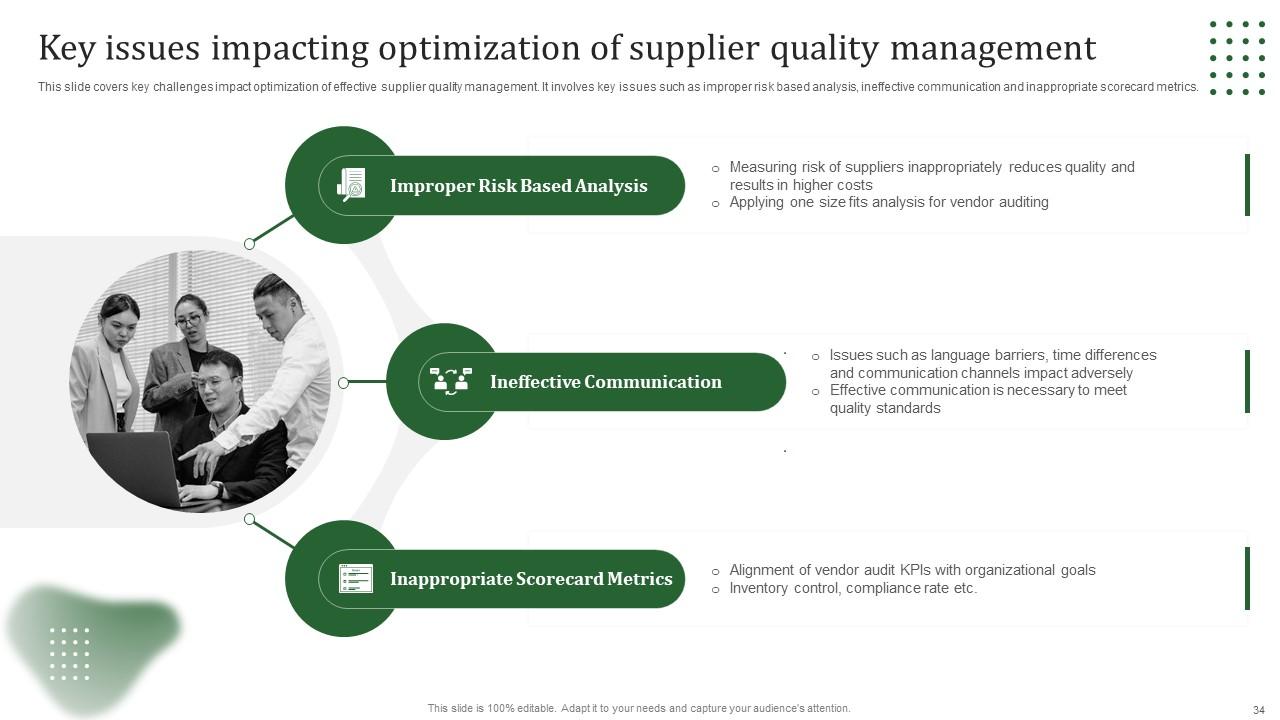
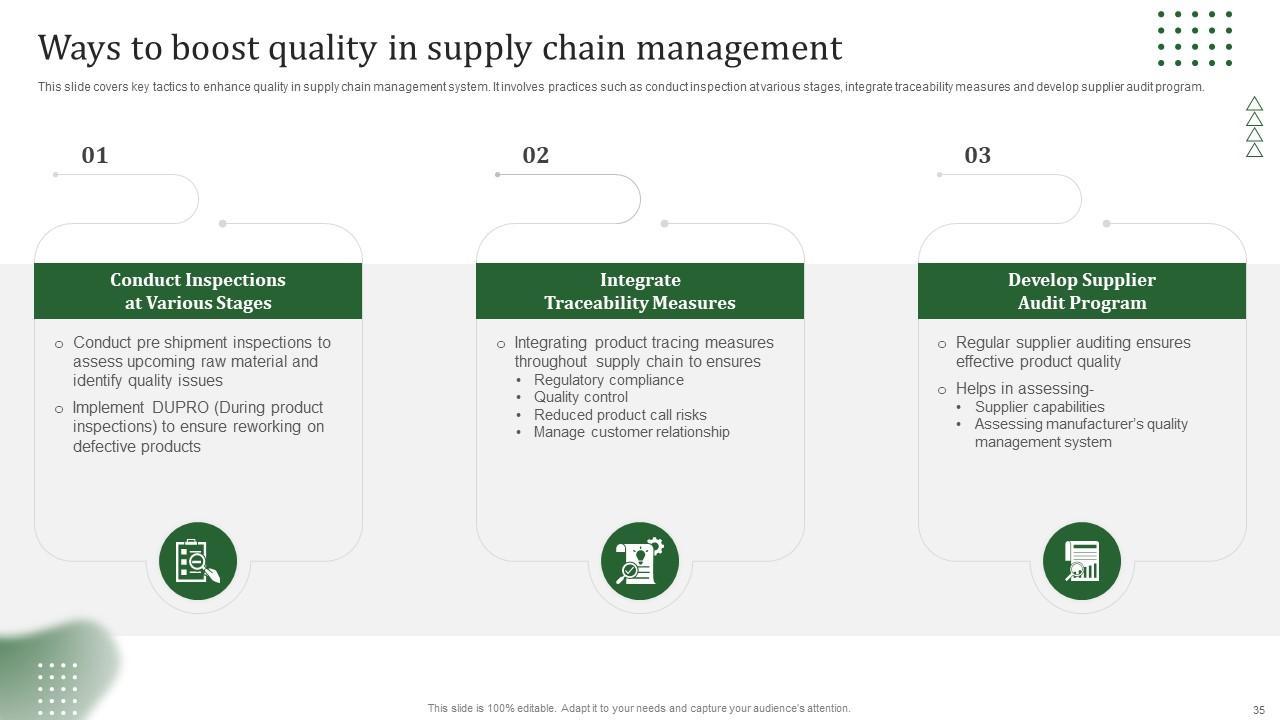
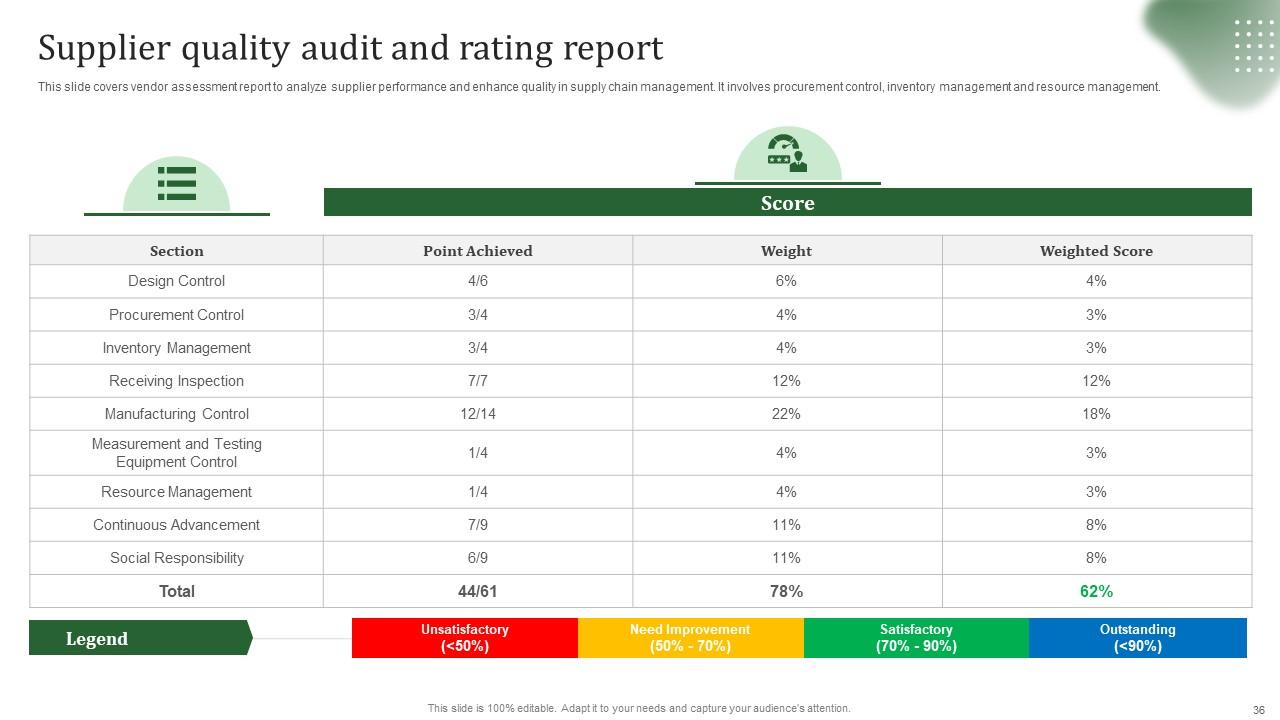
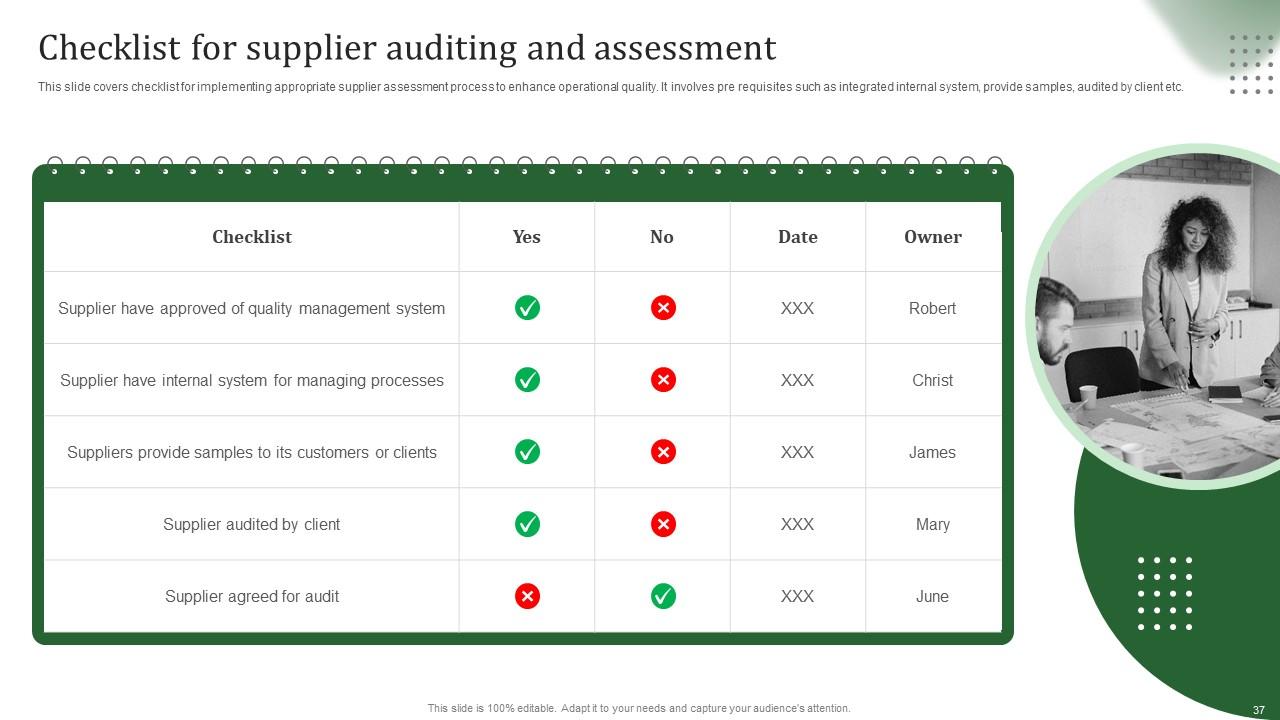
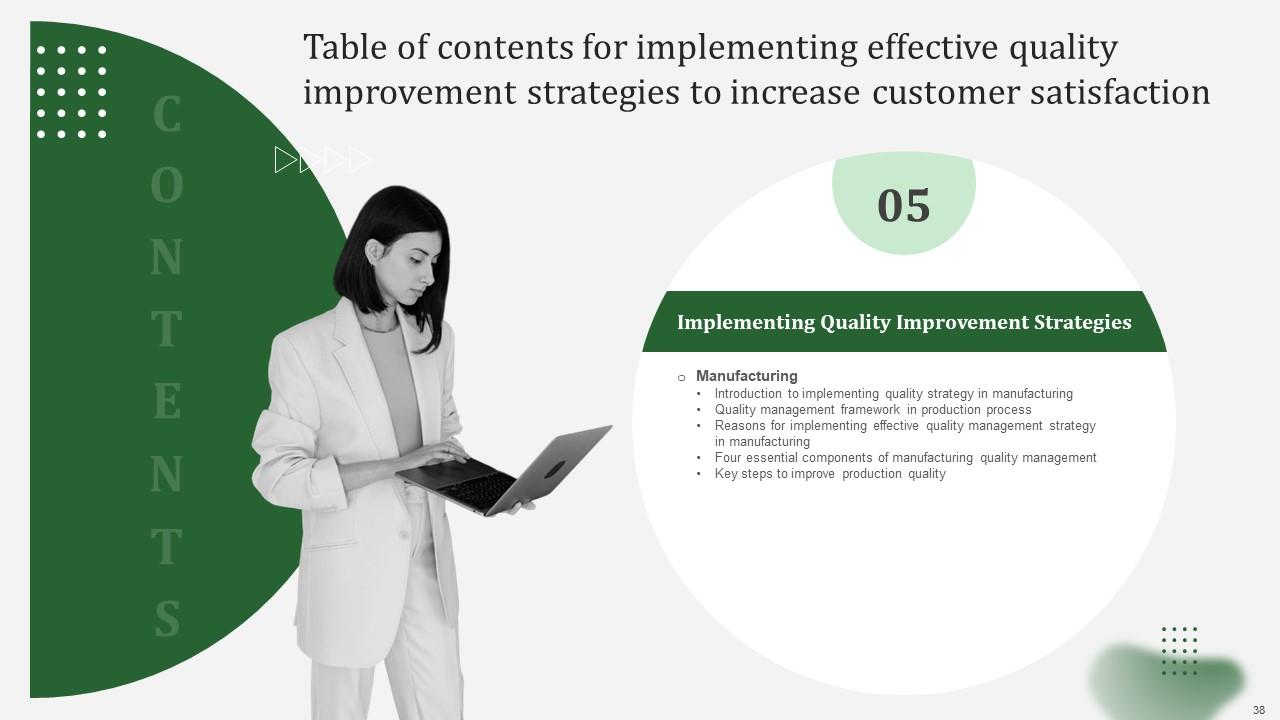
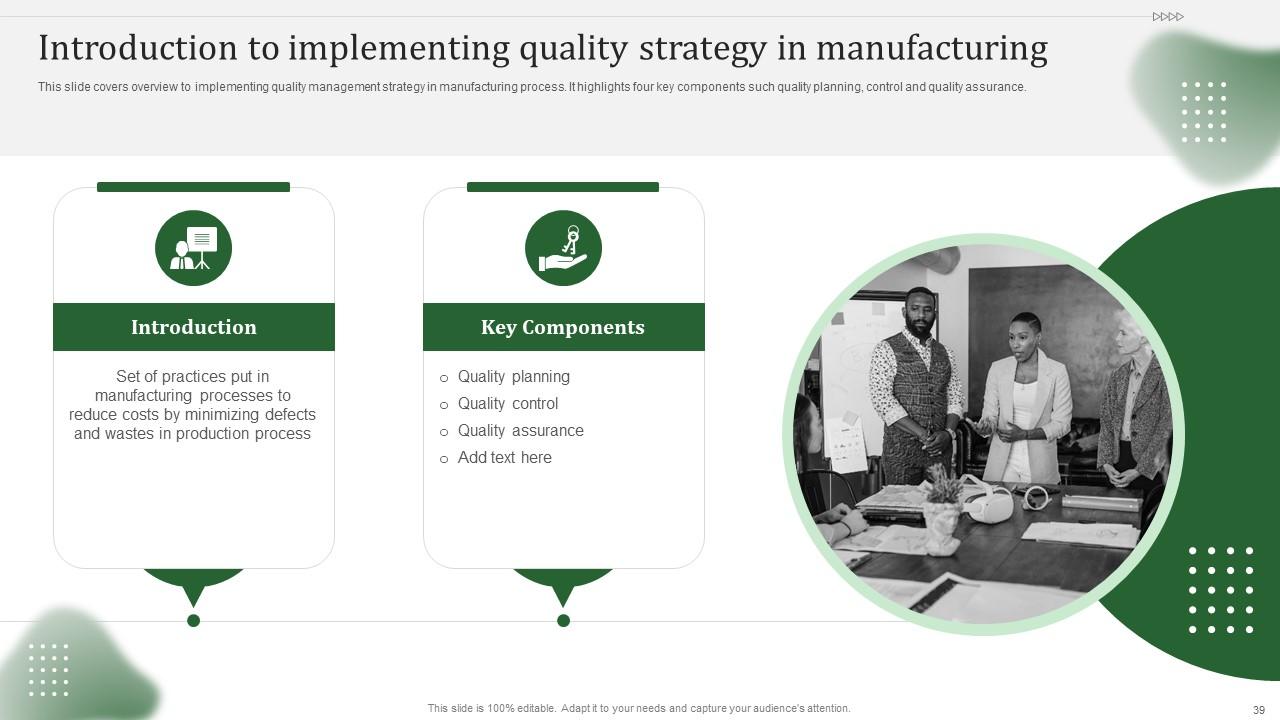
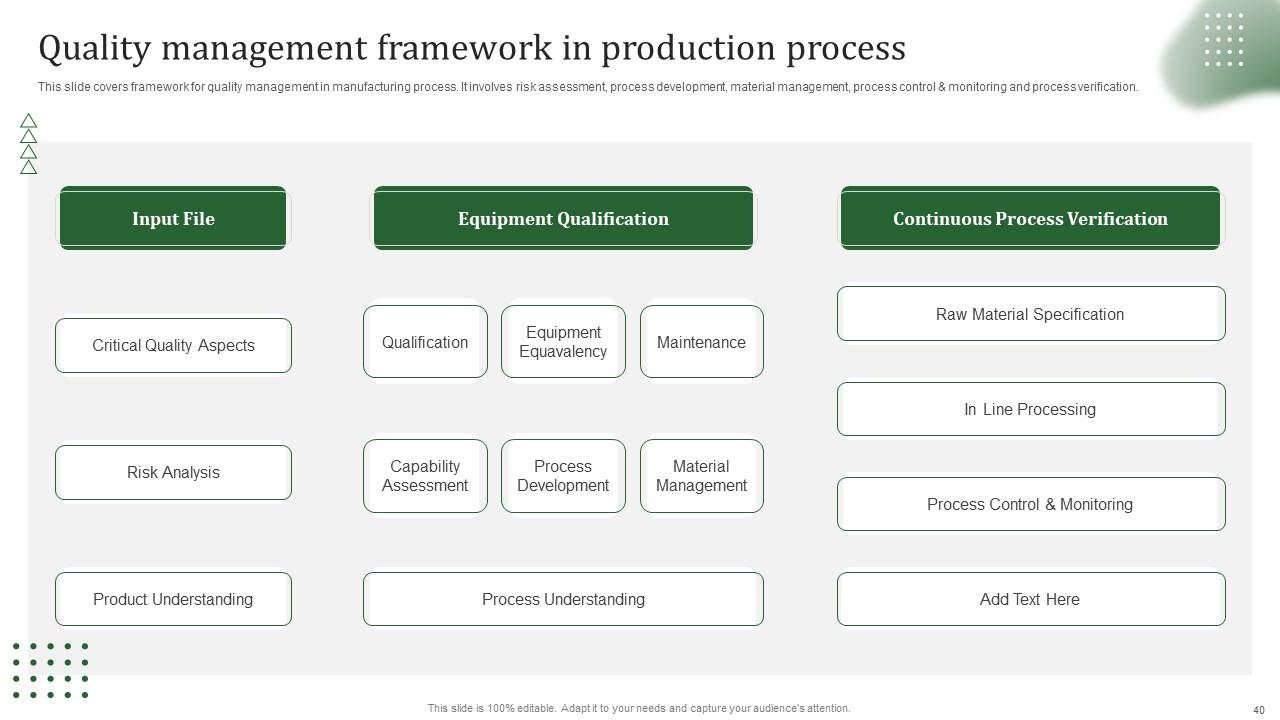
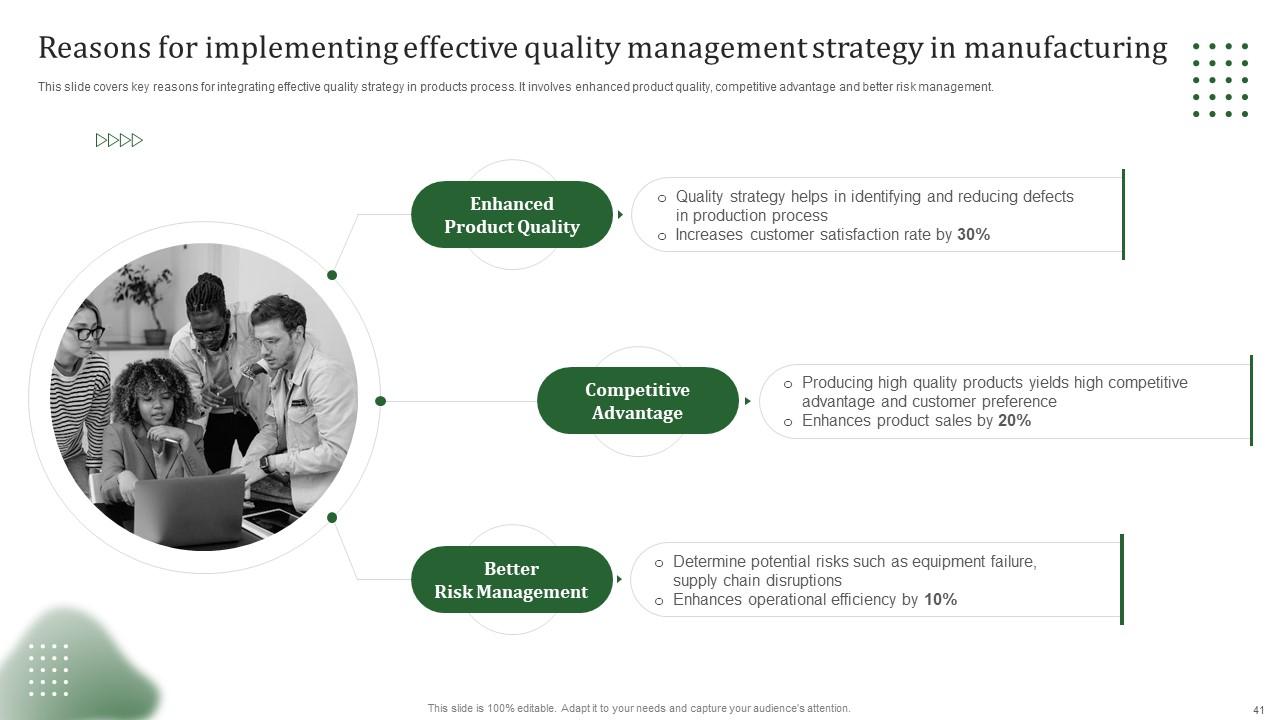
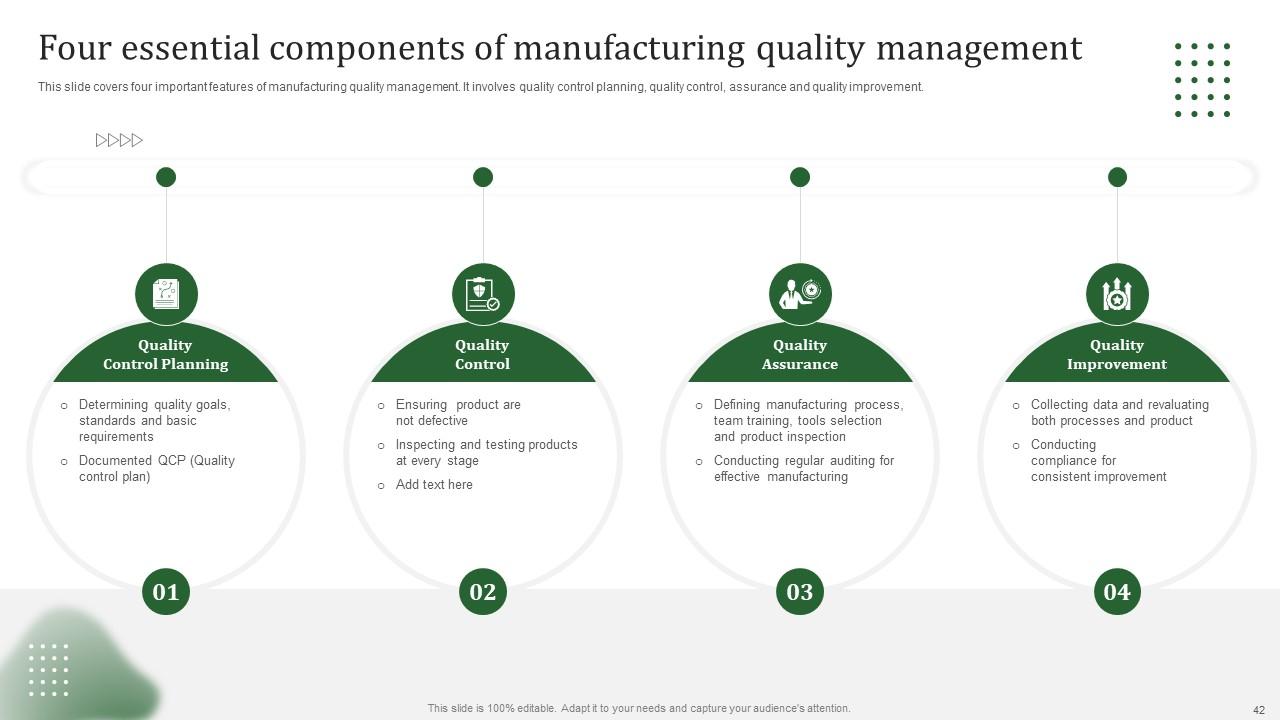
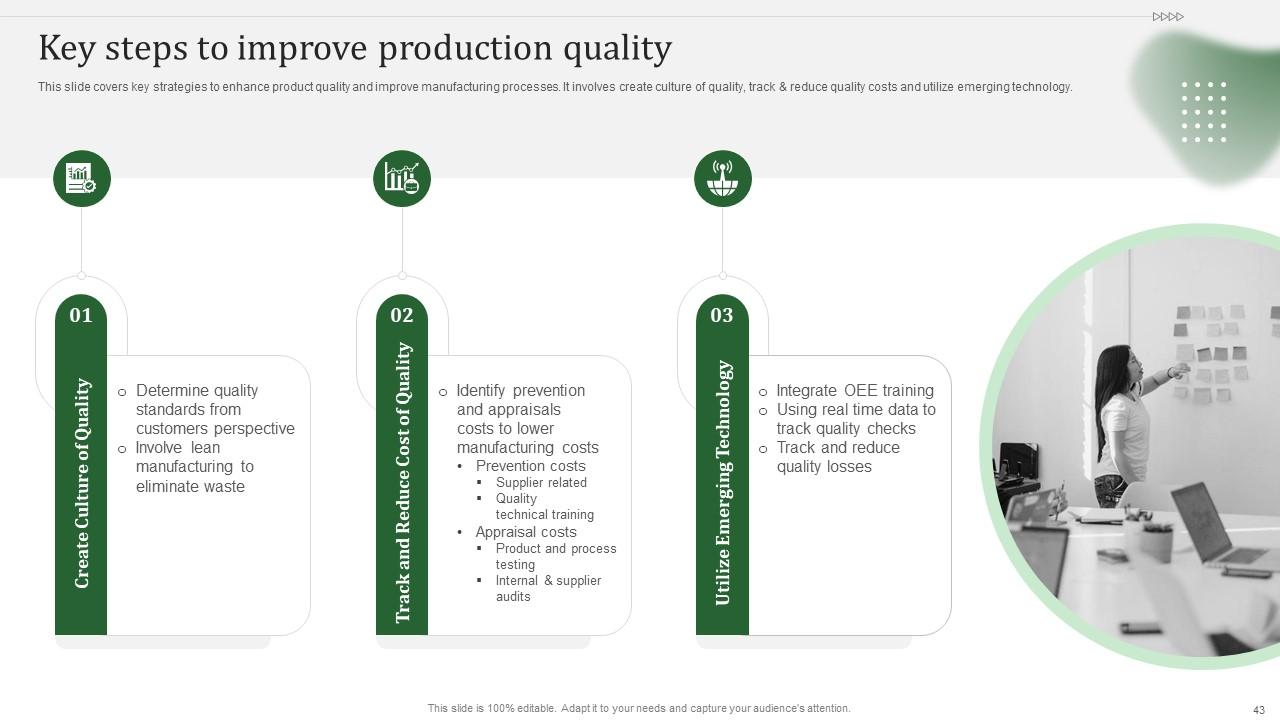
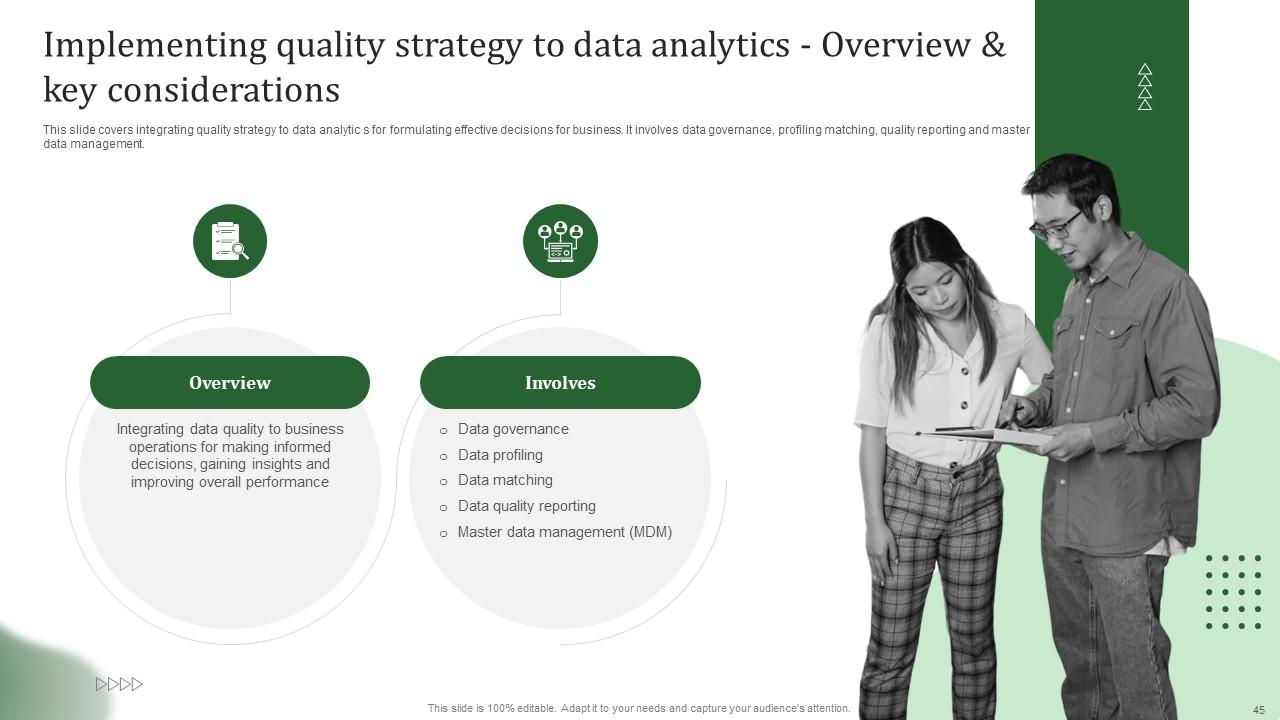
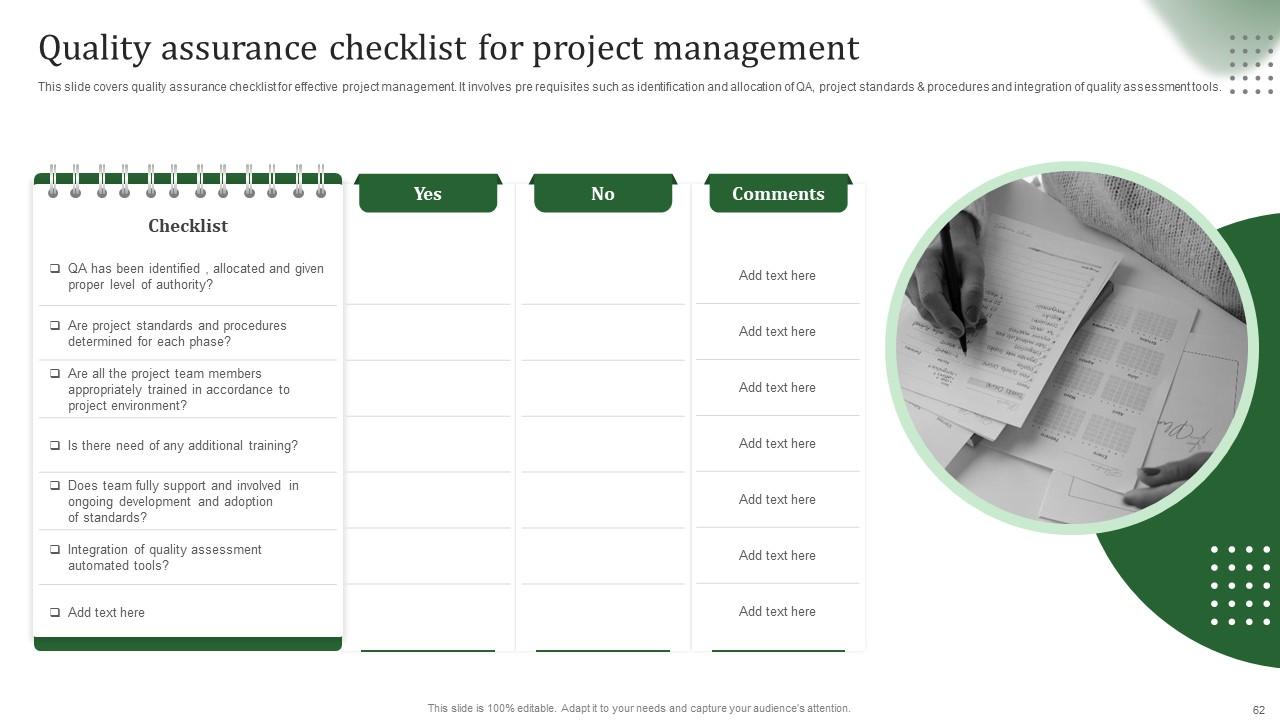
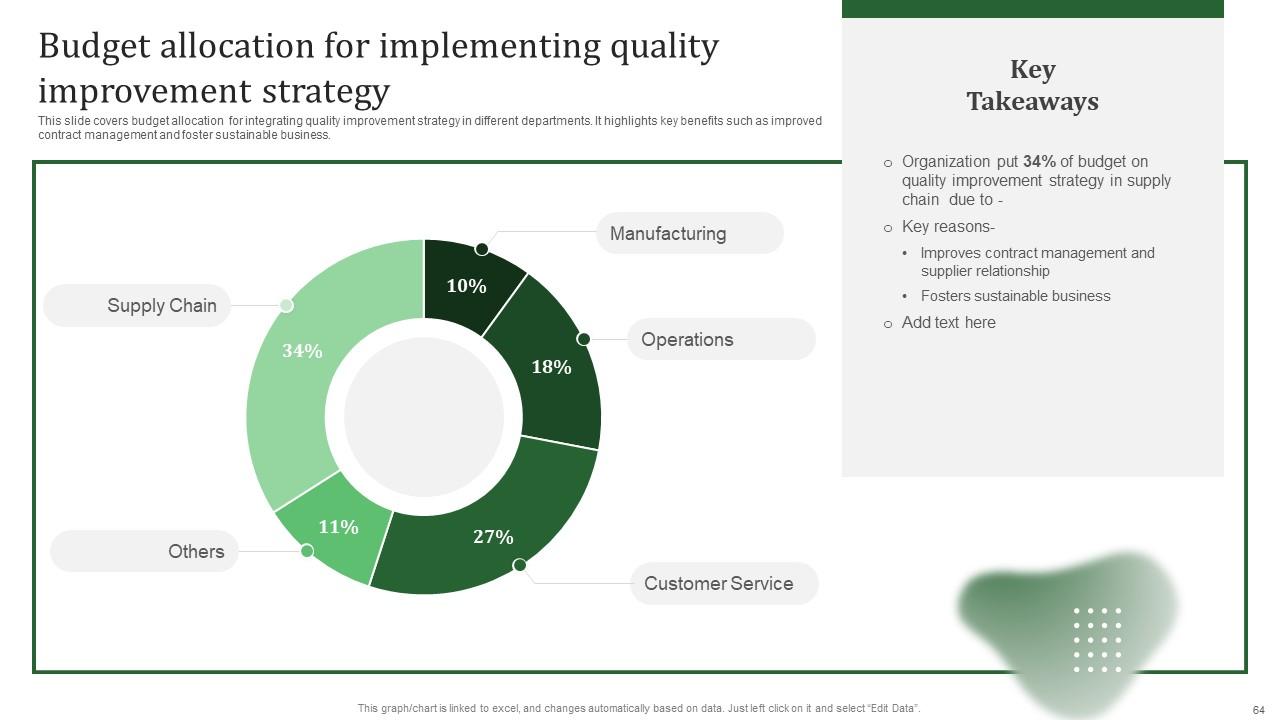
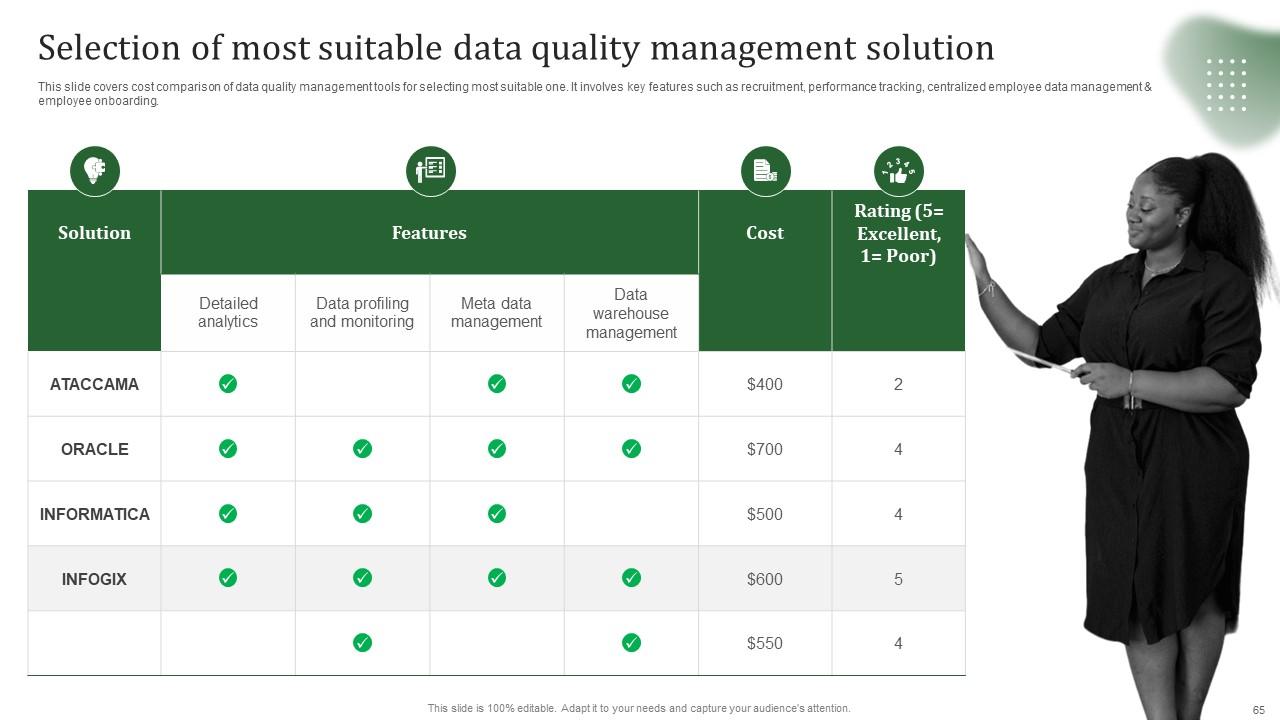
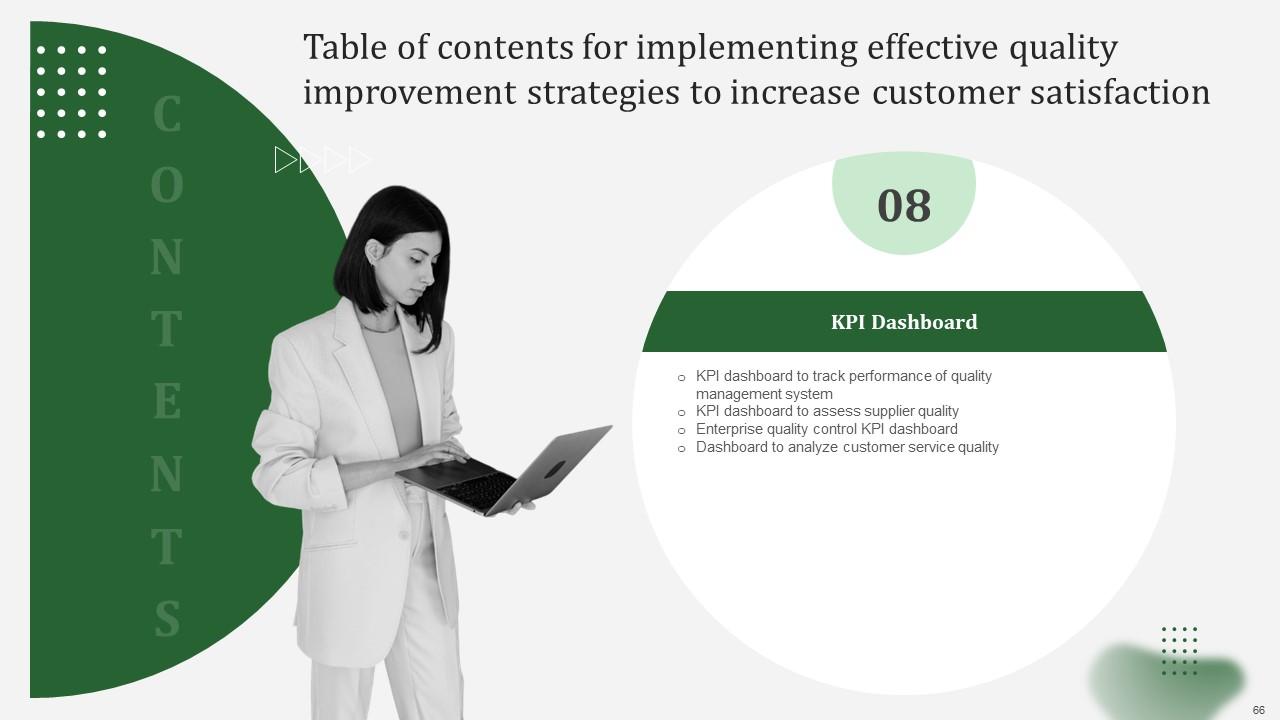
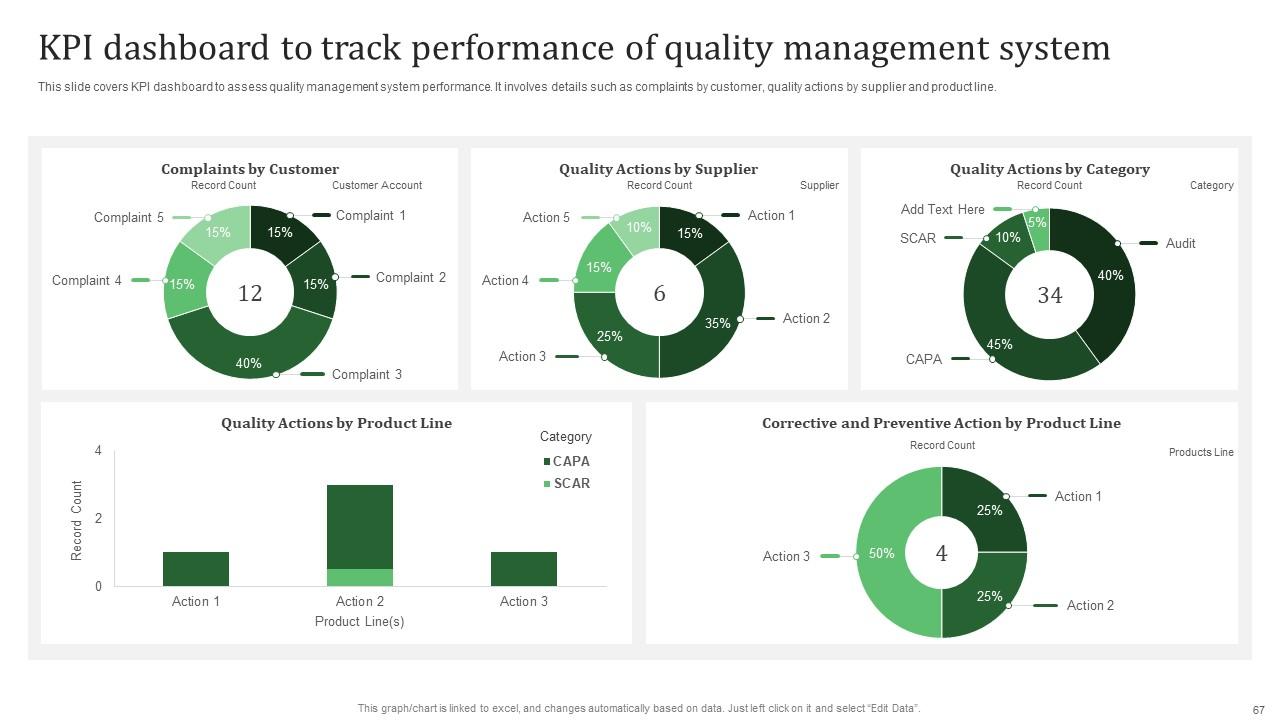
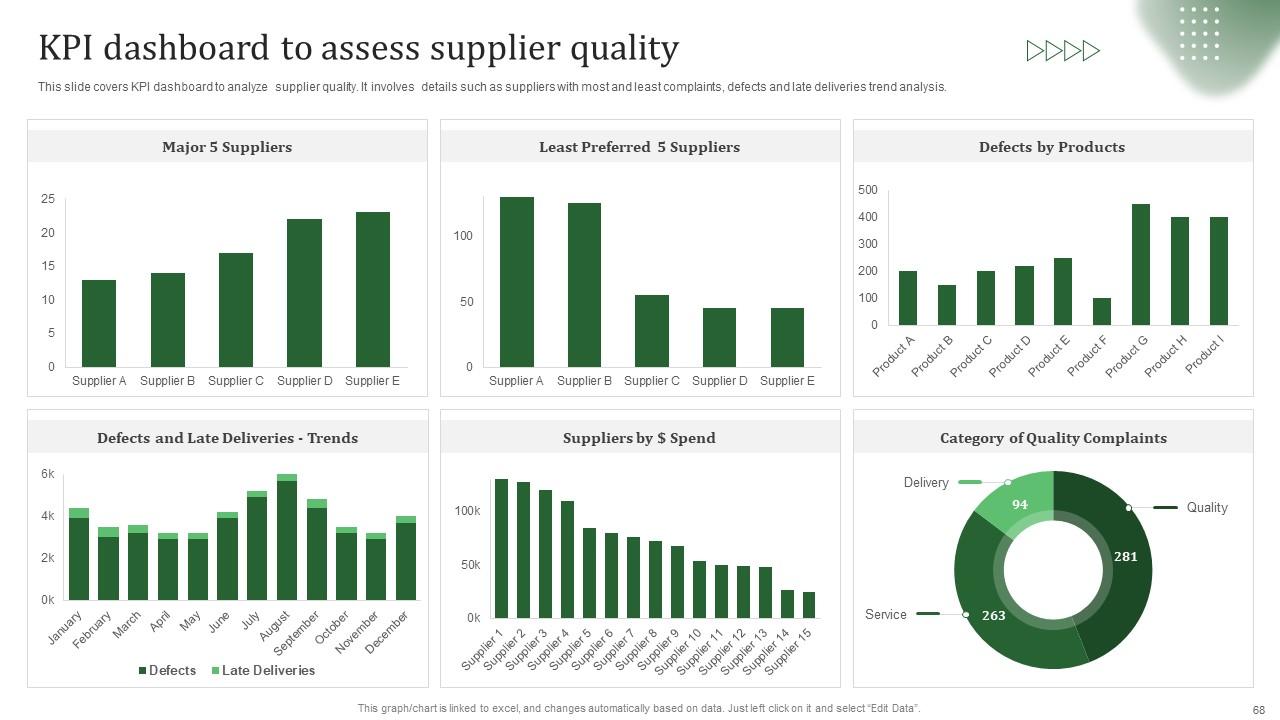
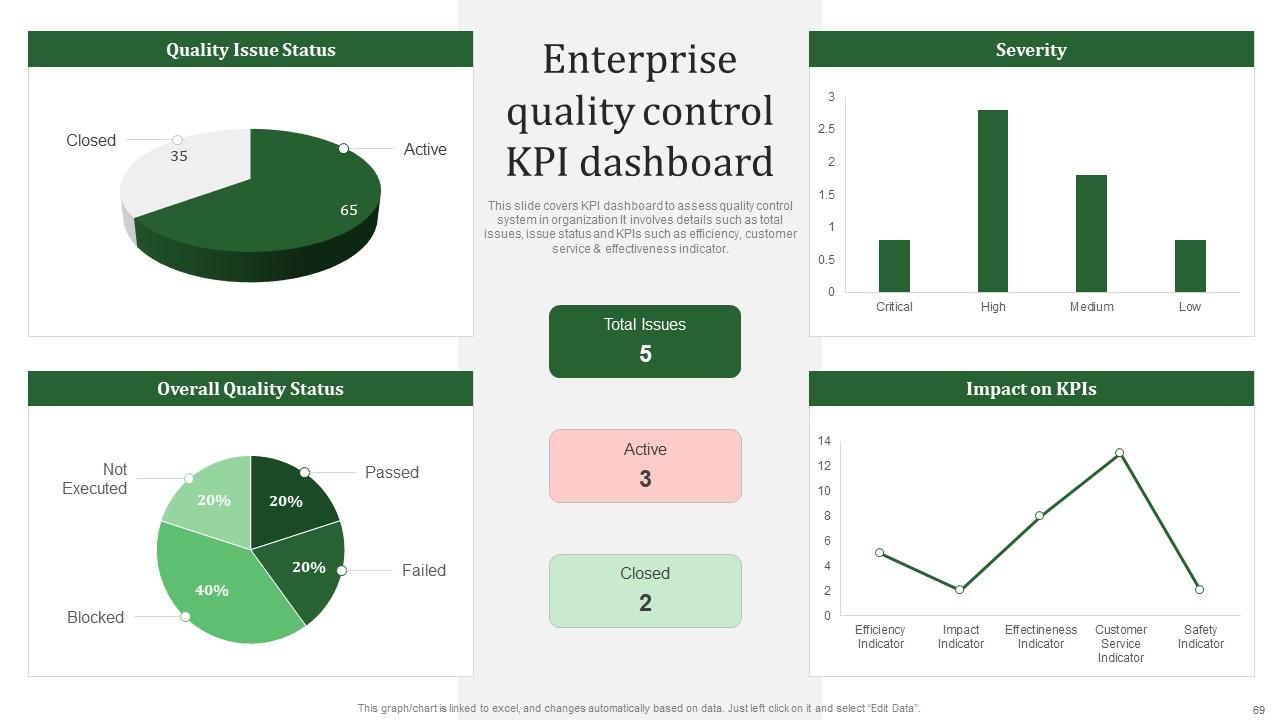
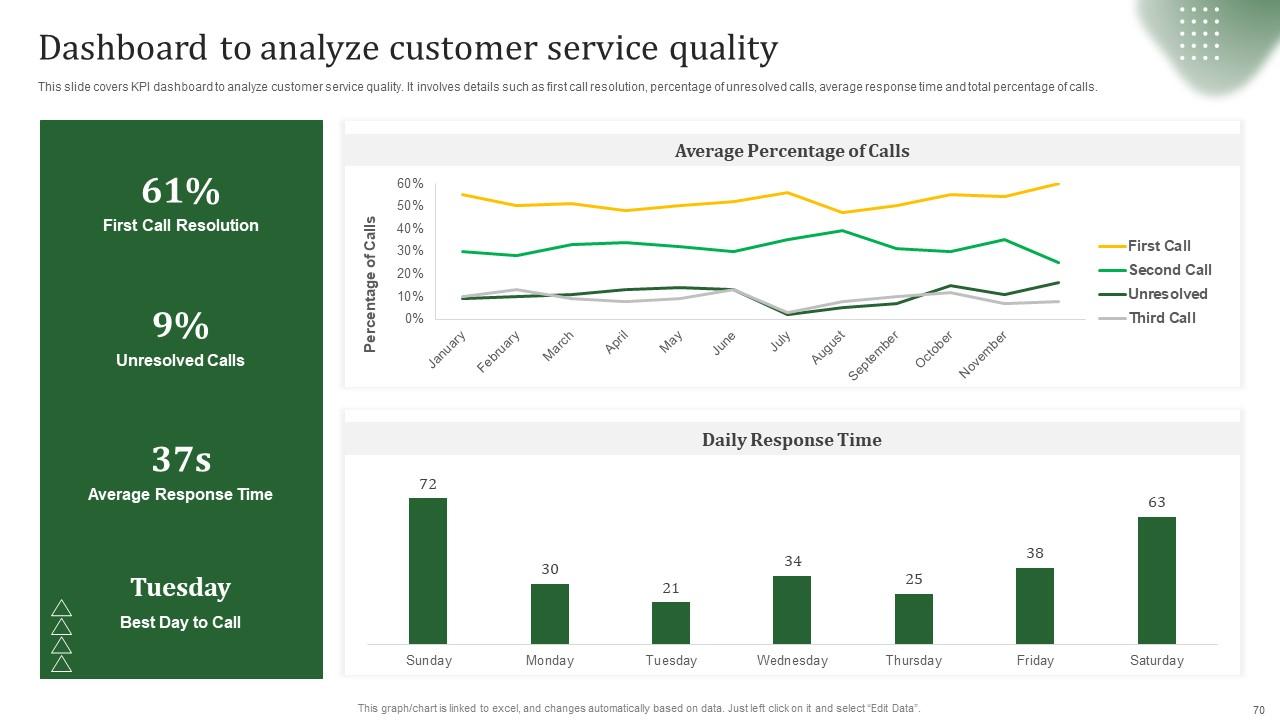
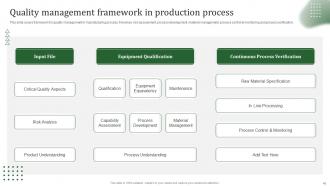
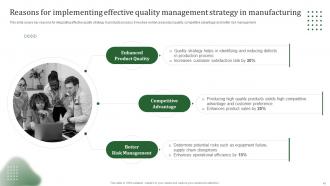
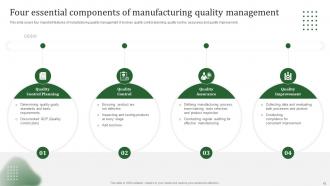
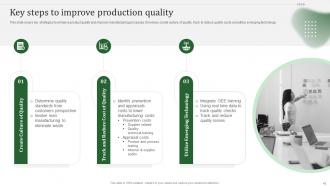
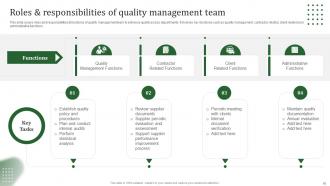
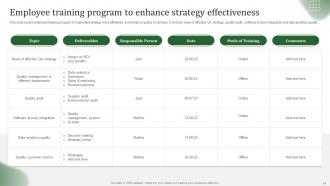
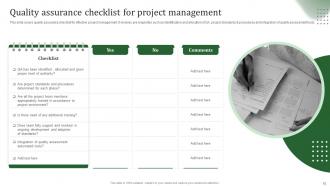
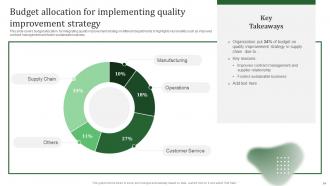
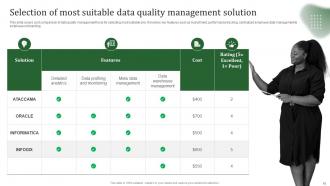
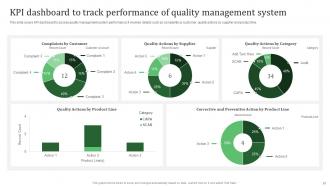
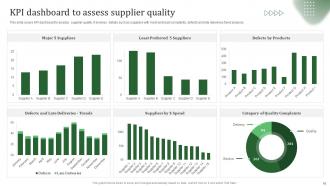
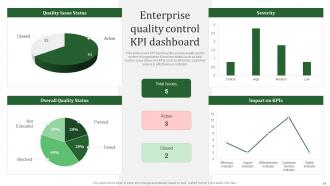
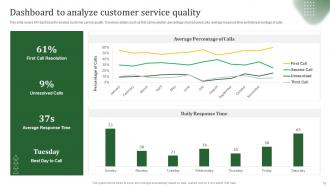
Enhancing organizational growth and development through implementing a quality strategy is crucial for enterprises. Grab our professionally designed Implementing effective quality improvement strategies to improve customer satisfaction PowerPoint Presentation. Its strategy involves deploying improvement tactics throughout various departments to enhance organizational effectiveness. Implementing quality improvement strategies extends to crucial areas such as manufacturing, supplier chain management, customer service, and data analytics. Additionally, by focusing on these areas, enterprises can make informed decisions, improve revenue generation, and ensure effective decision-making. Furthermore, The Supplier quality management PPT module also emphasizes technology integration in producing high-quality products and services. Leveraging technology plays a vital role in maintaining and improving quality standards within the organization. Moreover, Quality assurance PPT slides include a workflow chart that outlines the processes involved and highlights the roles and responsibilities of each team. Comprehensive cost analysis and a comparative assessment of software options are provided to enhance overall sales performance. Lastly, the Customer service quality PPT deck offers KPI dashboards and impact analysis tools to measure the effectiveness of the implemented strategies. Get access to 100 percent editable strategy template now.
Enhancing organizational growth and development through implementing a quality strategy is crucial for enterprises. Grab ou..










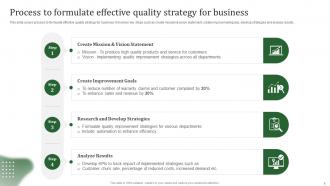
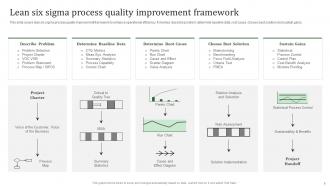
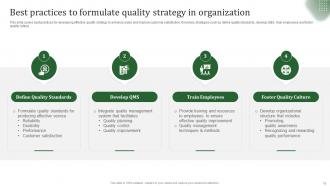
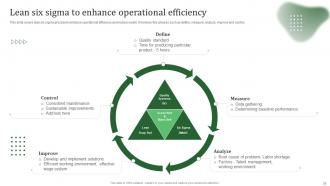
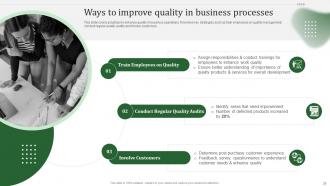
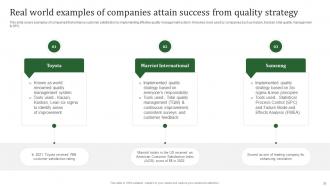










-

- Google Slides is a new FREE Presentation software from Google.
- All our content is 100% compatible with Google Slides.
- Just download our designs, and upload them to Google Slides and they will work automatically.
- Amaze your audience with SlideTeam and Google Slides.
-

Want Changes to This PPT Slide? Check out our Presentation Design Services
-

- WideScreen Aspect ratio is becoming a very popular format. When you download this product, the downloaded ZIP will contain this product in both standard and widescreen format.
-

- Some older products that we have may only be in standard format, but they can easily be converted to widescreen.
- To do this, please open the SlideTeam product in Powerpoint, and go to
- Design ( On the top bar) -> Page Setup -> and select "On-screen Show (16:9)” in the drop down for "Slides Sized for".
- The slide or theme will change to widescreen, and all graphics will adjust automatically. You can similarly convert our content to any other desired screen aspect ratio.
Compatible With Google Slides

Get This In WideScreen
You must be logged in to download this presentation.


Do you want to remove this product from your favourites?
PowerPoint presentation slides
Deliver this complete deck to your team members and other collaborators. Encompassed with stylized slides presenting various concepts, this Implementing Effective Quality Improvement Strategies to Improve Customer Satisfaction deck Strategy CD is the best tool you can utilize. Personalize its content and graphics to make it unique and thought-provoking. All the eighty two slides are editable and modifiable, so feel free to adjust them to your business setting. The font, color, and other components also come in an editable format making this PPT design the best choice for your next presentation. So, download now.

People who downloaded this PowerPoint presentation also viewed the following :
Content of this Powerpoint Presentation
Slide 1: This slide introduces Implementing Effective Performance Improvement system. Commence by stating Your Company Name.
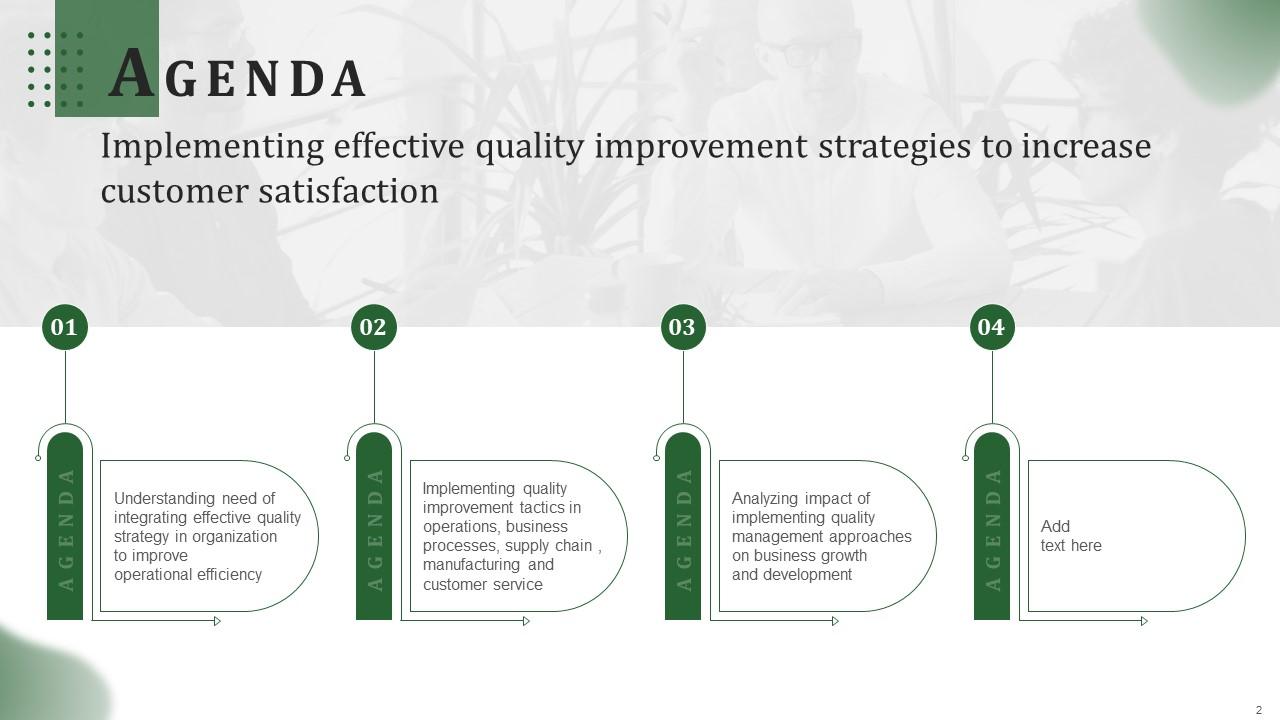
Slide 2: This slide depicts the vAgenda of the presentation.
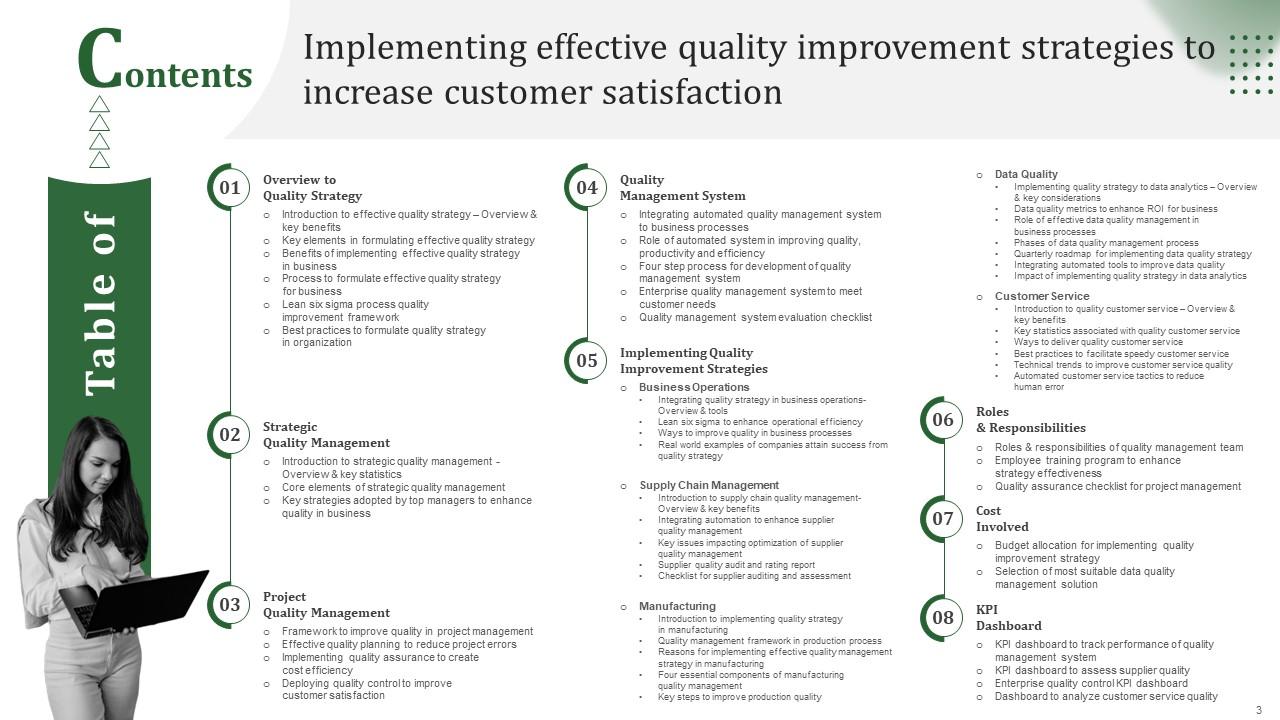
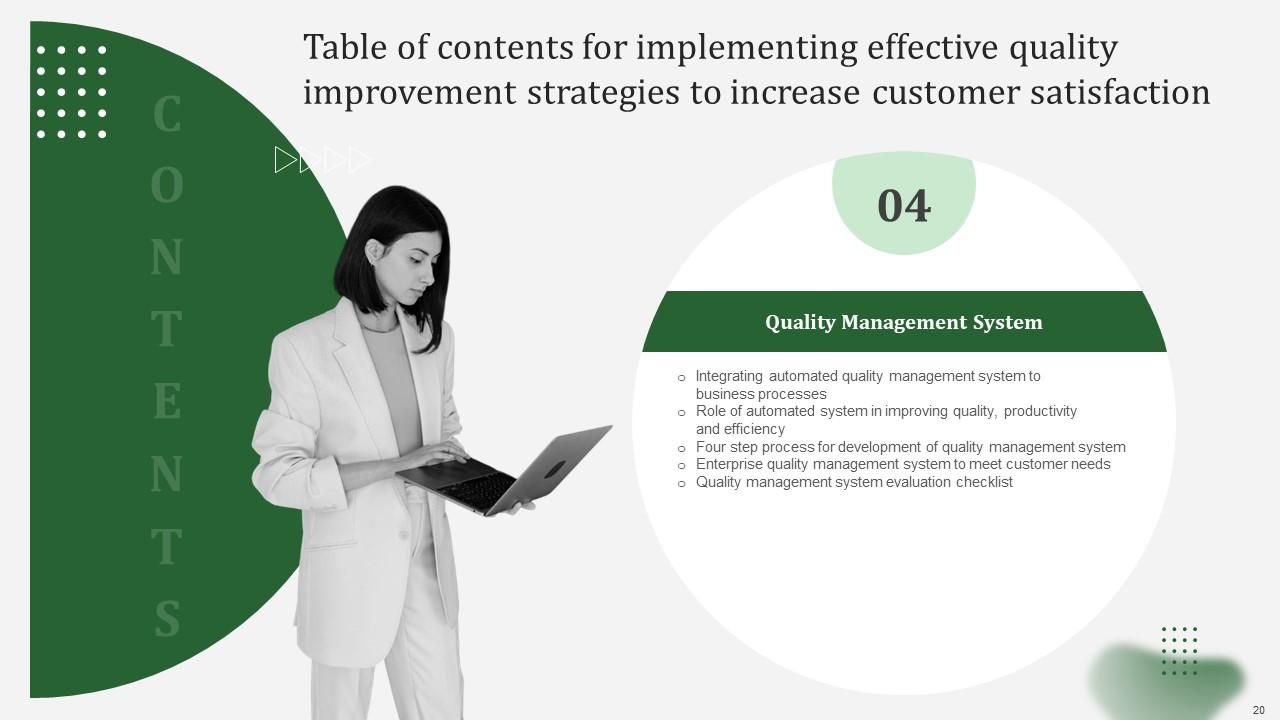
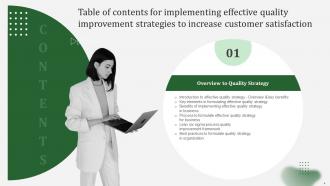
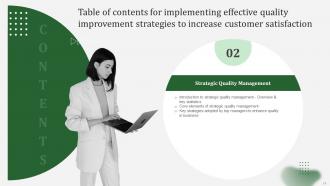
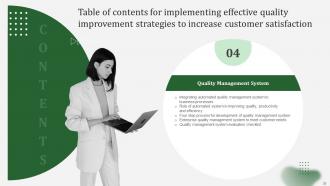
Slide 3: This slide includes the Table of contents.
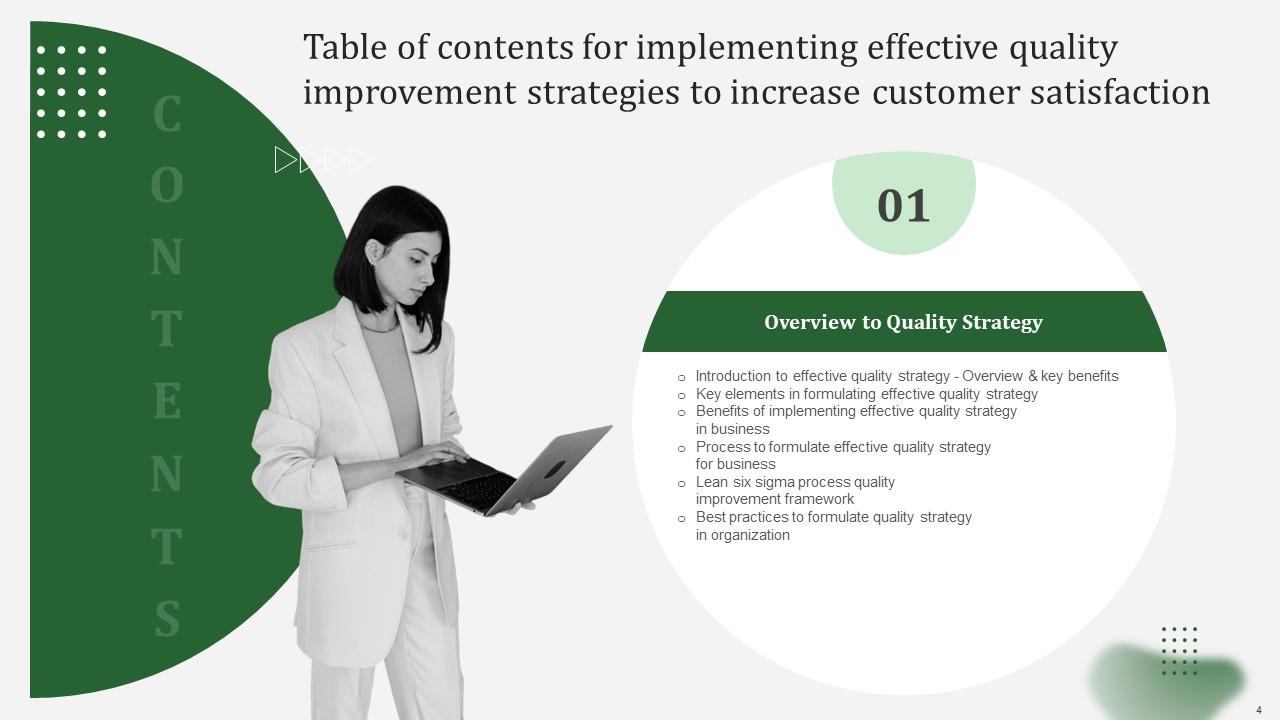
Slide 4: This slide highlights the Title for the Topics to be covered further.
Slide 5: The following slide covers graph depicting current employee performance issues in the company to analyze improvement opportunities.
Slide 6: This slide mentions about the comparative assessment of company and its top competitors.
Slide 7: The following slide depicts the main causes of staff poor performance.
Slide 8: This slide portrays the consequences of unstructured performance management system.
Slide 9: This slide indicates the Heading for the Contents to be covered in the upcoming template.
Slide 10: The following slide showcases the gap in employees’ current and desired skill level to boost learning and development.
Slide 11: This slide highlights the major drawbacks in current performance management system to determine and plan updated framework.
Slide 12: This slide presents the key advantages to organizations due to effective staff performance management to take informed decisions.
Slide 13: This slide exhibits the benefits of performance management for managers to maintain high performance practice within an organization.
Slide 14: The following slide highlights some major advantages of performance management to employees to minimize conflict among peers and subordinates.
Slide 15: This slide includes the Title for the Ideas to be discussed further.
Slide 16: The following slide illustrates the various phases of staff performance management cycle to promote healthy relationship among employees.
Slide 17: This slide covers the objectives and key metrics of performance management to align individual and organization’s goals.
Slide 18: This slide reveals the staff performance improvement plan to bridge the gap between actual and desired results.
Slide 19: This slide contains the communication plan to build relationship and simplify goals and objectives.
Slide 20: This slide exhibits the employee performance management timeline to facilitate communication and clarify priorities.
Slide 21: The following slide highlights some major challenges faced by employees while executing performance management cycle along with its solutions.
Slide 22: This slide depicts the comparative assessment of various performance tracking tools to ensure transparency and efficiency.
Slide 23: This slide covers the performance management audit checklist to oversee tasks and ensure completion on time.
Slide 24: This slide showcases timeline to execute new incentive plan to boost employee morale and ensure job satisfaction.
Slide 25: This slide exhibits the Heading for the Ideas to be covered next.
Slide 26: The following slide depicts the updated performance management framework to ensure alignment between goals and outcomes.
Slide 27: This slide reveals the Title for the Topics to be discussed in the following template.
Slide 28: The following slide covers the current and the desired performance goals to reduce shortcomings and attain better results.
Slide 29: This slide displays the management by objective (MBO) methodology to assess employee performance.
Slide 30: The following slide showcases the 360 degree performance evaluation technique to reduce unbiased reviews and ensure constructive feedback.
Slide 31: This slide illustrates the assessment center method to forecast future job roles.
Slide 32: This slide portrays the human resource cost accounting method to determine employees’ monetary contribution towards company.
Slide 33: This slide shows the behaviorally anchored rating scale (BARS) method to evaluate individual performance based on pre-determined standards.
Slide 34: This slide depicts the employee roles and responsibility chart to clarify roles and promote accountability.
Slide 35: This slide portrays the organizational training plan to determine required skills and organize sessions successfully.
Slide 36: This slide indicates the employee reward scheme based on their quarterly performance to boost their morale and retention rate.
Slide 37: The following slide showcases various feedback to enhance employee confidence and encourage communication.
Slide 38: This slide highlights the Heading for the Contents to be covered next.
Slide 39: The following slide depicts the impact of shifting from annual to regular performance feedback to evaluate short and long term progress.
Slide 40: This slide highlights the projected employee skill progress post implementing updated improvement strategies.
Slide 41: This slide presents the Title for the Ideas to be further discussed.
Slide 42: The following slide depicts the overview of staff performance management system to achieve goals and evaluate business growth.
Slide 43: This slide showcases the summary of 360 degree performance assessment method to analyze employee productivity and engagement rate.
Slide 44: This slide depicts the overview of employee appraisal tracking summary to align goals and system.
Slide 45: This is the Icons slide containing all the Icons used in the plan.
Slide 46: This slide is used ofr revealing some Additional information.
Slide 47: This slide portrays the Employee self performance evaluation form.
Slide 48: This slide displays the Heading for the Ideas to be covered further.
Slide 49: This slide showcases the Peer performance review questionnaire form.
Slide 50: This slide contains the Post it notes for reminders and deadlines.
Slide 51: This is the Puzzle slide with related imagery.
Slide 52: This slide elucidates the organizational Timeline.
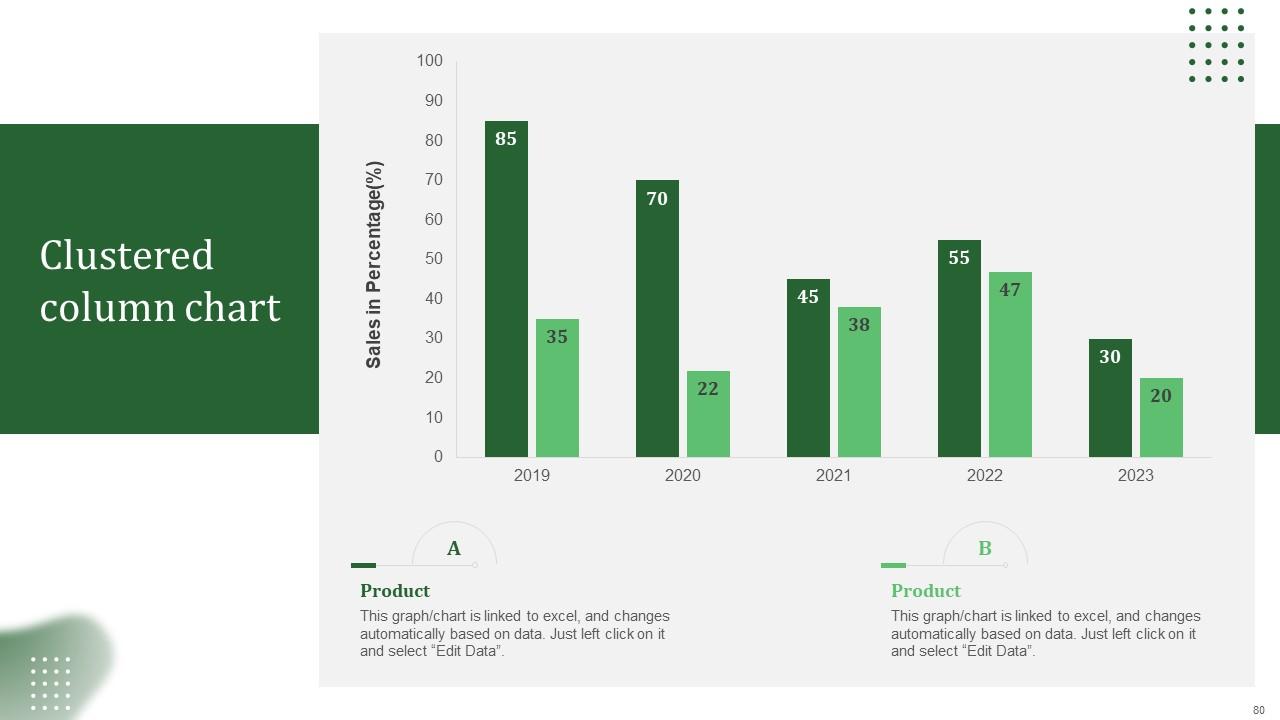
Slide 53: This is the Clustered bar slide.
Slide 54: This is the Quotes slide for motivation.
Slide 55: This is the Idea generation slide for encouraging fresh ideas.
Slide 56: This is the Thank You slide for acknowledgement.
Implementing Effective Quality Improvement Strategies to Improve Customer Satisfaction deck Strategy CD with all 87 slides:
Use our Implementing Effective Quality Improvement Strategies to Improve Customer Satisfaction deck Strategy CD to effectively help you save your valuable time. They are readymade to fit into any presentation structure.
-
The team is highly dedicated and professional. They deliver their work on time and with perfection.
-
The best collection of PPT templates!! Totally worth the money.
