

Implementing Hospital Management Strategies To Enhance Efficiency And Productivity Complete Deck Strategy CD




Try Before you Buy Download Free Sample Product
 Impress Your
 Audience
 100%
100% Editable
 Save Hours
 of Time


Hospital Marketing Strategies encompass the adept administration and management of healthcare establishments, including hospitals, clinics, and allied healthcare entities. Our Implementing Hospital Management Strategies to Enhance Efficiency and Productivity PowerPoint presentation introduces the Hospital Management and Marketing Strategies concept aimed at augmenting operational efficacy and productivity. First, an overview of hospital administration, curriculum, facilities, unique selling points, and key performance indicators KPIs, the presentation advances into diverse management strategies. Additionally, these encompass elevating patient experiences, optimizing information management, ensuring quality standards, bolstering financial management, and fostering effective human resource management. Moreover, Healthcare marketing strategies delve into reputation management strategies to enhance the hospitals image and standing. It sheds light on hospital marketing strategies like website optimization, PPC campaigns, SEO tactics, social media channel approaches, and offline marketing endeavors. Lastly, the Hospital management techniques feature slides detailing budget allocation for both management and marketing strategies, alongside depicting the impact of these strategies on the business, for insights into new customer acquisitions. Get access to this 100 percentage editable template now.
People who downloaded this PowerPoint presentation also viewed the following :
Content of this Powerpoint Presentation
Slide 1: This slide introduces Implementing Hospital Management Strategies to Enhance Efficiency and Productivity. State your company name and begin.
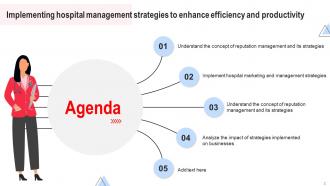
Slide 2: This is an Agenda slide. State your agendas here.
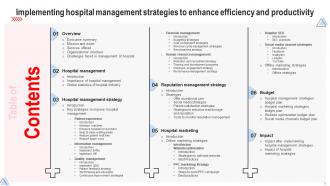
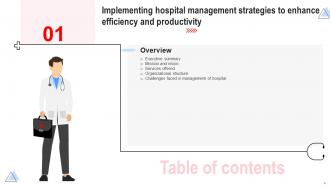
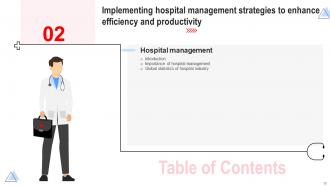
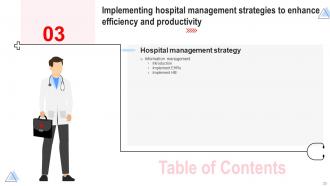
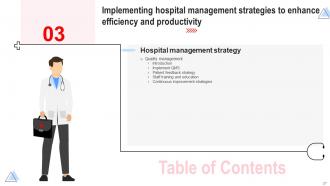
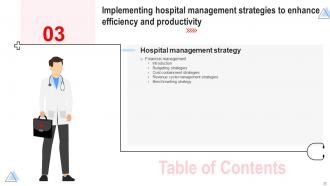
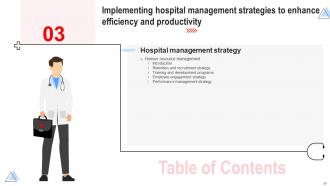
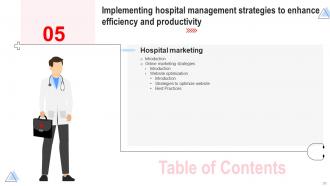
Slide 3: This slide shows Table of Content for the presentation.
Slide 4: This slide shows title for topics that are to be covered next in the template.
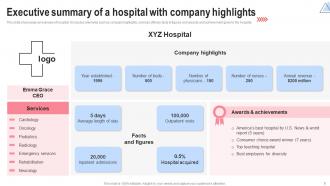
Slide 5: This slide showcases an overview of hospital. It includes elements such as company highlights, services offered, facts & figures and awards and achievement.
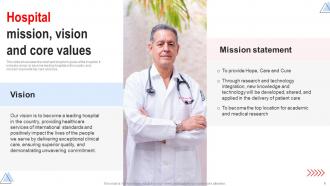
Slide 6: This slide presents the short and long term goals of the hospital. It includes vision: to become leading hospital in the country and; mission: to provide top care and cure.
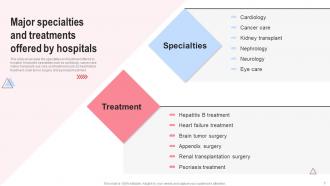
Slide 7: This slide showcases the specialties and treatment offered by hospital.
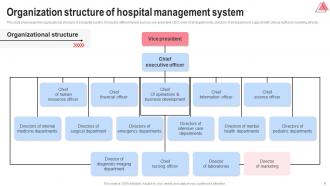
Slide 8: This slide displays the organizational structure of a hospital system.
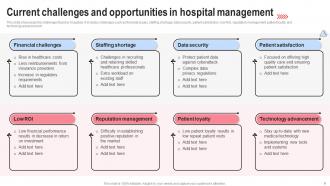
Slide 9: This slide presents the challenges faced by hospitals. It includes challenges such as financial issues, staffing shortage, data security etc.
Slide 10: This slide shows title for topics that are to be covered next in the template.
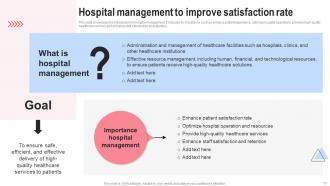
Slide 11: This slide showcases the introduction to hospital management. It includes its importance such as enhance patient experience, optimize hospital operations etc.
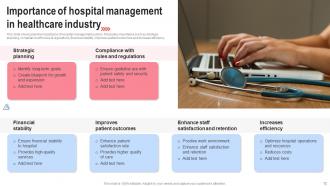
Slide 12: This slide describes the importance of hospital management system including strategic planning, compliance with rules & regulations, financial stability etc.
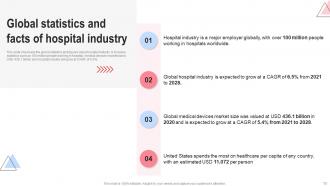
Slide 13: This slide showcase the global statistics and figures about hospital industry.
Slide 14: This slide shows title for topics that are to be covered next in the template.
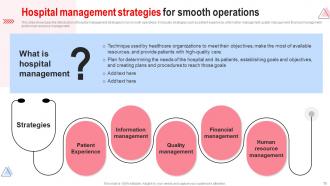
Slide 15: This slide presents the introduction of hospital management strategies to run smooth operations.
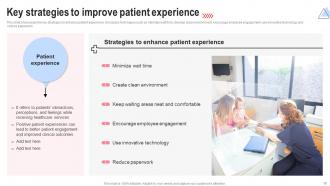
Slide 16: This slide showcases the key strategies to enhance patient experience.
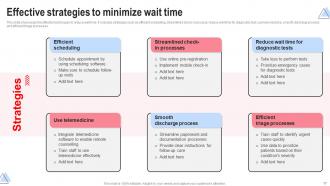
Slide 17: This slide presents the effective techniques to reduce wait time including efficient scheduling, streamlined check-in process, reduce wait time for diagnostic test etc.
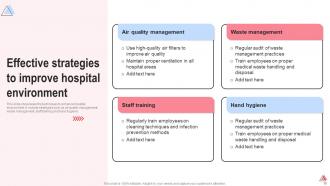
Slide 18: This slide showcases the techniques to enhance hospital environment including air quality management, waste management, staff training and hand hygiene.
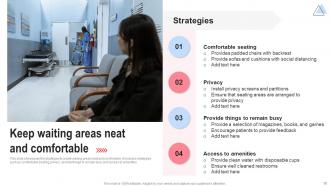
Slide 19: This slide displays the strategies to create waiting areas neat and comfortable.
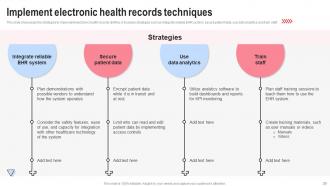
Slide 20: This slide presents the strategies to implement electronic health records (EHRs).
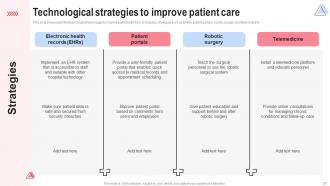
Slide 21: This slide showcases the technological techniques to improve patient wait time.
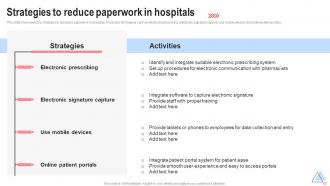
Slide 22: This slide presents the strategies to decrease paperwork in hospitals.
Slide 23: This slide shows title for topics that are to be covered next in the template.
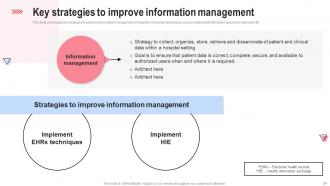
Slide 24: This slide showcases the strategies to enhance information management of hospitals.
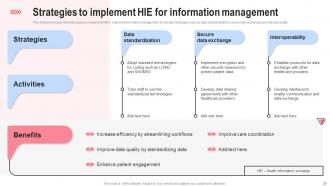
Slide 25: This slide presents the techniques to implement HIE to improve information management.
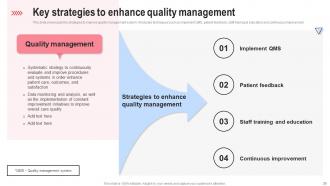
Slide 26: This slide showcases the strategies to improve quality management system.
Slide 27: This slide shows title for topics that are to be covered next in the template.
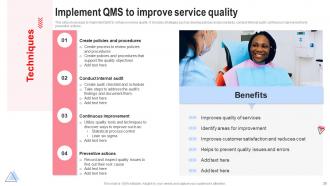
Slide 28: This slide showcases to implement QMS to enhance service quality.
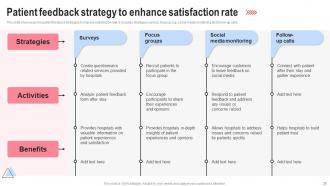
Slide 29: This slide presents the patient feedback strategies to improve satisfaction rate.
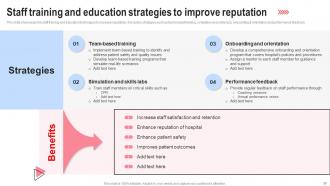
Slide 30: This slide showcases the staff training and education techniques to increase reputation.
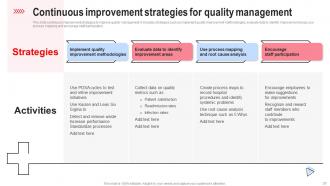
Slide 31: This slide presents continuous improvement strategies to improve quality management.
Slide 32: This slide shows title for topics that are to be covered next in the template.
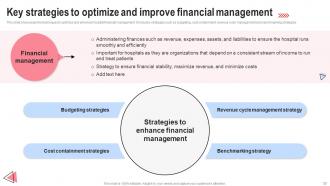
Slide 33: This slide showcases the techniques to optimize and enhance hospital financial management.
Slide 34: This slide presents budgeting techniques to enhance financial management.
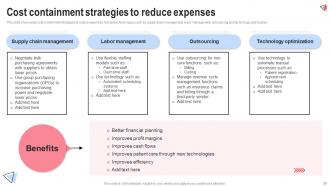
Slide 35: This slide showcases cost containment strategies to reduce expenses.
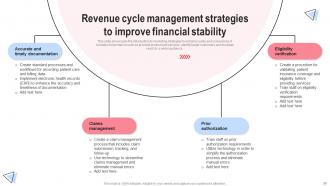
Slide 36: This slide displays the introduction to marketing strategies to enhance sales and conversions.
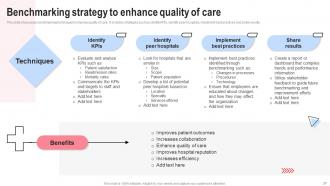
Slide 37: This slide showcases benchmarking techniques to improve quality of care.
Slide 38: This slide shows title for topics that are to be covered next in the template.
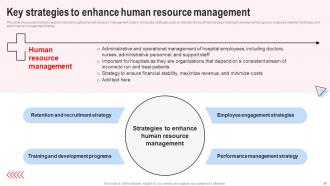
Slide 39: This slide showcases the techniques to improve hospitals human resource management system.
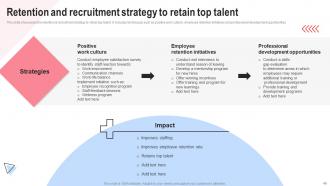
Slide 40: This slide presents the retention & recruitment strategy to retain top talent.
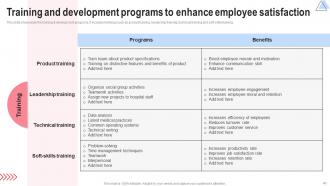
Slide 41: This slide showcases the training & development programs.
Slide 42: This slide presents the employee engagement techniques to foster positive workplace culture.
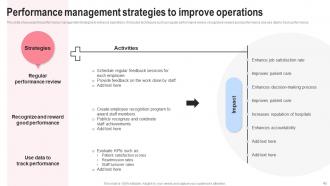
Slide 43: This slide showcases the performance management strategies to enhance operations.
Slide 44: This slide shows title for topics that are to be covered next in the template.
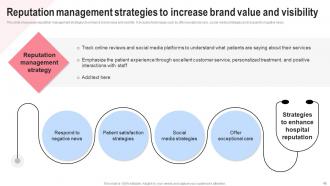
Slide 45: This slide presents reputation management strategies to enhance brand value and visibility.
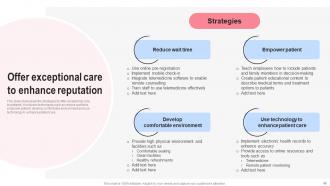
Slide 46: This slide showcases the strategies to offer exceptional care to patients.
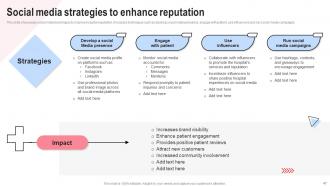
Slide 47: This slide presents social media techniques to improve hospital reputation.
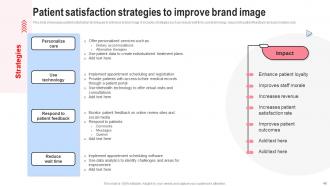
Slide 48: This slide showcases patient satisfaction techniques to enhance brand image.
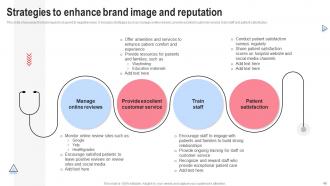
Slide 49: This slide describes the techniques to respond to negative news. It includes strategies such as manage online reviews, provide excellent customer service etc.
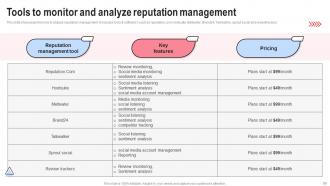
Slide 50: This slide showcases the tools to analyze reputation management.
Slide 51: This slide shows title for topics that are to be covered next in the template.
Slide 52: This slide presents the introduction to hospital marketing. It includes role of marketing in hospital industry.
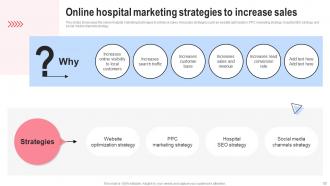
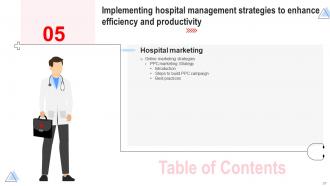
Slide 53: This slides showcases the online hospital marketing techniques to enhance sales.
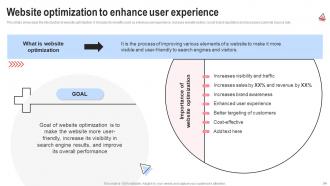
Slide 54: This slides displays the introduction to website optimization.
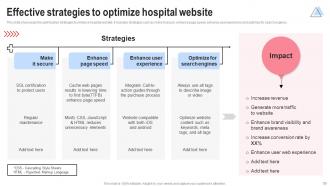
Slide 55: This slide showcases the optimization strategies to enhance hospital website.
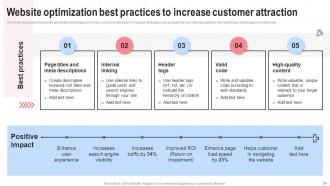
Slide 56: This slide presents the website optimization techniques to enhance customer attraction.
Slide 57: This slide shows title for topics that are to be covered next in the template.
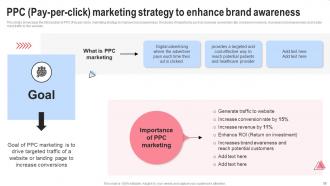
Slide 58: This slides showcases the introduction to PPC (Pay-per-click) marketing strategy to improve brand awareness.
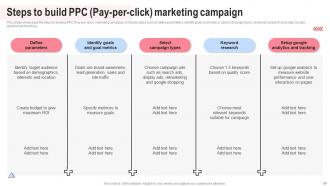
Slide 59: This slides also showcases the steps to develop PPC (Pay-per-click) marketing campaign.
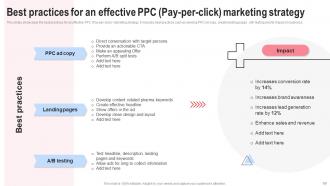
Slide 60: This slides describes the best practices for an effective PPC (Pay-per-click) marketing strategy.
Slide 61: This slide shows title for topics that are to be covered next in the template.
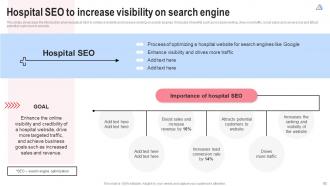
Slide 62: This slides presents the introduction pharmaceutical SEO to enhance visibility and increase ranking on search engines.
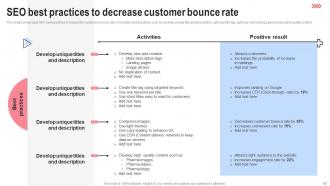
Slide 63: This slides showcases SEO best practices to reduce the customer bounce rate.
Slide 64: This slide shows title for topics that are to be covered next in the template.
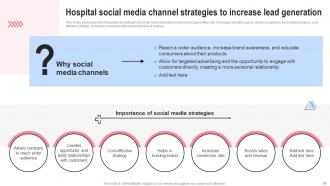
Slide 65: This slides presents introduction to strategies of social media channels to improve lead generation rate.
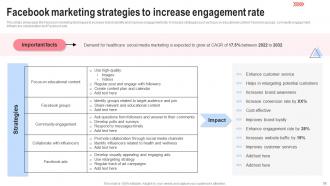
Slide 66: This slides showcases the Facebook marketing techniques to increase brand visibility and improves engagement rate.
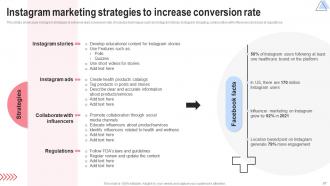
Slide 67: This slides displays Instagram strategies to enhance lead conversion rate.
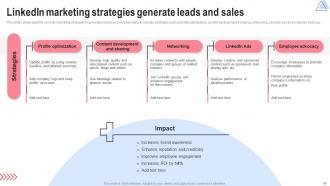
Slide 68: This slides presents the LinkedIn marketing strategies to generation leads and increase sales.
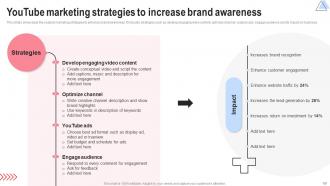
Slide 69: This slides showcases the youtube marketing strategies to enhance brand awareness.
Slide 70: This slide shows title for topics that are to be covered next in the template.
Slide 71: This slides presents the introduction to offline marketing strategies to enhance sales.
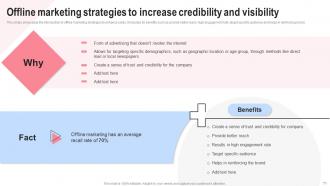
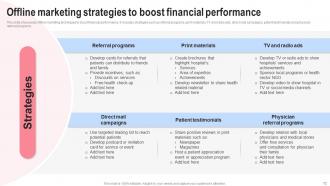
Slide 72: This slide showcases offline marketing techniques to boost financial performance.
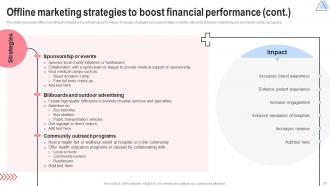
Slide 73: This slide also presents offline marketing techniques to boost financial performance.
Slide 74: This slide shows title for topics that are to be covered next in the template.
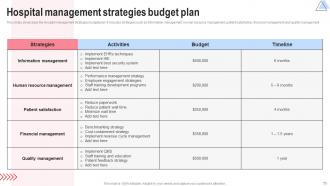
Slide 75: This slides showcases the Hospital management strategies budget plan.
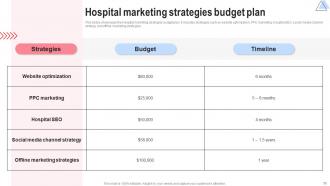
Slide 76: This slides also showcases the Hospital marketing strategies budget plan.
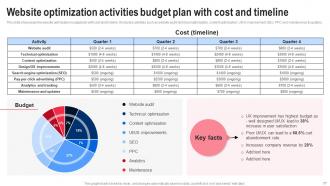
Slide 77: This slide presents the website optimization budget plan with cost and timeline.
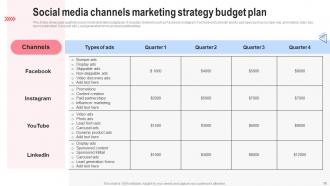
Slide 78: This slides showcases quarterly social media channels budget plan. It includes channels such as Facebook, Instagram, YouTube and LinkedIn.
Slide 79: This slide shows title for topics that are to be covered next in the template.
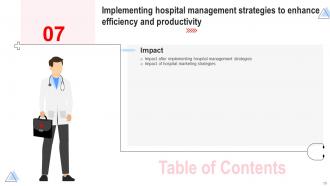
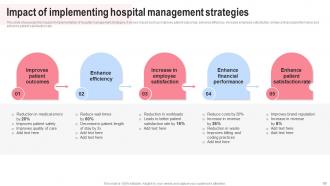
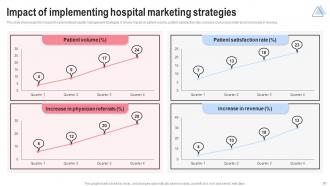
Slide 80: This slide showcases the impact of implementation of hospital management strategies.
Slide 81: This slide presents the impact of implementing hospital management strategies.
Slide 82: This slide is titled as Additional Slides for moving forward.
Slide 83: This is a Timeline slide. Show data related to time intervals here.
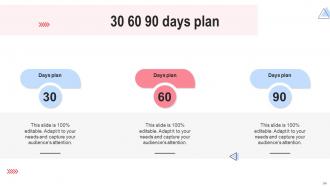
Slide 84: This slide provides 30 60 90 Days Plan with text boxes.
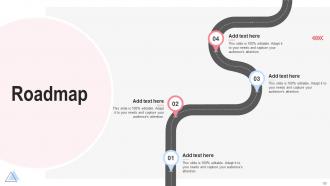
Slide 85: This slide presents Roadmap with additional textboxes.
Slide 86: This is a Thank You slide with address, contact numbers and email address.
Implementing Hospital Management Strategies To Enhance Efficiency And Productivity Complete Deck Strategy CD with all 91 slides:
Use our Implementing Hospital Management Strategies To Enhance Efficiency And Productivity Complete Deck Strategy CD to effectively help you save your valuable time. They are readymade to fit into any presentation structure.









FAQs for Implementing Hospital Management Strategies To Enhance Efficiency And Productivity Complete
Okay so there's five main things you gotta nail: patient care, finances, keeping your staff happy, making operations smooth, and getting the tech right. Most places screw up by doing everything at once - huge mistake. Start with patient outcomes and work backwards. Staff need good communication and training, obviously. Operations should focus on patient flow so people aren't waiting forever (nothing pisses people off more than sitting in a waiting room for hours). Keep your finances tight or you're toast. Modern tech like EMRs and analytics help you actually see what's working. Pick ONE area first though - build some wins before moving on.
Honestly, tech integration is a game changer for hospitals. Electronic health records cut out all that redundant paperwork - nobody wants to enter the same patient info three times. Your scheduling gets automated, wait times drop, and inventory tracking means you won't suddenly run out of bandages (happened to us once, not fun). Staff can actually text each other securely instead of hunting people down all day. The really cool part? Analytics help predict when you'll get slammed with patients so you can prep ahead. Just pick one system first though - don't overwhelm everyone at once.
Look, patient engagement really makes or breaks everything. You'll see way better compliance and fewer people coming back through your doors when they actually feel involved in their care. Plus your staff won't burn out as fast - there's something about building real connections instead of just going through the motions, you know? I've seen places try to slap engagement stuff on top of existing processes and it never works. Train your front-line people on how to actually talk to patients first. Then track satisfaction scores. Honestly, the whole thing falls apart if you don't bake it into your daily workflow from the start.
Look, you gotta weave compliance into your actual day-to-day stuff instead of making it this separate headache. Map out where regulations hit your operations - admissions, discharges, meds, all that. Automate what you can through your EMR and build protocols that don't make staff want to scream. Honestly, the trick is making it feel like quality improvement, not just more paperwork to suffer through. Your team will actually care if they see the point. Run audits regularly to catch problems early. Use that data to tweak things as you go.
You've gotta find that sweet spot between having enough people without going overboard when it's slow. Cross-training is huge - lets people jump between departments as needed. Scheduling software will literally save your sanity, trust me on this one. Track your patient patterns and when people call out sick so you can actually predict what you'll need. I'd start by comparing your current schedules to real patient loads - bet you'll spot some obvious issues right away. Oh, and check in with your team regularly. Catching burnout early beats dealing with people quitting unexpectedly.
So instead of just winging it with gut instincts, data analytics gives you actual numbers to base decisions on. Hospitals produce insane amounts of data - patient flow, readmissions, staffing patterns, you name it. You can spot bottlenecks before they wreck your day, predict when you'll get slammed with patients, and optimize schedules. Quality issues? You'll catch those early too. The trick is focusing on metrics that actually matter for your goals. Don't just hoard random data because you can - that's how you end up drowning in spreadsheets nobody looks at.
Honestly, start with communication - SBAR frameworks and better shift handoffs make a huge difference. Staff training around no-blame error reporting is critical (though getting people to actually buy into that culture is the real challenge). Technology helps catch stuff too - EHRs with safety alerts, barcode scanning for meds. Environmental things matter more than people think. Good lighting, clear signs, solid infection control. I'd pick whatever area has your worst incident rates and focus there first. Don't try to fix everything at once or you'll just overwhelm everyone.
Start with tracking what you actually use vs what you order - most places are terrible at this. Get some basic forecasting going based on patient patterns and seasonal stuff. Cross-train your staff so they're not just stuck in one role when things get crazy. Those vendor contracts? Negotiate them based on what you actually consume instead of buying huge bulk orders that expire. Lean principles work great here - cut the redundant crap and standardize your processes. Honestly, dashboards showing real-time consumption will save your sanity. You'll spot problems way faster than playing the guessing game most hospitals still do.
Honestly, telemedicine changes everything about how hospitals work. You can cut down on physical beds for routine stuff - follow-ups, basic consultations - which opens up space for the really sick patients. Your IT setup becomes super important though, maybe more than you'd expect. Staff-wise, you need doctors who are actually good at virtual visits (not all of them are, let's be real). The coolest part is keeping tabs on patients at home so they don't end up back in the ER. I'd start small - pick one department that makes sense and test it out first.
Make improvement feel safe, not scary. Celebrate small wins publicly and never punish people for flagging problems - that kills innovation fast. Set up regular huddles or suggestion boxes where people can share ideas freely. Train managers to ask "how do we fix this?" instead of "who screwed up?" when stuff goes wrong. Here's the thing though - you actually have to implement the good ideas and give credit. Otherwise people stop trying. When folks see their suggestions matter and create real change, they'll keep contributing. It's pretty simple but most places mess this up.
Honestly, stakeholder relationships can make or break everything you're trying to do. Physicians, nurses, administrators - if they're not on board, good luck getting anything done. I've seen too many projects crash because someone thought they could just dictate from the top. Map out who matters most first. Then actually talk to them regularly about what they need and what's bugging them. When people feel heard, they'll fight for your ideas instead of against them. Oh, and don't forget patients and board members - they have more influence than you'd think. Skip this step and you'll spend all your time putting out fires.
Look at your scheduling first - bet you're overstaffed during quiet times and drowning when it gets hectic. Cross-train people so they can jump between departments when needed. Don't touch patient care quality though, that's non-negotiable. Honestly, hospitals waste an insane amount of supplies, so tackle that. Renegotiate your vendor contracts too. Automated med dispensing actually saves time if you invest in the right tech. Track your numbers weekly - both money and quality metrics. You'll catch issues before they blow up. It's all about killing inefficiencies, not cutting corners.
Running a multi-specialty hospital? It's like herding cats, honestly. Departments don't talk to each other, scheduling becomes a nightmare, and protocols get all mixed up between specialties. Staff end up working in bubbles which isn't great for patients. Here's what actually works - get everyone using the same electronic system so they have to communicate. Set up regular meetings between departments, even if people grumble about it. Standardize your workflows so there's less confusion. Oh, and start small with just two specialties first to test things out before going hospital-wide.
Honestly, partnering with local orgs is a game-changer for service delivery. Map out what's around you first - community health centers, schools, businesses that might want employee wellness stuff. Social services partnerships are probably your biggest win though, especially for discharge planning. Cuts down readmissions like crazy. Look for gaps in what you're currently offering and find partners who can jump in there. I'd start by just reaching out to a few places and talking about shared goals or patient populations you both work with. Sometimes the best partnerships happen when you're not even looking for them.
Honestly, start with patient satisfaction and readmission rates - those two tell you a lot. Staff turnover is huge too, especially right now with how crazy things are. I'd throw in average length of stay and maybe ER wait times since patients definitely notice those. Financial stuff like cost per patient matters obviously, but patient outcomes are still what really counts. Mortality and infection rates don't lie about whether your changes are working. Oh, and bed occupancy rates help with planning. Don't try tracking everything though - pick like 3 or 4 that match your biggest headaches and go from there.
-
Excellent work done on template design and graphics.
-
It saves your time and decrease your efforts in half.