

Implementing Latest Manufacturing Strategy For Quality Improvement Strategy CD





Try Before you Buy Download Free Sample Product
 Impress Your
 Audience
 100%
100% Editable
 Save Hours
 of Time


Here is a competently designed Implementation Latest Manufacturing Strategy for Quality Improvement Template. This IoT technology PPT is a detailed production plan of goods and services to assist business strategy. Also, Advanced manufacturing presentation mainly focuses on improving product quality, reducing production costs, eliminating waste, optimizing operational flexibility, etc. Moreover, this Smart Manufacturing PowerPoint Presentation represents an overview of manufacturing issues faced by companies, including causes, competitive analysis of production costs, gap assessment, etc. Also, the Sustainable manufacturing template highlights vital objectives, importance, and essential manufacturing trend statistics. Further, the Total quality management deck offers multiple manufacturing strategies such as lean manufacturing, just-in-time, total quality management, Six Sigma, reverse logistics, etc. Additionally, the Industry 4.0 presentation also covers the latest manufacturing trends driving Industry 4.0. Addition to cloud computing applications in manufacturing, automation, IoT technology, and sustainable manufacturing. Lastly, the Cloud computing module also highlights the impact of implementing manufacturing strategies on product quality and productivity, along with estimated budget and costs. Get access to this 100 percent editable template now.
People who downloaded this PowerPoint presentation also viewed the following :
Content of this Powerpoint Presentation
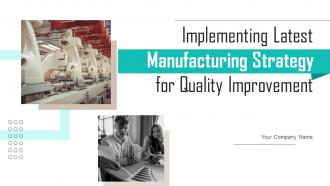
Slide 1: The slide introduces Implementing Latest Manufacturing Strategy for Quality Improvement.
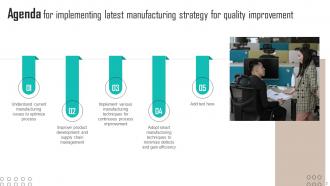
Slide 2: This is an Agenda slide. State your agendas here.
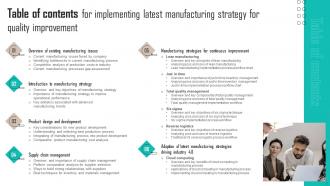
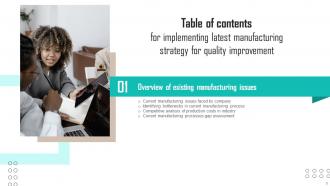
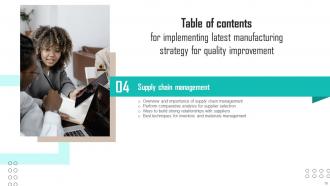
Slide 3: The slide displays Table of contents for presentation.
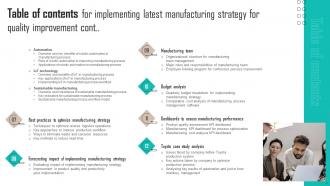
Slide 4: The slide continues table of contents.
Slide 5: The slide renders another table of contents further.
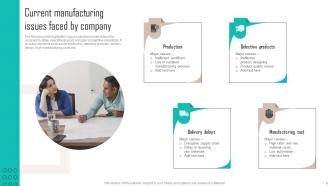
Slide 6: The slide highlights major production problems faced by company to attain operational goals and gain competitive advantage.
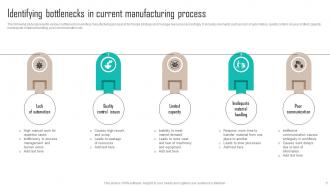
Slide 7: The slide represents various bottlenecks in existing manufacturing process to formulate strategy and manage resources accordingly.
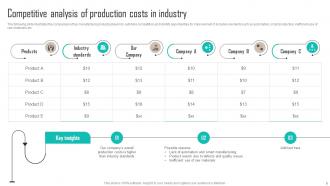
Slide 8: The slide illustrates the comparison of top manufacturing industry players to outshine competition and identify opportunities for improvement.
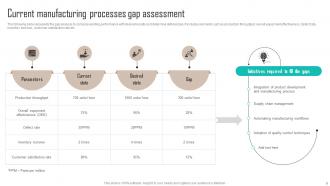
Slide 9: The slide represents the gap analysis to compare existing performance with desired results and determine deficiencies.
Slide 10: The slide highlights Title of contents which is to be discussed further.
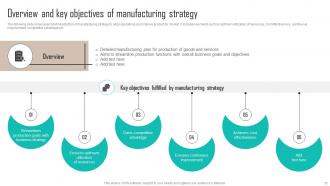
Slide 11: The slide showcases brief introduction of manufacturing strategy to align operations and improve product for market.
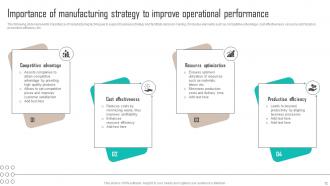
Slide 12: The slide represents importance of manufacturing techniques to support business strategy and facilitate decision making.
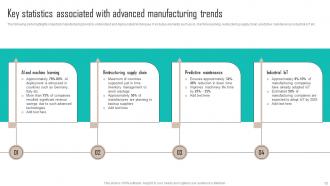
Slide 13: The slide highlights important manufacturing trends to understand and deploy latest techniques.
Slide 14: The slide displays Title of contents further.
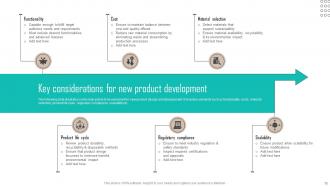
Slide 15: The slide illustrates some main points to be examined for new product design and development.
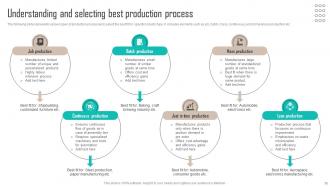
Slide 16: The slide represents various types of production processes to select the best fit for specific industry type.
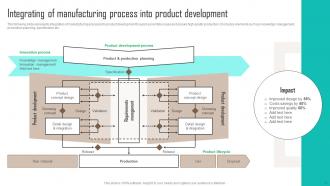
Slide 17: The slide presents integration of manufacturing process into product development to avoid assembly issues and ensure high quality production.
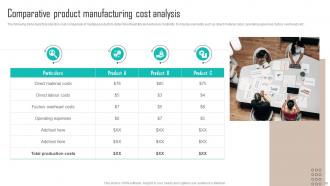
Slide 18: The slide depicts production cost comparison of multiple products to determine feasibility and enhance credibility.
Slide 19: The slide renders Title of contents further.
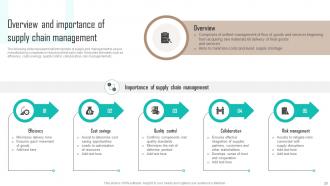
Slide 20: The slide represent brief introduction of supply and management to assist manufacturing companies in reducing direct sale costs.
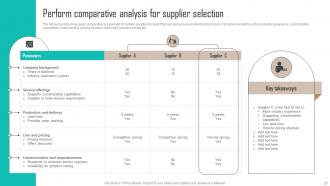
Slide 21: The slide showcases comparative assessment of multiple suppliers to select the best and ensure excellent performance.
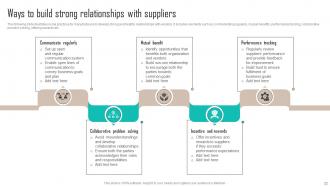
Slide 22: The slide illustrates some practices for manufacturers to develop strong and healthy relationships with vendors.
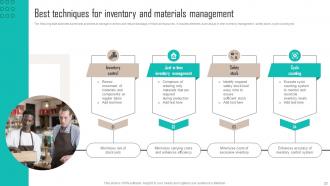
Slide 23: The slide exhibits some best practices to manage inventory and reduce blockage of financial resources.
Slide 24: The slide title of contents which is to be discussed further.
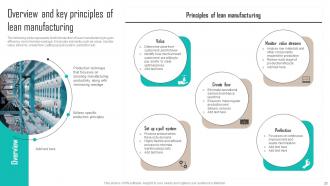
Slide 25: The slide represents brief introduction of lean manufacturing to gain efficiency and minimize wastage.
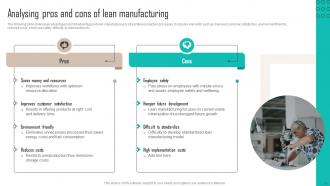
Slide 26: The slide showcases advantages and disadvantages of lean manufacturing to streamline production processes.
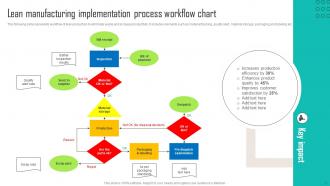
Slide 27: The slide renders workflow of lean production to eliminate waste and increase productivity.
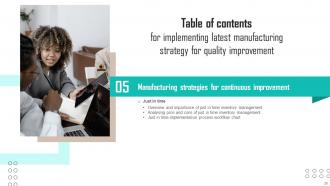
Slide 28: The slide describes title of contents further.
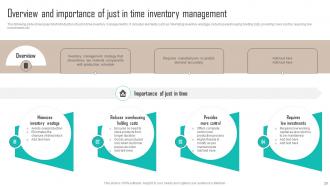
Slide 29: The slide showcases brief introduction of just in time inventory management.
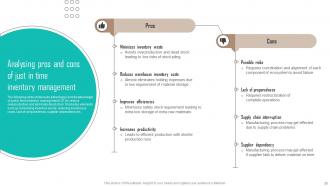
Slide 30: The slide exhibits advantages and disadvantages of just in time inventory management (JIT) to reduce overproduction and eliminate dead stock.
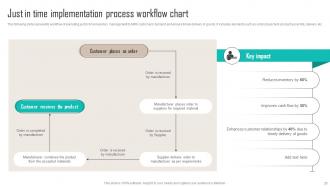
Slide 31: The slide represents workflow of executing just in time inventory management to fulfill customers’ demand and ensure timely delivery of goods.
Slide 32: The slide again displays title of contents.
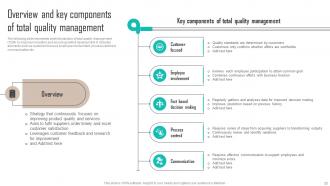
Slide 33: The slide gives brief introduction of total quality management (TQM) to improve innovation and ensure growth & development.
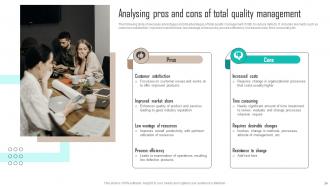
Slide 34: The slide showcases advantages and disadvantages of total quality management (TQM) to reduce defects.
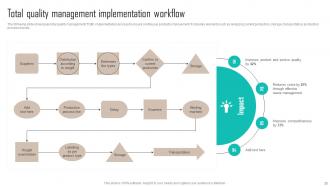
Slide 35: The slide shows total quality management (TQM) implementation process to ensure continuous products improvement.
Slide 36: The slide also depicts title of contents.
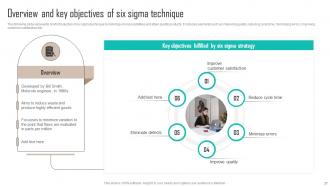
Slide 37: The slide represents brief introduction of six sigma technique to minimize error possibilities and attain quality products.
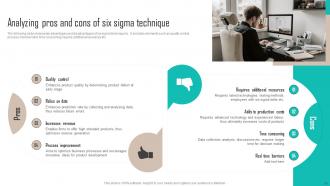
Slide 38: The slide showcases advantages and disadvantages of six sigma technique to .
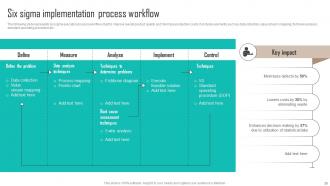
Slide 39: The slide presents six sigma execution process workflow chart to improve overall product quality and minimize production costs.
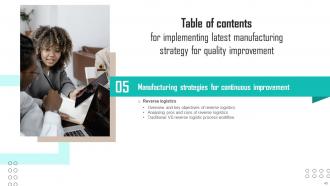
Slide 40: The slide represents title of contents further.
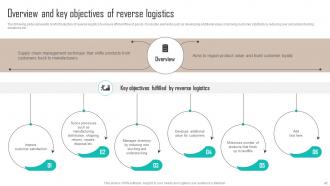
Slide 41: The slide provides brief introduction of reverse logistics to ensure efficient flow of goods.
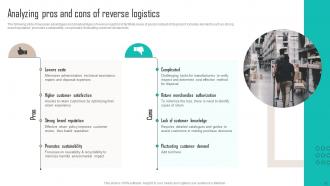
Slide 42: The slide showcases advantages and disadvantages of reverse logistics to facilitate reuse of goods instead of disposal.
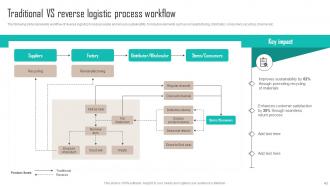
Slide 43: The slide represents workflow of reverse logistics to reduce waste and ensure sustainability.
Slide 44: The slide depicts title of contents further.
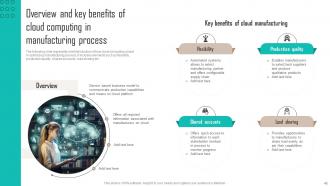
Slide 45: The slide provides brief introduction of how cloud computing assist in optimizing manufacturing process.
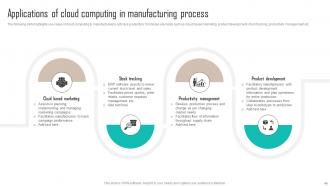
Slide 46: The slide highlights use cases of cloud computing in manufacturing to optimize production.
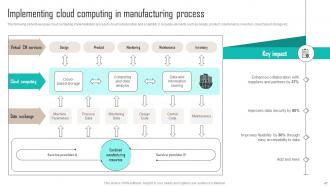
Slide 47: The slide showcases cloud computing implementation process to boost collaboration and scalability.
Slide 48: The slide renders title of contents further.
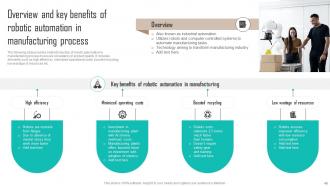
Slide 49: The slide provides brief introduction of robotic automation in manufacturing process to ensure consistency in product quality.
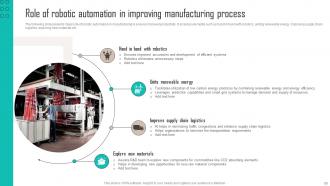
Slide 50: The slide presents major role of robotic automation in manufacturing to ensure improved productivity.
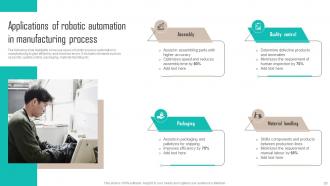
Slide 51: The slide highlights some use cases of robotic process automation in manufacturing to gain efficiency and minimize errors.
Slide 52: The slide highlights title of contents which is to be discussed further.
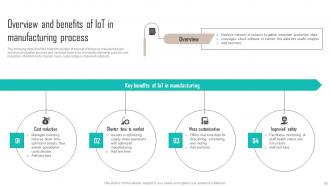
Slide 53: The slide provides brief introduction of internet of things in manufacturing to enhance production process and minimize down time.
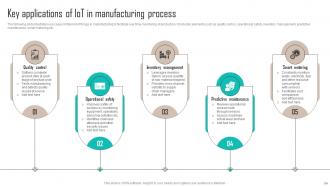
Slide 54: The slide illustrates use cases of internet of things in manufacturing to facilitate real time monitoring of production.
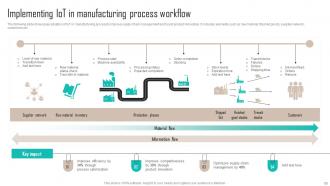
Slide 55: The slide showcases adoption of IoT in manufacturing process to improve supply chain management and boost product innovation.
Slide 56: The slide displays title of contents further.
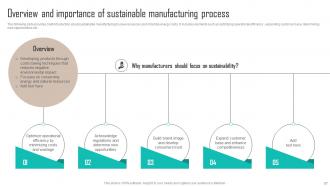
Slide 57: The slide provides brief introduction about sustainable manufacturing to save resources and minimize energy costs.
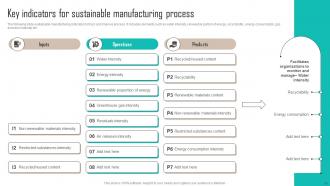
Slide 58: The slide renders sustainable manufacturing indicators to track and improve process.
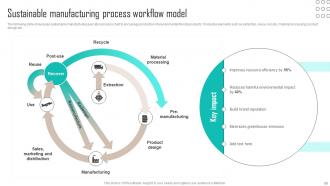
Slide 59: The slide showcases sustainable manufacturing execution process chart to encourage production of environmental friendly products.
Slide 60: The slide describes title of contents further.
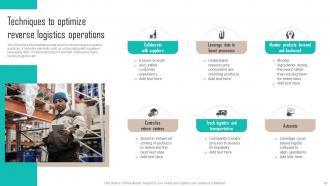
Slide 61: The slide illustrates some ways to improve reverse logistics practices.
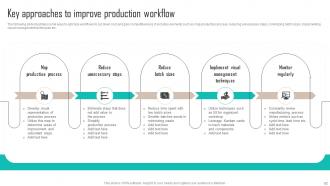
Slide 62: The slide exhibits some ways to optimize workflows to cut down cost and gain competitiveness.
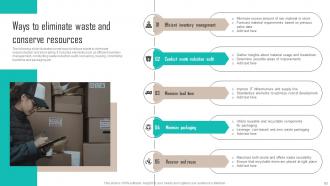
Slide 63: The slide represents some ways to reduce waste to eliminate overproduction and stock piling.
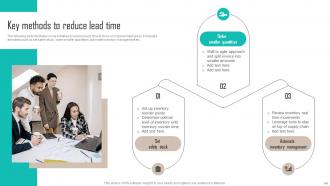
Slide 64: The slide shows some initiatives to reduce leads time to focus on improvement areas.
Slide 65: The slide depicts title of contents which is to be discussed further.
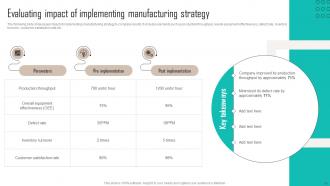
Slide 66: The slide showcases impact of implementing manufacturing strategy to compare results.
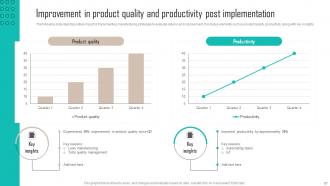
Slide 67: The slide depicts positive impact of implementing manufacturing strategies to evaluate returns and improvement.
Slide 68: The slide represents title of contents further.
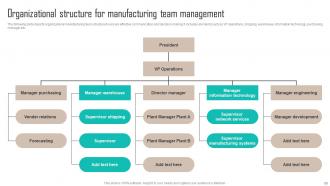
Slide 69: The slide depicts organizational manufacturing team structure to ensure effective communication and decision making.
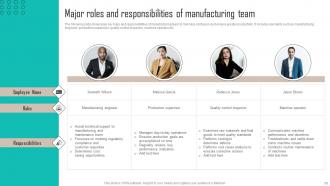
Slide 70: The slide showcases key roles and responsibilities of manufacturing team to minimize confusion and ensure greater productivity.
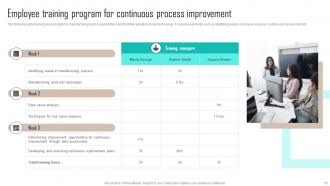
Slide 71: The slide renders training program plan for manufacturing team to upskill them and facilitate adoption of new technology.
Slide 72: The slide again demonstrates title of contents.
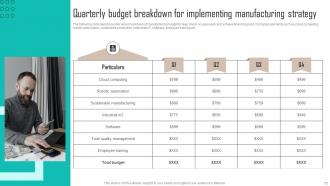
Slide 73: The slide depicts quarter wise breakdown of manufacturing budget to keep check on expenses and achieve financial goals.
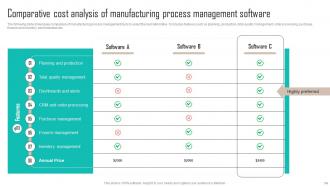
Slide 74: The slide showcases comparison of manufacturing process management tools to select the best alternative.
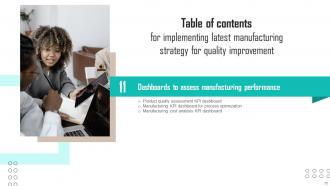
Slide 75: The slide renders title of contents further.
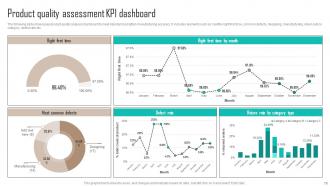
Slide 76: The slide showcases product quality analysis dashboard to meet standard and attain manufacturing accuracy.
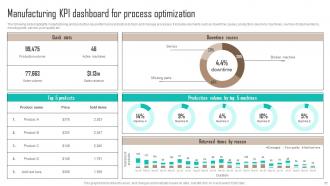
Slide 77: The slide highlights manufacturing and production key performance indicators to track and manage processes.
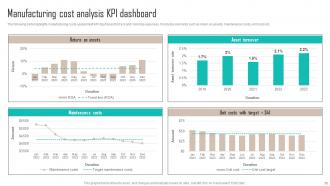
Slide 78: The slide displays manufacturing costs assessment KPI dashboard to track and minimize expenses.
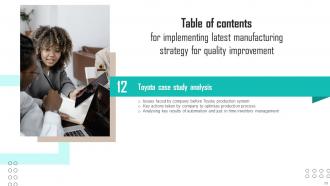
Slide 79: The slide describes title of contents further.
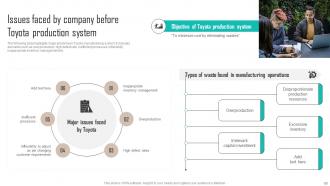
Slide 80: The slide highlights major problems in Toyota manufacturing system.
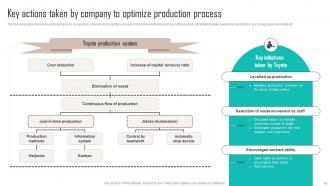
Slide 81: The slide depicts key actions taken by company to improve its production process.
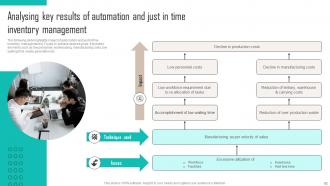
Slide 82: The slide renders impact of automation and just in time inventory management by Toyota to achieve desired goals.
Slide 83: This slide shows all the icons included in the presentation.
Slide 84: This slide is titled as Additional Slides for moving forward.
Slide 85: This is Our Team slide with names and designation.
Slide 86: This is About Us slide to show company specifications etc.
Slide 87: This is Our Mission slide with related imagery and text.
Slide 88: This slide shows Post It Notes. Post your important notes here.
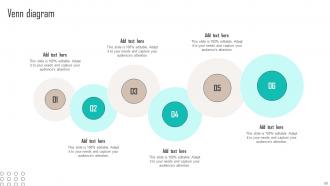
Slide 89: This slide depicts Venn diagram with text boxes.
Slide 90: This is a Thank You slide with address, contact numbers and email address.
Implementing Latest Manufacturing Strategy For Quality Improvement Strategy CD with all 98 slides:
Use our Implementing Latest Manufacturing Strategy For Quality Improvement Strategy CD to effectively help you save your valuable time. They are readymade to fit into any presentation structure.













FAQs for Implementing Latest Manufacturing Strategy For Quality
Industry 4.0 components include IoT sensors, artificial intelligence, robotics, cloud computing, and advanced analytics that create interconnected smart manufacturing systems. These technologies streamline production by enabling predictive maintenance, real-time quality control, and automated supply chain optimization, with manufacturers across automotive, electronics, and pharmaceuticals finding significantly reduced downtime and enhanced operational efficiency.
Manufacturers can effectively integrate IoT by deploying connected sensors for real-time monitoring, implementing predictive maintenance systems, establishing centralized data analytics platforms, and creating automated quality control mechanisms. These technologies streamline operations by reducing unplanned downtime, optimizing resource allocation, and enhancing production visibility, with many manufacturing facilities finding that IoT integration delivers significant cost savings and competitive advantage.
Sustainability drives modern manufacturing strategies through resource optimization, waste reduction, circular economy adoption, and carbon footprint minimization. These approaches enable manufacturers to streamline operations while meeting regulatory requirements and consumer expectations, with companies across automotive, electronics, and consumer goods finding that sustainable practices ultimately deliver cost savings, enhanced brand reputation, and competitive advantage.
Lean manufacturing principles adapt to modern supply chain challenges by emphasizing flexibility, digital integration, and supplier collaboration rather than just waste elimination. Companies increasingly implement demand-driven production, real-time visibility systems, and agile inventory management, with manufacturers in automotive and electronics finding that these adapted lean approaches deliver enhanced resilience and faster response times.
IoT sensors, artificial intelligence, robotics automation, digital twins, and edge computing are driving smart factory transformation. These technologies streamline manufacturing by enabling real-time monitoring, predictive maintenance, and adaptive production lines, with automotive and electronics manufacturers finding that integrated systems deliver enhanced operational efficiency and competitive advantage.
Advanced analytics and big data revolutionize manufacturing decision-making by providing real-time insights, predictive maintenance capabilities, demand forecasting, and quality optimization across production lines. Through machine learning algorithms and IoT sensors, manufacturers streamline operations, reduce downtime, and enhance product quality, with automotive and electronics companies finding that data-driven strategies deliver significant cost reductions and competitive advantages.
Best practices for implementing agile manufacturing include cross-functional team formation, flexible production systems, real-time data analytics, supplier partnership development, and continuous process optimization. These strategies enable manufacturers to respond quickly to market changes, reduce inventory costs, and enhance customer satisfaction, with companies in automotive and electronics finding that agile approaches deliver 30-40% faster product launches.
Manufacturers leverage additive manufacturing through rapid prototyping, customized production, supply chain simplification, and reduced material waste. This technology enables faster product development cycles, on-demand manufacturing capabilities, and complex geometries impossible with traditional methods, with aerospace and automotive companies finding significant cost reductions and enhanced design flexibility.
**INPUT**: What strategies can be employed to enhance workforce skills in the face of automation? **OUTPUT**: Workforce enhancement strategies include upskilling programs, cross-functional training, digital literacy initiatives, human-machine collaboration workshops, and continuous learning platforms. These approaches enable organizations to streamline transitions by developing analytical skills, technical competencies, and adaptive capabilities, with many manufacturing companies finding that strategic reskilling ultimately delivers higher productivity and employee engagement while maintaining competitive advantage. [Word count: 58 words]
Supply chain resilience is built through diversified supplier networks, strategic inventory buffers, real-time visibility systems, and flexible manufacturing capabilities that can quickly adapt to disruptions. Manufacturing companies increasingly leverage predictive analytics, regional sourcing strategies, and collaborative partnerships with suppliers, enabling them to maintain operations during crises while reducing costs and delivering consistent customer experiences in an increasingly volatile global environment.
Digital twins revolutionize manufacturing optimization by creating real-time virtual replicas that enable predictive maintenance, process simulation, quality control, and resource allocation strategies. Through continuous data integration, manufacturers can identify bottlenecks, reduce downtime, and enhance operational efficiency, with automotive and aerospace companies finding that digital twins deliver significantly faster production cycles and competitive manufacturing advantages.
Collaborative robots enhance manufacturing workforce dynamics by automating repetitive tasks, enabling human-robot partnerships, and creating opportunities for workers to focus on complex problem-solving and quality control. These cobots seamlessly integrate into existing operations, with automotive and electronics manufacturers finding that they increase productivity while reducing workplace injuries, ultimately delivering improved operational efficiency and enhanced job satisfaction for human workers.
Remote monitoring and management in manufacturing presents both challenges and opportunities, including cybersecurity risks, integration complexities, initial investment costs, alongside enhanced operational efficiency, predictive maintenance capabilities, and real-time decision making. Through IoT sensors and cloud platforms, manufacturers streamline production oversight, minimize downtime, and reduce maintenance costs, with automotive and pharmaceutical companies finding that remote systems ultimately deliver competitive advantage and scalable operational control.
Manufacturers can measure strategy effectiveness through real-time KPI dashboards, IoT sensor data, production analytics, quality metrics tracking, and automated performance monitoring systems. These technologies enable immediate visibility into operational efficiency, defect rates, and throughput changes, with many manufacturing organizations finding that continuous monitoring streamlines decision-making and accelerates strategic adjustments.
Customer feedback serves as a critical driver for manufacturing strategy evolution, influencing product design modifications, quality improvements, production scheduling, and supply chain adjustments. Through advanced analytics and customer relationship management systems, manufacturers can quickly adapt their processes, enhance product features, and streamline operations, with many companies finding that responsive feedback integration delivers competitive advantage and increased customer satisfaction.
-
Their professional templates are very impressive, even my manager was curious about the source. I am very grateful.
-
Time saving slide with creative ideas. Help a lot in quick presentations..