Mise en œuvre des ensembles de modèles Powerpoint PPT du système de gestion des commandes DK MD

Rating:
90%
Implementing Order Management System Powerpoint PPT Template Bundles DK MD
Slide 1 of 18
Favourites Favourites

Try Before you Buy Download Free Sample Product

Audience Impress Your
Audience
Editable 100%
Editable
Time Save Hours
of Time
The Biggest Sale is ending soon in
0
0
:
0
0
:
0
0
Rating:
90%

Caractéristiques de ces diapositives de présentation PowerPoint :

Si vous avez besoin d'un modèle professionnel avec un excellent design, alors ce système de gestion des commandes Powerpoint PPT Template Bundles DK MD est la solution idéale pour vous. Déployez-le pour captiver votre public et augmenter votre seuil de présentation avec les bons graphiques, images et structure. Décrivez vos idées et votre vision à l'aide de treize diapositives incluses dans ce jeu complet. Ce modèle convient aux réunions de discussion d'experts présentant vos points de vue sur le sujet. Avec une variété de diapositives ayant la même représentation thématique, ce modèle peut être considéré comme un ensemble complet. Il utilise certaines des meilleures pratiques de conception, donc tout est bien structuré. De plus, il répond à tous vos besoins et exigences en s'adaptant rapidement aux changements que vous apportez. Ce diaporama PPT est disponible en téléchargement immédiat aux formats PNG, JPG et PDF, ce qui améliore encore sa convivialité. Prenez-le en cliquant sur le bouton de téléchargement.

Contenu de cette présentation Powerpoint

Diapositive 1 : cette diapositive affiche le titre Implémentation du système de gestion des commandes.
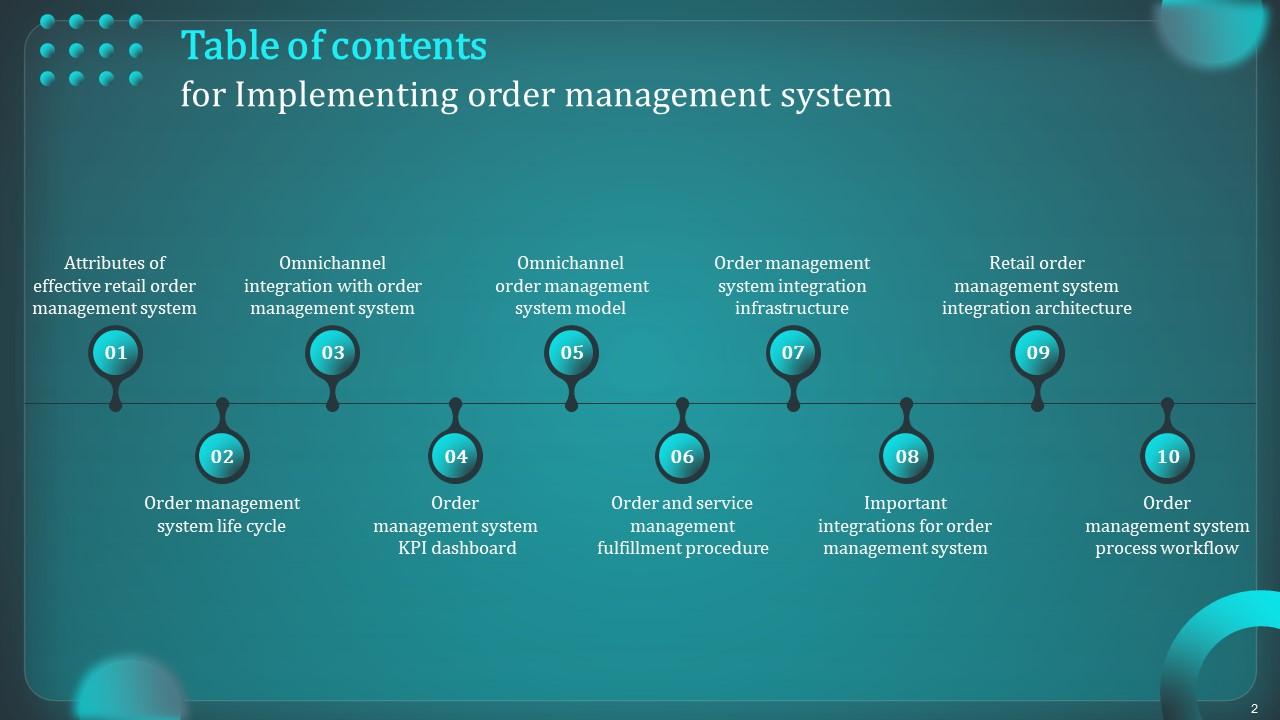
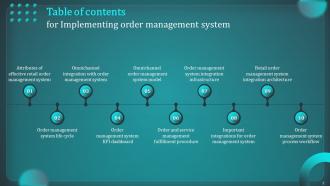
Diapositive 2 : Cette diapositive présente une table des matières.
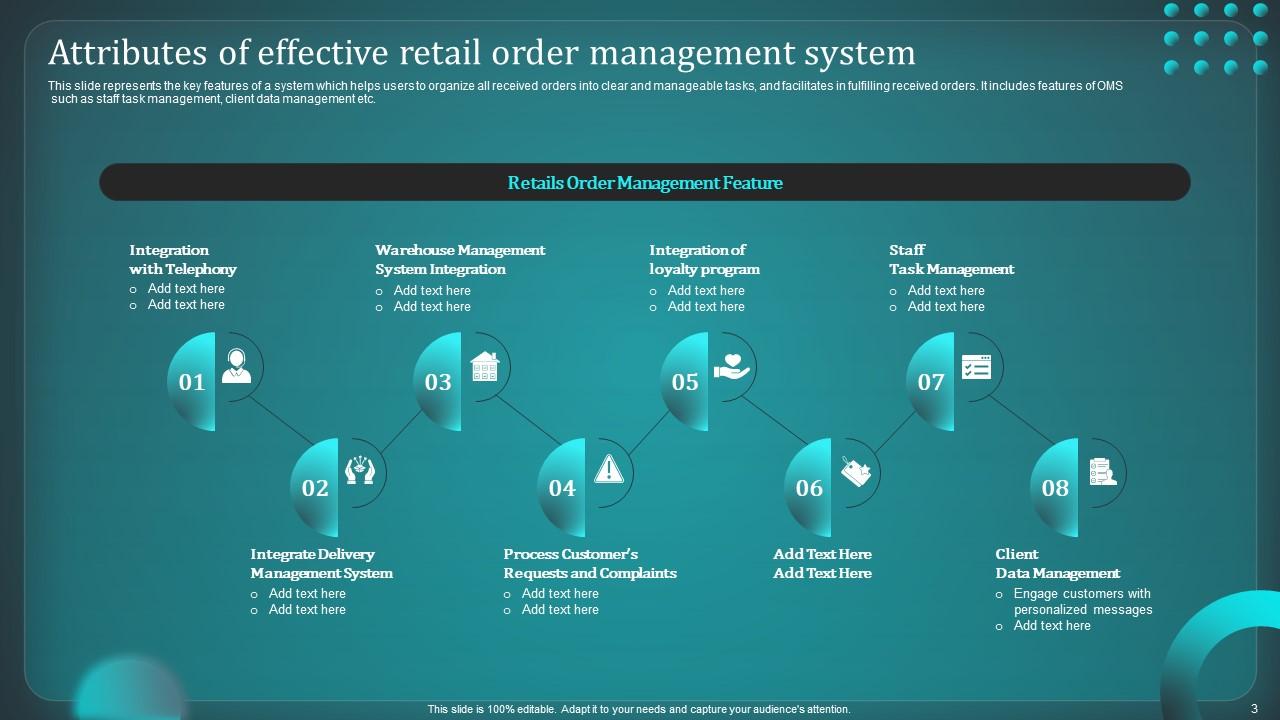
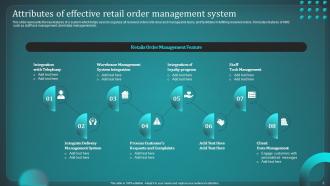
Diapositive 3 : Cette diapositive représente les principales caractéristiques d'un système qui aide les utilisateurs à organiser toutes les commandes reçues en tâches claires et gérables.
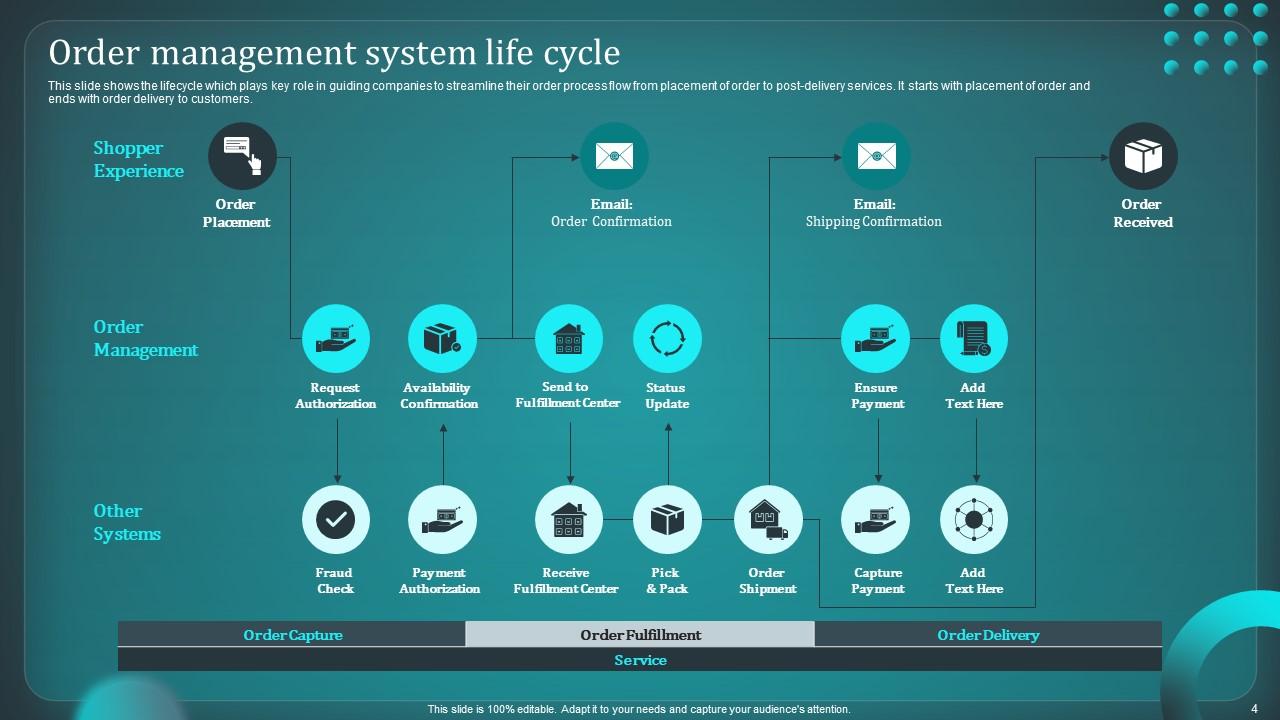
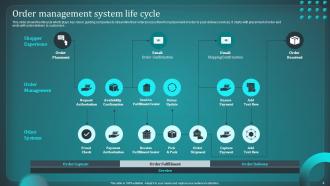
Diapositive 4 : Cette diapositive montre le cycle de vie qui joue un rôle clé en guidant les entreprises pour rationaliser leur flux de processus de commande, de la passation de la commande aux services post-livraison.
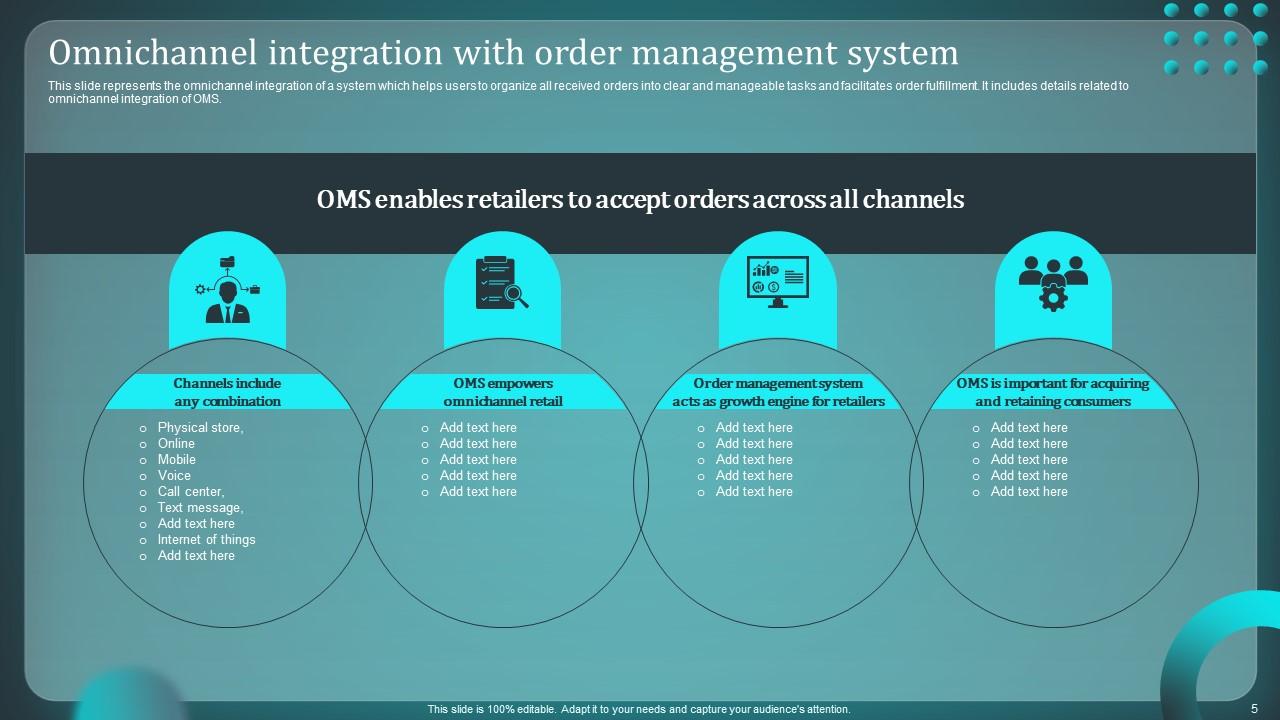
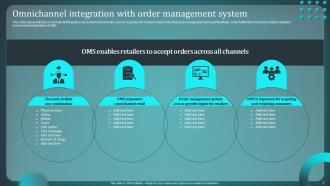
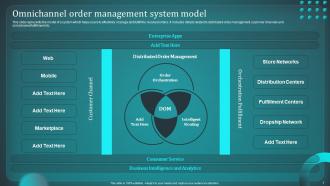
Diapositive 5 : Cette diapositive représente l'intégration omnicanal d'un système qui aide les utilisateurs à organiser toutes les commandes reçues en tâches claires et gérables.
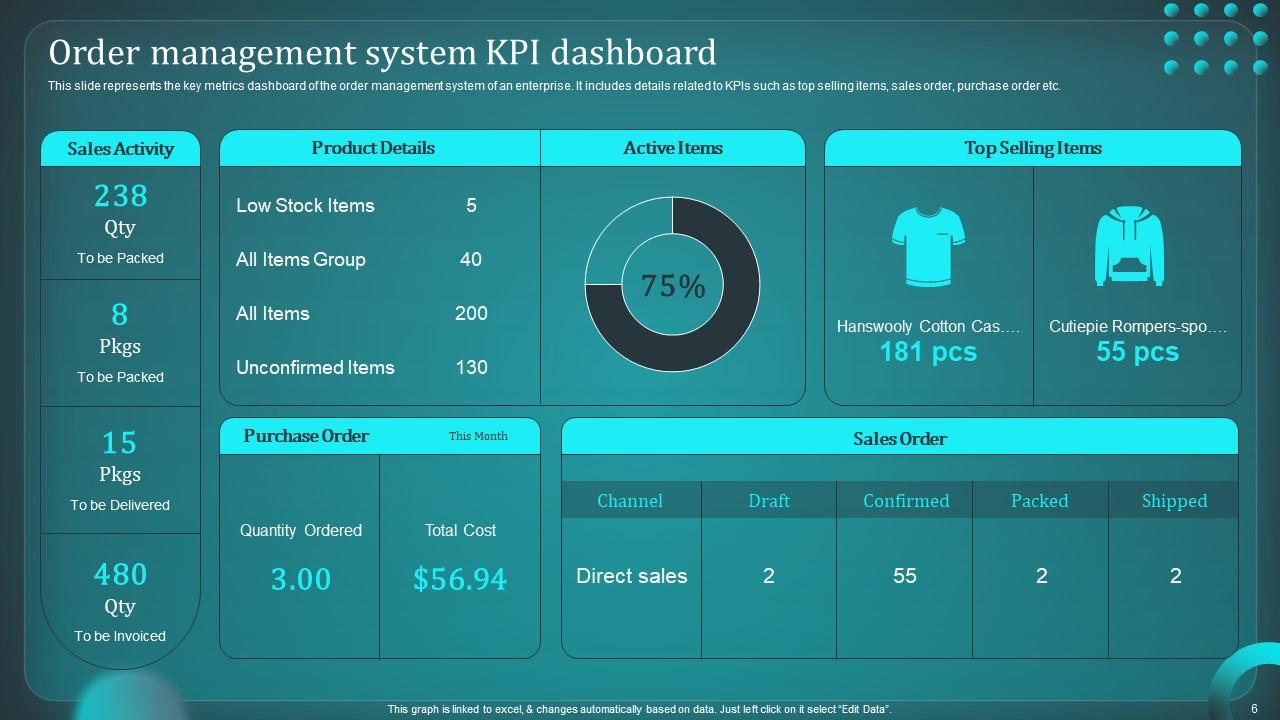
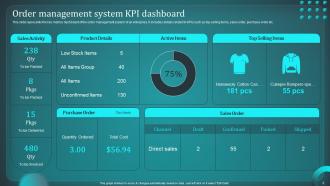
Diapositive 6 : Cette diapositive représente le tableau de bord des métriques clés du système de gestion des commandes d'une entreprise.
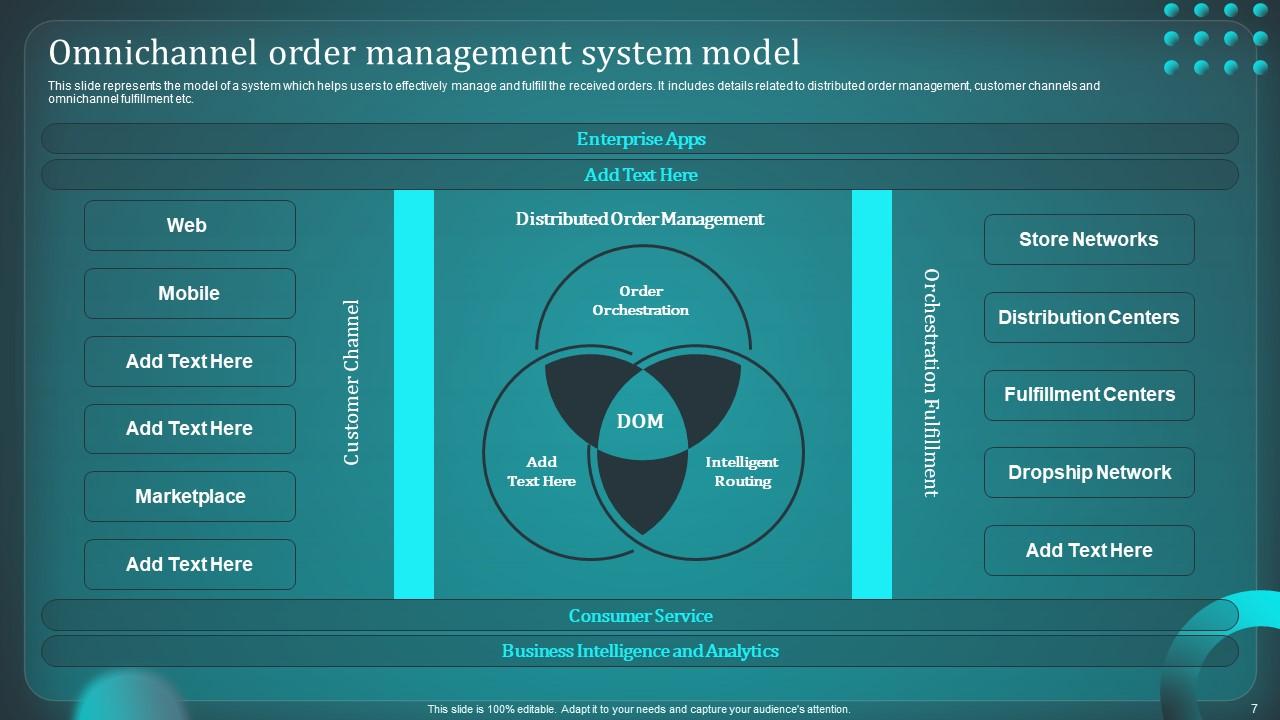
Diapositive 7 : Cette diapositive représente le modèle d'un système qui aide les utilisateurs à gérer et exécuter efficacement les commandes reçues.
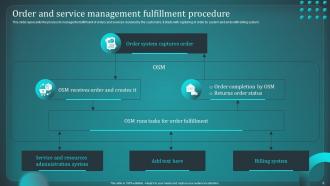
Diapositive 8 : Cette diapositive représente le processus de gestion de l'exécution des commandes et des services reçus par les clients.
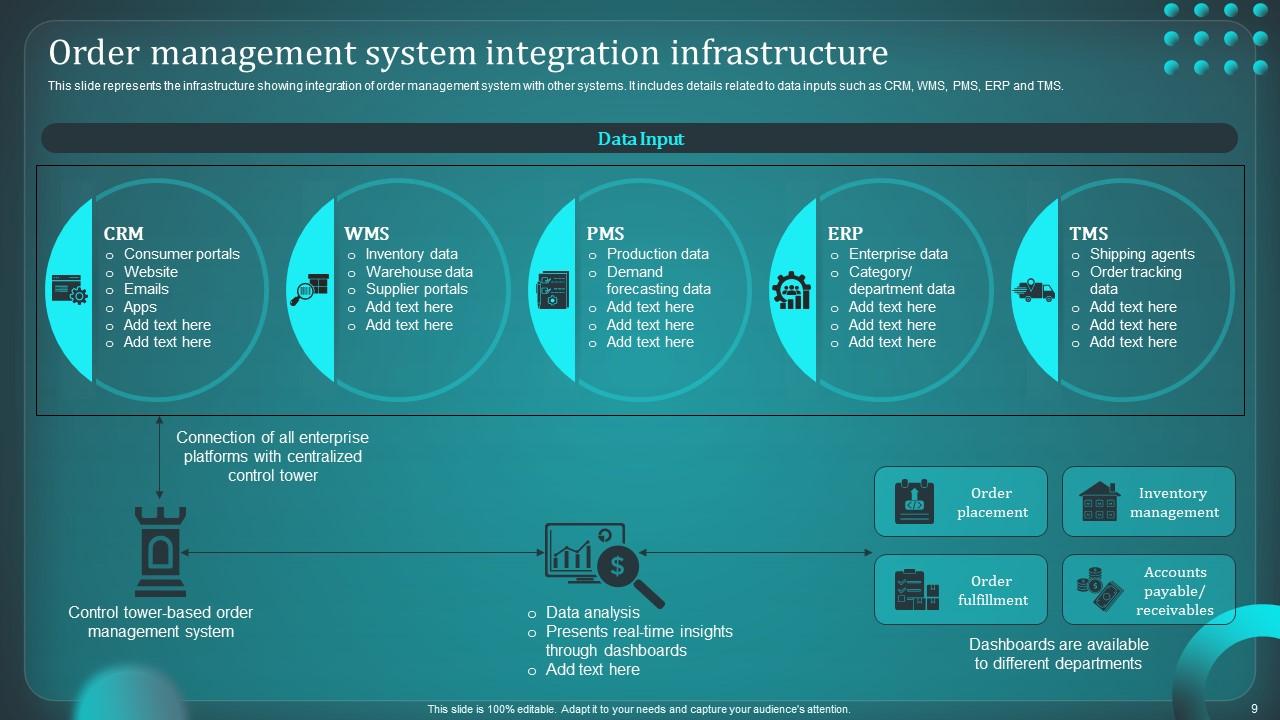
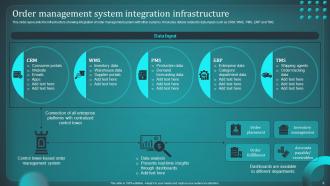
Diapositive 9 : Cette diapositive représente l'infrastructure montrant l'intégration du système de gestion des commandes avec d'autres systèmes.
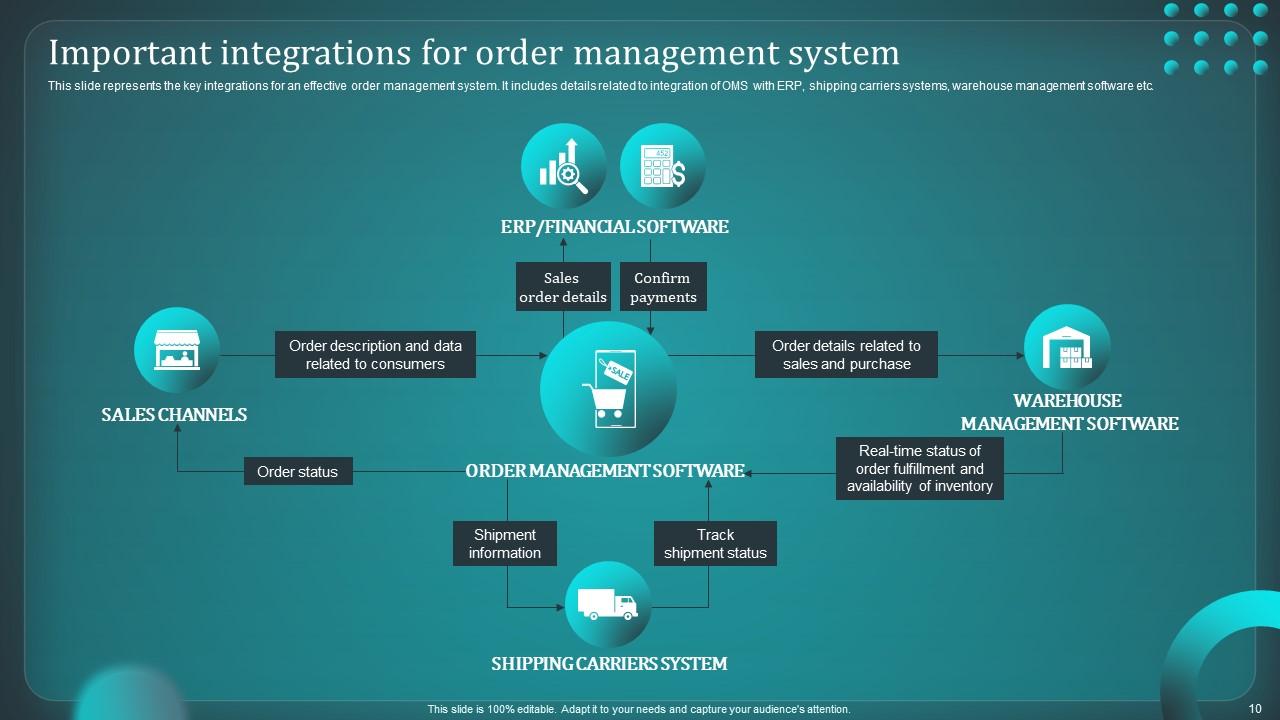
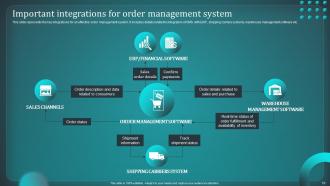
Diapositive 10 : Cette diapositive représente les intégrations clés pour un système de gestion des commandes efficace.
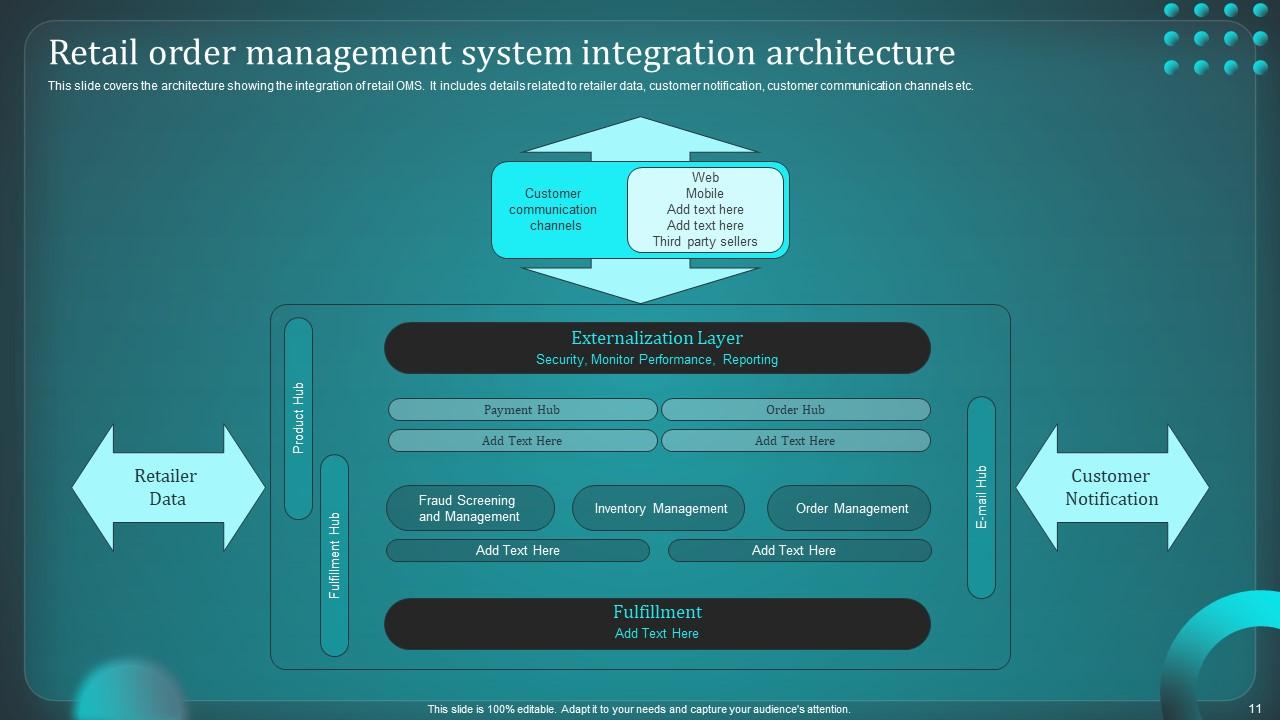
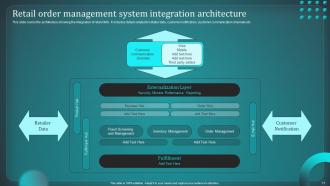
Diapositive 11 : Cette diapositive couvre l'architecture montrant l'intégration de l'OMS de vente au détail.
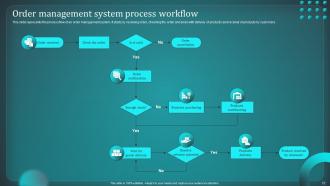
Diapositive 12 : Cette diapositive représente le flux de processus d'un système de gestion des commandes.
Diapositive 13 : Ceci est une diapositive de remerciement et contient les coordonnées de l'entreprise comme l'adresse du bureau, le numéro de téléphone, etc.

FAQs for Implementing Order Management System Powerpoint PPT Template

Key features to look for in an Order Management System include real-time inventory tracking, multi-channel order processing, automated workflow management, integrated payment processing, and comprehensive reporting analytics. These capabilities streamline operations by reducing manual errors, accelerating fulfillment cycles, and enhancing customer visibility, with many retailers and distributors finding that strategic OMS implementation delivers faster order processing and improved customer satisfaction.

An OMS streamlines order processing by automating order capture, inventory verification, payment processing, and fulfillment coordination across multiple channels and systems. Through centralized workflow management, businesses eliminate manual handoffs, reduce processing times, and minimize errors, while enabling real-time visibility into order status, ultimately delivering faster customer service and improved operational efficiency.

An OMS improves customer satisfaction by enabling accurate order tracking, faster fulfillment, proactive communication about delays, and seamless returns processing. Through real-time inventory visibility and automated workflows, businesses deliver consistent experiences across channels, reduce shipping errors, and provide timely updates, with many retailers finding that enhanced order transparency and reliability significantly boost customer loyalty and repeat purchases.

Real-time inventory tracking serves as the foundation of an effective OMS by providing accurate stock levels, preventing overselling, and enabling automatic reorder triggers across multiple channels. This visibility streamlines fulfillment operations, reduces stockouts and carrying costs, while enhancing customer satisfaction through reliable delivery promises, with many retailers finding that real-time data ultimately delivers competitive advantage in today's fast-paced marketplace.

An OMS integrates with existing e-commerce platforms and ERP systems through APIs, middleware solutions, and pre-built connectors that enable real-time data synchronization across inventory, customer information, and financial records. These integrations streamline operations by automating order processing, reducing manual data entry, and ensuring consistent information flow, with many retailers finding that seamless connectivity ultimately delivers faster fulfillment and enhanced customer experiences.

Key OMS metrics include order accuracy rates, fulfillment speed, inventory turnover, customer satisfaction scores, and cost per order. These KPIs enable organizations to streamline operations, minimize errors, and enhance customer experiences, with many retail and e-commerce businesses finding that tracking these metrics ultimately delivers competitive advantage and improved profitability.

An OMS centralizes inventory visibility, order routing, and fulfillment processes across multiple sales channels, ensuring consistent customer experiences whether orders originate from online stores, mobile apps, or physical locations. Through real-time inventory synchronization and intelligent order routing, retailers can fulfill orders from optimal locations, reduce shipping costs, and prevent overselling, with many finding that cross-channel integration ultimately delivers faster delivery times and improved customer satisfaction.

Common OMS implementation challenges include data migration complexities, integration difficulties with existing systems, employee training requirements, workflow disruptions, and initial setup costs. While these obstacles can temporarily impact operations, businesses increasingly find that strategic planning, phased rollouts, and comprehensive staff training ultimately deliver streamlined processes, enhanced inventory accuracy, and improved customer satisfaction across retail, manufacturing, and e-commerce sectors.

Automation in an OMS enhances operational efficiency by streamlining order processing, reducing manual data entry, and minimizing human errors throughout the fulfillment cycle. These automated systems enable retailers and manufacturers to process orders faster, optimize inventory allocation, and deliver real-time tracking updates, ultimately reducing operational costs while improving customer satisfaction and scalability.

Essential security measures for OMS selection include data encryption, multi-factor authentication, role-based access controls, regular security audits, and compliance certifications like SOC 2 or ISO 27001. These safeguards protect sensitive customer information, financial data, and order details while ensuring regulatory compliance, with many retail and e-commerce organizations finding that robust security frameworks ultimately enhance customer trust and operational resilience.

Data analytics within an OMS drives better inventory decision-making by providing real-time visibility into stock levels, demand patterns, and supplier performance, enabling predictive forecasting and automated reordering. Through advanced algorithms, retailers and manufacturers can minimize stockouts, reduce carrying costs, and optimize warehouse allocation, with many organizations finding that data-driven insights ultimately deliver 20-30% improvements in inventory turnover and operational efficiency.

Cloud-based OMS offers greater scalability, reduced IT infrastructure costs, automatic updates, enhanced accessibility, and faster deployment compared to on-premise solutions. While on-premise systems provide more direct control, cloud solutions enable businesses to scale operations seamlessly, minimize maintenance overhead, and access real-time data from anywhere, ultimately delivering improved operational efficiency and competitive advantage in increasingly dynamic markets.

An OMS streamlines returns and exchanges by automating return authorization, tracking product conditions, and updating inventory in real-time. Through integrated workflows, retailers can process refunds faster, redirect returned items to appropriate channels, and maintain customer satisfaction, with many e-commerce businesses finding that automated return management reduces processing time by up to 40%.

A robust OMS significantly enhances supply chain management by improving inventory visibility, streamlining order processing, and enabling real-time tracking across multiple channels. Through automated workflows and integrated systems, organizations achieve faster order fulfillment, reduced operational costs, and enhanced customer satisfaction, while minimizing stockouts and overstock situations, ultimately delivering competitive advantage in increasingly complex markets.

Businesses ensure OMS scalability by choosing cloud-based platforms, implementing modular architectures, and selecting systems with flexible APIs for seamless integrations. Through strategic planning and phased implementations, companies can accommodate increased order volumes, expand into new channels, and adapt to evolving market demands, ultimately delivering sustained operational efficiency and competitive advantage.

Ratings and Reviews

90% of 100
Review Form
Write a review
Most Relevant Reviews
  1. 80%

    by Johnson Morris

    The templates are easy to get, and the chat customer support is excellent. 
  2. 100%

    by Clayton Sanders

    The PPTs are extremely simple to modify. Thank you for providing the slides that are ready to be used. They assist me in saving a lot of time.

2 Item(s)

per page: