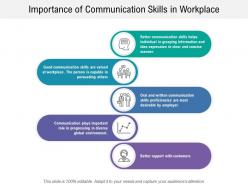
Importance of communication skills in workplace
Try Before you Buy Download Free Sample Product
Audience
Editable
of Time
Our Importance Of Communication Skills In Workplace are extremely descriptive. They depict every aspect completely.
People who downloaded this PowerPoint presentation also viewed the following :
Importance of communication skills in workplace with all 5 slides:
Your audience will embrace your thoughts. Open up to them with our Importance Of Communication Skills In Workplace.
FAQs for Importance of communication
Okay so first - nail your opening, like actually grab people's attention from the start. Your main points should flow logically (seems obvious but you'd be surprised how many people mess this up). Visual aids are great but only if they actually add something, not just random charts thrown in there. Body language is huge though - eye contact, gestures that make sense, change up your voice so you don't sound monotone. The speakers I actually enjoy listening to? They talk TO the room, not AT it. Oh and definitely practice those transitions between sections beforehand or you'll end up with those weird "um... so anyway" moments.
Honestly, your body language is way more important than you'd think for presentations. Eye contact builds trust with people - I learned this the hard way after bombing a few talks early on. Stand up straight, use your hands when you talk, and actually look at different parts of the room instead of staring at one spot. It feels super awkward at first. Practice in front of a mirror though, even if it makes you cringe watching yourself. Your words matter, but how you carry yourself is what makes people actually listen and remember what you said.
Dude, you gotta watch your audience while you're presenting - it's seriously a game changer. Look for confused faces or people checking their phones. When you see blank stares, that's your cue to slow down or throw in an example. I always pause and ask "make sense so far?" because honestly, most people won't interrupt to say they're lost. Pay attention to body language too - are they nodding or looking bored? Sometimes I'll even skip a section if I can tell it's not clicking. Way better than just bulldozing through your slides.
Know your audience first - that's everything. Executives? Hit them with the bottom line upfront, no fluff. Technical people want all the data and specifics. But with general audiences, ditch the jargon completely and use examples they'll actually get. I've watched so many presentations bomb because someone went full industry-speak with the wrong room - it's painful. Also think about where their heads are at. Stressed teams need you to calm them down, creative types want to feel energized. Before you send that email or give that talk, just ask yourself what they actually care about most.
Okay so three things that actually work: think before you talk, ditch the fancy words, and just get to the point already. I used to be the worst at rambling in meetings - drove everyone nuts. Now I do this "bottom line up front" thing where you say your main point first, then explain why. Super helpful. Also those filler words? They make you sound unsure even when you're not. Oh and pause between ideas! People need a second to catch up. I started timing myself when I practice stuff and it's honestly kind of eye-opening how fast we talk sometimes.
Dude, storytelling is a game changer for presentations. People actually give a shit when you tell them a story instead of just rattling off bullet points. Our brains are wired for narratives - we've literally been doing this since caveman days around fires. A good story sticks with people way longer than data ever will. Plus when you start with a quick story that ties to your main point, you'll see everyone suddenly sit up and pay attention. It's honestly kind of wild how much more engaged they get. Try it next time - just pick something simple that connects to whatever you're pitching.
Okay so three things that actually work: get your opening lines down cold so you don't have to think about them. Second, do that 4-7-8 breathing thing beforehand - breathe in for 4, hold it for 7, breathe out for 8. Sounds weird but it genuinely helps with the nerves. Oh and pick one person who looks friendly and just talk to them basically. The whole "nervousness is just excitement" thing isn't total BS either since they feel super similar. People aren't sitting there hoping you'll bomb - they want a good presentation too. Don't try all of this at once though, just pick one thing first.
Honestly, visual aids are like having a backup plan for when words aren't enough. They're super helpful for data or complicated processes - stuff that's just hard to picture in your head. Your audience will actually remember way more when they can see AND hear what you're talking about. But here's the thing - don't go overboard with fancy animations or whatever. Simple is better. I always think of them as supporting actors, not the star of the show. Use them to highlight your biggest points, and make sure they're not pulling attention away from what you're actually saying. People need something to look at besides just you up there!
Skip the generic "any questions?" - it never works. Try asking something specific like "What part of this clicks for you?" or "Where do you think we'll hit roadblocks?" You'll actually get people talking instead of staring at their phones. Set up different ways for people to respond too - polls work great, anonymous forms, maybe break into smaller groups since some folks hate speaking up in big crowds. Here's the thing though: when someone does give feedback, call it out publicly and tell everyone what you're gonna do with it. Even if their idea won't work, just acknowledging it builds so much trust. Make giving feedback feel worth their time, not like extra work.
Oh man, this stuff can totally trip you up if you're not careful. Different cultures have completely different expectations - some want you diving straight into data and facts, others need the relationship-building chit-chat first. Your normal eye contact might feel way too intense, and being enthusiastic could backfire and make you seem pushy. Research beforehand if you can, or just ask someone what they prefer. I usually start more formal than I think I need to, then loosen up once I get a feel for the room. Better safe than accidentally offending someone, you know?
Okay so the triangle thing actually works - pick different sections of the room and look at each for like 3-5 seconds instead of trying to eyeball everyone individually. Trust me, that distant stare thing is so awkward. For virtual stuff, stare at your camera not the screen (feels super weird but looks way better). I call it the lighthouse technique? Just sweep your gaze around smoothly. When you're nervous, find a couple friendly faces to come back to. Oh and slow down! Rushed speakers forget people exist and just stare at their notes the whole time.
Honestly, you just gotta practice out loud - there's no way around it. I used to think I could just wing presentations, but rehearsing actually makes everything flow better. You'll catch yourself doing weird stuff too (I apparently gesture way too much lol). The confidence thing is real though. More you do it, less nervous you get. Record yourself if you can stand watching it back - super helpful for timing and seeing what needs work. Start with small chunks, even just talking to your mirror. Sounds dumb but it works. You'll get way better at handling questions and transitions once you've run through it a bunch of times.
Oh man, the usual suspects: reading straight off slides (guilty), zero eye contact, and speed-talking like you're late for something. Um and uh every other word makes you sound nervous even when you're not. I always mess up by cramming way too much in - like why did I think I could cover 20 slides in 10 minutes? Also not knowing your audience is brutal. Practice out loud beforehand, show up early to mess with the tech, and honestly? Silence beats word vomit when you blank out mid-sentence.
Start by telling everyone upfront when you'll take questions - during or after. Saves you from random interruptions later. When someone jumps in anyway, just say "good question, let me finish this thought first" or "I'm covering that on slide 5." Some people honestly just love hearing their own voice, but don't let them hijack your whole thing. During Q&A, repeat each question so the back row can hear. Keep answers short. Don't know something? Just say so and offer to follow up - way better than fumbling through a BS answer.
Think of your presentation like GPS for your audience's brain - they need to know where they're going or they'll get lost. I've sat through so many presentations where the speaker just wandered around their topic and everyone checked out by slide 3. People's brains crave structure. When you've got a clear intro, body, and conclusion with smooth transitions, your audience can actually follow along and remember your points later. Honestly, half the battle is just having an outline and sticking to it. Short sentences work. Longer ones help you explain the why behind your main ideas. Trust me, you'll notice the difference when people actually retain what you said.
No Reviews