Integrated Project Plan For Product Launch Project Integration Management PM SS
Try Before you Buy Download Free Sample Product
Audience
Editable
of Time
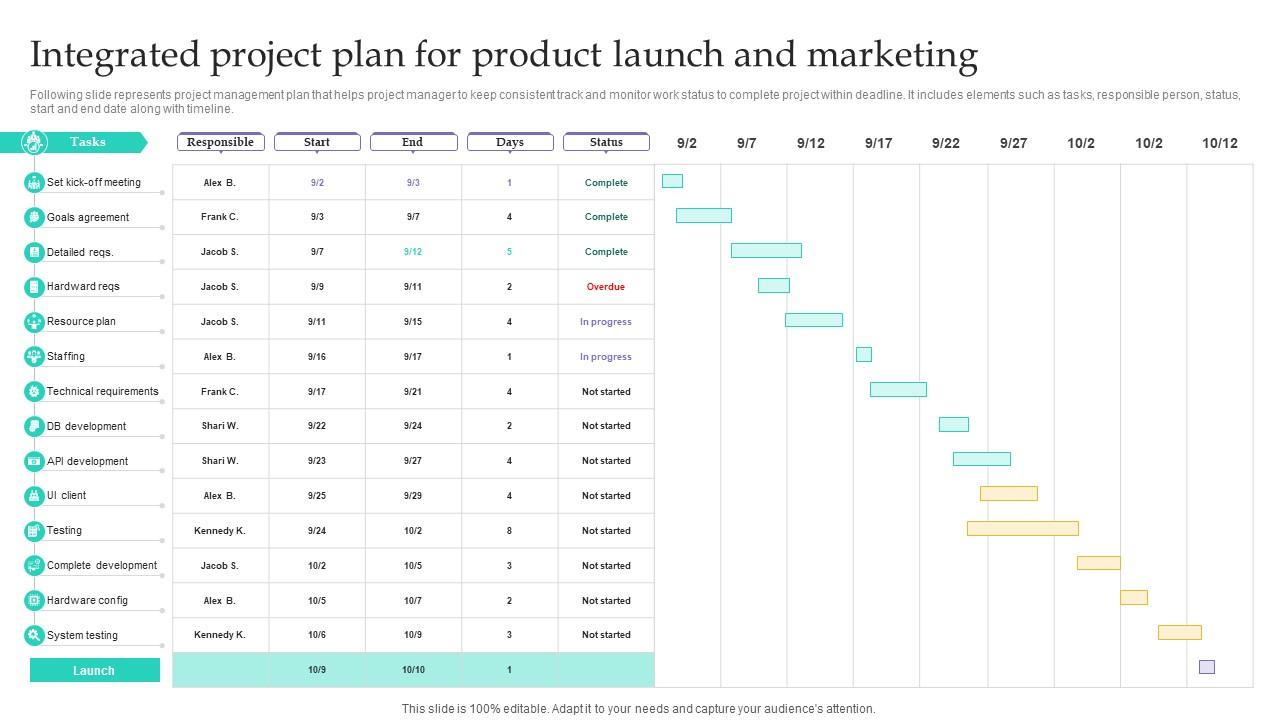
Following slide represents project management plan that helps project manager to keep consistent track and monitor work status to complete project within deadline. It includes elements such as tasks, responsible person, status, start and end date along with timeline.
People who downloaded this PowerPoint presentation also viewed the following :
Integrated Project Plan For Product Launch Project Integration Management PM SS with all 9 slides:
Use our Integrated Project Plan For Product Launch Project Integration Management PM SS to effectively help you save your valuable time. They are readymade to fit into any presentation structure.
FAQs for Integrated Project Plan For Product Launch Project Integration
So there are five main pieces - scope, schedule, budget, resources, and risk management. Think of them like dominoes honestly. Your scope determines what work you're doing, which then affects your timeline and how many people you need. Budget always comes in to mess with your perfect plans, forcing you to cut scope or extend deadlines. Schedule and resources have to match up or you'll have team members either bored or completely swamped. Risk management is the thing that touches everything else - it helps you see problems before they blow up your other components. When something changes, you've got to update everything at once. Change scope? Better check your timeline and budget immediately.
Dude, you've gotta talk to your stakeholders early or you'll be flying blind. Trust me on this one - I've watched projects crash because people skipped this step. Get their input on what they actually need and what constraints you're working with. They'll spot dependencies and risks that would totally blindside you otherwise. Short conversations now save you from major headaches later. Plus, when stakeholders feel heard, they're way more likely to have your back when things get tricky. Map out who matters most and set up those chats before you lock anything down.
So Microsoft Project or Smartsheet are solid choices for the heavy lifting - dependencies, resource management, all that stuff. Excel's tempting but trust me, it gets messy fast. You'll probably want something like Asana or Monday.com too for day-to-day team stuff. The real trick is finding tools that actually play nice with whatever you're already using. Nobody needs another data island, you know? I'd grab trials of maybe 2-3 options and test them on something small first. Way better than committing to the wrong thing and regretting it later.
Don't treat risk management like some separate thing you deal with later. Build it right into your project plan from day one - identify risks during initial planning and assign owners just like any other task. Most teams I know just tack it on at the end which is honestly pretty pointless. Bake risk reviews into your regular milestone meetings instead. Update your risk register every time you do other project updates. Oh, and make sure your backup plans actually show up in your timeline and budget - otherwise what's the point? Basically treat risks like they're part of your core requirements.
So resource allocation is basically figuring out who's doing what and when - it's honestly the backbone of any solid project plan. First, list out all your people, their skills, and how much time they actually have (not what they claim they have). Then match that against your timeline and tasks. Trust me, skip this step and you'll have people drowning while others are twiddling their thumbs. Worst case? Critical stuff just sits there unfinished. It also helps catch those awkward moments when two teams need your best developer at the exact same time. Map your resources first, then layer in the timeline.
Create a visual chart mapping your deliverables to company goals - sounds nerdy but it actually works. Check in with leadership regularly since priorities change like crazy (learned this the hard way). Your milestones should connect to business metrics they genuinely care about, not just stuff that looks good on paper. Set up quarterly review points to reassess alignment, especially when the org goes through changes. Honestly, alignment isn't a set-it-and-forget-it thing - it's ongoing maintenance. Book those stakeholder meetings now while you're thinking about it.
Set up review cycles - I do weekly during crazy busy times, monthly when things are chill. Track your schedule and dependencies like your life depends on it (because honestly, your sanity does). Automated alerts for critical path stuff will save you, even though you'll probably still obsess over checking everything anyway. When scope changes or milestones shift? Update immediately and tell stakeholders before they hear it through the grapevine. Don't wait until everything's on fire to update your plan. Start each week by reviewing what's coming up and what depends on what.
So basically, integrated plans pull everything together - all your teams, timelines, dependencies - instead of having stuff scattered everywhere. Traditional planning is like juggling separate docs that never talk to each other. Real pain honestly. With integrated ones, changes update automatically across the whole thing, so you're not constantly chasing people for status updates. Plus you can actually spot resource conflicts before they blow up your timeline. Way less headache than the old-school approach where everything goes stale after like two weeks. I'd try it on something small first - you'll probably wonder why you didn't switch sooner.
Oof, you're gonna deal with scope creep for sure - that's probably the worst one. Timelines are always unrealistic too, and good luck getting everyone to agree on what actually matters first. Every department thinks they're the priority (spoiler: they're not all right). Communication falls apart fast when you're managing tons of moving pieces. Here's what actually works though - document everything upfront and make people sign off before you start. Always pad your timeline because something will definitely break. I know it feels like overkill, but schedule way more check-ins than you think you need. Oh, and pick ONE person to be in charge. Seriously, multiple decision-makers will drive you insane.
Honestly, just bake communication right into your timeline from the start. Don't leave it to chance. Set up regular check-ins with stakeholders as actual deadlines - trust me, this prevents so many headaches down the road. Figure out who needs what info and when, then assign team members to own those relationships. I'm a huge fan of shared dashboards too because nobody wants another email thread that never dies. Oh, and treat communication like any other deliverable with real deadlines. Otherwise people just assume it'll happen naturally, which... it won't.
Honestly, start simple with like 5-7 metrics or you'll drown in data. Schedule stuff is obvious - are you hitting deadlines? Budget variance too, because nobody likes surprises there. Quality metrics like defect rates or how happy stakeholders are matter big time. Resource utilization is critical though - burned out teams suck, but so does having people twiddling their thumbs. Cross-functional collaboration metrics are where most integrated plans totally implode, so definitely track that. Oh, and how well you're actually handling risks. My old PM used to say "measure what breaks first" and honestly that's solid advice. Add more metrics later once tracking becomes routine.
So basically, Agile flips the whole planning thing on its head compared to waterfall. You're not stuck making one giant plan upfront anymore - instead you break stuff into sprints and plan as you go. Game changer, honestly. Your project plan actually becomes this living thing that changes after each sprint review. Sure, you still need the big picture roadmap and key milestones mapped out. But the nitty-gritty planning? That happens in bite-sized pieces. When priorities shift or requirements change (and they always do), you can pivot fast. I'd start by figuring out how your major deliverables fit into sprint cycles.
Dude, you really don't want to skip the integrated planning thing. Teams end up doing their own random stuff with zero coordination. I've watched projects go 40% over budget just from people not talking to each other - it's wild how fast things spiral. Dependencies get totally missed, critical deadlines slip through the cracks. Then stakeholders start panicking. One delayed piece breaks everything else downstream too. Even a rough plan beats no plan. You can always tweak it later, but good luck fixing a complete disaster once everyone's already off doing whatever.
Dude, totally dig into your old project data first - it's honestly the best predictor you've got. I always pull up our last 3-5 similar projects and look for where things went wrong. Timelines that exploded, dependencies we totally missed, resource crunches that derailed everything. Those integration points between teams? They fail way more than you'd think. Create a little "danger zones" list before you start the new plan. Sometimes I get distracted reading old post-mortems because they're kinda fascinating, but the patterns you'll find are gold. You'll dodge so many bullets just by knowing what tripped you up before.
Build in some buffer time for your critical stuff and do rolling wave planning - basically plan the immediate work in detail but keep future phases loose. Most plans go sideways pretty quick anyway, so don't overthink it. Set up checkpoint meetings to reassess what matters and keep your resource allocation flexible. Cross-train people when you can (saves your butt later). Document your assumptions upfront - when things inevitably change, you'll know exactly what gets impacted. Oh, and identify your biggest 3-5 risks first with backup plans ready to go.
-
I loved the hassle-free signup process. A few minutes and, I had this giant collection of beautiful designs.
-
SlideTeam is the best in the business. Their templates are engaging and customizable. You can rely on them.