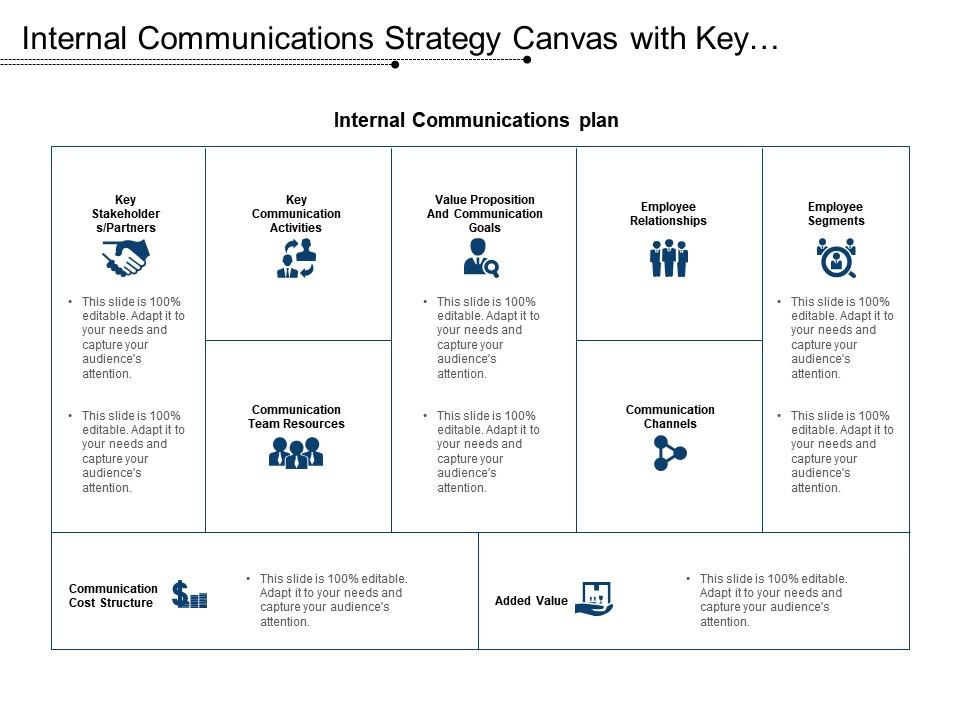
Internal communications strategy canvas with key communication activity and channels
Try Before you Buy Download Free Sample Product
Audience
Editable
of Time
Be crowned the champion with our Internal Communications Strategy Canvas With Key Communication Activity And Channels. Your ideas will be declared the best.
People who downloaded this PowerPoint presentation also viewed the following :
Internal communications strategy canvas with key communication activity and channels with all 5 slides:
Avoid being guarded with our Internal Communications Strategy Canvas With Key Communication Activity And Channels. They encourage a forthright approach.
FAQs for Internal communications strategy canvas with key communication
Honestly, start with figuring out who needs to know what - that's where most people mess up by blasting everyone with everything. Pick your core messages first, then think about channels people actually check (not just what leadership likes). Email, Slack, team meetings, whatever works for your crowd. Build in feedback somehow - surveys, quick polls, just asking around. Oh and definitely look at what you're doing now before changing everything. Most strategies tank because they skip the "does anyone actually read this stuff" part. Keep it simple and test as you go.
Honestly, I'd focus on two things - engagement stuff and whether people actually change what they're doing. Open rates and survey responses are easy wins to track. But the real test? See if anyone shows up to those town halls or starts using the new process you rolled out. Quick pulse surveys work great too - just ask "hey, did that last announcement make sense?" Super straightforward. Oh, and don't overthink it at first. Start with whatever's easiest to measure, then add more complicated stuff later. The behavior change metrics are way more valuable than just seeing who clicked what, if I'm being honest.
Tech is honestly a game-changer for internal comms. Makes everything faster and you can actually see if people are reading your stuff. Slack and Teams are solid for quick chats, employee apps work great for bigger announcements. I'd probably start by looking at what you're already using - bet there are some obvious holes where info gets lost. The trick is finding tools that match how your team actually talks to each other, not forcing them into something clunky. Without decent tech you're just crossing your fingers that important messages make it through. Analytics help too but don't go overboard with the data.
Good internal comms makes people feel like they actually matter. Share the wins AND the messy stuff - transparency builds trust way faster than fake corporate cheeriness. Give your team real ways to give feedback too, because honestly, nobody wants to feel ignored. Recognition through your channels helps a ton with morale. But here's the thing - don't just blast top-down messages all day. Ask your people what communication gaps they're dealing with first. That's where you start. Consistency beats perfection every time.
Ugh, the worst thing you can do is blast everyone with the same generic message - total waste of time. I've watched so many companies send these gorgeous newsletters that literally nobody reads. Actually ask people what info they're missing first. Then break your audience into groups and give each one what they actually care about. Skip the top-down corporate speak too. Make it a real conversation where people can respond back. Otherwise you're just shouting into the void and wondering why nothing changes.
Honestly, just be super upfront about everything from day one. People freak out way less when they actually understand WHY things are changing. Hit them from multiple angles too - meetings, emails, quick team chats - because some folks need to hear it three times before it clicks. The worst thing you can do? Go completely silent after dropping the news. I've seen that backfire so many times. When people don't know what's happening, they'll make up their own stories. Keep checking in regularly, answer their questions even if you're still figuring stuff out yourself.
Honestly, surveys are obvious but they work. Focus groups dig deeper though - you'll actually learn *why* people think what they think. Quick pulse surveys are solid for temperature checks. Those old suggestion boxes? Skip 'em, but digital ones aren't terrible. The real gold comes from one-on-ones during regular check-ins. People say stuff privately they'd never put in writing. Oh, and try having employees rate your actual messages - like a communication audit thing. Mix it up so you're not just hearing from the survey-loving overachievers every time.
Honestly, good internal communication is a game changer for keeping people engaged. People want to feel heard and actually know what's going on—not just get random announcements from the top. I've watched entire teams flip around once leadership started having real conversations instead of just talking AT everyone. Town halls help, but so do casual check-ins where you actually listen. Recognition programs work too, especially when you're talking about career growth opportunities. Oh, and definitely look at what you're already sending out—is it all one-way corporate speak? Because that's probably why people tune out.
Get out there fast and be super transparent - even when you don't have the full picture yet. Staying quiet just makes people panic and spread rumors. Make sure everyone's on the same page though - honestly, I've watched companies implode because marketing was saying one thing while operations said something totally different. Keep your messaging calm but straight up about what's happening. Tell people exactly what they need to do next. Oh, and don't just disappear after - keep updating them regularly so they're not sitting there wondering what the hell is going on.
Honestly, you've gotta over-communicate like crazy now. Those random coffee machine chats don't happen anymore, so you need to manufacture those moments. I'd say use Slack for daily stuff, but still do video calls for the messy conversations - text just doesn't cut it sometimes. Be super explicit about when you expect responses too, since everyone's schedules are wonky. Mix the real-time relationship stuff with async updates for info dumps. Oh, and maybe look at what you're doing now first? Figure out where people actually feel left out of the loop.
Honestly, just focus on stuff that actually matters to people's daily work lives. Company wins they helped make happen, random behind-the-scenes stories from leadership - that kind of thing hits different. Recognition posts are absolute gold too. Team spotlights, individual shoutouts, people eat that up. What doesn't work? Anything that sounds like corporate BS. Drop the jargon completely. Your best move is probably just asking your team what they want to see more of, then test different formats until something sticks. Oh, and make sure it feels like a real human wrote it - not some marketing robot.
People actually remember stories way better than boring bullet points - it's wild how much of a difference it makes. When you share company updates as real narratives, like how your team solved that crazy customer issue or pushed through a tough project, employees genuinely care more. Stories help everyone understand WHY you're making changes, not just what's happening. I swear the engagement boost is immediate. Next time you do a company update, start with an actual example instead of jumping straight into the numbers. Trust me on this one.
Track open rates and click-throughs first - that's your baseline. But don't stop there because honestly, high opens are pretty useless if nobody gets the actual message. I'd throw in some pulse surveys or quick quizzes to see if people actually understand what you're telling them. Behavioral stuff matters too, like are people following new policies you announced? Oh, and Employee Net Promoter Score gives you the overall vibe check. Just pick 3-4 metrics that match your goals though. You'll go crazy trying to measure everything.
So basically you want your internal comms to actually match what the company's trying to do. Innovation quarter? Share those wins, celebrate the creative stuff, make people feel like they're part of it. Pretty straightforward really. But here's the thing - most companies just pump out generic corporate speak that nobody reads anyway. Map out what you're currently sending against your actual business goals and you'll probably find some obvious gaps. The whole point is connecting people's day-to-day work to something bigger. Otherwise you're just adding to the noise, and honestly there's already enough of that floating around everyone's inbox.
Honestly, visuals are a game-changer for internal comms because people are drowning in emails these days. A quick infographic or chart makes your message actually stick instead of getting buried in someone's inbox. Works great for complex stuff too - like, why write three paragraphs explaining a process when one diagram does it better? Plus everyone processes info differently, so visuals hit more people effectively. My old team had this mix of languages and learning styles, made a huge difference. Just try throwing a simple diagram in your next update and see what happens.
-
Great quality slides in rapid time.
-
Editable templates with innovative design and color combination.