Interview Method For Data Collection With Types Guide For Data Collection Analysis MKT SS V

Rating:
100%
Interview Method For Data Collection With Types Guide For Data Collection Analysis MKT SS V Interview Method For Data Collection With Types Guide For Data Collection Analysis MKT SS V
Slide 1 of 7

or

Favourites Favourites

Try Before you Buy Download Free Sample Product

Audience Impress Your
Audience
Editable 100%
Editable
Time Save Hours
of Time
The Biggest Sale is ending soon in
0
0
:
0
0
:
0
0
Rating:
100%
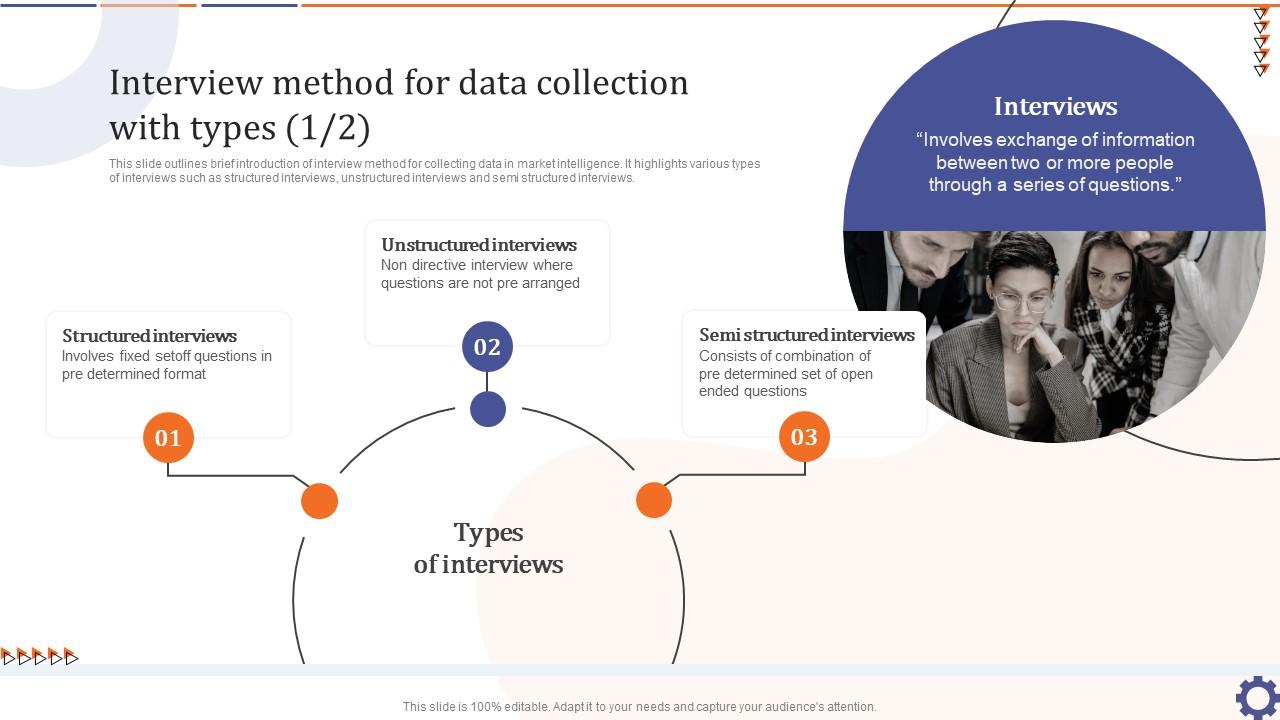
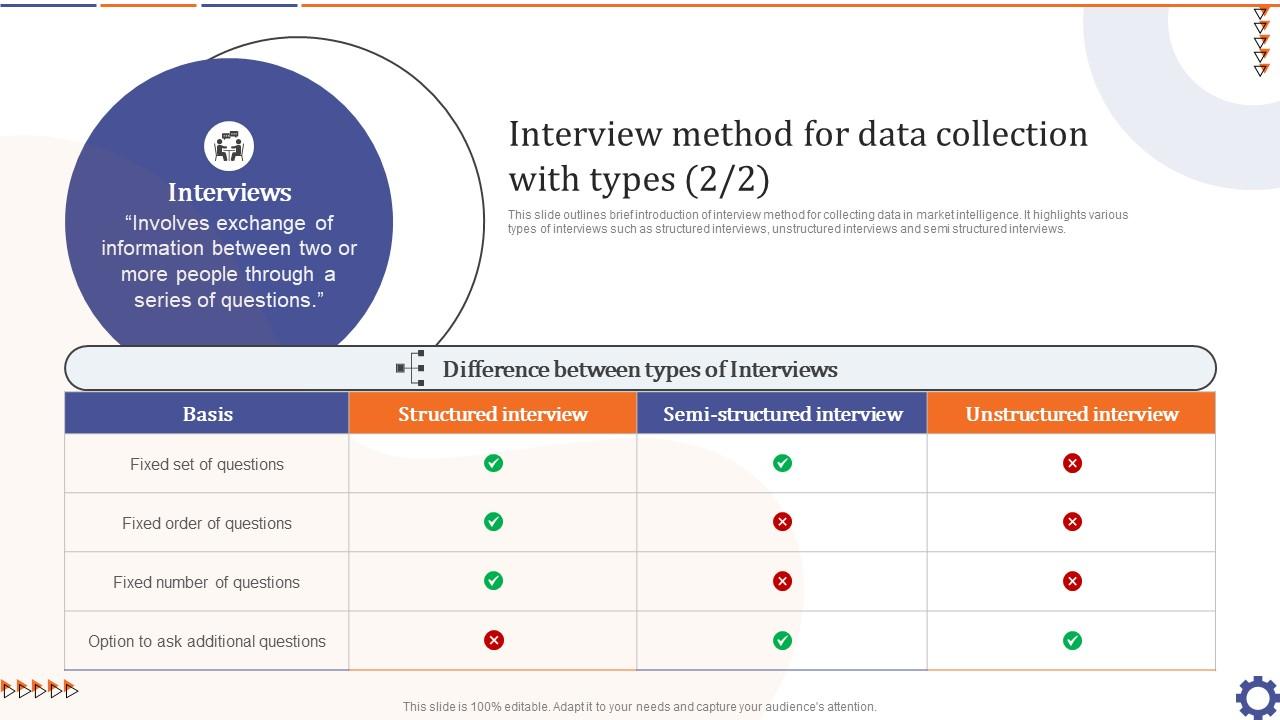
This slide outlines brief introduction of interview method for collecting data in market intelligence. It highlights various types of interviews such as structured interviews, unstructured interviews and semi structured interviews. Increase audience engagement and knowledge by dispensing information using Interview Method For Data Collection With Types Guide For Data Collection Analysis MKT SS V. This template helps you present information on three stages. You can also present information on Structured Interviews, Unstructured Interviews using this PPT design. This layout is completely editable so personaize it now to meet your audiences expectations.

FAQs for Interview Method For Data Collection With Types Guide For Data Collection Analysis

Honestly, interviews are pretty great because you can change direction mid-conversation based on what people tell you. Like if someone mentions something unexpected, you can just roll with it instead of being stuck with preset questions. You'll catch body language and tone that surveys totally miss. People are way more likely to actually show up too - probably because it feels more personal? And when answers don't make sense, you can ask them to explain right then and there. Sure, it takes more time than sending out a form, but if you really want to understand the reasoning behind what people do, nothing beats a good conversation.

Your interview style really depends on what kind of research you're doing. Academic stuff? You'll want structured questions to keep things consistent. Corporate work moves way faster - semi-structured interviews that can change direction when the business needs shift. Clinical research is totally different though, you need trauma-informed approaches and have to build trust first. That's honestly where being good with people matters more than any technique. Ethnographic work is more like having conversations in people's natural spaces. Bottom line - match your approach to who you're talking to.

Honestly, go with semi-structured interviews - they're perfect for qual research. You get to follow your main questions but can dig deeper when someone says something really interesting. I learned this the hard way lol. Structured ones are way too rigid and you'll miss those unexpected gems participants drop. Unstructured interviews? They're cool for early exploration but analyzing that data later is a nightmare - trust me, everything ends up scattered. Draft like 5-7 key questions as your backbone, then just let things flow naturally. Works every time.

Start with clear research goals, then write questions that actually get people to open up. Research your interviewees beforehand - their role, background, whatever matters for your study. I always spend way too much time on this part, but honestly it pays off! Have a colleague review your questions first to spot confusing bits. Test your recording setup (trust me on this one - losing data sucks). Find somewhere quiet and comfortable to chat. Practice listening actively in a mock session. The best insights usually come from your follow-up questions, not the scripted ones you planned.

Honestly, it's mostly about not being a jerk to people. Get explicit permission before recording anything - like, actually ask and document it. Be upfront about what you'll do with their info. Don't ask stuff that could mess up their job or family relationships, that's just asking for trouble. Also avoid leading questions where you're basically fishing for specific answers. People should feel free to skip questions or bail entirely if they want. Oh, and confidentiality is huge - some folks will only talk if you promise anonymity. Basically treat them like actual people instead of walking data points.

Okay so basically you wanna ask questions that start with "how" or "what" instead of stuff they can just answer yes or no to. Like "tell me about..." works great too. Then follow up with things like "can you give me an example?" The best trick though? Just shut up after they answer - I swear people will keep talking to fill the awkward silence and that's where the good stuff comes out. Oh, and ask about specific times rather than their general thoughts. "Describe when you..." hits different than "do you think..." Trust me, show real curiosity and give them room to actually think.

Okay so body language is actually massive in interviews. Your posture and eye contact can make someone totally comfortable or shut them down completely. I always lean in a bit to show I'm listening - crossed arms make you look judgmental even if you're literally just freezing. Try to match their vibe somewhat, keep decent eye contact (but don't be creepy about it), and use open gestures. Oh and people notice your nonverbals way more than you'd expect, which honestly surprised me at first. Just focus on seeming genuinely interested in their story.

Honestly, the biggest thing is actually listening instead of just waiting to fire off your next question. I always do some small talk first - like commenting on their office setup or whatever. People loosen up way more when they get why you're there, so explain the research upfront. Use their name here and there (not weird amounts though). Ask follow-ups that show you're actually hearing them. Oh and try matching how they talk - if they're super formal, don't be all casual. Makes it feel like a real conversation instead of some weird interview.

Video calls and automated scheduling are honestly game-changers for interviews - saves so much time upfront. AI screening tools help too, though I've seen them mess up if they're not set up right. Recording lets you review answers later which is super helpful. The downside? Tech always fails at the worst moment and makes everyone panic. You also miss a lot of body language on video calls compared to meeting face-to-face. Oh, and some of those AI tools can be weirdly biased against certain candidates. Definitely have a backup plan ready and try to meet your top picks in person if you can.

Oh man, there's so many ways our brains mess with us during interviews! Confirmation bias is huge - you'll subconsciously look for stuff that backs up your gut reaction. Then there's the halo effect where like, someone's really articulate so suddenly they're perfect at everything. I'm definitely guilty of affinity bias too, gravitating toward people who remind me of myself. And recency bias? Whatever happens in those last 10 minutes totally overshadows the rest. Best defense is structured questions and solid notes. Having multiple interviewers helps catch what you missed.

Oh man, this stuff matters way more than people realize! Eye contact is huge - some cultures expect it, others find it rude. Same with being on time (though honestly, who shows up late to interviews anyway?). You'll notice different comfort levels around bragging about achievements too. Some people tell stories differently, and silence doesn't always mean they're stumped - might just be thinking things through. Research their background beforehand if you can. Stay flexible during the actual conversation. Don't assume your communication style works for everyone.

Start with thematic analysis - just read through everything and look for patterns that keep popping up. Coding is honestly a lifesaver here. Label chunks of text that seem meaningful, then group similar ones together. NVivo's great if you have the budget, but Excel works fine for smaller stuff (I actually prefer it sometimes). Framework analysis is another solid option if you've got specific questions you're trying to answer. Oh, and definitely double-check your interpretations against the original data. Getting a colleague to review some of your coding helps too. I'd test your approach on just a few transcripts first before diving into everything.

Honestly, collecting interview feedback is a game-changer for your next studies. After each one, jot down what questions landed well and which ones totally bombed - you'll forget this stuff way faster than you think. I learned this the hard way my first semester lol. Notice patterns in how people respond and tweak your approach accordingly. Maybe your sampling's off, or certain questions need reworking. Sometimes you'll even realize your whole theoretical angle needs adjusting. The trick is documenting everything right after while it's fresh, then actually reviewing those notes before you design the next round.

Honestly? Tech problems are your biggest headache - internet crashing mid-question, terrible audio that makes transcription impossible later. You miss so much body language too, like when someone's getting uncomfortable or wants to say more. People get distracted at home way easier than in person. Oh, and participants sometimes feel weird talking to a screen instead of an actual human. Test everything beforehand though - seriously, do a practice run. Send them setup tips too because nothing's worse than spending half the interview troubleshooting their microphone.

Oh definitely do follow-ups if you can! They're seriously worth it. You'll catch stuff you totally missed the first time, plus you can ask about the really interesting bits they mentioned before. Sometimes people contradict themselves between interviews too, which is actually super useful data. The depth you get is insane compared to just one round. I always go back through my transcripts and find like 5 new questions I wish I'd asked. Build on what they already told you and see where it goes - you might discover angles you never even thought of. Even just one follow-up makes a huge difference.

Ratings and Reviews

100% of 100
Review Form
Write a review
Most Relevant Reviews
  1. 100%

    by Eduardo Greene

    Awesome use of colors and designs in product templates.
  2. 100%

    by Dusty Hoffman

    I faced no difficulty while searching for the slide I wanted. Honestly, the website’s interface is easy to use and can be navigated easily!

2 Item(s)

per page: