


Introducing New Product In Food And Beverage Industry Powerpoint Presentation Slides V




Try Before you Buy Download Free Sample Product
 Impress Your
 Audience
 100%
100% Editable
 Save Hours
 of Time


Launching a new product can be particularly challenging for the food and beverage industry. Check out our Introducing New Product in Food and Beverage Industry template. It can help any food and beverage company successfully launch a new product in an untapped market. Our New Launch deck starts with a section on the latest trends in the food industry and the global revenue generated by various food categories. It also includes a competitive analysis section to help companies identify their major competitors. Additionally, our Innovative Food and Drink PPT covers the critical demographics of the target audience, product launch goals, various risks involved in the launch, and the product launch stages. It then guides companies in successfully promoting the product to the target audience using online and offline marketing strategies. Finally, our Product Launch Stages module includes a survey form and KPI dashboard to help managers measure the success of the product launch. Our 100 percentage editable template can help any food and beverage company launch a new product successfully. Gain access to this comprehensive presentation now.
People who downloaded this PowerPoint presentation also viewed the following :
Content of this Powerpoint Presentation
Slide 1: This slide presents the topic of Introducing New Product in Food and Beverage Industry. Begin by stating Your Company Name.
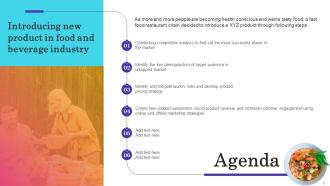
Slide 2: This slide depicts the Agenda of the presentation.
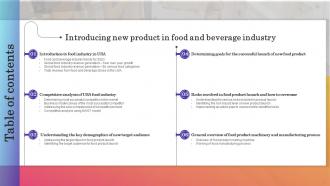
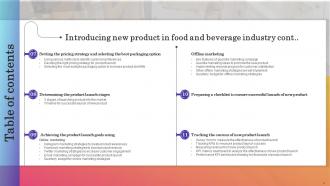
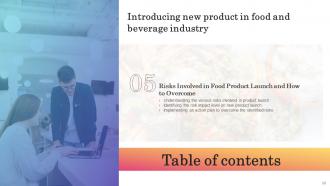
Slide 3: This slide includes the Table of contents.
Slide 4: This is yet another slide continuing the Table of contents.
Slide 5: This slide highlights the Title for the Topics to be covered further.
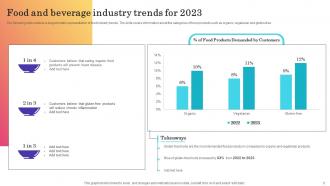
Slide 6: The following slide outlines a diagrammatic representation of food industry trends.
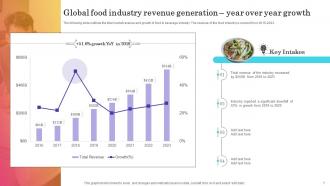
Slide 7: This slide showcases the total market revenue and growth of food & beverage industry.
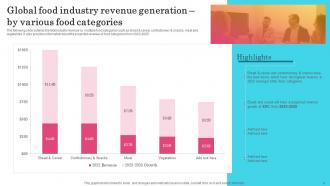
Slide 8: This slide portrays the total industry revenue by multiple food categories.
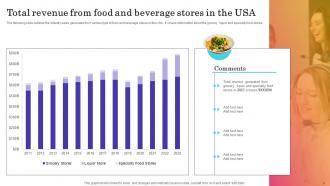
Slide 9: This slide depicts the Total revenue from food and beverage stores in the USA.
Slide 10: This slide includes the Heading for the Contents to be discussed next.
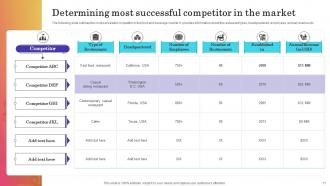
Slide 11: This slide deals with Determining most successful competitor in the market.
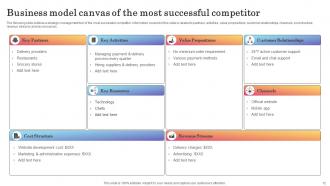
Slide 12: The following slide outlines a strategic management tool of the most successful competitor.
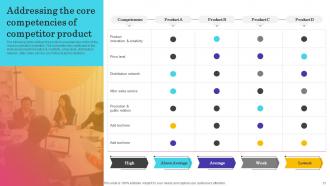
Slide 13: This slide focuses on Addressing the core competencies of competitor product.
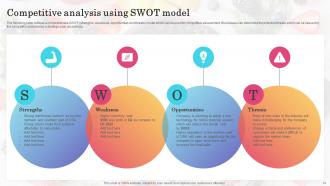
Slide 14: This slide reveals the Competitive analysis using SWOT model.
Slide 15: This slide displays the Title for the Ideas to be covered further.
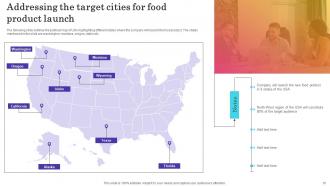
Slide 16: This slide outlines the political map of USA highlighting different states where the company will launch the food product.
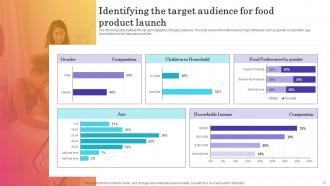
Slide 17: This slide focuses on Identifying the target audience for food.
Slide 18: This slide contains the Heading for the Ideas to be discussed next.
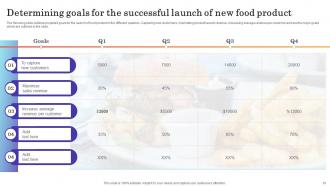
Slide 19: This slide deals with Determining goals for the successful launch of new food product.
Slide 20: This slide indicates the Title for the Contents to be covered in the following template.
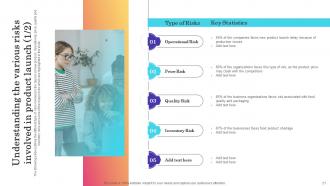
Slide 21: The following slide outlines the different type of risks involved in the launch of new product.
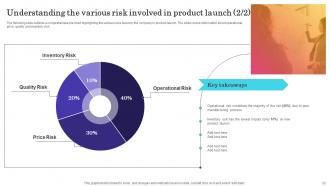
Slide 22: This slide continues the Understanding the various risk involved in product launch.
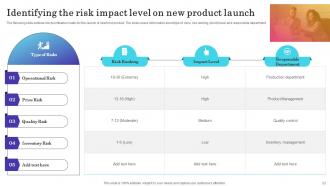
Slide 23: This slide emphasizes on Identifying the risk impact level on new product launch.
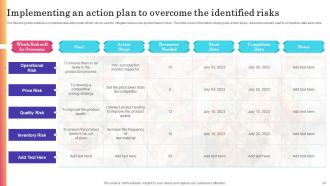
Slide 24: This slide talks about Implementing an action plan to overcome the identified risks.
Slide 25: This slide depicts the Heading for the Topics to be discussed further.
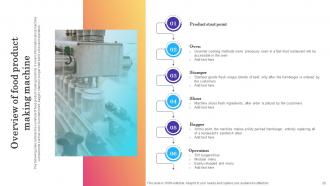
Slide 26: This slide presents the Overview of food product making machine.
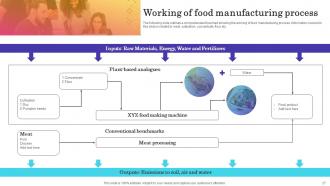
Slide 27: This slide reveals the Working of food manufacturing process.
Slide 28: This slide displays the Title for the Topics to be covered in the next template.
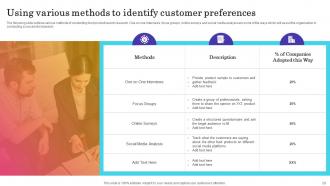
Slide 29: This slide showcases Using various methods to identify customer preferences.
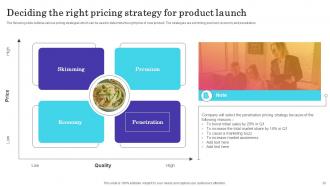
Slide 30: This slide deals with Deciding the right pricing strategy for product launch.
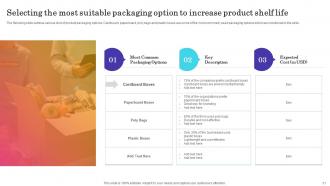
Slide 31: This slide talks about the Selecting the most suitable packaging option to increase product shelf life.
Slide 32: This slide depicts the Heading for the Contents to be discussed further.
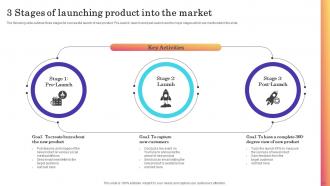
Slide 33: This slide states the 3 Stages of launching product into the market.
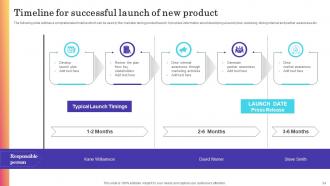
Slide 34: This side displays teh Timeline for successful launch of new product.
Slide 35: This slide incorporates the Title for the Ideas to be covered in the following template.
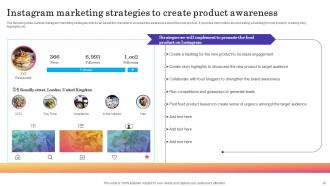
Slide 36: This slide outlines the Instagram marketing strategies to create product awareness.
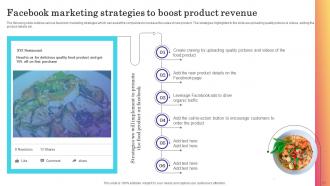
Slide 37: This slide talks about the Facebook marketing strategies to boost product revenue.
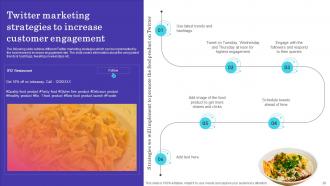
Slide 38: This slide states different Twitter marketing strategies which can be implemented by the businesses to increase engagement rate.
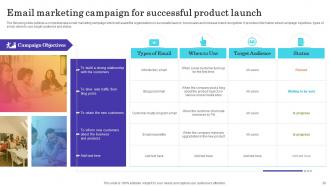
Slide 39: This slide showcases the Email marketing campaign for successful product launch.
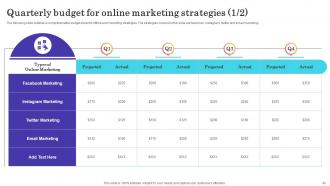
Slide 40: This slide represents the Quarterly budget for online marketing strategies.
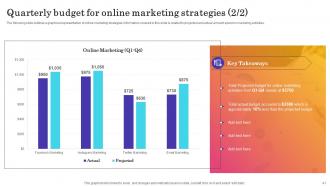
Slide 41: This slide continues the Quarterly budget for online marketing strategies.
Slide 42: This slide includes the Heading for the Ideas to be discussed in the upcoming template.
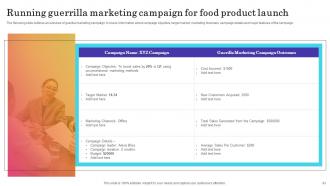
Slide 43: The following slide outlines an overview of guerilla marketing campaign.
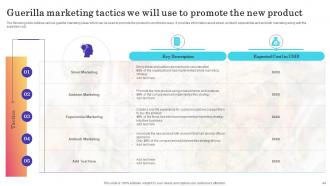
Slide 44: This slide portrays the Guerilla marketing tactics we will use to promote the new product.
Slide 45: This slide talks about Implementing rewards program for customer satisfaction.
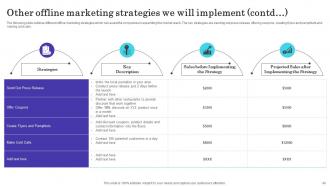
Slide 46: This slide continues the Other offline marketing strategies we will implement.
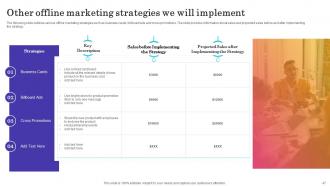
Slide 47: This slide presents the Other offline marketing strategies we will implement.
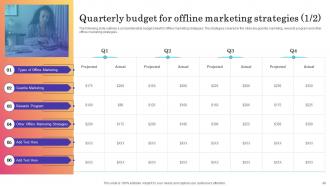
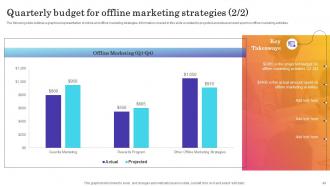
Slide 48: This slide exhibits the Quarterly budget for offline marketing strategies.
Slide 49: This slide continues the Quarterly budget for offline marketing strategies.
Slide 50: This slide depicts the Title for the Contents to be covered in the next template.
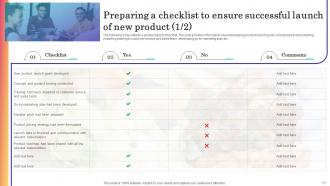
Slide 51: This slide reveals Preparing a checklist to ensure successful launch of new product.
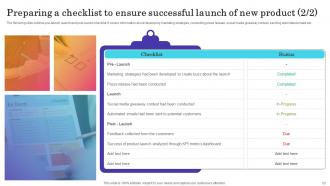
Slide 52: Thsi slide continues Preparing a checklist to ensure successful launch of new product.
Slide 53: This slide shows the Heading for the Topics to be discussed further.
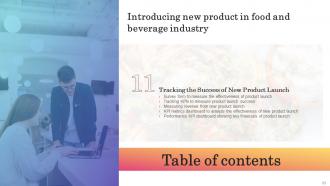
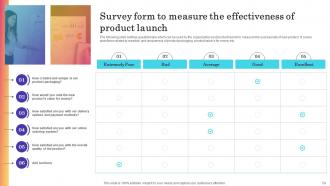
Slide 54: This slide highlights the Survey form to measure the effectiveness of product launch.
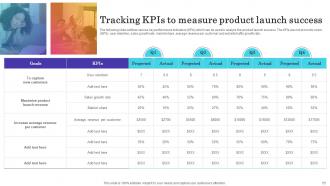
Slide 55: This slide talks about Tracking KPIs to measure product launch success.
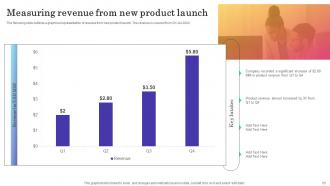
Slide 56: This slide deals with Measuring revenue from new product launch.
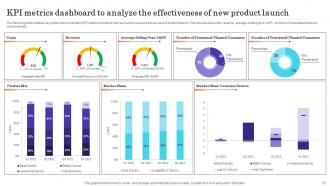
Slide 57: This slide shows the KPI metrics dashboard to analyze the effectiveness of new product launch.
Slide 58: This is the Icons Slide containing all the Icons used in the plan.
Slide 59: This slide is used for depicting some Additional information.
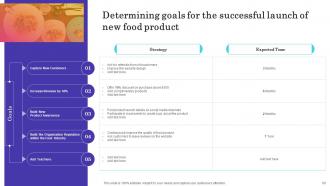
Slide 60: This slide focuses on Determining goals for the successful launch of new food product.
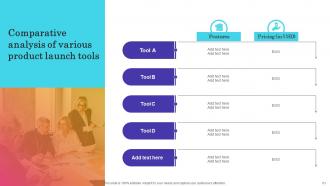
Slide 61: This slide displays Comparative analysis of various product launch tools.
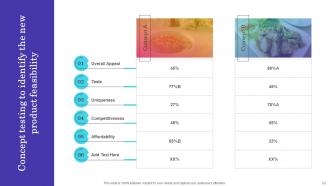
Slide 62: This slide illustrates teh Concept testing to identify the new product feasibility.
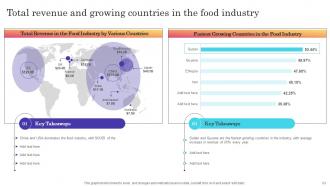
Slide 63: This slide indicates the Total revenue and growing countries in the food industry.
Slide 64: This is the About us slide. State your company-related information here.
Slide 65: This is Our team slide for mentioning the team-related information.
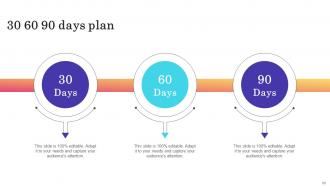
Slide 66: This is the 30 60 90 days plan slide for effective planning.
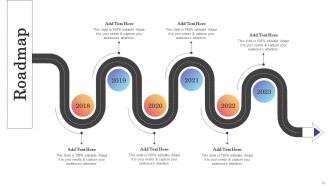
Slide 67: This slide reveals the Roadmap of the company.
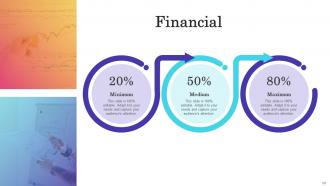
Slide 68: This slide elucidates information related to the Financial topic.
Slide 69: This is the Thank You slide for acknowledgement.
Introducing New Product In Food And Beverage Industry Powerpoint Presentation Slides V with all 74 slides:
Use our Introducing New Product In Food And Beverage Industry Powerpoint Presentation Slides V to effectively help you save your valuable time. They are readymade to fit into any presentation structure.






FAQs for Introducing New Product In Food And Beverage Industry Powerpoint
So first thing - definitely check out what's hot in health and wellness right now. Clean labels are everywhere, plus everyone wants plant-based stuff and ingredients that actually do something. Gen Z buys totally different than older folks too, which is wild. You'll want to see how your competitors are doing - what's crushing it vs what's bombing hard. Oh and don't sleep on the regulatory stuff, labeling rules change constantly. Convenience is king these days, and people actually care about sustainability now. Grab some industry reports and consumer surveys to make sure your idea isn't completely off base.
Honestly, consumer insights are like your cheat sheet for not launching something that'll tank. Figure out what actually drives your customers - their taste buds, how they shop, what they'll pay for. I've watched so many decent products crash because teams just assumed they knew better than their audience. Pretty brutal mistake. Run surveys, do focus groups, stalk social media to validate your idea before dumping money into it. Test stuff early and often - even basic taste tests can save you from an expensive disaster down the road. Trust me on this one.
Dude, yes - branding matters huge for launch. Think about it, there's like fifty energy drinks out there but Red Bull owns that space because of their brand, you know? Your packaging and logo need to instantly tell people who you are and what to expect. It's that split-second emotional thing that makes someone grab your product instead of the generic one next to it. Don't sleep on this part. You get one shot at that first impression, so make your brand stick out and be memorable from the start. The whole story needs to come together - design, messaging, all of it.
Start with focus groups and surveys - yeah, the feedback's gonna sting but better now than after you've blown your budget. Do taste tests with people who'd actually buy your stuff, somewhere that feels like real shopping. Run a small pilot in maybe 3-4 stores to see how pricing and packaging work in the wild. Test one thing at a time though, or you'll never know what tanked it. Oh, and set your success numbers upfront. Don't fall in love with ideas that aren't working - I've seen too many people throw good money after bad concepts.
Honestly, get people actually tasting your stuff first - that's everything with food. Hit up farmers markets, do demos, maybe partner with some local influencers who actually eat what they post about (you know the difference). Instagram and TikTok are clutch for food brands, especially if your packaging looks good on camera. I've seen some pretty basic products blow up just from aesthetic alone, it's wild. Build relationships with food bloggers in your area and small retailers who'll actually talk up your product. Don't try to conquer the world day one - start local where you can create real buzz, then expand. Master one thing before you spread yourself too thin.
Honestly, work backwards from who's gonna buy it. You've got like 3 seconds max on the shelf - retail is cutthroat. Design needs to scream what your product actually is while showing off the main benefits. Also has to keep everything fresh and not cost a fortune to make. FDA labeling stuff is obviously non-negotiable too. Test different concepts with actual people before you blow money on huge production runs. Oh, and make sure it fits your overall brand vibe - that consistency really matters when people are scanning shelves quickly.
OK so FDA stuff is obviously huge - labeling, nutrition facts, ingredient safety. That's your baseline. Then you've got state health departments breathing down your neck too. If you're going organic or non-GMO, those certifications are a whole other beast. Don't sleep on trademark protection either - seen too many people get burned there. Honestly? Get a food law attorney involved early. I know it sounds expensive but the rules change constantly and vary by product type. Oh, and start this research before you lock in your recipe because sometimes compliance issues force reformulation.
Honestly, food content absolutely crushes it on Instagram and TikTok - the algorithm is obsessed with it. Start teasing your stuff about 6-8 weeks out with behind-the-scenes clips and little sneak peeks. Show the product actually being used, not just sitting there looking pretty. Partner with food influencers (but pick ones that actually match your vibe, not just whoever has the most followers). Hashtags are still a thing, weirdly enough. Reply to comments like a real person, and track what's getting engagement so you can do more of that. Oh, and create stuff people actually want to share with their friends.
Check your sales velocity first - basically how fast stuff flies off shelves. Customer acquisition cost vs lifetime value matters too, plus repeat purchases in those first 90 days. The food world moves crazy fast, so don't wait around for perfect data or you're dead. Track where you're placed on shelves, stockouts, what retailers actually think. Social media buzz and reviews will warn you before sales tank (learned that one the hard way). Set up weekly check-ins for quarter one so you can change course quick if needed.
Dude, sustainability isn't just trendy anymore - millennials and Gen Z will literally pay 15-20% more for eco-friendly stuff. Your packaging, where you source materials, carbon footprint... they research all of it before buying. I've watched products completely bomb because their green messaging felt super fake. The whole sustainability angle has to be built into your product from the start, not just thrown on top later for marketing. Oh and definitely get real certifications and data to back up whatever claims you make - people can smell BS from a mile away.
Start with specialty stores and independent retailers - they'll actually say yes to new stuff unlike the big chains. Amazon's great for going direct to customers without dealing with buyers. Farmers markets are clutch for building buzz, even though they're kinda time-consuming. Getting into Whole Foods early is huge for credibility. Makes the regular grocery stores way more interested once they see you're legit somewhere. Don't spread yourself thin though - pick like 2-3 places max and really focus there. You need concentrated effort or nothing really takes off.
Honestly, working with influencers for your launch is pretty smart. Their followers already trust them, so when they recommend stuff it doesn't feel like another annoying ad. Food influencers especially have people who actually want to try new things. I'd focus on micro-influencers though - way better engagement than those huge accounts and you won't blow your budget. Just make sure their vibe matches your brand and their audience is who you're trying to reach. Oh, and their content style should feel right for your product too.
Honestly, most people skip testing with actual customers way too early - huge mistake. Retail shelf space is absolutely vicious, like way worse than you'd think. Supply chain stuff will bite you hard if you rush to launch without sorting it out first. I've watched so many companies crash because they literally couldn't keep products in stock. Your target customers won't magically understand what you're selling without super clear messaging. Pricing screwups are deadly too - go too low and you're stuck there forever. Test everything multiple times, budget like 3x more for marketing, and definitely have backup suppliers lined up.
Honestly, get people actually tasting your stuff - that's everything. Pop-up events work great, or maybe partner with local restaurants for exclusive previews. Food truck tours are solid too if that fits your budget. Social contests where people post pics of themselves trying it? Pure gold. Everyone's obsessed with free samples lol. Definitely hit up local food bloggers and chefs for partnerships - their followers actually trust their recommendations. Make it feel exclusive and time-sensitive so people get that FOMO feeling. Oh, and start this whole thing like 2-3 months early to build proper buzz.
Dude, feedback is everything when you're developing food products. After each prototype, collect what people actually think - then use it to tweak flavors or textures. Sometimes you'll need to completely change direction, which honestly sucks but happens. I've watched so many teams get attached to their first idea and totally ignore what testers are saying. Bad move. Set up different feedback rounds throughout the whole process - start internal, then focus groups, finally small market tests. Each round should guide your next version. Way better than just crossing your fingers and hoping it works.
-
Mesmerized with the fantastic collection! Super sleek, relevant infographics.
-
Wonderful ideas and visuals. I'm really pleased with the templates, which are unique and up to date.