Invoice Processing Workflow Using RPA Technology
Try Before you Buy Download Free Sample Product
Audience
Editable
of Time
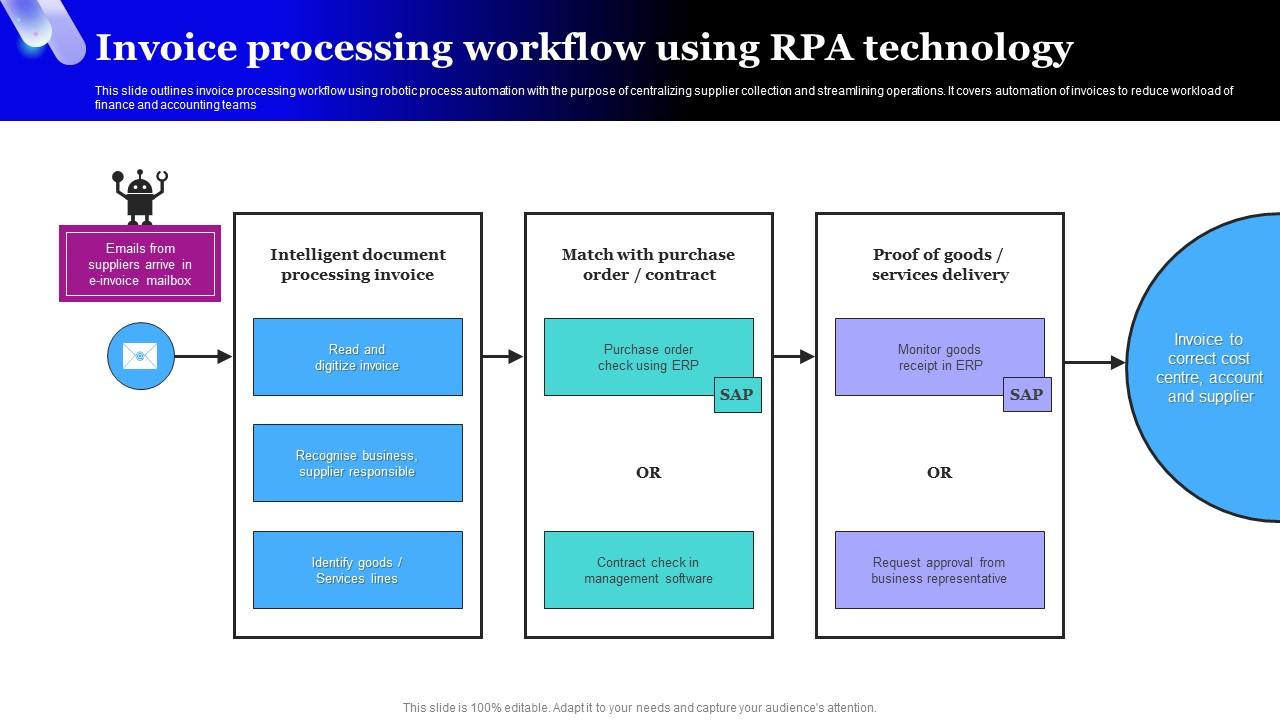
This slide outlines invoice processing workflow using robotic process automation with the purpose of centralizing supplier collection and streamlining operations. It covers automation of invoices to reduce workload of finance and accounting teams
People who downloaded this PowerPoint presentation also viewed the following :
Invoice Processing Workflow Using RPA Technology with all 6 slides:
Use our Invoice Processing Workflow Using RPA Technology to effectively help you save your valuable time. They are readymade to fit into any presentation structure.
FAQs for Invoice Processing Workflow
Invoice processing automation delivers significant cost reduction, faster approval cycles, enhanced accuracy, improved vendor relationships, and better cash flow management. These technologies streamline operations by eliminating manual data entry, reducing processing times from days to hours, and minimizing human errors, with many organizations finding that automated workflows ultimately enhance operational efficiency and provide competitive advantage in financial management.
Invoice processing automation reduces human errors by eliminating manual data entry, implementing automated validation checks, and standardizing approval workflows across financial operations. These systems enhance accuracy through OCR technology, duplicate detection, and real-time error flagging, with many organizations finding that automated processes deliver up to 90% fewer processing errors while significantly accelerating payment cycles.
Invoice processing automation systems commonly utilize optical character recognition (OCR), machine learning algorithms, natural language processing (NLP), robotic process automation (RPA), and cloud-based platforms. These technologies work together by digitizing paper invoices, extracting key data points, and validating information against purchase orders, with many organizations finding that this strategic combination reduces processing time by 80% while enhancing accuracy and compliance.
Invoice processing automation integrates with existing accounting software through APIs, direct database connections, and middleware platforms that enable seamless data synchronization and workflow automation. These systems automatically extract invoice data, validate it against purchase orders, and push approved transactions directly into ERP systems like SAP, QuickBooks, or Oracle, while maintaining audit trails and reducing manual data entry errors by up to 80%.
Invoice processing automation delivers substantial cost savings through reduced manual labor, eliminated paper handling, decreased processing errors, and faster approval cycles. Organizations typically see 60-80% reductions in processing costs, with many finance departments finding that automated workflows minimize late payment penalties while enabling staff reallocation to strategic tasks, ultimately delivering improved cash flow management.
Companies face challenges including initial setup costs, employee resistance to change, data migration complexities, system integration requirements, and workflow redesign needs. While these obstacles require strategic planning and resource allocation, organizations increasingly find that comprehensive training, phased implementation approaches, and clear communication about efficiency gains help minimize disruption, ultimately delivering faster processing times and reduced operational costs.
Artificial intelligence enhances invoice processing automation by enabling intelligent data extraction, automated validation, and predictive analytics for payment optimization. Through machine learning algorithms, AI systems automatically capture vendor information, line items, and approval workflows while detecting anomalies and potential fraud, ultimately delivering faster processing times and improved accuracy for finance teams.
**INPUT**: What security measures should be considered when using automated invoice processing systems? **OUTPUT**: Essential security measures include data encryption, multi-factor authentication, role-based access controls, audit trails, and secure cloud storage protocols. These safeguards streamline compliance while protecting sensitive financial data, with many organizations finding that automated systems actually enhance security through consistent monitoring, reduced human error, and comprehensive documentation, ultimately delivering both operational efficiency and regulatory confidence. **Word count: 58 words**
Organizations should track processing time reduction, cost per invoice, accuracy rates, vendor satisfaction scores, and compliance adherence percentages to measure automation success. These metrics enable finance teams to demonstrate ROI through faster approval cycles, reduced manual errors, and enhanced vendor relationships, with many companies finding that automated systems deliver 70-80% faster processing while significantly improving operational efficiency.
Invoice processing automation improves cash flow management by accelerating payment cycles, reducing processing errors, and providing real-time visibility into outstanding invoices. Through automated workflows and digital approvals, businesses can process invoices 75% faster, minimize late payment penalties, and better predict cash positions, with many financial departments finding that streamlined processes ultimately deliver improved vendor relationships and enhanced working capital optimization.
Machine learning enhances invoice data extraction by automatically recognizing patterns, adapting to various formats, improving accuracy over time, and handling unstructured data from different vendors. Through advanced algorithms, organizations streamline accounts payable processes, reduce manual errors, and accelerate payment cycles, with many financial departments finding that ML-powered systems deliver significantly faster processing and enhanced operational efficiency.
Small businesses can leverage invoice processing automation through cloud-based solutions, open-source software, and scalable SaaS platforms that offer pay-as-you-grow pricing models. These cost-effective approaches enable streamlined accounts payable, reduced manual errors, and faster payment cycles, with many small retailers and service providers finding that even basic automation delivers significant time savings and improved cash flow management.
Regulatory compliance considerations for automated invoice processing include data privacy regulations like GDPR, tax documentation requirements, audit trail maintenance, record retention policies, and financial reporting standards. These systems enhance compliance by automatically capturing transaction details, maintaining timestamped records, and generating comprehensive audit trails, with many financial institutions finding that automation significantly reduces compliance risks while streamlining regulatory reporting processes.
Invoice processing automation supports remote work by enabling digital document capture, cloud-based approval workflows, and real-time collaboration from any location. These systems streamline accounts payable operations through automated data extraction, mobile approvals, and integrated communication tools, with many organizations finding that remote teams can process invoices faster while maintaining accuracy and compliance standards.
Businesses should monitor AI-powered predictive analytics, blockchain-based verification systems, real-time payment integrations, enhanced mobile processing capabilities, and advanced exception handling algorithms. These emerging technologies streamline financial workflows by reducing manual oversight, accelerating approval cycles, and improving accuracy rates, with many organizations finding that early adoption delivers significant competitive advantages in operational efficiency.
-
Superb! The innovative and inspiring template designs provide an edge to the presentation.
-
I didn’t expect such a good service for the money I am paying. But, they exceed my expectations. Great work SlideTeam.