


Estrategia de convergencia de TI OT Diapositivas de presentación de Powerpoint
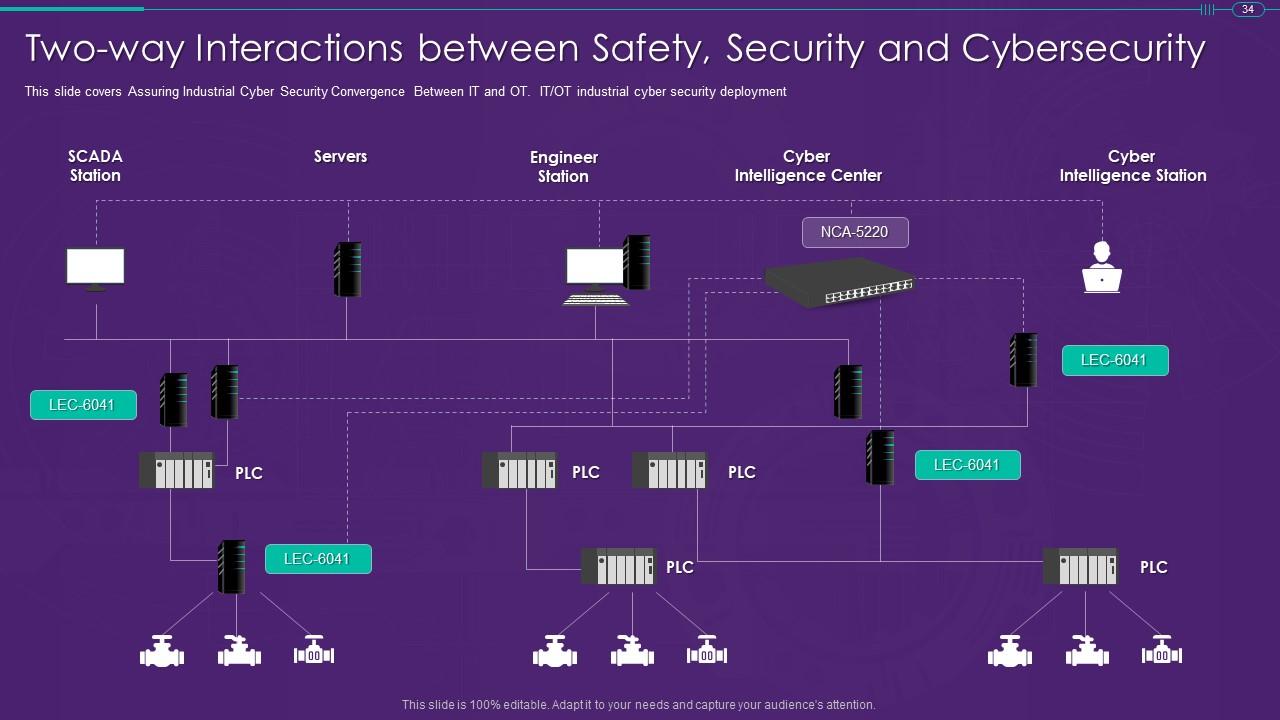
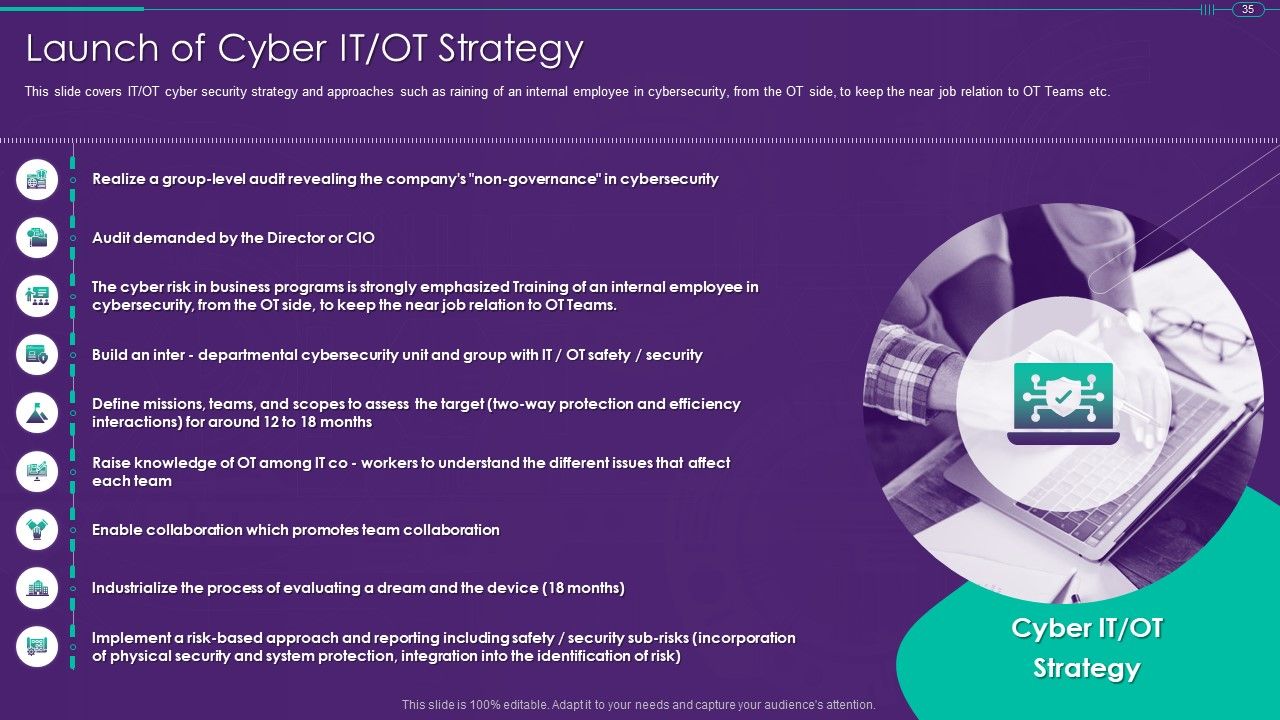
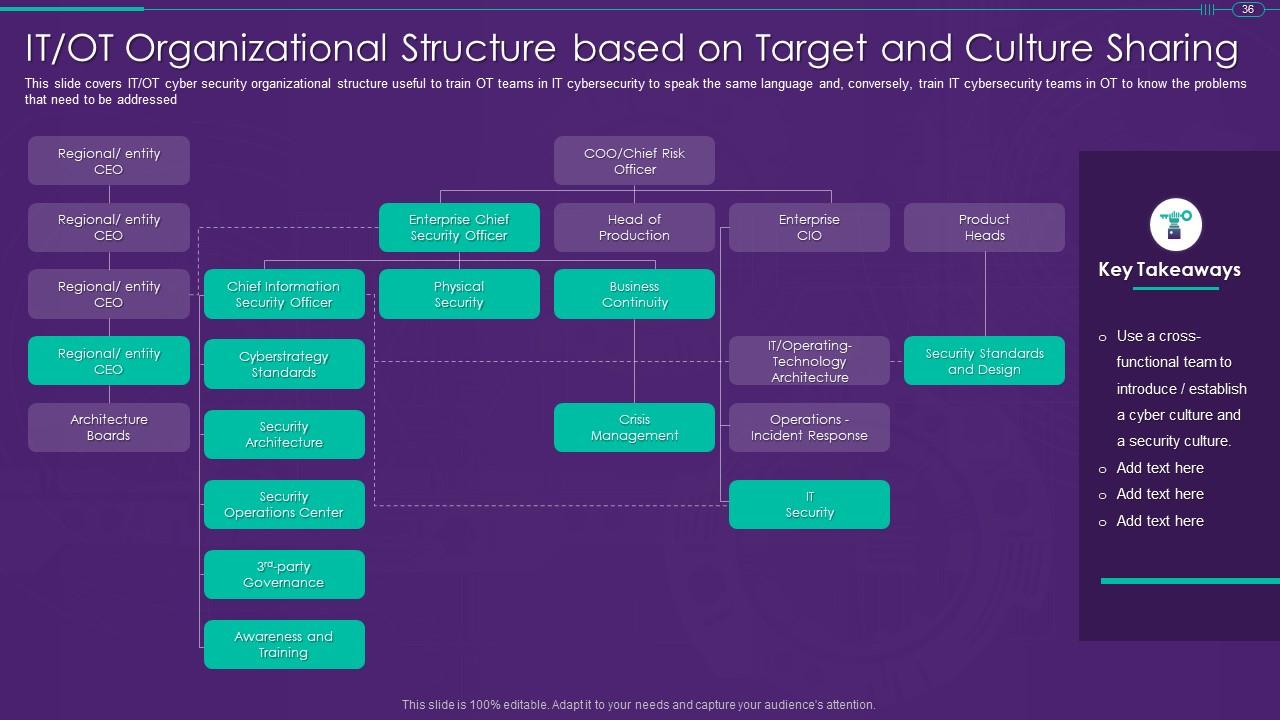
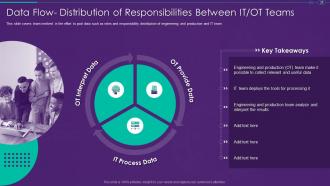
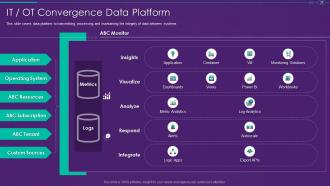
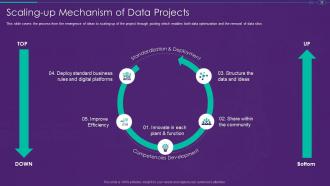
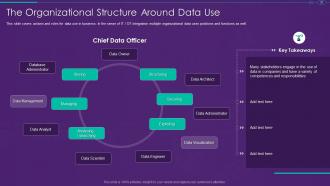
La integración de TI o OT ayuda a combinar las estructuras de producción que monitorean las actividades físicas y los procedimientos con el hardware de back-end y las aplicaciones de transporte y recuperación de información. Obtenga nuestra plantilla de estrategia de convergencia de TI OT diseñada de manera eficiente que cubre la integración de convergencia de TI o OT de sistemas de TI de tecnología de la información con sistemas de OT de tecnología operativa. En esta presentación, hemos cubierto la estrategia para hacer que la tecnología operativa OT y la tecnología de la información TI converjan y sean cada vez más iguales en función de los datos, la seguridad y las competencias. Además, incluye desafíos técnicos empresariales, desafíos de convergencia de TI u OT, catalizadores, modelo de integración y servicios y sistemas totalmente integrados. También cubre la Representación de la convergencia tecnológica de TI o OT y la Representación de la convergencia a través de la agrupación de competencias de TI o OT y Actores corporativos afectados por la convergencia de TI o OT. Esta presentación PPT cubre el enfoque general sugerido de convergencia de TI u OT y temas más amplios. Incluye flujo de datos: distribución de responsabilidades entre equipos de TI o OT, plataforma de datos de convergencia, mecanismo de ampliación de proyectos de datos y la estructura organizativa en torno al uso de datos. En esta presentación, también hemos cubierto las interacciones bidireccionales entre la seguridad, la protección y la ciberseguridad, el lanzamiento de la estrategia cibernética de TI o de OT, la estructura organizativa de TI o de OT, etc. Personalice ahora esta plantilla 100 % editable.














-

- Google Slides is a new FREE Presentation software from Google.
- All our content is 100% compatible with Google Slides.
- Just download our designs, and upload them to Google Slides and they will work automatically.
- Amaze your audience with SlideTeam and Google Slides.
-

Want Changes to This PPT Slide? Check out our Presentation Design Services
-

- WideScreen Aspect ratio is becoming a very popular format. When you download this product, the downloaded ZIP will contain this product in both standard and widescreen format.
-

- Some older products that we have may only be in standard format, but they can easily be converted to widescreen.
- To do this, please open the SlideTeam product in Powerpoint, and go to
- Design ( On the top bar) -> Page Setup -> and select "On-screen Show (16:9)” in the drop down for "Slides Sized for".
- The slide or theme will change to widescreen, and all graphics will adjust automatically. You can similarly convert our content to any other desired screen aspect ratio.
Compatible With Google Slides

Get This In WideScreen
You must be logged in to download this presentation.


Do you want to remove this product from your favourites?
Características de estas diapositivas de presentación de PowerPoint:
Entregue esta plataforma completa a los miembros de su equipo y otros colaboradores. Con diapositivas estilizadas que presentan varios conceptos, estas diapositivas de presentación de Powerpoint de estrategia de convergencia de TI OT son la mejor herramienta que puede utilizar. Personalice su contenido y gráficos para que sea único y estimulante. Las cincuenta y cuatro diapositivas son editables y modificables, así que no dude en ajustarlas a su entorno empresarial. La fuente, el color y otros componentes también vienen en un formato editable, lo que hace que este diseño PPT sea la mejor opción para su próxima presentación. Entonces, descarga ahora.

People who downloaded this PowerPoint presentation also viewed the following :
Contenido de esta presentación de Powerpoint
Diapositiva 1 : Esta diapositiva presenta la estrategia de convergencia de TI y TO. Indique el nombre de su empresa y comience.
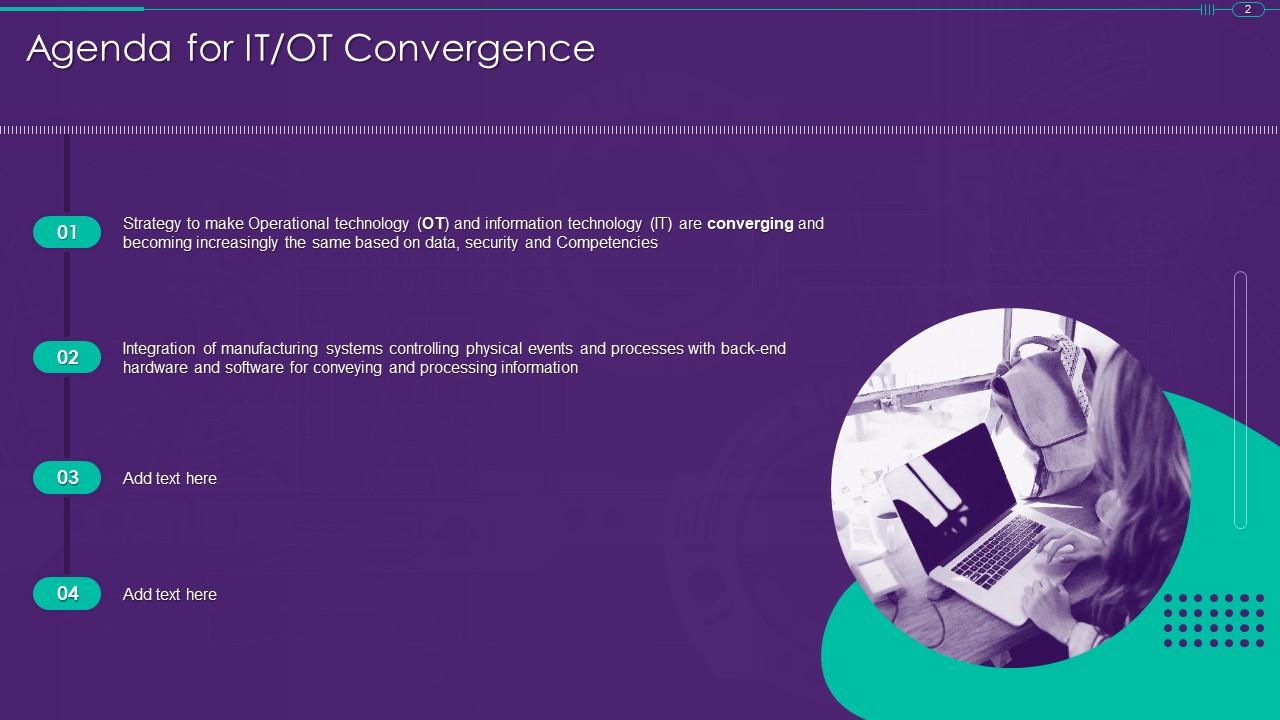
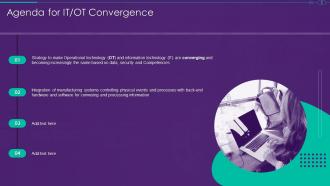
Diapositiva 2 : Esta diapositiva indica la agenda de la presentación.
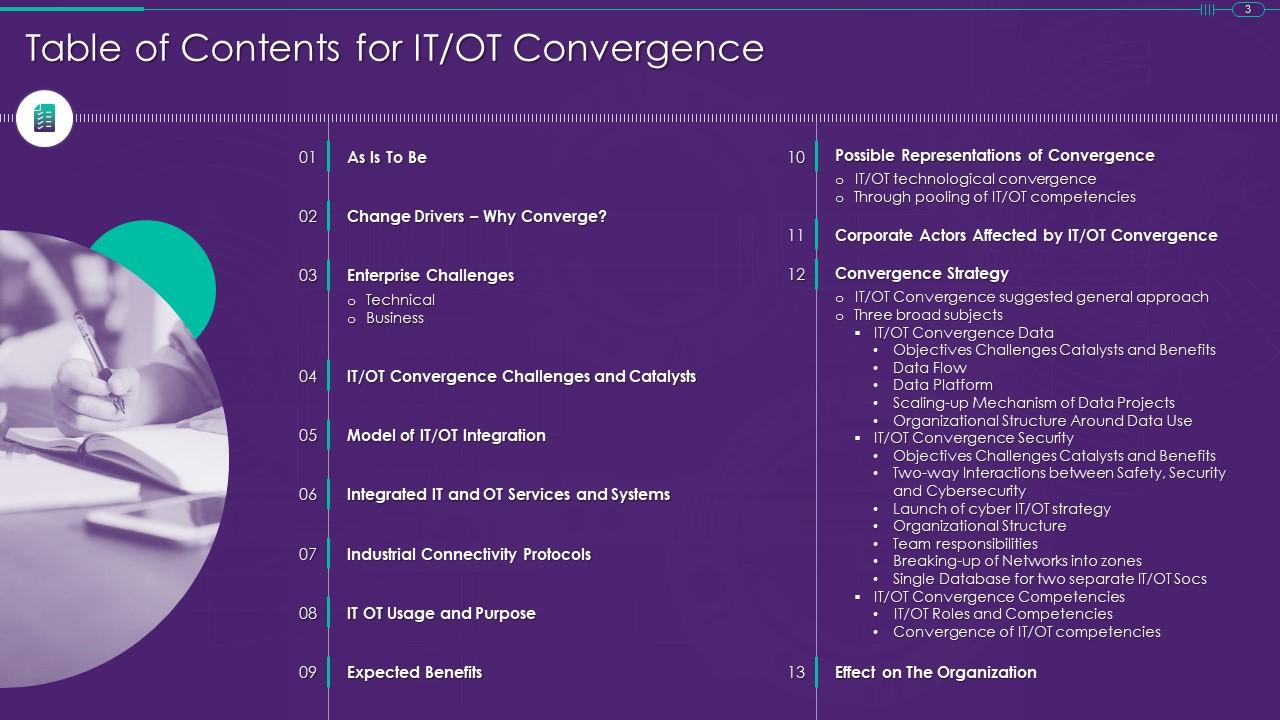
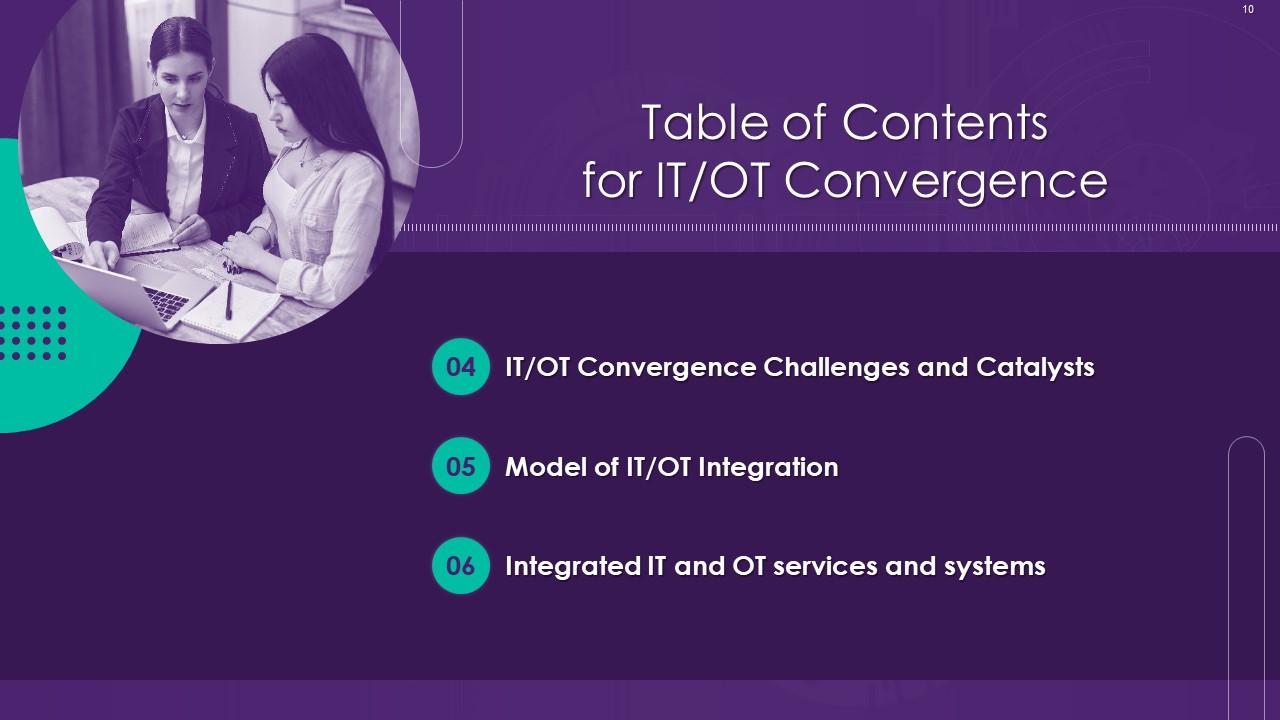
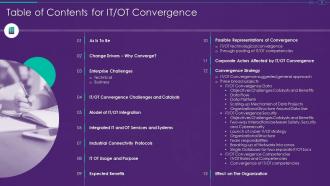
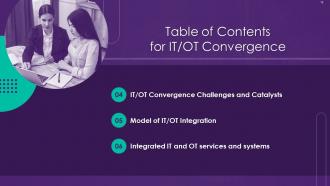
Diapositiva 3 : Esta diapositiva presenta la tabla de contenido de la presentación.
Diapositiva 4 : esta diapositiva resalta el título de los temas que se cubrirán a continuación en la plantilla.
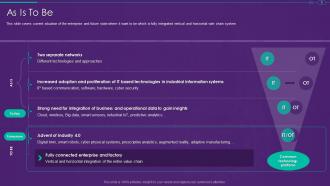
Diapositiva 5 : Esta diapositiva cubre la situación actual de la empresa y el estado futuro donde quiere estar.
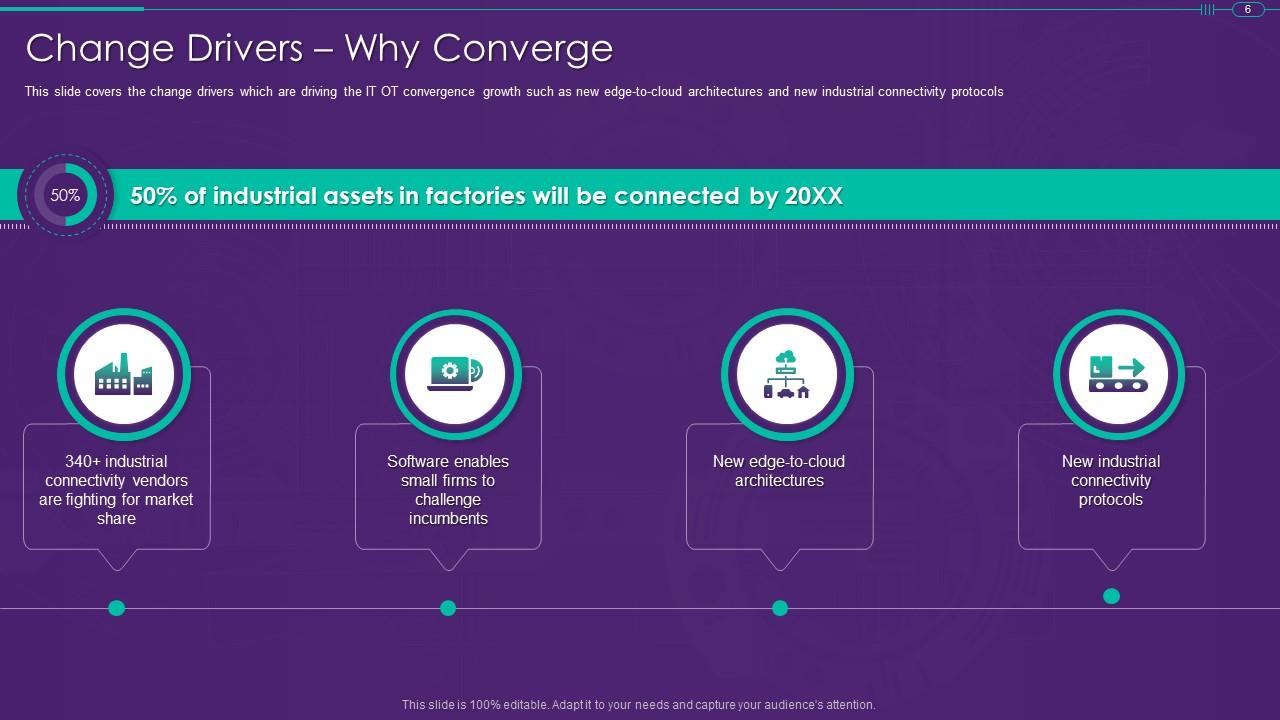
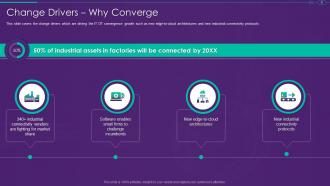
Diapositiva 6 : esta diapositiva cubre los impulsores de cambio que impulsan el crecimiento de la convergencia de TI y TO.
Diapositiva 7 : esta diapositiva resalta el título de los temas que se cubrirán a continuación en la plantilla.
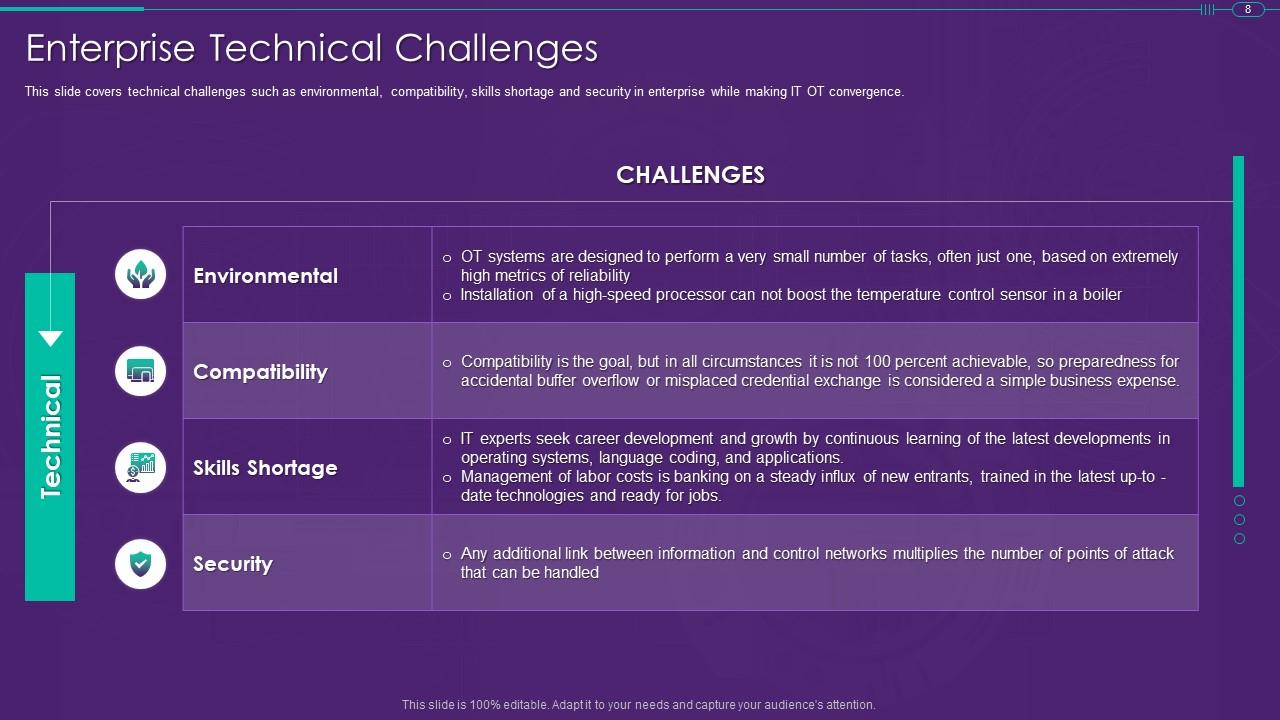
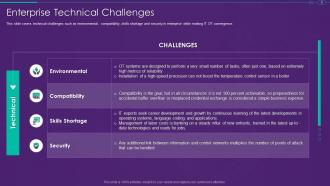
Diapositiva 8 : Esta diapositiva cubre desafíos técnicos como el medio ambiente, la compatibilidad, la escasez de habilidades y la seguridad.
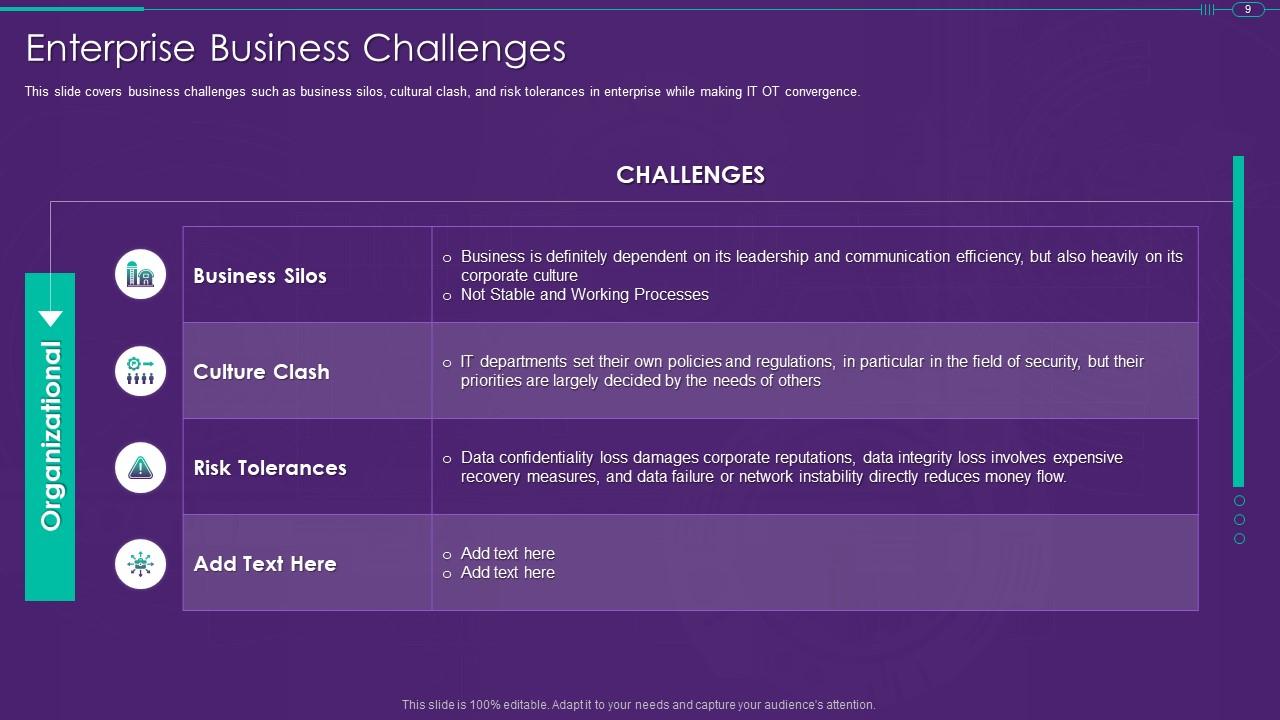
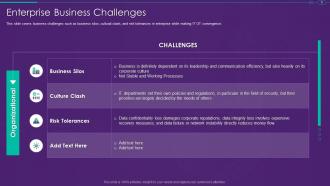
Diapositiva 9 : Esta diapositiva presenta desafíos comerciales como silos comerciales, choque cultural y tolerancia al riesgo.
Diapositiva 10 : esta diapositiva resalta el título de los temas que se cubrirán a continuación en la plantilla.
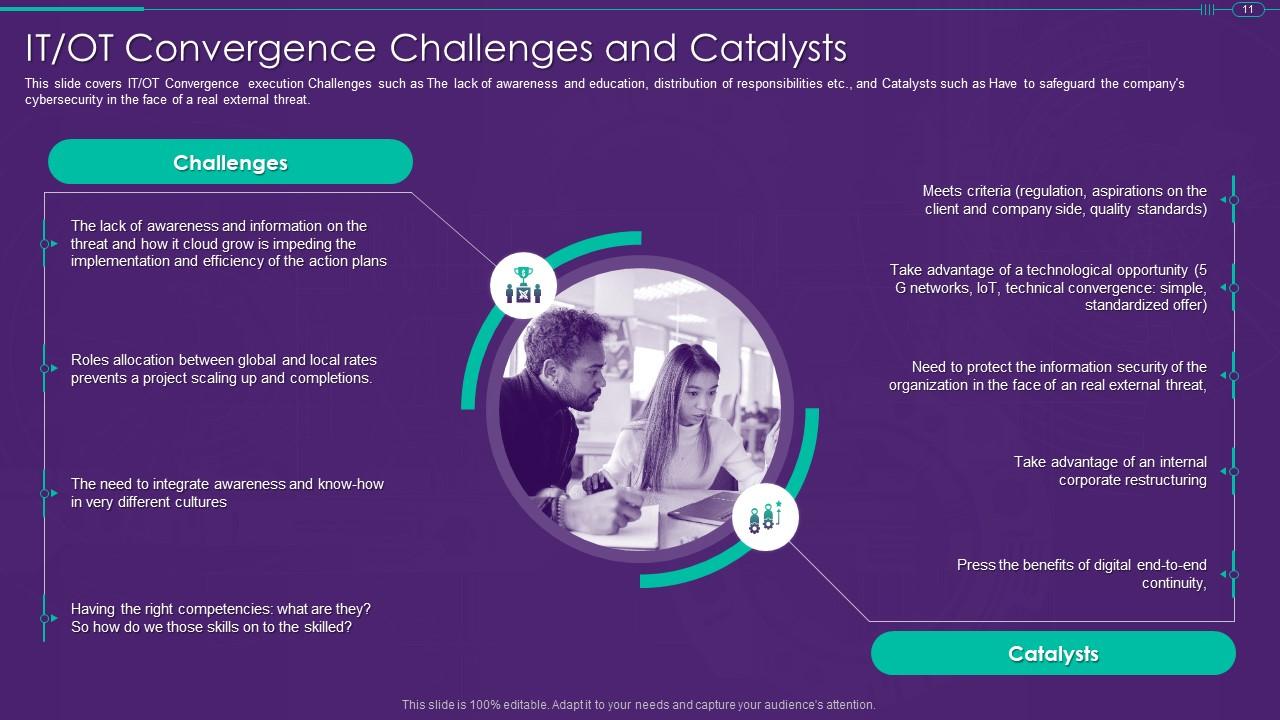
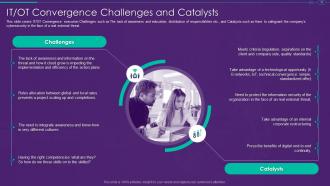
Diapositiva 11 : esta diapositiva muestra los desafíos y catalizadores de la convergencia de TI/OT.
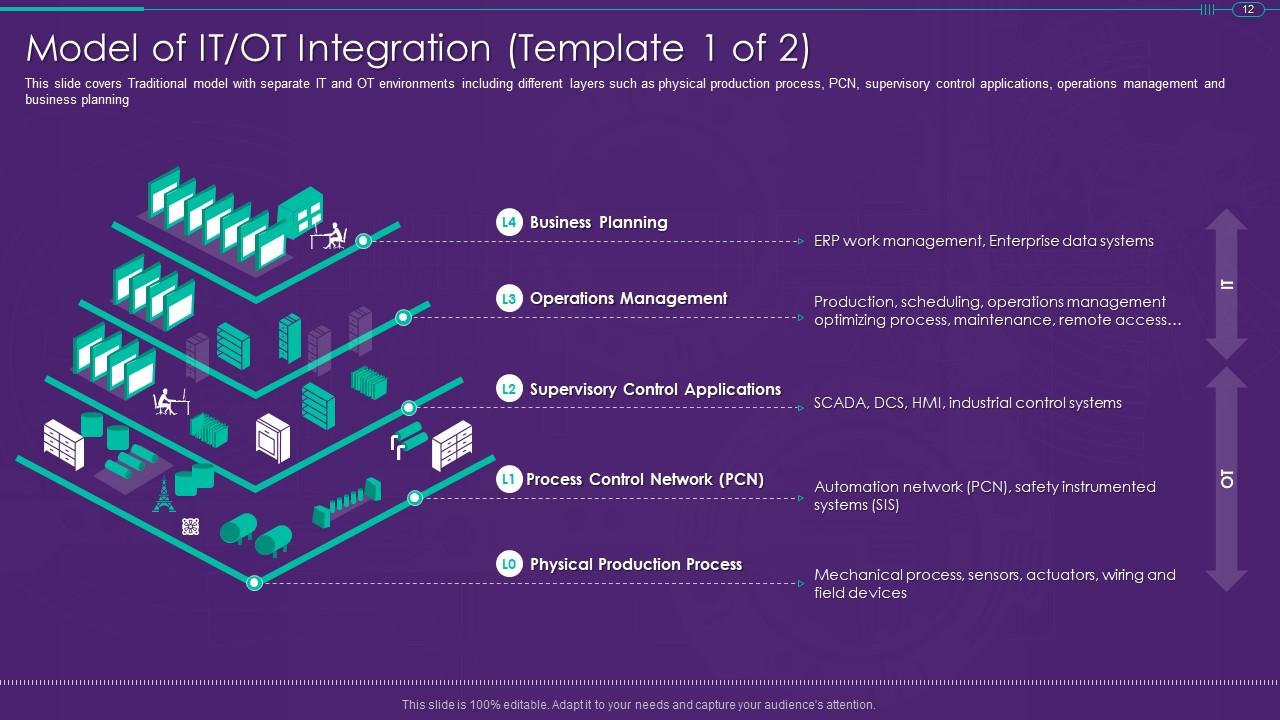
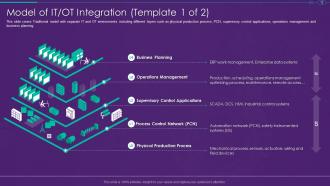
Diapositiva 12 : esta diapositiva representa el modelo tradicional con entornos de TI y TO separados.
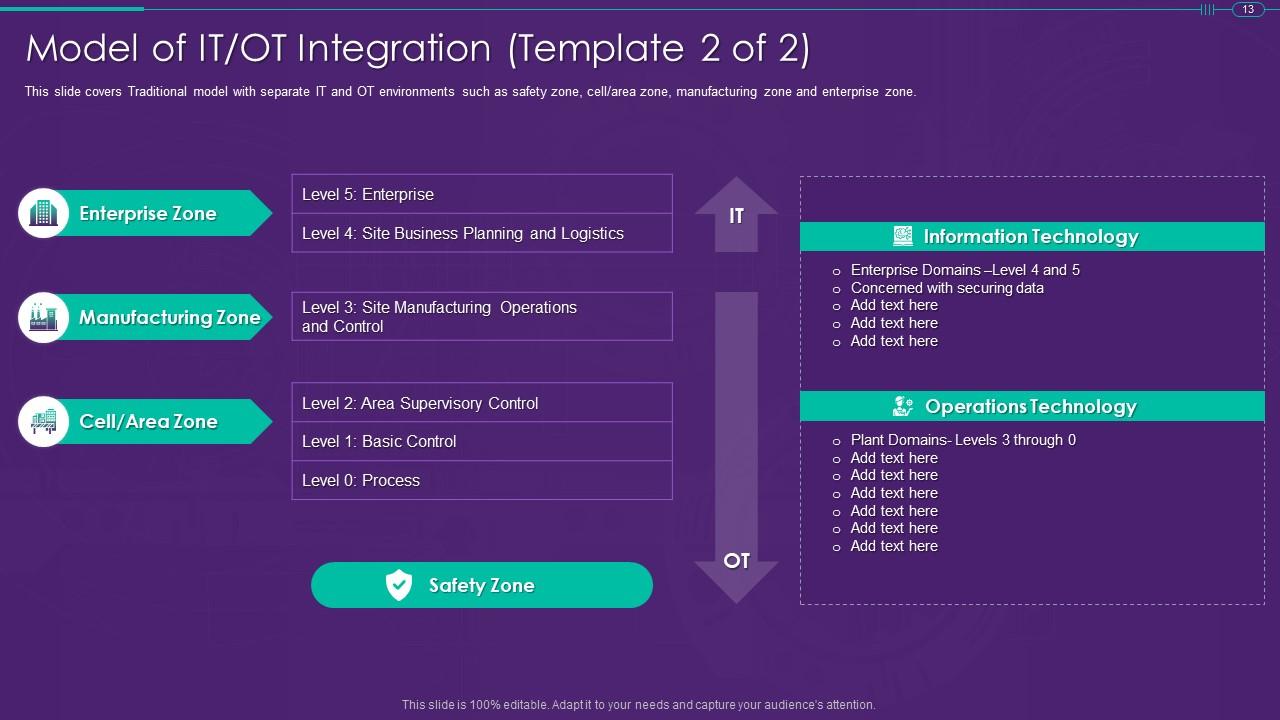
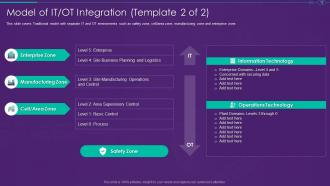
Diapositiva 13 : Esta es otra diapositiva que continúa con el Modelo de integración de TI/TO.
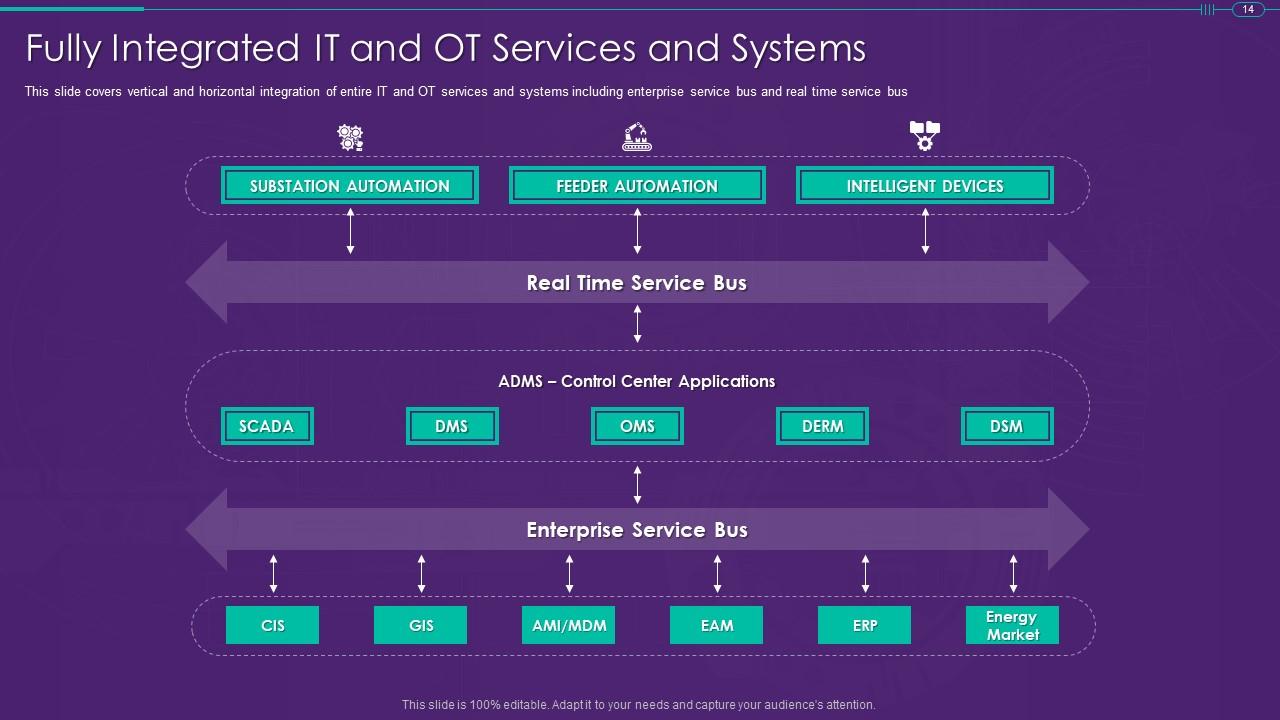
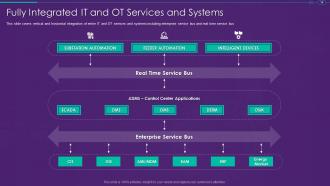
Diapositiva 14 : Esta diapositiva muestra los servicios y sistemas de TI y TO totalmente integrados.
Diapositiva 15 : esta diapositiva resalta el título de los temas que se cubrirán a continuación en la plantilla.
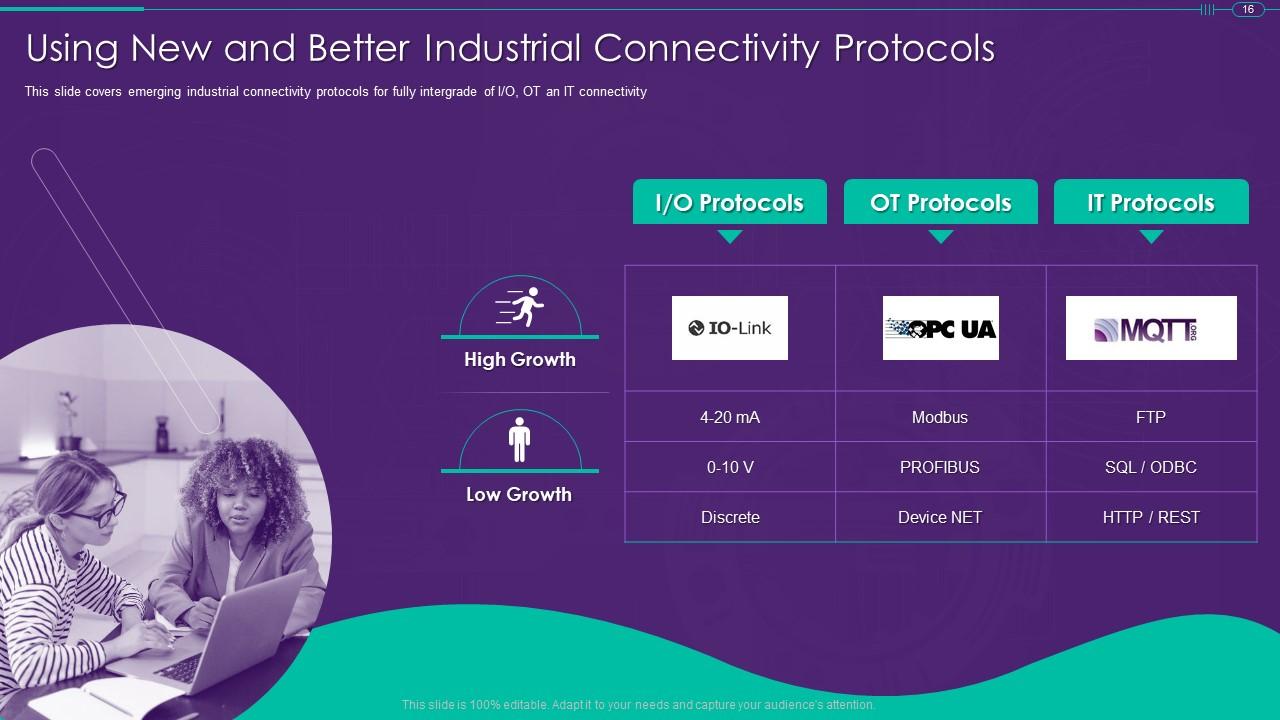
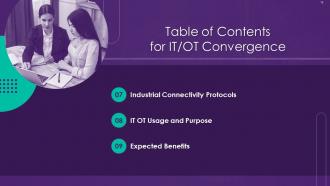
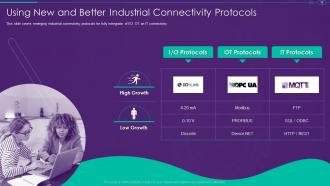
Diapositiva 16 : Esta diapositiva muestra el uso de nuevos y mejores protocolos de conectividad industrial.
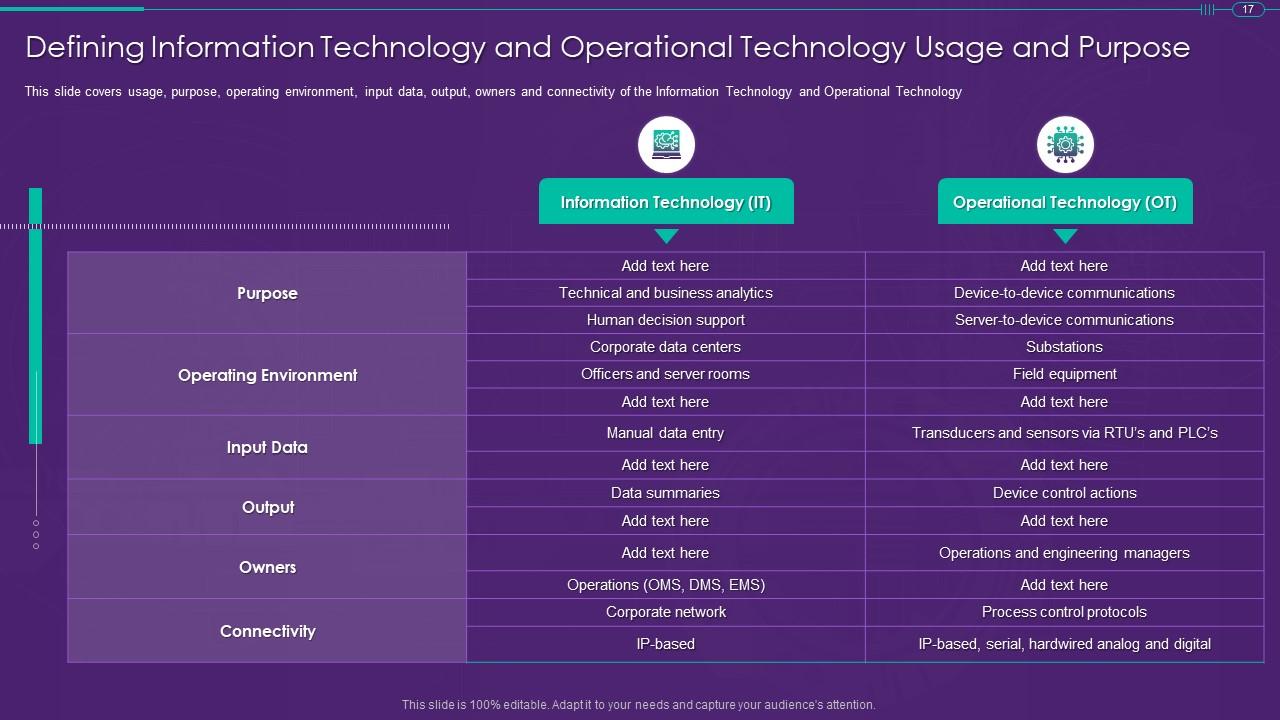
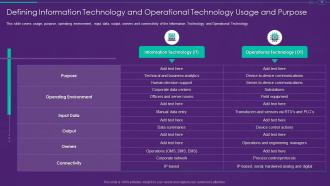
Diapositiva 17 : Esta diapositiva presenta la definición del uso y el propósito de la tecnología de la información y la tecnología operativa.
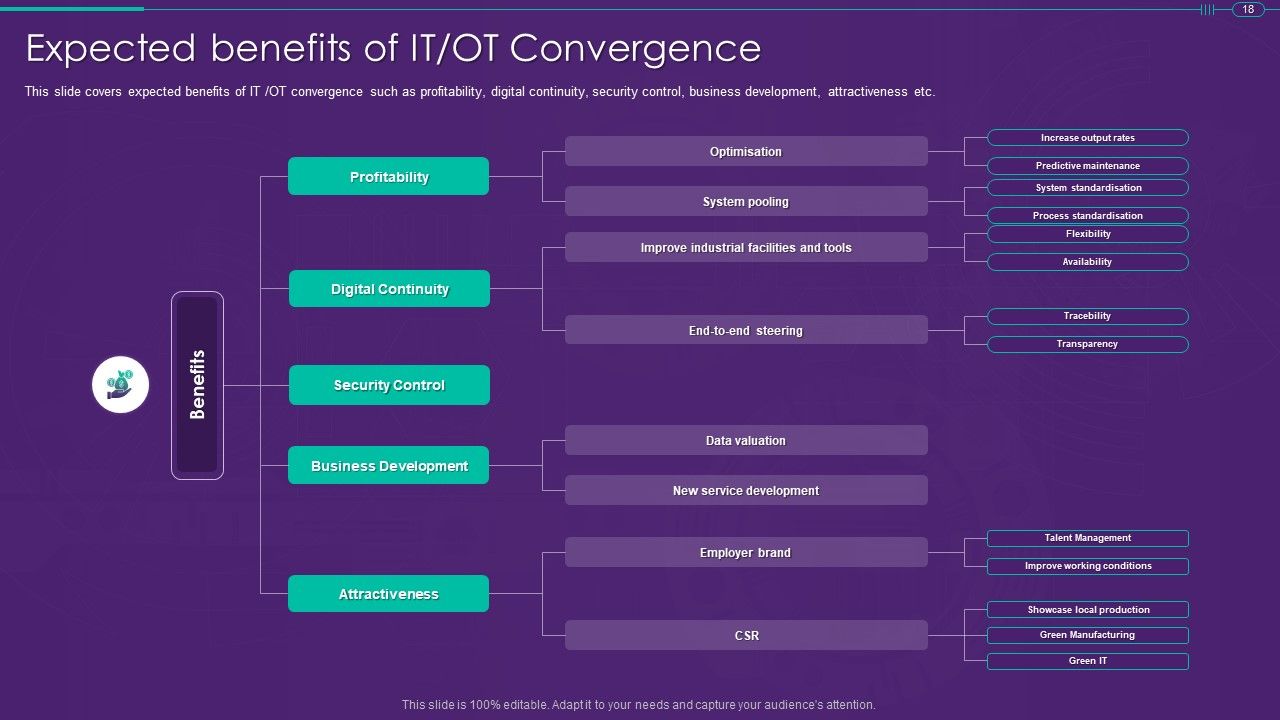
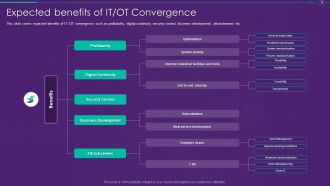
Diapositiva 18 : esta diapositiva muestra los beneficios esperados de la convergencia de TI/TO.
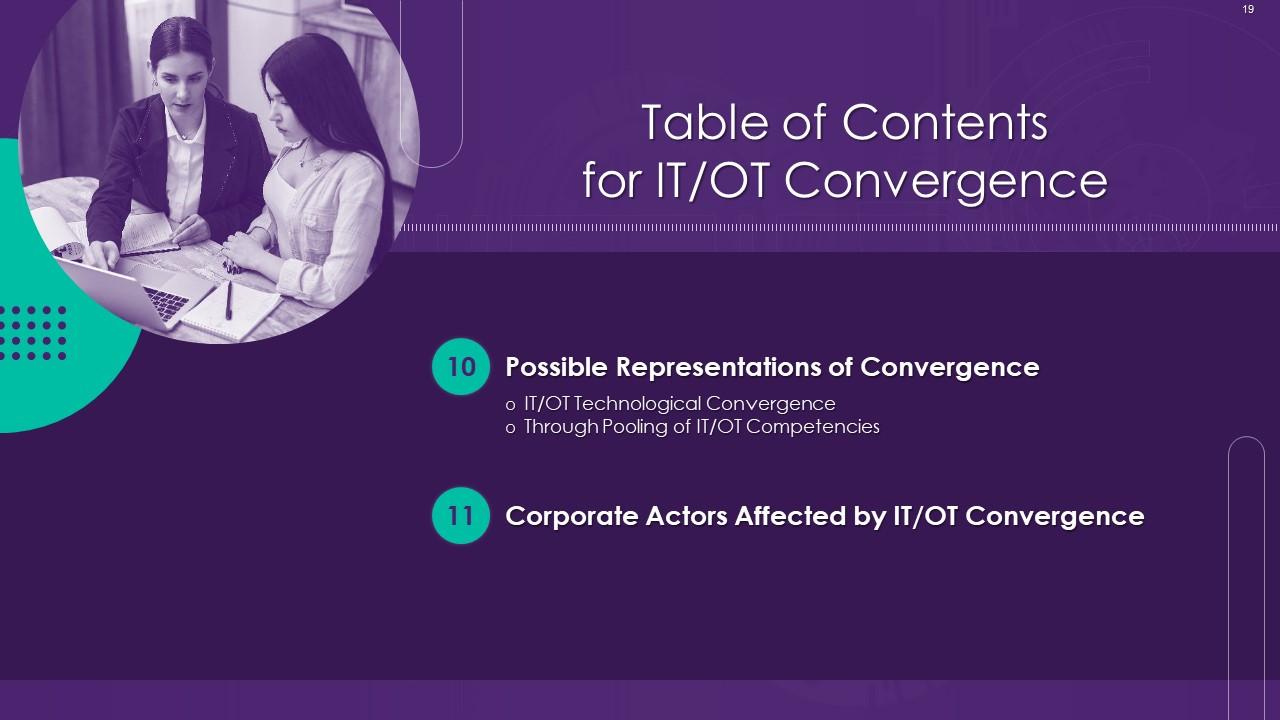
Diapositiva 19 : esta diapositiva resalta el título de los temas que se cubrirán a continuación en la plantilla.
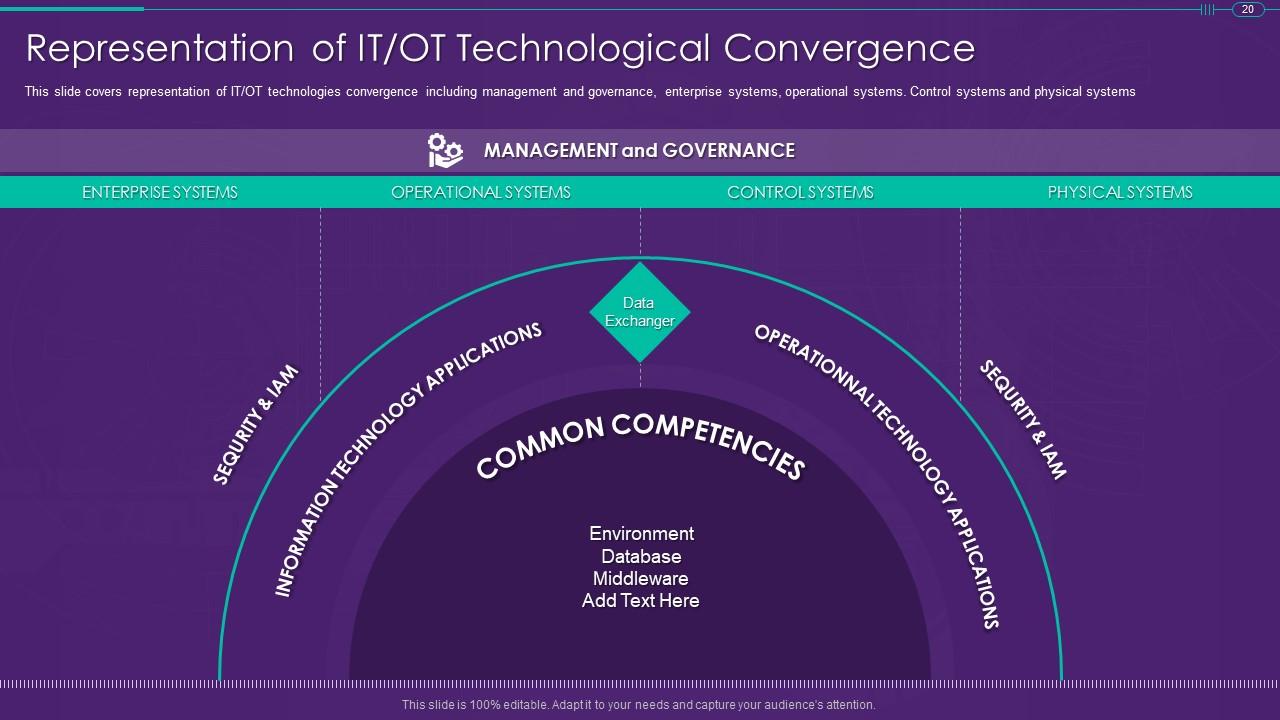
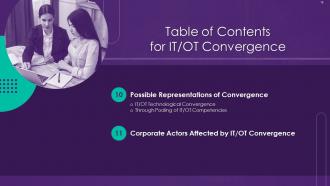
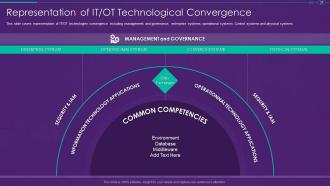
Diapositiva 20 : esta diapositiva representa la representación de la convergencia tecnológica de TI/TO.
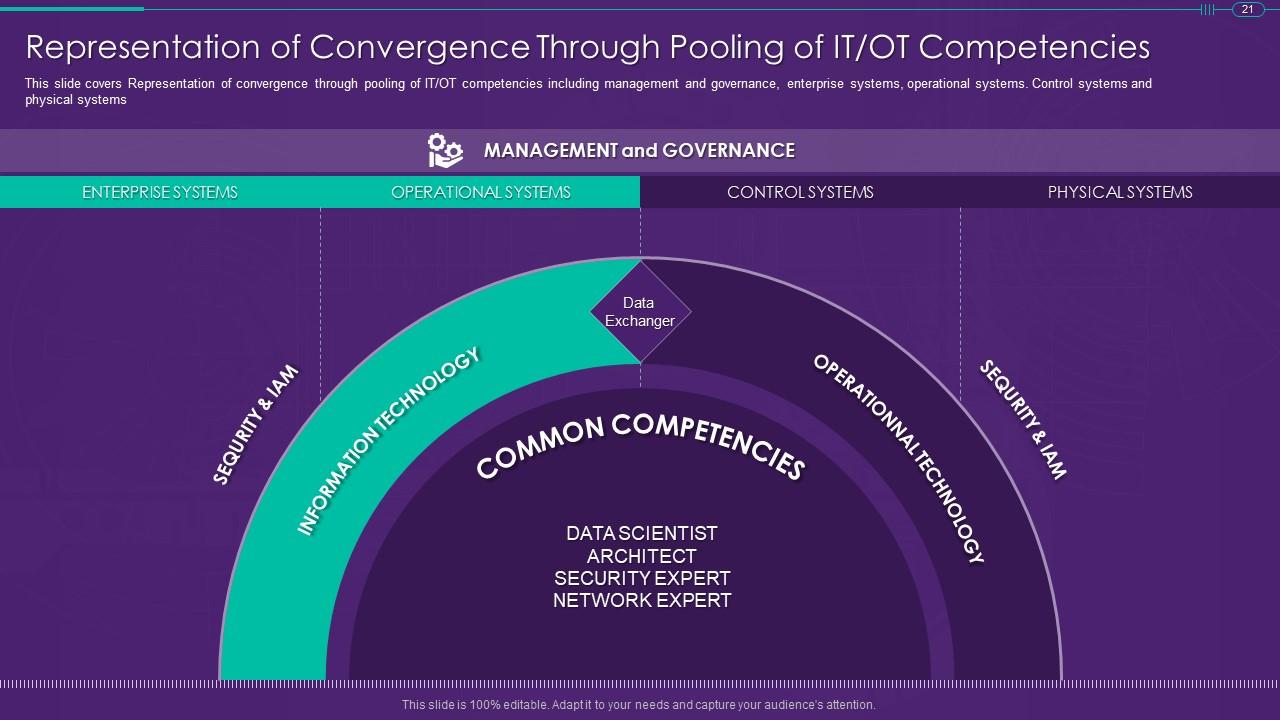
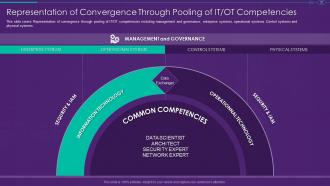
Diapositiva 21 : esta diapositiva muestra la representación de la convergencia a través de la combinación de competencias de TI/OT.
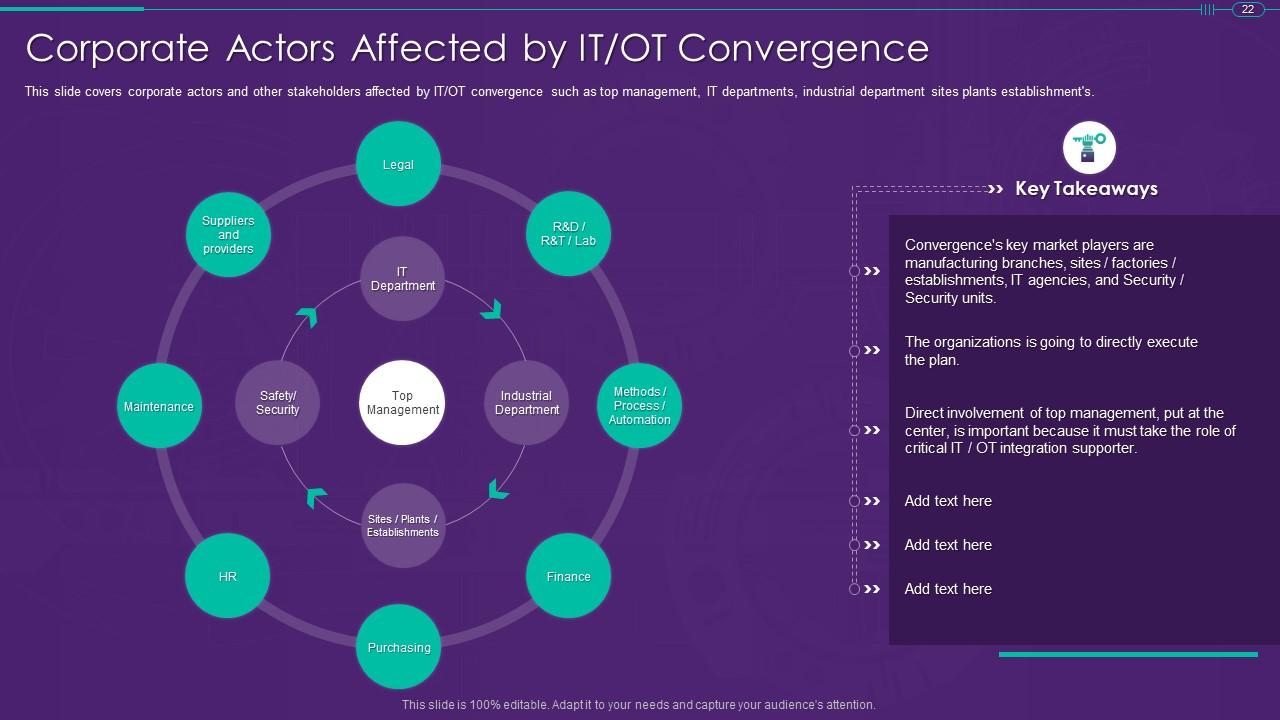
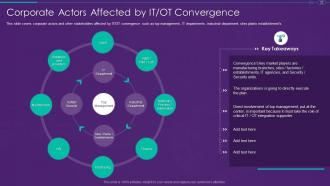
Diapositiva 22 : esta diapositiva muestra los actores corporativos afectados por la convergencia de TI/OT.
Diapositiva 23 : esta diapositiva resalta el título de los temas que se cubrirán a continuación en la plantilla.
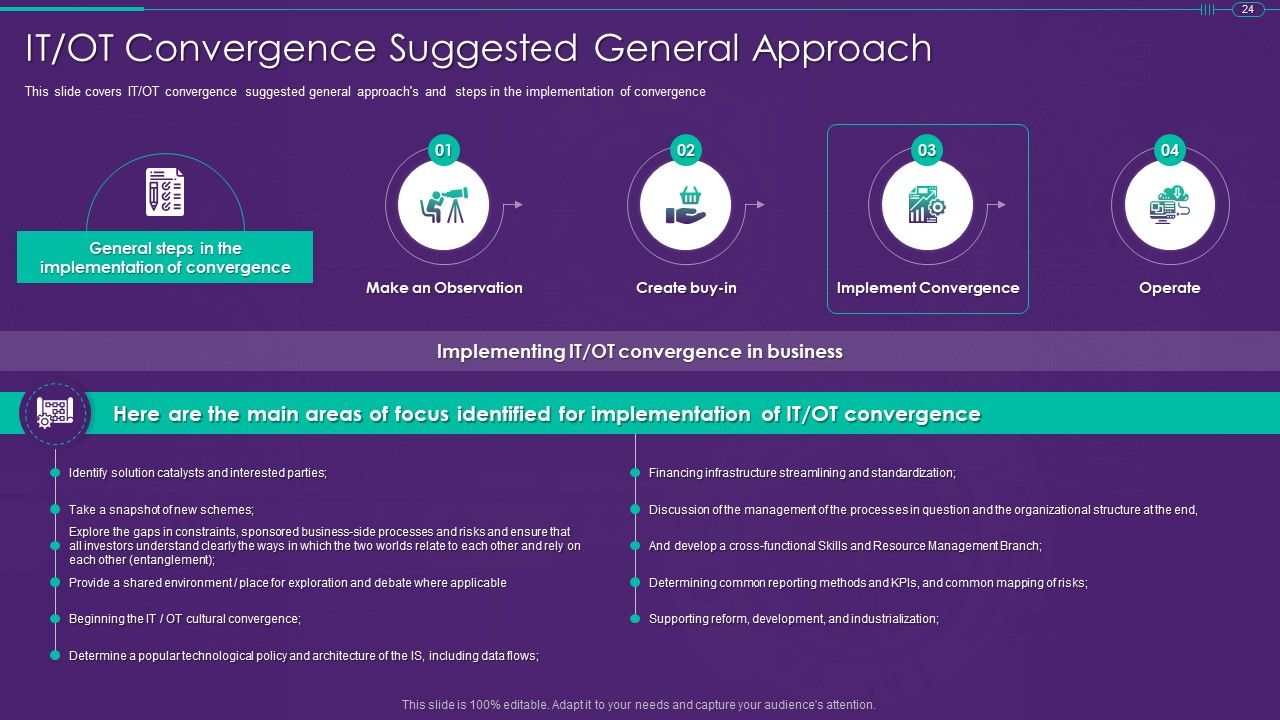
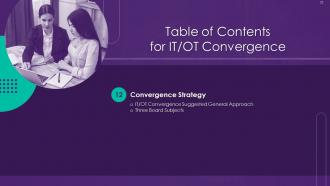
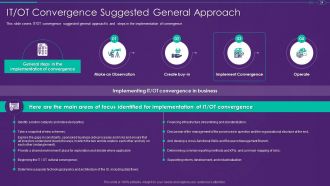
Diapositiva 24 : Esta diapositiva presenta el enfoque general sugerido para la convergencia de TI/TO.
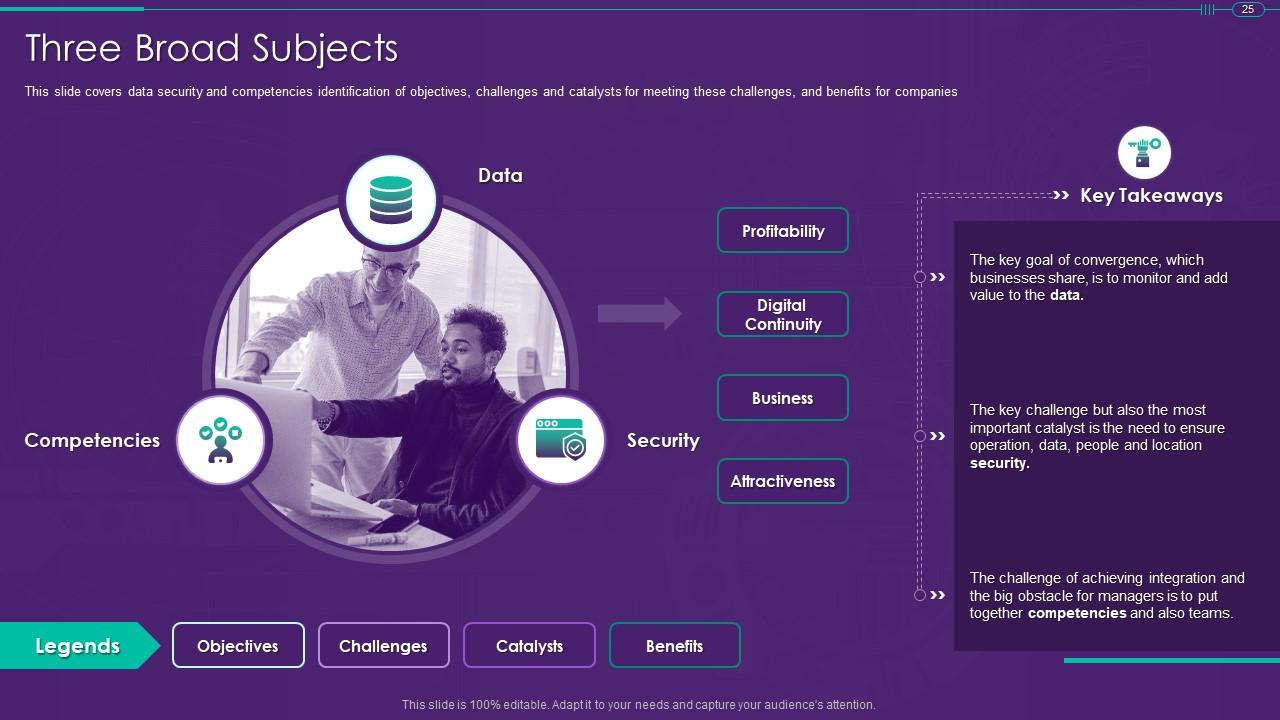
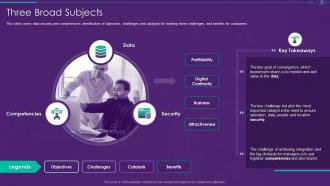
Diapositiva 25 : Esta diapositiva cubre la seguridad de los datos y la identificación de objetivos de competencias.
Diapositiva 26 : esta diapositiva resalta el título de los temas que se cubrirán a continuación en la plantilla.
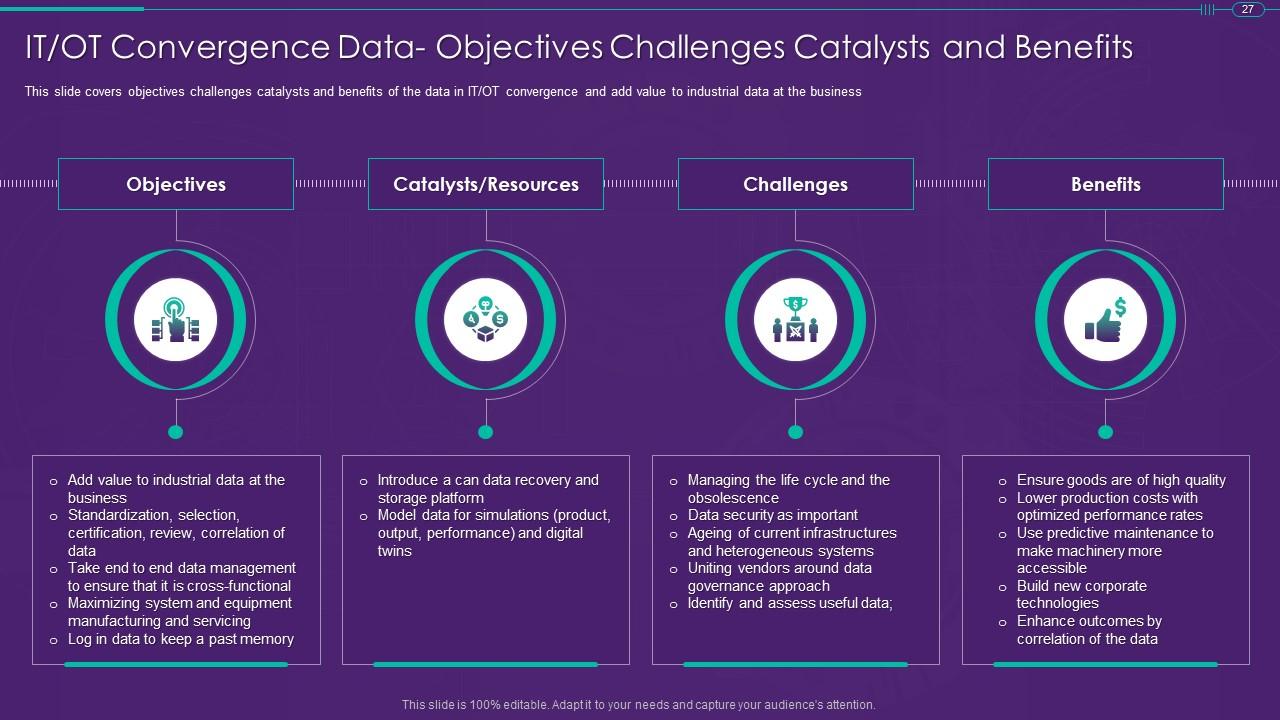
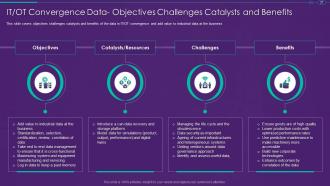
Diapositiva 27 : esta diapositiva muestra datos de convergencia de TI/TO: objetivos, desafíos, catalizadores y beneficios.
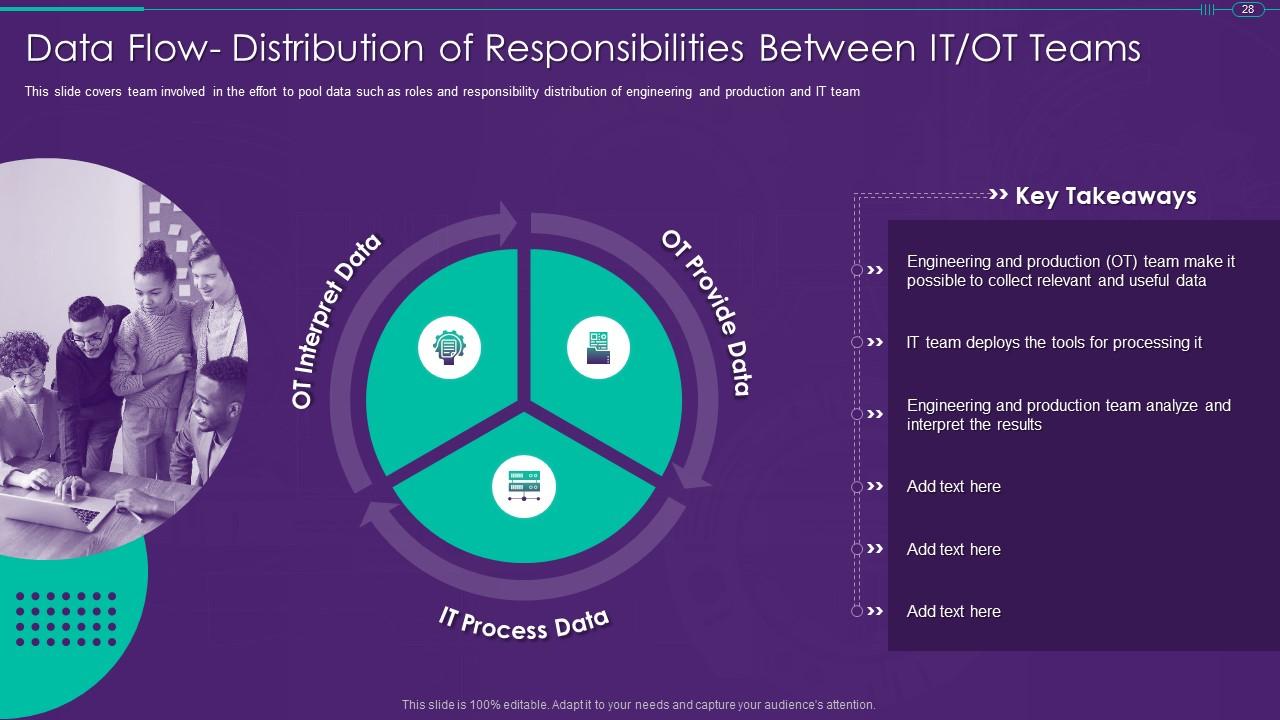
Diapositiva 28 : esta diapositiva representa el flujo de datos: distribución de responsabilidades entre los equipos de TI/OT.
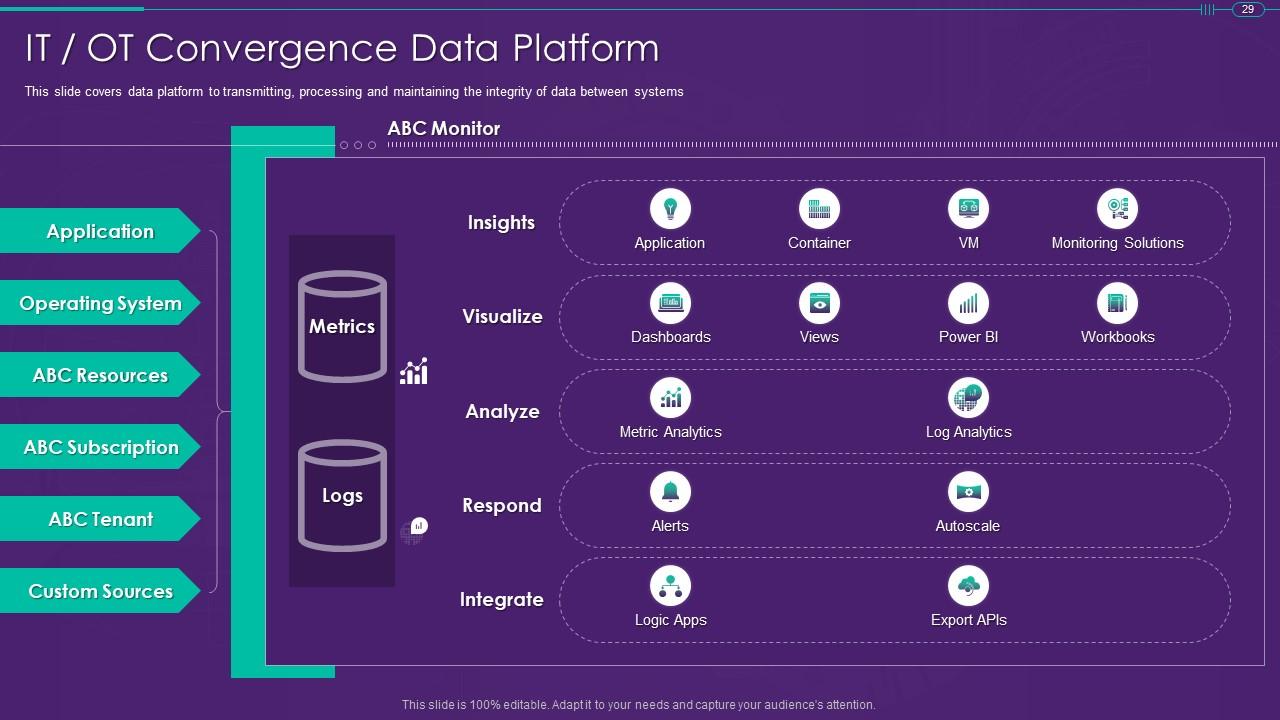
Diapositiva 29 : esta diapositiva cubre la plataforma de datos para transmitir, procesar y mantener la integridad de los datos entre sistemas.
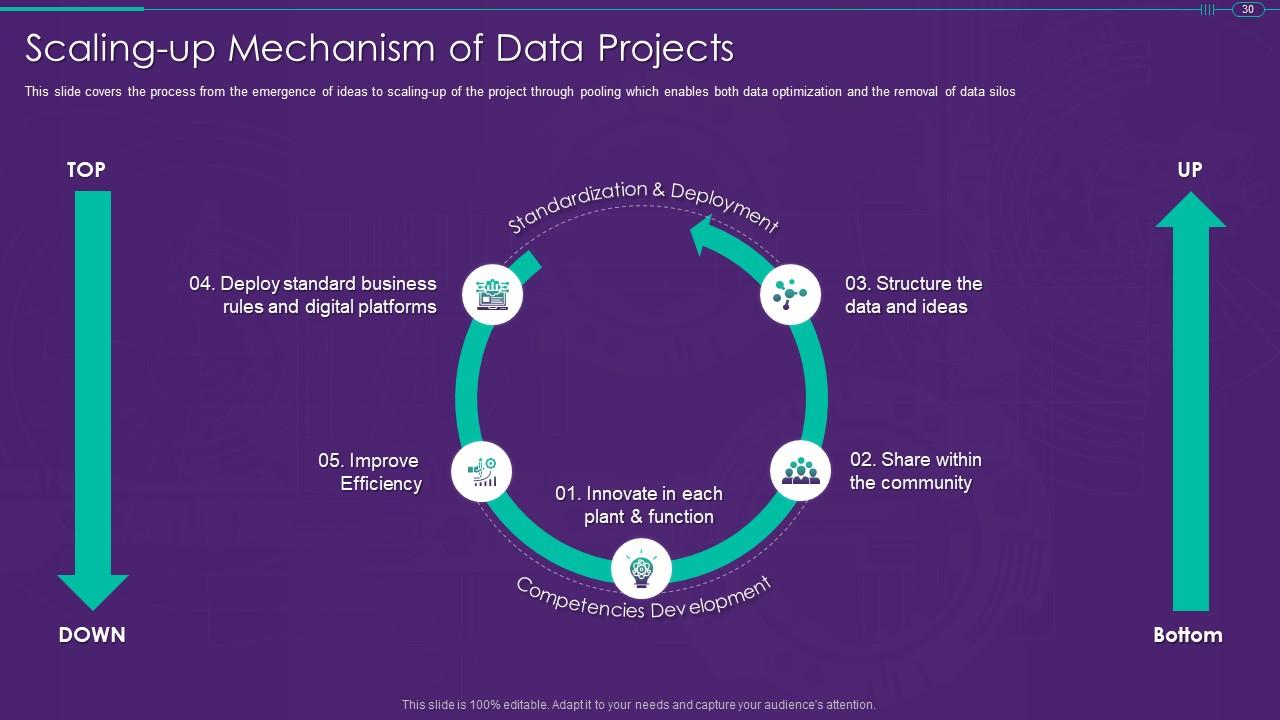
Diapositiva 30 : Esta diapositiva muestra el mecanismo de ampliación de proyectos de datos.
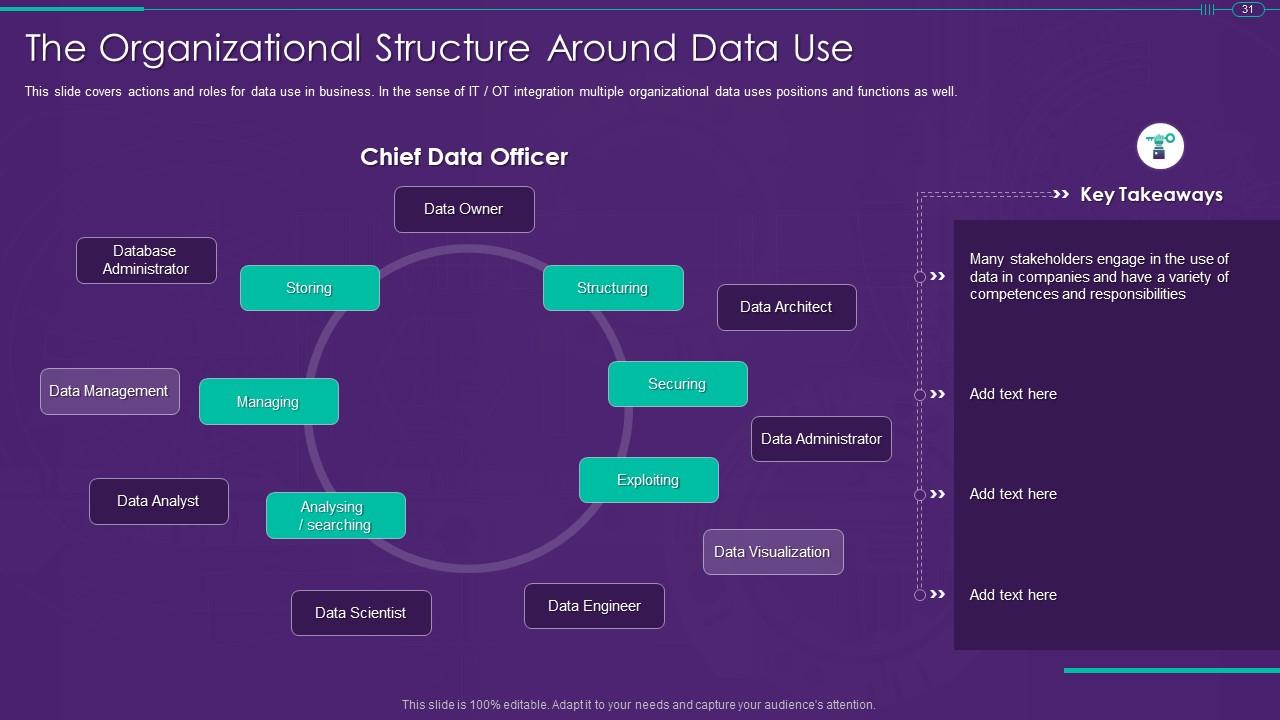
Diapositiva 31 : Esta diapositiva muestra la estructura organizativa en torno al uso de datos.
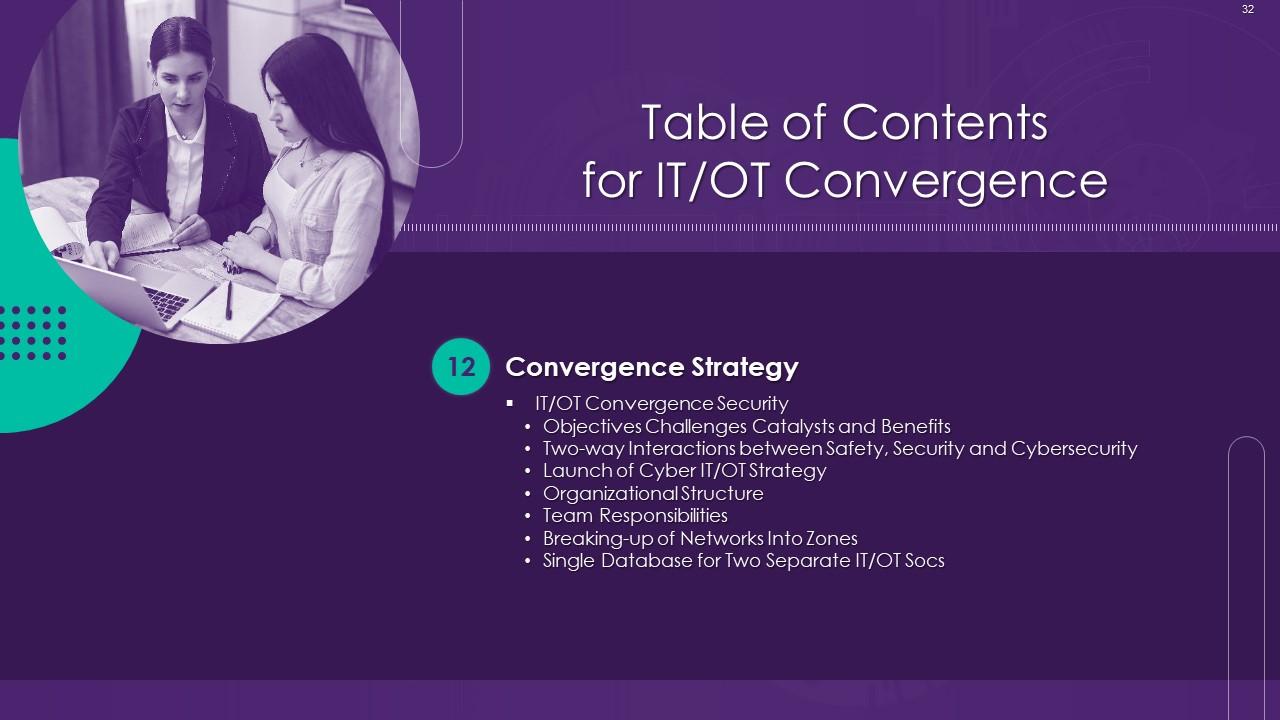
Diapositiva 32 : esta diapositiva destaca el título de los temas que se cubrirán a continuación en la plantilla.
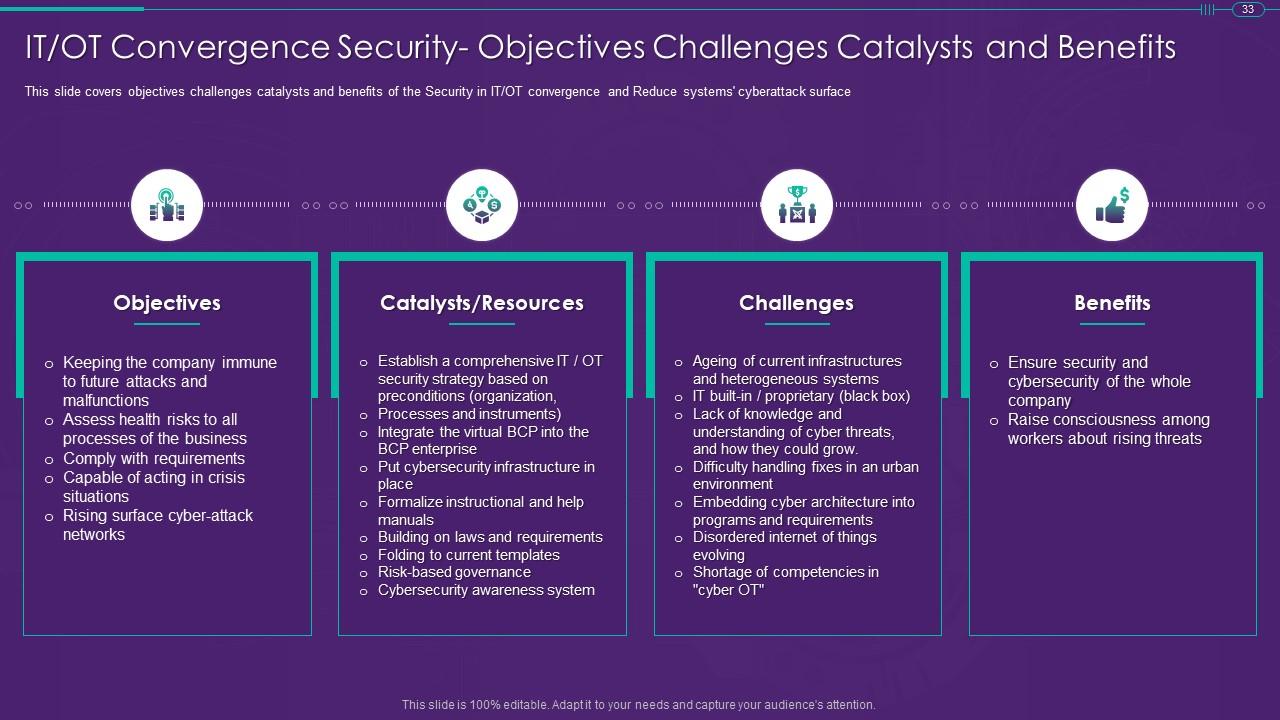
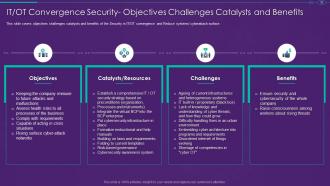
Diapositiva 33 : Esta diapositiva presenta la seguridad de convergencia de TI/TO: objetivos, desafíos, catalizadores y beneficios.
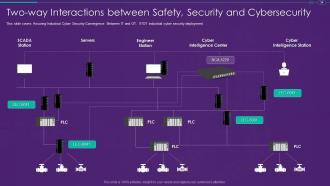
Diapositiva 34 : esta diapositiva muestra interacciones bidireccionales entre seguridad, protección y ciberseguridad.
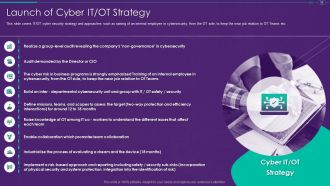
Diapositiva 35 : Esta diapositiva cubre la estrategia y los enfoques de seguridad cibernética de TI/TO.
Diapositiva 36 : Esta diapositiva representa la estructura organizativa de TI/TO basada en el intercambio de objetivos y cultura.
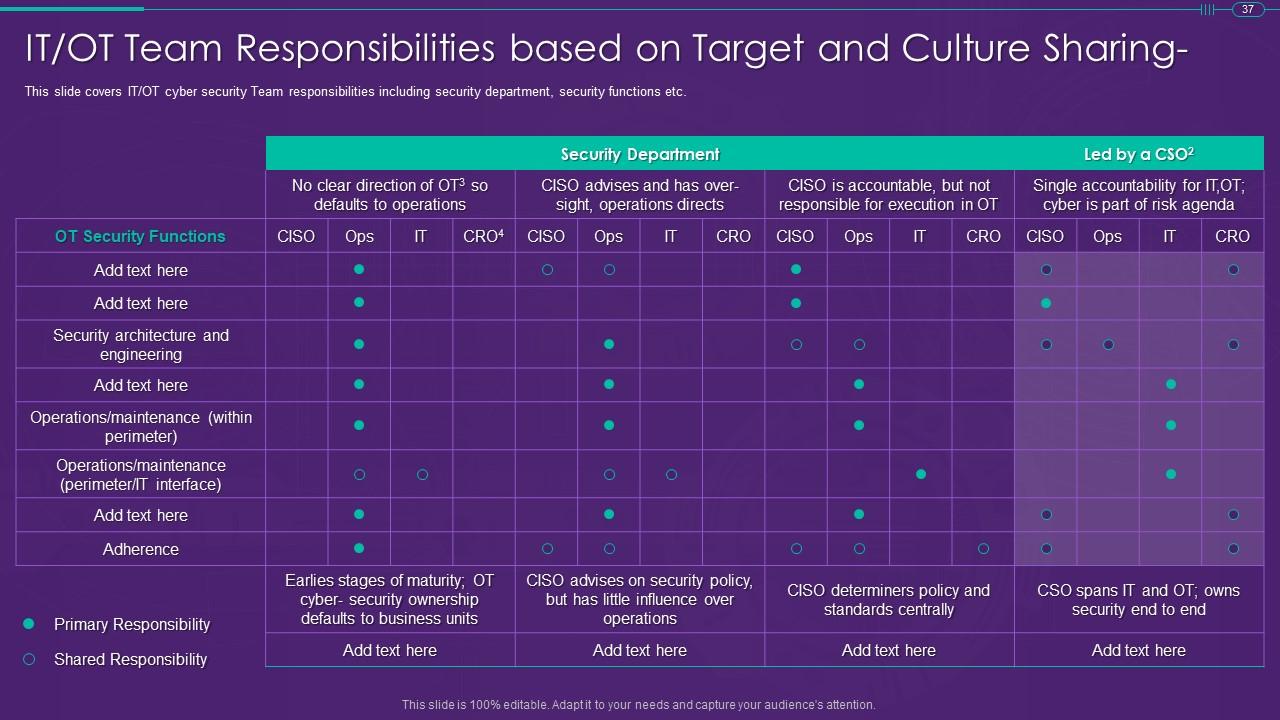
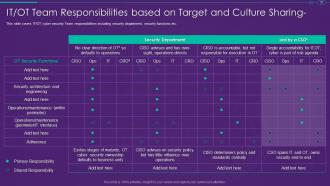
Diapositiva 37 : Esta diapositiva muestra las responsabilidades del equipo de TI/TO basadas en el intercambio de cultura y objetivos.
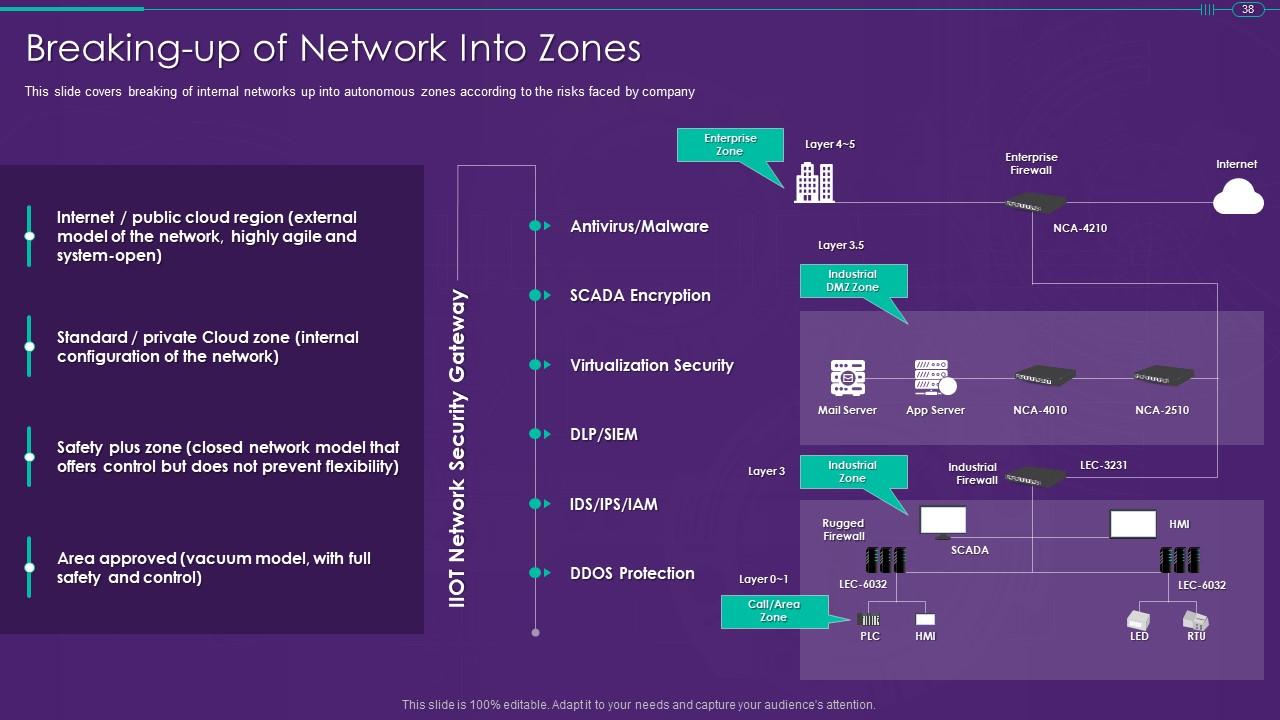
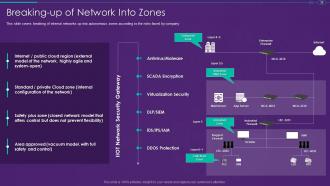
Diapositiva 38 : Esta diapositiva cubre la división de redes internas en zonas autónomas.
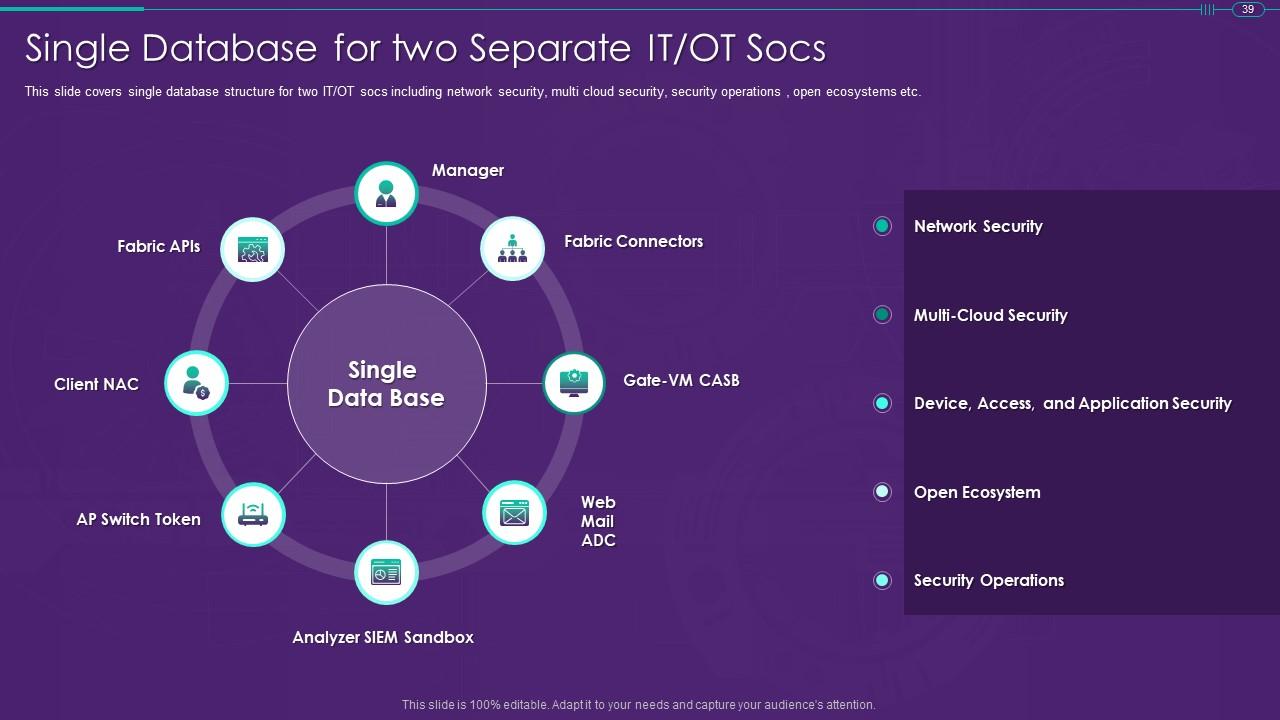
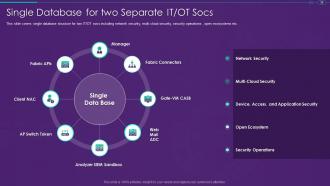
Diapositiva 39 : Esta diapositiva muestra una base de datos única para dos sociedades de TI/TO separadas.
Diapositiva 40 : esta diapositiva destaca el título de los temas que se cubrirán a continuación en la plantilla.
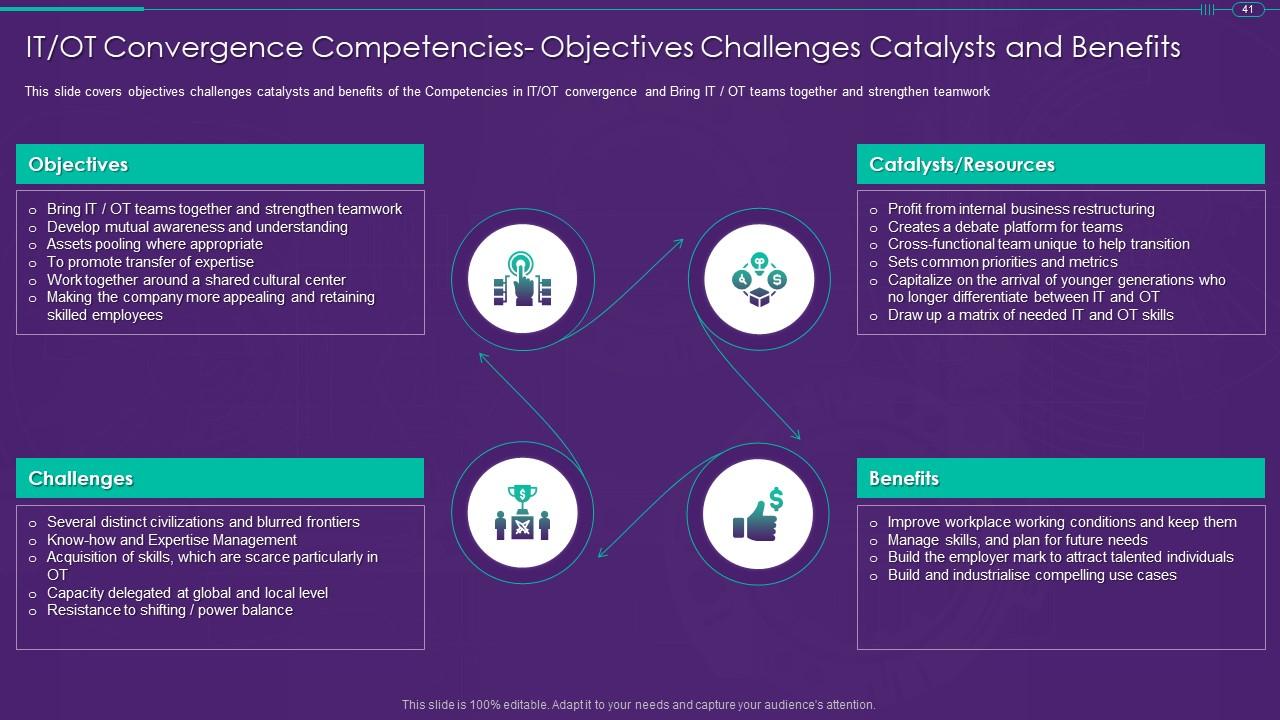
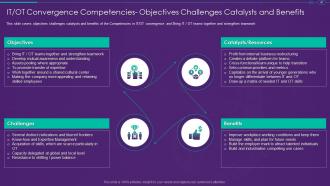
Diapositiva 41 : Esta diapositiva presenta Competencias de convergencia de TI/TO: objetivos, desafíos, catalizadores y beneficios.
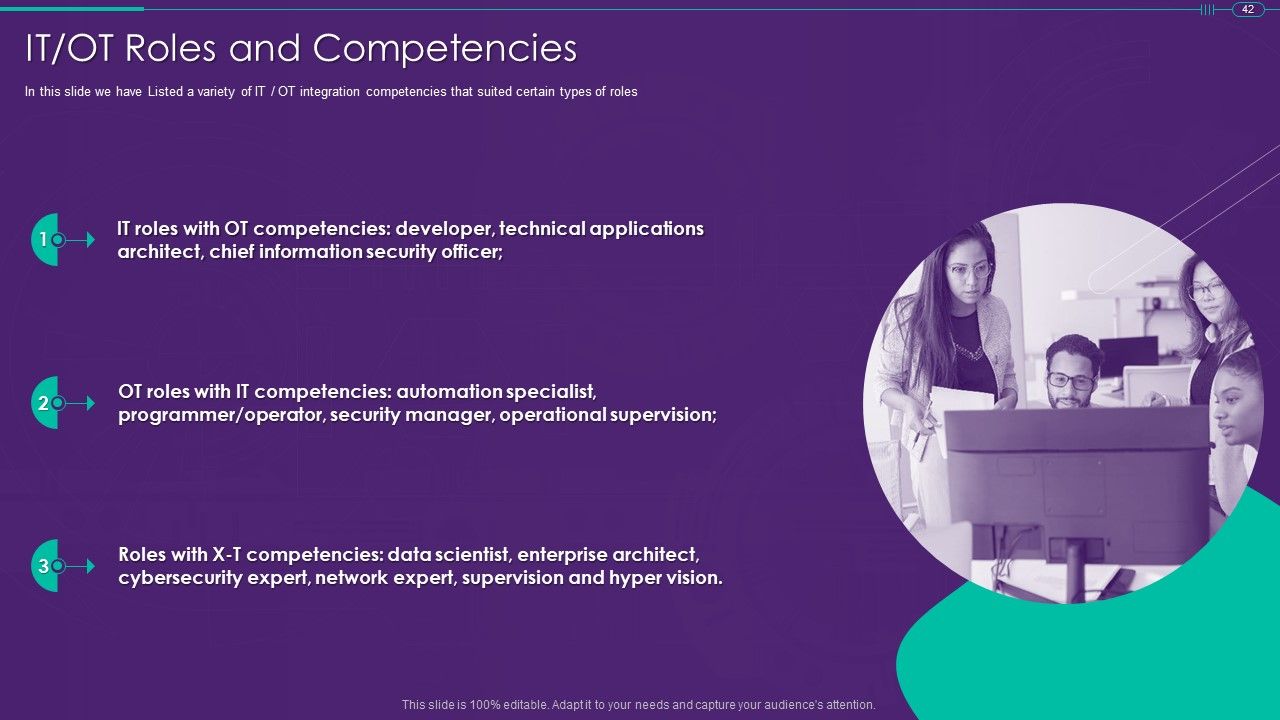
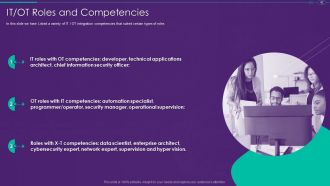
Diapositiva 42 : esta diapositiva muestra una variedad de competencias de integración de TI/OT que se adaptan a ciertos tipos de roles.
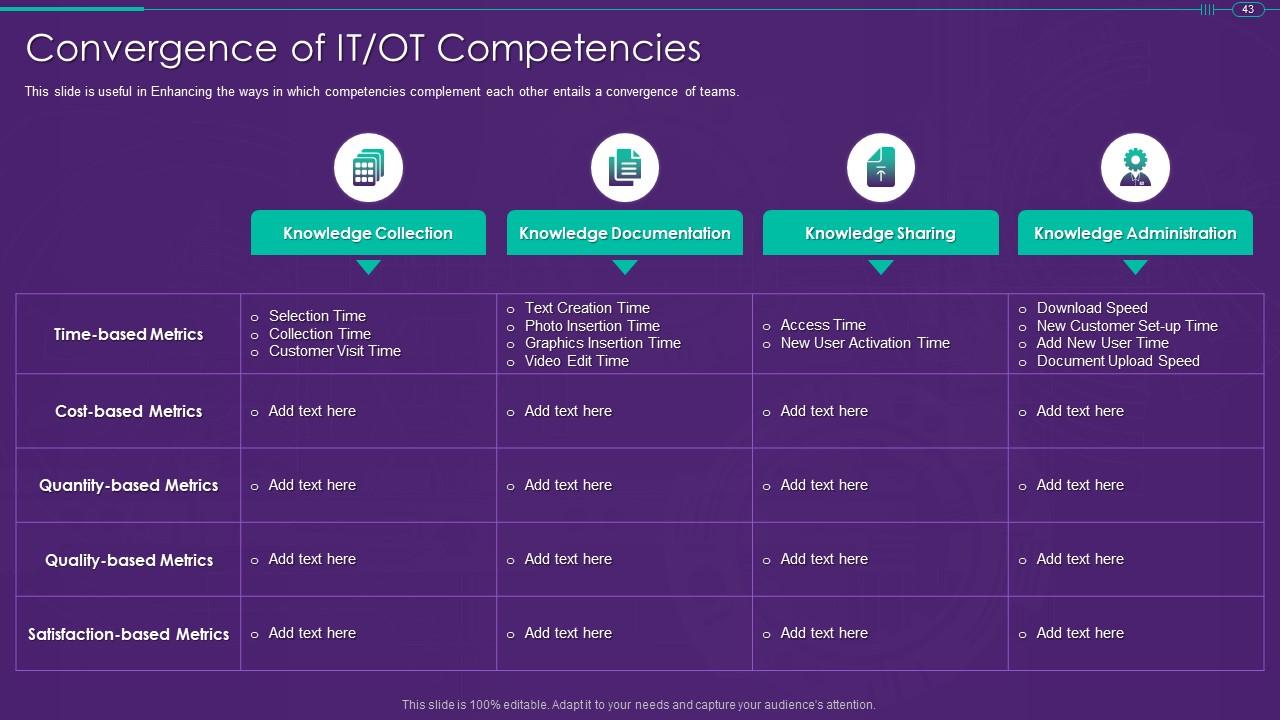
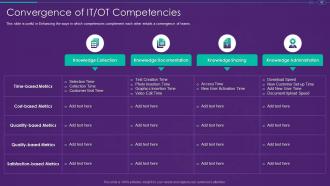
Diapositiva 43 : Esta diapositiva es útil para mejorar las formas en que las competencias se complementan entre sí.
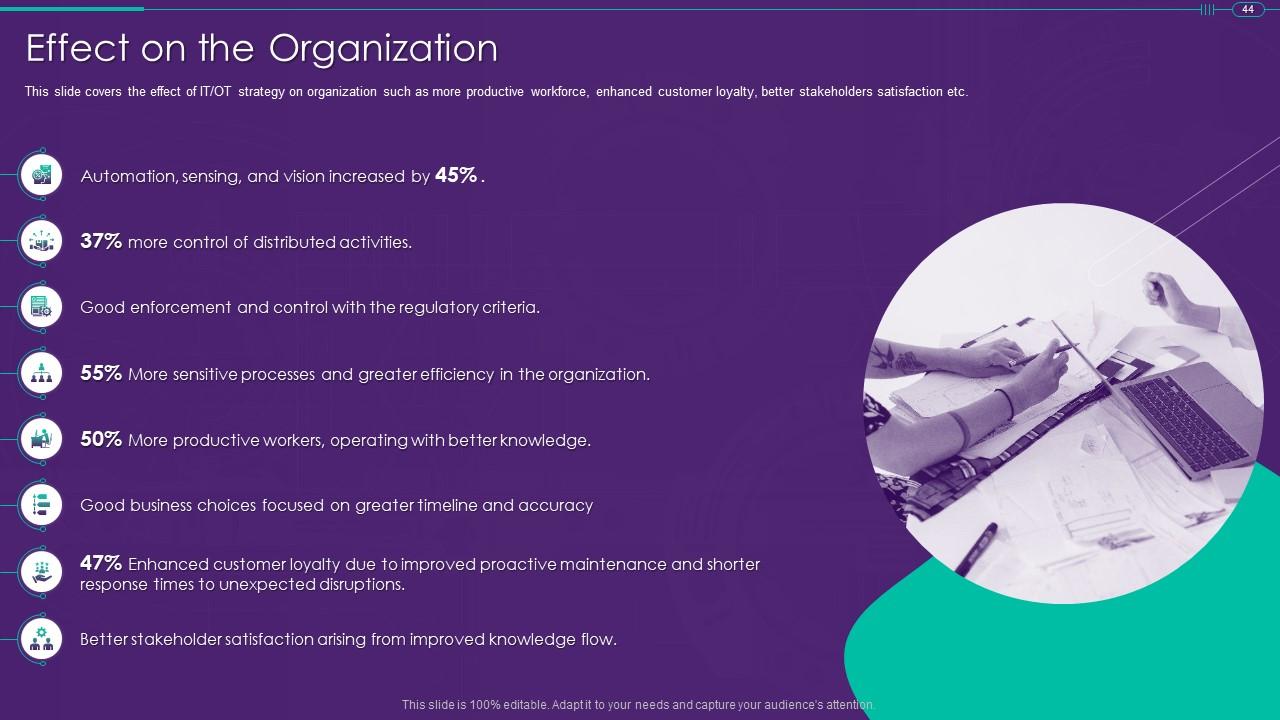
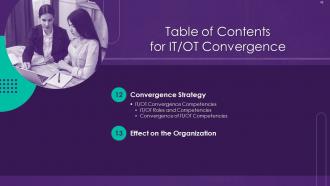
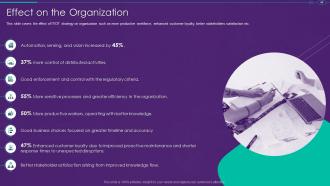
Diapositiva 44 : Esta diapositiva cubre el efecto de la estrategia de TI/TO en la organización.
Diapositiva 45 : esta diapositiva muestra iconos para la estrategia de convergencia de TI y TO.
Diapositiva 46 : esta diapositiva se titula Diapositivas adicionales para avanzar.
Diapositiva 47 : Esta es la diapositiva Nuestra misión con imágenes y texto relacionados.
Diapositiva 48 : Esta es la diapositiva Acerca de nosotros para mostrar las especificaciones de la empresa, etc.
Diapositiva 49 : Esta es la diapositiva Nuestro equipo con nombres y designación.
Diapositiva 50 : Esta es la diapositiva Nuestro objetivo. Indique los objetivos de su empresa aquí.
Diapositiva 51 : Esta diapositiva muestra Post-It Notes. Publique sus notas importantes aquí.
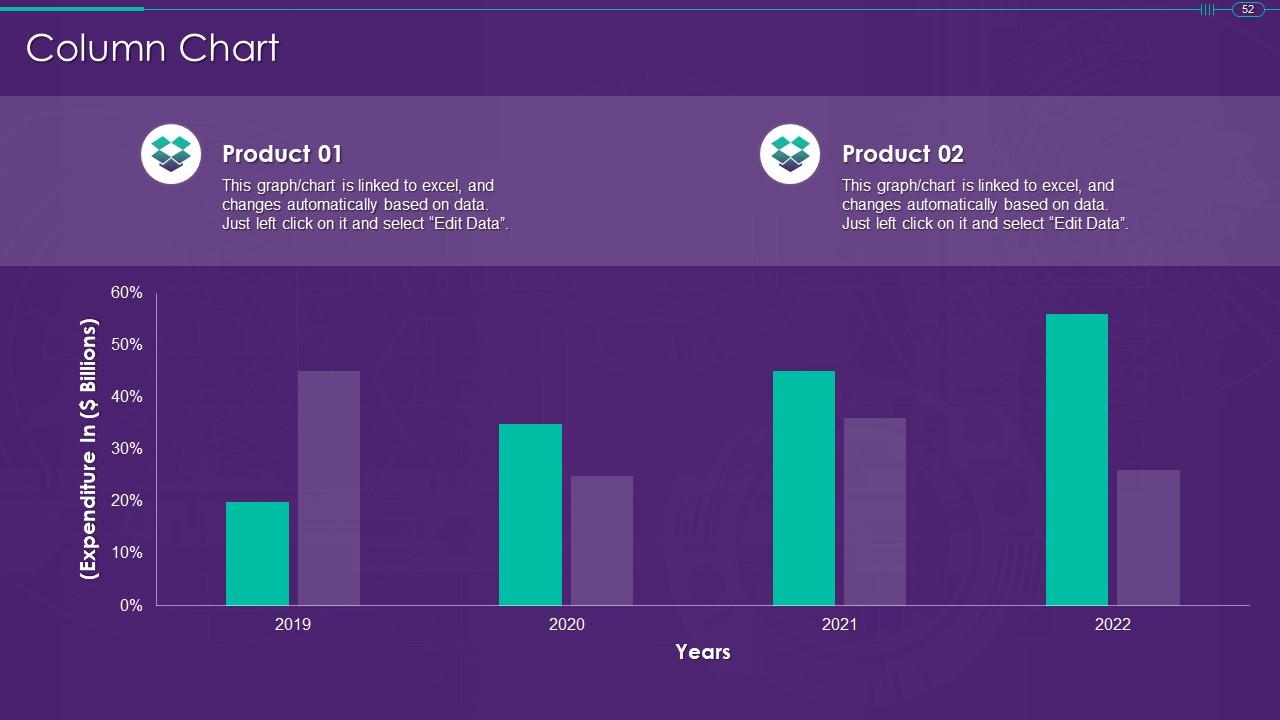
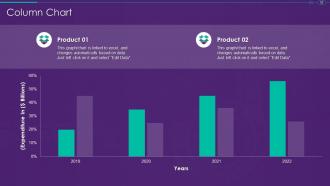
Diapositiva 52 : Esta diapositiva muestra un gráfico de columnas con una comparación de dos productos.
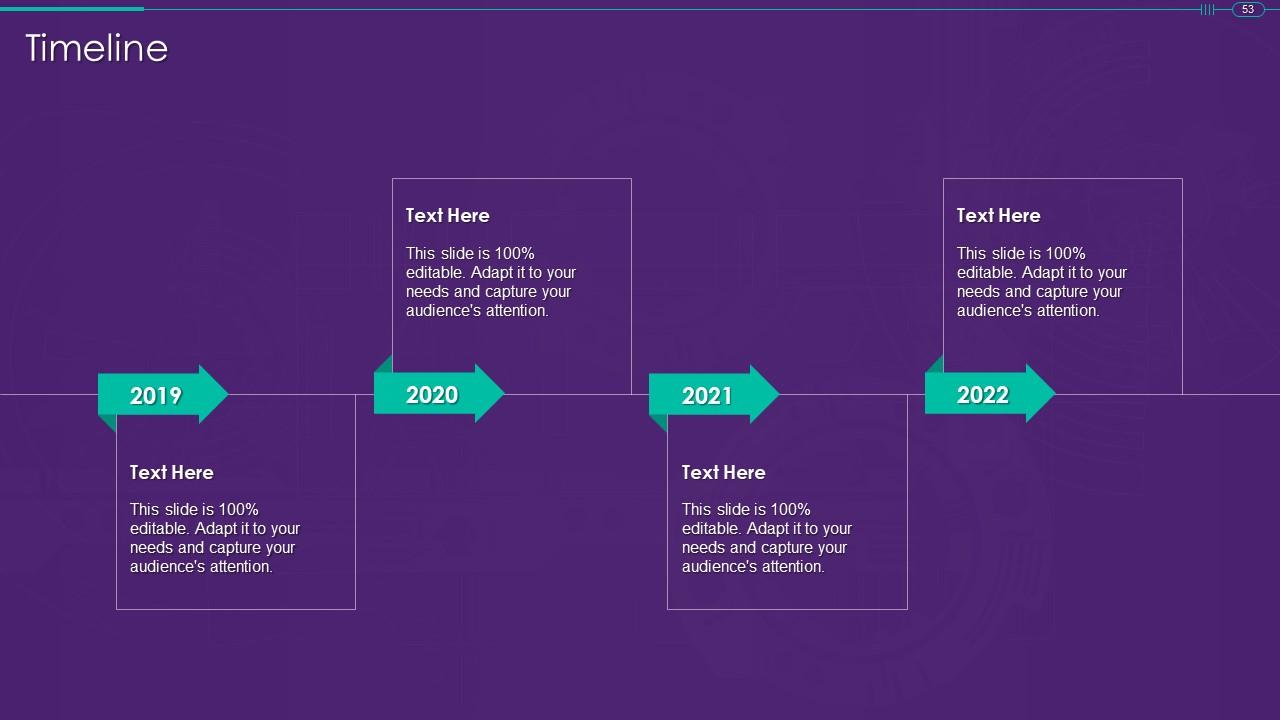
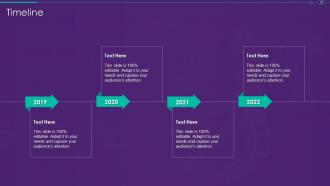
Diapositiva 53 : Esta es una diapositiva de la línea de tiempo. Mostrar datos relacionados con intervalos de tiempo aquí.
Diapositiva 54 : Esta es una diapositiva de agradecimiento con dirección, números de contacto y dirección de correo electrónico.
TI OT Estrategia de convergencia Diapositivas de presentación de Powerpoint con las 59 diapositivas:
Utilice nuestras diapositivas de presentación de Powerpoint de estrategia de convergencia de IT OT para ayudarlo a ahorrar su valioso tiempo de manera efectiva. Están listos para encajar en cualquier estructura de presentación.
-
Their templates are super easy to edit and use even for the one like me who is not familiar with PowerPoint. Great customer support.
-
I have just started downloading templates for my presentations and I must say this is a great design. It helped accelerate my presentation design process and made it more visually appealing.
