

Key Customer Account Management Tactics Powerpoint Presentation Slides Strategy CD V




Try Before you Buy Download Free Sample Product
 Impress Your
 Audience
 100%
100% Editable
 Save Hours
 of Time


Dive into the realm of critical business account planning with our Key Customer Account Management Tactics deck. This resource is designed to guide businesses in strategically managing and nurturing relationships with their most valuable and significant customers or key accounts. The presentation begins with an insightful overview of account strategy and its associated benefits. The SAM Strategic Account Management section provides key market statistics, evolution history, pillars, best practices, and critical considerations for essential business account planning and strategy implementation. The Key Account Management template delves into the steps of crucial account planning and management, emphasizing revenue potential and the development of tailored sales strategies. The Customer Relationships PowerPoint section caters to slides detailing critical account planning teams, outlining their responsibilities and offering an impact assessment of key account management initiatives. Access this powerful and comprehensive template to enhance your understanding and implementation of key business account planning and management strategies. Whether you are looking to refine your existing approach or build a new strategy, this template provides valuable insights and practical guidance for success.
People who downloaded this PowerPoint presentation also viewed the following :
Content of this Powerpoint Presentation
Slide 1: The slide introduces Key Customer Account Management Tactics. Put your Company name and begin.
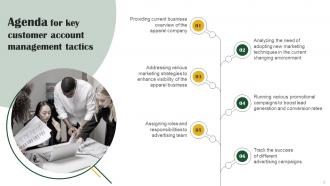
Slide 2: This is an Agenda slide. State your agendas here.
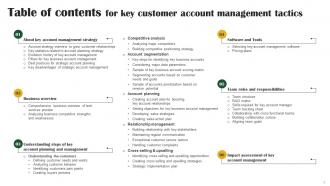
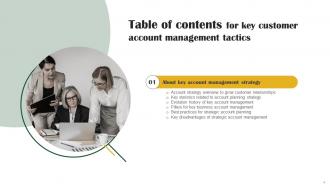
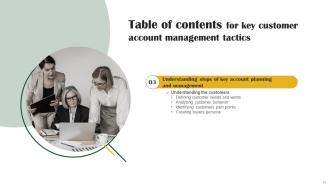
Slide 3: The slide displays Table of contents for presentation.
Slide 4: The slide continues Table of contents.
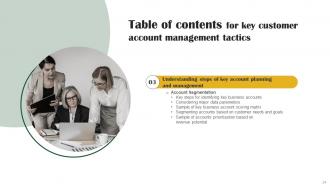
Slide 5: The slide highlights table of contents again which is to be discussed further.
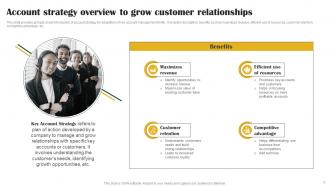
Slide 6: This slide provides glimpse about introduction of account strategy for adaptation.
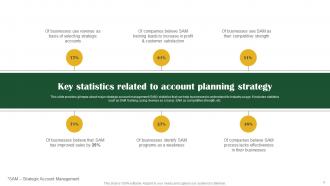
Slide 7: This slide renders glimpse about major strategic account management statistics.
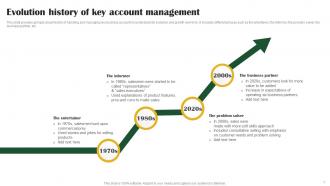
Slide 8: This slide illustrates glimpse about history of handling and managing key business accounts.
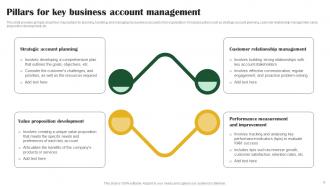
Slide 9: This slide provides glimpse about four major pillars.
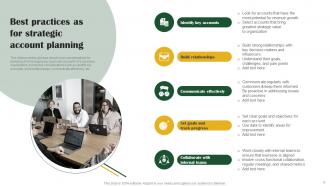
Slide 10: This slide shows glimpse about major considerations for planning and managing key customer accounts.
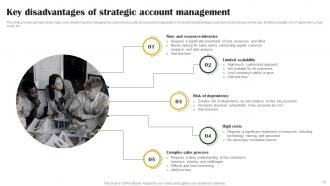
Slide 11: This slide gives glimpse about major cons of planning and managing key customer accounts.
Slide 12: The slide higlights title of contents further.
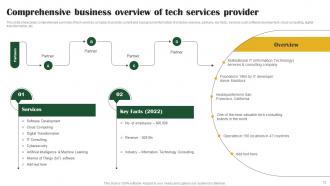
Slide 13: This slide showcases comprehensive summary of tech services company to provide current and background information.
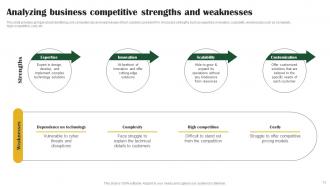
Slide 14: This slide provides glimpse about identifying core competencies and weaknesses of tech solutions provider firm.
Slide 15: The slide highlights title of contents which is to be discussed further.
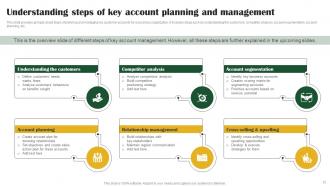
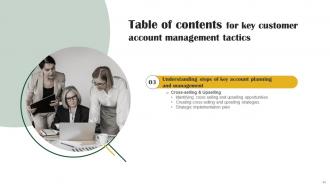
Slide 16: This slide provides glimpse about steps of planning and managing key customer accounts for a business organization.
Slide 17: The slide again highlights title of contents.
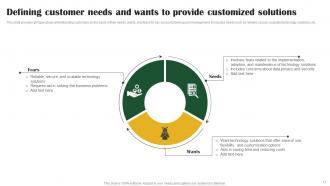
Slide 18: This slide provides glimpse about understanding customers on the basis of their needs, wants, and fears.
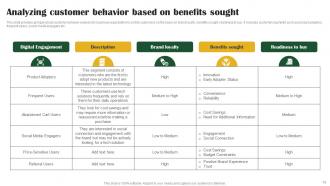
Slide 19: This slide represents glimpse about customer behavior analysis for business organization.
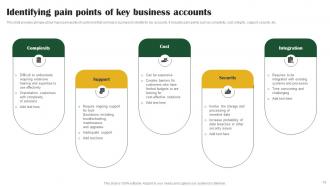
Slide 20: This slide presents glimpse about major pain-points of customers.
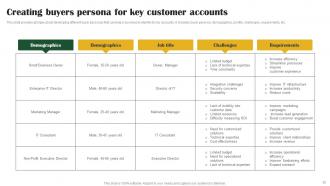
Slide 21: This This slide provides glimpse about developing different buyer personas.
Slide 22: The slide contains Title of contents further.
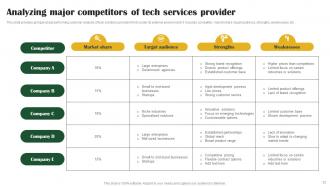
Slide 23: This slide gives glimpse about performing customer analysis of tech solutions provider firm to under its external environment.
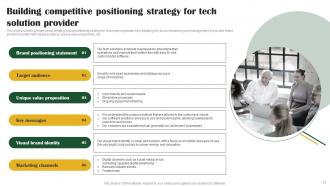
Slide 24: This slide provides glimpse about creating brand positioning strategy for business organization.
Slide 25: The slide again displays title of contents,
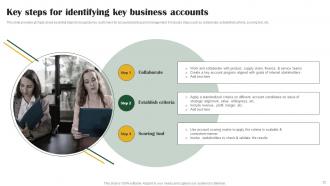
Slide 26: This slide provides glimpse about essential steps to recognize key customers.
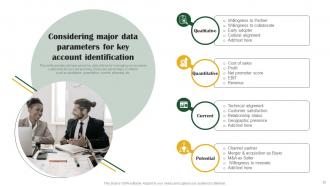
Slide 27: This slide provides glimpse about key data criteria for managing key business customers.
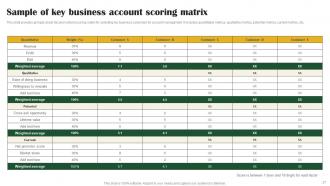
Slide 28: This slide provides glimpse about decision criteria scoring matrix for selecting key business customers.
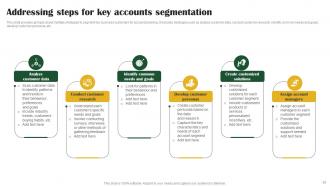
Slide 29: This slide provides glimpse about multiple strategies to segment key business customers.
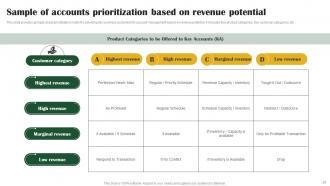
Slide 30: This slide provides glimpse about prioritization matrix for selecting key business customers.
Slide 31: The slide also renders Title of contents.
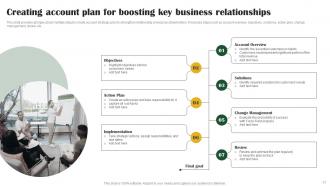
Slide 32: This slide provides glimpse about multiple steps to create account strategic plan to strengthen relationship among key stakeholders.
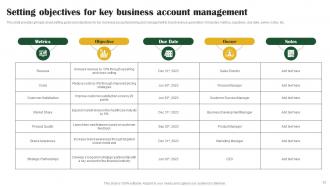
Slide 33: This slide illustrates glimpse about setting goals and objectives for key business account planning and management.
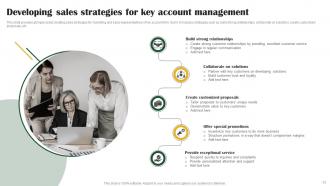
Slide 34: This This slide highlights glimpse about creating sales strategies.
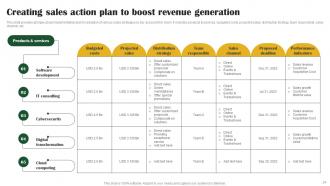
Slide 35: This slide provides glimpse about implementation plan for adoption of various sales strategies by key account team.
Slide 36: The slide depicts another title of contents.
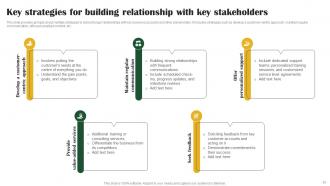
Slide 37: This slide represents glimpse about multiple strategies to build stronger relationships with key business accounts and other stakeholders.
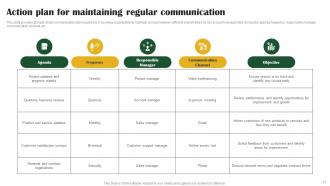
Slide 38: This slide presents glimpse about communication plan required by a business organization.
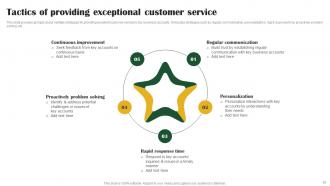
Slide 39: This slide renders glimpse about multiple strategies for providing excellent customer service to key business accounts.
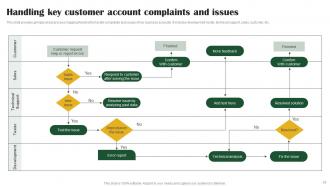
Slide 40: This slide shows glimpse about process mapping flowchart to handle complaints and issues of key business accounts.
Slide 41: The slide contains title of contents which is to be discussed further.
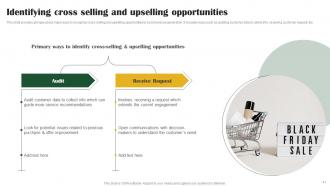
Slide 42: This slide provides glimpse about major ways to recognize cross-selling and upselling opportunities to boost revenue generation.
Slide 43: This slide shows glimpse about setting goals and objectives for key business account planning and management.
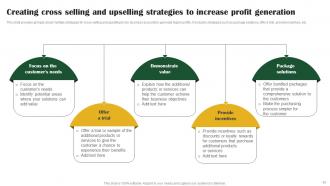
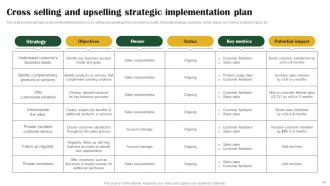
Slide 44: This slide showcases glimpse about implementation plan for cross-selling and upselling to key business accounts.
Slide 45: The slide displays another title of contents.
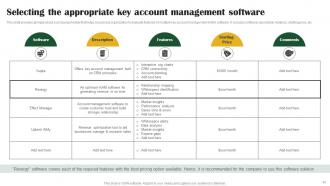
Slide 46: This slide exhibits glimpse about a comparison table that helps a business organization.
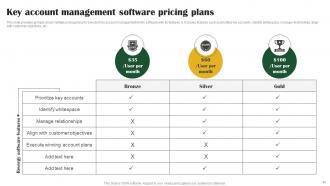
Slide 47: This slide provides glimpse about multiple pricing plans for selected key account management software with its features.
Slide 48: The slide highlights title of contents further.
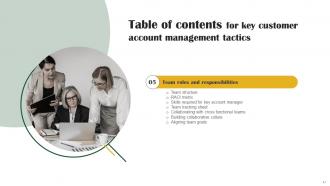
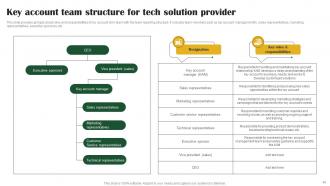
Slide 49: This slide provides glimpse about roles and responsibilities of key account team with the team reporting structure.
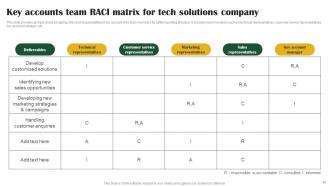
Slide 50: This slide gives glimpse about assigning roles and responsibilities to key account team members.
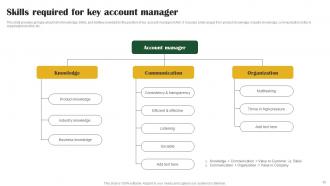
Slide 51: This slide shows glimpse about KSA needed for the position of key account manager.
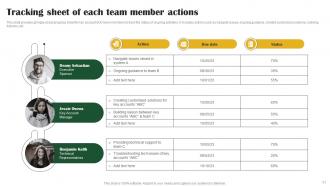
Slide 52: This slide presents glimpse about progress sheet for key account team members to track the status of ongoing activities.
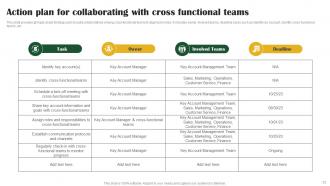
Slide 53: This slide exhibits glimpse about strategic plan to build collaborations among cross-functional teams to align team roles.
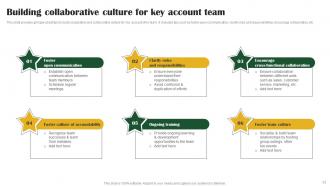
Slide 54: This slide represents glimpse about tips to build cooperative and collaborative culture for key account team.
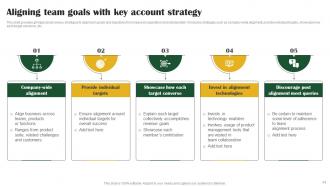
Slide 55: This slide showcases glimpse about various strategies to align team goals and objectives.
Slide 56: The slide again exhibits title of contents.
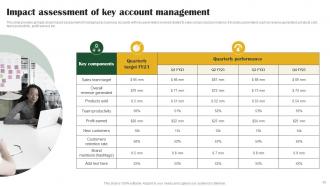
Slide 57: This slide provides glimpse about impact assessment of managing key business accounts with key parameters.
Slide 58: This slide shows all the icons included in the presentation.
Slide 59: This slide is titled as Additional Slides for moving forward.
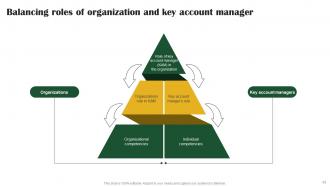
Slide 60: The slide renders Balancing roles of organization and key account manager.
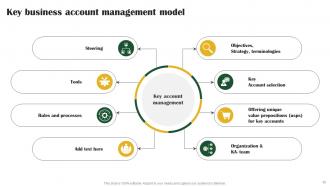
Slide 61: The slide displays Key business account management model.
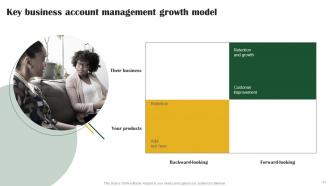
Slide 62: The slide depicts Key business account management growth model.
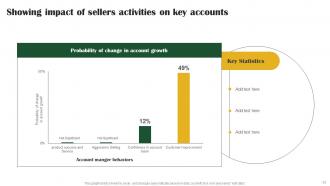
Slide 63: The slide contains Probability of change in account growth.
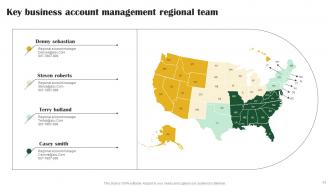
Slide 64: The slide illustrates Key business account management regional team.
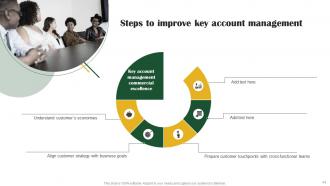
Slide 65: The slide represents Steps to improve key account management.
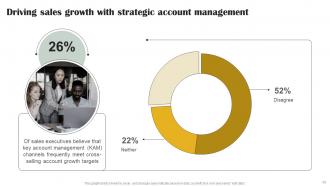
Slide 66: The slide shows Driving sales growth with strategic account management.
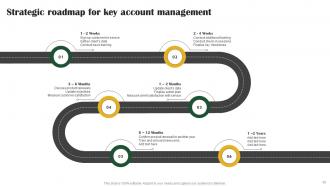
Slide 67: Thee slide demonstrates Strategic roadmap for key account management.
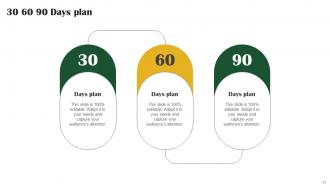
Slide 68: This slide provides 30 60 90 Days Plan with text boxes.
Slide 69: This slide shows SWOT describing- Strength, Weakness, Opportunity, and Threat.
Slide 70: This is a Thank You slide with address, contact numbers and email address.
Key Customer Account Management Tactics Powerpoint Presentation Slides Strategy CD V with all 78 slides:
Use our Key Customer Account Management Tactics Powerpoint Presentation Slides Strategy CD V to effectively help you save your valuable time. They are readymade to fit into any presentation structure.














FAQs for Key Customer Account Management Tactics Powerpoint Presentation Slides
Honestly, just focus on three things: keep your current clients happy, grow what they're spending with you, and get them talking you up to others. Way easier than hunting for new customers all the time - plus it's less of a headache. Really dig into what they actually need so you can spot chances to sell them more stuff or catch issues before they blow up. The goal is becoming their go-to partner, not just some random vendor they tolerate. I'd start by figuring out where each account stands and focus on the ones that matter most first.
Honestly, data analytics is like having x-ray vision for your business - you stop guessing and actually know what's working. Track how customers behave, catch churn signals early, find those sweet upselling moments. The best part? You'll discover which touchpoints genuinely move the needle for each account. No more generic pitches for everyone - you can personalize without going insane trying to scale it manually. My advice is start simple though. Pick one thing like engagement scores or how often people buy, then expand from there. Way less overwhelming that way.
Look, you can't treat every client the same - that's just wasting your time honestly. Figure out which accounts are worth $500K versus $5K, then tier them by revenue potential or growth opportunities. The big accounts get the VIP treatment while smaller ones get streamlined processes. Makes total sense when you think about it. Once you've ranked everything, build different strategies for each tier. I learned this the hard way - used to spend way too much energy on low-value accounts. Now I focus where it actually moves the needle.
Dude, personalized communication is seriously a game-changer. Clients feel way more valued when you actually remember stuff about their business or match how they like to communicate. I always keep little notes about each client - like what problems they're dealing with or if they prefer quick texts vs long emails. Reference those details next time you talk to them. It builds crazy trust over time. Short sentences work great sometimes. But you can also adjust your whole approach based on their industry or role, you know? Honestly, most people skip this step and it's such an easy win.
Track your revenue stuff obviously - growth, renewals, upsells. But honestly the relationship metrics are just as crucial. How engaged are your stakeholders? Meeting frequency, response times to your emails, that kind of thing. I got burned once watching only the money side while missing that people were basically ignoring me. Quarterly business reviews work great for this - customers actually like seeing you track their success. Plus you'll spot red flags way earlier. Oh and don't overthink the tracking system, just pick a few key things and stick with them.
Honestly? Just make sure everyone actually knows what's happening with your big accounts. I'd start by sharing those account plans with sales and marketing - they need to see the customer's goals and timeline stuff. Yeah, you'll probably need weekly check-ins (ugh, more meetings, but whatever). That way marketing can make content that doesn't suck, and sales won't accidentally mess up your relationships. The real win is when you're all saying the same thing to customers instead of confusing them. Set up some kind of shared tracking system. Trust me, it's worth the hassle.
So first things first - get a decent CRM like Salesforce or HubSpot to track all your customer stuff. That's non-negotiable. Then look into customer success tools like Gainsight or ChurnZero for monitoring how healthy your accounts are. Slack keeps the team talking, and something like Asana helps you not drop the ball on deliverables. I'm big on analytics tools too - they'll show you where the expansion opportunities are hiding. Oh, and honestly? Being organized is like 60% of the job. Start simple with your CRM, then add the fancy stuff later when things get messier.
Look, most account managers are basically sleepwalking until disaster hits. You've gotta watch for the obvious stuff - engagement dropping off, budget getting slashed, your main contact suddenly gone. Set up those quarterly check-ins to catch problems early. Track renewal dates, how much they're actually using your product, satisfaction scores. The usual suspects. Have backup plans ready too. Maybe that's cultivating other relationships there or keeping docs on all the value you've delivered. Oh, and different pricing options if they start pushing back. Honestly? Just score your biggest accounts 1-5 on risk level this week. Simple but it works.
Timing is everything here - wait until they're already loving what you've delivered. I always jot down random pain points they mention during calls (honestly, people spill so much useful info when they're just chatting). Map out their bigger business picture first, then spot the natural next steps. Present new solutions like they're boosting what's already working, not random extras they don't need. Regular check-ins help you catch new problems early and show off your wins. The goal? Make your next recommendation feel obvious, not salesy. Works way better than just throwing services at them.
Dude, feedback is everything for account management. Don't assume you know what clients want - I learned this the hard way honestly. Set up quarterly calls with your biggest accounts and just ask what's working, what sucks, how they prefer to communicate. You'll uncover stuff you never expected. Regular surveys help too. The whole point is letting their actual responses shape how you handle things going forward. Most of us think we're nailing it but clients see gaps we're totally blind to. Those casual check-ins? Gold mine for intel.
So you've gotta dig deeper than just what they're buying from you - figure out their actual business goals. I always try to bring something useful to every check-in, like industry trends or ideas they haven't thought of. Honestly? Some of my strongest relationships happened when I helped with random stuff completely outside our main deal. Flag problems before they blow up, and don't flake on promises. Oh, and start by mapping out what each account really cares about this quarter - that's been huge for me.
LinkedIn's your main weapon here - follow your top accounts and set up alerts when they post. Comment on their updates (actually thoughtful stuff, not just "great post!"). Share industry articles they'd find useful. Celebrate their wins publicly too. Twitter works if they're active there, but honestly most B2B folks live on LinkedIn anyway. The trick is being helpful without being pushy about sales. I'd aim to engage meaningfully once a week minimum. Oh, and posting your own insights shows you know your stuff - clients notice that more than you'd think.
Check-ins are like your smoke detector for accounts - they catch problems before everything goes to hell. I found this out the expensive way when a major client walked because I wasn't paying attention. Monthly or quarterly calls work best, but honestly, whatever you can stick to consistently. Come with real talking points about their business, not just your sales pitch. You'll spot opportunities they don't even see yet and can pivot when their priorities shift. Plus it shows you actually care about their success instead of just hitting your quota. Trust me on this one.
Okay so first thing - don't jump straight into fix-it mode. Actually listen to everyone's side first. I learned this the hard way when I made a client situation way worse by being too reactive. Stay neutral and ask good open-ended questions to figure out what's really going on underneath all the drama. Then get everyone together to brainstorm solutions that actually address the real problems, not just whatever people are complaining about on the surface. Document everything (trust me on this) and follow up religiously. You want to be seen as the problem-solver, not some referee trying to pick sides.
Honestly, relationship-building is everything - you've gotta be genuinely interested in what makes their business tick. Listen more than you talk, but when you do speak, make the complex stuff actually make sense. Strategic thinking matters way more than people realize too. Like, don't just solve today's problem - think about where they're headed in two years. Oh, and problem-solving skills are non-negotiable because stuff will break. It always does. My advice? Pick one of these to get really good at first, then layer on the rest. You can't master everything at once anyway.
-
No second thoughts when I’m looking for excellent templates. SlideTeam is definitely my go-to website for well-designed slides.
-
Definitely a time saver! Predesigned and easy-to-use templates just helped me put together an amazing presentation.