Key Metrics For Measuring The Seo Performance On Site Search Engine Optimization Strategy For Organization

Rating:
100%
Key Metrics For Measuring The Seo Performance On Site Search Engine Optimization Strategy For Organization Key Metrics For Measuring The Seo Performance On Site Search Engine Optimization Strategy For Organization
Slide 1 of 6
Favourites Favourites

Try Before you Buy Download Free Sample Product

Audience Impress Your
Audience
Editable 100%
Editable
Time Save Hours
of Time
The Biggest Sale is ending soon in
0
0
:
0
0
:
0
0
AI-Ready
Upload this template to AI and ask it to make any changes to content or color
100% editable Powerpoint Template for AI-assisted presentations. Finish your work in less time. Download Prompt Kit ​
Works with
Microsoft PowerPoint
Microsoft 365
Claude for PowerPoint
ChatGPT
Google Slides
Microsoft Copilot
Rating:
100%
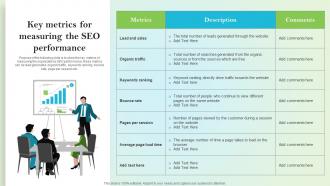
Purpose of the following slide is to show the key metrics of measuring the organizations SEO performance, these metrics can be lead generated, organic traffic, keywords ranking, bounce rate, page per session etc. Present the topic in a bit more detail with this Key Metrics For Measuring The Seo Performance On Site Search Engine Optimization Strategy For Organization. Use it as a tool for discussion and navigation on Organizations, Performance, Measuring. This template is free to edit as deemed fit for your organization. Therefore download it now.

People who downloaded this PowerPoint presentation also viewed the following :

FAQs for Key Metrics For Measuring The Seo Performance On Site Search Engine Optimization

Key SEO performance metrics include organic traffic growth, keyword ranking positions, click-through rates, bounce rates, and conversion rates from organic search. These metrics work together by revealing search visibility, user engagement quality, and revenue impact, with many businesses finding that tracking these comprehensively enables data-driven optimization strategies and sustained competitive advantage.

Organic traffic can be measured through Google Analytics, Google Search Console, keyword ranking tools, conversion tracking, and traffic source analysis. These platforms enable businesses to monitor visitor volume, search query performance, and user engagement patterns, while tracking revenue attribution and content effectiveness, ultimately delivering insights that enhance SEO strategies and competitive positioning.

CTR serves as a critical SEO performance indicator, measuring how effectively your search listings attract clicks relative to impressions and signaling content relevance to search engines. High CTRs demonstrate that your titles and meta descriptions resonate with users, potentially boosting rankings, while low CTRs indicate optimization opportunities, with many organizations finding that improving CTR correlates with enhanced organic visibility and traffic growth.

Conversion rates directly measure SEO's business impact by tracking how organic traffic translates into desired actions like purchases, sign-ups, or inquiries, making them more valuable than traffic volume alone. While high rankings drive visibility, conversion optimization ensures that SEO efforts deliver measurable ROI, with many companies finding that strategic keyword targeting combined with user experience improvements ultimately drives both traffic quality and revenue growth.

Bounce rate indicates visitor engagement quality and content relevance, directly impacting search rankings since search engines interpret high bounce rates as poor user experience signals. While isolated bounce rates require context, strategic content optimization, faster page loading, and improved user navigation can significantly reduce bounce rates, ultimately enhancing organic visibility and delivering stronger SEO performance.

Page load time significantly impacts SEO performance metrics by affecting bounce rates, user engagement, search rankings, and conversion rates. Google's algorithm prioritizes faster-loading sites, while slower pages increase user abandonment and decrease dwell time, ultimately reducing organic visibility and search performance, with many e-commerce and service businesses finding faster sites deliver better rankings.

Google Search Console, SEMrush, Ahrefs, Moz Pro, and Rank Tracker offer comprehensive keyword monitoring capabilities through automated tracking, competitor analysis, and historical data insights. These platforms streamline SEO workflows by delivering real-time ranking updates, local search visibility metrics, and SERP feature tracking, with many digital marketing teams finding that integrated dashboards ultimately enhance strategic decision-making and competitive positioning.

User engagement significantly impacts SEO performance through metrics like bounce rate, time on page, click-through rates, and social shares, which search engines interpret as quality signals. These engagement factors enhance search rankings by demonstrating content relevance and user satisfaction, with many websites finding that improved engagement metrics directly correlate with higher organic visibility and traffic growth.

Domain authority significantly influences search rankings, organic traffic volumes, keyword competitiveness, and overall SEO performance across digital marketing campaigns. Higher domain authority enables websites to rank more effectively for competitive keywords, attract quality backlinks, and achieve faster indexing, with many businesses finding that strategic domain authority improvements ultimately deliver enhanced visibility, increased organic conversions, and sustainable competitive advantage in search results.

Backlinks can be measured through domain authority scores, referral traffic analytics, keyword ranking improvements, link quality assessments, and anchor text diversity analysis. These metrics enable SEO professionals to evaluate link-building campaigns by tracking organic search growth, page authority increases, and competitive positioning improvements, with many digital marketing teams finding that high-quality backlinks significantly enhance search visibility and drive measurable traffic gains.

Local SEO performance analysis should prioritize Google My Business insights, local keyword rankings, citation consistency across directories, online review metrics, and local pack visibility. These metrics streamline local visibility by tracking customer engagement, search position improvements, and geographic targeting effectiveness, with many retail businesses and service providers finding that consistent monitoring ultimately delivers increased foot traffic and enhanced local market penetration.

Content quality can be quantified through SEO metrics including bounce rate, time on page, pages per session, social shares, and backlink acquisition rates. These indicators reveal user engagement and content value, with search engines increasingly prioritizing content that generates longer session durations, higher click-through rates, and natural link building, ultimately delivering improved rankings and organic traffic growth.

Mobile SEO performance measurement best practices include tracking mobile page speed, mobile-first indexing status, mobile usability errors, local search rankings, and mobile conversion rates. These metrics enable businesses to optimize mobile user experiences by identifying technical issues, improving site responsiveness, and enhancing local visibility, with many retailers and service providers finding that comprehensive mobile tracking ultimately delivers higher search rankings and increased mobile revenue.

Social media engagement influences SEO metrics by increasing brand visibility, driving referral traffic to websites, and enhancing content reach through shares and interactions. While social signals aren't direct ranking factors, platforms like LinkedIn, Twitter, and Facebook amplify content distribution, generate backlinks, and boost brand awareness, ultimately improving organic search performance and online authority.

Analyzing competitor SEO performance reveals keyword gaps, content opportunities, backlink strategies, technical optimization approaches, and market positioning insights. These competitive intelligence findings enable businesses to identify underexploited keywords, benchmark their content against top performers, and discover link-building opportunities, ultimately delivering strategic advantages and faster organic growth in increasingly competitive digital landscapes.

Ratings and Reviews

100% of 100
Review Form
Write a review
Most Relevant Reviews
  1. 100%

    by Clair Gray

    Nice and innovative design.
  2. 100%

    by Michael Allen

    Their designing team is so expert in making tailored templates. They craft the exact thing I have in my mind…..really happy.

2 Item(s)

per page: