Logistics Plan Powerpoint Ppt Template Bundles
Try Before you Buy Download Free Sample Product
Audience
Editable
of Time
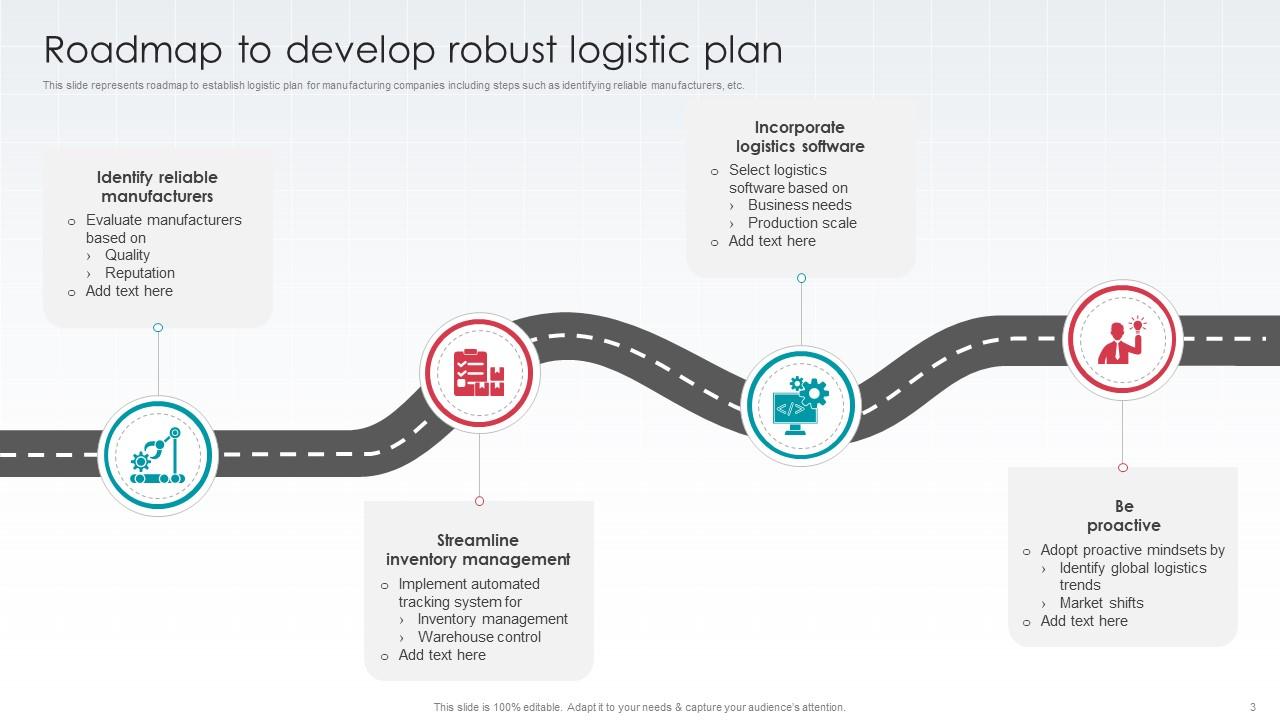
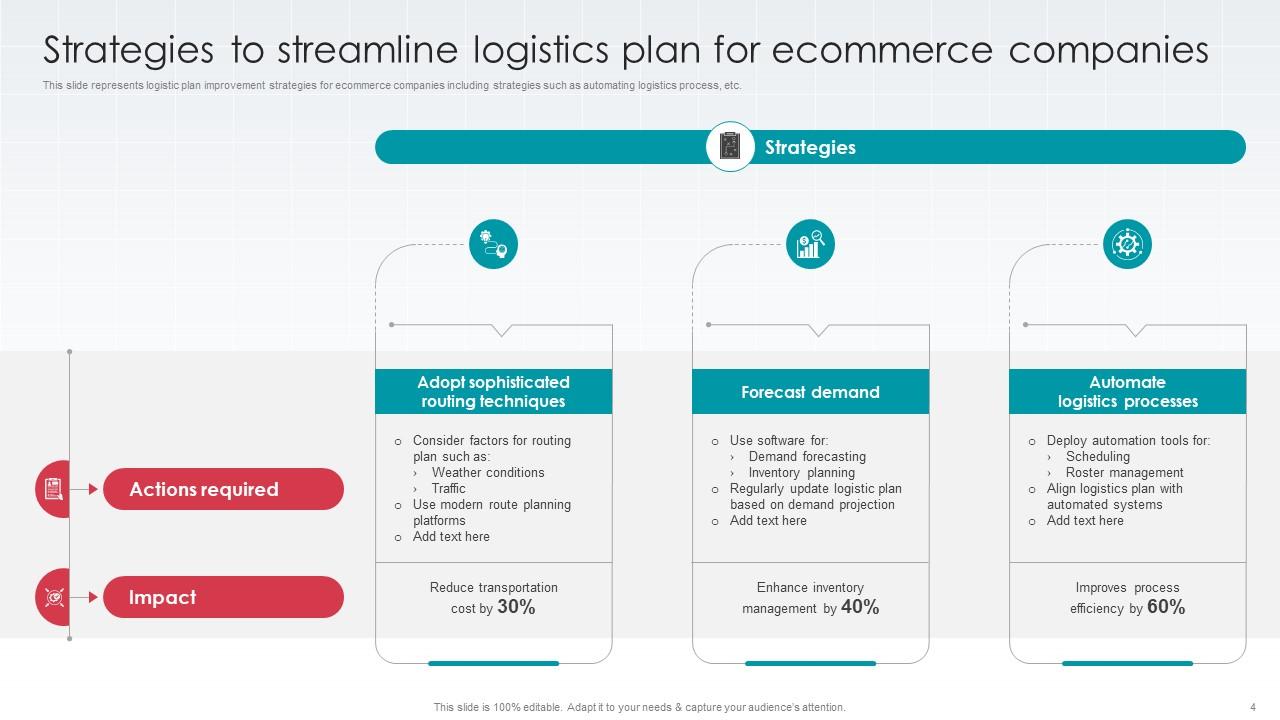
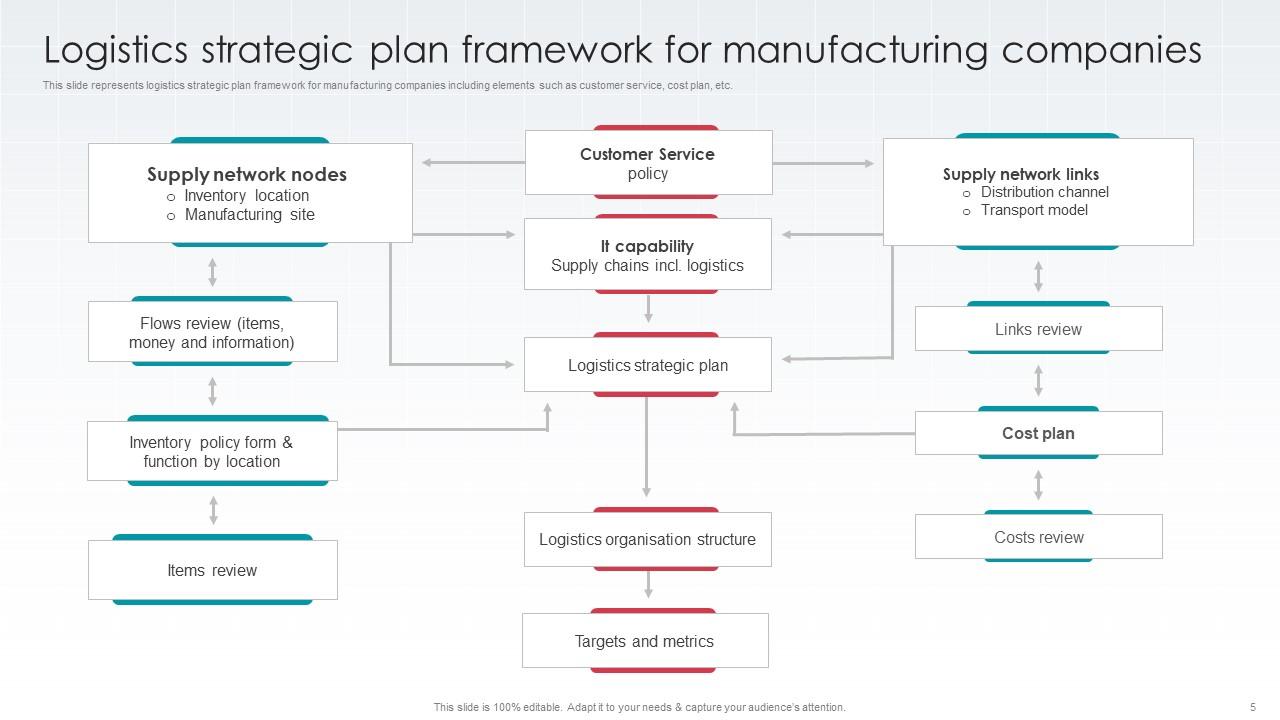
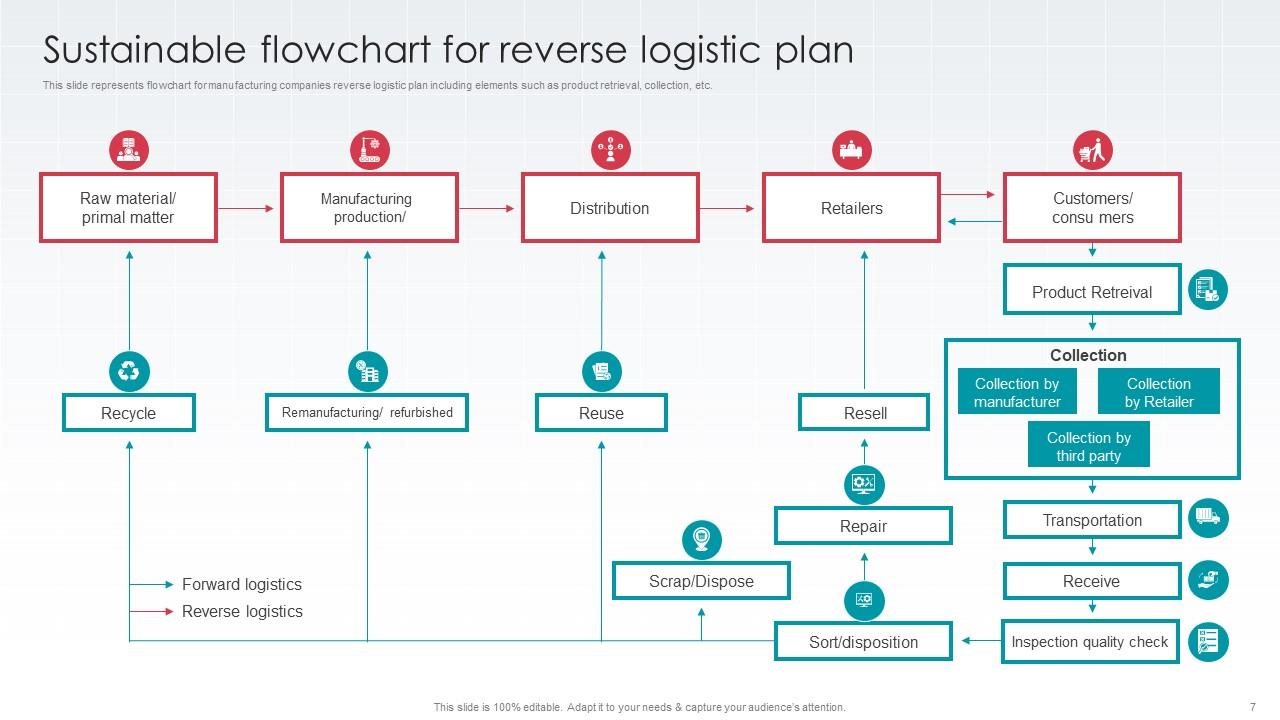
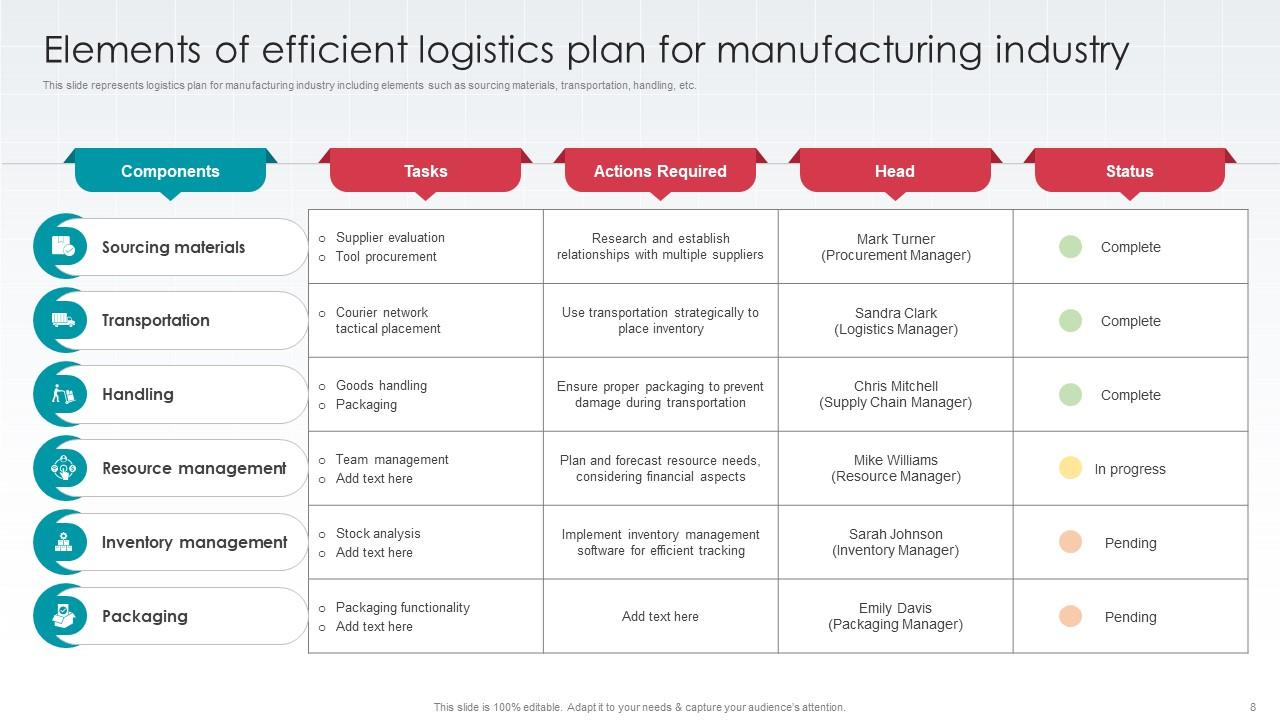
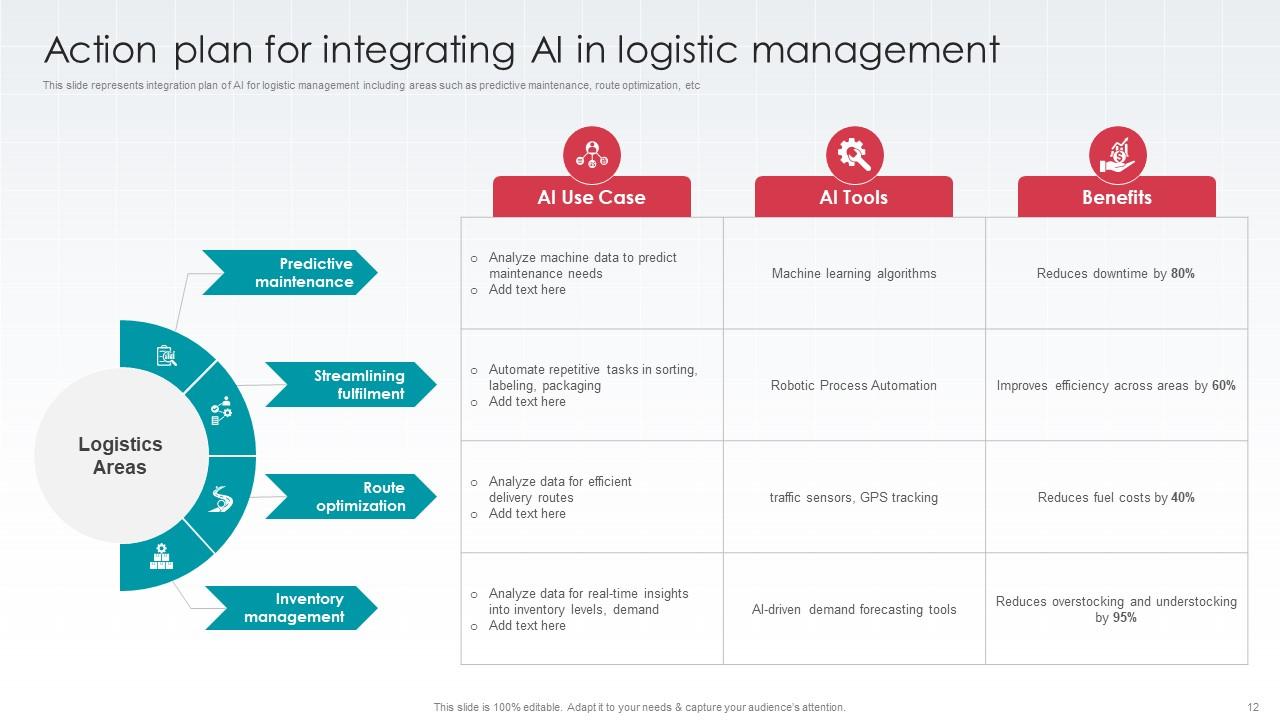
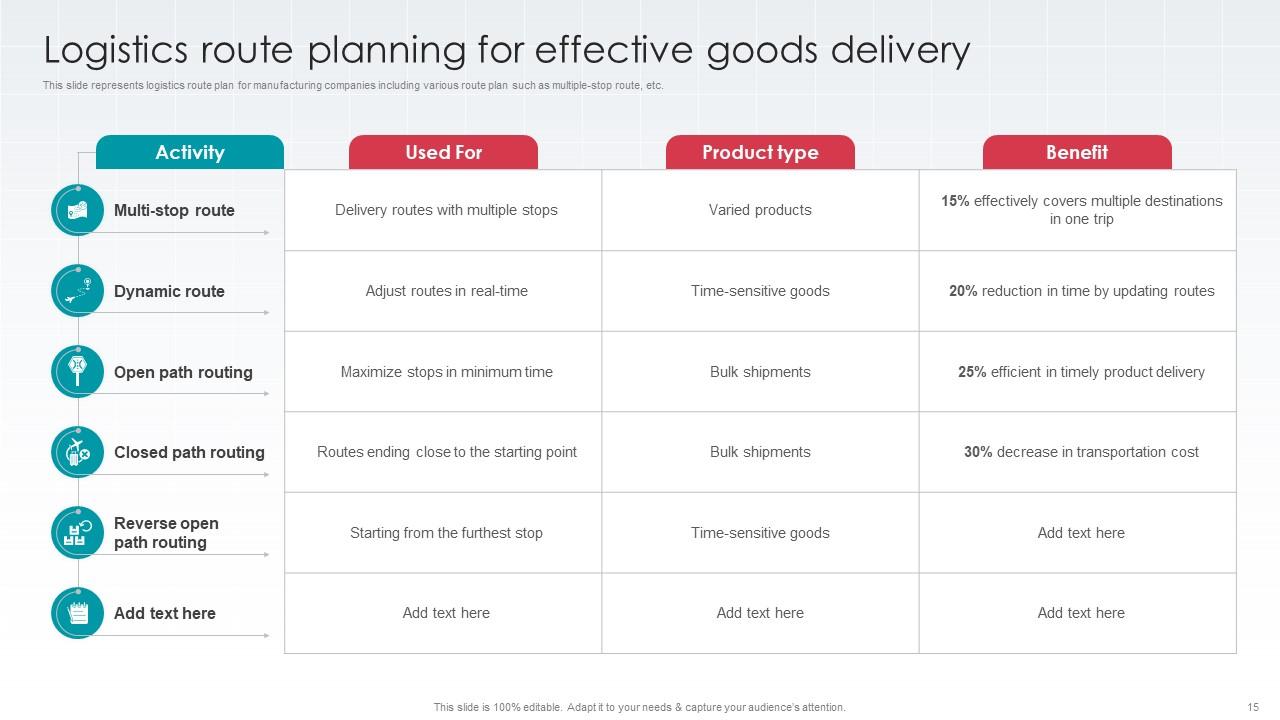
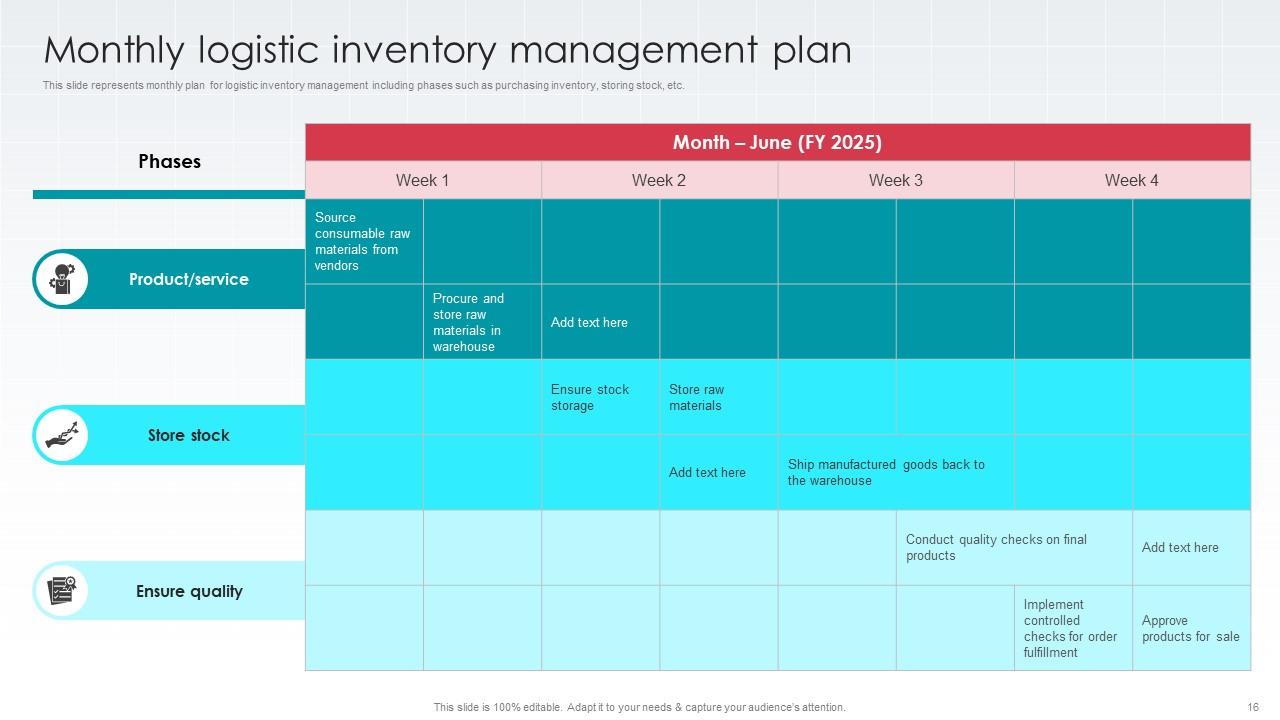
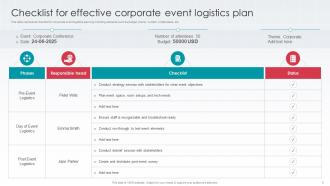
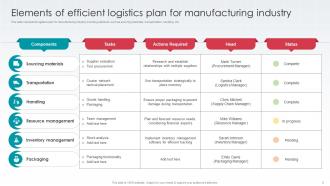
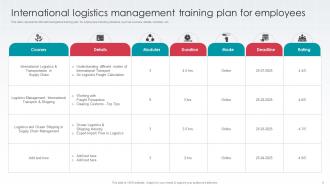
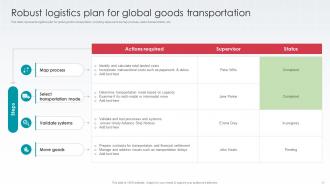
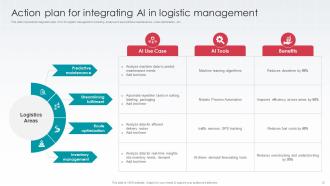
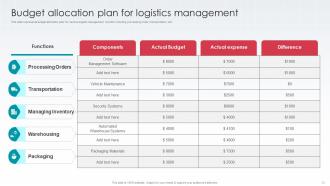
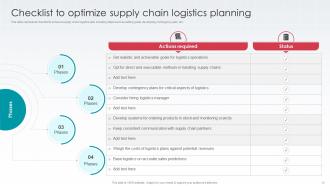
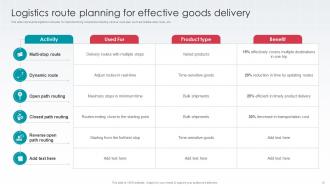
Unveil the future of seamless operations with our Logistics Plan PowerPoint template. This dynamic presentation encapsulates the essence of supply chain logistics, transportation strategy, distribution planning, inventory management, and freight logistics. Effortlessly convey the intricacies of your logistics plan through captivating visuals and strategic insights. Tailored for professionals seeking comprehensive solutions, this PPT offers a strategic roadmap for optimizing every facet of the logistics journey. From warehouse efficiency to transportation intricacies, empower your audience with a clear vision using this user-friendly template. Streamline your logistics communication and bring clarity to supply chain processes with this essential tool designed to elevate your logistics planning presentations.
People who downloaded this PowerPoint presentation also viewed the following :
Logistics Plan Powerpoint Ppt Template Bundles with all 28 slides:
Use our Logistics Plan Powerpoint Ppt Template Bundles to effectively help you save your valuable time. They are readymade to fit into any presentation structure.
FAQs for Logistics Plan Powerpoint
Key components of an effective logistics plan include inventory management, transportation optimization, warehouse operations, demand forecasting, and supplier coordination. These elements work together by streamlining supply chain flow, minimizing costs, and enhancing delivery reliability, with many organizations finding that strategic integration of these components delivers competitive advantage and improved customer satisfaction.
Technology significantly enhances logistics planning efficiency by automating route optimization, enabling real-time tracking, and facilitating predictive analytics for demand forecasting. Through AI-powered systems and IoT sensors, companies streamline warehouse operations, minimize transportation costs, and accelerate delivery times, with many retailers and manufacturers finding that these integrated solutions ultimately deliver improved customer satisfaction and competitive advantage.
Developing a logistics strategy involves analyzing current supply chain performance, defining objectives and KPIs, mapping distribution networks, evaluating transportation modes, and establishing vendor partnerships. Through strategic planning, organizations streamline operations, reduce costs, and enhance customer satisfaction, with many manufacturing and retail companies finding that comprehensive logistics strategies deliver competitive advantages and improved operational efficiency.
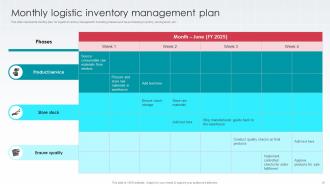
Inventory management and logistics serve as critical pillars of supply chain optimization by controlling stock levels, reducing carrying costs, and ensuring timely product delivery across distribution networks. These strategic functions streamline operations by minimizing waste, enhancing demand forecasting, and accelerating order fulfillment, with many retail and manufacturing organizations finding that integrated inventory-logistics systems deliver significant cost reductions and improved customer satisfaction.
Data analytics enhances logistics planning decision-making by providing real-time visibility into supply chain performance, identifying bottlenecks and inefficiencies, and enabling predictive forecasting for demand patterns. Through advanced analytics platforms, logistics managers can optimize route planning, reduce transportation costs, and improve delivery accuracy, with many companies finding that data-driven insights ultimately deliver faster services and significant operational savings.
Common logistics plan implementation challenges include supply chain disruptions, inventory management complexities, transportation cost fluctuations, technology integration difficulties, and vendor coordination issues. These obstacles often impact operational efficiency through delayed deliveries, increased costs, and reduced customer satisfaction, with many organizations finding that proactive risk management and flexible contingency planning ultimately deliver improved resilience and competitive advantage.
Stakeholder communication is critical in logistics planning, ensuring alignment between suppliers, customers, internal teams, and transportation partners throughout the supply chain process. Effective communication enables real-time coordination, reduces delays and costs, minimizes inventory disruptions, and enhances customer satisfaction, with many organizations finding that transparent stakeholder engagement ultimately delivers competitive advantage and operational efficiency.
Key logistics plan metrics include on-time delivery rates, transportation costs, inventory turnover, order accuracy, warehouse efficiency, and customer satisfaction scores. These performance indicators enable organizations to streamline operations, reduce expenses, and enhance service quality, with many retail and manufacturing companies finding that comprehensive metric tracking ultimately delivers competitive advantage and improved customer experiences.
Regional regulations significantly influence logistics planning by dictating transportation methods, documentation requirements, customs procedures, and delivery timeframes across different markets. International companies must navigate varying import/export laws, safety standards, and tax structures, with many organizations finding that strategic regulatory compliance planning reduces delays, minimizes costs, and ultimately delivers competitive advantage in global operations.
Sustainable logistics practices include electric vehicle fleets, route optimization software, renewable energy warehouses, packaging reduction initiatives, and carbon offset programs. These approaches streamline operations by minimizing fuel consumption, reducing waste, and enhancing supply chain transparency, with many retailers and manufacturers finding that sustainable logistics ultimately delivers cost savings while strengthening brand reputation.
Risk management integrates into logistics planning through comprehensive risk assessment, contingency planning, supplier diversification, real-time monitoring systems, and scenario modeling. These strategies enable organizations to identify potential disruptions, develop alternative transportation routes, maintain backup supplier relationships, and implement automated alert systems, ultimately delivering greater supply chain resilience and operational continuity.
B2B logistics planning involves complex supply chains with fewer, larger orders, longer lead times, and specialized transportation requirements, while B2C focuses on high-volume, smaller shipments with faster delivery expectations and direct-to-consumer fulfillment. B2B operations typically emphasize relationship management and bulk handling, whereas B2C prioritizes last-mile delivery efficiency, customer experience optimization, and scalable distribution networks that enable faster service delivery.
Transportation mode selection fundamentally shapes logistics plans by determining delivery speed, cost structure, geographic reach, and service reliability across supply chain operations. Strategic modal choices between trucking, rail, air, and maritime options directly influence inventory positioning, warehouse locations, and customer service levels, with many organizations finding that multimodal approaches optimize both operational efficiency and competitive advantage.
Outsourcing logistics delivers reduced operational costs, access to specialized expertise, enhanced scalability, improved technology integration, and strategic focus on core business activities. Many companies, especially in retail and manufacturing, find that third-party logistics providers streamline supply chain operations, minimize infrastructure investments, and enable faster market expansion, ultimately delivering competitive advantage in increasingly complex global markets.
Continuous improvement methodologies enhance logistics planning through systematic data analysis, process optimization, and performance monitoring cycles. By implementing lean principles, Six Sigma techniques, and kaizen approaches, organizations streamline warehouse operations, reduce transportation costs, and minimize delivery times, with many logistics companies finding that these methodologies deliver sustained operational efficiency and competitive advantage.
-
Unique research projects to present in meeting.
-
I want to thank SlideTeam for the work that they do, especially their customer service.