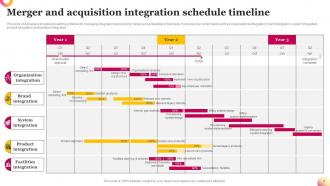
M And A Timeline Powerpoint Ppt Template Bundles

Rating:
80%
M And A Timeline Powerpoint Ppt Template Bundles
Slide 1 of 17
Favourites Favourites

Try Before you Buy Download Free Sample Product

Audience Impress Your
Audience
Editable 100%
Editable
Time Save Hours
of Time
The Biggest Sale is ending soon in
0
0
:
0
0
:
0
0
Rating:
80%
Deliver a lucid presentation by utilizing this M And A Timeline Powerpoint Ppt Template Bundles. Use it to present an overview of the topic with the right visuals, themes, shapes, and graphics. This is an expertly designed complete deck that reinforces positive thoughts and actions. Use it to provide visual cues to your audience and help them make informed decisions. A wide variety of discussion topics can be covered with this creative bundle such as Business Integration, Private Equity Transaction, M and A Process, Integration Roadmap. All the twelve slides are available for immediate download and use. They can be edited and modified to add a personal touch to the presentation. This helps in creating a unique presentation every time. Not only that, with a host of editable features, this presentation can be used by any industry or business vertical depending on their needs and requirements. The compatibility with Google Slides is another feature to look out for in the PPT slideshow.

FAQs for M And A Timeline Powerpoint

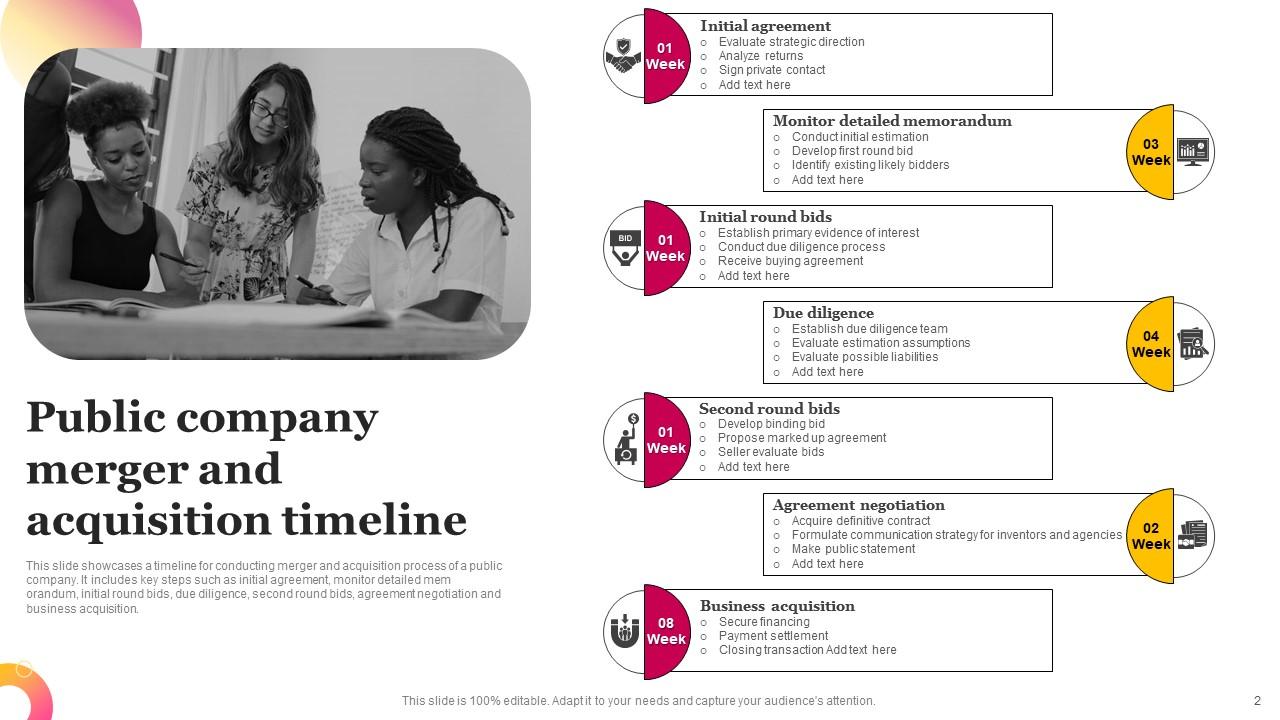
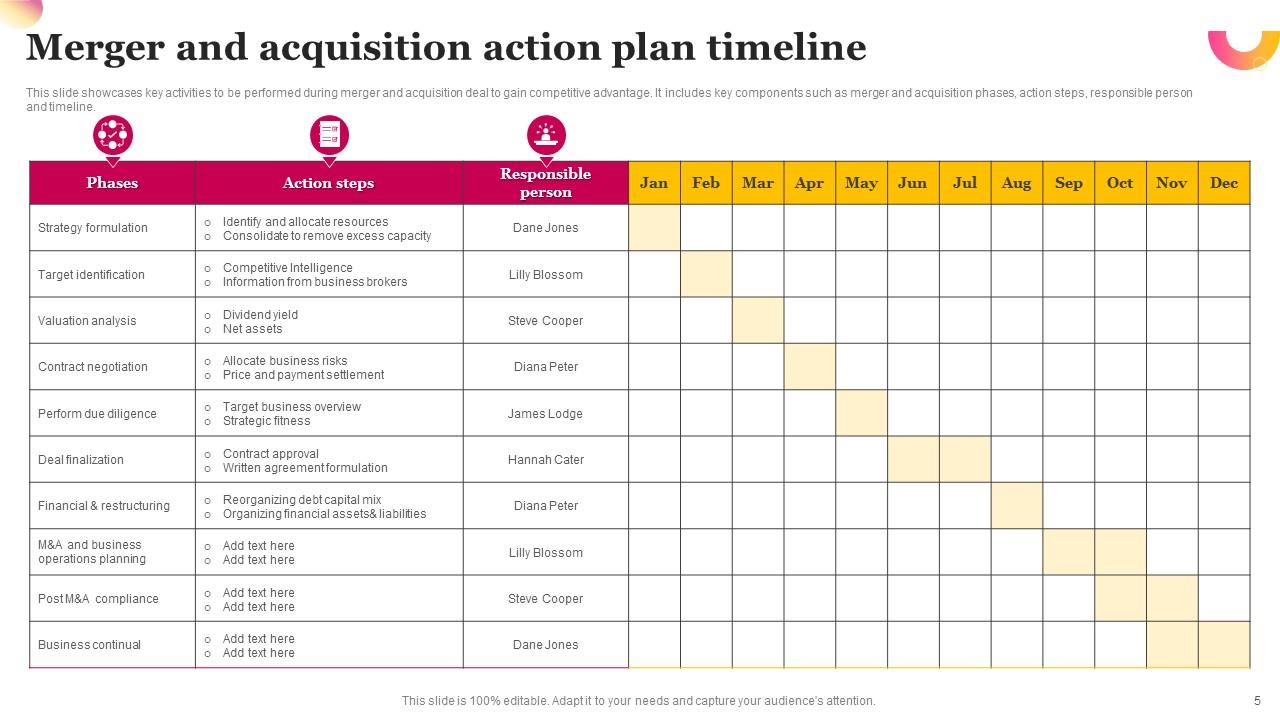
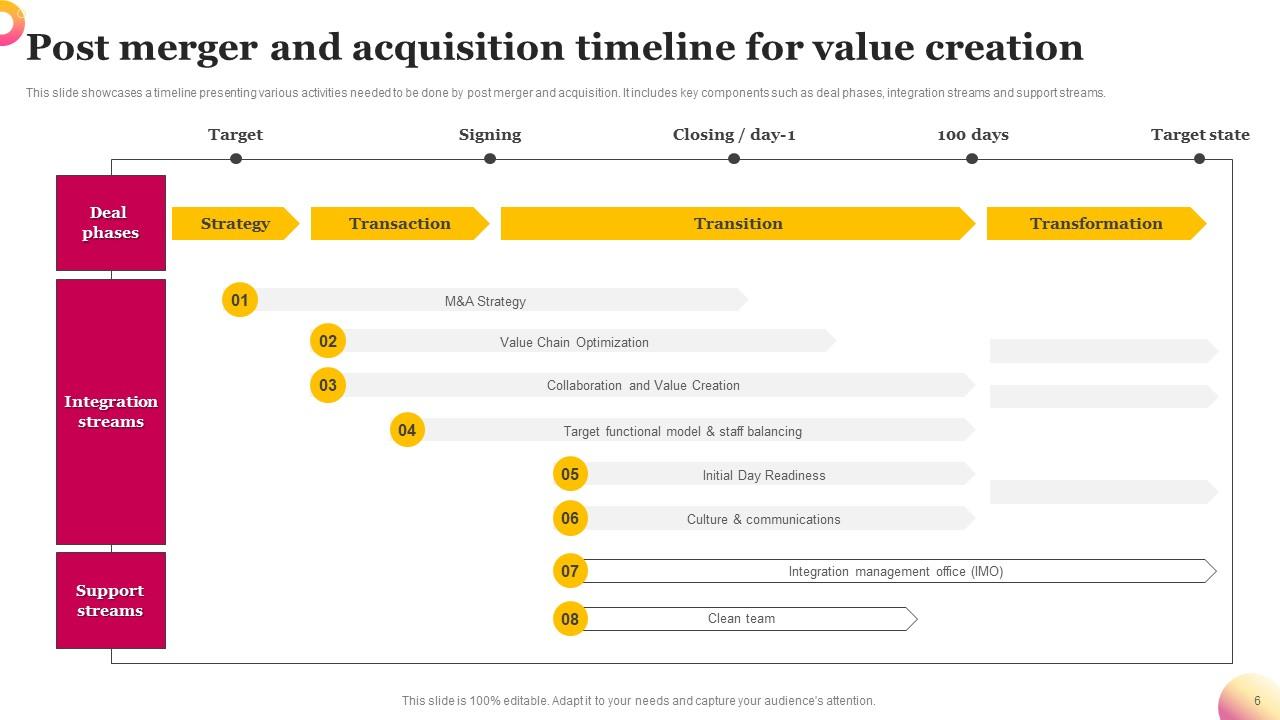
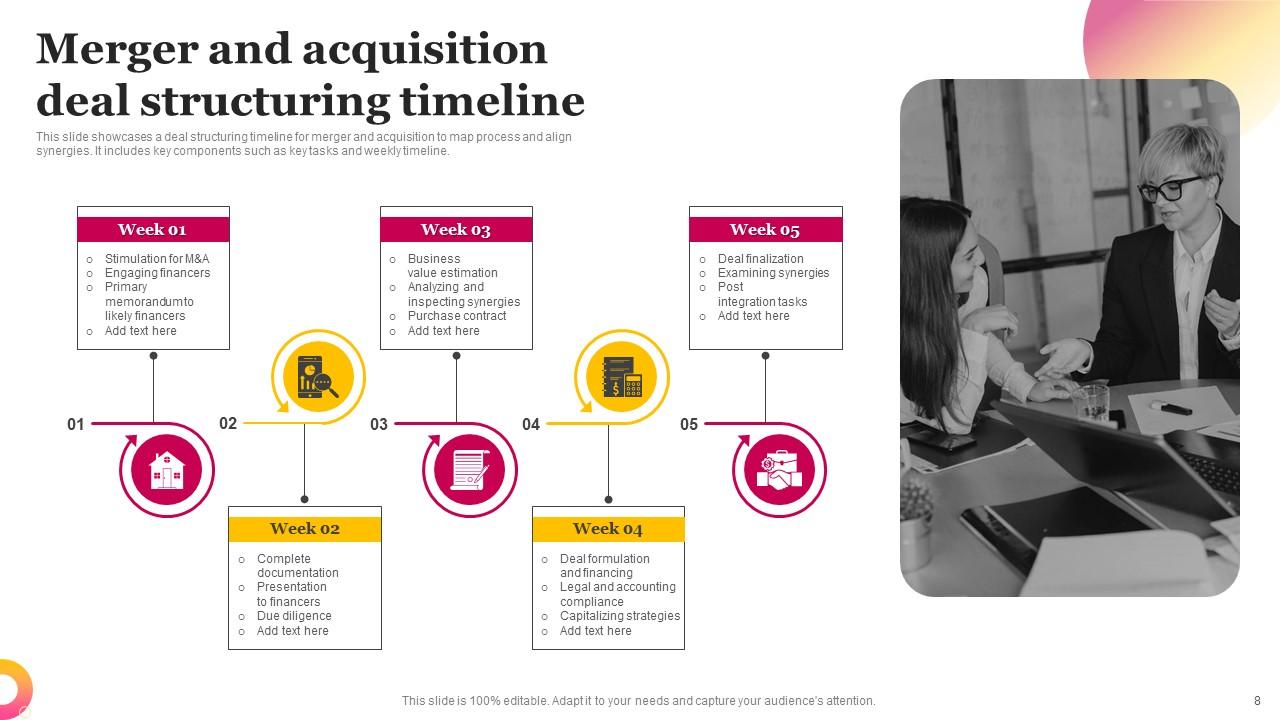
M&A timelines include pre-transaction planning, due diligence, negotiation, regulatory approval, and post-merger integration phases. These stages interconnect through continuous stakeholder communication, risk assessment, and strategic alignment, with investment banks, legal teams, and corporate development groups finding that early integration planning during due diligence accelerates post-closing synergy realization and operational efficiency.

Effective due diligence streamlines M&A timelines by identifying critical issues early, reducing post-discovery delays, and enabling faster decision-making through comprehensive risk assessment. Well-structured due diligence processes help organizations avoid costly surprises, accelerate negotiations, and minimize regulatory complications, with many successful deals finding that thorough upfront analysis ultimately delivers smoother integrations and competitive deal closure.

Communication serves as the foundation throughout M&A phases, from confidential preliminary discussions and due diligence coordination to stakeholder announcements and post-merger integration planning. Effective communication strategies streamline negotiations, manage regulatory requirements, and address employee concerns, while transparent updates to investors, customers, and partners ultimately minimize uncertainty, accelerate deal closure, and enhance integration success across organizations.

Companies mitigate M&A timeline risks through comprehensive due diligence, early regulatory engagement, and proactive stakeholder communication strategies. By establishing clear integration frameworks, securing financing commitments upfront, and maintaining transparent dialogue with regulators, organizations streamline approval processes while addressing potential roadblocks, ultimately delivering faster deal closures and reduced execution costs.

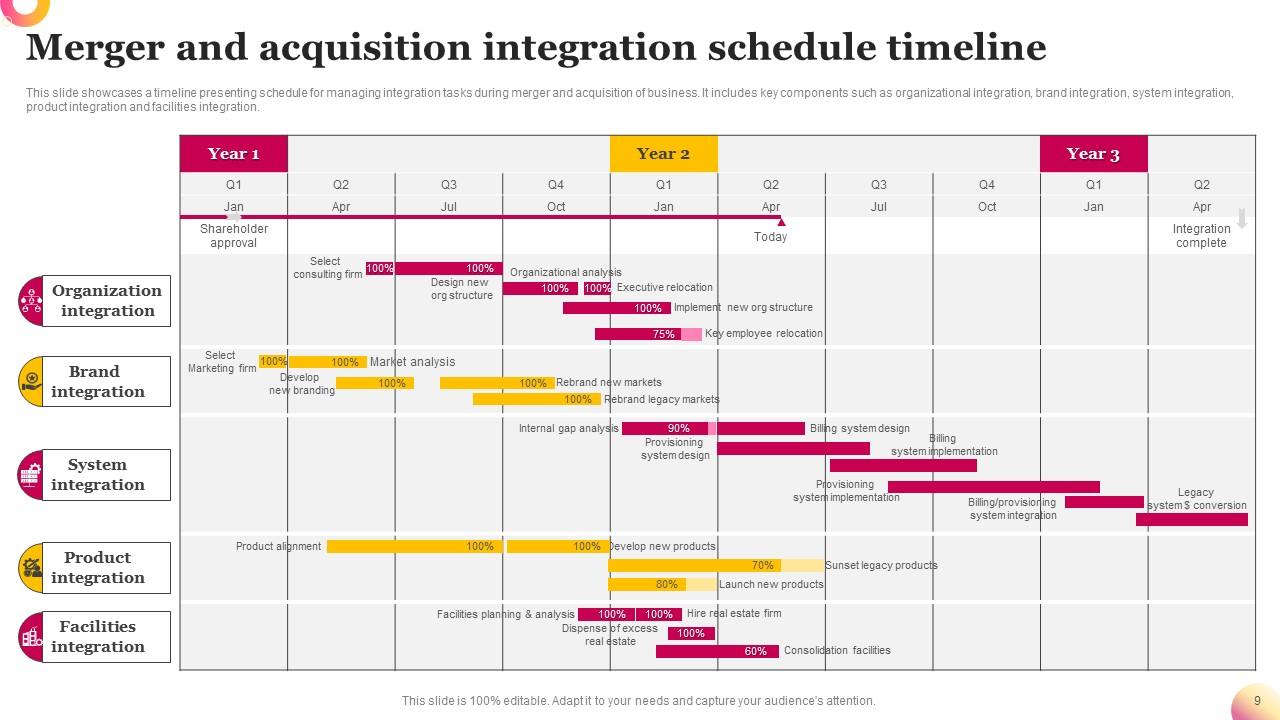
Common M&A integration challenges include cultural misalignment, technology system incompatibilities, talent retention issues, operational redundancies, and communication breakdowns across merged entities. These obstacles can be addressed through comprehensive cultural assessment programs, phased technology integration strategies, and transparent stakeholder communication, with many organizations finding that early identification and structured change management ultimately streamline operations while preserving competitive advantages.

Cultural differences can significantly extend cross-border M&A timelines through varied negotiation styles, decision-making processes, regulatory approaches, and communication preferences. These variations require additional time for relationship building, consensus development, and regulatory navigation, with many international transactions finding that investing in cultural alignment and local expertise ultimately streamlines approvals and enhances post-merger integration success.

Technology streamlines M&A processes through virtual data rooms, AI-powered due diligence, automated document analysis, cloud-based collaboration platforms, and digital workflow management systems. These solutions accelerate deal timelines by enabling real-time document sharing, automated compliance checking, and seamless stakeholder communication, with investment banks and corporate development teams finding significantly faster deal execution and reduced operational costs.

Regulatory approvals significantly extend M&A timelines by adding 6-18 months for review processes, requiring extensive documentation, and potentially demanding asset divestitures or operational modifications. These approvals directly impact transaction success, with many deals in healthcare, telecommunications, and financial services finding that early regulatory engagement, comprehensive compliance strategies, and proactive stakeholder communication ultimately deliver smoother closings and competitive advantages.

Best practices for setting realistic M&A timelines include conducting thorough due diligence upfront, building in buffer periods for regulatory approvals, establishing clear milestone checkpoints, and maintaining flexible communication schedules with all stakeholders. These approaches streamline deal progression by anticipating potential delays, managing stakeholder expectations, and enabling proactive problem-solving, with many organizations finding that structured timeline management ultimately delivers smoother transactions and higher success rates.

Companies should track deal announcement to closing duration, regulatory approval timeframes, due diligence completion rates, integration milestone achievements, and synergy realization schedules. These metrics enable organizations to identify bottlenecks early, streamline decision-making processes, and maintain stakeholder confidence, with many finding that consistent timeline adherence significantly enhances deal value and competitive positioning.

Due diligence delays can significantly impact M&A success by increasing transaction costs, creating market uncertainty, and potentially allowing competitors to emerge with alternative offers. These delays often signal underlying issues like incomplete financial records or regulatory complications, which can erode buyer confidence, reduce deal valuations, and ultimately lead to renegotiated terms or deal abandonment, with many organizations finding that prolonged timelines strain resources and strategic momentum.

Strategies to accelerate M&A negotiations include comprehensive due diligence preparation, pre-negotiation term sheet alignment, dedicated deal teams, and parallel workstream management. These approaches streamline discussions by addressing key concerns upfront, enabling faster decision-making, and minimizing delays, with many organizations finding that thorough preparation and clear communication protocols ultimately deliver shorter timelines and smoother transactions.

Economic conditions significantly influence M&A timelines through financing availability, regulatory scrutiny, and market volatility. During economic downturns, deals often extend 3-6 months longer due to increased due diligence requirements, tighter credit markets, and heightened regulatory review, while favorable conditions streamline processes through readily available capital and expedited approvals.

Stakeholder engagement ensures timeline adherence by facilitating clear communication, securing necessary approvals, and minimizing resistance-driven delays throughout the M&A process. Proactive engagement with employees, regulators, customers, and shareholders accelerates due diligence, streamlines integration planning, and reduces post-merger disruptions, with many organizations finding that early stakeholder alignment ultimately delivers faster deal closure and smoother operational transitions.

Lessons learned from past M&A experiences improve future timelines by identifying bottlenecks, streamlining due diligence processes, and establishing clearer communication protocols across teams. Organizations increasingly leverage these insights to develop standardized integration playbooks, optimize resource allocation, and anticipate regulatory challenges, with many companies finding that systematic post-deal reviews ultimately reduce future transaction timelines by 20-30%.

Ratings and Reviews

80% of 100
Review Form
Write a review
Most Relevant Reviews
  1. 80%

    by Christopher Wood

    “I always have a wonderful experience with SlideTeam. It's my ""go to"" when I need a template.”
  2. 80%

    by Dino Grant

    SlideTeam is the best in the business. Their templates are engaging and customizable. You can rely on them.

2 Item(s)

per page: