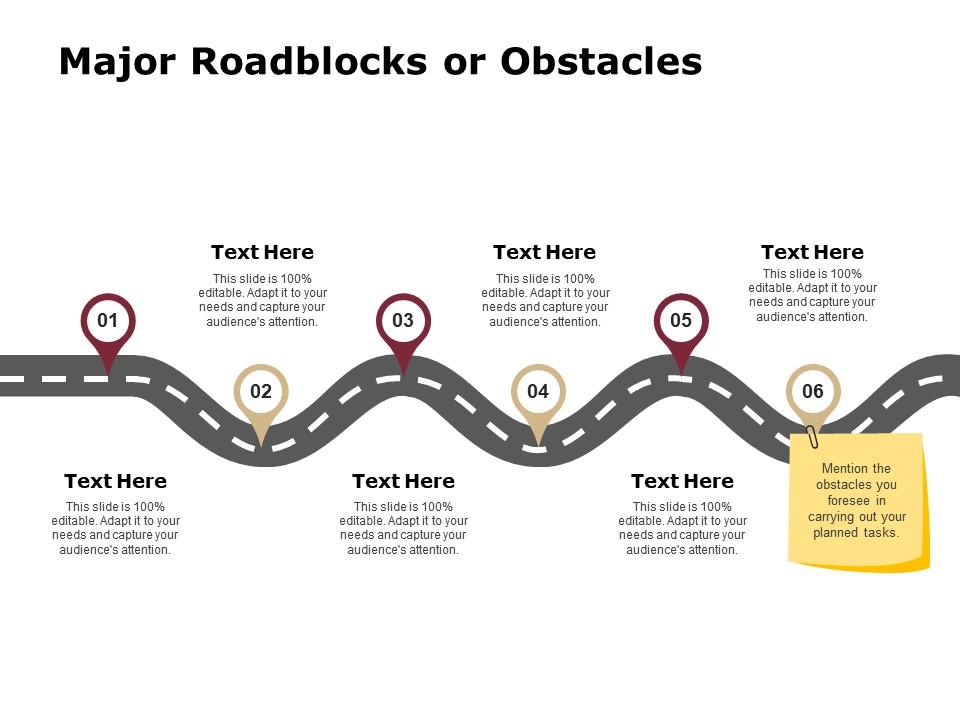
Principales obstáculos u obstáculos Líneas de tiempo Ppt Presentación de PowerPoint Galería Formato Ideas

Slide 1 of 5
Favourites Favourites

Try Before you Buy Download Free Sample Product

Audience Impress Your
Audience
Editable 100%
Editable
Time Save Hours
of Time
The Biggest Sale is ending soon in
0
0
:
0
0
:
0
0

Características de estas diapositivas de presentación de PowerPoint:

Presentando este conjunto de diapositivas con el nombre Principales obstáculos u obstáculos Cronogramas Ppt Presentación de PowerPoint Galería Formato Ideas. Este es un proceso de seis. Las etapas de este proceso son Timeline, Business, Planning, Management, Process. Esta es una presentación de PowerPoint completamente editable y está disponible para su descarga inmediata. Descárguelo ahora e impresione a su audiencia.

People who downloaded this PowerPoint presentation also viewed the following :

FAQs for Major roadblocks or obstacles timelines ppt powerpoint presentation

Scope creep is the absolute worst - like, you start with one thing and suddenly everyone wants fifteen more features. Then you've got teams not talking to each other, which creates chaos. Resource shortages hit hard too. Construction gets screwed by weather and permits, software hits weird technical problems, manufacturing deals with supply chain nightmares. But honestly? Most projects fail because the timeline was garbage from day one. Nobody wants to be the person saying "this'll take six months" when everyone expects two. Build in extra time and do weekly check-ins so small problems don't become disasters.

Oh man, resource problems are the worst for project timelines. Seriously kills everything. You'll be cruising along and then boom - your best developer gets yanked for some "emergency" project. Budget cuts hit mid-way through and suddenly you're doing everything with half the team. It's like trying to cook dinner when someone keeps stealing your ingredients. The competition between projects for the same people? Total nightmare. Honestly, just assume something's gonna break and plan extra time from day one. Map out who you really NEED and when, but don't expect it to go smoothly.

Oh man, scope changes are project killers. They mess up everything because you can't just add time to the end - there's always some weird dependency that breaks your whole timeline. I've watched "quick fixes" turn into months of delays when teams realize how connected everything is. The timing is always terrible too, like right when you promised to deliver something. Actually had this happen last quarter and it was brutal. But here's what saved me: write down every single change with how it'll impact your dates. Don't move forward until everyone signs off on the new timeline. Trust me on this one.

Oh dude, you're so right to ask about this. Bad communication literally kills projects - I've watched it happen over and over. Stakeholders will blindside you with changes or sit on approvals for weeks if you don't stay on top of them. Super frustrating but totally avoidable. What works is setting up regular check-ins from the start, even when things seem fine. Don't wait for them to reach out first. Catch scope creep early before it snowballs into chaos. Honestly, being annoying with updates is way better than scrambling to fix timeline disasters later.

Ugh, economic shifts are the worst for project timelines - they mess you up from every direction. Your budget shrinks while vendors jack up prices or literally disappear. That 6-month thing? Yeah, it's now 9+ months easy. Supply chains go completely haywire too. I watched one team sit around for three months waiting for stuff that used to show up in two weeks. It's honestly insane how fast things can spiral. You're not just dealing with delays either - you'll end up redesigning everything with way less cash. My advice? Pad your timeline more than feels necessary and line up backup suppliers now.

Oh man, team dynamics are HUGE for hitting deadlines. Good communication and trust? Projects just flow and problems get sorted fast. But when people don't mesh well, everything falls apart - folks work alone, nobody shares critical info, and stupid conflicts eat up time. I've watched entire projects crash because the team couldn't get their act together. Honestly, communication breakdowns are the worst - they'll torpedo weeks from your timeline. My take? Spend some real time early on getting everyone aligned, then do regular check-ins. Way easier to fix team weirdness before it kills your schedule.

Honestly, I'd go with Agile if I were you - breaking things into sprints makes it way easier to catch problems before they blow up. Waterfall's fine but super rigid when stuff hits the fan. Build in buffer time from day one, that's huge. Regular check-ins are your friend here, helps you see delays coming while you can still do something about it. Oh and track how fast your team actually works on stuff, not how fast you think they should work. Document the risks early and have backup plans ready. Sounds boring but it'll save your butt later.

Break those huge tasks down first - way less overwhelming that way. Build in buffer time because something always goes sideways (Murphy's law is real). Figure out what's absolutely critical vs what would just be nice to finish. I swear, daily team check-ins are a lifesaver for catching problems early. Spot your biggest risks now and have backup plans ready. The key thing though? Start talking to stakeholders about potential delays before you actually need extra time. Don't wait until you're already behind. Oh, and be ruthless about priorities - you can't do everything perfectly under tight deadlines.

Look, new tech can totally speed things up - better tools, automation, smoother teamwork. But it can also completely screw you over if you're not careful. Learning curves are brutal, and sometimes that "amazing" new software just breaks everything else you're using. I made that mistake once, wasn't pretty. My advice? Don't jump on every shiny tool that pops up mid-project. Stay aware of what's out there, sure, but only adopt stuff that'll actually move the needle. Timing matters way more than people think.

Dude, realistic milestones are like your project insurance policy. Break everything into smaller pieces first - way easier to estimate that way. Your team will actually hit targets instead of constantly missing them, which honestly keeps morale from tanking. I've watched so many projects implode because someone thought they could magically finish in half the time. Spot delays before they become disasters. Stakeholders won't hate you when you deliver what you promised. Oh, and always pad your estimates a bit - trust me on this one, stuff always takes longer than you think it will.

Dude, complex projects are brutal for timelines. More moving parts = way more stuff breaking down. My last integration project? Total nightmare - every dependency had its own drama. Here's the thing though: complexity doesn't just add extra risk, it multiplies everything. Multiple teams, new tech, weird dependencies... each one creates like 5 more ways things can blow up. You'll think you need an extra week but honestly? Triple your buffer time for anything remotely complicated. Simple projects, sure, pad by 20%. Complex ones need way more breathing room or you'll be scrambling.

Oh man, compliance stuff will totally destroy your timeline if you're not careful. I made this mistake before - thought approvals would take like a week, ended up being two months. Figure out what regulations hit your project right at the start. Then actually build those review cycles into your schedule as must-haves, not nice-to-haves. Some industries are worse than others obviously. Get your preliminary designs to the regulatory people ASAP though. Seriously, they move at their own pace and there's nothing you can do about it once you're stuck waiting.

Honestly, just pick Asana, Trello, or Monday.com and stick with it - don't be like me switching tools every month lol. Gantt charts are a game changer for seeing how tasks connect, even though they look intimidating at first. Set up those automated reminders because I promise you'll forget something important otherwise. Oh and get Toggl or Harvest for time tracking. It's kind of scary seeing where hours actually go versus your perfect plan, but super helpful. The biggest thing? Don't overthink it. Choose one system and commit to using it consistently instead of tool-hopping when things get messy.

So basically you track how long stuff actually takes vs what you thought it would take, then use that info to get better at guessing next time. I started doing this on my last project and honestly it was eye-opening - I'm terrible at estimating anything involving user testing apparently. The trick is being consistent about it though. When you finish tasks, write down the real timeframe and compare it to your original estimate. Look for patterns in where you're always off. Then factor that into your next round of planning. Maybe start small - just track one project for like two weeks and see what you learn.

Tight deadlines seriously mess with people's heads. Your team gets stressed and anxious, which is obvious, but then decision fatigue kicks in - they're so mentally drained they start making dumb choices. Communication falls apart because everyone gets tunnel vision. I've watched really solid teams turn snippy with each other when crunch time hits. The really brutal part? Stress causes mistakes, mistakes create more pressure, and suddenly you're in this awful spiral. Oh, and build in buffer time from the start - trust me on this one.

Ratings and Reviews

0% of 100
Review Form
Write a review
Most Relevant Reviews

No Reviews