Exemplo de planejamento estratégico de gestão Apresentação Ppt
Try Before you Buy Download Free Sample Product
Audience
Editable
of Time
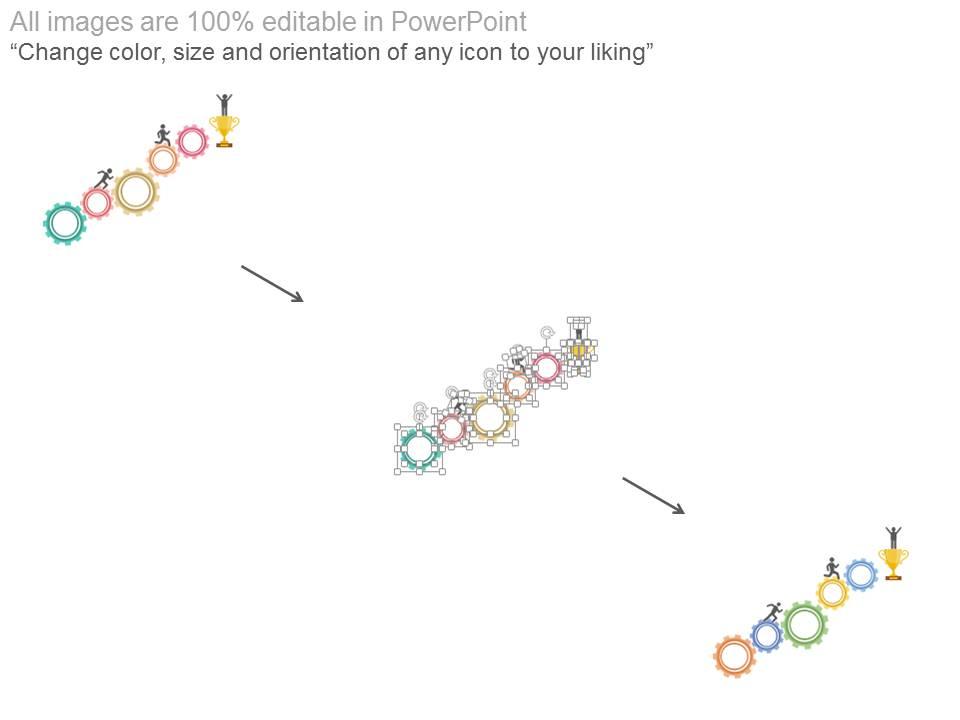
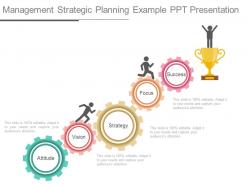
Com nosso design de apresentação PPT de planejamento estratégico de gestão, você pode destacar o conceito de criar a estratégia perfeita para atender aos objetivos do negócio. Nosso slide do PowerPoint mostra a imagem gráfica profissional dos profissionais em diferentes níveis das engrenagens. As empresas atuam no aspecto do planejamento estratégico para garantir o bom funcionamento do processo. Quer você esteja aumentando o valor da sua marca ou vendendo os produtos ou serviços para atingir as metas desejadas. Este visual da Apresentação mostra os principais aspectos que desempenham um papel significativo no crescimento do negócio como atitude, visão, estratégia, foco e sucesso. Garantir que profissionais e investidores trabalhem em prol do objetivo comum que é atender às metas de negócios. O diagrama do PowerPoint é o grande exemplo de mostrar ao seu público como os negócios alcançam o sucesso com o planejamento. Se as coisas forem planejadas da maneira certa, você poderá alcançar objetivos individuais e também de negócios. Portanto, baixe e insira este slide PPT criativo em sua apresentação o mais rápido possível. Nossa apresentação Ppt de exemplo de planejamento estratégico de gestão o encherá de confiança abundante. Nenhum evento o deixará desconcertado.
Recursos desses slides de apresentação do PowerPoint:
Projetos PPT flexíveis que combinam bem com os slides do Google. Slide 100% editável do PowerPoint e facilmente corrigível. Modelo de apresentação assistível em exibição padrão e widescreen. O download é rápido e pode ser convertido em documentos JPEG e PDF. Mais designs de apresentação acessíveis com diferentes nós e estágios. Adequado para equipes de gestão de negócios e profissionais de comércio. As etapas desse processo são atitude, visão, estratégia, foco, sucesso.
People who downloaded this PowerPoint presentation also viewed the following :
Exemplo de planejamento estratégico de gerenciamento Apresentação ppt com todos os 4 slides:
Permita que as pessoas evoluam constantemente com nossa apresentação de exemplo de planejamento estratégico de gerenciamento. Eles ajudam as abordagens dinâmicas a emergir.
FAQs for Management strategic planning
Honestly, most people mess this up by skipping the boring foundational stuff. Start with vision/mission - I know it sounds corporate-y but trust me on this. Do a solid SWOT analysis so you actually know what you're working with. Set objectives that are specific and measurable (none of that vague "increase engagement" nonsense). Then break everything down into action plans with real owners and deadlines. Oh, and don't rush through any of these steps just because you're excited to get started. Block out actual time for each phase or you'll end up backtracking later when things inevitably fall apart.
Break down those big strategic goals into actual tasks people can work on daily. Most companies are terrible at this part, honestly. Map out how each department's work connects to the main objectives - like, really spell it out because people won't figure it out themselves. Set up KPIs that tie operational stuff to strategic outcomes. Monthly check-ins help keep everyone aligned. The real trick is making sure people get WHY their work matters to the bigger picture, not just what they're supposed to do.
So SWOT analysis is basically your roadmap for everything else you'll do strategically. Map out strengths, weaknesses, opportunities, and threats first. Then you know exactly where to put your energy - maybe using what you're already good at to grab new opportunities, or fixing weak spots before they bite you. Honestly, most people think it's too simple but it actually works if you don't half-ass it. The trick is being real about your problems and not sugarcoating threats (easier said than done). Once you've got that honest picture, setting priorities becomes so much clearer.
Here's what I'd do - figure out your KPIs first and make sure they actually connect to what you're trying to accomplish. Most companies mess this up by skipping baseline measurements entirely, then can't figure out if anything worked. I like tracking both the quick wins (employee engagement, customer acquisition) and the bigger picture stuff like revenue growth. Quarterly check-ins work pretty well for most things. Oh, and measure actual results, not just how busy everyone looks. The real trick is staying consistent with how you track everything and actually doing something when the numbers tell you to pivot.
SWOT analysis is probably where I'd start - dead simple but it works. Porter's Five Forces is solid for understanding your competition. Business Model Canvas lets you map everything out visually, which I actually love. For tracking progress, OKRs are honestly amazing at turning big ideas into stuff you can actually measure. Balanced Scorecard gives you different angles if that's your thing. But here's the deal - don't go crazy picking every tool out there. Grab 2-3 that feel right for your team and stick with them. Better to use a few consistently than juggle ten poorly.
Honestly, you can't just set a strategy and cruise on autopilot anymore. Market trends will wreck that plan fast. Consumer habits change, new tech pops up, competitors do something crazy - your strategy has to bend with all that. COVID was insane for this, right? Companies scrambling to go digital overnight. What works is baking trend-watching into your whole process. Do regular market checks, watch the early warning signs in your space. Oh, and actually use that external stuff when you review your strategy - don't just file it away. Your plan should be alive, responding to real signals as they happen.
So first figure out who your main stakeholder groups are - maybe 5-7 tops. Then pick methods that actually work for them. Some people hate surveys but love sitting down to chat. Others want something quick they can do online. Town halls are solid, and advisory committees work well if you've got the bandwidth. Focus groups too, though they're more work to set up. Honestly the biggest thing is actually showing people how you used their feedback - otherwise they'll stop participating. I'd probably just pilot one approach with your biggest group first and see how it goes.
Honestly, you've gotta bake flexibility right into your plan from day one. Build in buffer time and keep some resources in your back pocket. Things will go sideways - they always do. Set up regular check-ins so you catch problems early instead of getting blindsided later. Have a few backup options ready to go before you need them, because scrambling for solutions during a crisis is the worst. Oh, and make sure you've got clear protocols for who decides what when things get messy. The second something changes, tell your team immediately. Nothing kills momentum like people working off outdated info.
Dude, scenario planning is like having a backup plan for your backup plan. Things go sideways all the time - I swear the universe has it out for perfectly laid strategies. Map out 3-4 ways everything could fall apart: market crashes, competitors doing something weird, whatever keeps you up at night. You're not trying to be Nostradamus here. Build strategies flexible enough to pivot when reality punches you in the face. Honestly, the planning process itself is half the value - you'll spot blind spots you never saw coming.
Honestly, the biggest mistakes I see are people either being way too vague or going completely overboard. Like saying "we'll boost sales" without any actual numbers or deadlines - what does that even mean? Getting everyone involved from the start is huge too. I can't tell you how many fancy strategy docs I've watched just sit there because leadership made them behind closed doors. Oh, and definitely build in those check-ins every few months. Things change fast and you'll need to pivot. Trust me on this one.
Honestly, you'll want to get some good data visualization going first - Tableau or Power BI are solid for spotting trends you'd totally miss in Excel. For keeping everyone on the same page, Miro or Monday.com work great (though Monday can be a bit overwhelming at first). Too many companies still make big decisions based on hunches, which is kinda crazy in 2024. Cloud planning tools let you test different scenarios and track your KPIs as things happen. My advice? Pick one analytics tool and one collaboration platform to try out next quarter.
Honestly, mix it up with different approaches. Get your leaders telling stories about the "why" in town halls - way more powerful than just reading slides. Videos and infographics crush boring PowerPoint every time (learned that the hard way). Don't be that company that announces once then goes radio silent though. Keep hitting it through newsletters, team meetings, even random hallway conversations. Your middle managers are super critical here since they're the ones actually talking to everyone daily. Oh, and coffee chats work surprisingly well for the more casual reinforcement stuff.
Quarterly check-ins are your sweet spot, with a big annual overhaul. Fast-moving industry? Maybe monthly - I've seen too many companies ignore their plan until everything's on fire. Quarterly catches the small stuff before it snowballs. The yearly deep dive lets you pivot based on what actually happened vs what you thought would happen. Honestly, just put it on your calendar right now or you'll keep pushing it off when things get crazy. Oh, and don't be those people who dust off their strategic plan only when the board's breathing down their necks.
So basically, short-term planning is like 1-2 years out - think "boost sales 15% this year." Long-term? That's your 3-10 year big picture stuff, like "dominate our market." Most businesses totally screw this up though - they get stuck only thinking quarter to quarter. Here's what actually works: start with where you want to be in 5 years, then work backwards. What do you need to hit this year to get there? It's way easier to make those hard calls about spending money when you've got that bigger vision mapped out first.
Honestly, culture is everything when it comes to actually pulling off your strategic plans. Think about it - if everyone's used to working in silos and suddenly you need cross-team coordination, you're screwed. People will just dig their heels in and resist anything that feels too different or risky. I've seen this happen so many times. Your team's willingness to change, how they make decisions, even their daily habits - it all comes back to culture. Short sentences work better here. Before you launch your next big initiative, take a hard look at whether your current culture will actually support it. You might need to work on shifting mindsets first, which honestly takes way longer than most people expect.
-
Great experience, I would definitely use your services further.
-
Unique design & color.