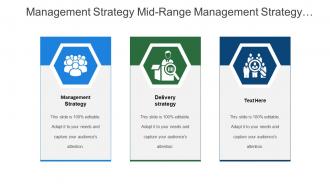
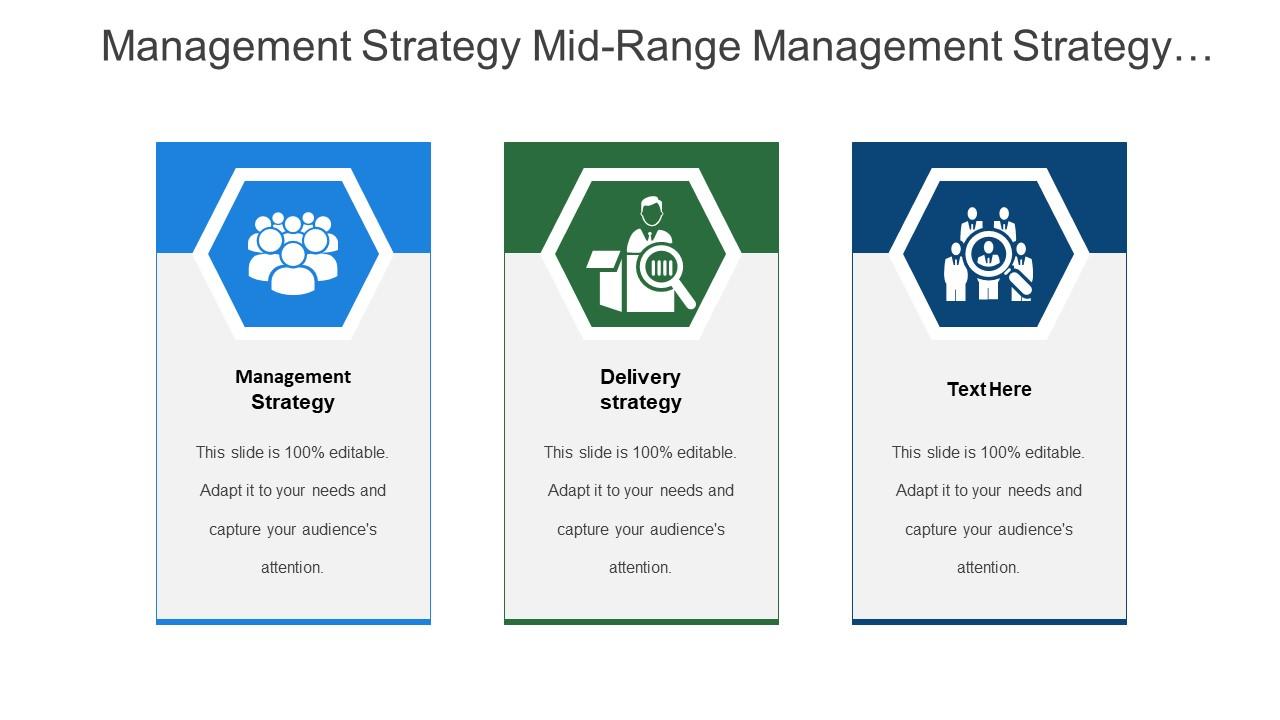
Estrategia de gestión Estrategia de gestión de rango medio Estrategia de ejecución
Try Before you Buy Download Free Sample Product
Audience
Editable
of Time
Nuestra estrategia de gestión Estrategia de gestión de rango medio La estrategia de ejecución no permite que la intensidad del esfuerzo disminuya. Garantice un enfoque continuo en el trabajo en cuestión.
Características de estas diapositivas de presentación de PowerPoint:
Presentación de este conjunto de diapositivas con el nombre - Estrategia de gestión Estrategia de gestión de rango medio Estrategia de ejecución. Este es un gráfico editable de tres etapas que trata temas como estrategia de gestión, estrategia de gestión de rango medio, estrategia de entrega para ayudar a transmitir su mensaje mejor gráficamente. Este producto es un producto premium disponible para descarga inmediata y es 100 por ciento editable en Powerpoint. Descárguelo ahora y utilícelo en sus presentaciones para impresionar a su audiencia.
People who downloaded this PowerPoint presentation also viewed the following :
Estrategia de gestión Estrategia de gestión de rango medio Estrategia de ejecución con las 5 diapositivas:
Anime a su equipo a hacer ese pequeño extra. Instálelos con nuestra Estrategia de gestión Estrategia de gestión de rango medio Estrategia de ejecución.
FAQs for Management strategy mid range management
Honestly, most strategies fail because people get way too ambitious without thinking through the basics. You need three things: know where you're heading, communicate it clearly, and actually plan how to execute it. Resource allocation is huge here - like, this is where everything usually goes sideways. Regular check-ins help, plus you've got to be flexible enough to change course when stuff isn't working. Oh, and here's my test - can everyone on your team explain the strategy? If not, it's too complex. Try writing it down in one page max. Seriously, if you can't fit it on one page, you're probably overcomplicating things.
Stop watching the clock and start tracking what actually gets done. Honestly, micromanaging remote workers is a fast track to losing good people. Set up regular check-ins but don't breathe down their necks. Document your processes better so people aren't constantly guessing what you want. Response times need clear expectations since nobody can just pop by your office anymore. Trust your team to work when they're sharpest - some people crush it at 6am, others hit their stride after lunch. The whole thing works way better when you focus on results instead of whether someone's online at exactly 9am.
Think of data analytics as your business GPS - it shows you what's actually happening instead of guessing. You'll spot trends, understand your customers better, and catch problems before they blow up. Like, I can't imagine making big decisions without looking at the numbers first (seems crazy risky to me). Focus on maybe 3-5 metrics that tie directly to your goals. Don't get sucked into tracking everything just because you can - that's a rabbit hole. Pick what matters most for your strategy and start there.
Honestly, managing globally is all about reading the room - culturally speaking. Direct feedback might work great in Germany, but you'll crash and burn trying that in Japan where face-saving matters way more. Some places expect you to be the boss who makes all the calls. Others work better when everyone collaborates. I learned this the hard way once, actually. Don't try to use the same playbook everywhere - it's like wearing a winter coat to the beach. Look up stuff like power distance and individualism for whatever regions you're dealing with. Your communication style has to shift with each culture or you're toast.
Poor communication kills strategies faster than anything else. Don't just drop some grand plan on people - they need to get WHY you're doing it. Been there, done that mistake myself. Focus on maybe 2-3 priorities tops because doing everything at once is a disaster waiting to happen. Track your progress too, like actually track it with real milestones every few weeks. Oh and definitely loop your team into the planning stuff - they'll spot issues you totally missed. Sometimes the best insights come from people doing the actual work, you know?
Honestly, break down those big goals into quarterly chunks first. Then when you're making day-to-day decisions, just ask yourself "does this actually get us closer to where we want to be in 3 years?" Sounds obvious but most people skip this step completely. I'd probably do like 70/30 split - most resources on immediate stuff, but keep that 30% for longer-term bets. Set up some kind of dashboard so you can see both types of progress at once. Oh and schedule regular check-ins or you'll definitely forget to do this consistently.
Dude, start with SWOT and Porter's Five Forces - those are your bread and butter. SWOT's great for looking inward at your strengths and weaknesses, while Porter's helps you figure out what competitors are doing. If you want something more comprehensive, McKinsey's 7S model covers everything from strategy to company culture. Oh, and Balanced Scorecard's clutch for tracking if you're actually hitting your goals. Here's the thing though - don't go overboard. Pick maybe 2-3 frameworks max. Your team will literally hate you if you throw too many at them. Match whatever you choose to your industry and company size, then actually stick with it.
Honestly, pick your KPIs first before doing anything else - that's where most people screw up. I'd go with 3-5 max because more than that and you'll get overwhelmed by numbers. Mix it up with stuff like employee engagement and process adoption (those show early wins) plus the bigger picture metrics like revenue and customer satisfaction. Check in every month or two to see if things are trending the right way. Don't get hung up on hitting exact targets - consistency matters more. Oh and start measuring from day one, not later when your boss asks for proof it's actually working.
Your leadership style can make or break whether strategies actually work. Too controlling? People execute but don't really care or offer ideas. Go too hands-off and stuff falls through the cracks - honestly happens more than you'd think. Collaborative leaders usually see better results because their teams feel invested. How you communicate, make decisions, and take feedback directly impacts whether your strategic stuff succeeds. The trick is matching your approach to what the strategy needs and what your team responds to best.
Honestly, talking to stakeholders upfront saves you so much headache later. People who'll actually deal with your decisions - employees, customers, suppliers - they see stuff you'll miss sitting in meetings all day. When they help build the strategy instead of just receiving it, buy-in happens naturally. Nobody wants changes shoved down their throat, you know? Start by figuring out who actually matters for what you're planning. Then create real ways to hear them out, not just token feedback sessions. The intel you get is gold - it's like having a cheat sheet before making big moves. Trust me on this one.
Honestly, the biggest mistake I see is jumping straight to what you're changing without explaining why first. Your team will resist if they don't get the reasoning behind it. Skip the mass email approach - do interactive sessions instead. Let people actually ask questions and complain a bit. Find those few people on your team who everyone listens to and get them on board early. The real work happens after though. Keep checking in over the next few weeks, help them work through problems, and make a big deal about small wins. That's what actually makes change stick.
Dude, tech has totally changed management - everything's so data-focused now. Real-time performance tracking, automated decisions, AI that spots problems before they blow up. Pretty crazy honestly. But you've gotta adapt your style too, which can be tricky at first. You're basically juggling people AND digital systems at the same time. The tricky part? You don't want to lose that personal connection with your team while you're drowning in dashboards and analytics. Find that sweet spot between being efficient with all the tech stuff and still being, you know, human.
Start with psychological safety - nobody's gonna brainstorm if they're worried about getting roasted for dumb ideas. Cross-functional teams are where the magic happens honestly, since marketing + engineering combos usually beat siloed thinking. Try to carve out experimentation time (that Google 20% thing is gold but yeah, good luck selling leadership on it). Celebrate the small wins just as much as you do the failures. Your team probably knows exactly what's slowing them down bureaucracy-wise. Just ask them directly - I bet their answers will surprise you. Remove those roadblocks first.
Don't wait to build CSR into your strategy - do it from the start. Look for spots where doing good actually helps your bottom line too. Better employee benefits? Higher retention. Going green often cuts costs down the road. Too many companies I know just tack on some charity stuff later and wonder why it feels hollow. Pick CSR goals that make business sense, give them real money, and get your leadership actually excited about it. Oh, and make sure you can measure the impact - investors love seeing those numbers. The whole point is making social responsibility part of how you make money, not just how you spend it.
Look, your team sees stuff you totally miss from your management bubble. They're living with your decisions daily while you're up there thinking everything's fine. Get their input regularly or you'll be making changes based on half the picture. Monthly one-on-ones are clutch for this - you'll catch issues before they blow up and actually understand what drives each person. I learned this the hard way when I thought my "open door policy" was enough (spoiler: it wasn't). Their feedback shows you what's really working versus what just looks good on paper.
-
Top Quality presentations that are easily editable.
-
Excellent work done on template design and graphics.