

Manual Testing Strategies For Quality Control Powerpoint Presentation Slides





Try Before you Buy Download Free Sample Product
 Impress Your
 Audience
 100%
100% Editable
 Save Hours
 of Time


This Manual Testing Strategies for Quality Control PowerPoint presentation briefly explains manual software testing, different techniques, and approaches used to perform manual testing. In addition, this White-box Testing for Quality Software PPT contains the overview, advantages, and testing methods of manual testing. In this Black-Box Testing to Build Quality Software template we have covered the overview, benefits, and testing techniques of white box testing. It also includes the area of focus and demerits of white box testing. Also, the Gray-Box Testing Best Practices PPT presentation includes the overview, benefits, testing tools, and software testing life cycle of black box testing. In addition, it includes the introduction, benefits, and tools of gray box testing. Lastly, this Manual Testing for End to End Software Integration PowerPoint Presentation outlines the best practices, a checklist, a training budget, a timeline, a roadmap, and the impact of automation testing. Download our 100 percent editable and customizable template, also compatible with Google Slides.
People who downloaded this PowerPoint presentation also viewed the following :
Content of this Powerpoint Presentation
Slide 1: This slide introduces Manual Testing Strategies for Quality Control. State Your Company Name and begin.
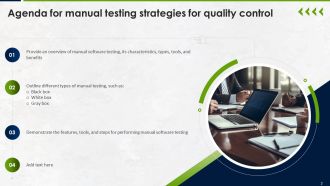
Slide 2: This slide is an Agenda slide. State your agendas here.
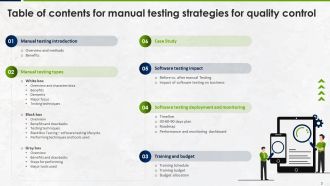
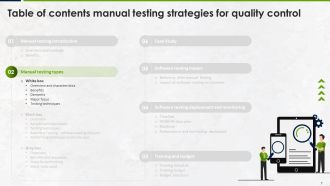
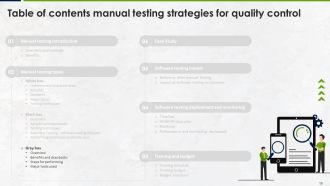
Slide 3: This slide shows a Table of Contents for the presentation.
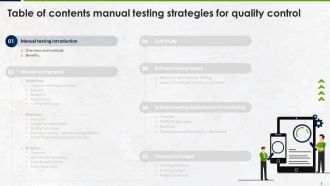
Slide 4: This slide is in continuation with the previous slide.
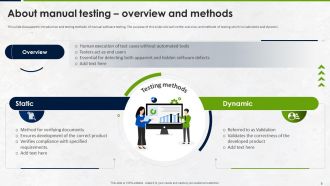
Slide 5: This slide discusses the introduction and testing methods of manual software testing.
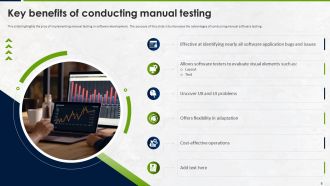
Slide 6: This slide highlights the pros of implementing manual testing in software development.
Slide 7: This slide is in continuation with the previous slide.
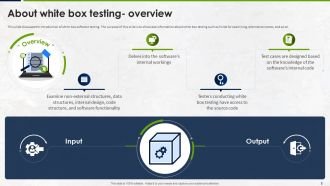
Slide 8: This slide entails the introduction of white box software testing.
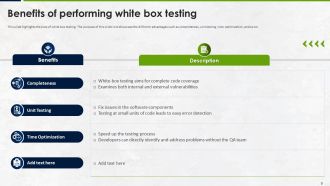
Slide 9: This slide caters to the pros of white box testing.
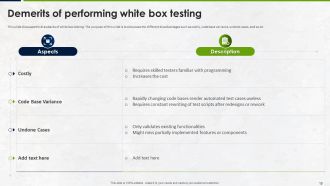
Slide 10: This slide discusses the drawbacks of white box testing.
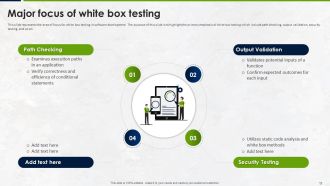
Slide 11: This slide highlights the area of focus for white box testing in software development.
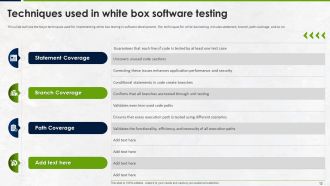
Slide 12: This slide outlines the major techniques used for implementing white box testing in software development.
Slide 13: This slide is in continuation with the previous slide.
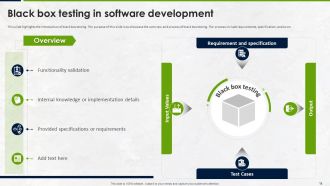
Slide 14: This slide highlights the introduction of black box testing.
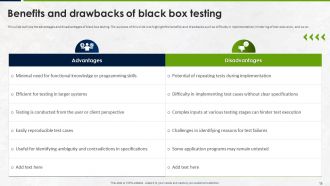
Slide 15: This slide outlines the advantages and disadvantages of black box testing.
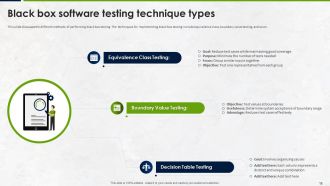
Slide 16: This slide depicts the different methods of performing black box testing.
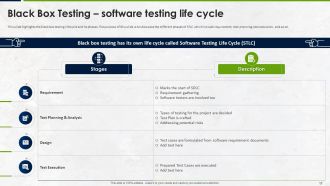
Slide 17: This slide demonstrates the black box testing lifecycle and its phases.
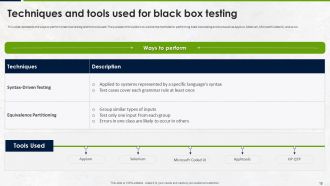
Slide 18: This slide elucidates the ways to perform black box testing and the tools used.
Slide 19: This slide is an introductory slide.
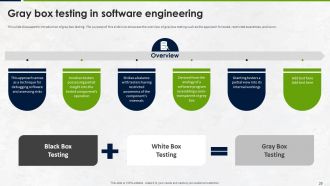
Slide 20: This slide puts the introduction of gray box testing.
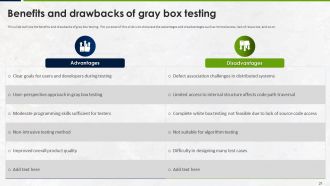
Slide 21: This slide marks the benefits and drawbacks of gray box testing.
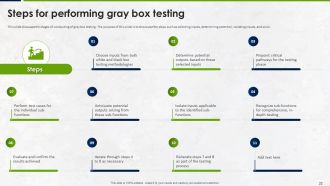
Slide 22: This slide discusses the stages of conducting of gray box testing.
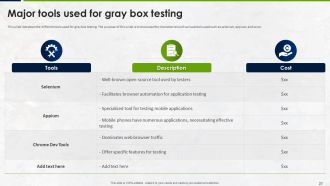
Slide 23: This slide lists down the different tools used for gray box testing.
Slide 24: This slide is an introductory slide.
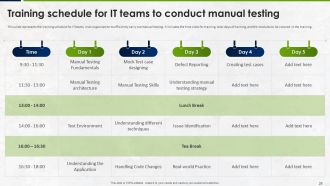
Slide 25: This slide represents the training schedule for IT teams in an organization to efficiently carry out manual testing.
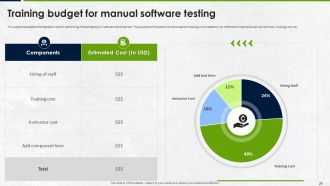
Slide 26: This slide showcases the breakdown cost for performing manual testing for software development.
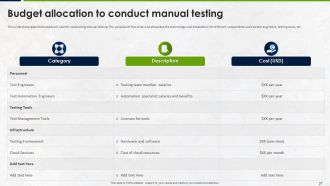
Slide 27: This slide shows the breakdown cost for conducting manual testing.
Slide 28: This slide is an introductory slide.
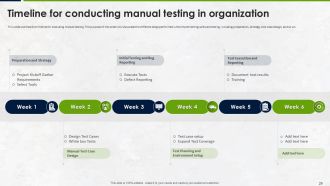
Slide 29: This slide outlines the timeline for executing manual testing.
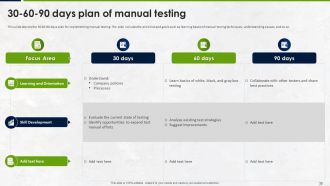
Slide 30: This slide depicts the 30 60 90 days plan for implementing manual testing.
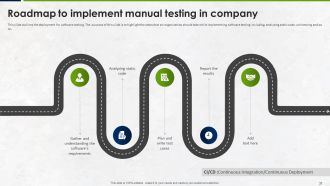
Slide 31: This slide projects the deployment for software testing.
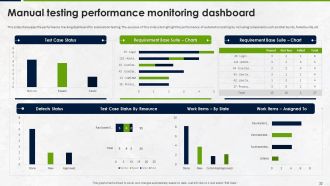
Slide 32: This slide pertains to the performance tracking dashboard for automation testing.
Slide 33: This slide is an introductory slide.
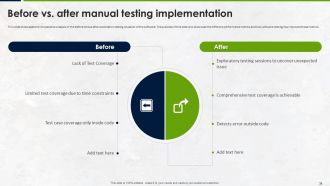
Slide 34: This slide showcases the comparative analysis of the before versus after automation testing situation of the software.
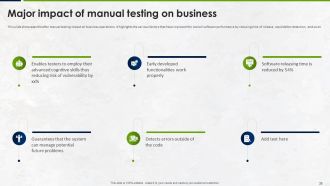
Slide 35: This slide elucidates the after manual testing impact on business operations.
Slide 36: This slide projects the after manual testing impact on business operations.
Slide 37: This slide is an introductory slide.
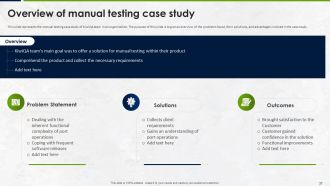
Slide 38: This slide represents the manual testing case study of KiwiQA team in an organization.
Slide 39: This slide shows all the icons included in the presentation.
Slide 40: This slide is titled Additional Slides for moving forward.
Slide 41: This slide is Our Mission slide with related imagery and text.
Slide 42: This slide is Our Team slide with names and designations.
Slide 43: This slide shows Post-It Notes. Post your important notes here.
Slide 44: This slide depicts a Venn diagram with text boxes.
Slide 45: This slide showcases Magnifying Glass to highlight information, specifications, etc.
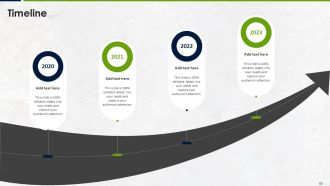
Slide 46: This slide is a Timeline slide. Show data related to time intervals here.
Slide 47: This slide is a thank-you slide with address, contact numbers, and email address.
Manual Testing Strategies For Quality Control Powerpoint Presentation Slides with all 54 slides:
Use our Manual Testing Strategies For Quality Control Powerpoint Presentation Slides to effectively help you save your valuable time. They are readymade to fit into any presentation structure.













FAQs for Manual Testing Strategies For Quality Control
So basically you're catching all the stuff automated tests miss - bugs, weird edge cases, usability problems. Manual testing lets you actually think like a regular person using the app, not like a developer who knows how everything works. You're checking if the requirements make sense and if people can actually navigate without getting confused. Honestly, half the time you'll find issues that nobody even thought to test for. I'd start by mapping out real user journeys - like how someone would actually use it day-to-day, not just the technical boxes to check.
Honestly, go manual when you need actual human eyes on things. Does the UX feel weird? Are the colors totally off? That's manual territory. Automated tests can't tell if your app sucks from a user perspective - they just check if buttons work the same way every time. I'd use manual testing early on when stuff's still changing constantly. Also great for exploring random edge cases you didn't think of. Quick question though - are you asking "does this feel right" or "does this function correctly"? First one = manual testing. Second = automate that thing. Start by figuring out what actually needs a person versus what you can script.
Start with stuff that'll absolutely wreck your product if it breaks - those core user flows everyone hits. Happy path scenarios first, then weird edge cases. I always go after high-frequency features over the random stuff nobody uses. Areas with previous bugs? Test those again - they love to resurface. Same with recent code changes. Time's always tight, so weigh how long each test takes against what you actually get from it. Honestly, just make a simple 1-5 scoring thing for impact and failure risk, then multiply them. Keeps things from getting too complicated.
So exploratory testing is basically where you ditch the script and just poke around like a normal person would. You're asking "what happens if I click this?" or following weird hunches when something seems sketchy. Way more fun than running the same boring test cases, honestly. You'll catch edge cases and usability stuff that planned tests totally miss - like when users do something completely unexpected (which they always do). I'd probably do this for like 20-30% of your testing time alongside your regular structured stuff. It's where you find the really interesting bugs.
Honestly, documentation saves your butt in manual testing. Test cases keep you on track instead of randomly clicking stuff. Bug reports help you remember what broke (trust me, you'll forget). Test plans organize the chaos. I learned this the hard way when I had to explain missing issues to my manager - not great. Plus when someone new joins your team, they won't be completely lost. Start with basic templates for test cases and bug reports. Makes regression testing less of a nightmare too. It's boring work but totally worth it.
Honestly, just make a traceability matrix first - sounds tedious but it'll show you exactly what's missing. Break those chunky requirements into smaller bits you can actually test. Don't skip the weird edge cases either, those always bite you later. Get stakeholders to review your coverage too. They interpret requirements totally different than we do sometimes. Oh, and negative scenarios - test what happens when things go wrong, not just the happy path. I'd start by auditing what you've got now against the requirements. You'll probably find gaps you didn't even realize were there.
Boundary testing is your best friend - max/min inputs, empty fields, stuff just outside the limits. Try weird user behavior too like spam clicking buttons or navigating in unexpected ways. Special characters always break things in the most random places, and don't get me started on super long text inputs. Load testing reveals the weirdest bugs honestly. Think about those "what if a user accidentally does this" moments. Oh, and keep notes on edge cases you find - they'll definitely show up again in other features later.
Log bugs right away in whatever tracking system you use - include repro steps, what you expected vs what actually happened, plus severity. Screenshots are your best friend here, trust me on this. Developers will thank you later instead of going back and forth asking "wait, what exactly did you click?" Categorize everything properly and set the right priority levels. For reporting, build dashboards that show trends, open/closed rates, critical stuff. Regular updates to stakeholders are key - focus on blockers and quality metrics. Just stay consistent with your format so people can actually make sense of what you found.
Focus on defect detection rate, test execution rate, and how many bugs slip into production - those are your bread and butter. Test coverage percentage matters too, plus cycle time. Honestly? I'm kinda obsessed with defect density per module because it shows you exactly where the code's falling apart. Resolution time and retest effectiveness tell you if devs are actually listening to your feedback. Don't go crazy trying to track everything though. Pick maybe 3 metrics that match whatever's currently driving you nuts, then add more later.
Standardized test cases and checklists are your best friend here - seriously, they'll save you so much headache later. Document the steps, findings, and those random edge cases that seem pointless but always bite you somehow. Same test data every time, stick to your entry/exit criteria religiously. Write down everything about your testing environment too, especially when something's different from usual. Think of it like this: if you had to pass your work to another tester tomorrow, could they follow your exact process? Templates for common scenarios are a game changer. Start building those now.
Get real users involved - they'll find stuff you never would. I learned this when users completely destroyed our "bulletproof" checkout flow lol. Make test scenarios that actually match how people work, not just the perfect happy path. Document issues with screenshots so devs can't say "works fine for me." You need clear acceptance criteria from the start or you'll argue about what's broken vs what's done. Oh and give people time to mess around naturally instead of rushing through some boring checklist. Do a debrief right after while they remember what sucked.
Ditch the heavy documentation and go exploratory instead. Your best bet is getting tight with the dev team - like actually sitting in their daily standups. Test stuff as it gets built, not at the end (that waterfall thing is dead anyway). I'd focus on the risky parts first since you can't test everything. Automate the boring repetitive tests so you have more time for the weird edge cases that actually break things. Oh, and push for getting testable pieces every couple days - makes your life way easier. The continuous approach just works better than cramming everything into a "testing phase."
Honestly? Time pressure's brutal. You're constantly racing against deadlines while doing the same test flows repeatedly - gets mind-numbing fast. Plus tracking everything without missing weird edge cases is a nightmare. My advice: build some solid checklists for your common scenarios first. Game changer for saving mental energy. Try exploratory testing to keep things interesting, and definitely pair up with devs when you can. They'll catch stuff you miss and vice versa. Oh, and get decent test management software - trust me on this one. Makes organizing way less painful than spreadsheets everywhere.
Honestly, getting testers and developers talking to each other is like half the battle won already. Developers can point you toward the sketchy code they just pushed, and you'll catch way more meaningful bugs. When they actually get your repro steps, fixes happen so much faster too. I've watched teams spiral for weeks just because nobody was communicating - it's painful to see. Try doing quick sync meetings and sharing test plans before you dive in. Oh, and definitely keep shared docs somewhere everyone can find them. Your whole bug cycle will speed up once people start actually working together instead of throwing stuff over the fence.
For test case management, grab TestRail, Zephyr, or qTest - they'll save your sanity organizing scenarios and tracking results. Bug tracking is huge too, so Jira or Azure DevOps work great for logging issues and working with devs. Screen recording tools like Loom are clutch for showing exactly what broke (way better than trying to describe it). I keep all my testing notes in Notion but honestly any decent note app works. Oh, and seriously avoid spreadsheets if you can - I've watched teams lose their minds trying to manage everything in Excel. Just start with what your team already has, then add stuff as you need it.
-
SlideTeam is a great place for PPT templates. They have many templates on a single topic. It has made my life a lot easier.
-
SlideTeam provides PPTs on every single topic. Their templates suit my job very well. I am very grateful!