Map of central asia 1314

Rating:
80%
Map of central asia 1314
Slide 1 of 5
Favourites Favourites

Try Before you Buy Download Free Sample Product

Audience Impress Your
Audience
Editable 100%
Editable
Time Save Hours
of Time
The Biggest Sale is ending soon in
0
0
:
0
0
:
0
0
Rating:
80%
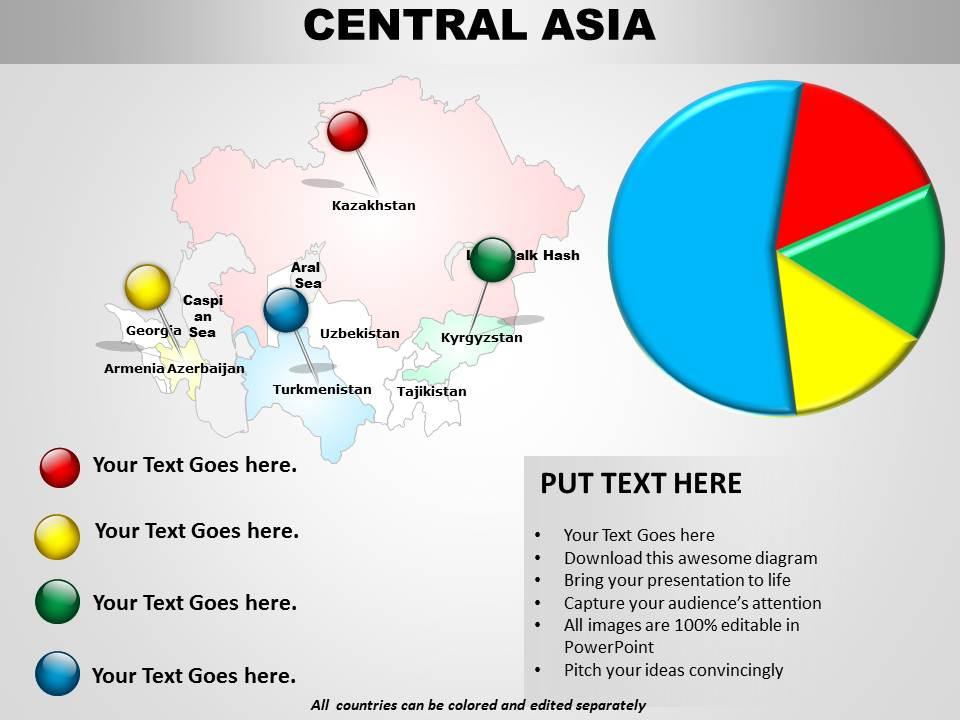
We are proud to present our map of central asia 1314. Our Map Of Central Asia will generate and maintain the level of interest you desire. They will create the impression you want to imprint on your audience.

People who downloaded this PowerPoint presentation also viewed the following :

FAQs for Map of

Around 1314, Central Asia experienced the fragmentation of the Mongol Empire into distinct khanates, including the Chagatai Khanate and Ilkhanate, while witnessing the rise of local powers and shifting trade routes along the Silk Road. Contemporary maps of this period reflect these transformations by documenting territorial boundaries, emerging political entities, and evolving commercial networks, ultimately providing historians and researchers with strategic insights into regional power dynamics and economic patterns that shaped medieval Eurasian geopolitics.

The Mongol Empire's successor states dominated Central Asia in 1314, including the Ilkhanate controlling Persia and eastern Anatolia, the Golden Horde governing the western steppes, and the Chagatai Khanate ruling Transoxiana and the Tarim Basin. These fragmented Mongol territories, alongside the emerging Ottoman beylik in western Anatolia and various Central Asian city-states, created a complex political landscape that shaped trade routes and cultural exchange across the region.

The Silk Road significantly shaped Central Asia's 1314 landscape by connecting diverse kingdoms through trade networks, facilitating cultural exchange, and creating strategic commercial hubs that enhanced regional prosperity. These established routes enabled merchants, scholars, and diplomats to streamline cross-cultural interactions while delivering economic stability, political alliances, and territorial influence, with many emerging city-states finding competitive advantage through strategic positioning along these vital corridors.

The Mongol Empire fundamentally established Central Asia's political boundaries through territorial divisions among khanates, including the Chagatai Khanate, Golden Horde, and Ilkhanate regions. These administrative divisions streamlined governance across vast territories, enhanced trade route control, and created lasting geographical frameworks, with many modern Central Asian borders ultimately reflecting these strategic Mongol organizational patterns and territorial demarcations.

Major cities in Central Asia during 1314 included Samarkand, Bukhara, Merv, Urgench, and Otrar, serving as vital commercial and cultural intersections along Silk Road networks. These urban centers facilitated trade between East and West through strategic positioning, diverse marketplaces, and scholarly institutions, with many supporting vibrant communities of merchants, artisans, and intellectuals who enhanced cross-cultural exchange and economic prosperity.

The 1314 map illustrates Islam's influence through the prominence of major Islamic trade centers like Samarkand and Bukhara, the strategic positioning of mosques and madrasas along Silk Road routes, and the Arabic script used for regional place names. These geographical markers demonstrate how Islamic culture, commerce, and education networks had become deeply integrated into Central Asian society, with many regions finding that religious and commercial networks ultimately delivered enhanced trade relationships, cultural exchange, and administrative systems across the vast territories.

The 1314 Central Asian map depicts mountain ranges like the Tian Shan and Hindu Kush, major rivers including the Amu Darya and Syr Darya, desert regions, and fertile oases that fundamentally shaped settlement patterns. These geographical features created natural trade corridors along river valleys and oasis networks, while mountainous terrain and harsh deserts served as barriers, ultimately concentrating populations in strategically advantageous locations that facilitated commerce and agriculture.

Central Asian social structures in 1314 directly shaped political boundaries through tribal confederations, clan-based territories, and nomadic hierarchies that determined territorial control and allegiance systems. The map reflects how pastoral societies organized around kinship networks, trade route dominance, and seasonal migration patterns created fluid political divisions, with many regions finding that social mobility and military prowess ultimately determined leadership and territorial boundaries.

The 1314 Central Asia map reveals pre-colonial trade routes, tribal territories, and empire boundaries that predate modern nation-states, helping scholars understand how artificial colonial borders often divided historically unified peoples and regions. By comparing medieval political entities with today's Kazakhstan, Uzbekistan, and Kyrgyzstan borders, researchers can trace cultural continuities, identify why certain ethnic groups span multiple countries, and ultimately deliver deeper insights into contemporary regional tensions and shared historical identities.

Central Asia in 1314 featured diverse languages including Persian, Turkic dialects, Arabic, and Mongolian, alongside cultures shaped by Islamic traditions, nomadic practices, and Silk Road commerce. These linguistic and cultural patterns reflected territorial divisions shown on period maps, with Persian dominating sedentary regions, Turkic languages prevalent among pastoral communities, and Arabic maintaining scholarly influence across Islamic territories.

The 1314 Central Asia map demonstrates comparable accuracy to contemporary Islamic and Chinese cartographic works, featuring detailed trade route networks, settlement locations, and geographical features that align with other period sources. While European maps from this era often contained significant spatial distortions, Central Asian cartography benefited from extensive Silk Road knowledge and astronomical observations, ultimately delivering more precise regional representations than many Western counterparts of the time.

Cultural and imperial interactions in 1314 Central Asia created lasting implications including enhanced trade networks, religious syncretism, technological exchange, administrative innovations, and linguistic diversity. The Silk Road facilitated cross-pollination between Mongol, Islamic, Chinese, and Persian civilizations, with merchant cities like Samarkand and Bukhara becoming cosmopolitan centers that blended architectural styles, governance systems, and cultural practices, ultimately establishing Central Asia's role as Eurasia's strategic crossroads.

Military conflicts in 1314 Central Asia were primarily driven by Mongol successor states competing for territorial control, with the Chagatai Khanate, Golden Horde, and Ilkhanate engaging in border wars over trade routes and grazing lands. These conflicts resulted in fluid, contested boundaries rather than fixed borders, with military victories determining temporary control over key cities like Samarkand and Bukhara, ultimately creating a patchwork of shifting territories that reflected military strength rather than ethnic or geographic divisions.

The 1314 map reveals extensive trade networks, diplomatic corridors, and cultural exchange routes connecting Central Asia with Persia through established caravan paths and administrative centers, while linking to China via Silk Road tributaries and merchant settlements. These connections demonstrate how Central Asian kingdoms served as crucial intermediaries, facilitating commerce between Persian territories and Chinese markets, ultimately delivering enhanced economic prosperity and cross-cultural integration across the region.

The 1314 map serves as a crucial primary source for historians, enabling detailed analysis of territorial boundaries, trade route networks, political entities, and settlement patterns across medieval Central Asia. Through cartographic evidence, researchers can reconstruct the complex interplay between nomadic empires, sedentary kingdoms, and commercial centers along the Silk Road, ultimately delivering insights into economic relationships, cultural exchanges, and geopolitical strategies that shaped the region's historical trajectory.

Ratings and Reviews

80% of 100
Write a review
Most Relevant Reviews
  1. 80%

    by William Martinez

    Design layout is very impressive.
  2. 80%

    by Devin Daniels

    Innovative and attractive designs.

2 Item(s)

per page: