


Relatório de Pesquisa de Mercado para a Indústria de Alimentos Apresentação em Powerpoint Slides
Relatório de Pesquisa de Mercado para a Indústria de Alimentos fornece uma visão abrangente do mercado de alimentos nos EUA. O resumo da análise do setor mostra o cenário competitivo, as principais tendências e os indicadores econômicos relacionados ao segmento de produção de alimentos. O deck de PowerPoint inclui uma visão geral básica da indústria de fabricação de alimentos em relação à contribuição para o PIB, receitas estimadas e o número total de fábricas registradas nos EUA. Além disso, este módulo PPT inclui uma análise abrangente da indústria usando técnicas SWOT, PESTEL e Porters Five Forces. Além disso, abrange uma análise aprofundada do mercado dos subsegmentos da indústria de produção de alimentos, carnes, laticínios, grãos, frutas e legumes. Além disso, a apresentação do PPT contém um plano de ação para adotar a Indústria 4.0 para superar os desafios da fabricação de alimentos. Também inclui detalhes do impacto da Indústria 4.0 no setor de fabricação de alimentos em termos de vigilância aprimorada do ecossistema de fabricação de alimentos, melhor controle sobre cadeias de suprimentos complexas, etc., e os possíveis riscos que podem dificultar a adoção bem-sucedida da Indústria 4.0. Eventualmente, ele também incorpora painéis para monitorar as vendas de bens de consumo e os custos da cadeia de suprimentos. Baixe agora.

















You must be logged in to download this presentation.


Do you want to remove this product from your favourites?
Características destes slides de apresentação do PowerPoint :
Entregue este deck completo aos membros de sua equipe e outros colaboradores. Com slides estilizados apresentando vários conceitos, este relatório de pesquisa de mercado para slides de apresentação em Powerpoint da indústria de alimentos é a melhor ferramenta que você pode utilizar. Personalize seu conteúdo e gráficos para torná-lo único e instigante. Todos os cinquenta e sete slides são editáveis e modificáveis, portanto, sinta-se à vontade para ajustá-los à sua configuração de negócios. A fonte, cor e outros componentes também vêm em um formato editável, tornando este design PPT a melhor escolha para sua próxima apresentação. Então, baixe agora.

People who downloaded this PowerPoint presentation also viewed the following :
Conteúdo desta apresentação em PowerPoint
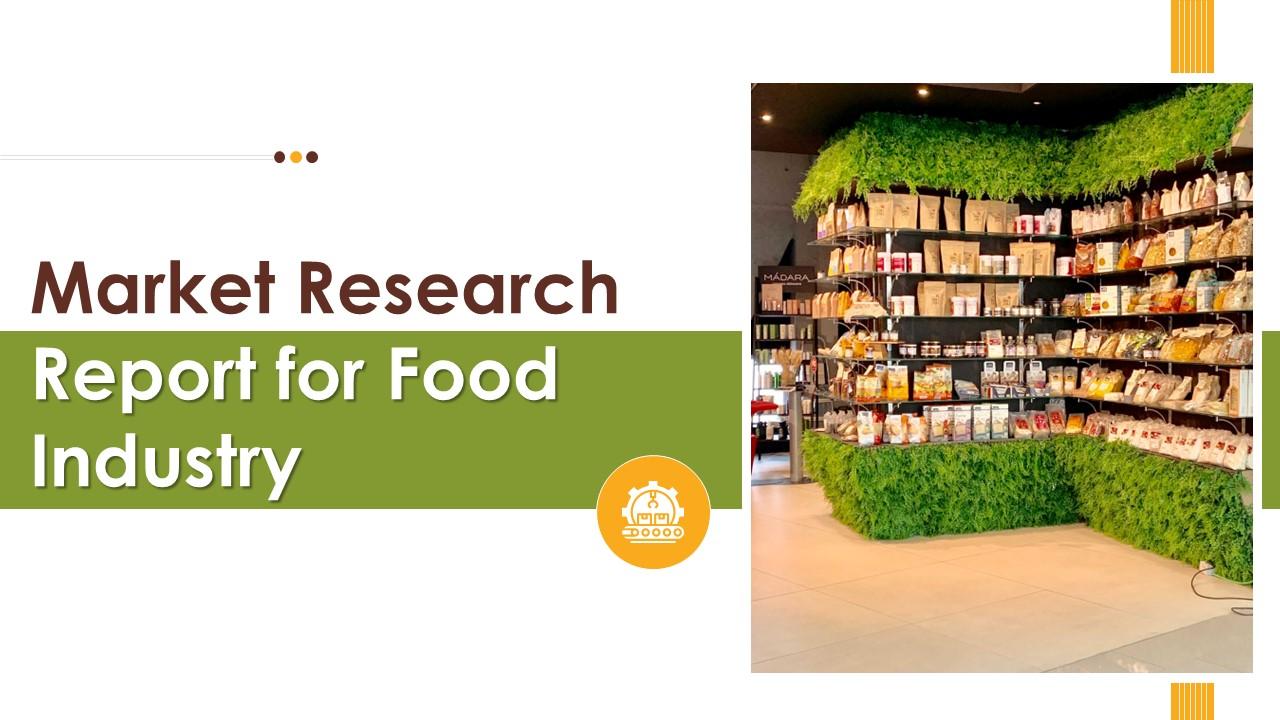
Slide 1 : Este slide apresenta o Relatório de Pesquisa de Mercado para a Indústria de Alimentos. Indique o nome da sua empresa e comece.
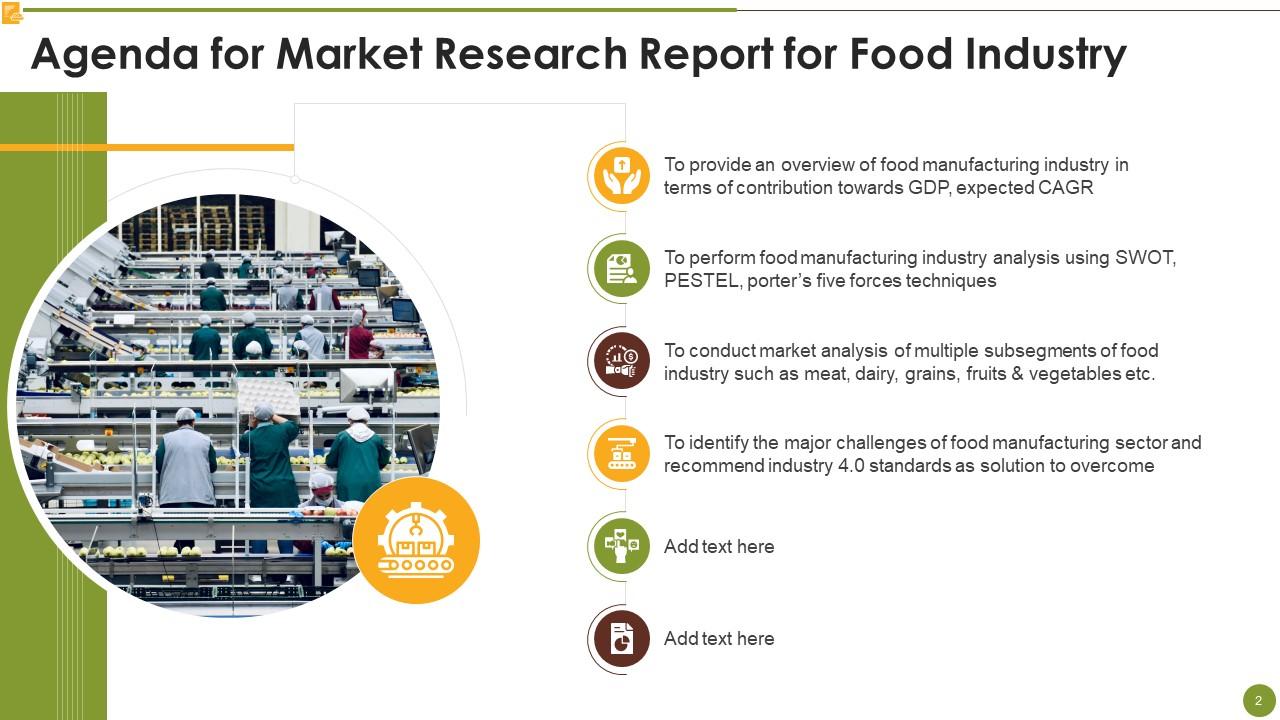
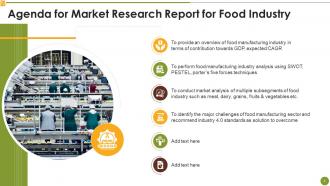
Slide 2 : Este é um slide da Agenda. Declare suas agendas aqui.
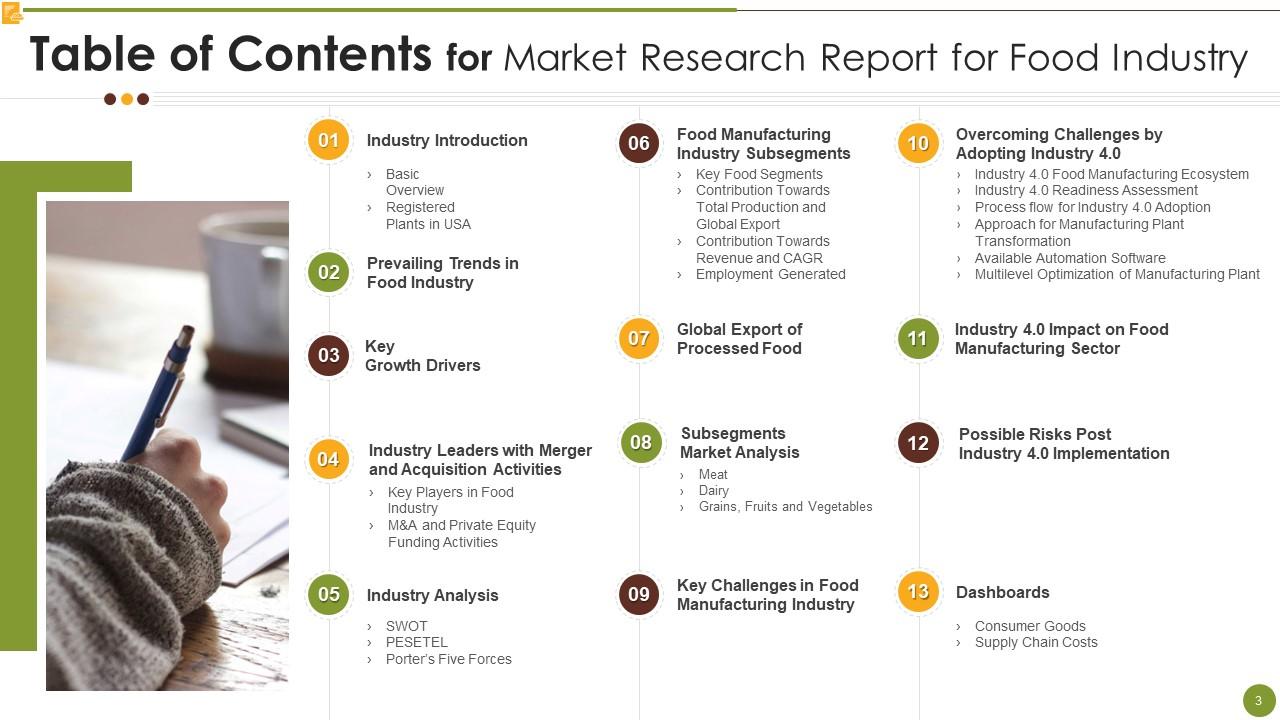
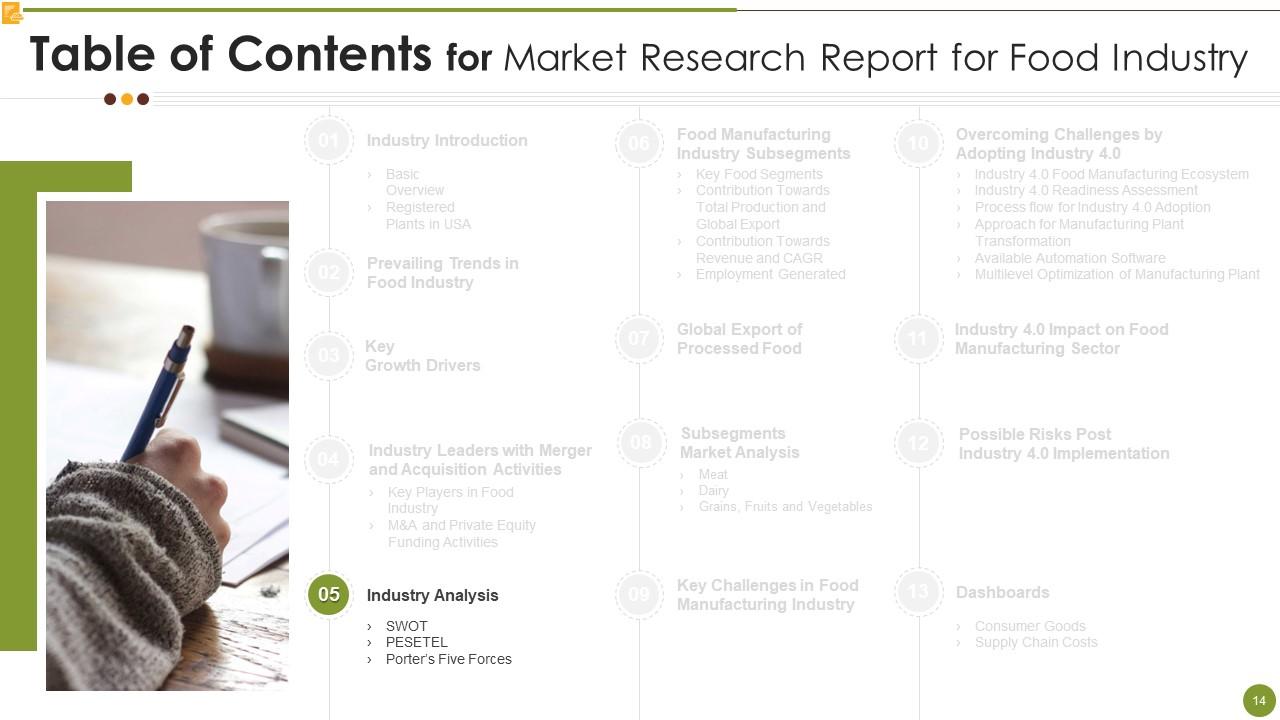
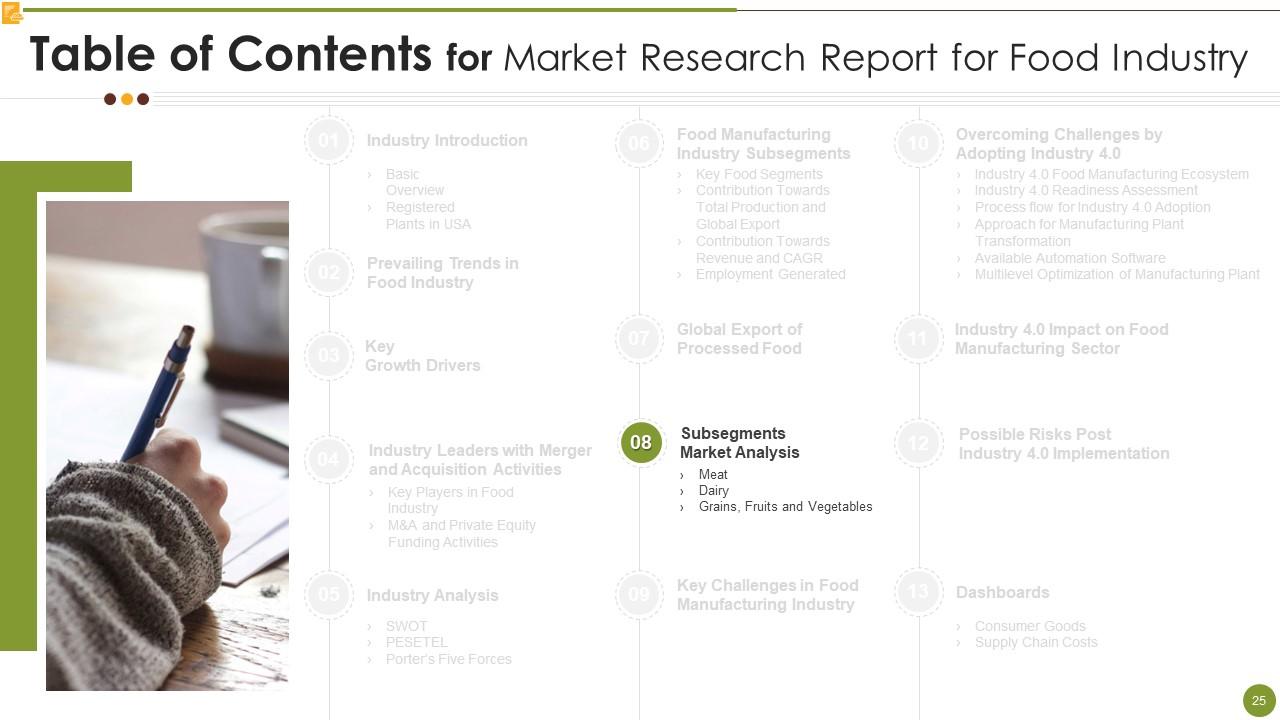
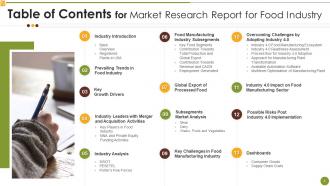
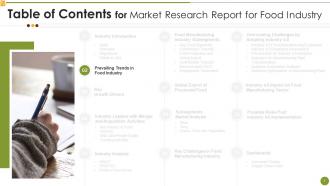
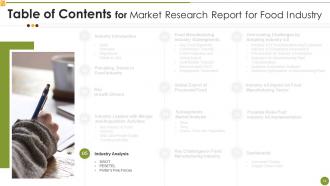
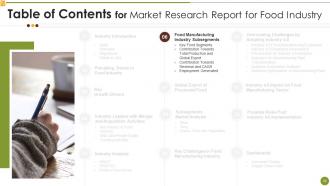
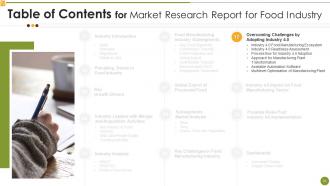
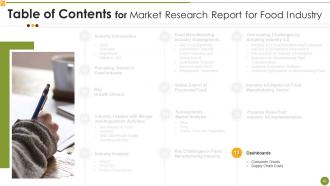
Slide 3 : Este slide apresenta o Índice da apresentação.
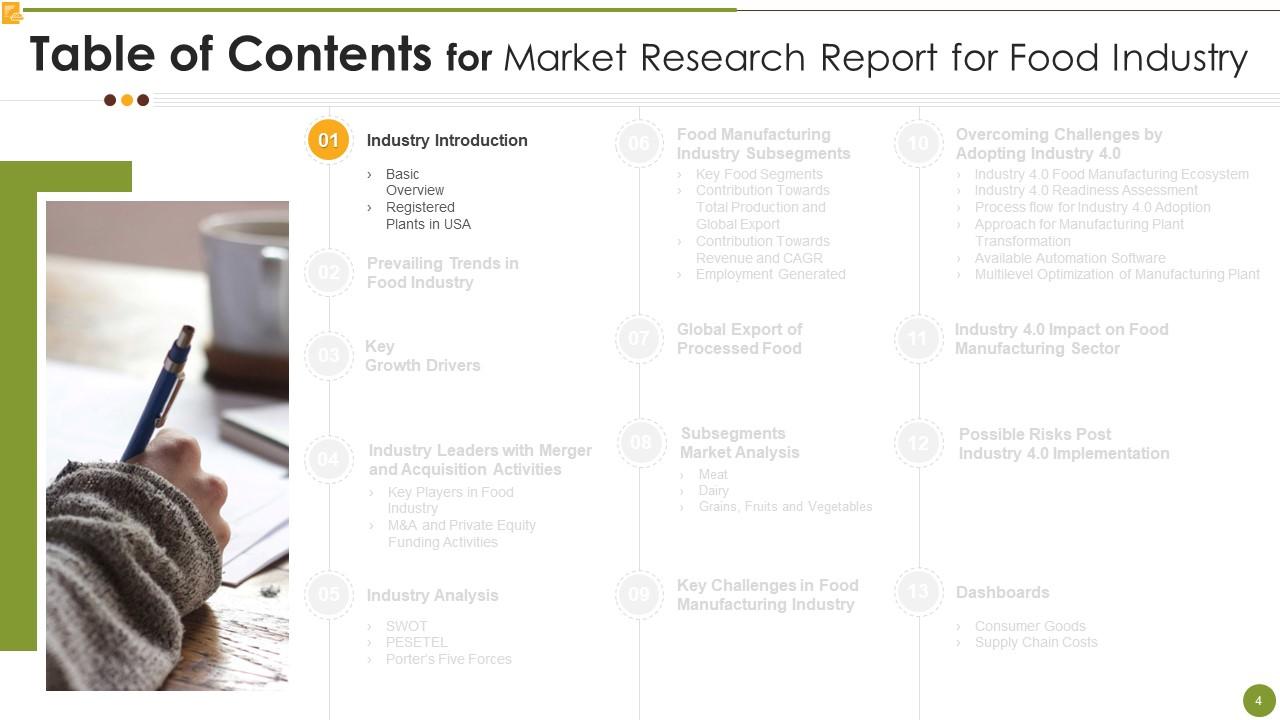
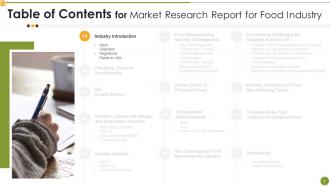
Slide 4 : Este slide destaca o título dos tópicos que serão abordados a seguir no modelo.
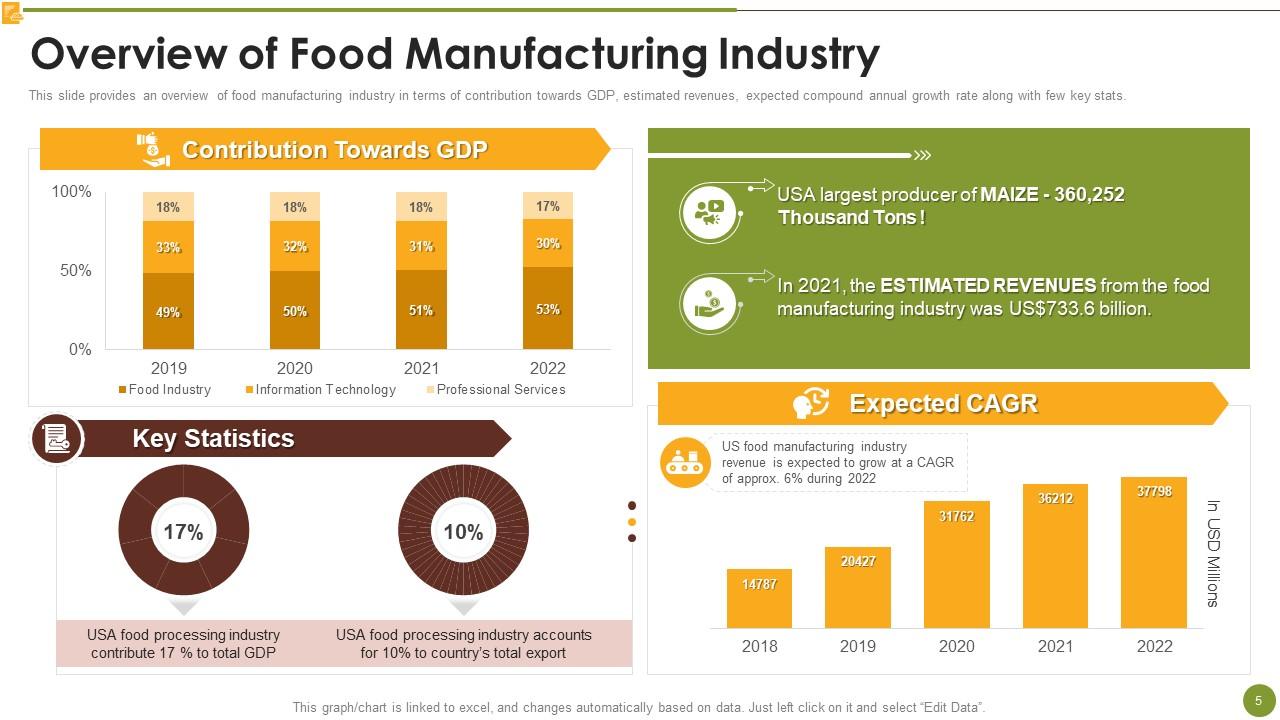
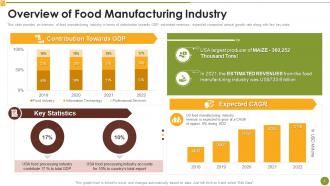
Slide 5 : Este slide mostra a Visão Geral da Indústria de Transformação de Alimentos.
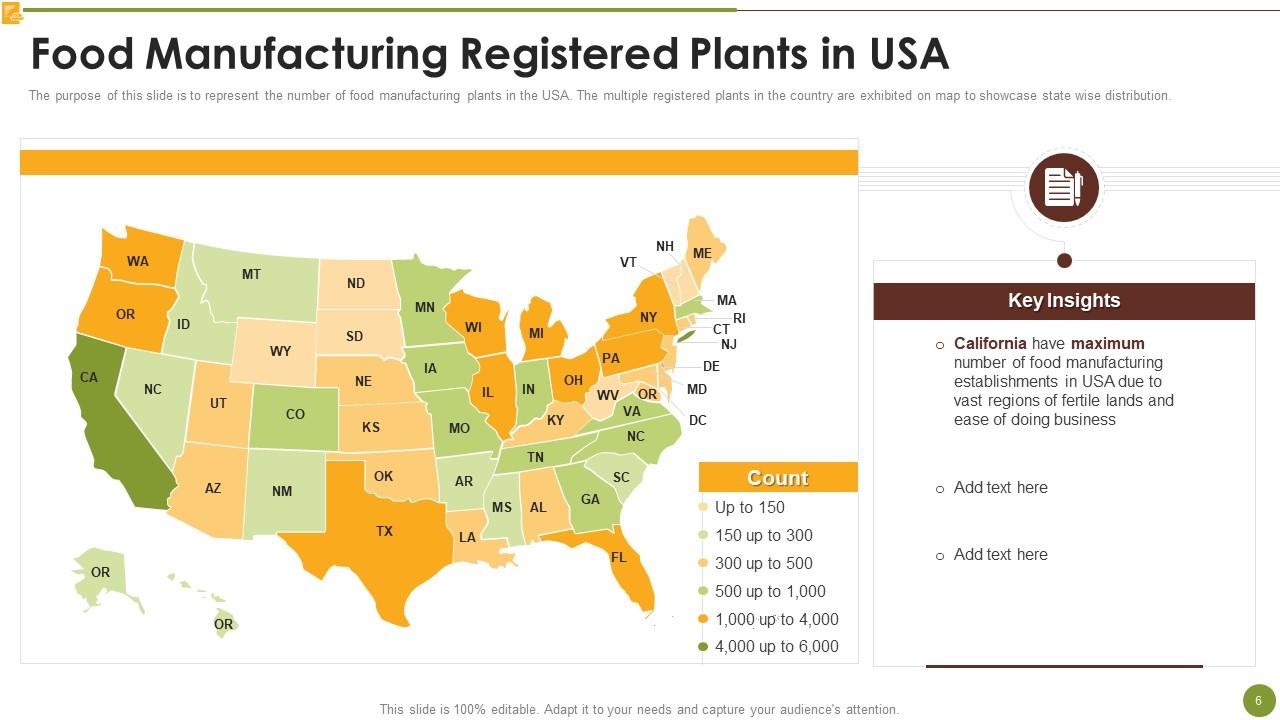
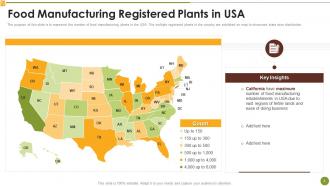
Slide 6 : Este slide apresenta as Plantas Registradas de Fabricação de Alimentos nos EUA.
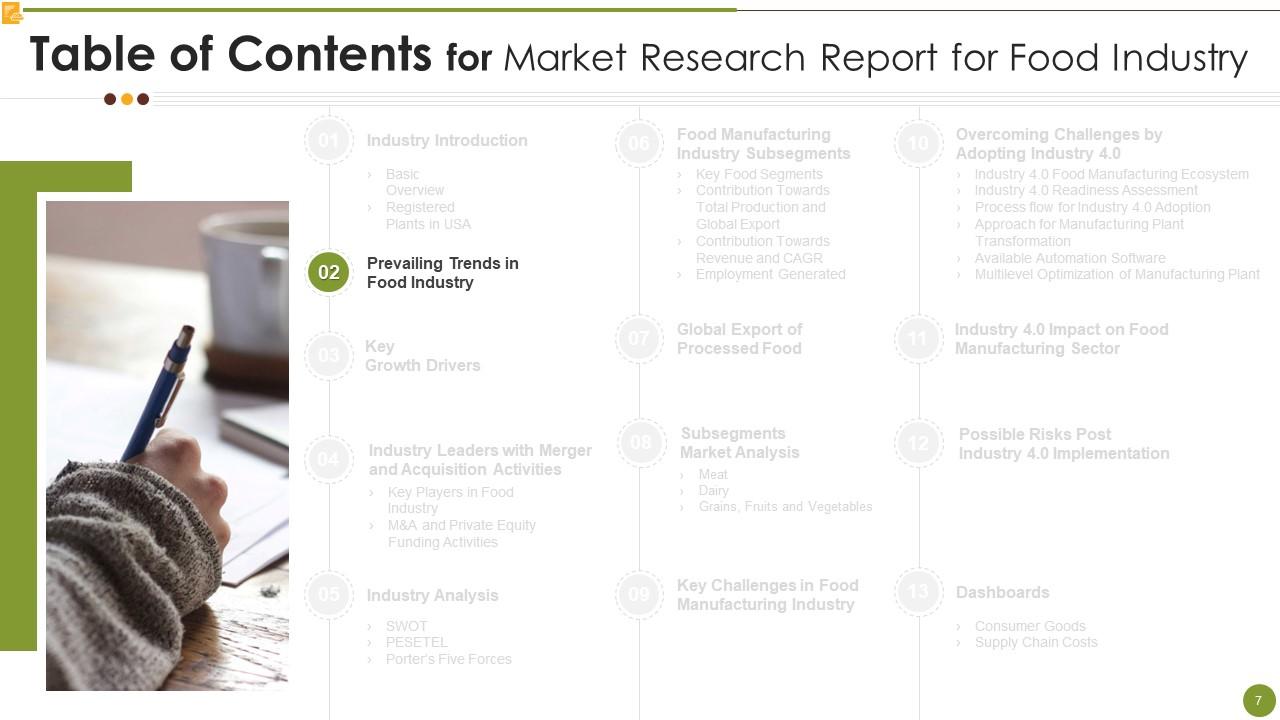
Slide 7 : Este slide destaca o título dos tópicos que serão abordados a seguir no modelo.
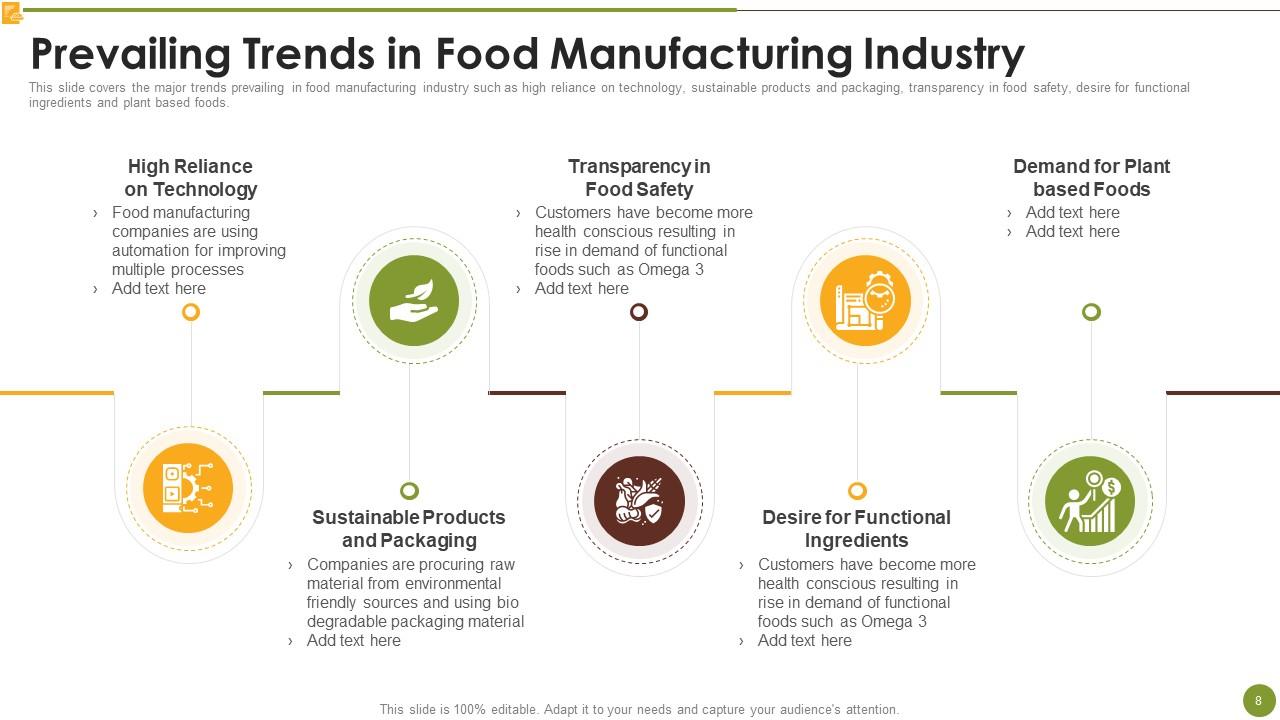
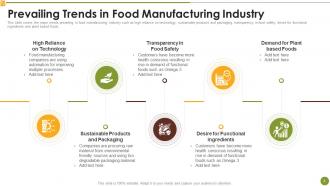
Slide 8 : Este slide mostra as tendências predominantes na indústria de manufatura de alimentos.
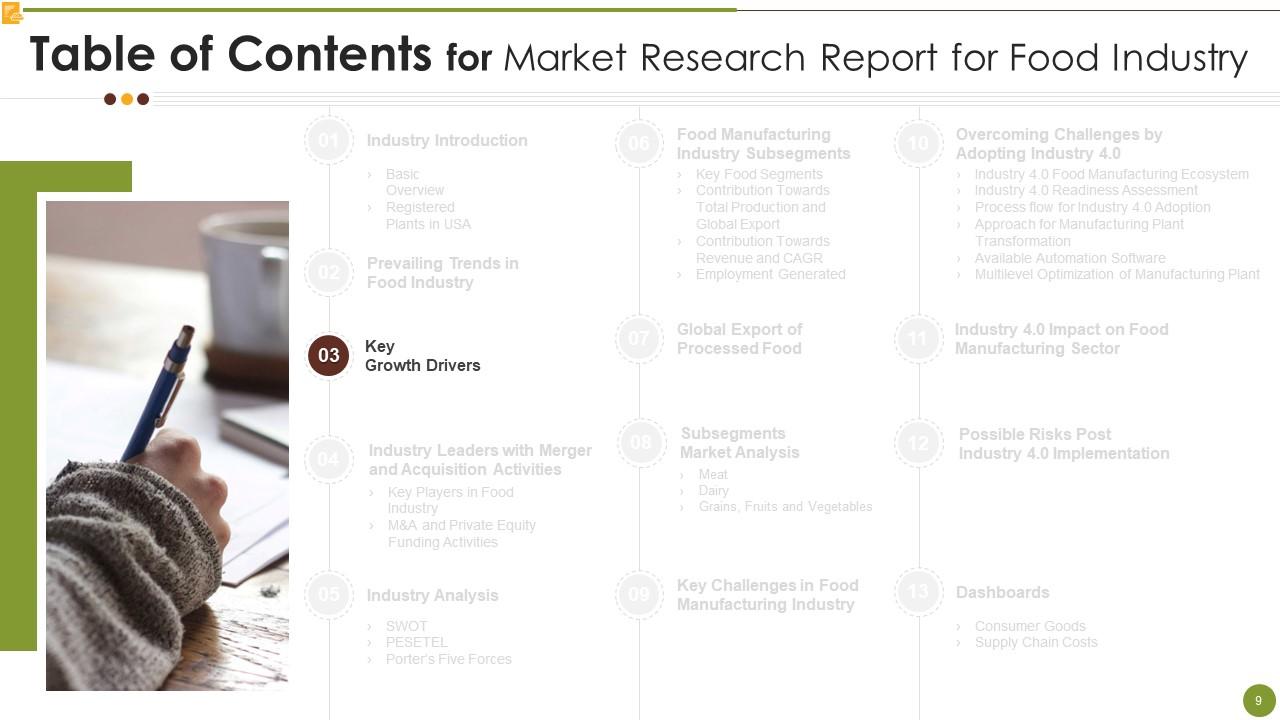
Slide 9 : Este slide destaca o título dos tópicos que serão abordados a seguir no modelo.
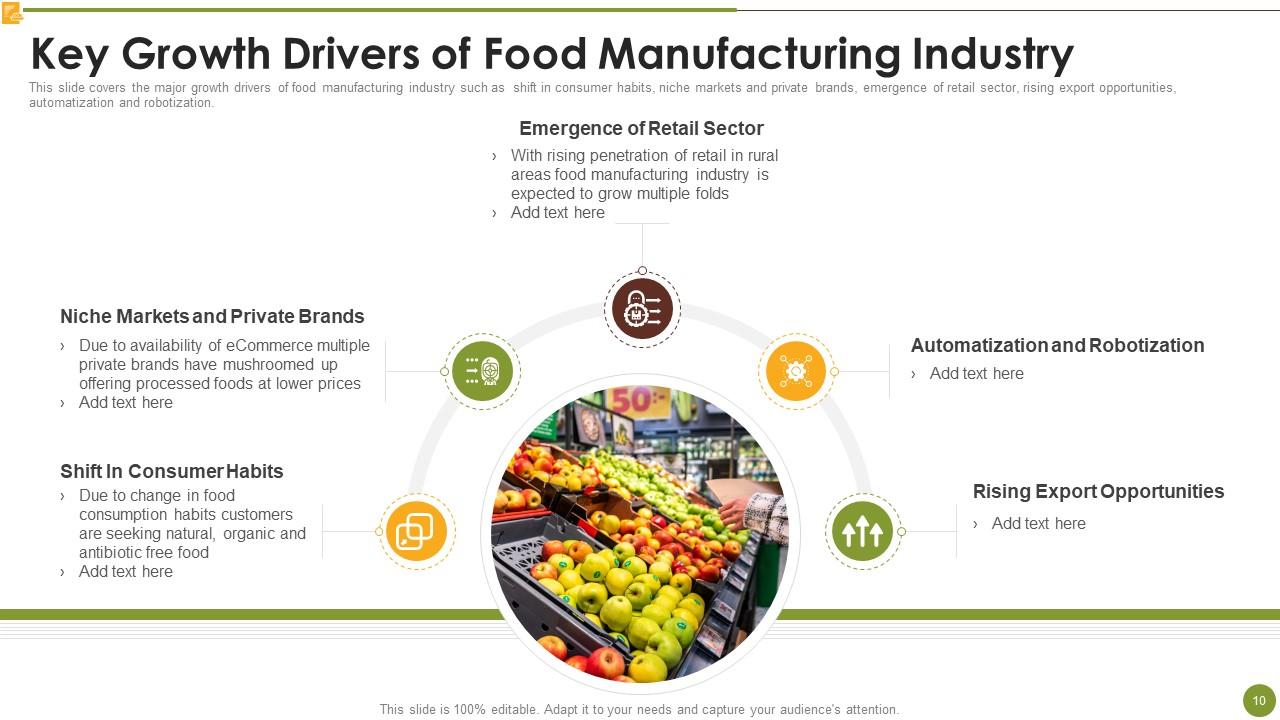
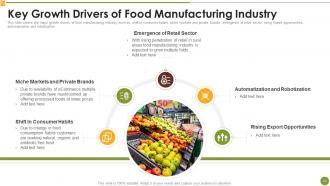
Slide 10 : Este slide representa os principais impulsionadores do crescimento da indústria de manufatura de alimentos.
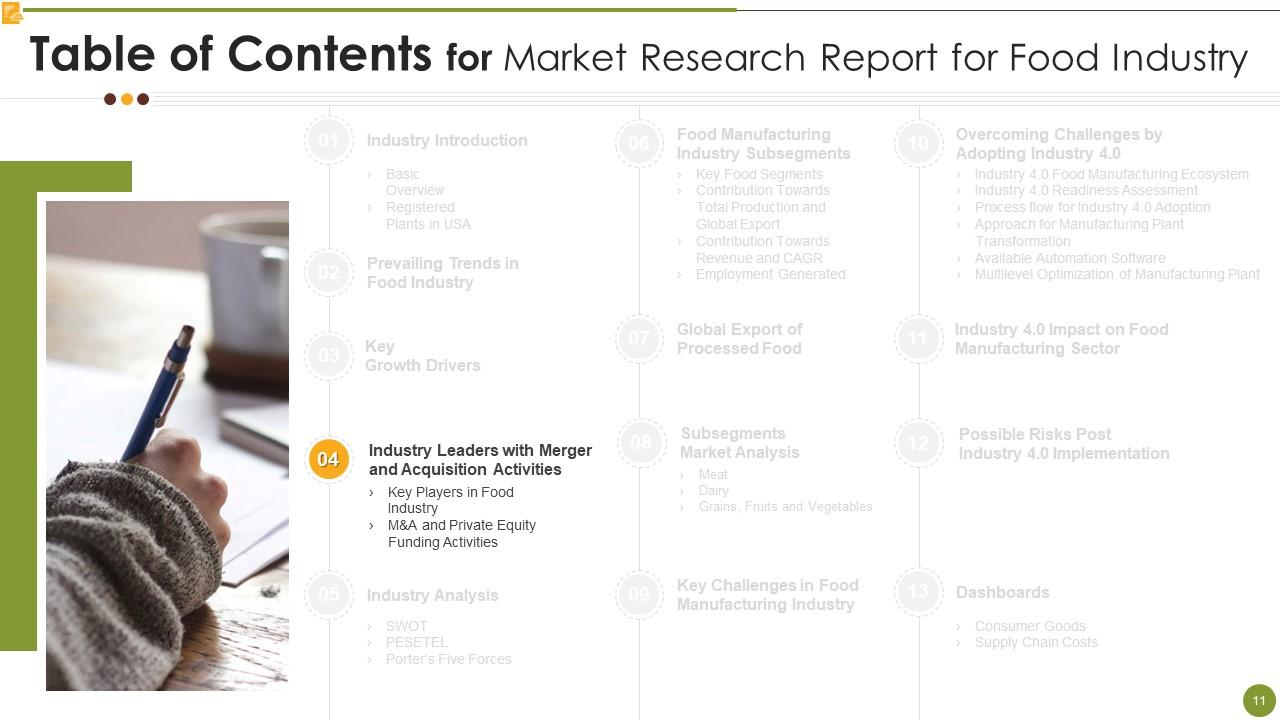
Slide 11 : Este slide destaca o título dos tópicos que serão abordados a seguir no modelo.
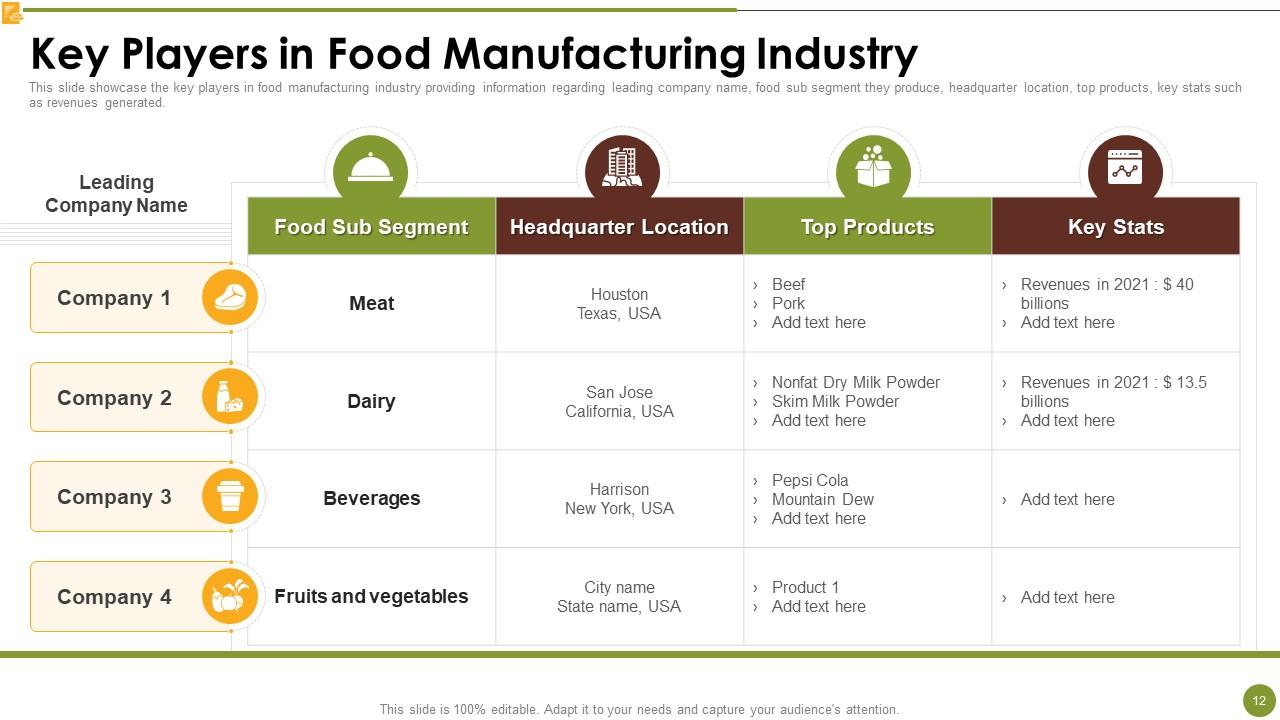
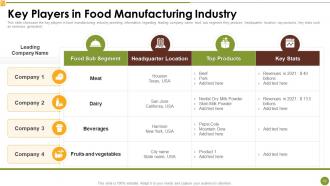
Slide 12 : Este slide mostra os principais players na indústria de manufatura de alimentos.
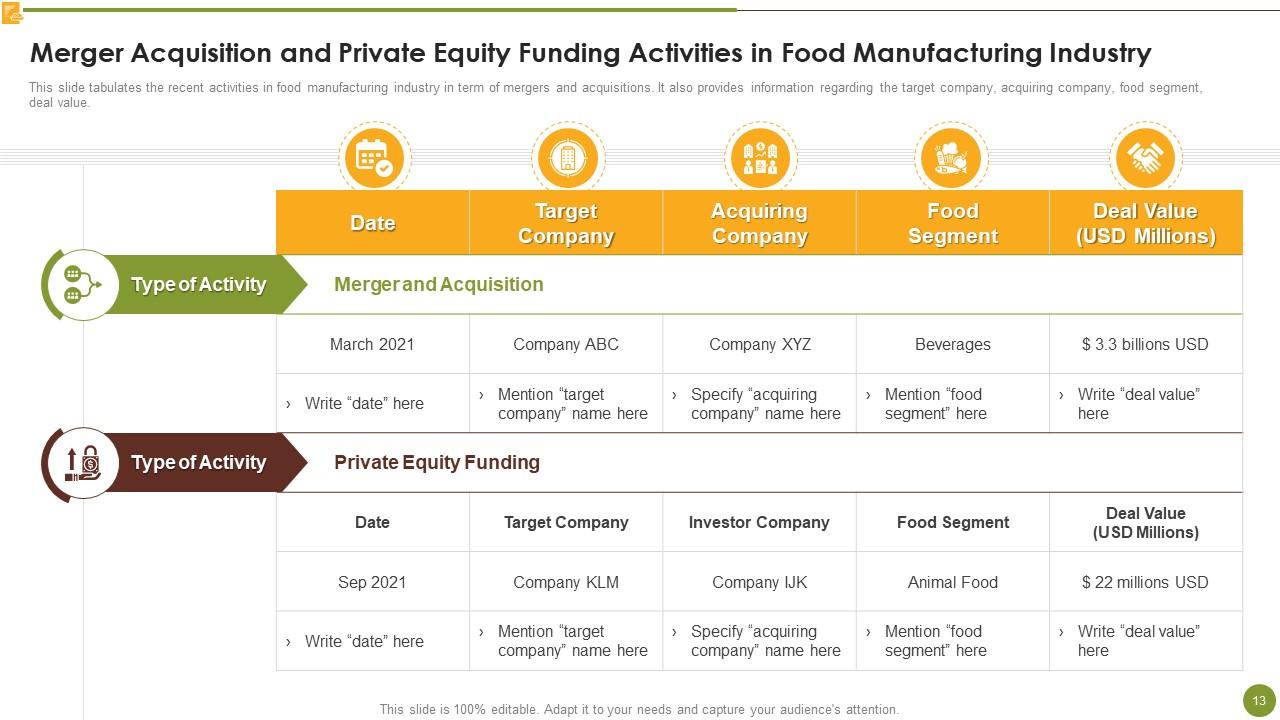
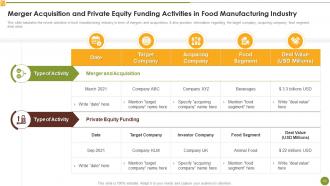
Slide 13 : Este slide mostra as atividades de Aquisição de Fusões e Captação de Private Equity na Indústria de Transformação de Alimentos.
Slide 14 : Este slide destaca o título dos tópicos que serão abordados a seguir no modelo.
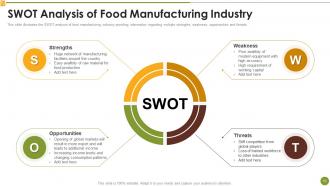
Slide 15 : Este slide representa a Análise SWOT da Indústria de Manufatura de Alimentos.
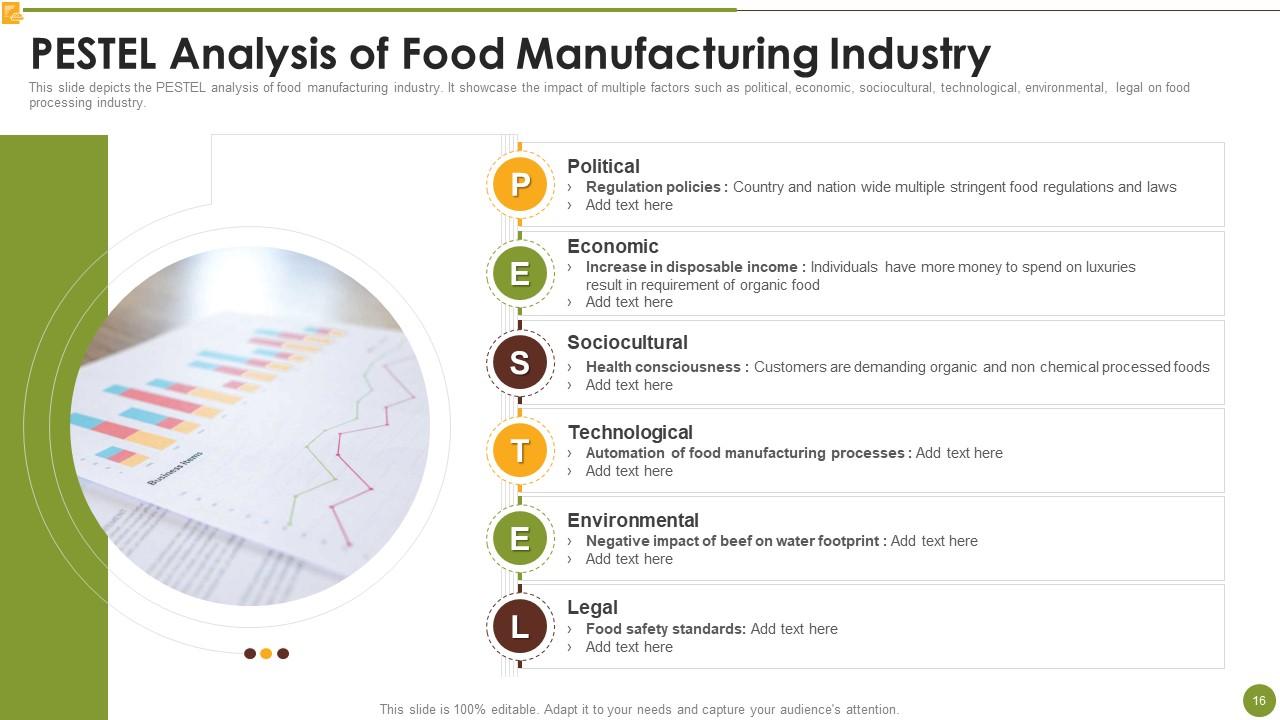
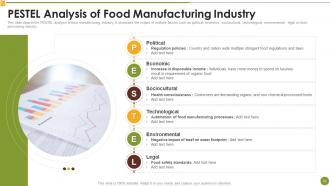
Slide 16 : Este slide mostra a Análise PESTEL da Indústria de Manufatura de Alimentos.
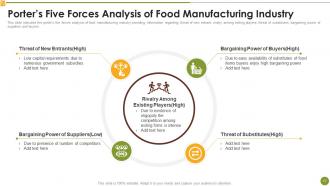
Slide 17 : Este slide mostra a Análise das Cinco Forças de Porter da Indústria de Manufatura de Alimentos.
Slide 18 : Este slide destaca o título dos tópicos que serão abordados a seguir no modelo.
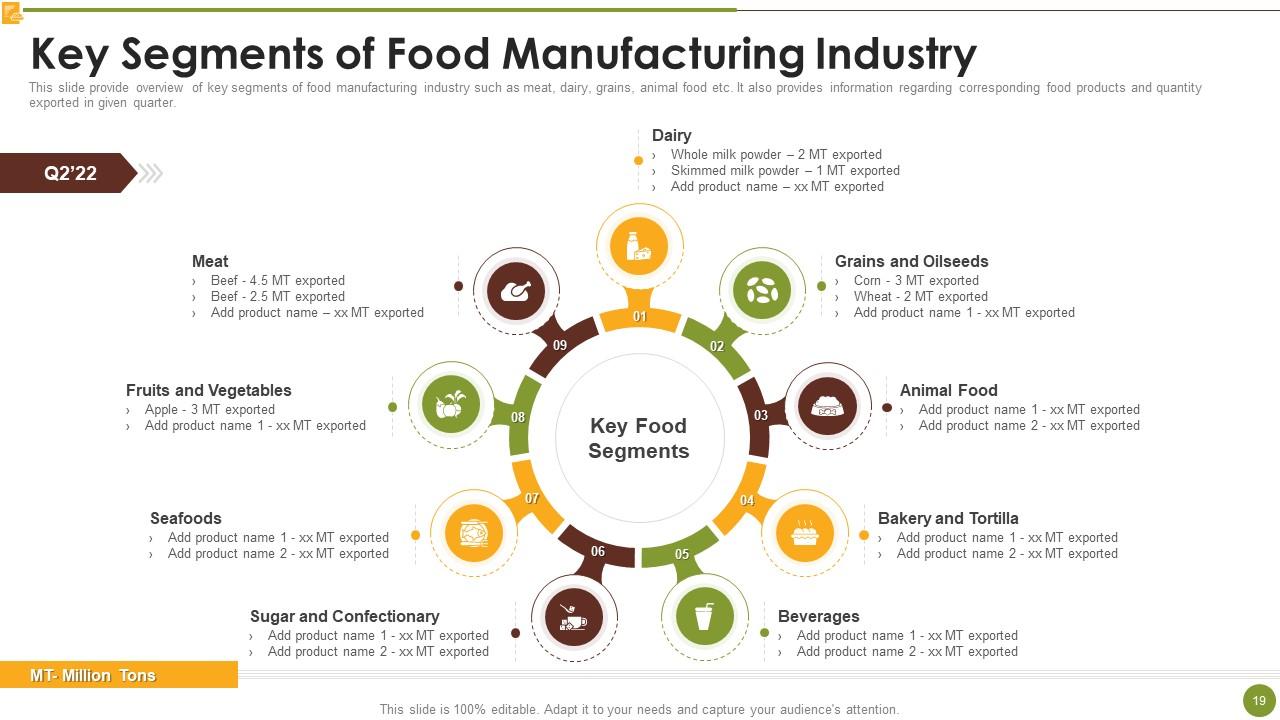
Slide 19 : Este slide apresenta os principais segmentos da indústria alimentícia.
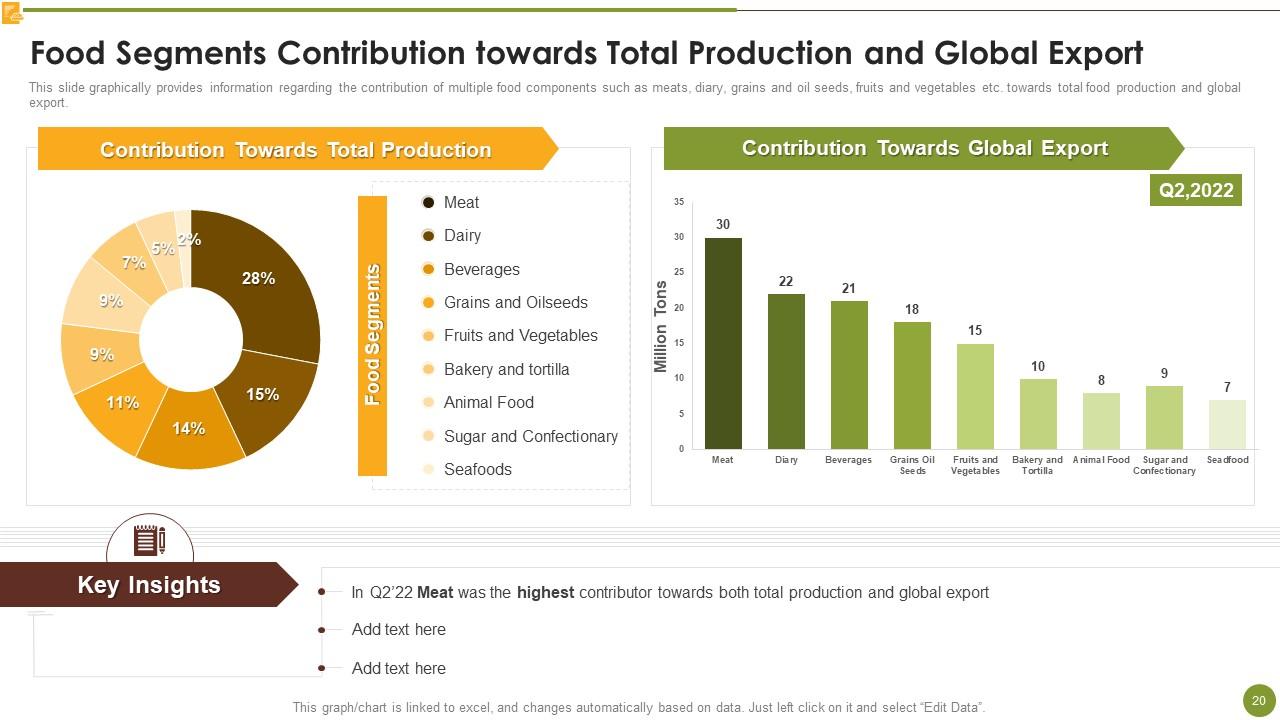
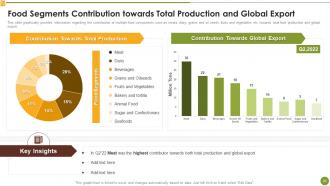
Slide 20 : Este slide mostra a Contribuição dos Segmentos de Alimentos para a Produção Total e Exportação Global.
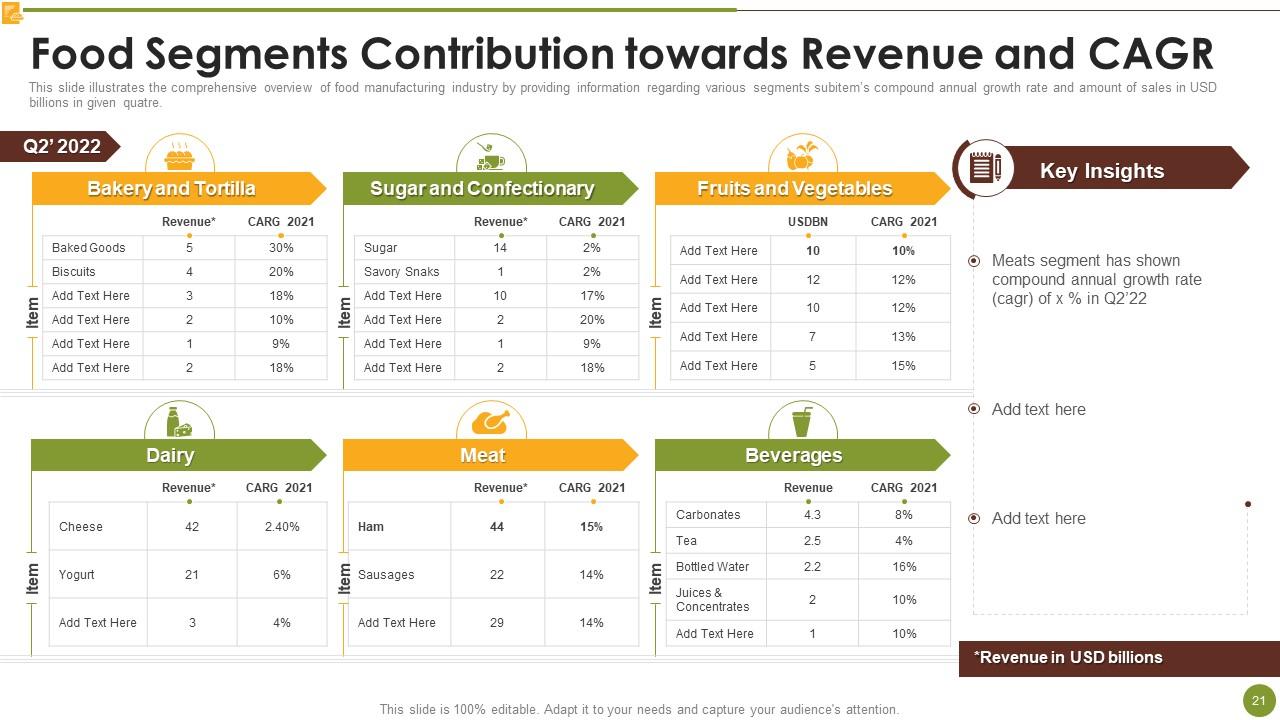
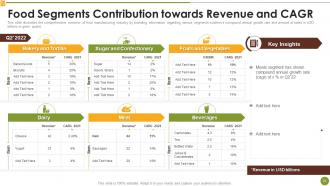
Slide 21 : Este slide representa a Contribuição dos Segmentos de Alimentos para Receita e CAGR.
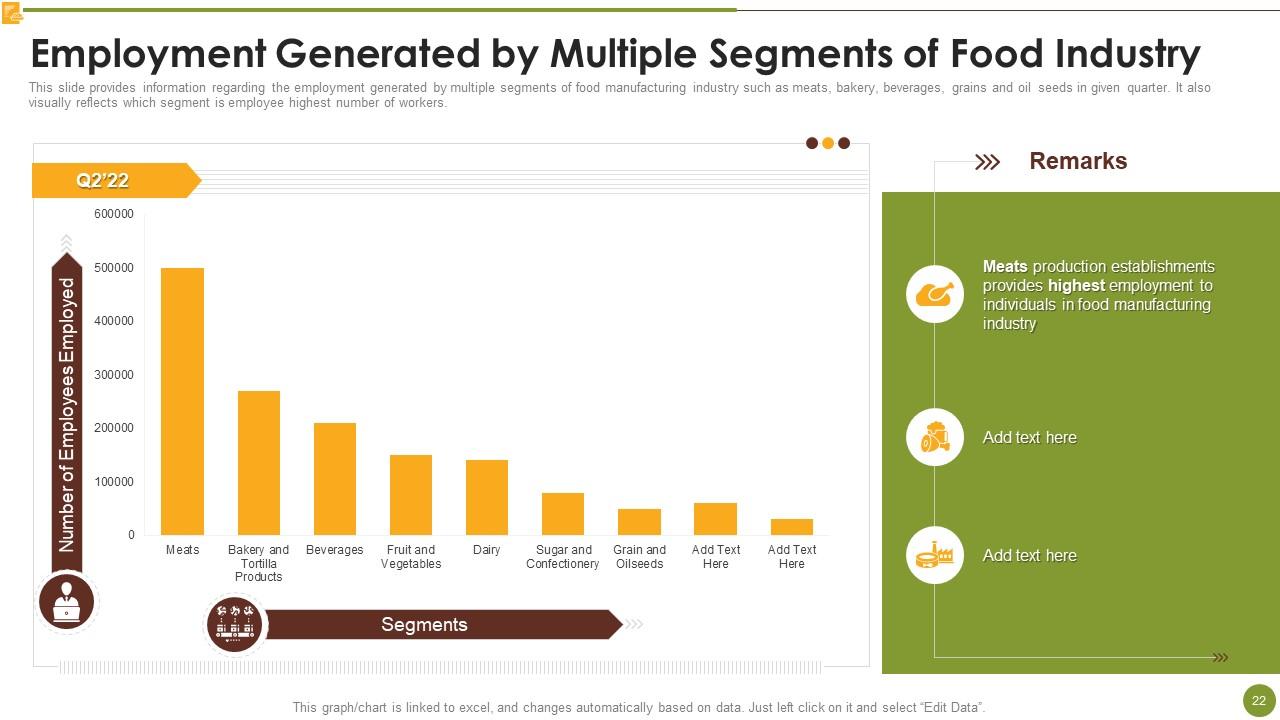
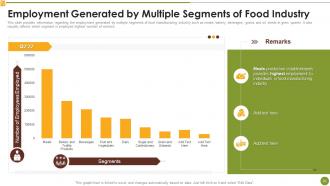
Slide 22 : Este slide mostra o Emprego Gerado por Múltiplos Segmentos da Indústria de Alimentos.
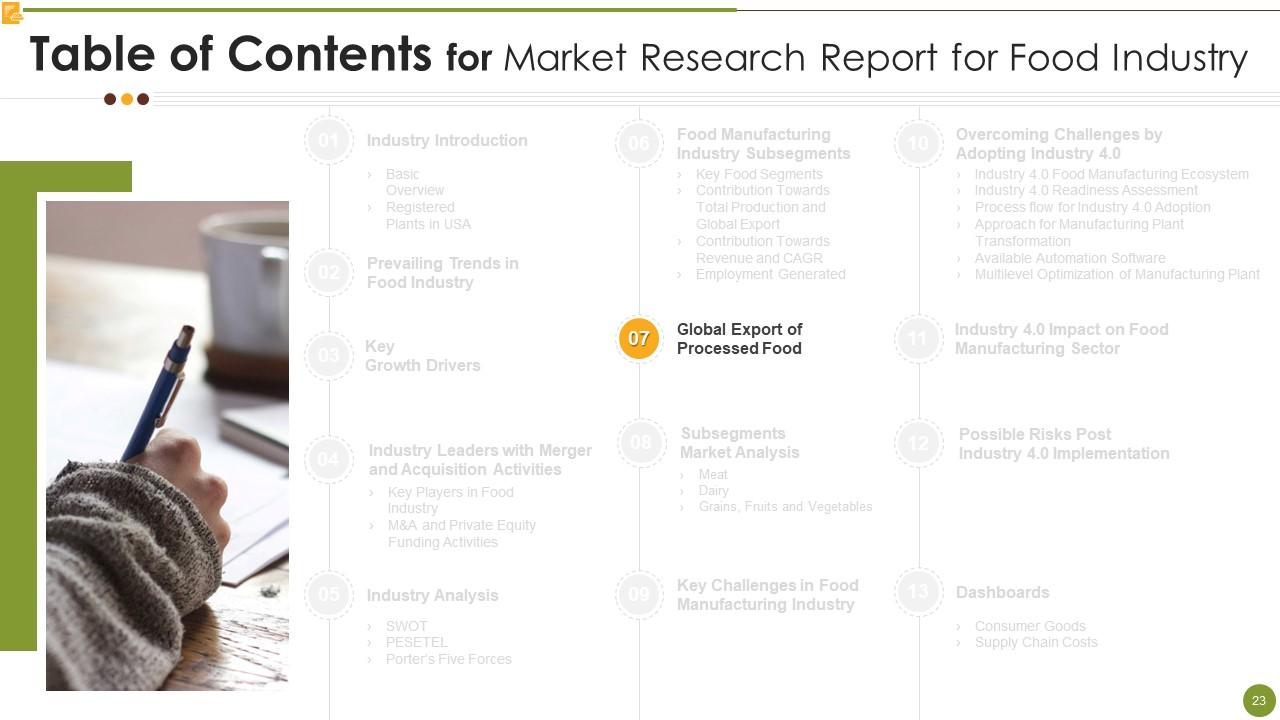
Slide 23 : Este slide destaca o título dos tópicos que serão abordados a seguir no modelo.
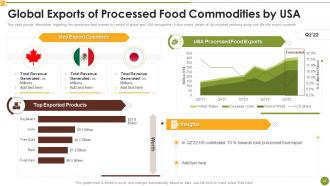
Slide 24 : Este slide mostra as Exportações Globais de Commodities de Alimentos Processados pelos EUA.
Slide 25 : Este slide destaca o título dos tópicos que serão abordados a seguir no modelo.
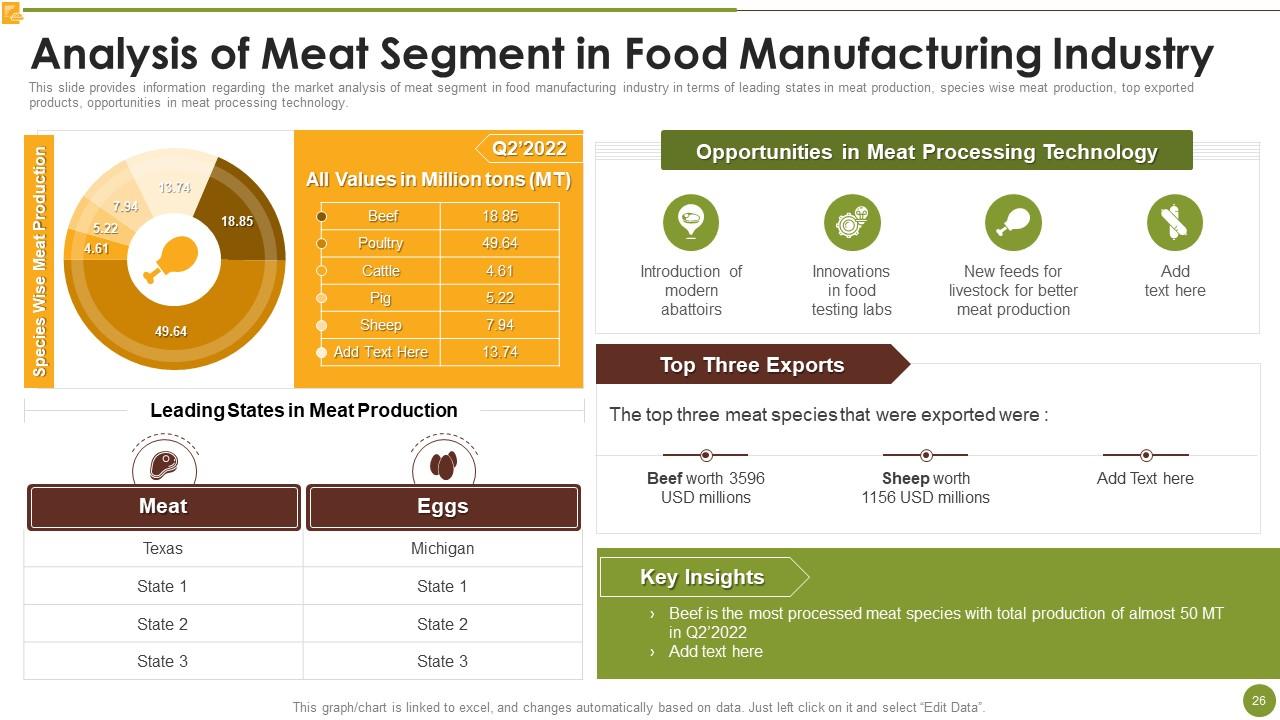
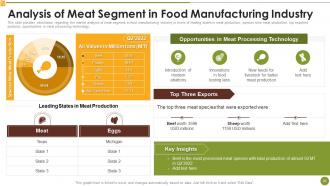
Slide 26 : Este slide apresenta a Análise do Segmento de Carnes na Indústria de Transformação de Alimentos.
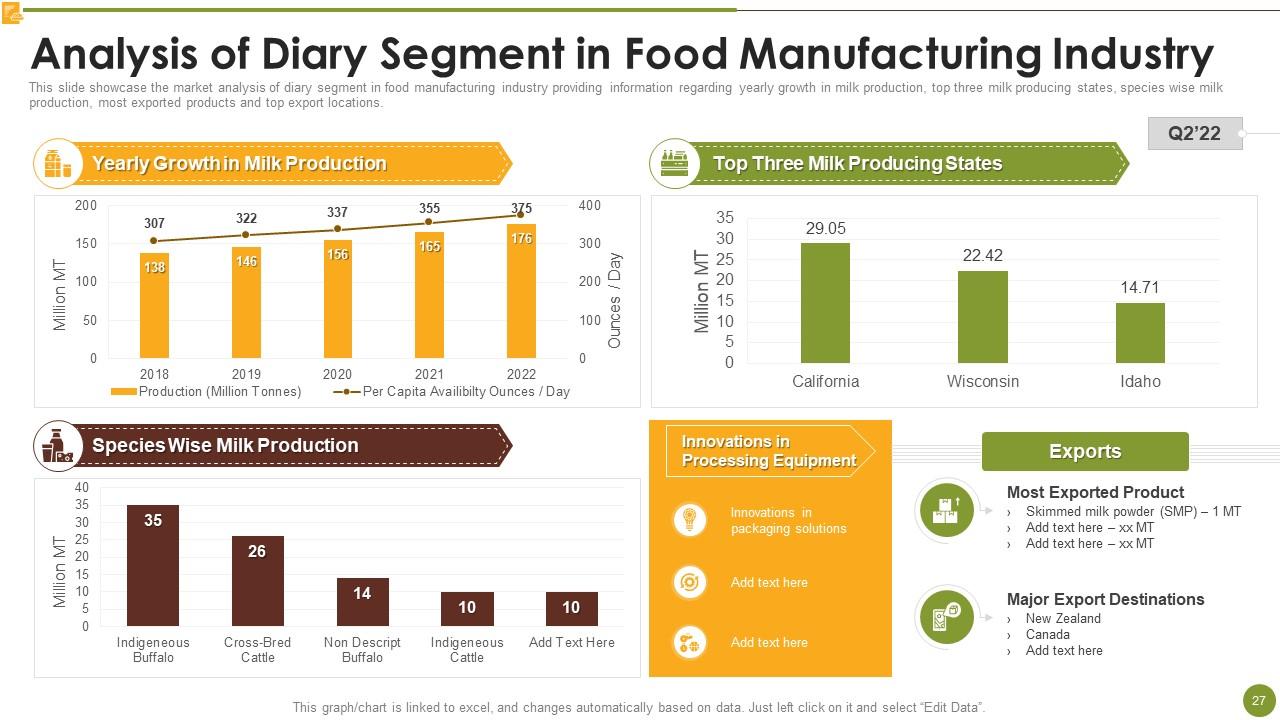
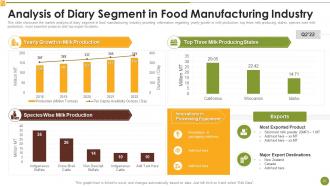
Slide 27 : Este slide apresenta a Análise do Segmento de Laticínios na Indústria de Manufatura de Alimentos.
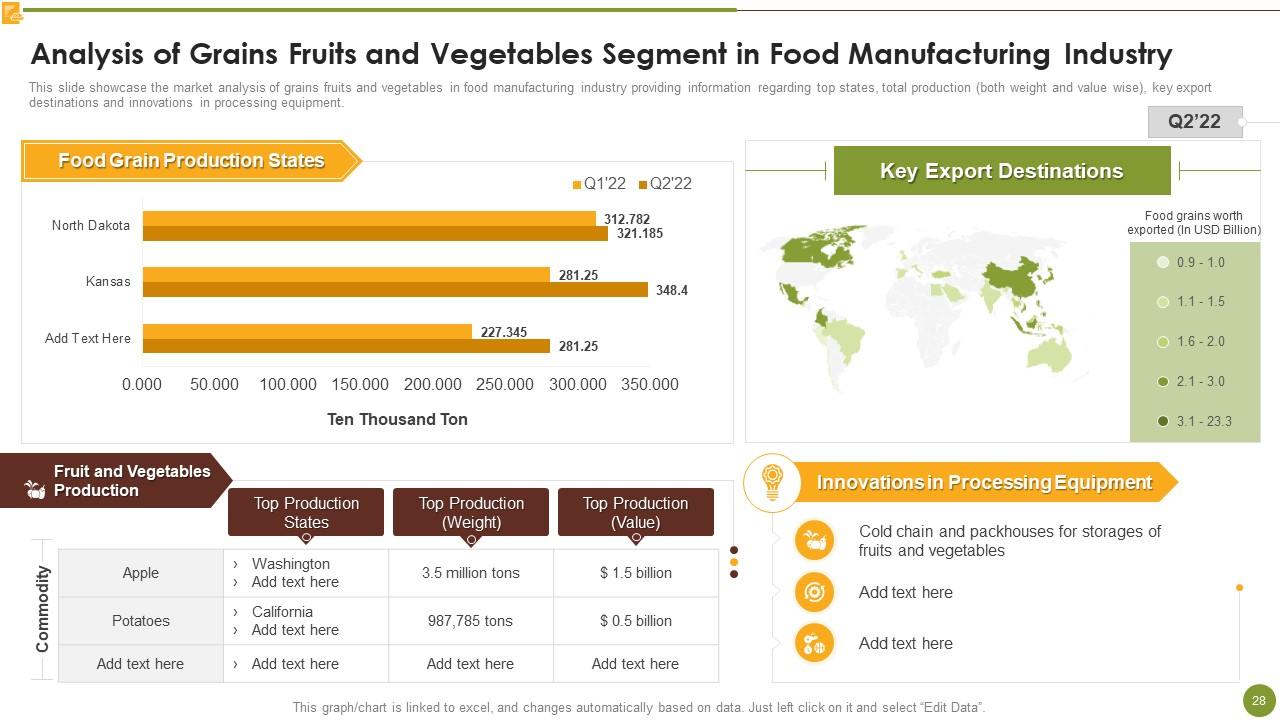
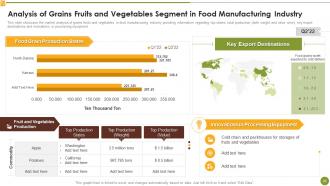
Slide 28 : Este slide mostra a análise de mercado de grãos, frutas e hortaliças na indústria alimentícia.
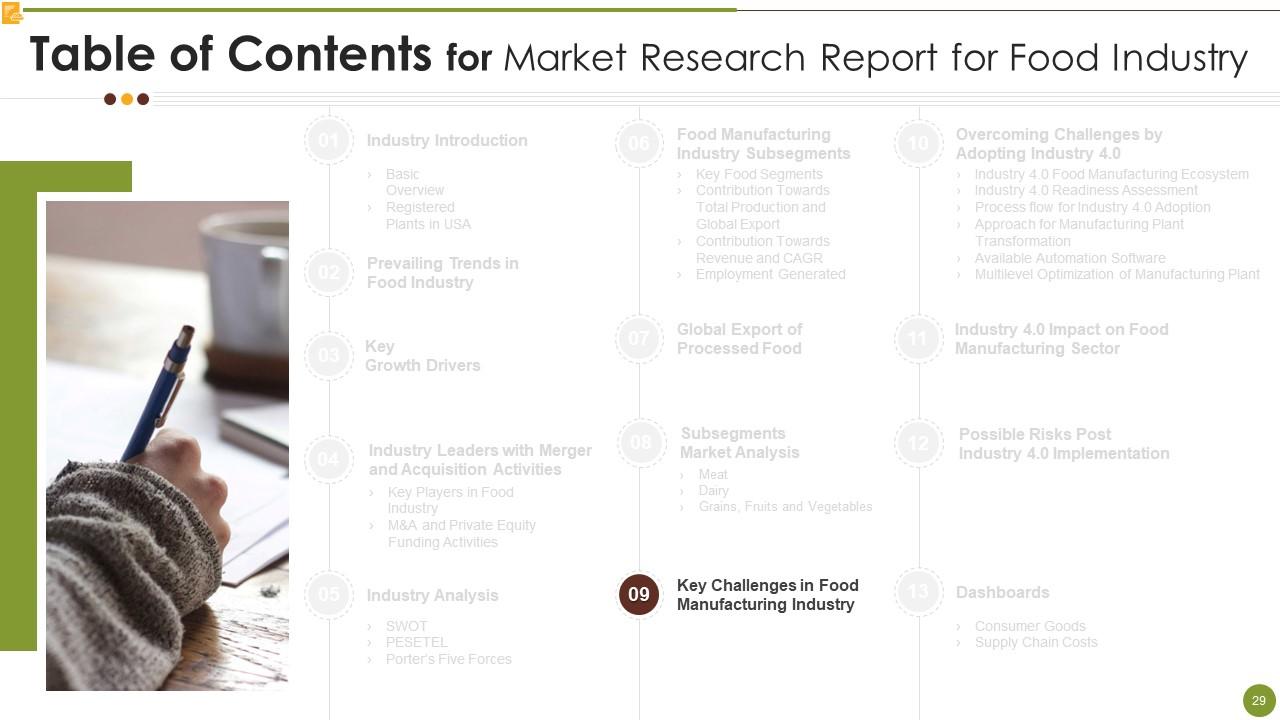
Slide 29 : Este slide destaca o título dos tópicos que serão abordados a seguir no modelo.
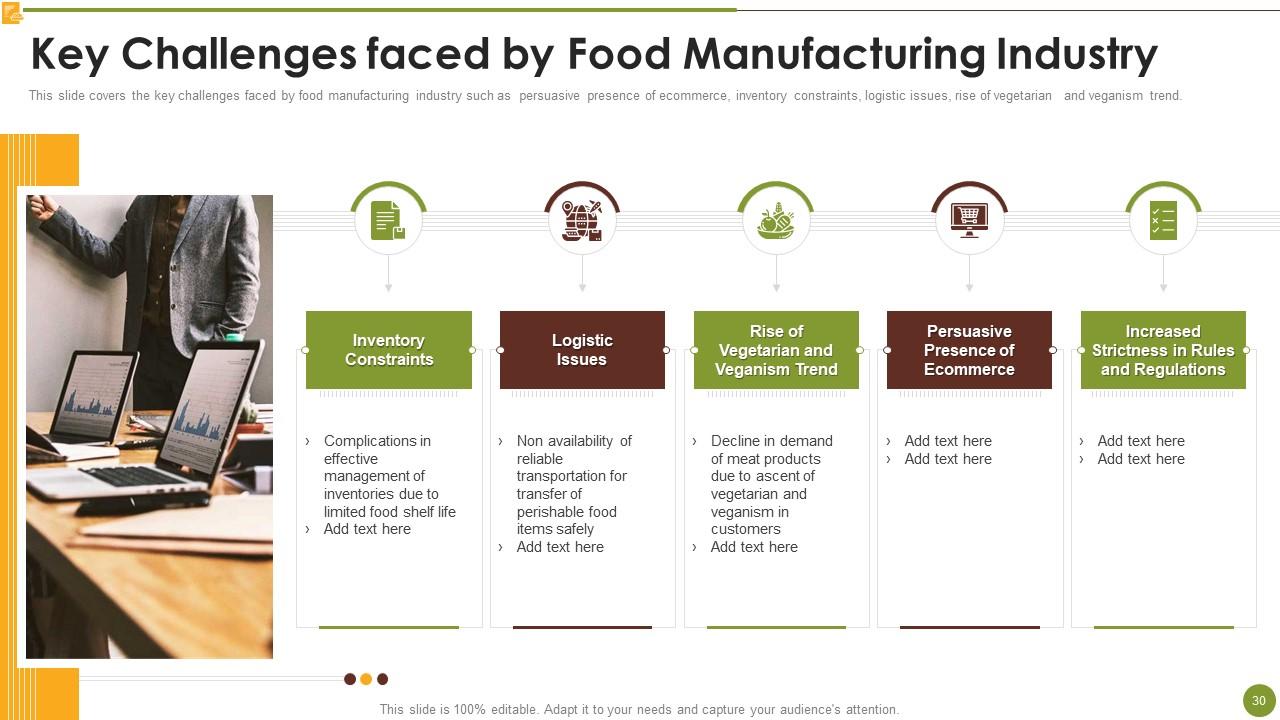
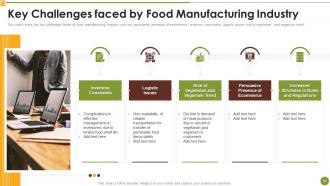
Slide 30 : Este slide representa os principais desafios enfrentados pela indústria de manufatura de alimentos.
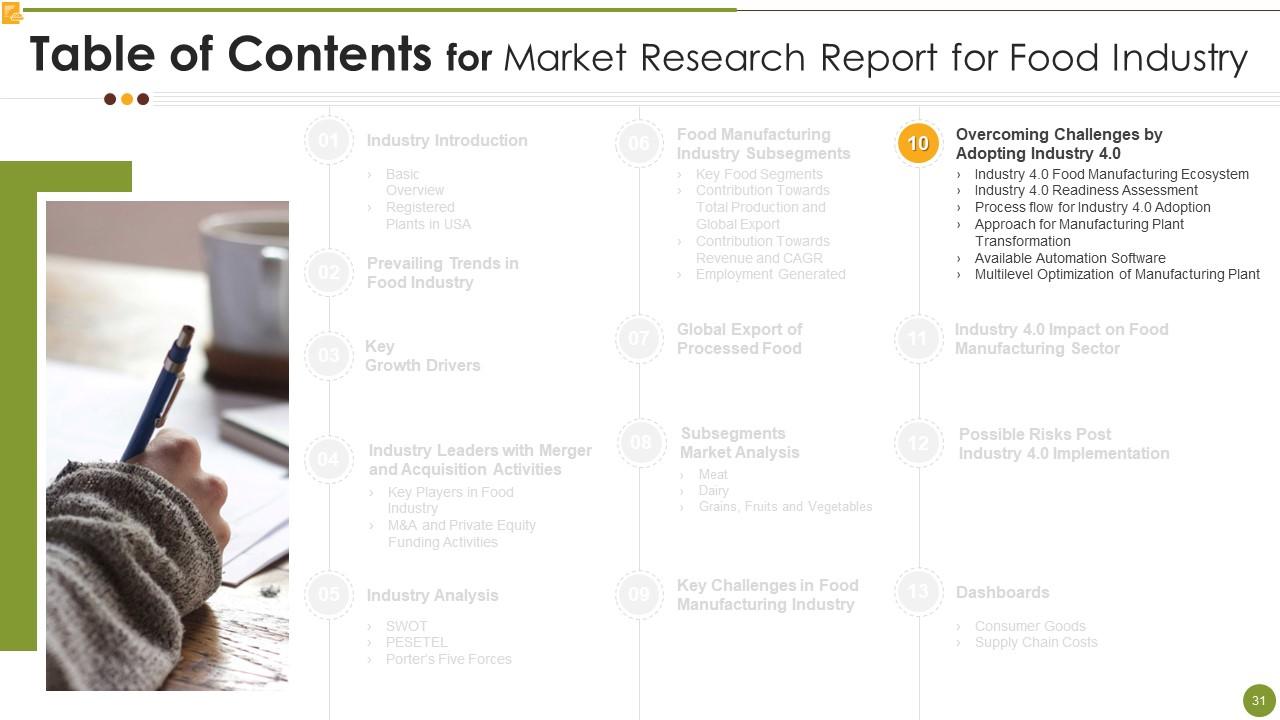
Slide 31 : Este slide destaca o título dos tópicos que serão abordados a seguir no modelo.
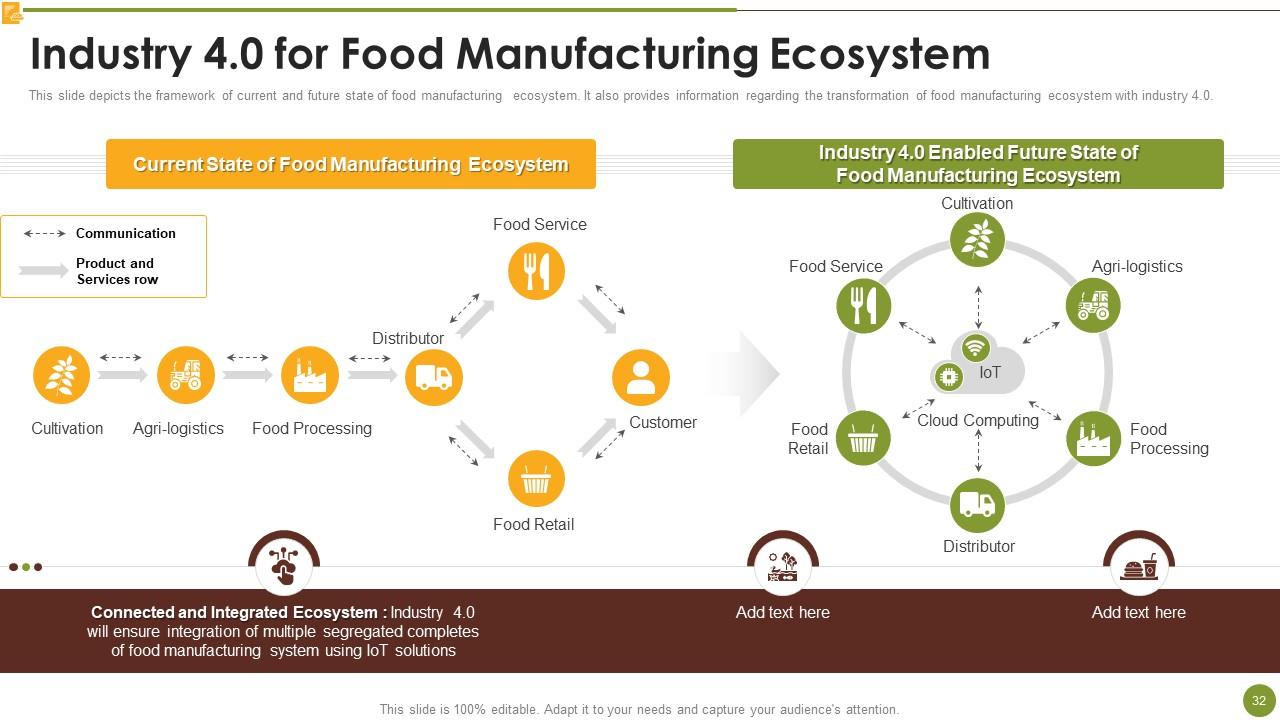
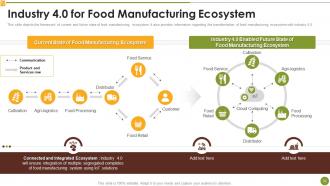
Slide 32 : Este slide descreve a Estrutura do Estado Atual e Futuro do Ecossistema de Manufatura de Alimentos.
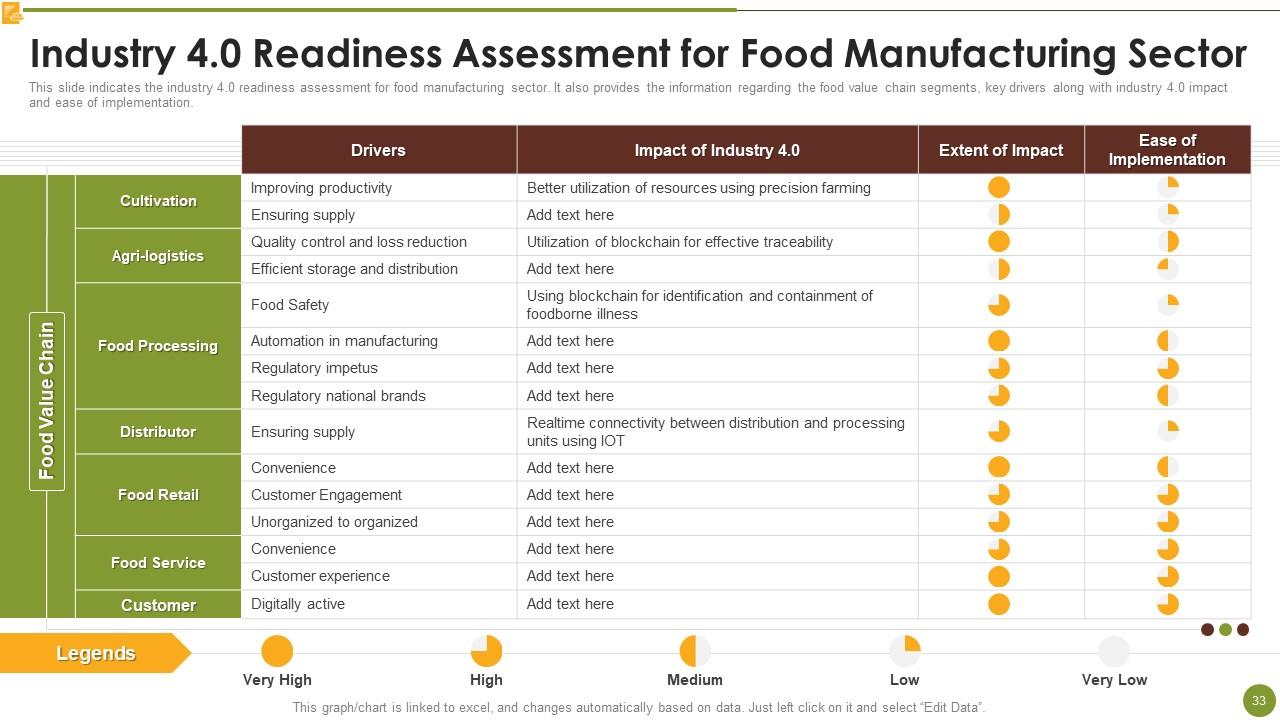
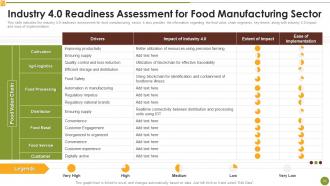
Slide 33 : Este slide indica a avaliação de prontidão da indústria 4.0 para o setor de fabricação de alimentos.
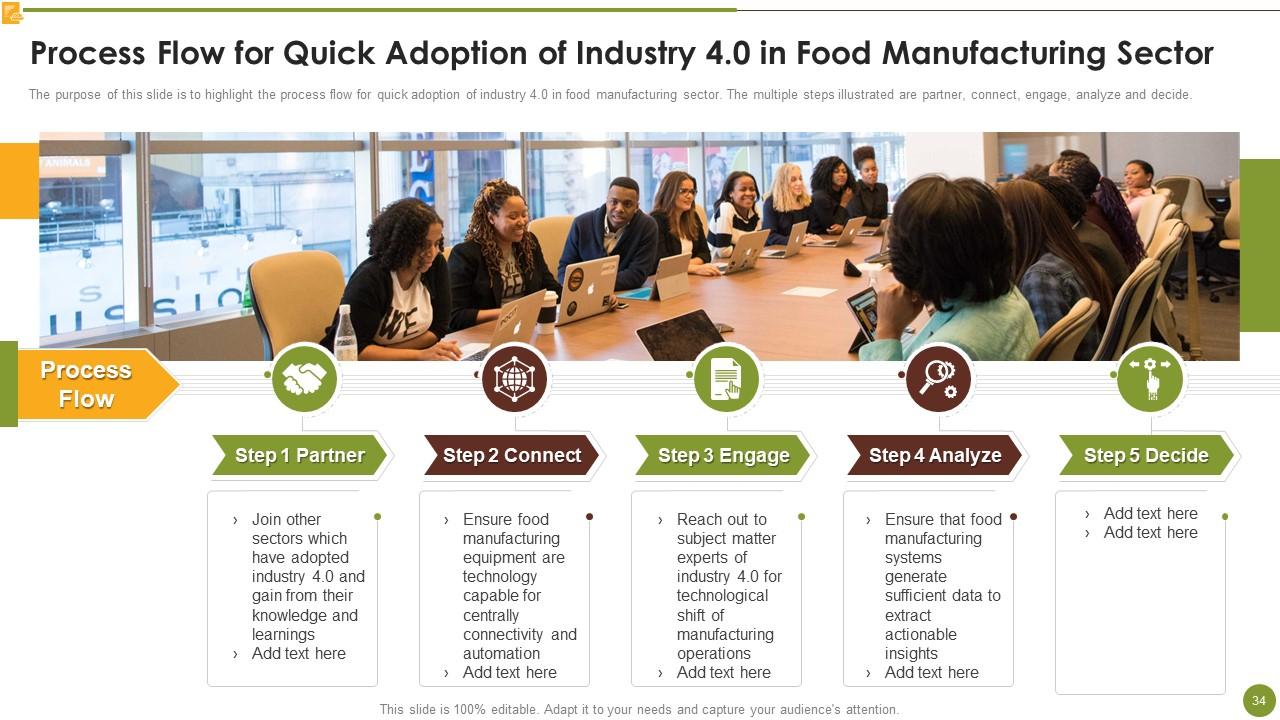
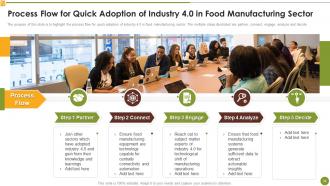
Slide 34 : Este slide representa o Fluxo do Processo para Adoção Rápida da Indústria 4.0 no Setor de Manufatura de Alimentos.
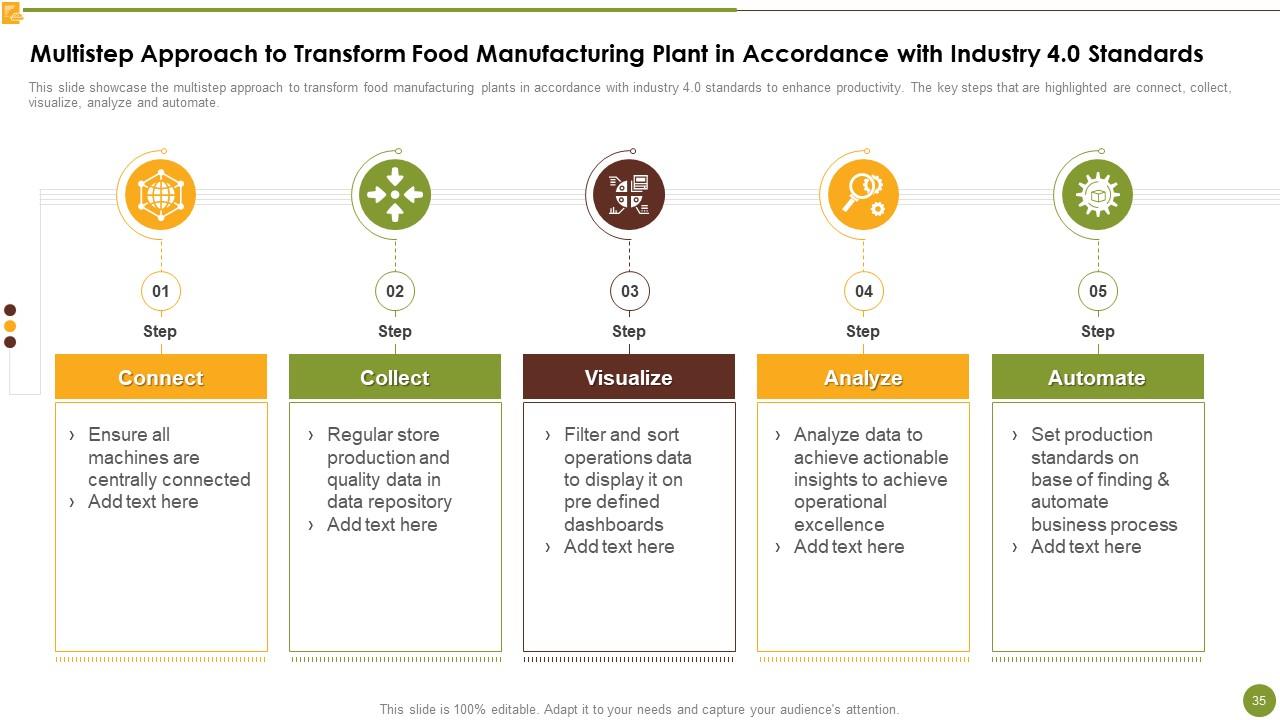
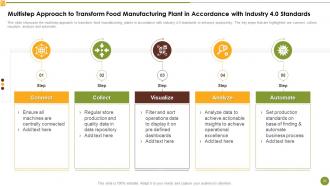
Slide 35 : Este slide mostra a abordagem de várias etapas para transformar as fábricas de alimentos.
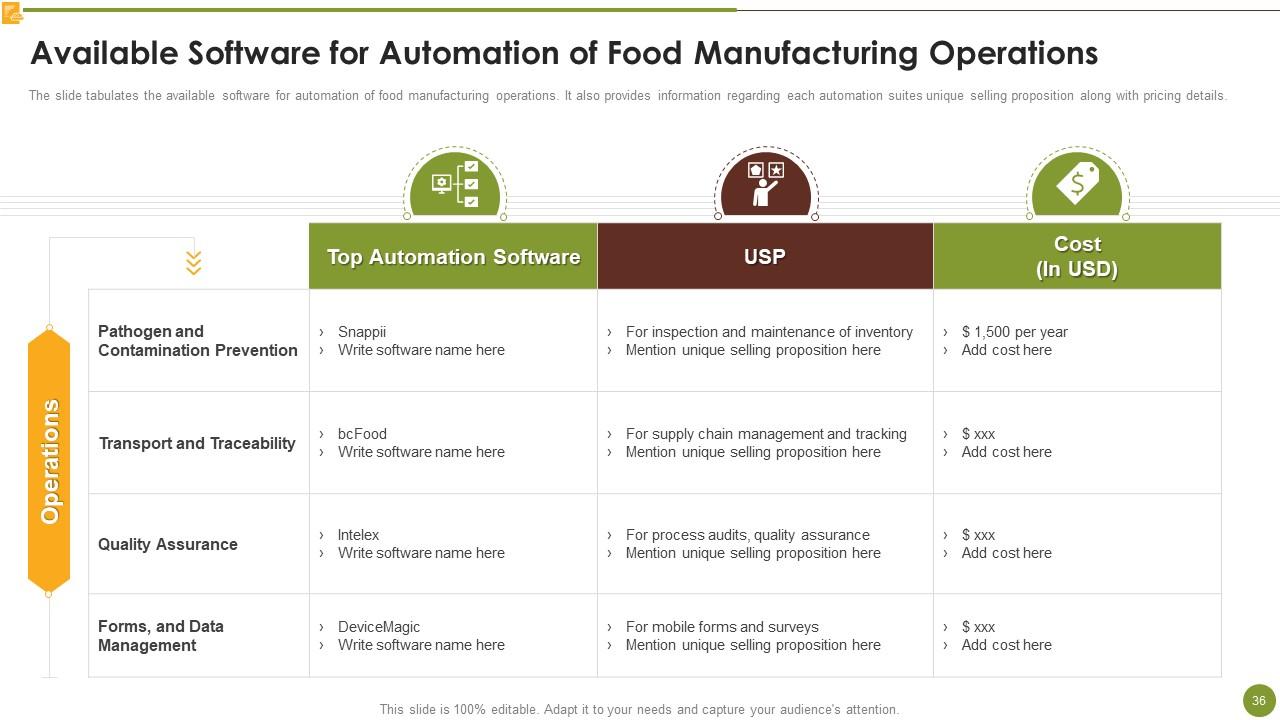
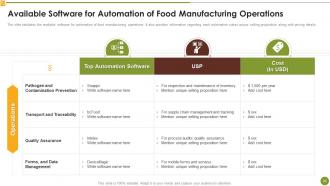
Slide 36 : Este slide mostra os Softwares Disponíveis para Automação das Operações de Fabricação de Alimentos.
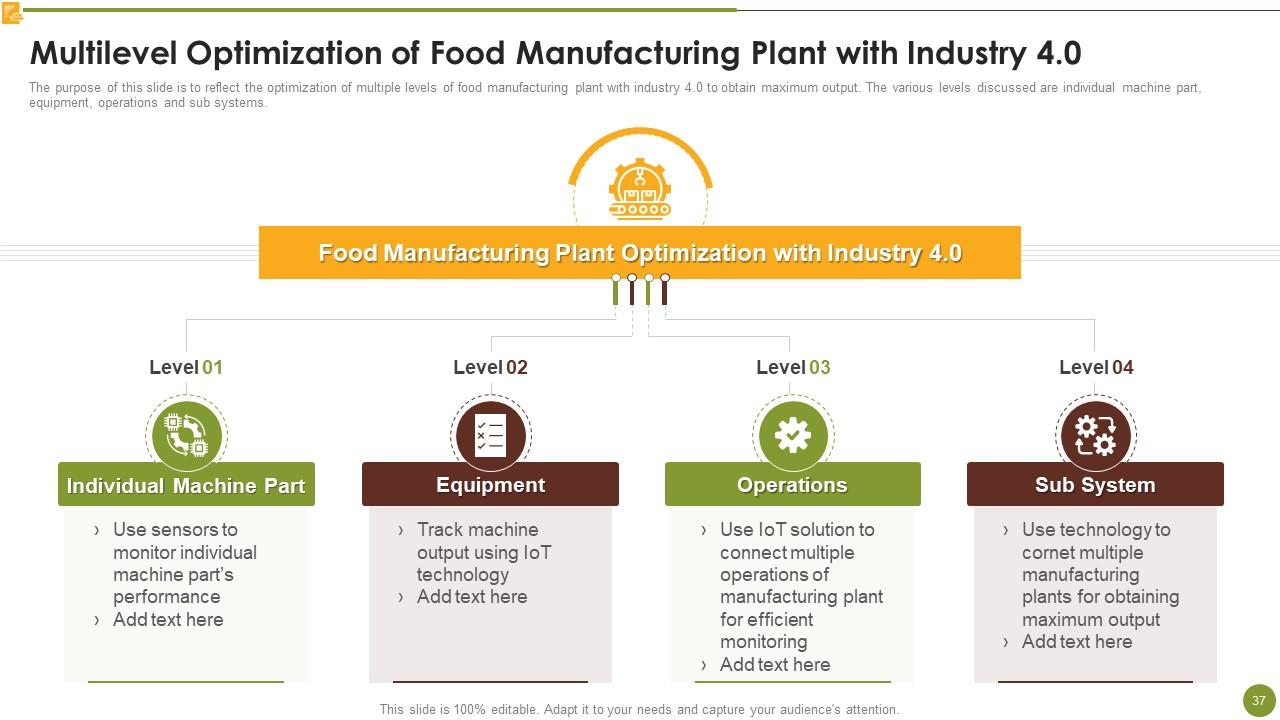
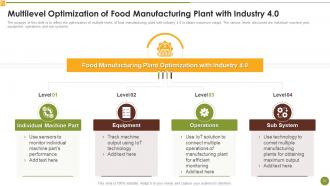
Slide 37 : Este slide apresenta a Otimização Multinível da Fábrica de Alimentos com a Indústria 4.0.
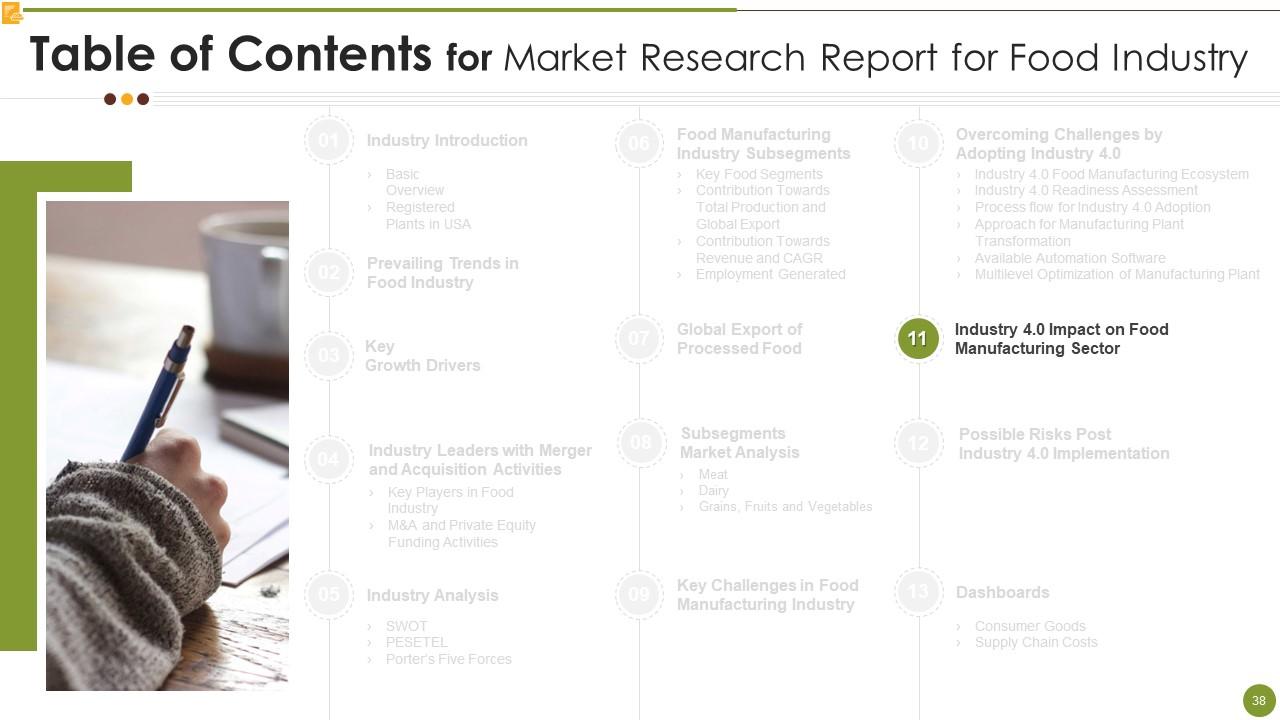
Slide 38 : Este slide destaca o título dos tópicos que serão abordados a seguir no modelo.
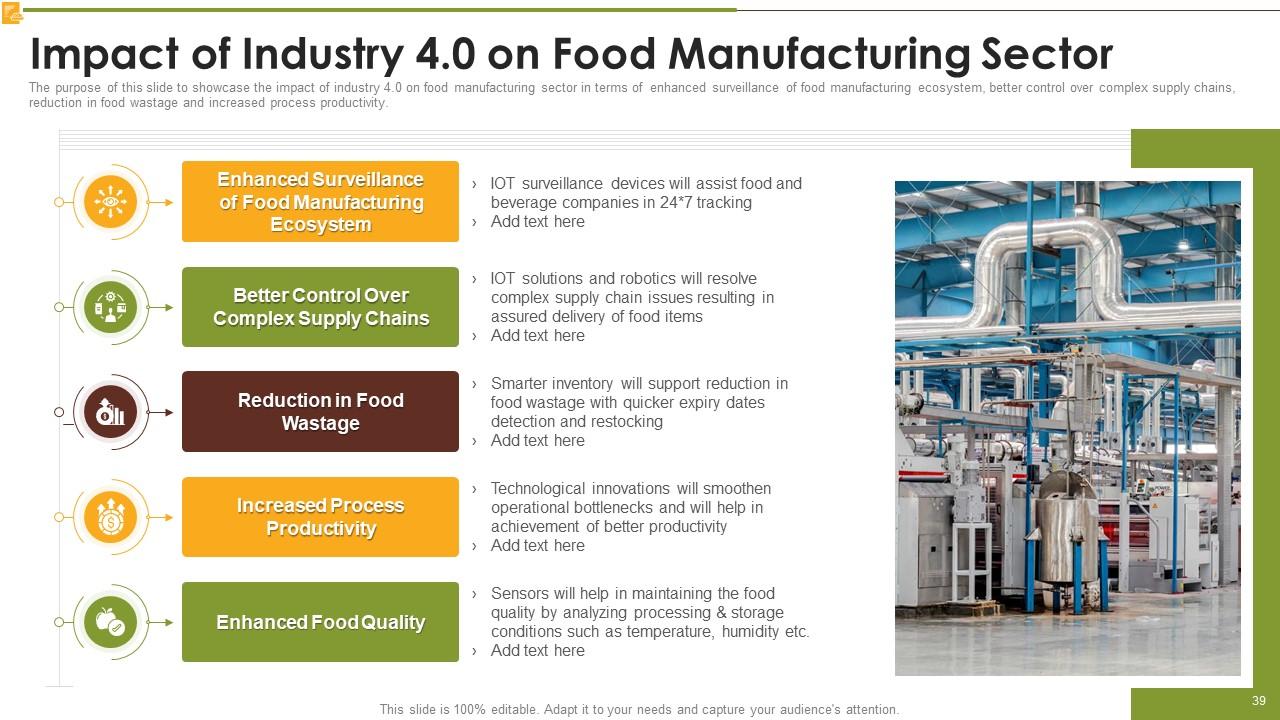
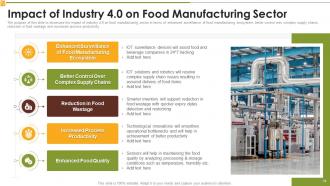
Slide 39 : Este slide representa o Impacto da Indústria 4.0 no Setor de Manufatura de Alimentos.
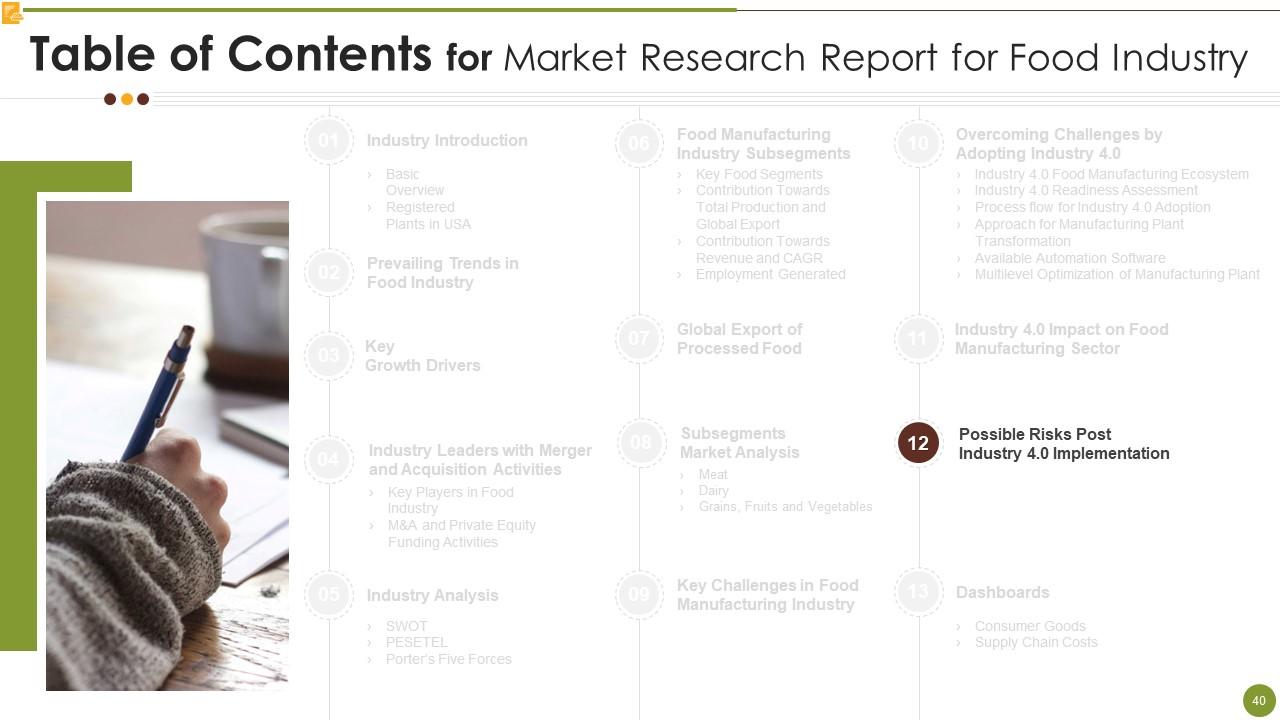
Slide 40 : Este slide destaca o título dos tópicos que serão abordados a seguir no modelo.
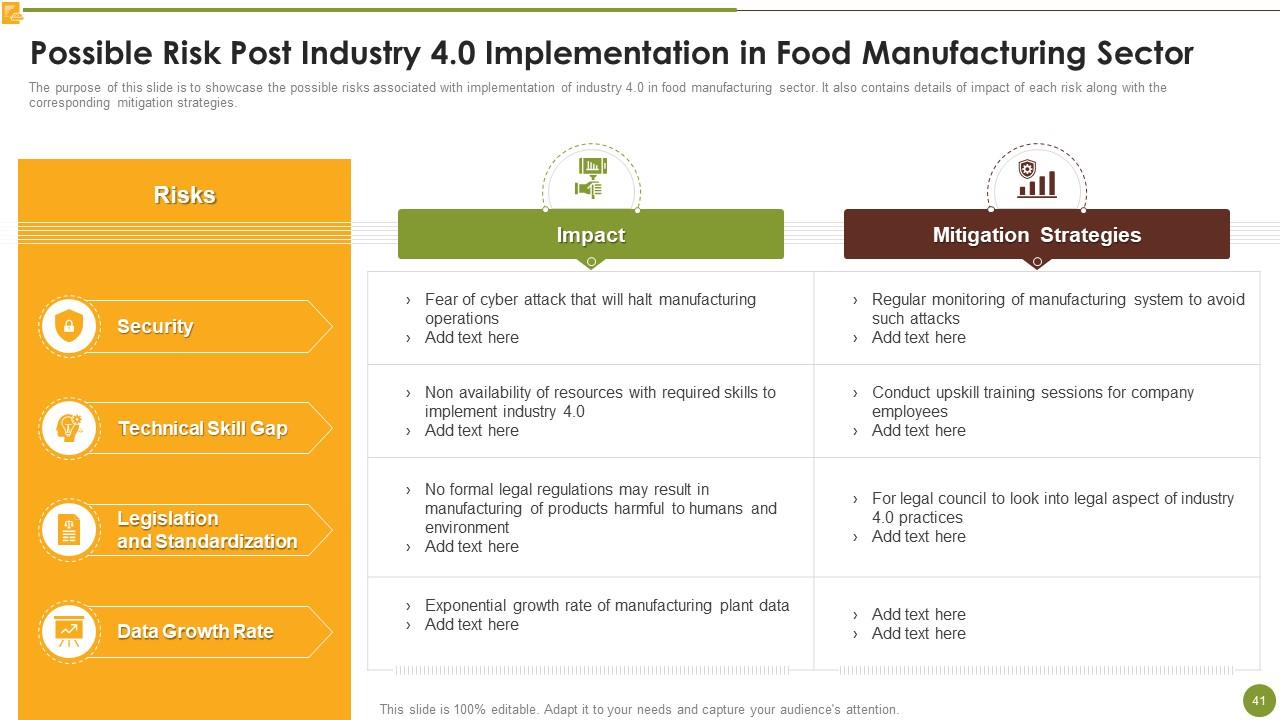
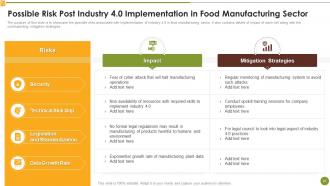
Slide 41 : Este slide mostra o Possível Risco Pós-Implementação da Indústria 4.0 no Setor de Manufatura de Alimentos.
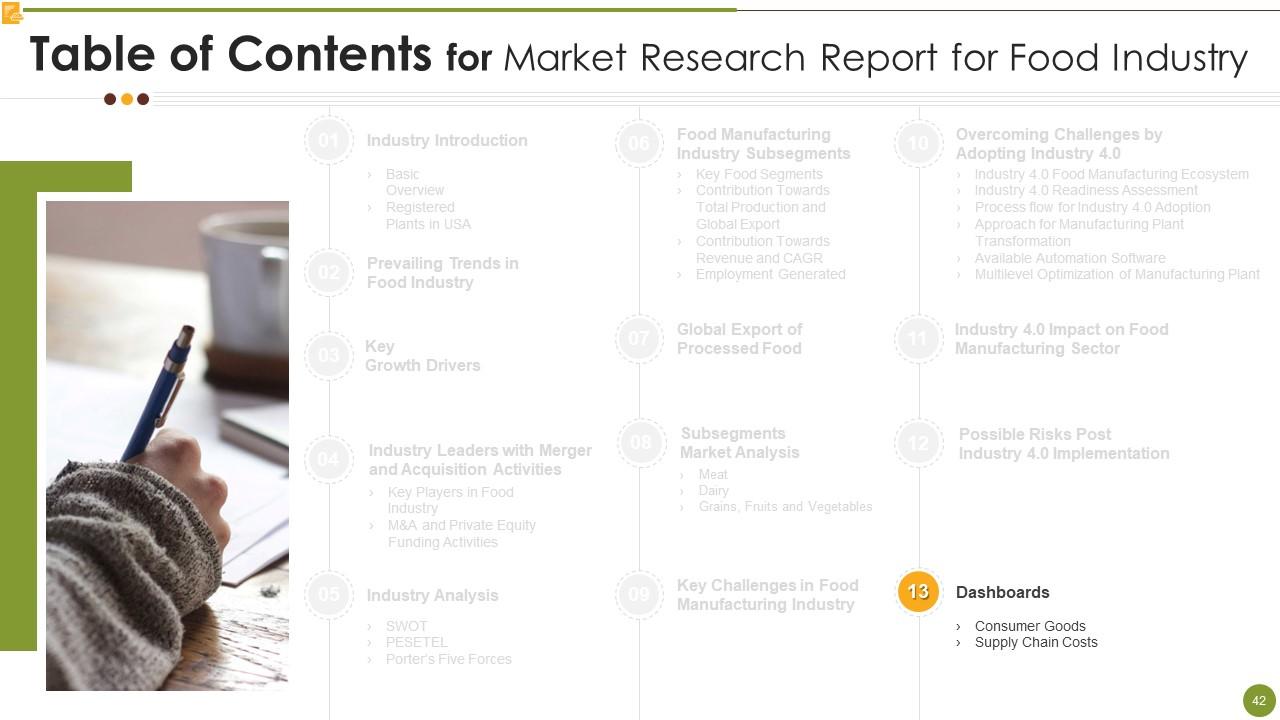
Slide 42 : Este slide destaca o título dos tópicos que serão abordados a seguir no modelo.
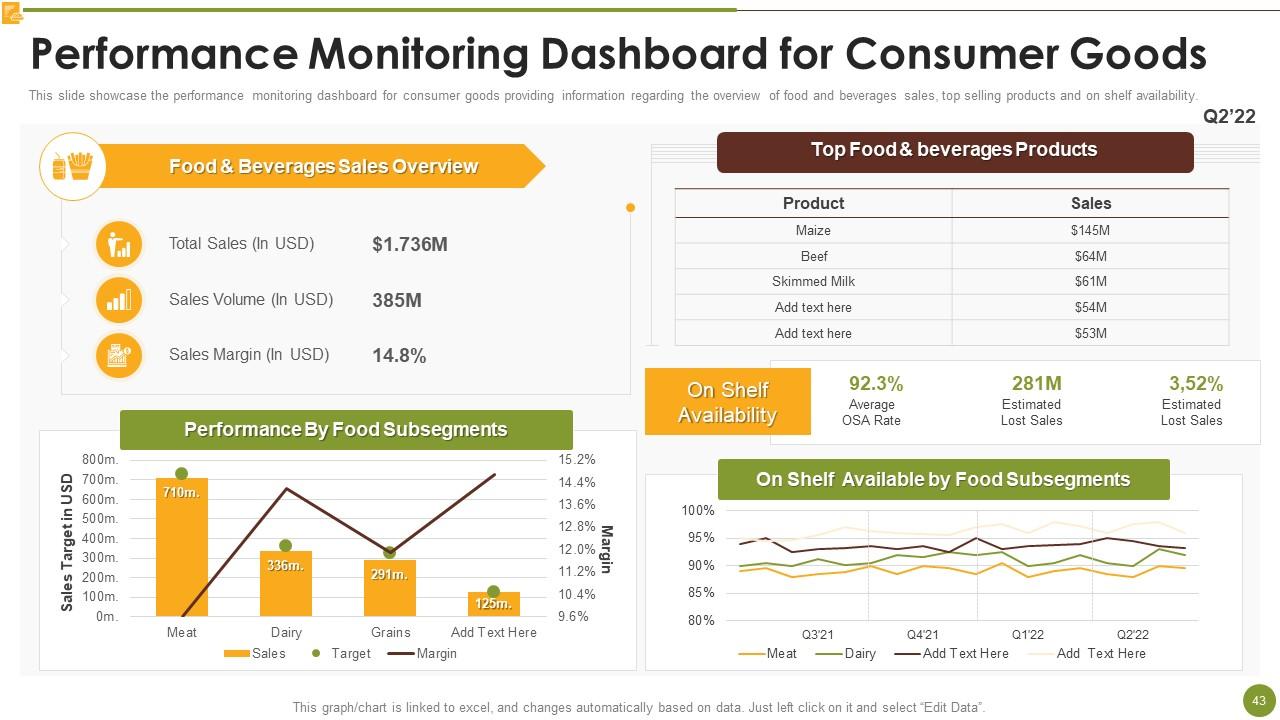
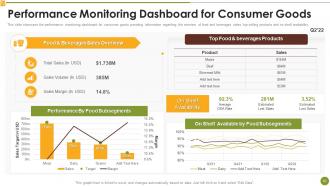
Slide 43 : Este slide mostra o Painel de Monitoramento de Desempenho para Bens de Consumo.
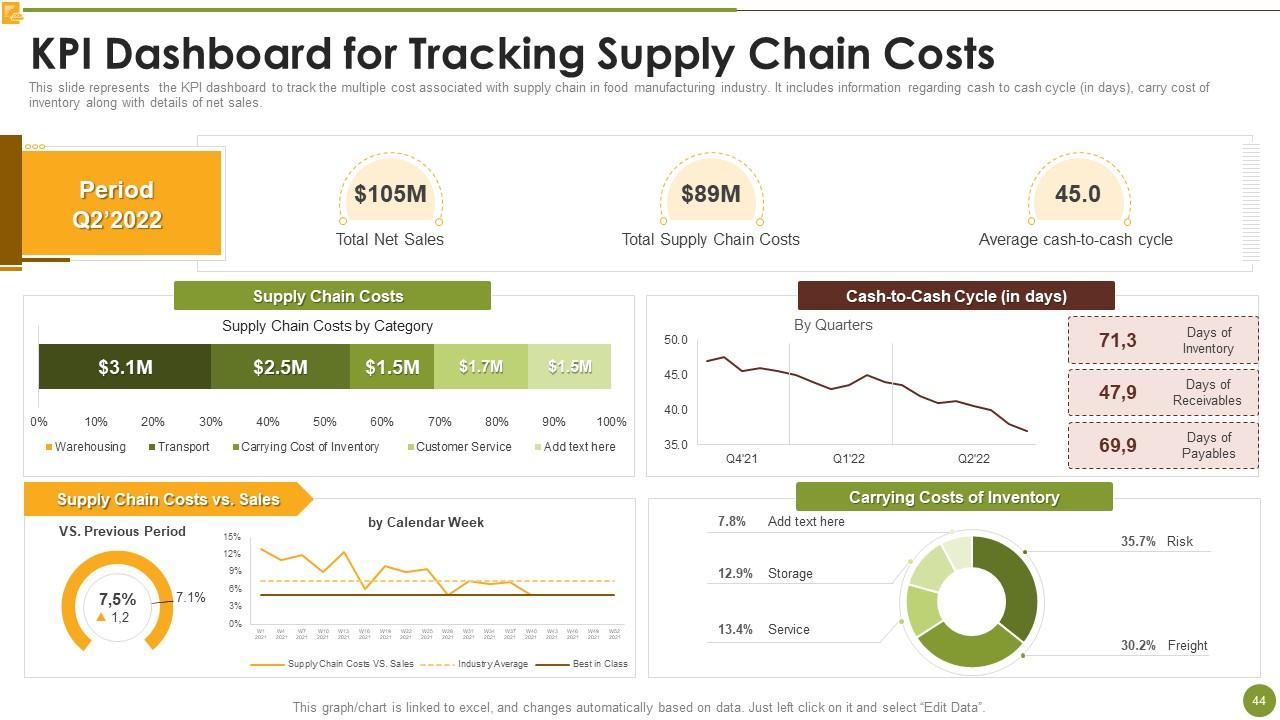
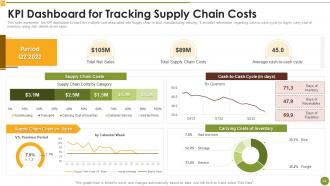
Slide 44 : Este slide representa o Painel de KPI para rastrear o Custo Múltiplo Associado à Cadeia de Suprimentos.
Slide 45 : Este slide é intitulado como Slides Adicionais para avançar.
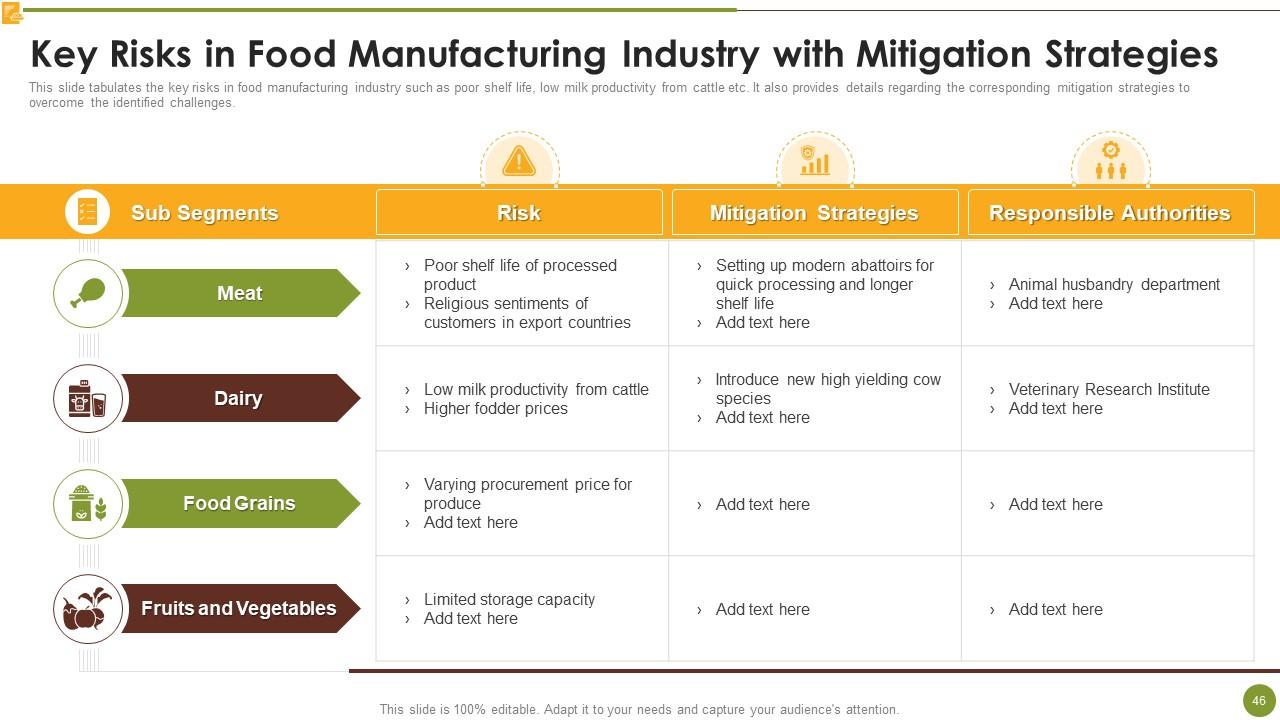
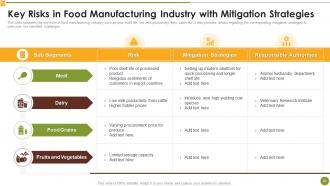
Slide 46 : Este slide mostra os principais riscos na indústria de manufatura de alimentos com estratégias de mitigação.
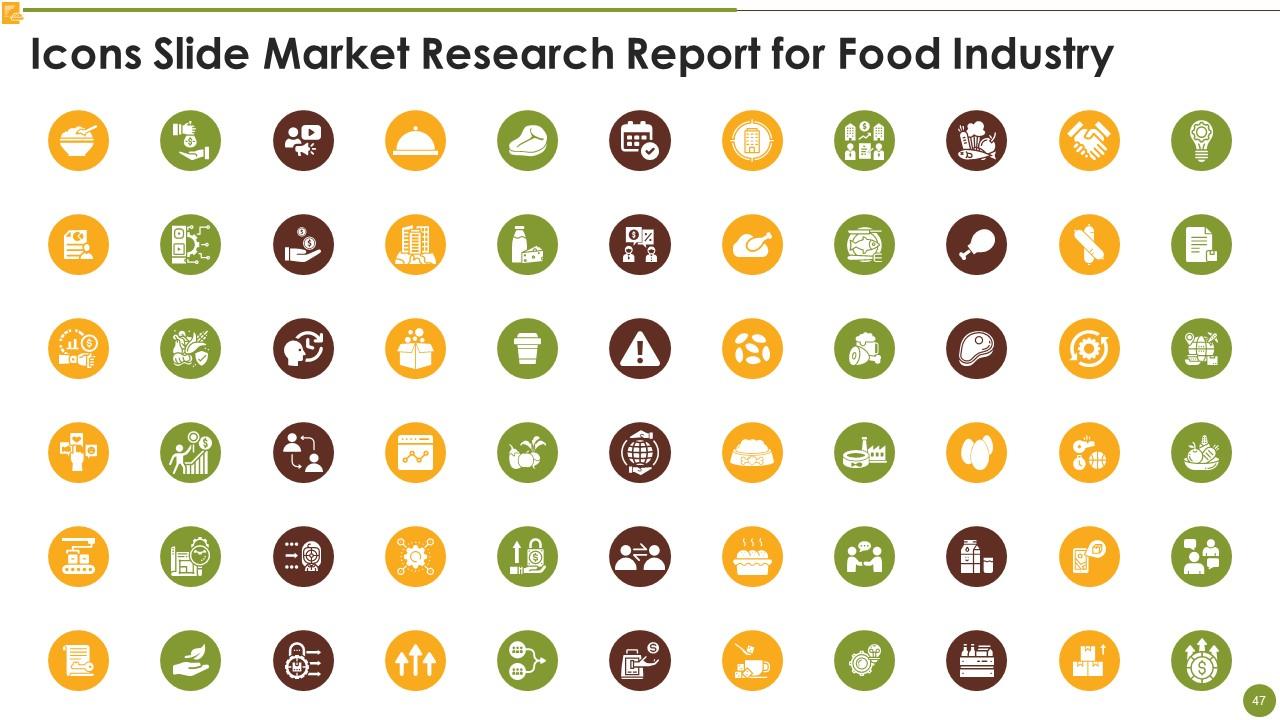
Slide 47 : Este slide mostra o Icons Industry Report for Food Manufacturing Sector.
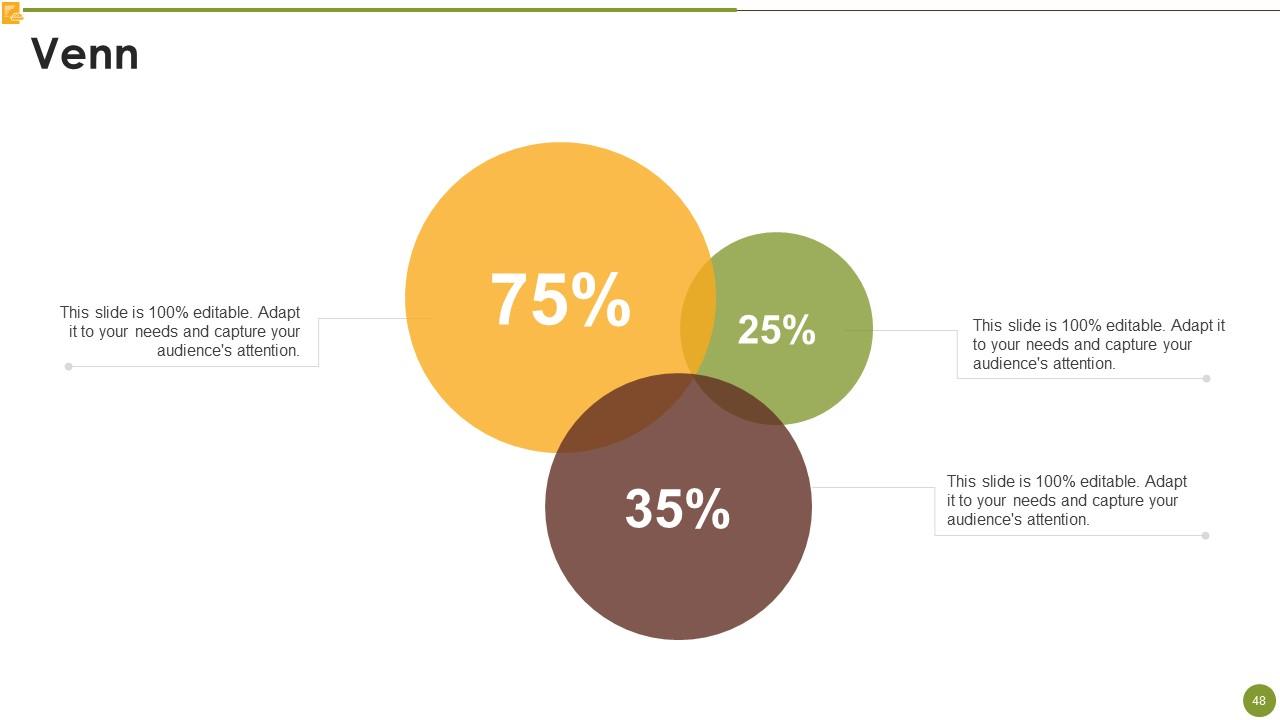
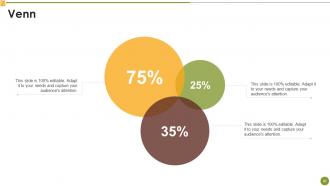
Slide 48 : Este slide mostra o diagrama de Venn com caixas de texto.
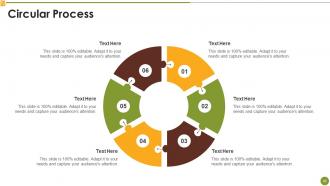
Slide 49 : Este slide mostra o Diagrama Circular com caixas de texto adicionais.
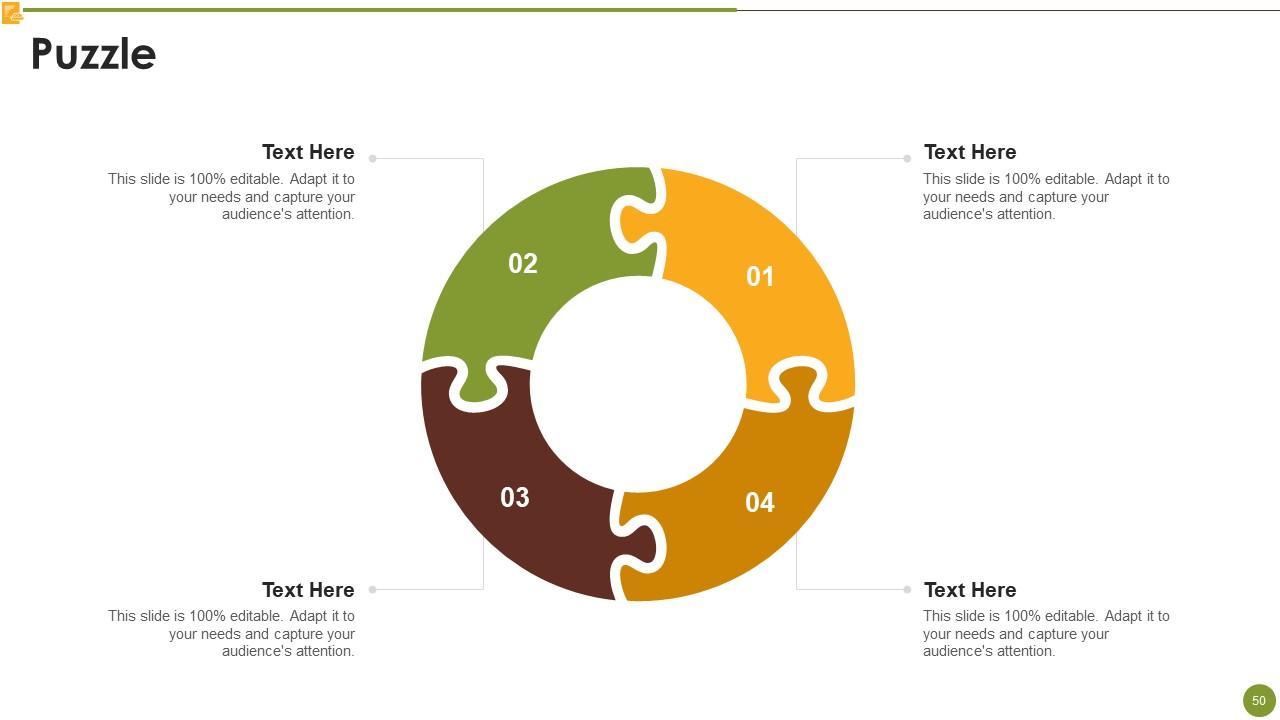
Slide 50 : Este slide contém Puzzle com ícones e textos relacionados.
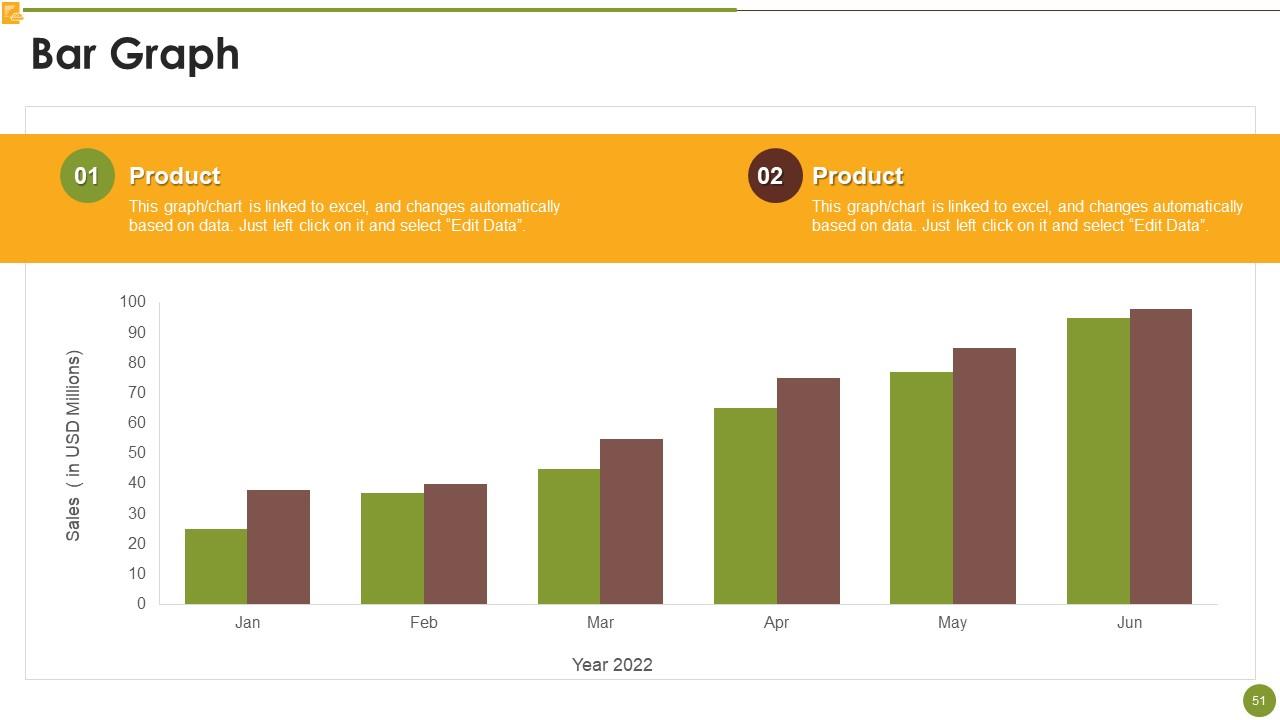
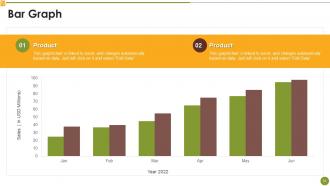
Slide 51 : Este slide apresenta o gráfico de barras com a comparação de dois produtos.
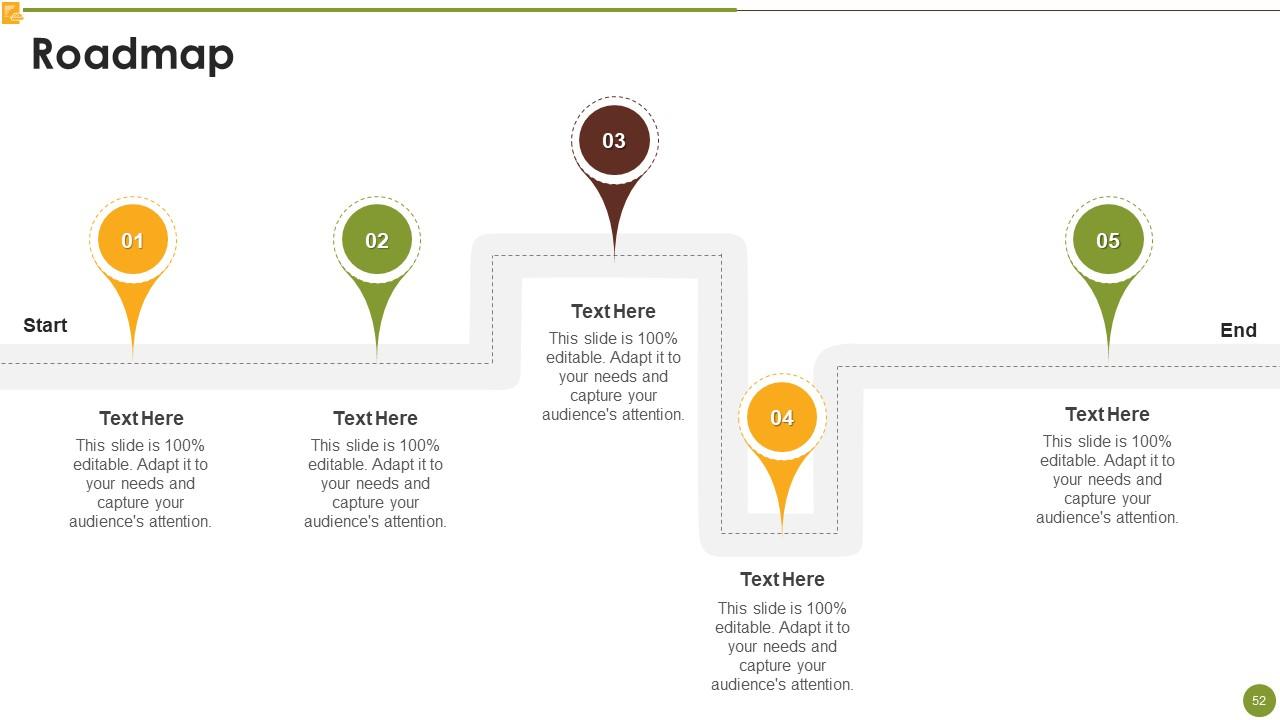
Slide 52 : Este slide apresenta o Roteiro com caixas de texto adicionais.
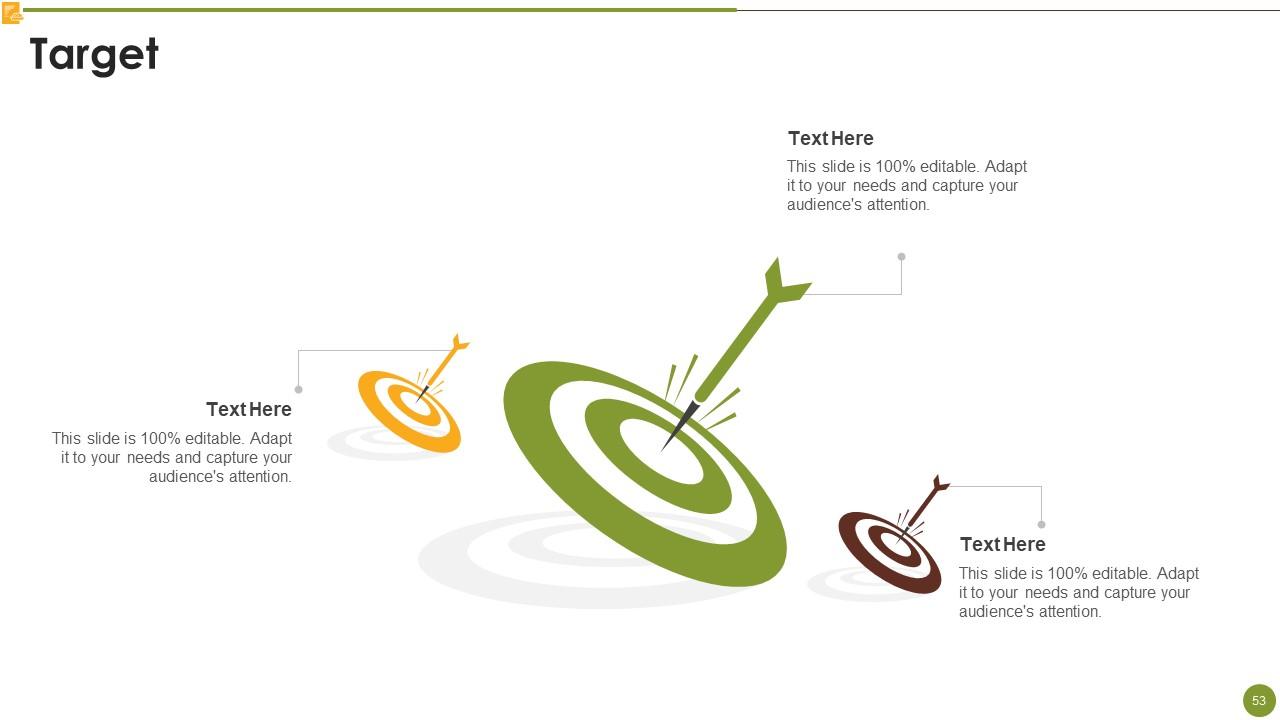
Slide 53 : Este é o slide Nossa Meta. Indique seus alvos aqui.
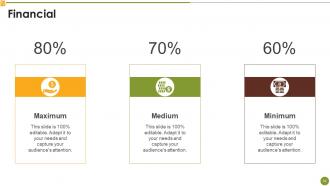
Slide 54 : Este é um slide financeiro. Mostre suas coisas relacionadas a finanças aqui.
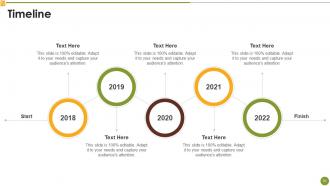
Slide 55 : Este é um slide de linha do tempo. Mostrar dados relacionados a intervalos de tempo aqui.
Slide 56 : Este é o slide Sobre Nós para mostrar as especificações da empresa, etc.
Slide 57 : Este é um slide de agradecimento com endereço, números de contato e endereço de e-mail.
Relatório de pesquisa de mercado para slides de apresentação em Powerpoint da indústria de alimentos com todos os 62 slides:
Use nosso relatório de pesquisa de mercado para slides de apresentação em Powerpoint da indústria alimentícia para ajudá-lo a economizar seu valioso tempo. Eles são readymade para caber em qualquer estrutura de apresentação.
-
The best collection of PPT templates!! Totally worth the money.
-
You can rely on SlideTeam whenever you run out of designs for your presentation. Thank you so much SlideTeam!
