


Proposition de maintenance mécanique Diapositives de présentation Powerpoint
La proposition de service de maintenance technique répond à tous les besoins de l'entreprise. Découvrez notre proposition de maintenance mécanique conçue avec perspicacité. Il fournit une maintenance complète pour tous vos besoins d'ingénierie. Notre équipe d'ingénieurs et de techniciens certifiés est hautement qualifiée et expérimentée dans les disciplines d'ingénierie. Nous nous engageons à fournir la meilleure qualité de service, en mettant l'accent sur la sécurité et la fiabilité. Nos services comprennent la maintenance préventive, les réparations d'urgence et les mises à niveau du système. Nous proposons également des services de formation et de conseil pour vous aider à maximiser l'efficience et l'efficacité de vos systèmes d'ingénierie. Notre objectif est de vous aider à atteindre et à maintenir les normes de performance et de fiabilité les plus élevées. Au plaisir de vous servir et de répondre à vos besoins en ingénierie. Accédez maintenant.
La proposition de service de maintenance technique répond à tous les besoins de l'entreprise. Découvrez notre proposit..


















-

- Google Slides is a new FREE Presentation software from Google.
- All our content is 100% compatible with Google Slides.
- Just download our designs, and upload them to Google Slides and they will work automatically.
- Amaze your audience with SlideTeam and Google Slides.
-

Want Changes to This PPT Slide? Check out our Presentation Design Services
-

- WideScreen Aspect ratio is becoming a very popular format. When you download this product, the downloaded ZIP will contain this product in both standard and widescreen format.
-

- Some older products that we have may only be in standard format, but they can easily be converted to widescreen.
- To do this, please open the SlideTeam product in Powerpoint, and go to
- Design ( On the top bar) -> Page Setup -> and select "On-screen Show (16:9)” in the drop down for "Slides Sized for".
- The slide or theme will change to widescreen, and all graphics will adjust automatically. You can similarly convert our content to any other desired screen aspect ratio.
Compatible With Google Slides

Get This In WideScreen
You must be logged in to download this presentation.


Do you want to remove this product from your favourites?
Caractéristiques de ces diapositives de présentation PowerPoint :
Vous pouvez survivre et naviguer à travers une compétition acharnée si vous avez les bonnes compétences et les bons produits à portée de main. Si un plan d'affaires est à l'ordre du jour à venir, il ne serait pas sage de votre part de procéder en l'absence de notre document de diapositives de présentation Powerpoint de proposition de maintenance mécanique bien conçu. Notre document Word de plan d'affaires ne jure que par des détails approfondis et répond ainsi à toutes les questions qui peuvent vous toucher, vous ou votre public, à tout moment. De plus, ce sont les avantages multiples qu'offre notre document Word. Constitué de graphismes haute résolution, ce document ne gêne pas lorsqu'il est projeté sur un écran large. Étant pré-conçu et complètement modifiable, ce plan d'affaires prêt à l'emploi permet aux présentateurs d'économiser beaucoup de temps et d'efforts qui, autrement, seraient gaspillés dans la conception du plan d'affaires à partir de zéro. Nous mettons à votre disposition nos documents Word de plan d'affaires en gardant à l'esprit l'avantage concurrentiel. Joignez-vous à nous maintenant.

People who downloaded this PowerPoint presentation also viewed the following :
Contenu de cette présentation Powerpoint
Diapositive 1 : Cette diapositive présente la proposition de maintenance mécanique. Indiquez le nom de votre entreprise et commencez.
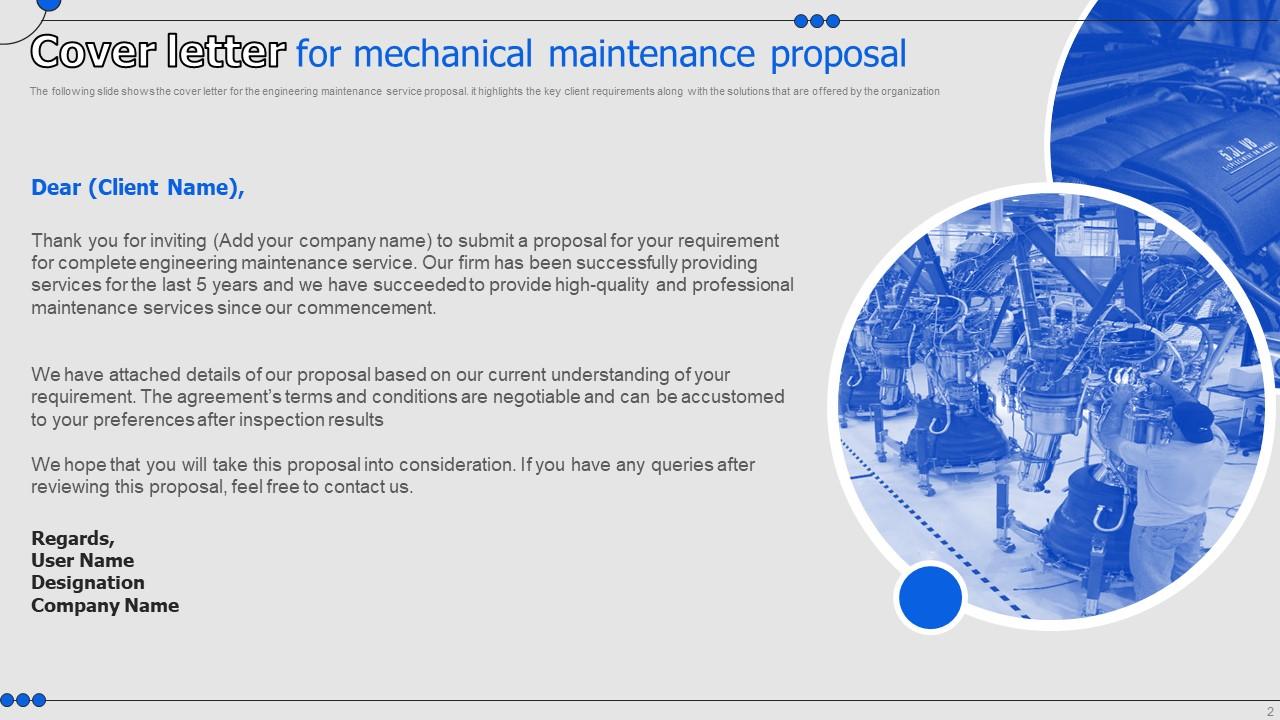
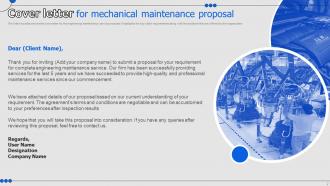
Diapositive 2 : Cette diapositive montre la lettre d'accompagnement pour la proposition d'entretien mécanique.
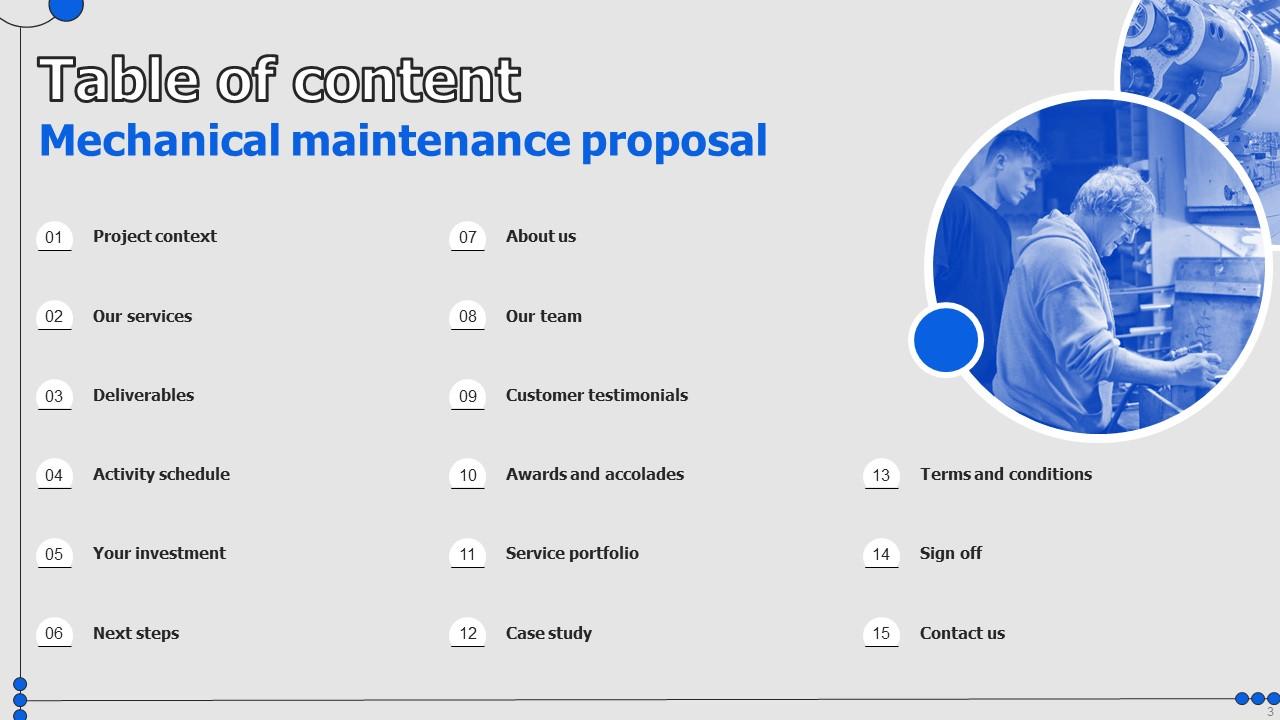
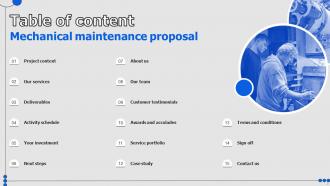
Diapositive 3 : Cette diapositive explique la table des matières.
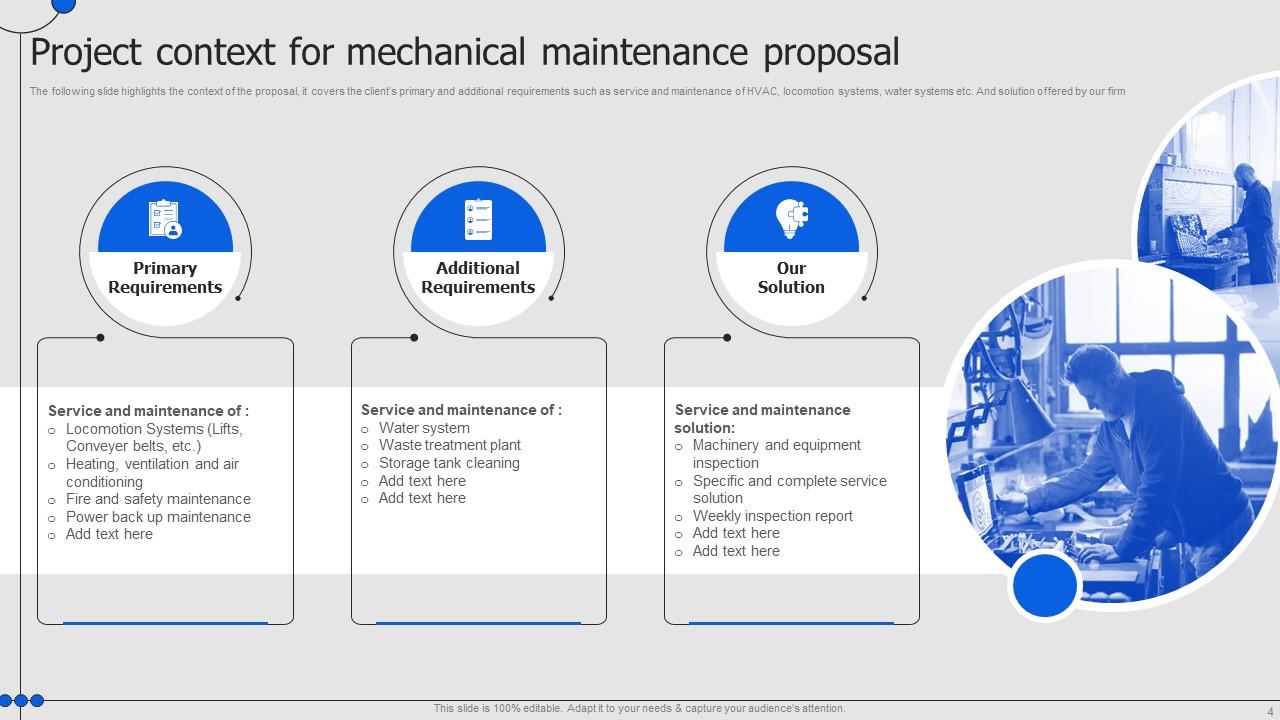
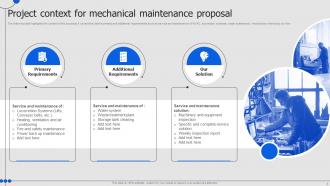
Diapositive 4 : La diapositive suivante met en évidence le contexte de la proposition, elle couvre les exigences principales et supplémentaires du client telles que l'entretien et la maintenance des systèmes de CVC, de locomotion, d'eau, etc.
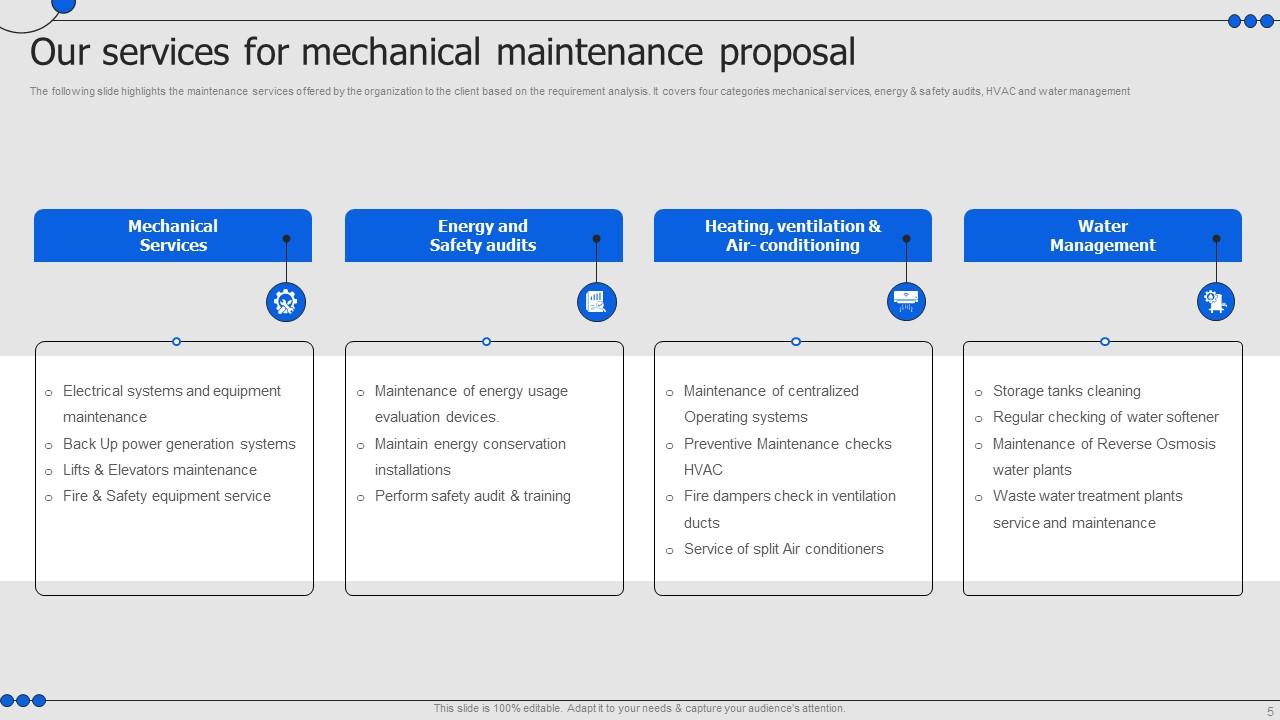
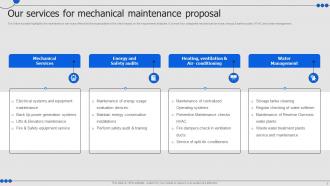
Diapositive 5 : Cette diapositive présente les services de maintenance offerts par l'organisation aux clients.
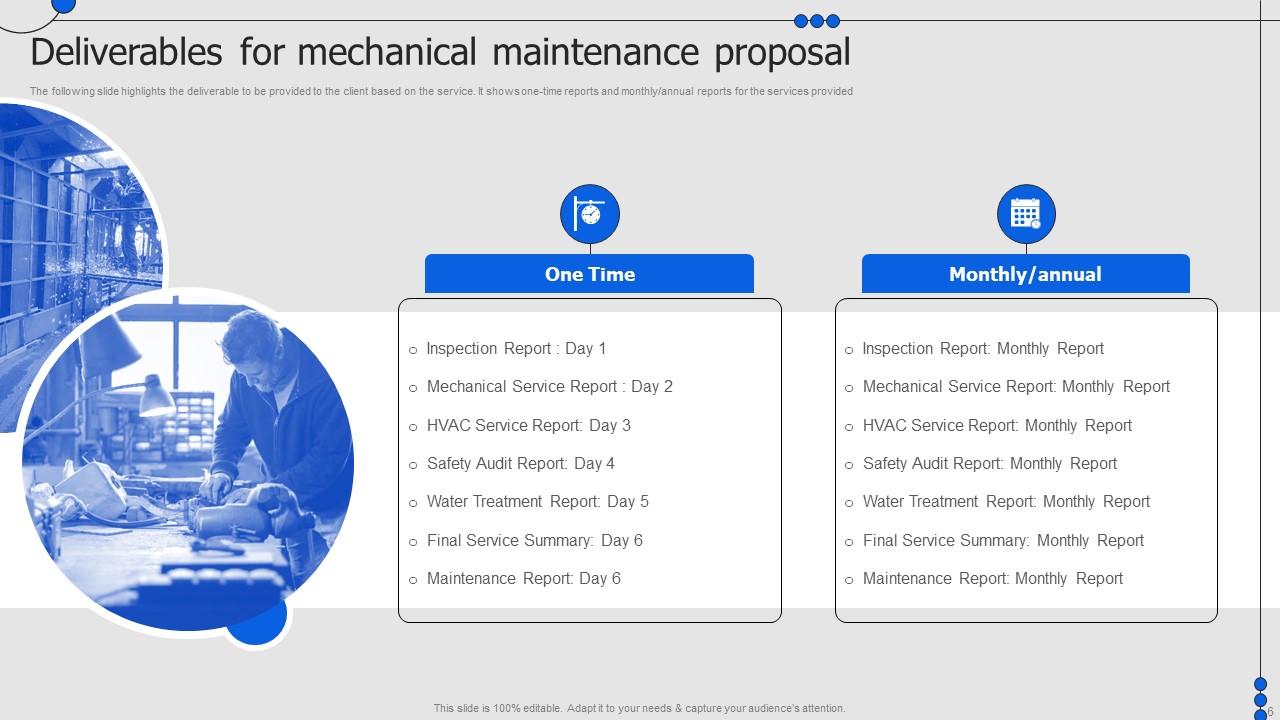
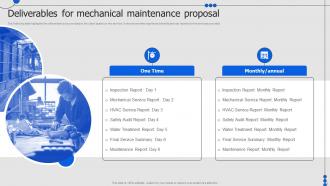
Diapositive 6 : Cette diapositive présente le livrable à fournir au client en fonction du service.
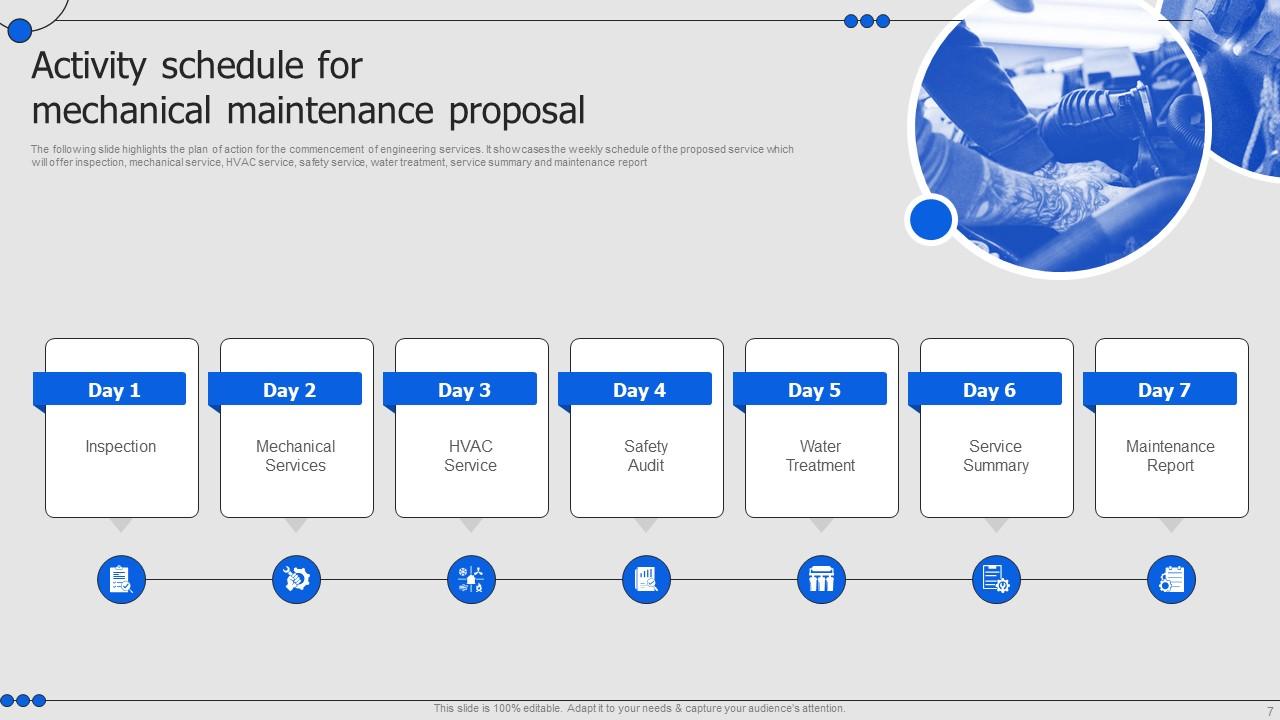
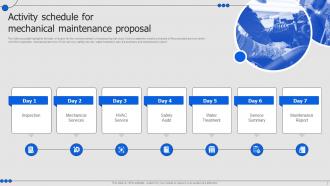
Diapositive 7 : Cette diapositive affiche le calendrier des activités pour la proposition de service de maintenance technique.
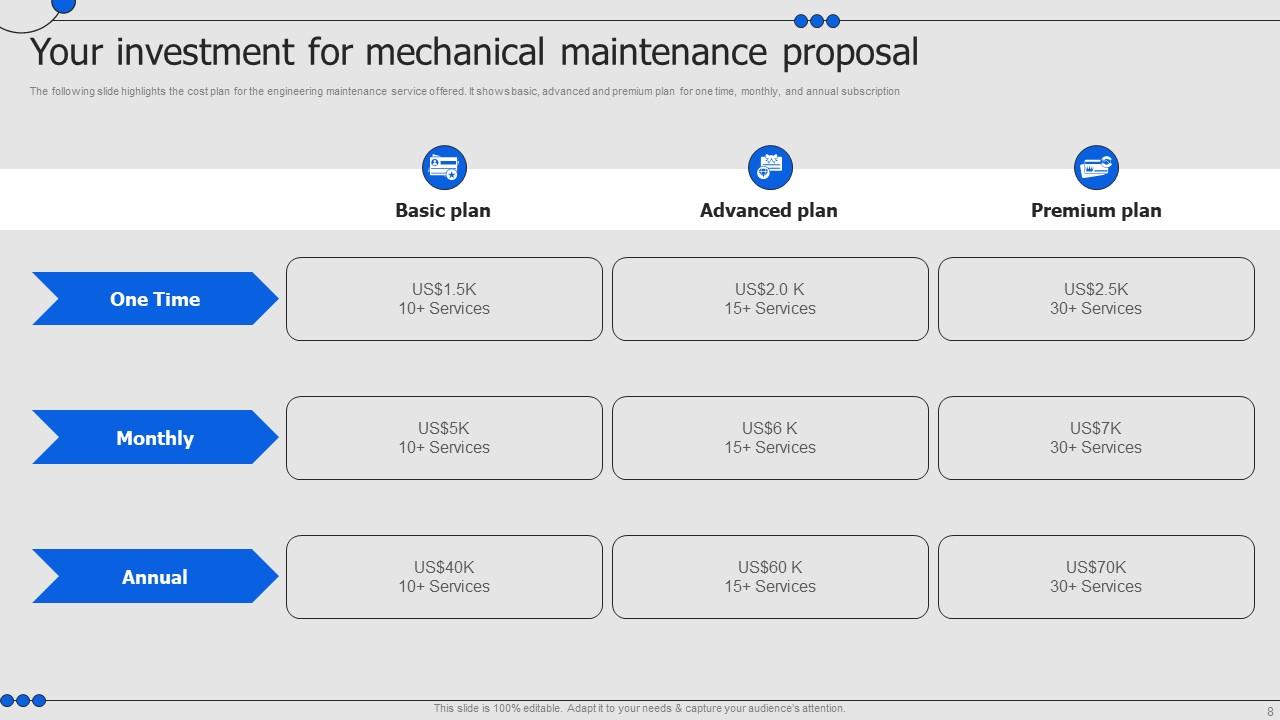
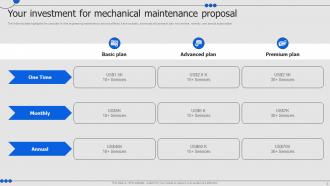
Diapositive 8 : La diapositive suivante présente le plan de coûts pour le service de maintenance technique offert.
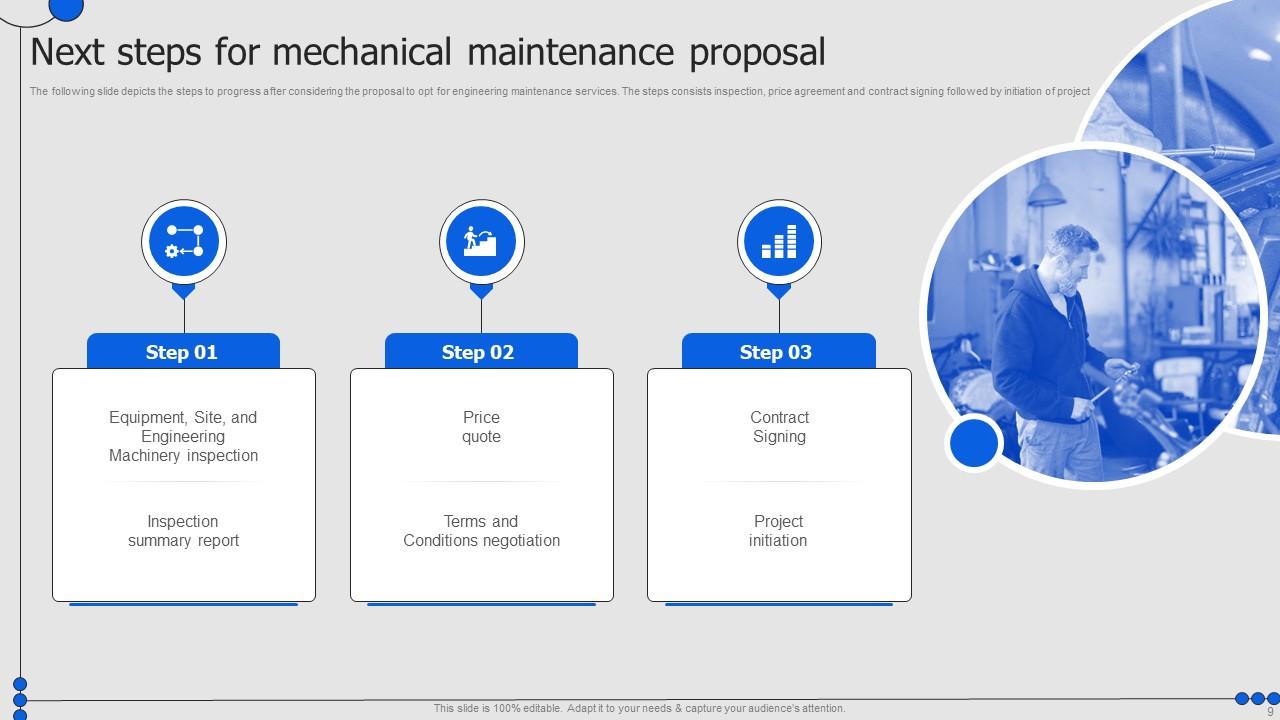
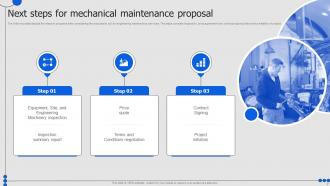
Diapositive 9 : Cette diapositive indique les étapes à franchir après avoir considéré la proposition d'opter pour les services de maintenance technique.
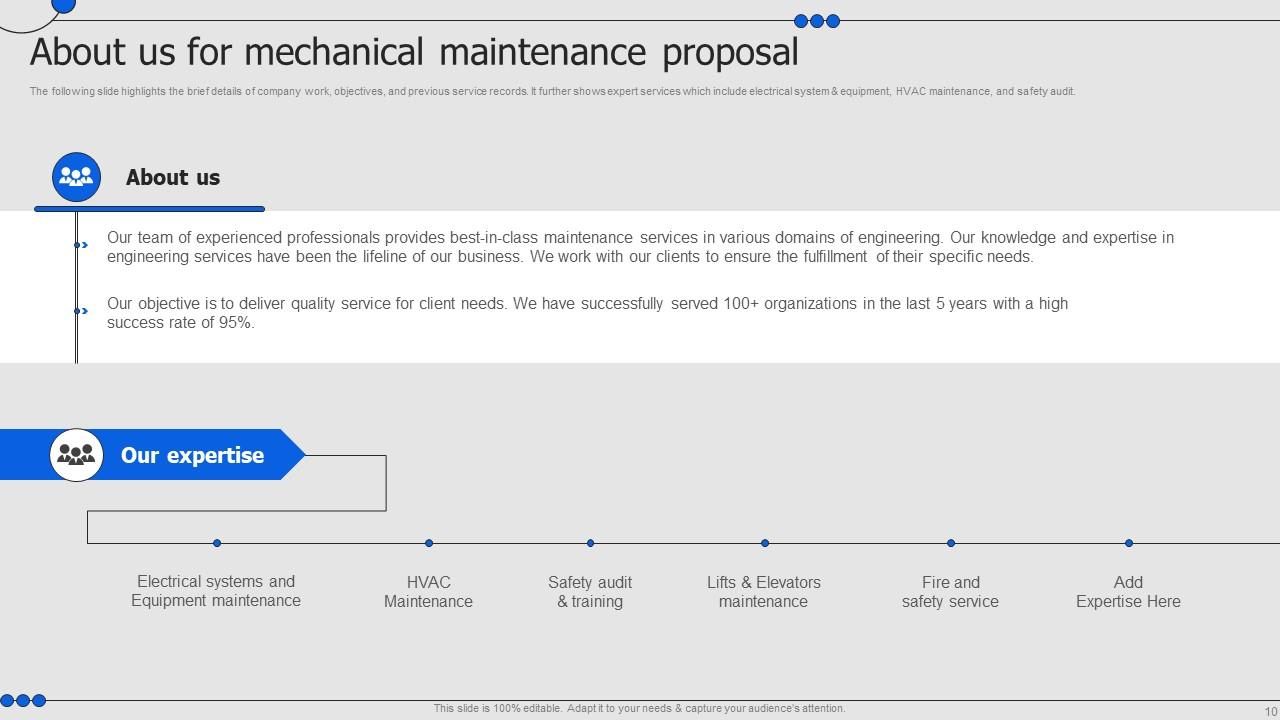
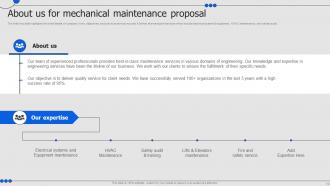
Diapositive 10 : Voici la section À propos de nous présentant les informations relatives à la société.
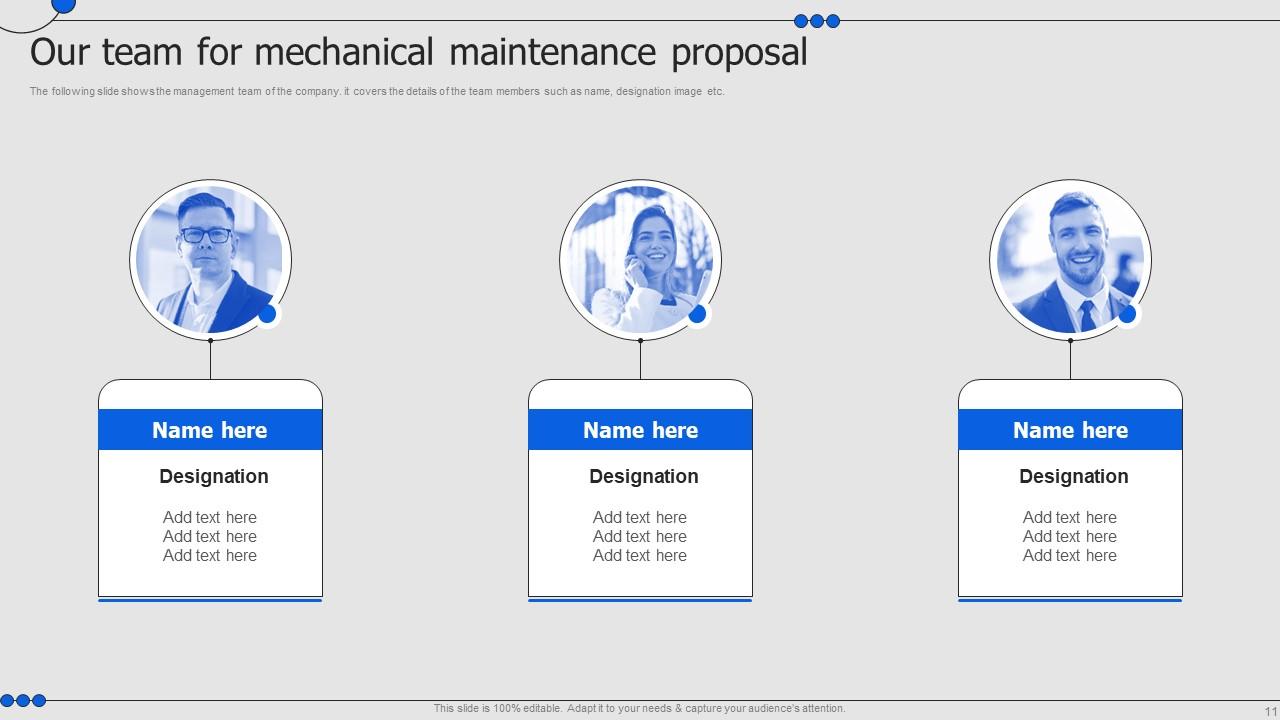
Diapositive 11 : Voici la diapositive Notre équipe. Indiquez ici les informations relatives aux membres de votre équipe.
Diapositive 12 : Cette diapositive poursuit les informations relatives à l'équipe.
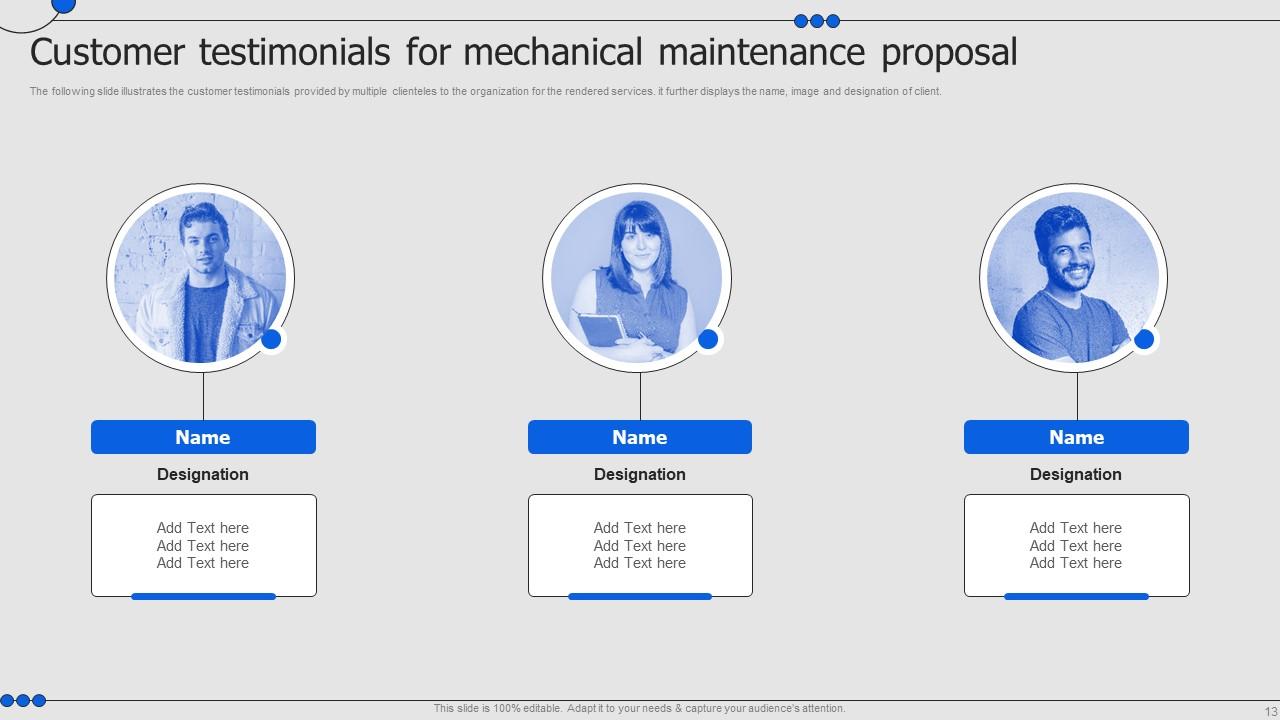
Diapositive 13 : Cette diapositive indique les témoignages de clients pour la proposition de service de maintenance technique.
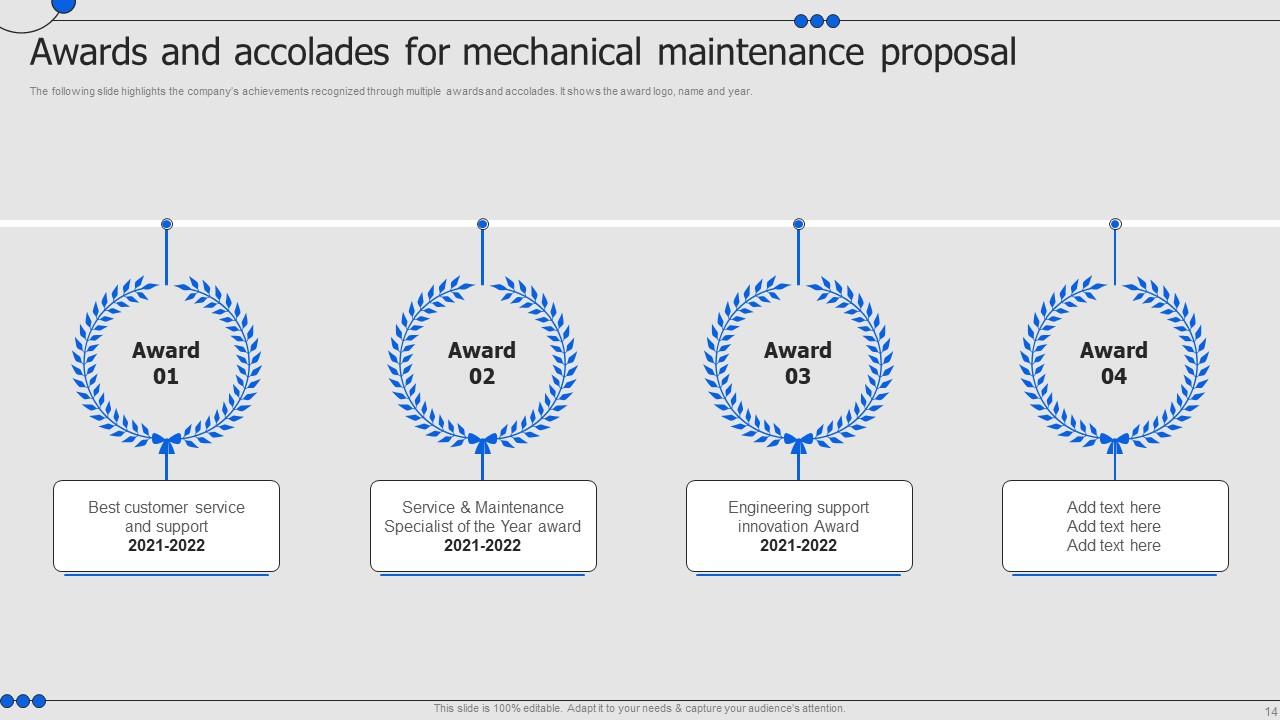
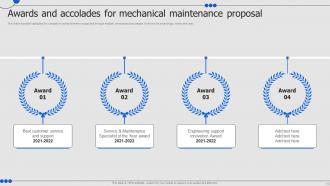
Diapositive 14 : La diapositive suivante présente les réalisations de l'entreprise reconnues par de multiples prix et distinctions.
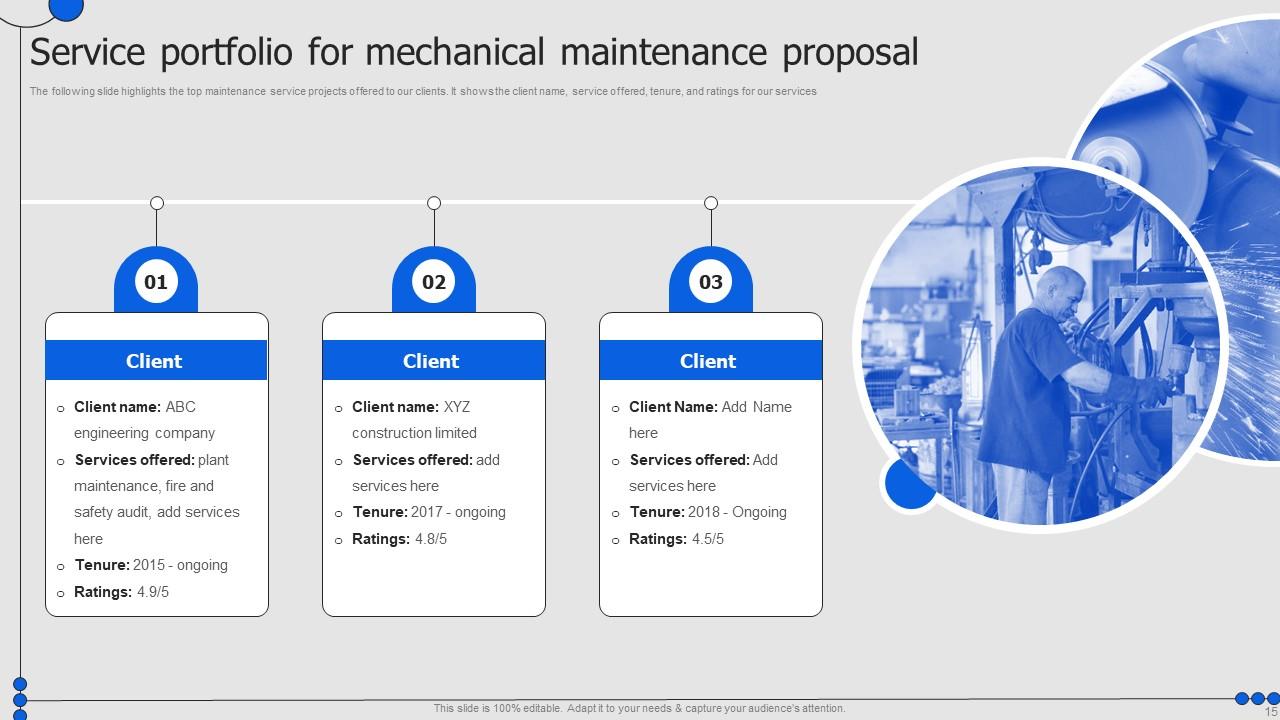
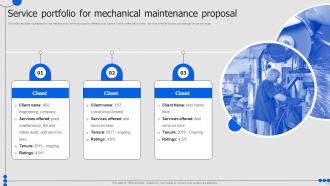
Diapositive 15 : La diapositive suivante présente les principaux projets de services de maintenance proposés aux clients.
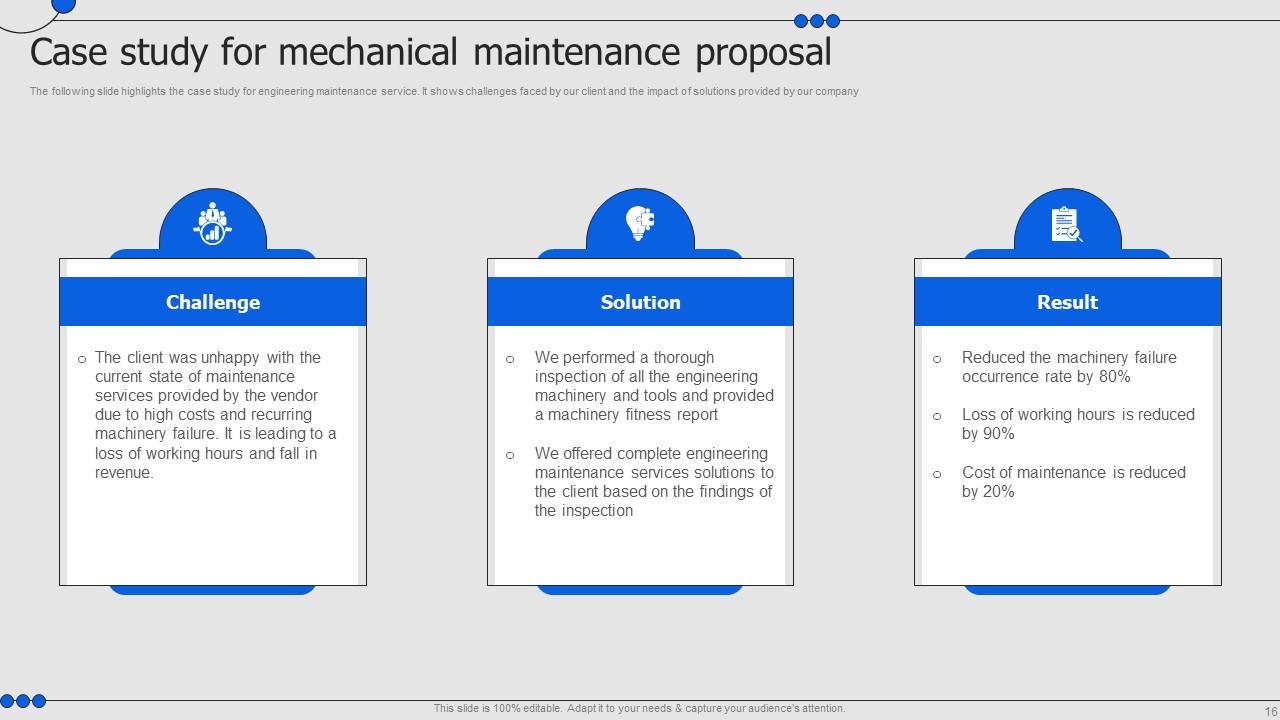
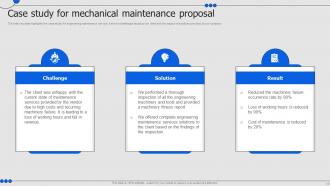
Diapositive 16 : La diapositive suivante présente l'étude de cas pour le service de maintenance technique.
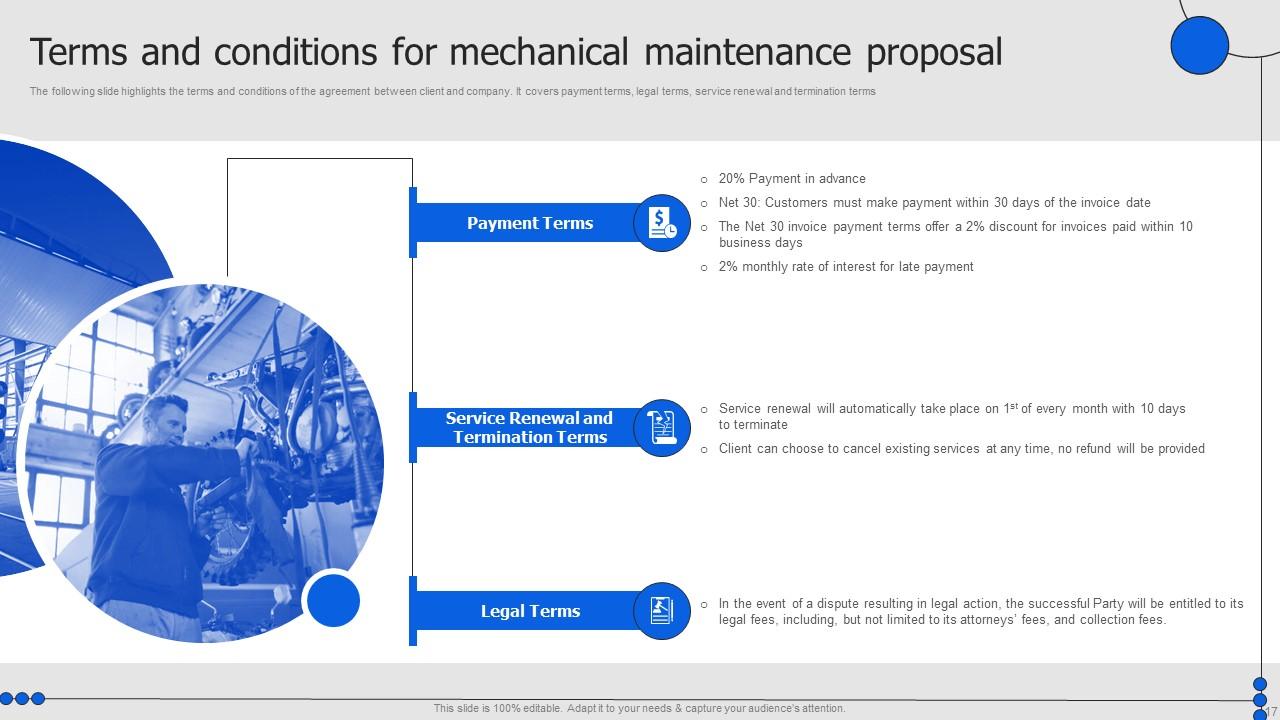
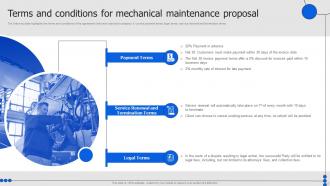
Diapositive 17 : Cette diapositive présente les termes et conditions de l'entente entre le client et l'entreprise.
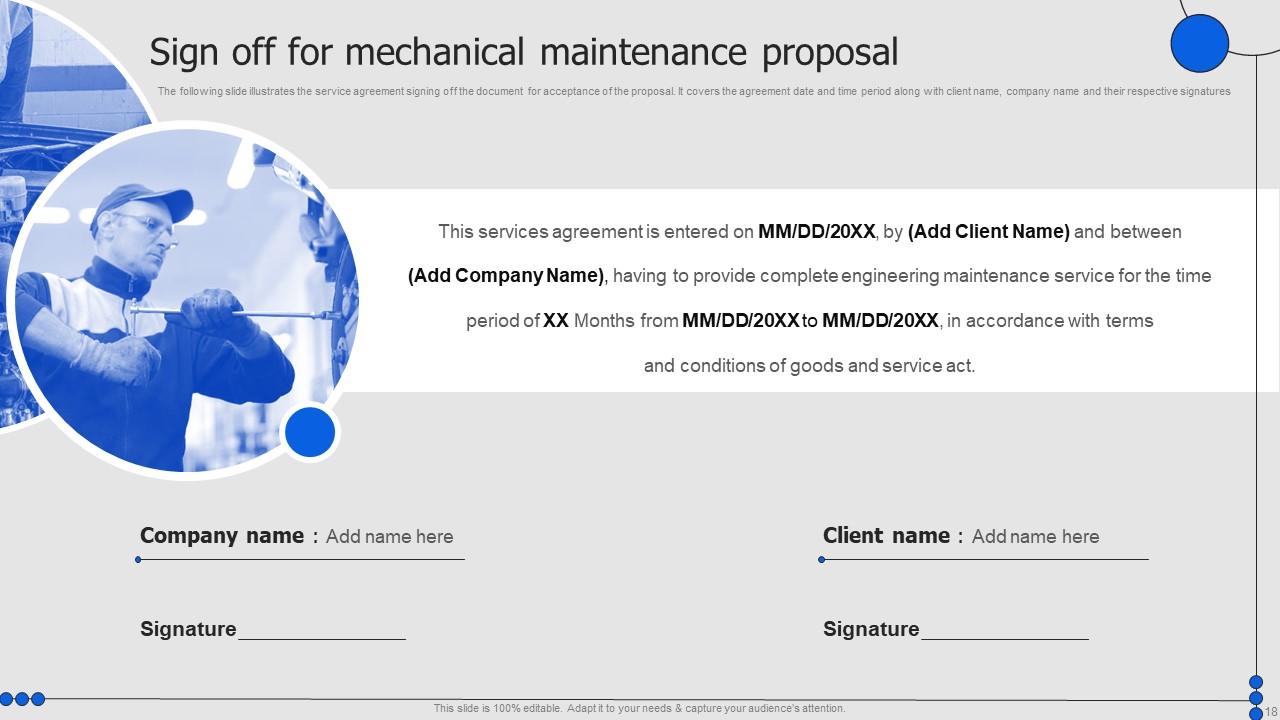
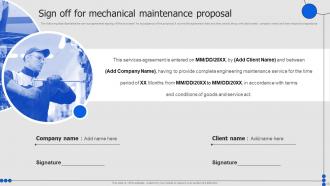
Diapositive 18 : La diapositive suivante illustre l'entente de service signant le document d'acceptation de la proposition.
Diapositive 19 : Cette diapositive présente les coordonnées de l'organisation.
Diapositive 20 : Il s'agit de la diapositive Icônes contenant toutes les icônes utilisées dans le plan.
Diapositive 21 : Le but de cette diapositive est d'élucider les informations supplémentaires.
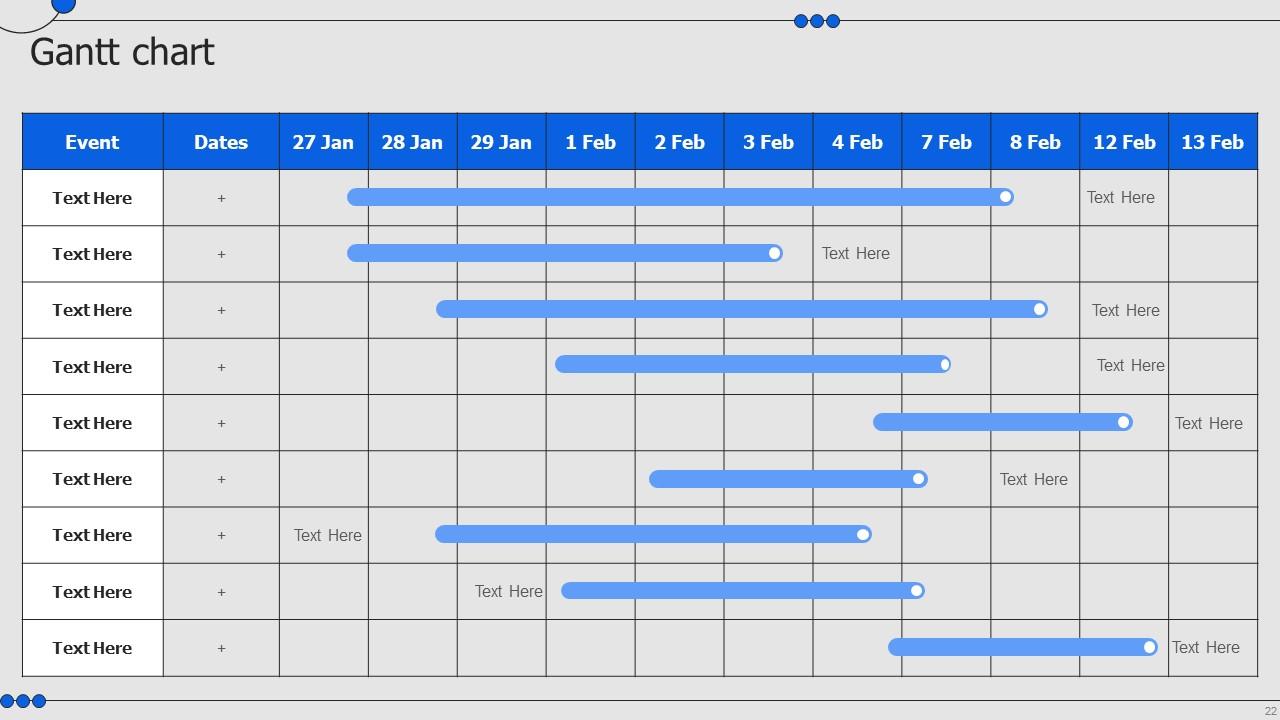
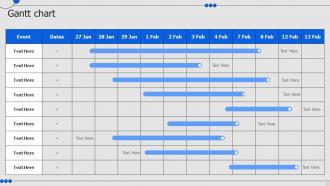
Diapositive 22 : Voici le diagramme de Gantt avec les images associées.
Diapositive 23 : Voici la diapositive du plan 30 60 90 jours pour une planification efficace.
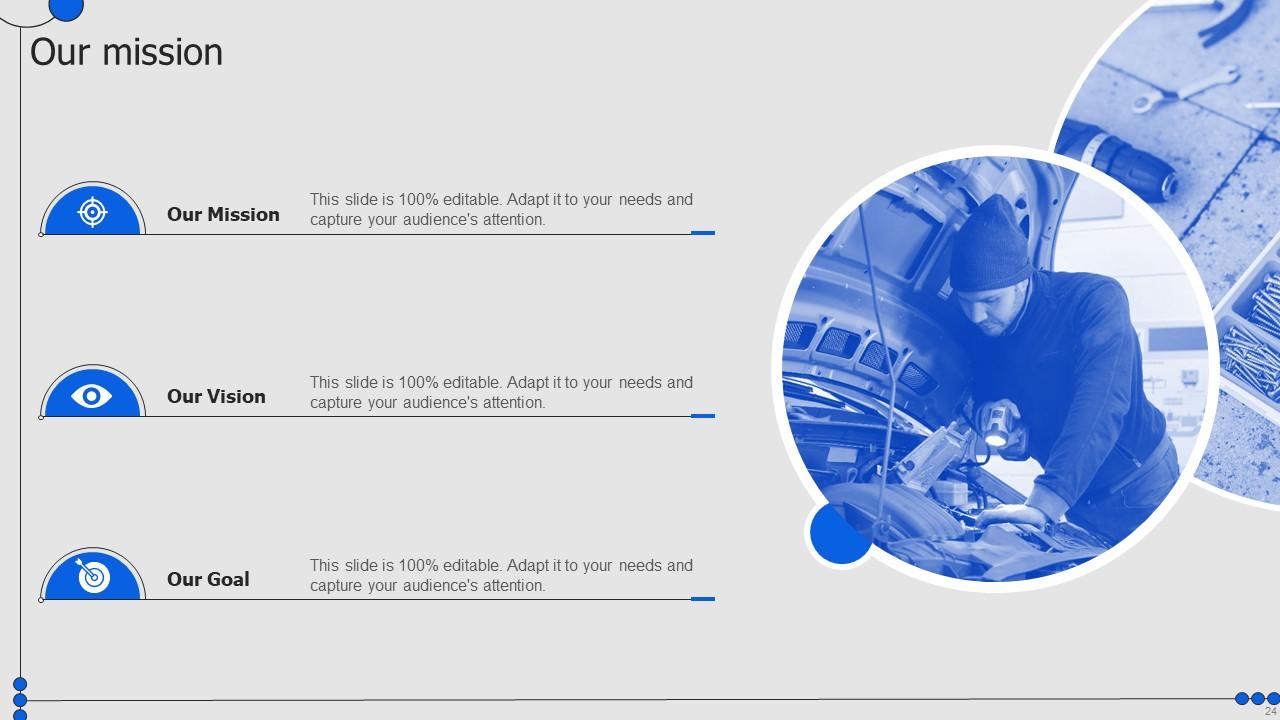
Diapositive 24 : Cette diapositive intègre la mission, la vision et les valeurs de l'entreprise.
Diapositive 25 : Cette diapositive révèle la feuille de route de l'organisation.
Diapositive 26 : Cette diapositive présente la chronologie de l'entreprise.
Diapositives de présentation Powerpoint de la proposition de maintenance mécanique avec les 31 diapositives :
Utilisez nos diapositives de présentation Powerpoint de proposition de maintenance mécanique pour vous aider efficacement à gagner un temps précieux. Ils sont prêts à l'emploi pour s'adapter à n'importe quelle structure de présentation.
-
SlideTeam’s readymade presentations have landed my unique images with my bosses in the past and it continues to reward me.
-
SlideTeam offers so many variations of designs and topics. It’s unbelievable! Easy to create such stunning presentations now.
