Mentor Coaching Action Plan For Professional Development
Try Before you Buy Download Free Sample Product
Audience
Editable
of Time
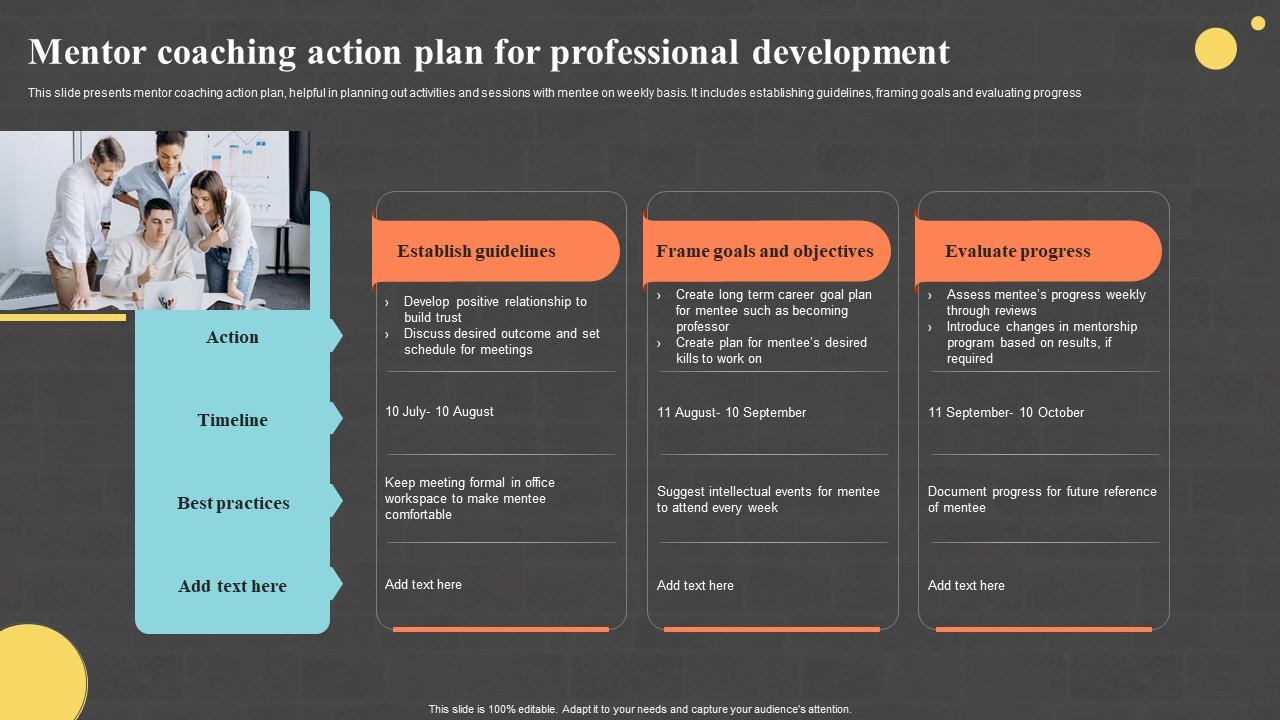
This slide presents mentor coaching action plan, helpful in planning out activities and sessions with mentee on weekly basis. It includes establishing guidelines, framing goals and evaluating progress.
People who downloaded this PowerPoint presentation also viewed the following :
Mentor Coaching Action Plan For Professional Development with all 6 slides:
Use our Mentor Coaching Action Plan For Professional Development to effectively help you save your valuable time. They are readymade to fit into any presentation structure.
FAQs for Mentor Coaching Action Plan
Good mentors actually listen instead of just waiting for their turn to talk. Find someone who stays current - not stuck telling stories from 1995 (okay, some old stories are gold). You want honest feedback that doesn't destroy your soul. They should ask questions that make you think, not just dump advice on you. Honestly, the best ones I've met are weirdly good at celebrating small wins with you. Look for someone whose path you'd actually want to follow. Oh, and they'll make time even when they're swamped.
Honestly, just ask them how they learn best - saves so much time. I made the mistake of droning on with slides to someone who needed to actually DO things to get it. Watch how they respond too. Visual people light up with diagrams, others need to talk it through out loud. Don't forget introverts might go quiet but still be processing - they usually prefer written follow-ups anyway. Extroverts? They'll interrupt you mid-sentence with ideas, which is actually helpful. Start with "what's worked for you before?" then pivot based on what you're seeing click.
Dude, emotional intelligence makes or breaks mentorship honestly. You've gotta pick up on whether your mentee is actually frustrated or just confused - totally different responses needed. Also helps when you don't lose your shit after they mess up the same thing repeatedly lol. The tricky part? Catching yourself when your advice gets colored by your own baggage. I learned this the hard way with my first mentee. Pay attention to what's happening emotionally in your conversations, not just the actual words being said. It's honestly more important than the technical stuff sometimes.
Honestly, tech makes mentorship so much less of a headache. Video calls work great when you can't meet in person, and messaging apps are perfect for those quick "wait, what did you mean by..." questions. Shared docs help you both stay on top of goals without losing track. Calendly is a game-changer - seriously saves you from that endless email ping-pong trying to find a time that works. Oh, and collaboration platforms let you actually work on stuff together, which is pretty cool. Just don't go overboard with apps though. Pick like 2-3 tools and stick with them, or you'll spend more time figuring out the tech than actually getting mentored.
Don't try to clone yourself in them - that's the worst thing you can do. Some mentors get obsessed with reliving their glory days instead of actually listening, which is honestly just annoying. You'll want to guide without micromanaging every little decision they make. Monthly check-ins are huge for building trust. Keep boundaries flexible but clear. Their goals will probably shift over time anyway, so ask what's actually working instead of assuming you know. Oh, and don't make everything about your own experience.
Dude, first thing - actually match people based on what they want to achieve, not just who's been around longest. Set clear expectations from day one about meeting frequency and what everyone's supposed to bring to the table. Here's where most companies screw up though: they just throw people together and hope for the best. You need regular check-ins to see if pairs are actually vibing or if someone needs a switch. Give mentors some basic coaching tips too - not everyone knows how to mentor well naturally. Oh, and connect it to real opportunities like special projects. Otherwise yeah, you're just funding awkward coffee dates that go nowhere.
Honestly, the key is being super prepared and actually driving the conversation. Don't just show up and ask "got any advice?" - that's kinda useless. Instead, bring specific problems you're dealing with and clear goals about what you want to get out of it. Your mentor will appreciate when you take charge of the agenda rather than making them guess what you need. Oh, and definitely follow up on whatever they suggest! Report back on how it went - they actually love hearing whether their advice worked or totally bombed. Show up consistently too, because flaking out is the fastest way to lose a good mentor's interest.
Mentorship is honestly such a game-changer for both people involved. You'll get faster learning, inside info about the industry, and someone actually rooting for you to succeed. Meanwhile, your mentor sharpens their leadership skills and expands their network through your connections too. The numbers don't lie - mentees usually see quicker promotions and better salaries. Mentors get props for developing talent, which looks amazing when they're gunning for senior positions. Find someone whose career you actually admire, then be upfront about what specific help you need. Oh, and set clear expectations from day one - saves everyone headaches later.
Honestly, the biggest thing is keeping their stuff private - don't gossip about their goals or problems to anyone else. Set boundaries early about what you will and won't do. If you're in hiring decisions that could affect them, step back from those situations. Power dynamics get messy fast, so don't let them become too dependent on you. Give honest feedback even when it stings. I learned this the hard way - guide them to make their own choices instead of pushing what you think they should do. Respect that it's ultimately their career, not yours.
Honestly, praise the effort, not just the wins. When they try something new or push through a tough spot, that's what you celebrate. Ask "what'd you learn from that?" instead of just "nice work." Share your own screwups too - I wish I'd done this more with my first mentee because it shows struggle is totally normal. Those roadblocks? They're actually gold for learning, even though it doesn't feel like it in the moment. The whole thing is about reinforcing that skills grow through practice. Oh, and don't worry if you mess this up at first - mentoring's definitely a skill you develop over time too.
Honestly, you need goals from day one or you'll both just be spinning your wheels. I've watched so many mentor relationships crash and burn because nobody figured out what they were actually trying to accomplish - it's painful to see. Map out what your mentee wants and be specific about it. How often will you meet? What does winning look like? This stuff keeps you accountable too, which is huge. Without clear expectations, you'll end up in those weird conversations where you're talking about completely different things. Trust me, spend that first session nailing down the roadmap. Everything else flows from there.
Oh man, this is so true from what I've seen. Some people want you to be super direct with feedback, others get offended if you're not more subtle about it. Like, I had one mentee who basically wanted me to tell him exactly what to do step-by-step, but another one preferred when I'd just drop hints and let her figure it out. The whole authority thing varies too - some cultures expect you to be this wise guru they never question, while others want more of a peer relationship. Honestly, I just started asking people upfront how they like to receive guidance. Saves everyone a lot of awkwardness later.
Okay so here's what I've learned works - be super specific instead of just saying "good job" or whatever. I use this thing called the SBI model where you describe the situation, what behavior you saw, and how it affected things. Way more helpful than being vague about stuff being "wrong." Balance is huge too. Don't just pile on criticism - call out what they're doing well alongside areas to improve. Frame everything around their goals, not what you personally prefer. And honestly? Ask questions to get them thinking rather than just telling them what to fix. Creates way less defensiveness.
Honestly, I just track the obvious stuff first - did they get promoted, finish that certification, hit their goals? But the real gold is watching how they talk to you over months. Are they asking smarter questions? Taking more risks? Monthly check-ins are clutch for this. Just ask them straight up what's helping and what sucks. I also love seeing when they start expanding their network or mentoring someone else - that's when you know it clicked. Set up simple monthly reviews against their original goals. Nothing fancy, just real talk about progress.
Honestly, peer mentorship is such an underrated thing. You're getting support from someone dealing with the exact same chaos you are right now. Sure, senior mentors give you that career roadmap stuff, but peers? They actually get why you're stressed about that random Tuesday deadline. You don't have to explain all the office politics backstory - they're living it too. Plus there's no weird power dynamic when you need honest feedback. I'd just grab coffee with people at your level regularly. Even those random hallway conversations can totally shift your perspective on things you're stuck on.
-
Thank you for showering me with discounts every time I was reluctant to make the purchase.Â
-
I downloaded some of the presentations for work. They were simple to modify and saved me a lot of time and effort.