Miles And Snow Strategy Typology Matrix

Rating:
100%
Miles And Snow Strategy Typology Matrix
Slide 1 of 6
Favourites Favourites

Try Before you Buy Download Free Sample Product

Audience Impress Your
Audience
Editable 100%
Editable
Time Save Hours
of Time
The Biggest Sale is ending soon in
0
0
:
0
0
:
0
0
Rating:
100%
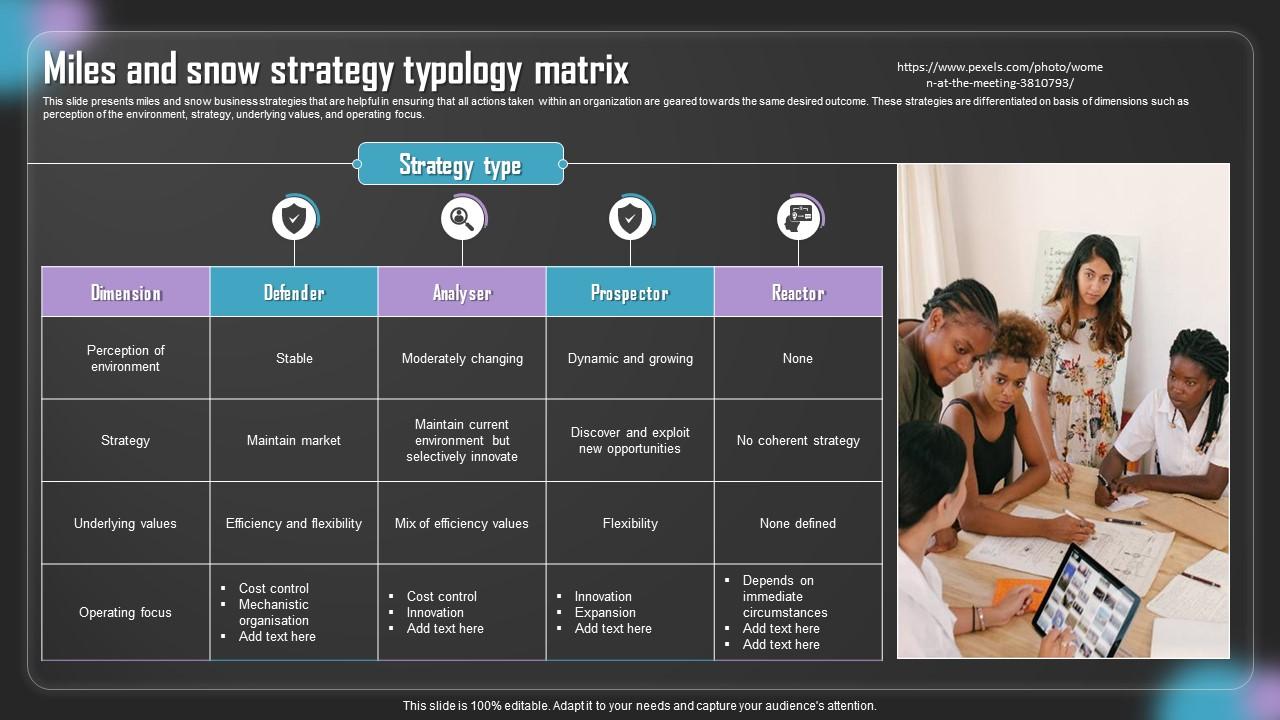
This slide presents miles and snow business strategies that are helpful in ensuring that all actions taken within an organization are geared towards the same desired outcome. These strategies are differentiated on basis of dimensions such as perception of the environment, strategy, underlying values, and operating focus. Presenting our set of slides with Miles And Snow Strategy Typology Matrix. This exhibits information on four stages of the process. This is an easy to edit and innovatively designed PowerPoint template. So download immediately and highlight information on Matrix, Typology, Strategy.

People who downloaded this PowerPoint presentation also viewed the following :

FAQs for Miles And Snow

So Miles and Snow basically broke down company strategies into four types. Prospectors are always hunting for the next big thing - total risk-takers. Defenders just want to protect what they've already got and stay efficient. Analyzers sit somewhere in between, picking their spots to innovate. Reactors aren't even really a strategy tbh - they're just constantly scrambling to keep up. Honestly, the reactor thing always seemed like kind of a dig to me. But anyway, if you want to figure out which one fits your company, just watch how your leadership handles market changes and competitive pressure.

So Defenders are all about protecting what they've already got instead of going after new stuff. They obsess over keeping costs down and really knowing their current customers. Honestly, it's kind of like that person who gets the same lunch every day - boring maybe, but they know what works. Quality and consistent service are their thing, not flashy new products. Customer loyalty is huge for them. If you're at a Defender company, don't expect them to care much about expanding into new markets. They'd rather keep the customers they have happy.

So prospector strategies are all about hunting for new opportunities and staying ahead of trends. You're constantly scanning for emerging markets, developing fresh products, being first to jump on changes. It's like permanent startup mode - exhausting but pretty exciting too. This whole approach pushes innovation since you need creative solutions to break into new spaces. Plus you're actively exploring untapped market segments instead of just defending what you already have. Honestly, the trickiest part is building an organization that's flexible enough to pivot fast when you spot the next opportunity.

Think Apple and Microsoft - perfect examples right there. They don't rush to invent stuff first. Instead, they watch what works, then swoop in with better execution and way more resources. Apple didn't create smartphones or tablets but man, they nailed the execution. Microsoft does this all the time too - cloud services after Amazon, gaming responses to Sony. Pretty smart actually, since they let others eat the risk while protecting their cash cows. When you're looking at strategy, find the "fast followers" instead of first movers. That's your analyzer pattern.

Yeah, totally doable! Miles and Snow actually call this the Analyzer approach - basically you keep your main business rock solid while carefully testing new stuff on the side. Picture it like keeping one foot planted while you test new ground with the other. Way less exciting than going full startup mode, but honestly way smarter too. The trick is being picky about what you experiment with and making sure it doesn't mess with your bread and butter. I'd start small - maybe pick 2-3 areas that are close to what you already do and see what happens. That way you're not betting the farm on some crazy new direction.

So environmental scanning is how you figure out which Miles and Snow strategy actually makes sense for your company. Look at how fast your industry moves, whether customer demands are predictable, what kind of competitive pressure you're dealing with. Fast changes and uncertainty? You're probably looking at Prospector mode. Stable environment where things don't shift much? Defender all the way. Most companies honestly just skip this whole step and copy whatever worked before - which is kinda insane when you think about it. The scanning part helps you match your approach to what's really happening instead of just guessing.

Look, your market conditions pretty much decide which strategy you can pull off. Stable markets? Go with Defender - just perfect what you're already good at. When things get crazy and unpredictable though, you'll need to be a Prospector, always pivoting and trying new stuff. Analyzers are smart for those weird mixed situations where part of your market is chill but other parts are total chaos. Reactors... honestly that's just what happens when companies completely misread the room. The trick is being brutally honest about how volatile your market actually is, then matching your strategy instead of swimming upstream.

So basically, companies switch strategies when shit hits the fan or their current approach just isn't working anymore. Like when a Defender suddenly faces new tech that could kill their market share - they'll pivot toward being more of an Analyzer. Or you've got Prospectors who've blown too much money on bad ideas and need to dial it back. Market conditions matter tons here. Growing industries? Everyone wants to be a Prospector. Consolidating markets favor the Defender types. Economic crashes force changes too. The real trick is admitting your strategy sucks and actually doing something about it instead of just minor tweaks.

Miles and Snow basically helps you figure out what your company's actually good at instead of pretending to be something you're not. Defenders should double down on efficiency and owning their market - don't get distracted by shiny new trends (trust me on this one). Prospectors need to throw money at R&D and move fast. Analyzers get to play both sides, which honestly sounds exhausting but whatever works. The key thing is being brutally honest about which type you really are, not the one that sounds cooler in meetings. Otherwise you'll waste time forcing strategies that just don't fit.

Look, the biggest trap is tunnel vision - you get so locked into one approach that you miss everything else. Defenders obsess over efficiency but completely miss disruptive stuff coming their way. Prospectors? They'll chase every shiny opportunity and burn cash without building anything solid. Analyzers overthink themselves into paralysis trying to nail both innovation AND efficiency perfectly. Honestly, markets don't give a damn about your strategic "purity." What works is treating these frameworks like rough guides, not gospel. Stay loose enough to pivot when things change - which they always do.

So here's the deal - tech basically makes whatever strategy you're already using way more powerful. Prospectors kill it because they can spot new opportunities super fast and beat everyone else to market. Defenders? They use tech to run their existing business better and make it harder for competitors to mess with them. Analyzers are kind of genius honestly - they get efficiency gains while still being able to jump on good innovations when they see them. But reactors are pretty much toast since they can't figure out how to actually use new tech strategically. First step is being honest about which type you really are, then go all-in on tech that actually fits your approach.

Honestly, it totally depends on which Miles and Snow strategy you're using. Prospectors should obsess over innovation stuff - new product revenue, R&D spend, how fast you get to market. Market share and cost efficiency are what Defenders need to watch, plus customer loyalty scores. Analyzers get stuck doing both (kind of a pain but whatever). Don't even get me started on Reactors - they're everywhere strategically. Here's the thing though: pick 3-5 metrics that actually show if your strategy's working. Stop copying what other companies measure just because.

Dude, yes! Small businesses can totally use Miles and Snow's framework to beat bigger competitors. Here's the thing - you've got advantages they don't. Go Prospector and pivot into new markets super fast while they're drowning in red tape (seriously, big companies take forever to make decisions). Or pick Defender mode and own a tiny niche so hard that massive firms won't even bother. Your size is actually perfect because you can change direction in weeks, not months. Just pick whichever strategy fits your team best and run with it.

So basically, Miles and Snow shows you how to match your company setup to your strategy. Prospectors? They need flat, flexible structures - gotta move fast on new opportunities with that innovation-focused culture. Defenders are the opposite. Centralized hierarchy works great for them since they're all about efficiency and doing what they already do well. Analyzers are honestly the trickiest ones because they're trying to do both - you need structures that can handle stability AND change somehow. Reactors are just... organizational chaos most of the time. Bottom line: if your structure doesn't match your strategy, you're gonna have problems.

Look, first figure out what type you actually are - that's huge. Prospectors should go all-in on innovation and wow customers with new stuff (people love being first). Defenders? Focus on rock-solid relationships and consistent quality - honestly, customers eat that reliability up way more than flashy features. Analyzers get to play both sides... proven solutions plus selective innovation when it makes sense. Oh, and if you're a Reactor, maybe sort out your strategy first before worrying about engagement tactics. Design your customer touchpoints around whatever strengths you've got.

Ratings and Reviews

100% of 100
Write a review
Most Relevant Reviews
  1. 100%

    by Dennis Stone

    Kudos to SlideTeam for achieving the high success rate in delivering the top-notch slides. 
  2. 100%

    by Denver Fox

    Innovative and attractive designs.

2 Item(s)

per page: