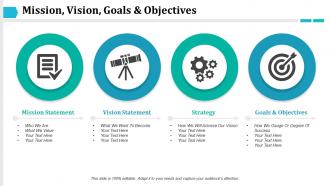
Missão Visão Metas e objetivos Ppt Slide Themes
Try Before you Buy Download Free Sample Product
Audience
Editable
of Time
Dê um relato detalhado de como o futuro será melhor com nossa Missão Visão Metas e Objetivos Ppt Slide Themes. Informe o pessoal sobre as inovações.
Recursos desses slides de apresentação do PowerPoint:
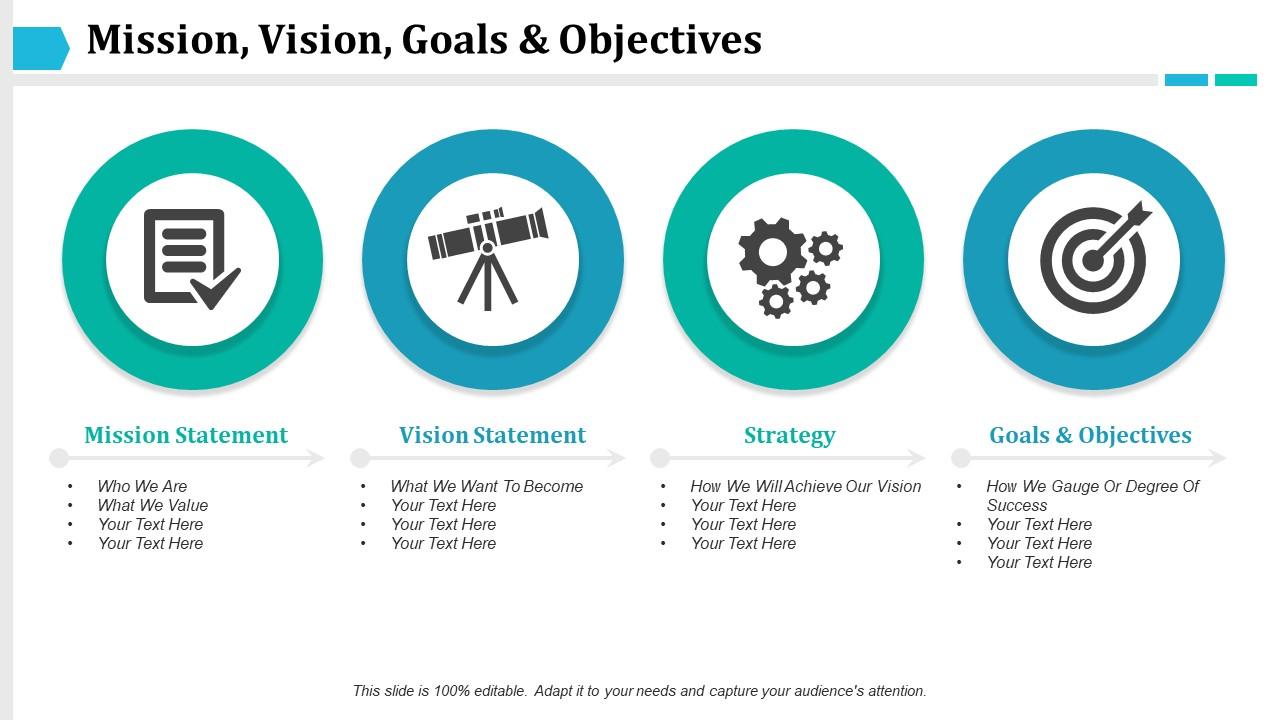
Apresentando este conjunto de slides com o nome - Missão Visão Metas e objetivos Temas de slides do Ppt. Este é um processo de quatro estágios. As etapas deste processo são Declaração de Missão, Declaração de Visão, Estratégia, Metas e Objetivos.
People who downloaded this PowerPoint presentation also viewed the following :
Missão Visão Metas e objetivos Temas de slides Ppt com todos os 5 slides:
Avalie diferentes caminhos para investimento com nossa Missão Visão Metas e Objetivos Ppt Slide Themes. Descubra as melhores áreas para crescimento.
FAQs for Mission vision goals and objectives
Okay so here's the deal - your mission is what you're actually doing right now. Like "we make affordable sneakers" or whatever. Vision is the big dreamy stuff about where you want to end up someday. Mission statements are way more practical and specific. Vision gets all inspirational about the future - think "creating a world where everyone can run" vs "we sell running shoes." Honestly, I always remember it this way: if you could literally print it on your business card without looking ridiculous, it's probably your mission. The vision stuff is usually too lofty for that.
Having clear goals is honestly a game-changer for teams. Everyone knows what they're actually working toward instead of just... doing random stuff. Think of it like GPS vs wandering around lost - way less wasted effort on things that don't matter. Your team can focus on what's important and track progress better too. The trick is being super specific though. Vague goals just make everything messier. I learned this the hard way managing our project last year! When people can picture exactly what "done" looks like, they'll naturally prioritize better and you can celebrate the wins together.
SMART goals are solid - you know, Specific, Measurable, Achievable, all that stuff. OKRs work well too if your team's into the whole "big picture alignment" thing. Some companies swear by Balanced Scorecards, which basically look at financial, customer, internal, and learning angles. But honestly? The framework doesn't matter as much as people think. Just pick one that doesn't make your team's eyes glaze over and actually use it. I've seen teams obsess over the "perfect" method while their actual objectives stay messy. Consistency beats perfection every single time.
Oh totally! You'd actually be crazy not to change them. Your mission might shift when new market opportunities pop up or you pivot into different areas. Goals change all the time - budget cuts, new priorities, market shifts, whatever. Vision statements get tweaked as you hit milestones and can see what's actually next. Objectives are probably the most flexible since they're tied to specific timelines and tactics. I mean, if your goals haven't changed in like three years, something's probably wrong. Just don't let them drift aimlessly - maybe review quarterly and check if they still match where you're headed?
Dude, plaster that mission and vision everywhere - website, email sigs, meeting slides, office walls. But here's the thing most companies screw up: they stop there. Managers need to actually bring it up in conversations and connect it to what people do daily. Like, when you're making decisions, reference why it matters for the bigger picture. I'd probably start by figuring out where it's already showing up and where you're missing opportunities. Oh, and train your managers on this stuff - they're usually the weak link. Consistency is everything.
Honestly? You really need stakeholder input for this stuff. Employees, customers, investors - they all see your org differently and that's valuable. A mission statement written by just the exec team usually falls flat. Get their feedback through surveys or workshops early on. Your vision needs to feel realistic, not like corporate word salad. I've seen too many companies skip this step and wonder why nobody connects with their "why." Different perspectives help you avoid that trap. Plus, when people contribute to creating it, they're way more likely to actually buy into it.
Oh SMART goals are actually pretty useful! They make you get specific instead of being all wishy-washy. So like, don't say "improve customer satisfaction" - instead write "boost our scores from 7.2 to 8.0 in 6 months using weekly surveys." See the difference? You need all five parts: Specific, Measurable, Achievable, Relevant, Time-bound. Be realistic about what you can actually pull off though. I learned this the hard way lol. Try rewriting one goal you have right now with all those elements. You'll be shocked how much clearer everything becomes when you force yourself to answer the who/what/when stuff.
Oh man, biggest mistake? Being way too generic - like those mission statements that could work for any random company. Skip the corporate nonsense ("synergistic excellence" makes me cringe). Keep it short too; nobody remembers a whole paragraph. Don't just focus on what you do - talk about WHY you do it. The impact stuff matters more. And please don't copy your competitors and just change the name... I've seen that disaster before. Test it with your team first. Make sure it actually fits your culture instead of sounding like every other business out there.
Honestly, having clear goals changes everything. People actually know what they're working toward instead of just spinning their wheels. It cuts down on all that confusion and conflicting priorities - you know how frustrating that gets. Teams collaborate way better because they finally see how their stuff connects to the big picture. Plus people feel more motivated when they can actually see their impact mattering. Oh, and definitely make sure team goals obviously connect to the bigger company ones. Keep talking about those connections regularly or people forget. Sounds basic but it's wild how many places skip this step.
Yeah, having a solid vision definitely makes a huge difference for motivation. People need that bigger "why" beyond just their daily grind, you know? It's honestly like that old example - someone laying bricks vs building a cathedral. Same exact work, but one person feels way more invested. Your team starts seeing how their role actually matters in the bigger picture. They'll put in more effort when they feel proud of what they're building together. Just don't be one of those leaders who creates this amazing vision statement then never mentions it again - you've gotta keep bringing it up in meetings and stuff.
Pick 2-3 solid metrics for each goal - don't go crazy with data overload. Revenue targets, deadlines, customer satisfaction scores, whatever actually matters for what you're trying to do. Just make sure they're not those BS vanity numbers that look pretty but tell you nothing useful. Monthly check-ins work great for most stuff, though quarterly might be better if your goals are longer-term. The main thing is connecting your metrics to real outcomes. I learned this the hard way when I spent months tracking website visits instead of actual conversions - felt productive but was basically useless! Course-correct when things aren't working.
Honestly? Every 3-5 years, or whenever you hit major changes - new leadership, market shifts, that kind of thing. Don't just ask the executives though. Your frontline people know if you're actually walking the walk or just talking pretty words on the website. I've watched companies with beautiful mission statements that bear zero resemblance to how they operate day-to-day. Run some workshops with different folks across the company. Test whatever you come up with against reality - like, can people actually remember it? Will they roll their eyes when you say it out loud? Keep it honest and something you'll actually use.
Think of it like a roadmap - your mission is why you're doing this whole thing in the first place. Vision? That's where you want to end up down the road. Goals break that big picture into chunks you can actually tackle, then objectives get into the nitty-gritty with deadlines and numbers. Most people I know totally blow off the vision step (huge mistake btw). Here's the thing though - they've gotta connect. Mission feeds into vision, vision shapes your goals, goals determine what you're measuring. I'd start by checking if yours actually make sense together or if they're just random statements.
Honestly, just stick with PowerPoint's basic layouts or grab something from Canva if you want it to look nicer. I've watched so many people bomb these presentations by cramming their entire mission statement on one slide - it's painful. Split everything up: one slide for mission, another for vision, then goals. Use icons or simple graphics but don't go crazy. Actually, my old boss used to say "if you need more than 10 words on a slide, you're doing it wrong" which might be extreme but... he had a point. Keep the flow logical and your audience won't zone out halfway through.
Honestly, visuals just hit different than walls of text. Your brain processes images like 60,000 times faster than words, which is kind of wild when you think about it. So when you pair good imagery or videos with your mission statement, people actually remember it. You know how a killer presentation sticks with you way longer than some boring email? Same concept here. Plus visuals help break down your big organizational goals so different people can actually get what you're trying to do. My advice? Create a simple one-page visual that connects your mission to real stories. Works great for getting your team aligned and explaining stuff to outsiders too.
-
Excellent products for quick understanding.
-
Good research work and creative work done on every template.