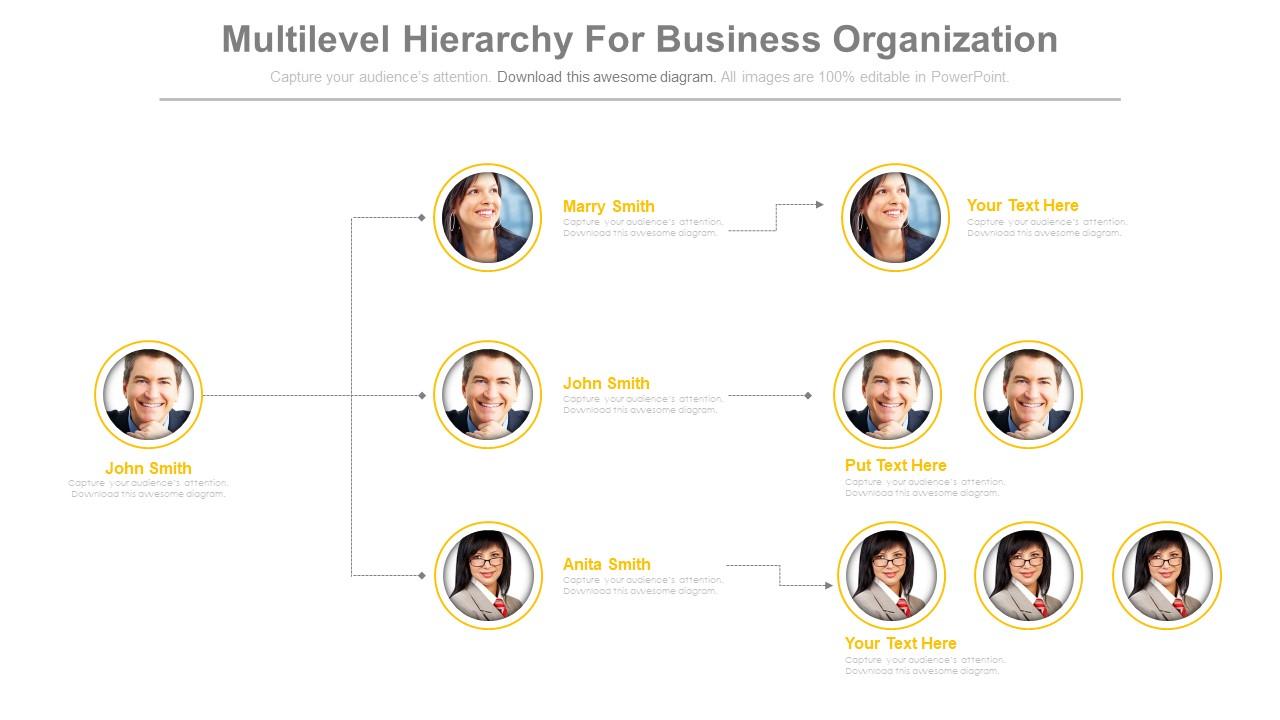
Jerarquía multinivel para la organización empresarial Presentaciones de PowerPoint

Rating:
90%
Multilevel hierarchy for business organization powerpoint slides
Slide 1 of 4
Favourites Favourites

Try Before you Buy Download Free Sample Product

Audience Impress Your
Audience
Editable 100%
Editable
Time Save Hours
of Time
The Biggest Sale is ending soon in
0
0
:
0
0
:
0
0
Rating:
90%

Características de estas diapositivas de presentación de PowerPoint:

Imágenes de alta resolución y los iconos de diapositivas. Acceso para editar y personalizar según los requisitos de su negocio. Permita que sus usuarios abran en una pantalla ancha sin comprometer la calidad. Diseños de diapositivas amigables con la técnica. Compatible para usarse con las diapositivas de Google. Fácil de descargar y guardar en el formato que desee. Apropiado para que el equipo de gestión empresarial muestre el proceso de jerarquía.

FAQs for Multilevel hierarchy for business

So basically every company has the same four layers, just with different fancy titles. You've got the C-suite people at the top doing strategy stuff. Below them are VPs and Directors handling oversight. Then managers and team leads coordinating everyone. And finally the people actually doing the work. Bigger companies love adding random layers like "Principal Engineer" or whatever - honestly some titles are just made up at this point. But yeah, if you're trying to figure out who reports to who or need to escalate something, just think about which bucket everyone fits into.

Yeah, so basically hierarchy screws up communication because everything has to go through all these layers. Messages get twisted or delayed - it's that telephone game thing all over again. Your frontline people have great insights but they take forever to reach the top. Then when executives make decisions, they're completely watered down by the time they get to you. Honestly, the more levels between departments, the worse it gets. I'd say create some informal channels where people can actually talk to each other. And sometimes? Just skip the chain for urgent stuff - better to ask forgiveness than permission.

Honestly, your company's culture matters way more than whatever's on the org chart. Like, you could have the exact same structure as another place, but if people actually talk to each other openly, the whole hierarchy thing becomes way more flexible. I've seen companies where you literally need permission to speak to someone two levels up - so weird, right? Others just let everyone collaborate however makes sense. Culture also decides if you get promoted for kissing ass, actually doing good work, or just sticking around forever. Watch how decisions really happen day-to-day. That'll tell you everything.

Honestly, flat structures work because people get to actually talk to the decision-makers instead of playing telephone through five managers. Your employees feel way more heard when they can pitch ideas directly - no more bureaucratic black holes where good suggestions just disappear. Communication moves faster too. Problems get fixed quicker, people develop more skills since they're not trapped in tiny boxes. I'd probably start by looking at how many approvals you need for basic stuff - that's usually where things get ridiculous. When people have real autonomy, they're just more engaged. Makes sense, right?

Look, tall hierarchies are great if your people want clear career ladders and defined roles - most do. Specialization works well too since everyone can focus on their thing. But the bureaucracy? Ugh. Everything moves at a snail's pace because decisions bounce between like five layers of management. Communication gets all twisted up, costs go through the roof with all those manager salaries. I've seen companies where it takes weeks just to approve basic stuff. Only go this route if you genuinely need that control and specialization, because you're trading speed and flexibility for structure.

Look, it really comes down to what each industry actually needs to function. Tech companies do the flat thing with small teams because they're chasing speed and innovation - makes sense. Manufacturing sticks with old-school hierarchies since you need clear chains of command for safety stuff. Healthcare's weird though, they end up with these messy matrix structures where people report to both clinical AND admin sides. Super confusing but regulations kinda force it. Financial services? They're all about those rigid hierarchies for compliance reasons. Honestly, just figure out what your industry requires instead of chasing whatever structure sounds cool right now.

Honestly, tech just cuts through all the bureaucratic BS. Instead of going through three managers to reach your boss, you'll just ping them on Slack - crazy how normal that's become. Remote work means teams can organize themselves without someone breathing down their necks constantly. A lot of middle management stuff like tracking projects gets automated now, so those roles aren't as necessary. Oh, and everything's way more transparent when communication flows directly between people. I'd start by figuring out where your biggest communication roadblocks are and tackle those first.

Oh man, role clarity is a game changer! It stops all that "wait, whose job is this?" nonsense that just kills productivity. Everyone knows exactly what they're doing and who they report to. No more duplicate work or awkward finger-pointing sessions - honestly those are the worst. People can actually focus on their actual work instead of trying to figure out what they're supposed to be doing. Decision-making gets way faster too since you know who's in charge of what. The trick is nailing down job descriptions and reporting lines right from the start.

Jump on conflicts fast before they blow up into company-wide drama. Listen to everyone first - don't assume the higher-up person is right just because they outrank someone (they always think they are though). Get people talking directly instead of playing messenger between them. Be super clear about communication rules and actually stick to them. Oh, and make your decision process transparent so people get why you made certain calls. Regular check-ins help catch stuff early too. Way better than dealing with full meltdowns later.

Look, diversity totally changes how your hierarchy works. It breaks down those invisible walls that kept certain people out of leadership talks. Decision-making gets way more collaborative instead of that rigid top-down stuff. Some old-school managers hate it at first - which honestly tells you everything you need to know about them, lol. People feel more comfortable speaking up no matter their level. Innovation improves too. You'll see more cross-team collaboration happening naturally. Start by checking who's actually in your leadership pipeline right now though.

Honestly, just focus on three things: your team size right now, how you guys actually talk to each other, and where you're planning to grow. I've watched way too many tiny startups make these insane org charts like they're Google or something - it's ridiculous. Keep it simple at first. Make sure the people who need to collaborate can actually reach each other without going through five different people. Your investors might have opinions about who should be CEO vs CTO, so factor that in. Start flat though. Only add management layers when things get messy or you're missing key skills.

Smaller companies can usually work with just 2-3 levels - CEO, managers, then everyone else. Once you hit 100+ people though, you'll probably need more layers or communication gets messy. Growth naturally creates specialized roles too, which means more hierarchy. But here's what I've seen mess up a lot of companies: they add management layers just because they're getting bigger. That's backwards thinking. Keep things as flat as you can while making sure managers aren't drowning. Nobody wants a boss who's spread too thin to actually help.

Honestly, you need to know who you're actually reporting to because otherwise it's chaos. I've seen people get stuck with three different "managers" all giving conflicting direction - nightmare fuel right there. When the chain is clear, you know exactly who to bug when stuff hits the fan. No more guessing games about whose approval you actually need. Information moves better too since everyone knows their lane. The whole accountability thing works way better when people can't pass the buck around. Trust me, fight for that clarity now because dealing with reporting confusion later is way worse than just asking awkward questions upfront.

Honestly, hierarchies are kind of a double-edged sword for innovation. You get the budget and clear decision-making power to actually make things happen. But then you've got all these layers where good ideas can just... die. Waiting for approvals, going through people who think "we've always done it this way." Short sentences can kill momentum fast. Some structure definitely helps though - teams need ownership and resources to experiment. I learned this the hard way at my last job actually. The trick is finding that balance where you're not drowning in red tape, but you've still got enough organization to get things done without needing a million signatures.

Dude, remote work is totally flattening out company structures. Middle management is getting slashed left and right - honestly, about time. Cross-functional teams are everywhere now because you can't just wander around the office checking on people anymore. Team leads? They're basically facilitators now instead of micromanagers breathing down your neck. Companies finally get that tracking hours is pointless when everyone's working from their kitchen table. It's all about results now. If I were you, I'd push for streamlined approvals and more autonomy at your place - that's where everything's heading anyway.

Ratings and Reviews

90% of 100
Review Form
Write a review
Most Relevant Reviews
  1. 80%

    by Dwain Johnston

    Excellent work done on template design and graphics.
  2. 100%

    by Jack Johnson

    The Designed Graphic are very professional and classic.

2 Item(s)

per page: