


Navigating Landscape Of Online Grocery Shopping Powerpoint Presentation Slides




Try Before you Buy Download Free Sample Product
 Impress Your
 Audience
 100%
100% Editable
 Save Hours
 of Time


Embark on a comprehensive exploration of the Navigating Landscape of Online Grocery Shopping with our dynamic PowerPoint presentation. This PPT unveils the global market size and statistics, providing a holistic market overview. Delve into the considerations for launching an online grocery platform and discover essential features to incorporate. Unleash effective marketing strategies for promotion, and learn how to analyze campaign performance and evaluate ROI. Explore the intricacies of a recommendation system tailored for online grocery applications, enhancing user experience. The presentation also covers data scraping insights from the online grocery market, offering a competitive edge. Elevate your understanding of this evolving landscape with our meticulously designed slides. Download this template now to unravel the secrets of successful online grocery ventures.
People who downloaded this PowerPoint presentation also viewed the following :
Content of this Powerpoint Presentation
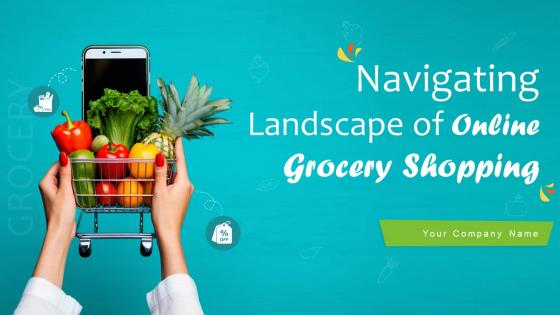
Slide 1: This slide showcase title Navigating Landscape of Online Grocery Shopping. State Your Company Name.
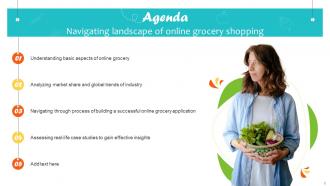
Slide 2: This slide showcase title Analyzing market share and global trends of industry.
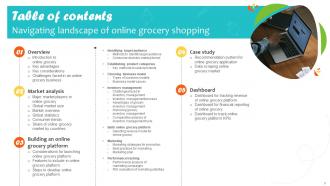
Slide 3: This slide exhibit Table of Content.
Slide 4: This slide exhibit Table of Content: Overview.
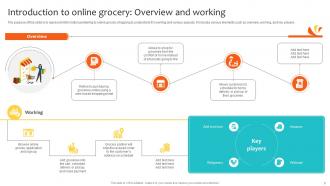
Slide 5: This slide is to represent information pertaining to online grocery shopping to understand it’s working and various aspects.
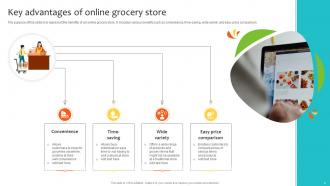
Slide 6: This slide is to represent the benefits of an online grocery store.
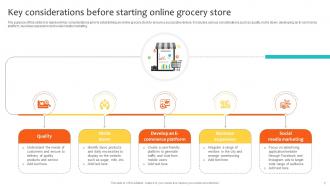
Slide 7: This slide is to represent key considerations prior to establishing an online grocery store to ensure a successful venture.
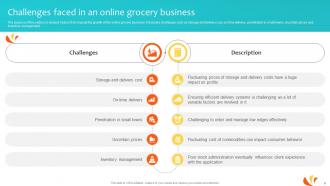
Slide 8: This slide is to analyze factors that impede the growth of the online grocery business.
Slide 9: This slide exhibit Table of Content:Market analysis
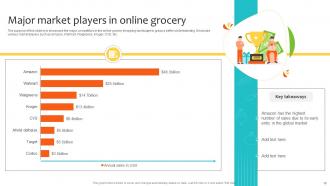
Slide 10: This slide is to showcase the major competitors in the online grocery shopping landscape to grasp a better understanding.
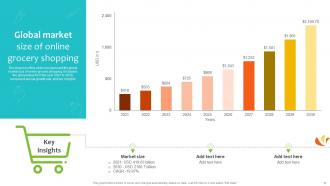
Slide 11: This slide is to represent the global market size of online grocery shopping.
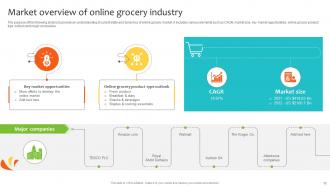
Slide 12: This slide is to provide an understanding of current state and dynamics of online grocery market.
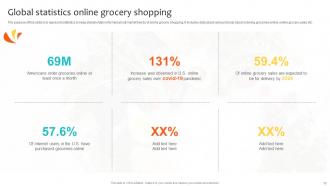
Slide 13: This slide is to represent statistics to keep stakeholders informed about market trends of online grocery shopping.
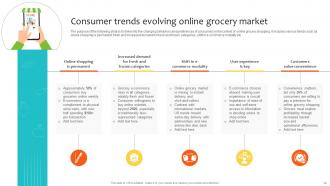
Slide 14: This slide is to delve into the changing behaviors and preferences of consumers in the context of online grocery shopping.
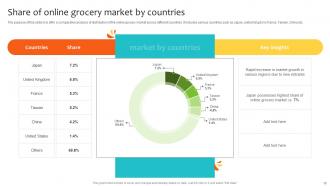
Slide 15: This slide is to offer a comparative analysis of distribution of the online grocery market across different countries.
Slide 16: This slide exhibit Table of Content: Building online grocery platform
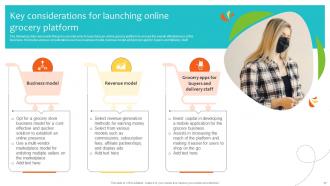
Slide 17: This slide represents things to consider prior to launching an online grocery platform to ensure the overall effectiveness of the business.
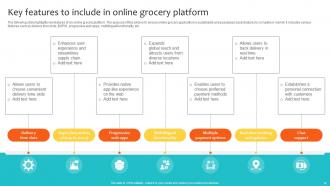
Slide 18: This slide highlights key features of an online grocery platform.
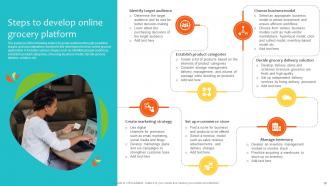
Slide 19: This slide is to guide audience through essential stages and considerations involved in the development of an online grocery application.
Slide 20: This slide exhibit Table of Content: Identifying target audience
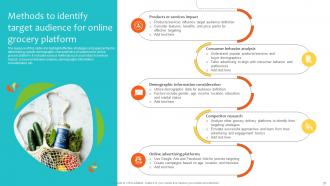
Slide 21: This slide is to highlight effective strategies and approaches for determining specific demographic characteristics of audience for online grocery platform.
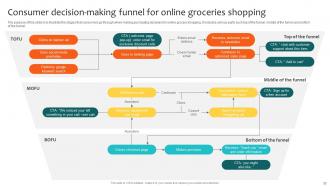
Slide 22: This slide is to illustrate the stages that consumers go through when making purchasing decisions for online grocery shopping.
Slide 23: This slide exhibit Table of Content: Establishing product categories
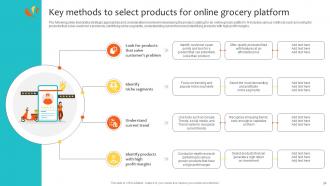
Slide 24: This slide elaborates strategic approaches and considerations involved in developing the product catalog for an online grocery platform.
Slide 25: This slide exhibit Table of Content: Choosing business model
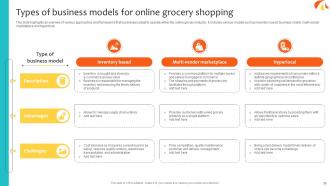
Slide 26: This slide highlights an overview of various approaches and frameworks that businesses adopt to operate within the online grocery industry.
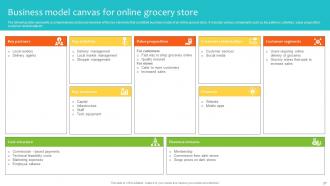
Slide 27: This slide represents a comprehensive and visual overview of the key elements that constitute business model of an online grocery store.
Slide 28: This slide exhibit Table of Content: Inventory management
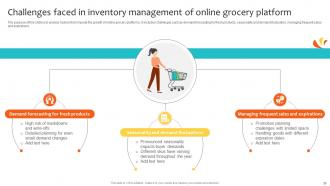
Slide 29: This slide is to analyze factors that impede the growth of online grocery platforms.
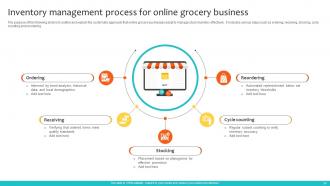
Slide 30: This slide is to outline and explain the systematic approach that online grocery businesses adopt to manage stock inventory effectively.
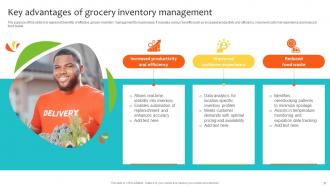
Slide 31: This slide is to represent benefits of effective grocery inventory management for businesses.
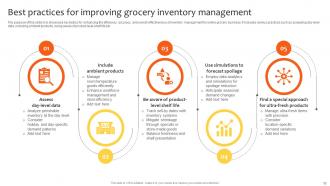
Slide 32: This slide is to showcase key tactics for enhancing the efficiency, accuracy, and overall effectiveness of inventory management for online grocery business.
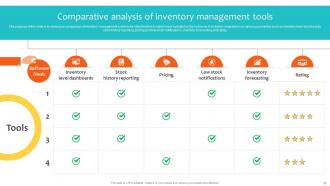
Slide 33: This slide is to showcase comparison of inventory management systems for stakeholders to select most suitable tool for business.
Slide 34: This slide exhibit Table of Content: Build online grocery platform
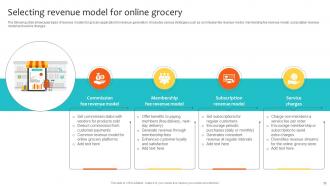
Slide 35: This slide showcases types of revenue models for grocery application for revenue generation.
Slide 36: This slide exhibit Table of Content: Marketing
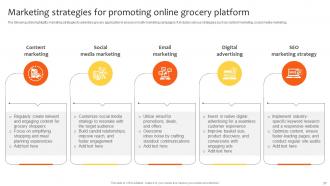
Slide 37: This slide highlights marketing strategies to advertise grocery application to ensure smooth marketing campaigns.
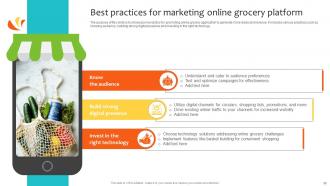
Slide 38: This slide is to showcase key tactics for promoting online grocery application to generate more leads and revenue.
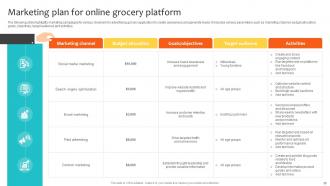
Slide 39: This slide highlights marketing campaigns for various channels for advertising grocery application to create awareness and generate leads.
Slide 40: This slide exhibit Table of Content: Performance tracking
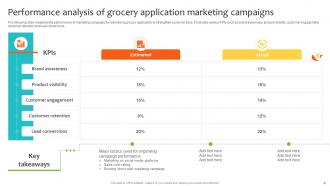
Slide 41: This slide measures the performance of marketing campaigns for advertising grocery application to strengthen customer base.
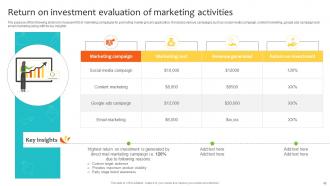
Slide 42: This slide is to measure ROI of marketing campaigns for promoting mobile grocery application.
Slide 43: This slide exhibit Table of Content: Case study
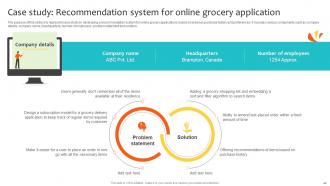
Slide 44: This slide is to represent case study on developing a recommendation system for online grocery applications based on previous purchase history and preferences.
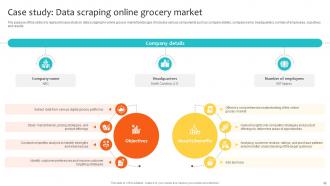
Slide 45: This slide is to represent case study on data scraping for online grocery market landscape.
Slide 46: This slide exhibit Table of Content: Dashboard
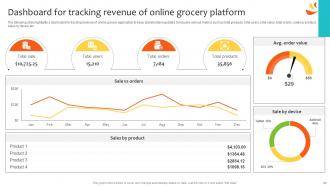
Slide 47: This slide highlights a dashboard for tracking revenue of online grocery application to keep stakeholders updated.
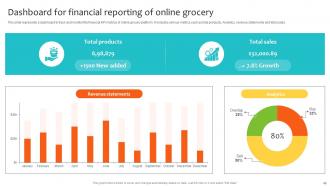
Slide 48: This slide represents a dashboard to track and monitor the financial KPI metrics of online grocery platform.
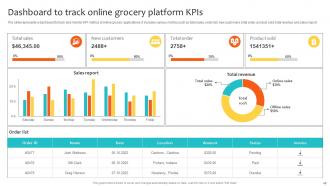
Slide 49: The slide represents a dashboard to track and monitor KPI metrics of online grocery applications.
Slide 50: This slide shows all the icons included in the presentation.
Slide 51: This slide is titled as Additional Slides for moving forward.
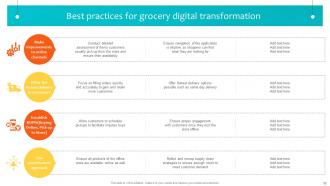
Slide 52: This slide showcase title Best practices for grocery digital transformation.
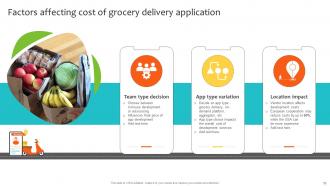
Slide 53: This slide showcase title Factors affecting cost of grocery delivery application.
Slide 54: This is a Timeline slide. Show data related to time intervals here.
Slide 55: This is Our Target slide. State your targets here.
Slide 56: This slide provides 30 60 90 Days Plan with text boxes.
Slide 57: This is a Thank You slide with address, contact numbers and email address.
Navigating Landscape Of Online Grocery Shopping Powerpoint Presentation Slides with all 65 slides:
Use our Navigating Landscape Of Online Grocery Shopping Powerpoint Presentation Slides to effectively help you save your valuable time. They are readymade to fit into any presentation structure.





















FAQs for Navigating Landscape Of Online Grocery Shopping
Online grocery shopping offers convenience, time savings, price comparison capabilities, reduced impulse purchases, and access to detailed product information and reviews. These advantages streamline the shopping experience by eliminating travel time, enabling strategic budgeting through easy price comparisons, and delivering enhanced control over purchasing decisions, with many busy professionals and families finding that digital platforms ultimately provide greater efficiency and cost management than traditional in-store experiences.
The COVID-19 pandemic accelerated online grocery adoption by forcing consumers to prioritize safety, convenience, and contactless delivery options. While initially driven by necessity during lockdowns, many shoppers discovered benefits like time savings, wider product selection, and scheduled deliveries, with retailers finding that these behavioral shifts have largely persisted post-pandemic.
Recent technological advancements include AI-powered personalization, computer vision for inventory management, automated warehouses, mobile apps with voice ordering, and real-time delivery tracking systems. These technologies streamline operations by reducing fulfillment times, enhancing product recommendations, and optimizing delivery routes, with many retailers finding that integrated platforms ultimately deliver faster services and improved customer satisfaction.
Delivery options significantly impact customer satisfaction by offering flexible scheduling, same-day availability, contactless delivery, and real-time tracking capabilities. These services enhance convenience and reliability, with many retailers finding that customers prioritize speed and communication, ultimately driving loyalty and repeat purchases in an increasingly competitive grocery market.
Loyalty programs drive online grocery retention through personalized discounts, exclusive offers, reward points, free delivery perks, and early access to sales. These programs enhance customer lifetime value by creating switching costs and emotional connection, with many retailers finding that loyalty members spend 20-30% more per transaction while significantly reducing customer acquisition costs.
Online grocery shopping preferences vary significantly across age groups, income levels, family composition, and geographic locations, with younger consumers favoring convenience and speed while older shoppers prioritize customer service and product quality. Demographics like busy professionals, families with children, and urban millennials increasingly embrace features like same-day delivery and subscription services, while rural and older populations often prefer traditional shopping experiences, ultimately creating diverse market segments requiring tailored approaches.
Online grocery shopping presents both environmental challenges and opportunities through reduced individual car trips, optimized delivery routes, and decreased food waste, while also increasing packaging materials and potential delivery emissions. Many retailers are addressing these concerns by implementing electric delivery vehicles, sustainable packaging solutions, and route optimization technologies, ultimately delivering lower carbon footprints per order and enhanced environmental efficiency compared to traditional shopping methods.
Retailers can improve online grocery shopping by implementing intuitive mobile apps, real-time inventory tracking, flexible delivery windows, personalized recommendations, and seamless substitution processes. Through AI-driven platforms, grocery chains like Walmart and Kroger enhance customer satisfaction by offering accurate product availability, optimized delivery routes, and tailored shopping experiences, ultimately delivering convenience and customer loyalty.
Essential security measures include SSL encryption, secure payment gateways, two-factor authentication, data tokenization, and PCI DSS compliance. These technologies streamline protection by encrypting sensitive data, securing payment processing, and preventing unauthorized access, with many grocery retailers finding that robust security frameworks ultimately enhance customer trust and reduce fraud-related costs.
Online grocery platforms often employ dynamic pricing, subscription discounts, delivery fees, and digital-exclusive promotions, while brick-and-mortar stores rely on traditional markups and in-store specials. These digital strategies enable retailers to optimize margins through data analytics, personalized offers, and operational cost adjustments, ultimately delivering competitive pricing models that enhance customer loyalty and market reach.
Common challenges include delivery delays, product substitutions, quality concerns for fresh items, limited product selection, and higher prices compared to in-store shopping. While these issues initially deterred adoption, many retailers are addressing them through improved logistics, better quality control, and enhanced customer service, with consumers increasingly finding that convenience and time savings outweigh the drawbacks.
Consumer reviews and ratings significantly influence online grocery purchasing by providing social proof, quality insights, and reducing uncertainty about product freshness and value. These peer assessments help shoppers evaluate unfamiliar brands, assess product quality they can't physically inspect, and build confidence in their selections, with many consumers finding that detailed reviews about taste, packaging, and delivery condition ultimately streamline their decision-making process.
Emerging trends include AI-powered personalization, same-day delivery expansion, voice commerce integration, sustainable packaging initiatives, and hybrid shopping experiences combining online ordering with in-store pickup. These developments enable retailers to enhance customer convenience, reduce operational costs, and capture market share, with many grocery chains finding that strategic digital investment delivers significantly improved customer loyalty and competitive positioning.
Businesses can utilize data analytics to enhance online grocery shopping through predictive inventory management, personalized product recommendations, dynamic pricing optimization, and customer behavior analysis. These analytics-driven approaches enable retailers to reduce stockouts, increase basket sizes, and improve delivery efficiency, with many grocery chains finding that data insights ultimately deliver faster fulfillment and enhanced customer experiences.
Supply chain innovations for online grocery retailers include AI-powered demand forecasting, automated warehouse systems, micro-fulfillment centers, real-time inventory management, and predictive analytics for routing optimization. These technologies streamline operations by reducing waste, minimizing delivery times, and enhancing inventory accuracy, with many retailers finding that strategic automation ultimately delivers lower operational costs and improved customer satisfaction.
-
“Excellent service from the customer support team when I wanted a slide that was a bit different from those on their standard menu. Super helpful.”
-
Loved the collection. Editing the presentation was seamless with their templates.