


New And Used Car Dealership Business Plan Powerpoint Presentation Slides
The automotive industry holds a prominent global position within this industry, car dealerships play a crucial role by offering both new and used vehicles. Grab our New and Used Car Dealership Business Plan. It provides an overview of the current state of car dealerships and presents a growth plan for the next five years. Our Car Dealership Business Plan outlines the business goals and the strategies employed to achieve them. It also includes thorough market research to support your objectives, such as analyzing the competitive landscape, industry insights, emerging trends, growth and revenue drivers, and target market identification. Our Trends shaping car dealership industry PPT covers the application of Porters framework and its impact on car dealerships, identifies existing market gaps, proposes solutions, highlights opportunities, etc. It also includes TAM Total Addressable Market, SAM Serviceable Available Market, and SOM Serviceable Obtainable Market. The module also incorporates a well structured financial overview demonstrating a carefully considered and thought out proposition. It includes a revenue model, balance sheet, cash flow statement, break even analysis, discounted cash flow valuation, and profit and loss statement. Get instant access.























You must be logged in to download this presentation.


Do you want to remove this product from your favourites?
 Impress your
 audience
 100%
100% Editable
 Save Hours
 of Time
PowerPoint presentation slides
You can survive and sail through cut throat competition if you have the right skills and products at hand. If a business plan is on your upcoming agenda, then it will not be wise of you to proceed in absence of our well designed New And Used Car Dealership Business Plan Powerpoint Presentation Slides. Our PowerPoint presentation swears by in depth detailing and thus answers every question that may hit you or your audience at any point of time. Whats more, are the multi fold benefits that our PowerPoint offers. Made up of high resolution graphics, this PPT does not hamper when projected on a wide screen. Being pre designed and thoroughly editable this ready made business plan saves a lot of the presenters time and efforts which otherwise get wasted in designing the business plan from scratch. We make our business plan PowerPoint presentation available to you keeping in mind the competitive edge. Join your hands with us now.

People who downloaded this PowerPoint presentation also viewed the following :
Content of this Powerpoint Presentation
Slide 1: This slide introduces New And Used Car Dealership Business Plan. Commence by stating Your Company Name.
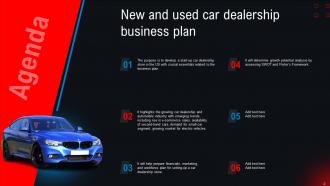
Slide 2: This slide depicts the Agenda of the presentation.
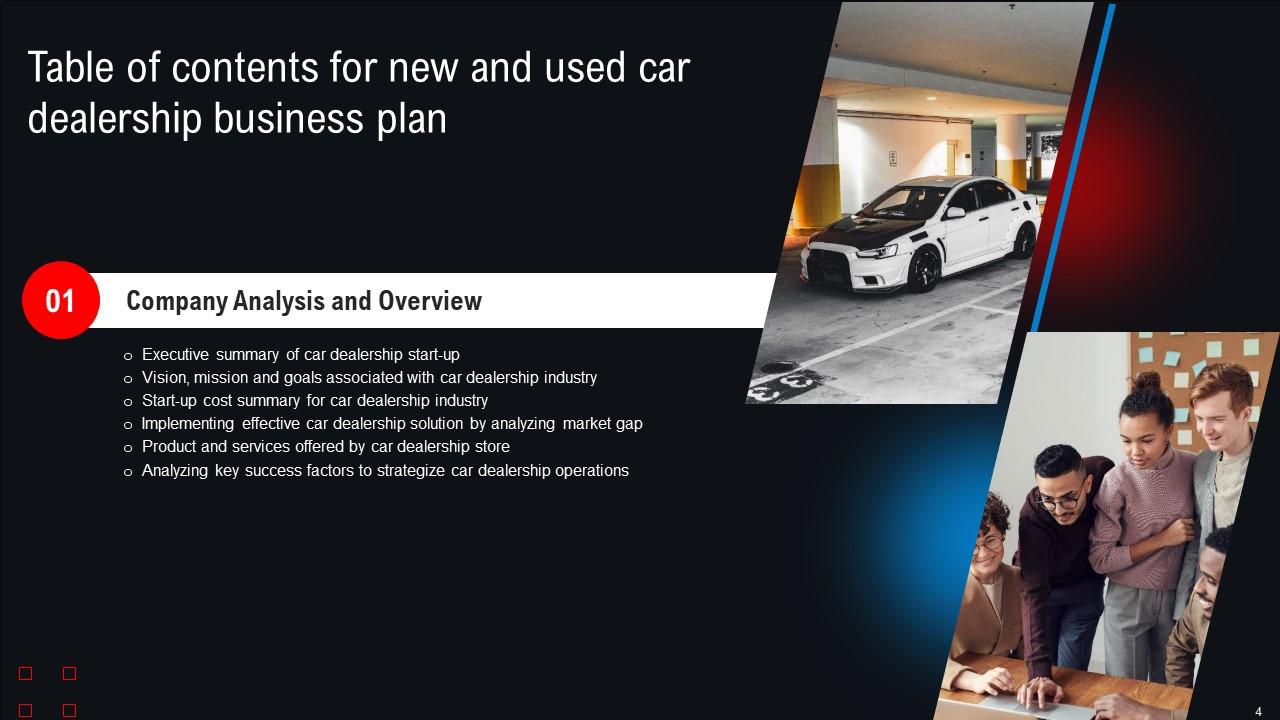
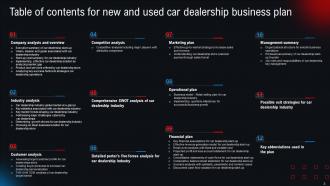
Slide 3: This slide includes the Table of contents.
Slide 4: This slide highlights the Title for the Topics to be covered further.
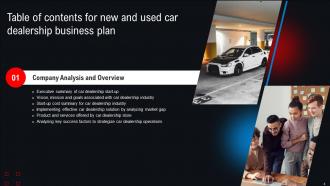
Slide 5: This slide presents the Executive summary of car dealership start-up.
Slide 6: This slide covers the car dealership industry's vision, mission, and goals.
Slide 7: This slide states the Start-up cost summary for car dealership industry.
Slide 8: This slide deals with Implementing effective car dealership solution by analyzing market gap.
Slide 9: This slide highlights the Product and services offered by car dealership store.
Slide 10: This slide focuse son Analyzing key success factors to strategize car dealership operations.
Slide 11: This slide indicates the Heading for the Contents to be discussed in the following template.
Slide 12: This slide portrays the Car dealership industry global market at a glance.
Slide 13: This slide highlights the thorough assessment of a market within the car dealership industry.
Slide 14: This slide continues the Key statistics associated with car dealership industry.
Slide 15: This slide further continues the Key statistics associated with car dealership industry.
Slide 16: This is yet another slide continuing the Key statistics associated with car dealership industry .
Slide 17: This slide also continues the Key statistics associated with car dealership industry.
Slide 18: This slide highlights the key market trends that have the potential to change the current market scenario.
Slide 19: This slide deals with Addressing major challenges catered by car dealerships.
Slide 20: This slide focuses on Determining growth drivers for car dealership industry.
Slide 21: This slide emphasizes on Choosing an ideal business location for car dealership store.
Slide 22: This slide displays the Title for the Ideas to be further discussed.
Slide 23: This slide covers an assessment of how the company's products will fit into a particular market.
Slide 24: This slide provides a glimpse of how to better understand the target audience.
Slide 25: This slide depicts the TAM SAM SOM analysis of car dealership target market.
Slide 26: This slide includes the Heading for the Ideas to be covered in the forthcoming template.
Slide 27: This slide reveals the Competitive analysis including major players with attributes comparison.
Slide 28: This slide shows the Title for the Contents to be discussed enxt.
Slide 29: This slide highlights the Comprehensive SWOT analysis of car dealership industry.
Slide 30: This slide contains the Heading for the Topics to be discussed further.
Slide 31: The slide highlights porter’s five forces model and its implications in the US car dealership industry.
Slide 32: This slide indicates the Title for the Topics to be covered in the following template.
Slide 33: This slide presents the Effective go-to-market strategy to increase sales and revenue.
Slide 34: This slide continues the Effective go-to-market strategy to increase sales and revenue.
Slide 35: This slide further continues the Effective go-to-market strategy to increase sales and revenue.
Slide 36: This slide also continues the Effective go-to-market strategy to increase sales and revenue.
Slide 37: This slide focuses on Understanding car dealership store customer journey through sales funnel.
Slide 38: This slide displays the Heading for the Contents to be discussed further.
Slide 39: This slide exhibits the Business model of Retail selling plan for car dealership industry.
Slide 40: The slide covers particular objectives or goals that the organization intends to attain as part of its business plan.
Slide 41: This slide indicates the Title for the Ideas to be covered in the upcoming template.
Slide 42: This slide shows the Key financial assumptions for car dealership start-up.
Slide 43: This slide reveals the Effective revenue generation model for car dealership start-up.
Slide 44: This slide highlights the Break-even analysis with fixed and variable cost.
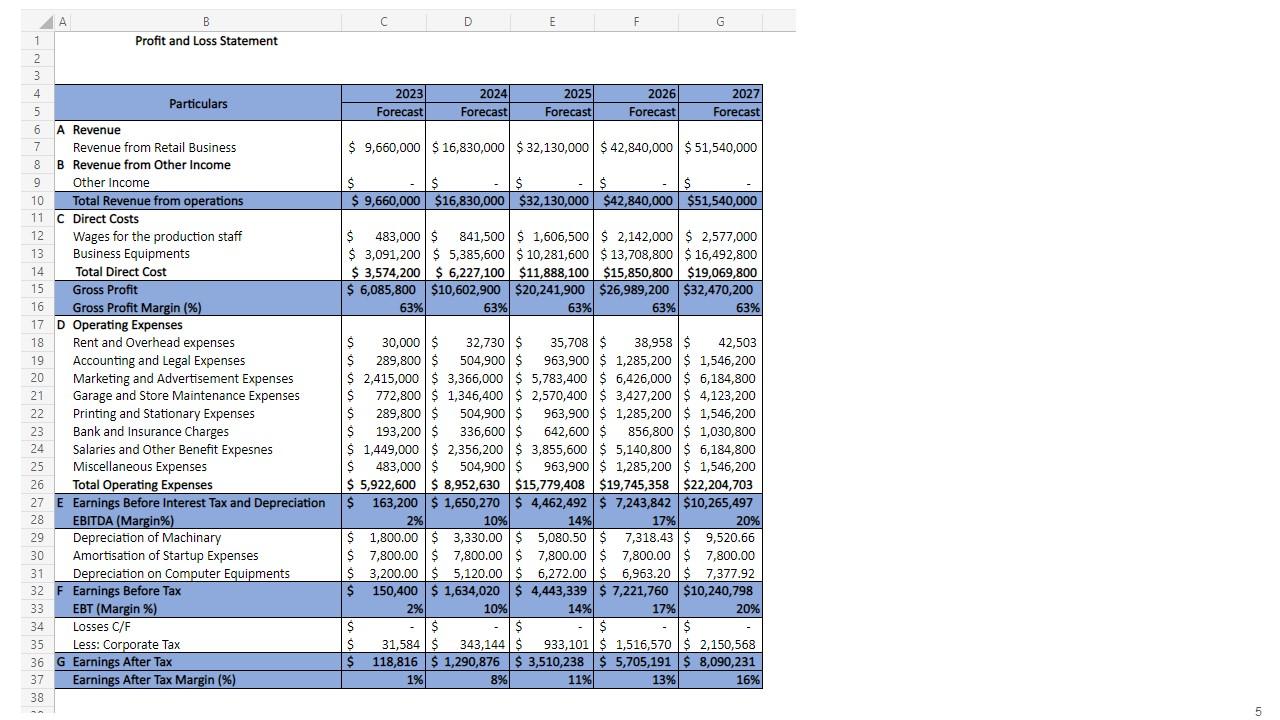
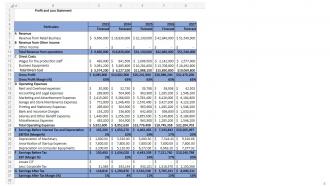
Slide 45: This slide displays the Projected profit and loss account statement for car dealership start-up.
Slide 46: This slide continues the Projected profit and loss account statement for car dealership start-up.
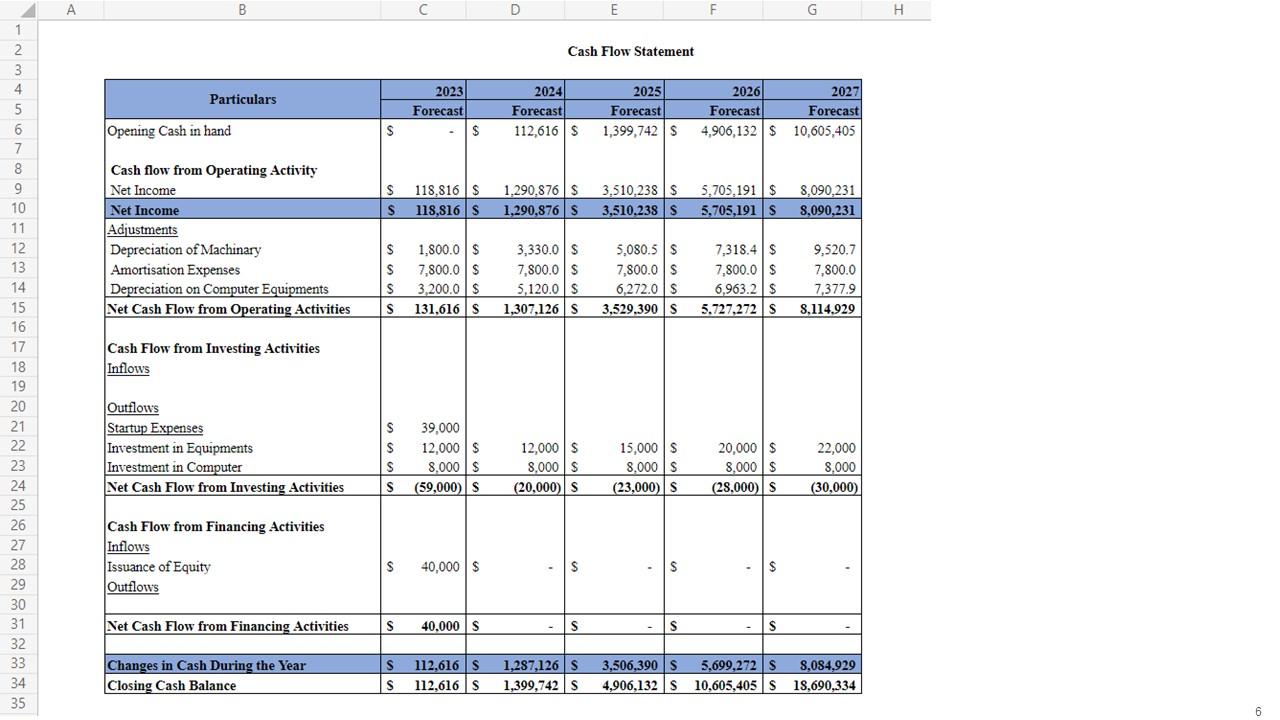
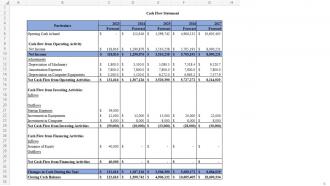
Slide 47: This slide displays the Consolidated statements of cash flows for car dealership start-up.
Slide 48: This slide continues the Consolidated statements of cash flows for car dealership start-up.
Slide 49: This slide further continues the Comparative balance sheet statement for car dealership start-up.
Slide 50: This is yet another slide continuing the Comparative balance sheet statement for car dealership start-up.
Slide 51: This slide depicts the Scenario analysis with optimistic, pessimistic and nominal cases.
Slide 52: This slide continues the Scenario analysis with optimistic, pessimistic and nominal cases.
Slide 53: This slide's purpose is to calculate the amount of money an investor would get from an investment after adjusting for the time value of money.
Slide 54: This slide contains the Heading for the Ideas to be discussed next.
Slide 55: The slide highlights the organizational hierarchy in the company.
Slide 56: This slide portrays the Professional summary of car dealership start-up founder.
Slide 57: This slide exhibits the Job roles and responsibilities of car dealership key management.
Slide 58: This slide continues the Job roles and responsibilities of car dealership key management.
Slide 59: This slide further continues the Job roles and responsibilities of car dealership key management.
Slide 60: This slide shows the Title for the Contents to be covered further.
Slide 61: This slide represents exit strategies.
Slide 62: This slide includes the Heading for the Topics to be discussed next.
Slide 63: This slide highlights the Key abbreviations used in the plan.
Slide 64: This is the Icons slide containing all the Icons used in the plan.
Slide 65: This slide is used for depicting some Additional information.
Slide 66: This is the Puzzle slide with related imagery.
Slide 67: This is the Venn diagram slide.
Slide 68: This is the Idea generation slide for encouraging fresh ideas.
Slide 69: This slide is used for the purpose of Comparison.
Slide 70: This slide exhibits the organization's Timeline.
Slide 71: This is the Thank You slide for acknowledgement.
New And Used Car Dealership Business Plan Powerpoint Presentation Slides with all 76 slides:
Use our New And Used Car Dealership Business Plan Powerpoint Presentation Slides to effectively help you save your valuable time. They are readymade to fit into any presentation structure.
-
Love the template collection they have! I have prepared for my meetings much faster without worrying about designing a whole presentation from scratch.
-
SlideTeam never fails to surprise me with its amazing PPT designs. Thanks team for providing me with your constant support!
