Diapositivas de presentación en PowerPoint de la nueva propuesta de asociación
Try Before you Buy Download Free Sample Product
Audience
Editable
of Time
Emplee nuestro contenido listo para las diapositivas de la presentación en PowerPoint de la nueva propuesta de asociación y resalte los objetivos de la colaboración. Discuta las dos formas de una asociación comercial, a saber, un contrato único y un representante permanente en una ubicación específica utilizando nuestra plantilla de PowerPoint de acuerdo de fusión empresarial. Desarrolle las visiones y certificaciones de su organización para reforzar la confianza con la empresa objetivo. También puede dilucidar los beneficios de la colaboración con su institución y las soluciones que propone como líder emergente en la competitiva industria de la tecnología de la información. Objetivos como estructuras de seguridad de alto nivel para proteger a los consumidores, herramientas y capacitación centradas en el cliente, soluciones de TI personalizadas, etc. se pueden ilustrar con la ayuda de este diseño de PowerPoint de licitación de empresa. Muestre su experiencia técnica en sitios web publicitarios, software como compras, atención médica, banca, finanzas, concesionarios de automóviles, restaurantes y comercialización. Especializado en el desarrollo y los servicios de consultoría, puede demostrar la presencia global de su institución incorporando esta asociación de firmas propuestas visuales PPT. Además, puede demostrar su valía al incluir las diapositivas de los testimonios de sus clientes, la gloriosa experiencia laboral y enfocarse en sus excelentes habilidades en el campo de TI. Brinde transparencia legal a la empresa asociada potencial indicando los términos y condiciones tales como detalles de pago, confidencialidad, etc. La diapositiva de cierre se puede incluir aquí para obtener las firmas del usuario asignado, el nombre de la empresa y el nombre del cliente con su información de contacto. Expanda su negocio a pasos agigantados incorporando esta presentación de diapositivas de PowerPoint del contrato de asociación con la empresa. Descargue este tema de PowerPoint de licitación de alianza empresarial para presentar los servicios confiables y dignos de confianza de su institución.
Características de estas diapositivas de presentación de PowerPoint:
Si su empresa necesita enviar una nueva propuesta de asociación Diapositivas de presentación de PowerPoint, no busque más. Nuestros investigadores han analizado miles de propuestas sobre este tema para determinar su eficacia y conversión. Simplemente descargue nuestra plantilla, agregue los datos de su empresa y envíela a su cliente para obtener una respuesta positiva.
People who downloaded this PowerPoint presentation also viewed the following :
Contenido de esta presentación de Powerpoint
Diapositiva 1 : Esta diapositiva presenta la propuesta de nueva asociación. Indique el nombre de la empresa, el nombre del cliente y el nombre y la designación del usuario.
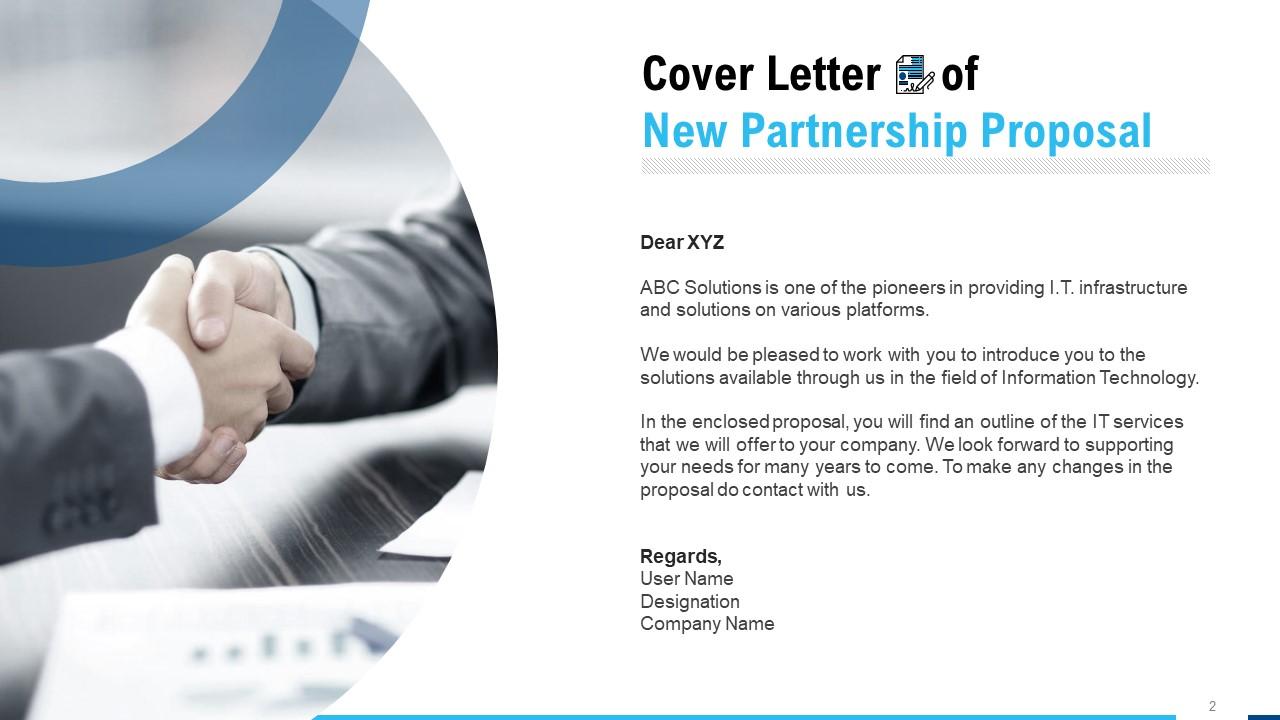
Diapositiva 2 : esta diapositiva muestra la Carta de presentación.
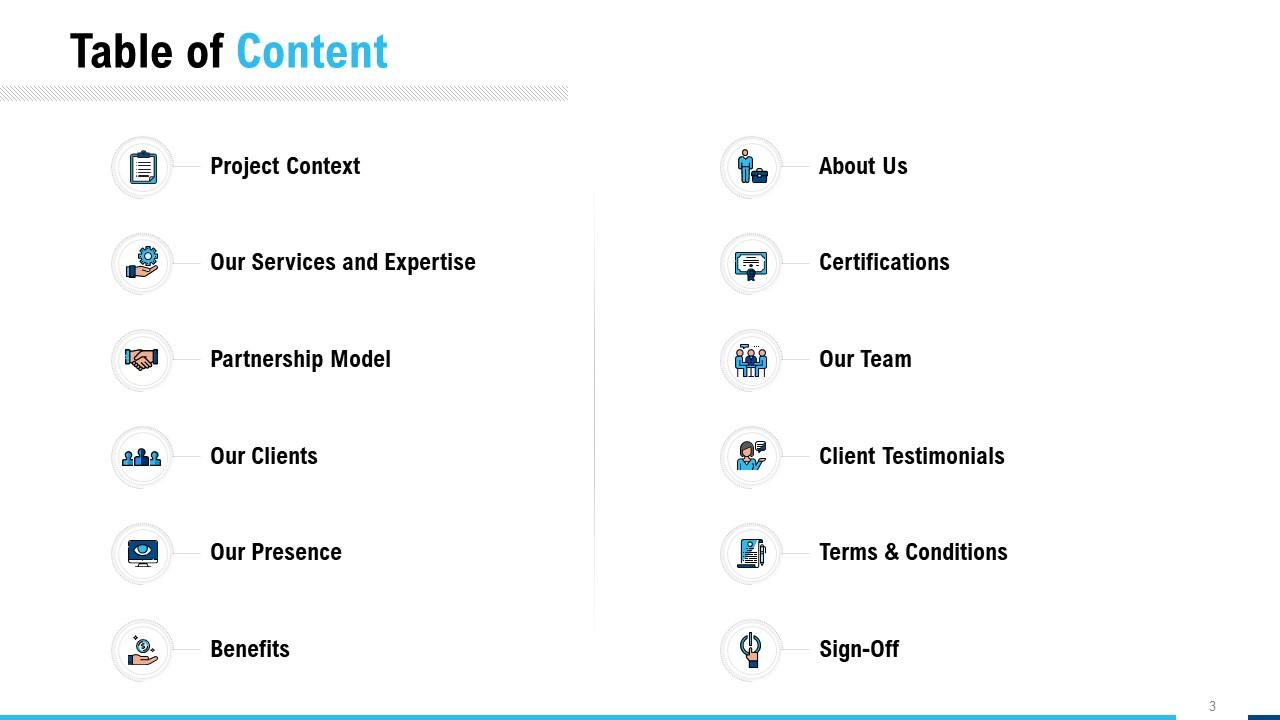
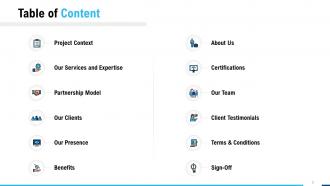
Diapositiva 3 : esta diapositiva muestra la tabla de contenido de la presentación.
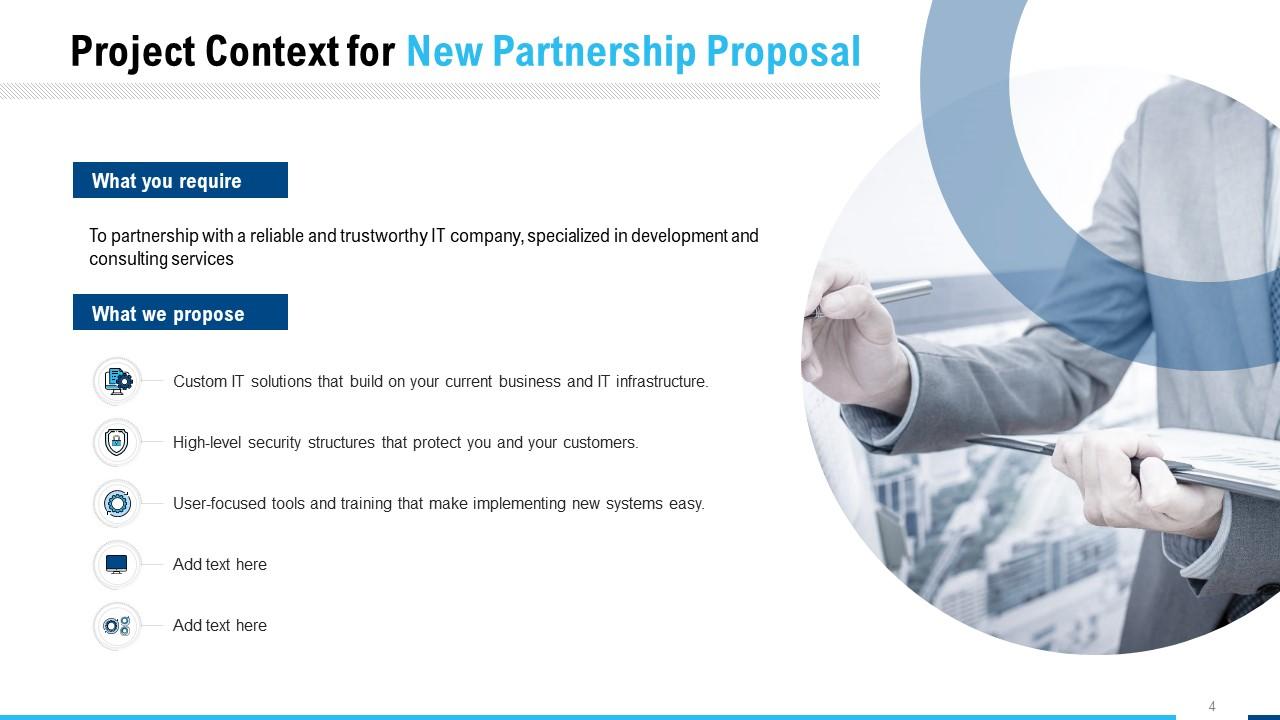
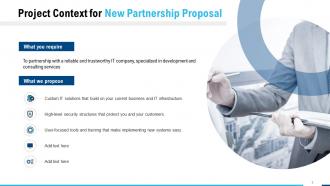
Diapositiva 4 : Esta diapositiva muestra el contexto del proyecto para una nueva propuesta de asociación.
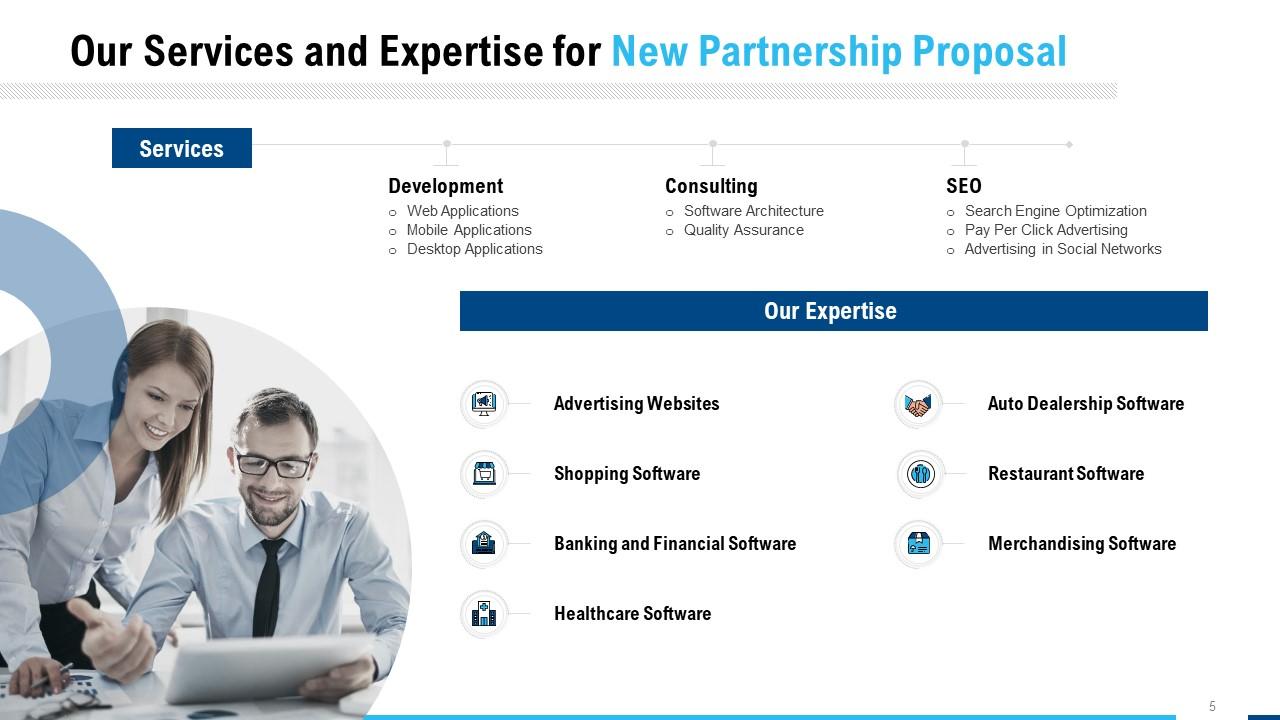
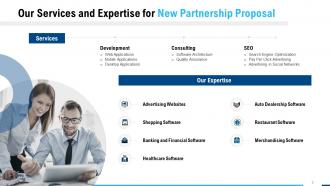
Diapositiva 5 : Esta diapositiva representa Nuestros servicios y experiencia para una nueva propuesta de asociación que contiene: desarrollo, aplicaciones web, aplicaciones móviles, aplicaciones de escritorio, consultoría, arquitectura de software, garantía de calidad, SEO, etc.

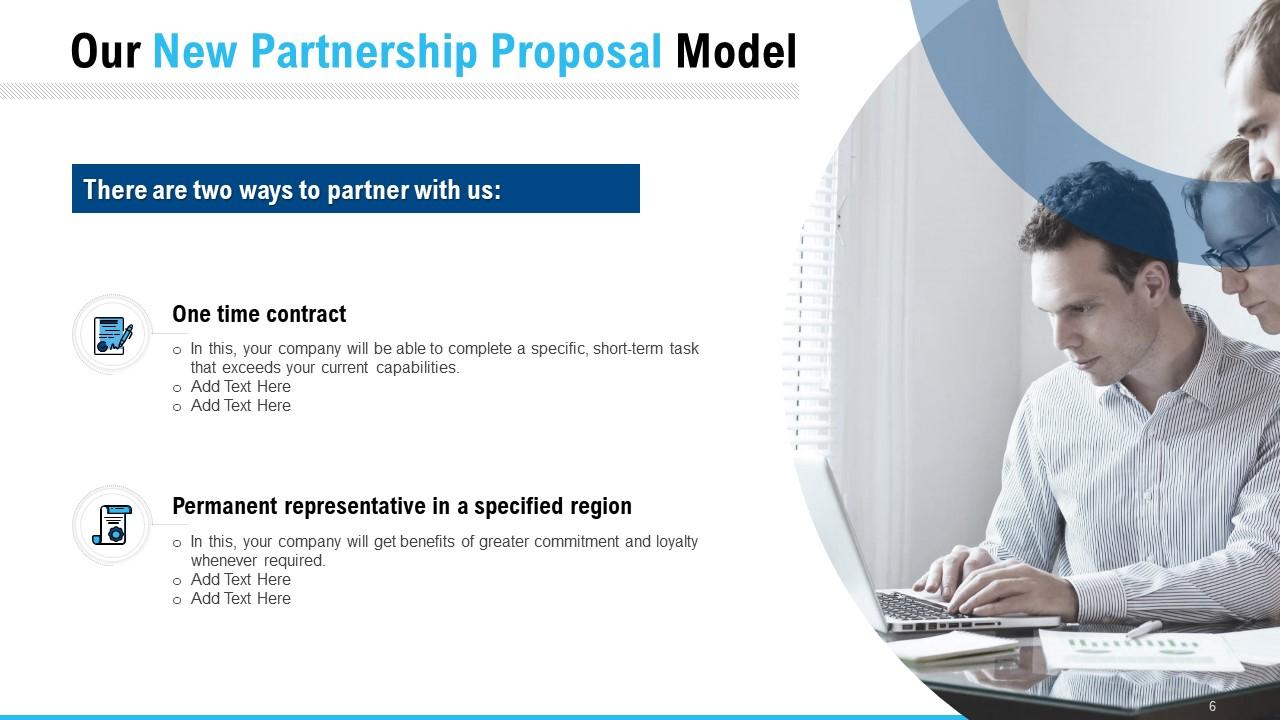
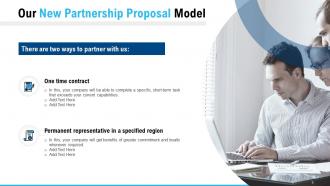
Diapositiva 6 : Esta diapositiva presenta nuestro nuevo modelo de propuesta de asociación.
Diapositiva 7 : Esta diapositiva muestra a Nuestros Clientes con los nombres y el logotipo de los clientes.
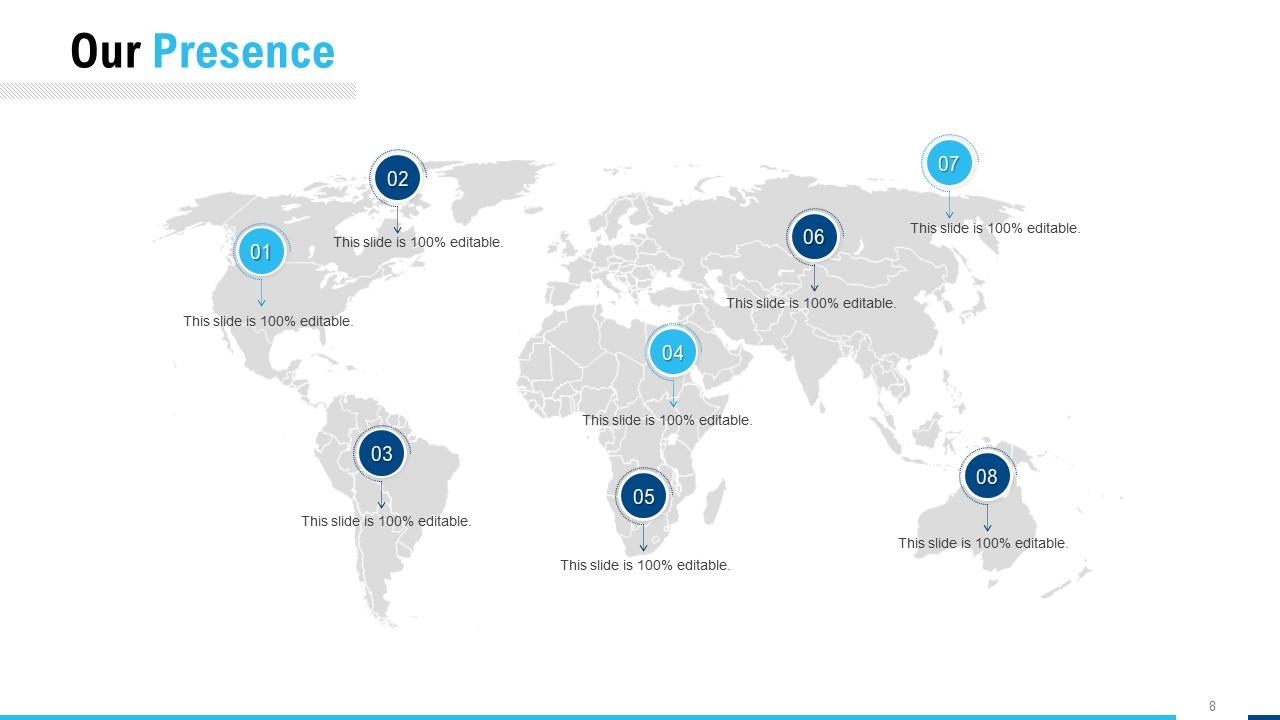
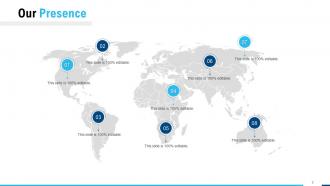
Diapositiva 8 : Esta diapositiva muestra Nuestra presencia.
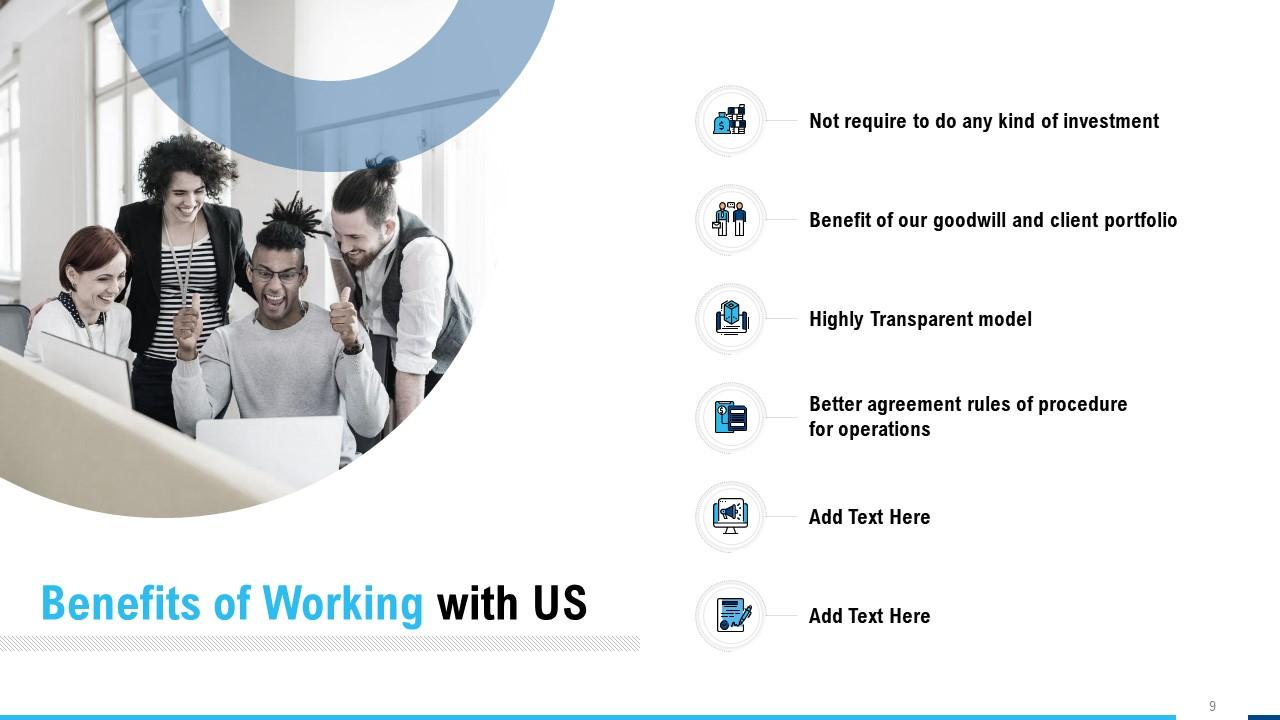
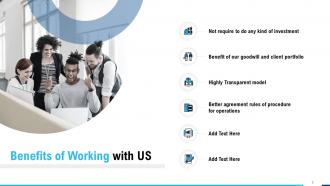
Diapositiva 9 : Esta diapositiva presenta los beneficios de trabajar con nosotros.
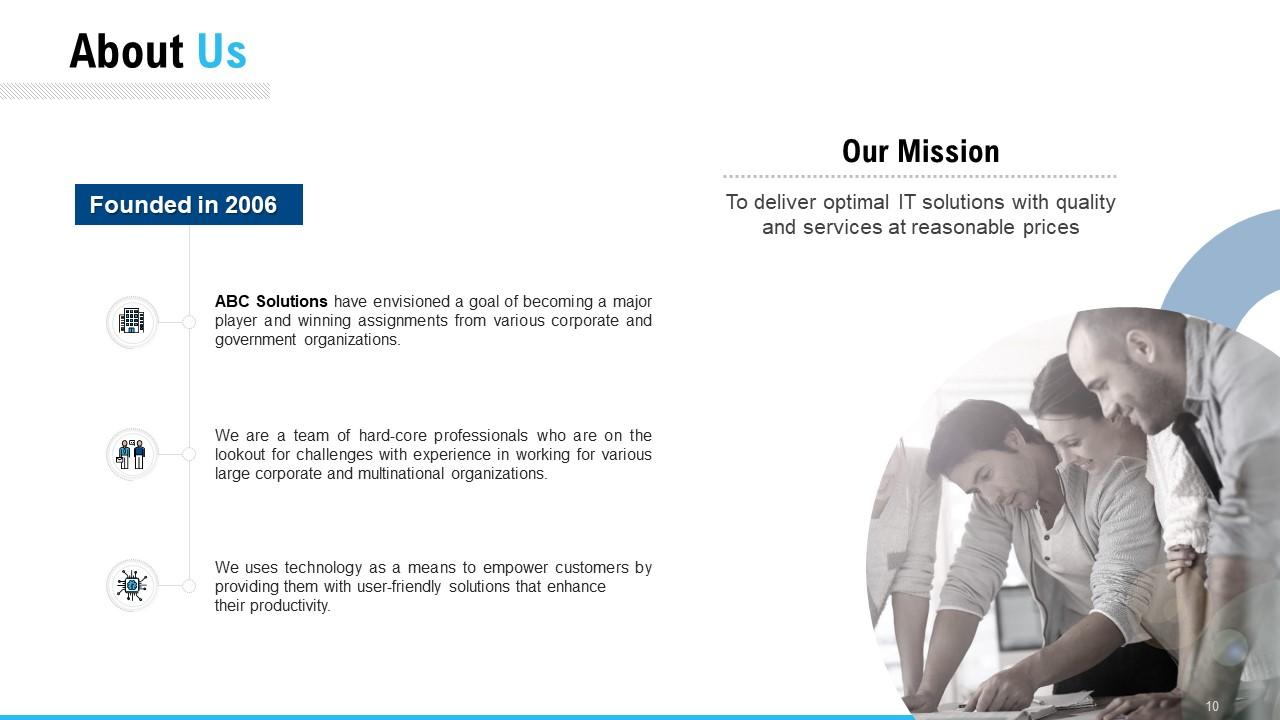
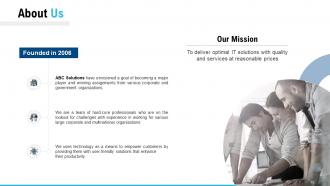
Diapositiva 10 : Esta es la diapositiva Acerca de nosotros para mostrar las especificaciones de la empresa.
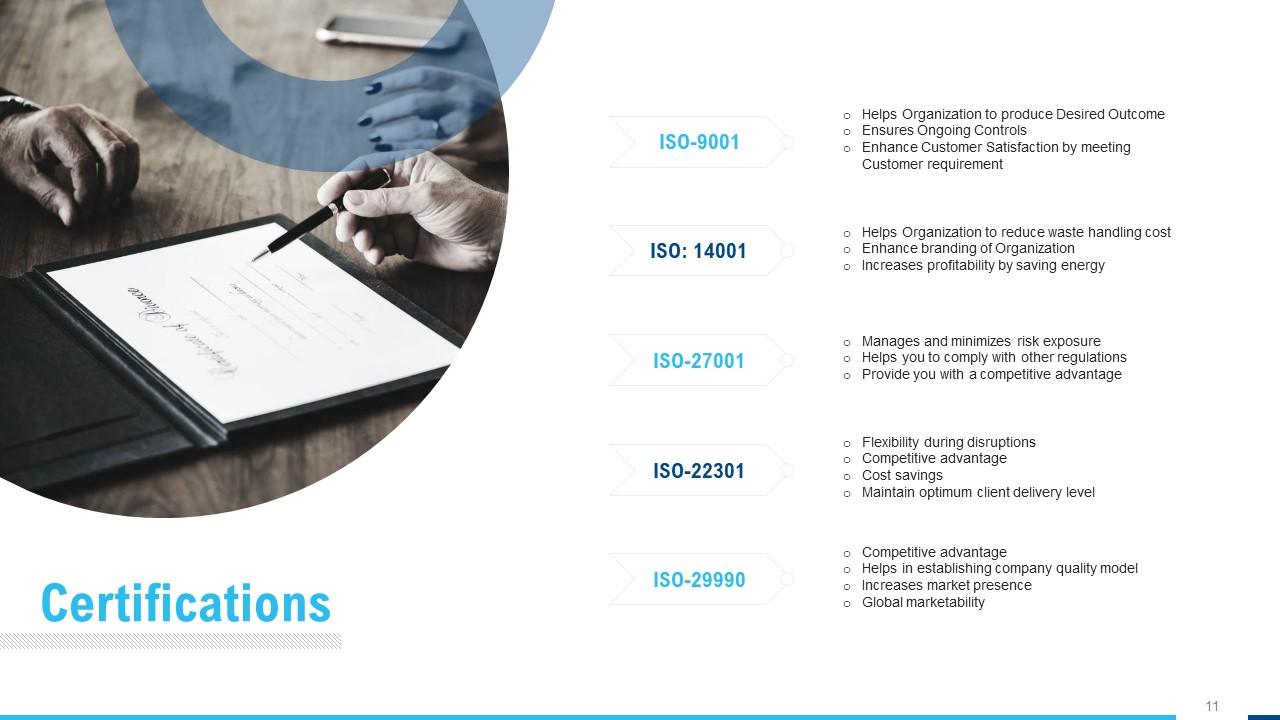
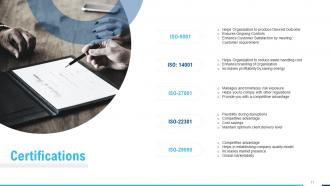
Diapositiva 11 : Esta diapositiva muestra las certificaciones.
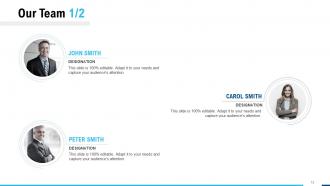
Diapositiva 12 : Esta es la diapositiva de Nuestro equipo con nombres y designaciones.
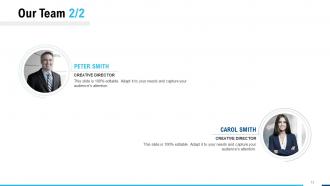
Diapositiva 13 : Esta es la diapositiva de Nuestro equipo con nombres y designaciones.
Diapositiva 14 : Esta diapositiva muestra testimonios de clientes con nombres y designaciones de clientes.
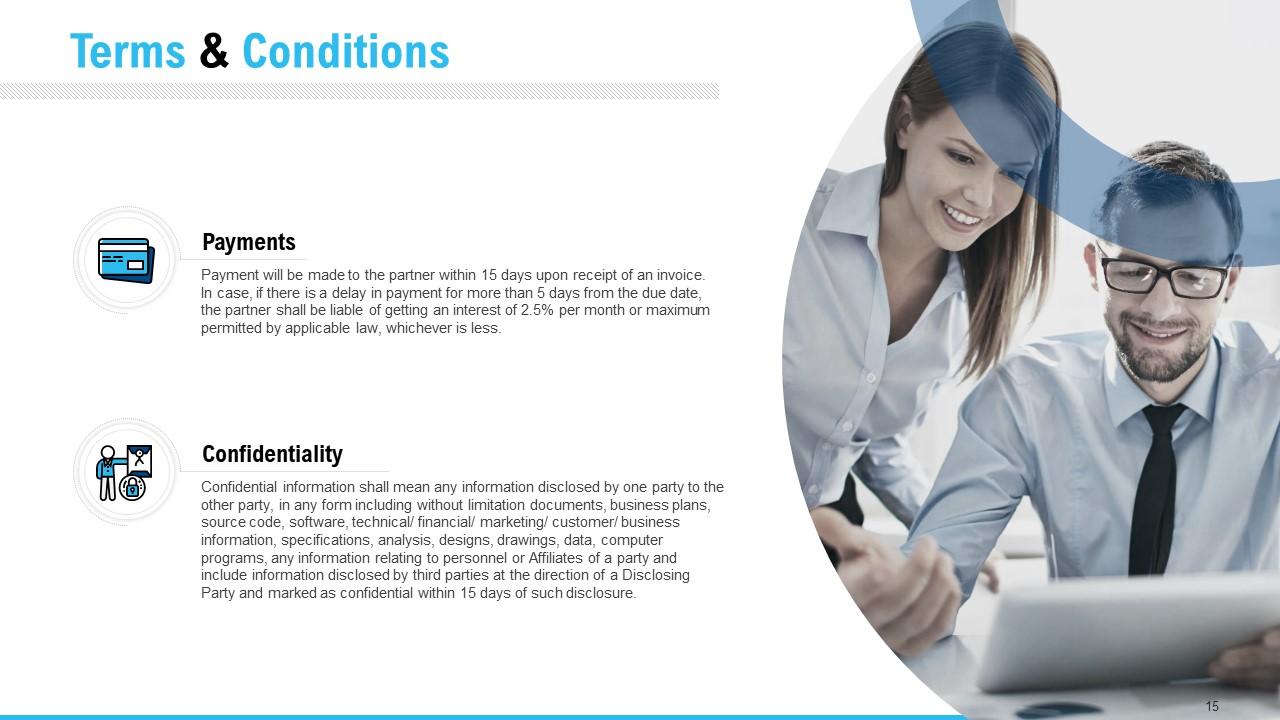
Diapositiva 15 : esta diapositiva muestra los Términos y condiciones.
Diapositiva 16 : Esta es la diapositiva de Aprobación.
Diapositiva 17 : Esta es la diapositiva Contáctanos con la dirección, el número de contacto y la dirección de correo electrónico.
Diapositiva 18 : esta diapositiva se titula Diapositivas adicionales para avanzar.
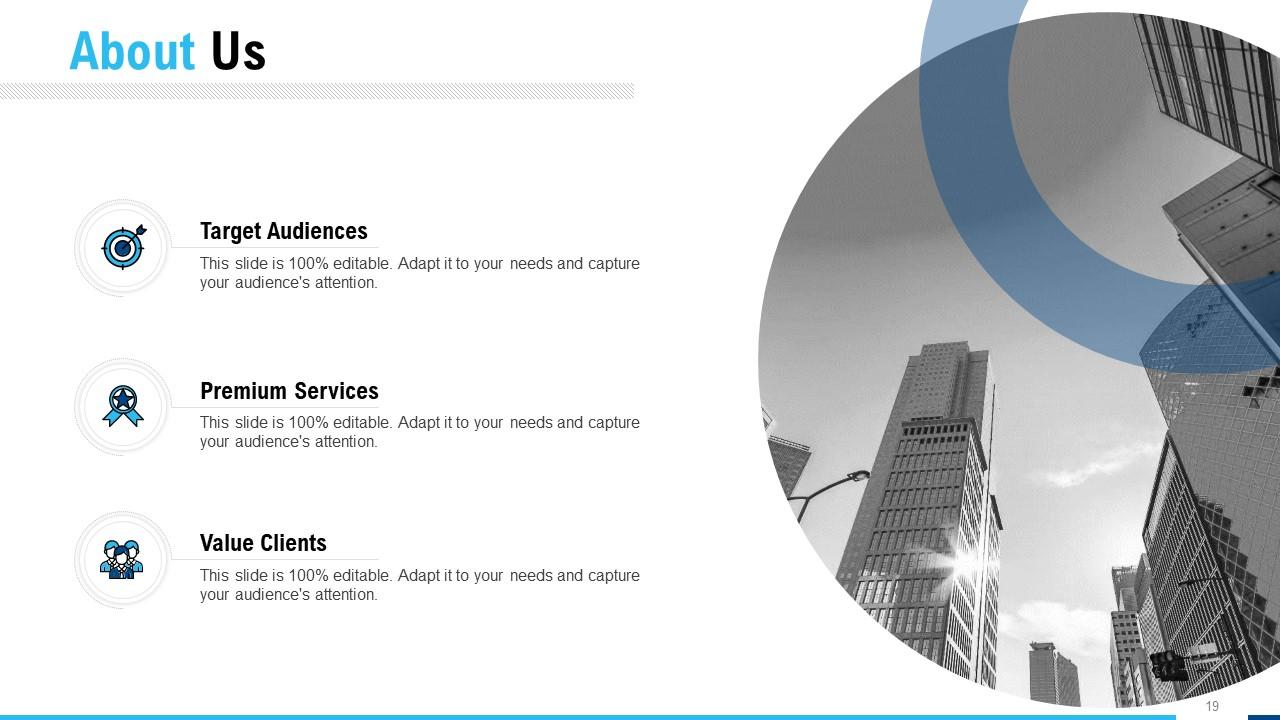
Diapositiva 19 : Esta es la diapositiva Acerca de nosotros para mostrar las especificaciones de la empresa.
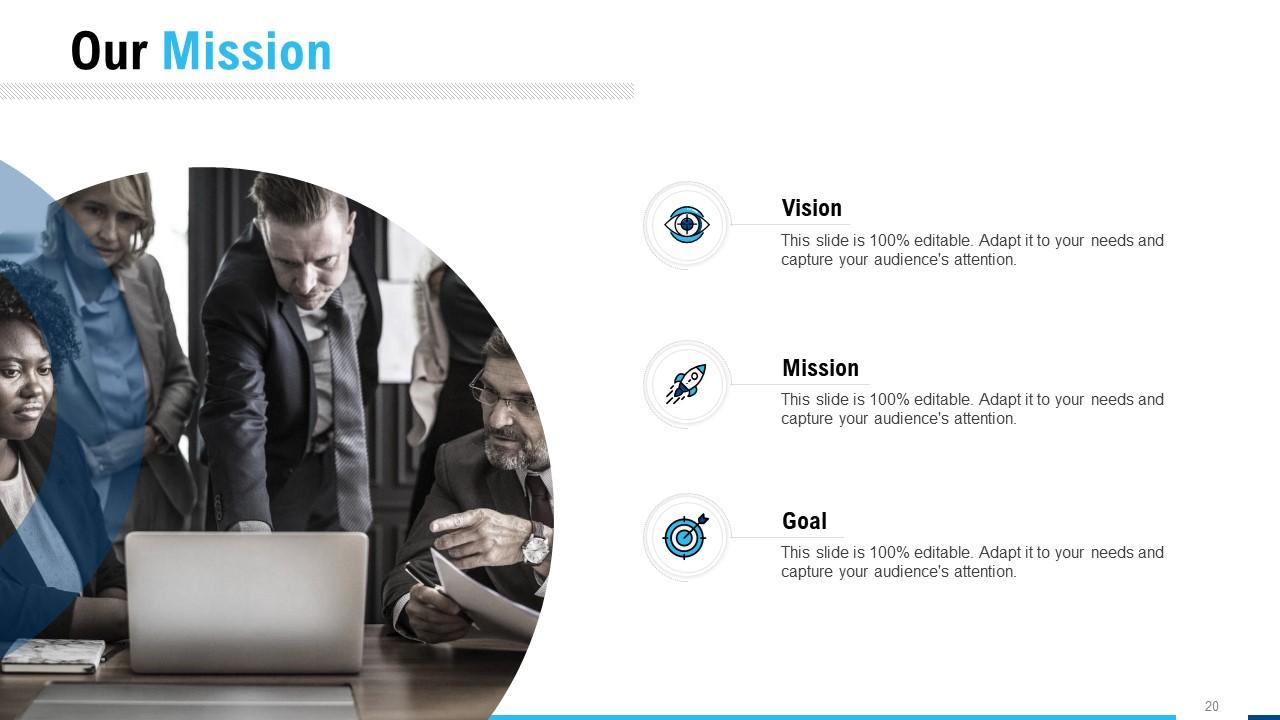
Diapositiva 20 : Esta es la diapositiva de Nuestra misión con Misión, Visión y Objetivo.
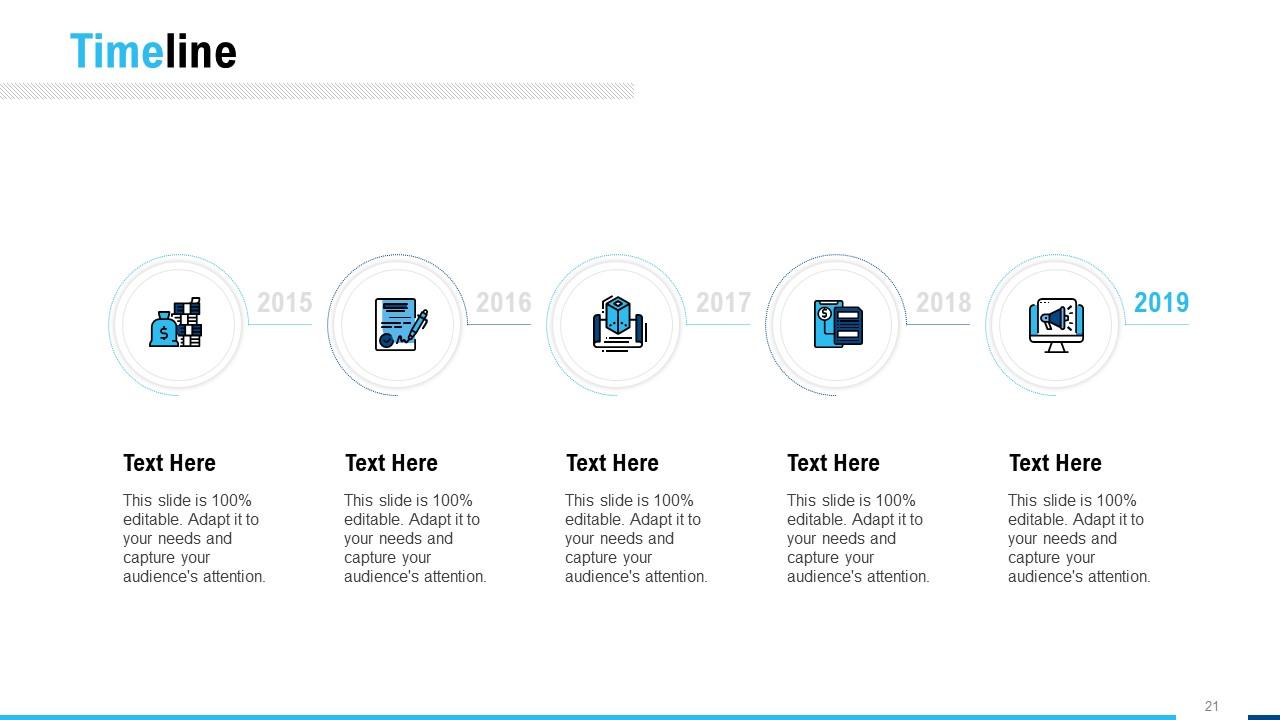
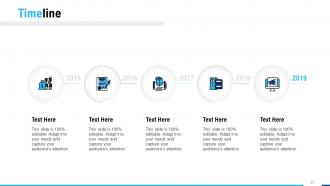
Diapositiva 21 : Esta es la diapositiva de la línea de tiempo.
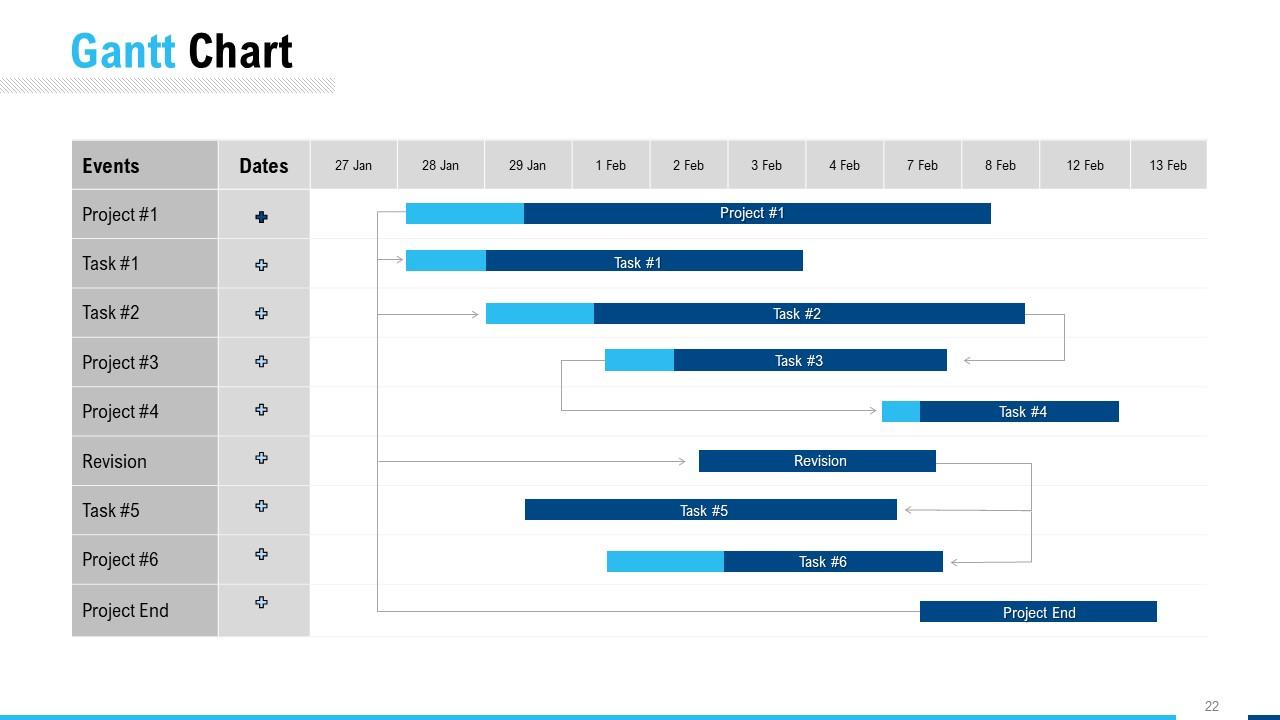
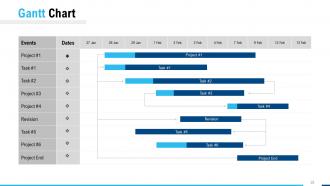
Diapositiva 22 : esta diapositiva muestra el diagrama de Gantt.
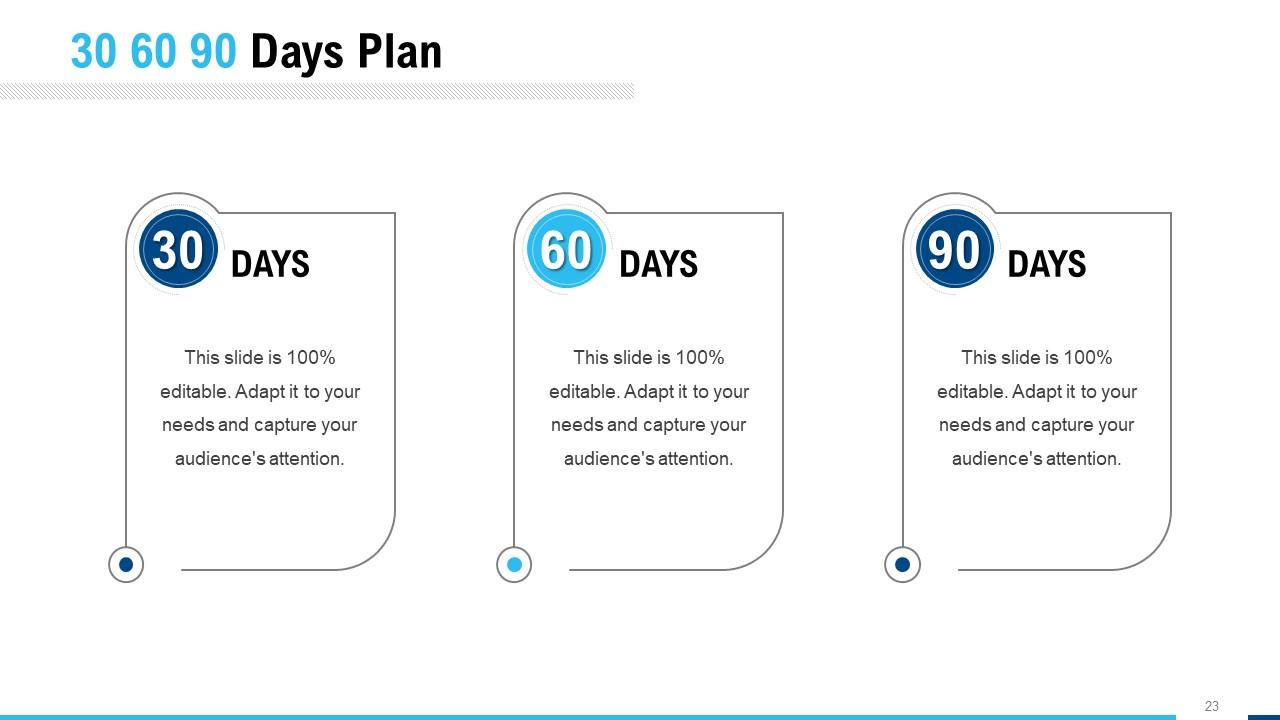
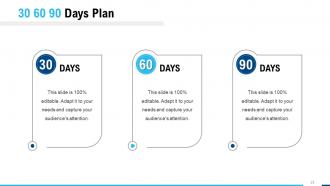
Diapositiva 23 : Esta es la diapositiva del plan 30 60 90 días.
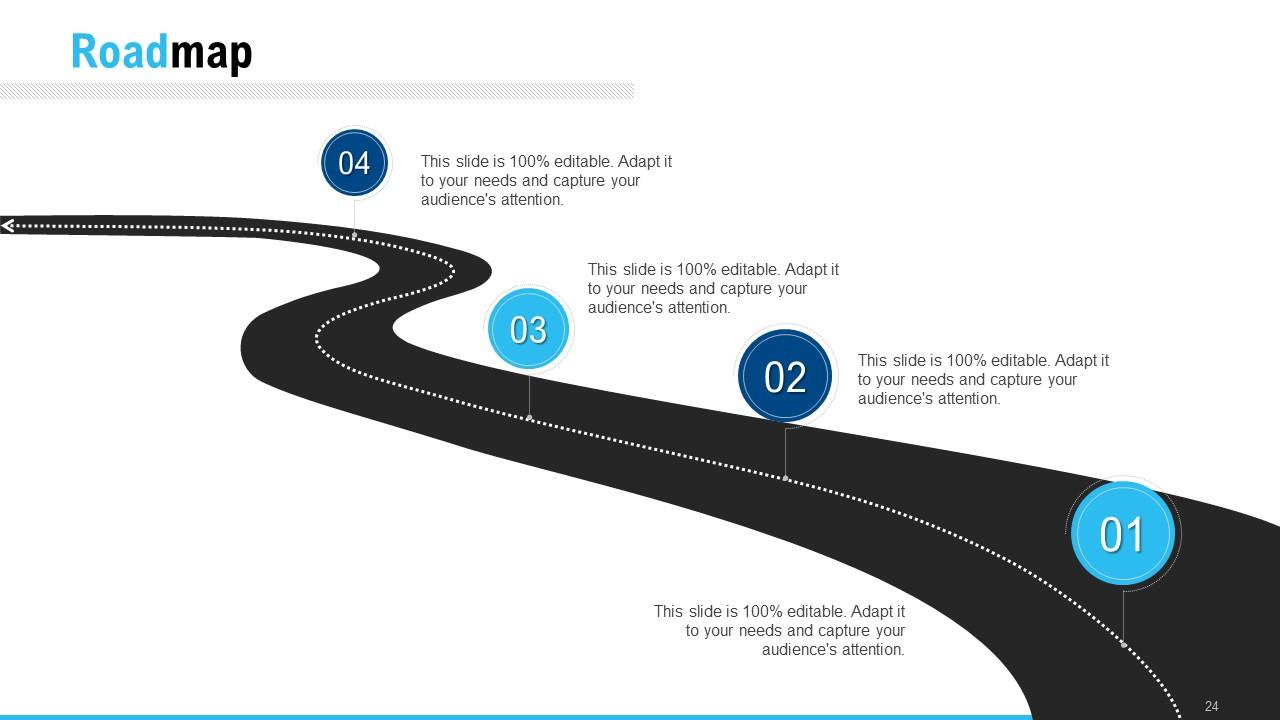
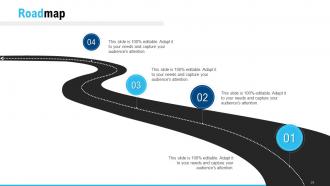
Diapositiva 24 : Esta diapositiva describe el proceso de la hoja de ruta.
Diapositivas de presentación en PowerPoint de la nueva propuesta de asociación con las 24 diapositivas:
Desaliente las imitaciones burdas con nuestras diapositivas de presentación en PowerPoint de la nueva propuesta de asociación. Ilustre cómo puede herir genuinamente los sentimientos.
FAQs for New partnership proposal
You need a clear value prop for both sides, plus specific goals and who's doing what. Timeline with milestones is crucial. Don't forget the financial stuff or resource commitments. Most proposals tank because they're way too vague about what the other party gets out of it - seriously, I see this all the time. Include success metrics so everyone's on the same page about what good looks like. Also throw in an exit strategy since, you know, things change. Your proposal should hit their pain points first, not just what you want. Oh, and lead with a killer executive summary that grabs them right away.
Honestly, templates are a game-changer for partnership proposals. They force you to organize everything logically instead of rambling through dense paragraphs that nobody reads anyway. You get clean sections for benefits, timelines, responsibilities - all that good stuff. Look, presentation matters way more than it should. A polished template just hits different than a messy Word doc. Plus you won't forget important details since good templates are built around what partners actually want to see. My take? Don't reinvent the wheel. Find one that fits your partnership type and tweak it from there.
Okay so three main things to look at: strategic fit, what they can do that you can't, and whether you'll actually get along. Their goals need to mesh with yours for real - not just look pretty in a presentation. Figure out what gaps they fill, like market reach or tech skills or whatever you're missing. Cultural stuff matters way more than people think (trust me on this one). Do your teams vibe? Same communication style? Compatible timelines? Check their finances and rep too obviously. Oh and map out your must-haves first before you start reaching out to anyone. Saves so much time later.
Okay so first thing - figure out what's actually bugging your partner or what they're trying to achieve. Then map out how working together fixes their problems AND gets you what you want. I do this dumb little two-column thing every time but honestly it works. Don't just say "this'll be great for everyone" - get specific with real numbers. Like actual cost savings or revenue bumps, you know? The whole point is showing them this partnership isn't just you getting what you want. It's gotta genuinely help their business move forward too. Numbers are what close these deals.
Honestly, market research is what separates the pros from people just throwing stuff at the wall. It helps you find the right partners and actually understand what keeps them up at night. You'll know exactly what value you bring and can talk their language - like mentioning industry trends they actually care about. I've watched so many proposals bomb because they were just generic nonsense instead of showing real insight. The research backs up your revenue numbers too, which matters way more than you'd think. Oh, and definitely dig into their recent moves and competitors before writing anything.
Honestly, the "before and after" approach works so well for this stuff. Show them where you both are now, then paint the picture of what you could build together. Focus on real problems your audience actually deals with - they'll relate instantly to that shared pain. Skip the fluffy benefits and go straight to concrete examples or case studies instead. People forget vague promises anyway. Tell it like a story: here's where we are (setup), here's our partnership idea (the twist), and boom - mutual success (the ending). Throw in some actual customer quotes or solid data points. Then ask them to write this success story with you.
Look, you absolutely need to spell out who's doing what or you'll end up in that awkward "wait, I thought YOU were handling this" situation. Trust me, it's partnership poison. Think of it like roommate chores - nobody wants to always be the one cleaning while their partner binge-watches Netflix. When you map out specific responsibilities, you're catching problems before they blow up. Don't just write fluffy stuff about "working together." Your proposal should have actual deliverables and deadlines for each person. Otherwise you're just setting yourselves up for drama later. Been there, seen partnerships implode over this exact thing.
Honestly, start with the boring stuff - their financials and any legal drama. Pull credit reports and see if they've been sued lately. Google the hell out of them too, you'd be shocked what comes up sometimes. Get references from their other partners (red flag if they won't give any). Make sure your businesses actually make sense together and you're not gonna end up competing. Oh, and check if they can actually deliver what they promise - do they have the right people? I usually just make a simple pros/cons list and see if it's worth the headache.
Track the obvious stuff first - revenue, lead conversion, how much you're spending to get new customers. But honestly? The soft metrics matter just as much. How's the brand alignment feeling? Are customers actually happy with what comes out of these joint efforts? I'd also watch relationship health indicators - sounds weird but partnerships blow up over communication breakdowns all the time. Event attendance and co-marketing performance tell you tons too. Just make sure you baseline everything upfront or you'll never prove ROI when your boss starts breathing down your neck about results.
First thing - map out what both companies actually want to achieve in the next 1-3 years. Growth numbers, new markets, operational stuff, whatever their priorities are. Then dig into where those goals overlap (that's where the magic happens, honestly). Don't just say "this partnership sounds great" - get specific about how it'll move real metrics for both sides. Your proposal should connect those dots with concrete examples and projected results. Oh, and definitely set up a planning session to go through both strategic plans together. Makes the whole conversation way more productive when you're looking at everything side by side.
Definitely nail down liability protection and how you'll split profits/losses first. Decision-making stuff too - who gets final say on what? Partnership fights get ugly real quick when roles aren't clear. Don't skip intellectual property ownership, especially if either of you already has assets or you're creating new stuff. Tax implications matter depending on your industry. Oh, and termination clauses are huge - sounds depressing but you need an exit plan. Dispute resolution process too. I'd honestly just pay a lawyer for like an hour to look it over before you sign anything.
Dude, seriously get stakeholder feedback early - it's a lifesaver. They'll spot stuff you totally missed like unrealistic deadlines or budget red flags. Your stakeholders usually know the inside scoop about the partner org too, which is gold. What their priorities actually are, how they make decisions, that kind of thing. I've watched proposals go from meh to amazing once people got that input. The key thing is stakeholders help you talk about benefits in a way that actually clicks with the partner. Oh and give your reviewers real time to think about it - nobody wants to just rubber stamp your work.
Ugh, the worst thing you can do is be super vague about everything. Like, don't just say "let's work together!" Actually spell out what's in it for them and what you need. I used to make everything about what *I* wanted - big mistake. Start with how you'll solve their problems instead. Skip the boring company history stuff too. Nobody cares about that backstory. Make it scannable and focused. Oh, and this is huge - always include what happens next with actual deadlines. Otherwise it just dies in their inbox and you're left wondering why they ghosted you.
Honestly, digital tools are a game-changer for partnership proposals. CRM platforms track all your conversations and where each proposal stands - saves so much mental energy. Templates in Notion or Google Workspace mean you're not reinventing the wheel every time. DocuSign is clutch for signatures (seriously, who has time for printing anymore?). Project management stuff like Asana keeps you from forgetting follow-ups, which I'm terrible at otherwise. Don't go overboard though - pick maybe 2-3 tools that actually work together instead of having apps scattered everywhere.
Start with what's in it for them - crystal clear mutual value. Research their current priorities first so you can tie everything directly to their goals. Keep it concise but nail down specifics: deliverables, timelines, how you'll measure success. Honestly, I've watched too many partnerships die because someone sent a 20-slide rambling mess. Give them options too - maybe light collaboration or deeper integration, whatever fits. Oh, and have your legal/resource answers ready before they ask. End with concrete next steps, not some vague "let's circle back" nonsense.
-
Great designs, Easily Editable.