

New product development and life cycle strategies process





Try Before you Buy Download Free Sample Product
 Impress Your
 Audience
 100%
100% Editable
 Save Hours
 of Time


To stay in competition a business house need to comprehend product life cycle theory in a precise way. Taking this into account here we have come up with a pre made sample of PPT presentation illustrating various stages of product life cycle. You can take advantage of this PowerPoint slide deck to illustrate purpose of product development life cycle so as to manage cash flow and resources in a better way. Additionally, you can portray results of your product life cycle analysis underlining marketing stage of a specific product. Creative presentation themes of Brand-Product matrix, Penetration pricing, Market communication mix, Building brand preference and many more like these are highlights of this PPT sample. In short, from product managers to marketing managers and product strategists all can rely on this good PPT example to deliver a jaw dropping PPT presentation. Get started now by downloading this pre made PPT model.
People who downloaded this PowerPoint presentation also viewed the following :
Content of this Powerpoint Presentation
Slide 1: This is an introductory slide to Product Life Cycle and Development. State your company name and begin.
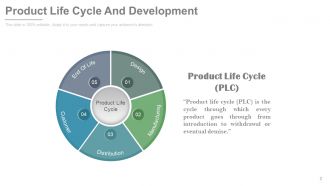
Slide 2: This slide shows Product Life Cycle with its definition and five components- Design, Manufacturing, Distribution, Customer, End Of Life.
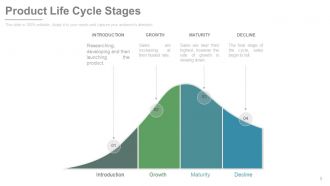
Slide 3: This slide shows Product Life Cycle Stages graph with four levels- Introduction, Growth, Maturity, Decline.
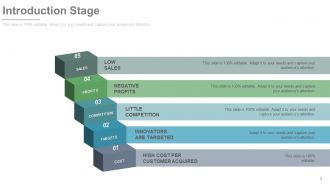
Slide 4: This slide shows Introduction Stage which consists of the following five levels- SALES, PROFITS, COMPETITION, TARGETS, COST.
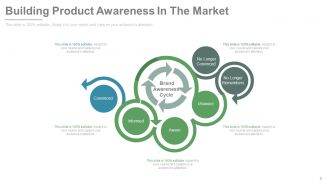
Slide 5: This is Building Product Awareness In The Market slide. It shows Brand Awareness Cycle with six parameters- No Longer Convinced, No Longer Remembers, Unaware, Aware, Informed, Convinced.
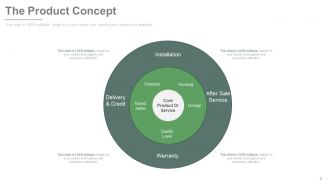
Slide 6: This slide shows The Product Concept by stating the Core Product Or Service. This further includes- Installation, After Sale Service, Warranty, Delivery & Credit, Packing, Features, Design, Quality Level, Brand name.
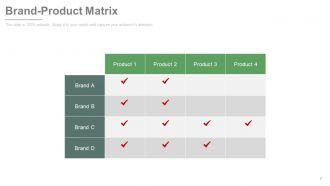
Slide 7: This slide shows the Brand-Product Matrix. Put relevant data in the given table and make use of it.
Slide 8: This slide shows Product Quality Check meter with the following five parameters- Excellent, Good, Average, Poor, Bad.
Slide 9: This slide presents Penetration Pricing in a graphical form.
Slide 10: This slide presents Distribution Of A Product flow chart. It shows the various levels the product has to go through to reach the End User.
Slide 11: This slide shows Marketing Communication Mix which consists of- Advertising, Sales Promotion, Personal Selling, Public Relations, Direct Marketing.
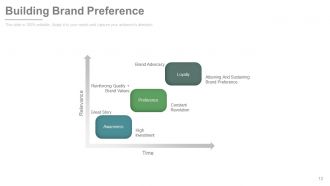
Slide 12: This slide shows Building Brand Preference graph. In this graph Time is shown on the x- axis and Relevance on the y- axis with three parameters- Loyalty, Awareness, Preference.
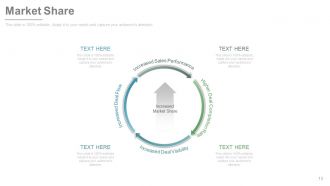
Slide 13: This is Market Share slide showing Increased Market Share with the following parameters- Increased Deal Visibility, Increased Sales Performance, Higher Deal Completion Rate, Increased Deal Flow.
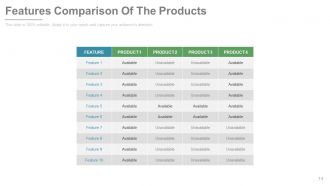
Slide 14: This slide Features Comparison Of The Products. Add relevant data in this table.
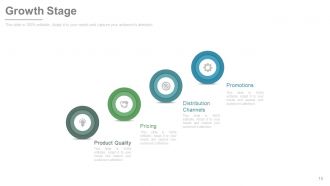
Slide 15: This slide shows four levels in the Growth Stage- Pricing, Distribution Channels, Product Quality, Promotions.
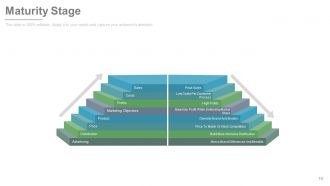
Slide 16: This slide shows Maturity Stage with various levels. Some of them are- Profits Sales Costs Marketing Objectives Product Price Distribution Advertising Low Costs Per Customer Process etc.
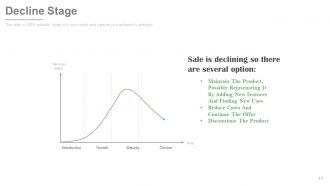
Slide 17: This slide showcases Decline Stage graphically with Time on the x-axis and Services sales on the y-axis. It also shows three options if the sales are declining- Maintain The Product, Possibly Rejuvenating It By Adding New Features And Finding New Uses, Reduce Costs And Continue The Offer, Discontinue The Product.
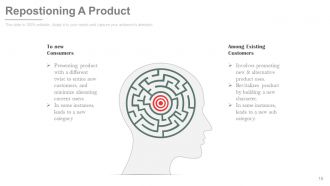
Slide 18: This is Repostioning A Product slide with creative human brain imagery. You can easily reposition your product as per your need on the basis of the following two parameters- Among Existing Customers, To new Consumers.
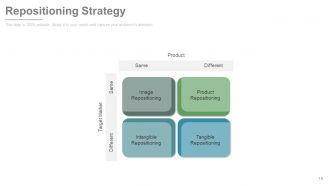
Slide 19: This slide presents Repositioning Strategy matrix which shows- Image Repositioning, Intangible Repositioning, Tangible Repositioning, Product Repositioning.
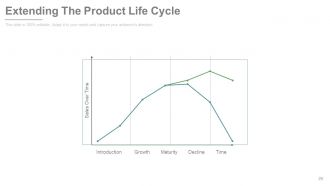
Slide 20: This is Extending The Product Life Cycle graph slide with the following stages to be shown/ displayed- Introduction, Growth, Maturity, Decline.
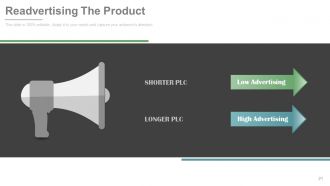
Slide 21: This slide shows Readvertising The Product with loudspeaker imagery.
Slide 22: This slide shows Price Reduction with imagery and text boxes.
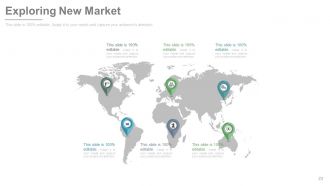
Slide 23: This is Exploring New Market slide on a world map iamge form. You can mark different locations of your market in this map and use it accordingly.
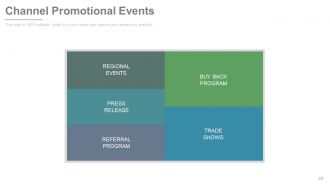
Slide 24: This slide shows Channel Promotional Events namely- REGIONAL EVENTS, REFERRAL PROGRAM, PRESS, RELEASE, BUY BACK PROGRAM, TRADE SHOWS.
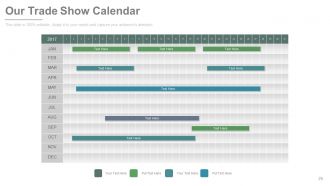
Slide 25: This slide shows Our Trade Show Calendar. Mark the dates of your trade show in this calendar.
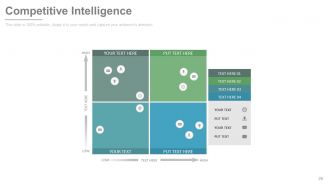
Slide 26: This slide shows Competitive Intelligence matrix with High and Low parameters. Put relevant comparing data here.
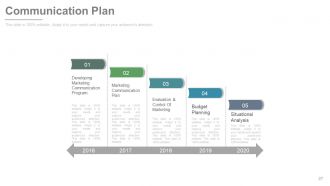
Slide 27: This slide shows five stages in Communication Plan- Developing Marketing Communication Program, Marketing Communication Plan, Evaluation & Control Of Marketing, Budget Planning, Situational Analysis.
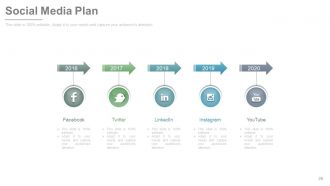
Slide 28: This slide presents Social Media Plan in a timeline form. It also shows the icons of some popular social media sites such as- Facebook, Twitter, LinkedIn, Instagram, YouTube. You can alter them as per your need.
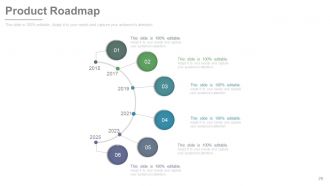
Slide 29: This slide presents Product Roadmap in terms of years.
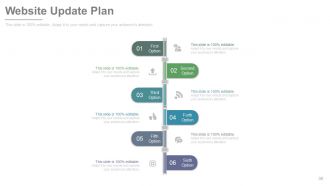
Slide 30: This slide shows Website Update Plan.
Slide 31: This slide presents Customer Testimonial. Add data as per your need.
Slide 32: This slide is titled Additional Slides to proceed further with the presentation. You can also change the content as per need.
Slide 33: This is an Agenda slide. Use it to showcase your product/ company agenda etc.
Slide 34: This is Our Vision slide with text boxes. State your vision here.
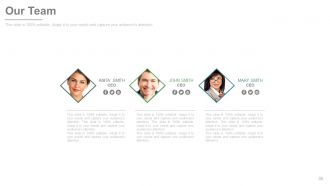
Slide 35: This is Our Team slide. Mention name, designation etc. here.
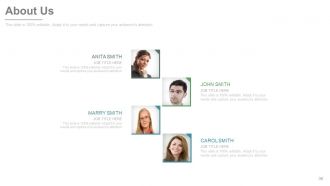
Slide 36: This is an About Us slide. Provide a brief introduction about company/ team here.
Slide 37: This is Our Goal slide to state company goals, aspirations etc.
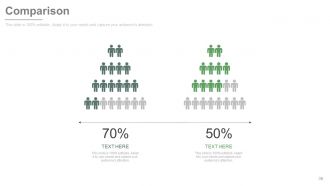
Slide 38: This slide displays Comparison on the basis of gender. It shows male and female image compared in terms of percentage.
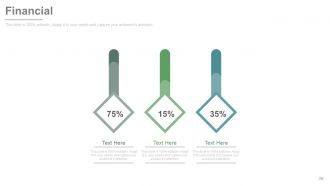
Slide 39: This is a Financial score slide to show financial aspects here.
Slide 40: This is a Quotes slide to convey message, beliefs etc.
Slide 41: This is a Dashboard slide showing- Income Distribution, Cogs Distributions, Expense Distributions, Profit And Loss.
Slide 42: This is a Location slide to show global growth, presence etc. on a world map image.
Slide 43: This is a Timeline slide to present important dates, journey, evolution, milestones etc.
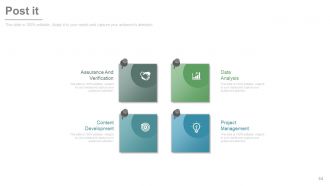
Slide 44: This is a Post it notes slide showing the following notes- Data Analysis, Project Management, Assurance And Verification, Content Development.
Slide 45: This slide presents Newspaper Layouts with text boxes to flash company news, position etc.
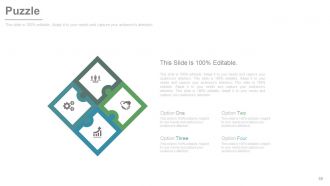
Slide 46: This is a Puzzle image slide to show information, specifications etc.
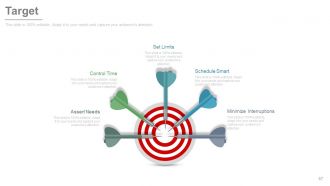
Slide 47: This is a Target image slide to show targets, goals, information, specifications etc.
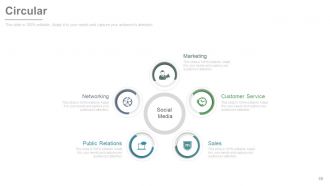
Slide 48: This is a Circular image slide showing Social Media consisting of the following components- Marketing, Customer Service, Public Relations, Networking, Sales.
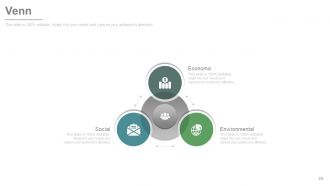
Slide 49: This is a Venn diagram slide showing- Economic, Environmental, Social.
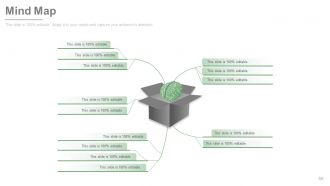
Slide 50: This is a Mind map image slide to show information, segregation, specifications etc.
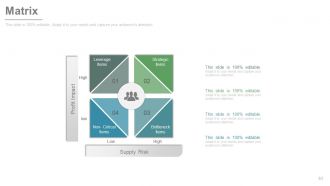
Slide 51: This slide shows a Matrix with two parameters- Supply Risk, Profit Impact.
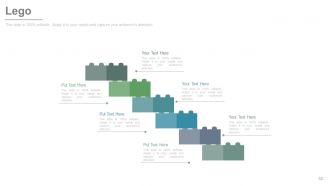
Slide 52: This is a Lego image slide to show information, specifications etc.
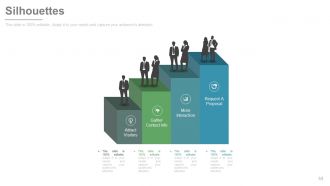
Slide 53: This is Silhouettes slide showing- Attract Visitors, Gather Contact Info, More Interaction, Request A Proposal.
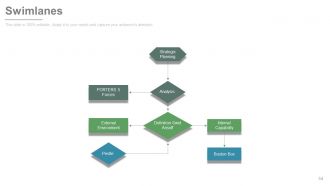
Slide 54: This slide presents Swimlanes showing Strategic Planning.
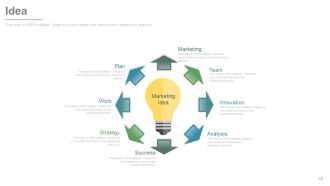
Slide 55: This is an Idea slide with bulb imagery showing Maketing Idea. This marketing idea consists of- Marketing, Team, Innovation, Analysis, Success, Strategy, Work, Plan.
Slide 56: This slide shows a Magnifying glass image with text boxes. State information etc. here.
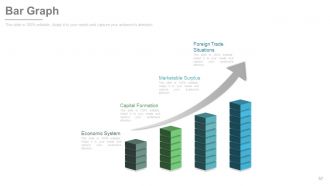
Slide 57: This slide presents Bar Graph showing- Economic System, Capital Formation, Marketable Surplus, Foreign Trade Situations.
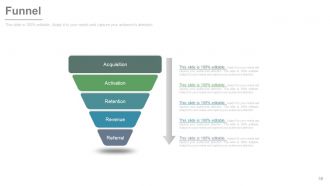
Slide 58: This is a Funnel image slide with the following stages- Acquisition, Activation, Retention, Revenue, Referral.
Slide 59: This is a Thank You slide with Address# street number, city, state, Contact Numbers, Email Address
New product development and life cycle strategies process with all 59 slides:
Use our New Product Development And Life Cycle Strategies Process to effectively help you save your valuable time. They are readymade to fit into any presentation structure.
-
Product Life Cycle and Development
-
Product Life Cycle And Development
-
Product Life Cycle Stages
-
Introduction Stage
-
Building Product Awareness In The Market
-
The Product Concept
-
Brand Product Matrix
-
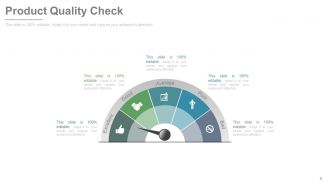
Product Quality Check
-
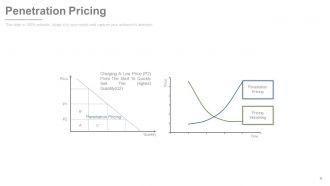
Penetration Pricing
-
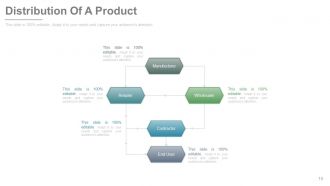
Distribution Of A Product
-
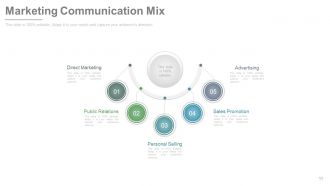
Marketing Communication Mix
-
Building Brand Preference
-
Market Share
-
Features Comparison Of The Products
-
Growth Stage
-
Maturity Stage
-
Decline Stage
-
Repositioning A Product
-
Repositioning Strategy
-
Extending The Product Life Cycle
-
Readvertising The Product
-
Price Reduction
-
Exploring New Market
-
Channel Promotional Events
-
Our Trade Show Calendar
-
Competitive Intelligence
-
Communication Plan
-
Social Media Plan
-
Product Roadmap
-
Website Update Plan
-

Customer Testimonial
-
Additional Slides
-
Agenda
-
Our Vision
-
Our Team
-
About Us
-
Our Goal
-
Comparison
-
Financial
-
Quotes
-

Dashboard
-
Location
-
Timeline
-
Post it
-
Newspaper Layouts
-
Puzzle
-
Target
-
Circular
-
Venn
-
Mind Map
-
Matrix
-
Lego
-
Silhouettes
-
Swimlanes
-
Idea
-
Magnifying Glass
-
Bar Graph
-
Funnel
-
New Product Development and Life Cycle Strategies Process
FAQs for New product development and life
So you've got idea generation first, then concept development and market research. After that comes product design, prototyping, and testing - honestly the testing part is such a slog but you really can't skip it. Launch comes last obviously. Start by brainstorming a bunch of ideas, then figure out which ones actually make sense and check if people want them. Design your product, build some prototypes, test everything like crazy. I know it's tempting to rush through research and testing, but trust me - fixing stuff later when it's already out there is way worse. Oh and definitely monitor how it's doing after launch!
Look, market research is gonna save you so much headache later. It shows you what problems people actually have and if they'd pay for solutions. Use it to test your idea early - like, talk to potential customers before you build anything. What you assume they want is probably way off anyway (learned that the hard way). Interviews and surveys help you understand their real pain points and which features actually matter. You'll also discover competitors you missed and find market gaps. Honestly, spending time on this upfront beats creating something nobody wants.
Honestly, cross-functional collaboration makes or breaks launches. Get engineering, marketing, sales, design, and ops talking from day one - not when someone panics at the end. I've watched products crash because teams stayed in silos. Nobody caught the obvious disconnects until way too late (so frustrating). Early collaboration helps you catch issues fast and build what customers actually want. Short bursts work better than marathon meetings, by the way. Set up regular cross-team check-ins so everyone sees each other's timelines and roadblocks. It's really that simple.
Talk to people first before you waste time building stuff. I learned this the hard way lol. Customer interviews are gold - way better than surveys honestly. Mock up something basic, doesn't need to be fancy. Test it with real users and see if they actually care about your idea. Landing pages work great for gauging interest too. Build an MVP with just the core features if people seem into it. The whole point is getting feedback when it's still cheap to make changes. Don't get attached to your first version - most ideas need tweaking based on what users actually tell you.
Dude, biggest mistake? Falling head over heels for your first idea without checking if anyone actually wants it. Skip the market research and you'll end up like those teams building random features for months that literally nobody asked for. Don't get paralyzed trying to make everything perfect before testing though - that's just procrastination with extra steps. Keep your concept focused enough to actually test but flexible enough to change direction. Oh, and please do your competitive homework even if you think you're the next big thing. Getting brutal customer feedback early sucks but it's way better than failing later.
Testing is your sanity check - it shows what actually works vs what you *think* works. Get feedback early, even on messy prototypes. Users will catch problems you'd never see internally. Watching people struggle with "obvious" stuff is honestly kind of painful but super valuable. Each round should drive your next changes - tweaking UI, adding features, sometimes killing entire ideas. I learned this the hard way on my last project. Don't design in a bubble - set up regular testing so you're not just guessing what people want.
Track both leading and lagging stuff - user adoption, customer acquisition cost, how you're hitting timelines. Revenue's obvious but don't skip the softer metrics like satisfaction scores and support tickets. I made this mistake once where we thought our launch was crushing it but retention was garbage. Development velocity matters too, plus burn rate. Set your benchmarks early or you'll be scrambling later trying to figure out what success even looks like. Stick to maybe 5-7 key metrics - any more and you're just drowning in numbers that don't actually help.
Think of your product roadmap as the thing that stops your dev and marketing teams from constantly stepping on each other's toes. It shows everyone what features are coming when, so marketing can actually plan campaigns around real launch dates instead of guessing. Both teams can see resource allocation and market milestones in one place - honestly, it's kind of a lifesaver. Just don't make the mistake of treating it like it's set in stone. Keep updating it and make sure everyone can access it easily, or you'll end up with that "wait, what are we launching next month?" panic again.
Honestly, run risk assessments constantly - like, at every major milestone. Prototype early and test with real users before you're in too deep. Set up checkpoints where you can actually bail if things aren't working (hardest part tbh). Keep a simple risk register and check it weekly with your team. Your stakeholders need to know about problems as they come up - nobody likes getting blindsided. Oh, and always have backup plans for your worst-case scenarios. Sometimes I think half of project management is just being paranoid enough to plan ahead.
Dude, competitive analysis is honestly your best friend during product development. Start with it to spot market gaps and validate your idea - I've watched so many teams skip this and get crushed later. Use it to figure out what features matter most and how you'll position yourself differently. The trick is keeping it going throughout development, not just doing it once and forgetting about it. Set up some Google alerts or whatever to track what competitors are doing. That way you can adjust quickly if someone launches something that changes the game. Trust me, it's way better than flying blind.
Honestly, you gotta get everyone talking from the start - engineering, manufacturing, QA, the whole crew. Don't wait until you're "done" to loop them in. Set up regular check-ins so people can catch production nightmares before they happen. I've watched so many gorgeous prototypes turn into absolute manufacturing disasters (learned that one the hard way). Test with real materials and constraints throughout, not just pretty CAD models. Oh, and document everything as you go - trust me, you'll be scrambling later trying to remember why you made certain choices when it's time to scale up.
Look, sustainability isn't optional anymore - it's woven into everything from day one. Companies are running lifecycle assessments super early, picking greener materials, designing stuff that can actually be repaired or recycled. Sure, being eco-friendly feels good, but honestly? It's become a business necessity. Customers demand it, investors scrutinize it, and weirdly enough it often saves money down the road. Regulations are tightening too. My advice? Audit your current process first. Find your biggest environmental pain points - boom, there's your improvement roadmap. Start there and work outward.
Dude, so many cool things happening in product dev right now. Machine learning is clutching for spotting customer trends super early. Digital twins are wild - basically you build virtual prototypes and test everything before making physical stuff. Saves tons of money and time. Cloud platforms make team collaboration actually bearable now, and IoT sensors give you live data from products people are already using. AR/VR isn't just for gaming anymore either, great for design work. Oh and honestly? Just pick whatever fixes your biggest headache first, don't try to do everything at once.
Dude, agile is seriously worth trying. You break everything into these short 1-2 week sprints instead of building for months and crossing your fingers. Catch problems early, get feedback fast, pivot when stuff isn't working. Your team actually talks to each other with daily check-ins and those retrospective meetings (which honestly aren't as boring as they sound). Way better than the old school waterfall method where you'd just... hope everything worked out at the end. Start small though - maybe just use it for prototyping first, then expand once everyone gets the hang of it.
Honestly, branding is like your product's whole personality when you launch. It affects how people see it, remember it, talk about it - the works. Get your positioning and visuals sorted way before launch day because that stuff drives everything else. Your marketing, pricing, which platforms you use. Without it? You're just another generic thing fighting for attention. Oh and definitely start working on your brand story like 3-6 months early - I learned that the hard way. Everything needs to feel connected when you finally go live.
-
Understandable and informative presentation.
-
Excellent products for quick understanding.
-
Excellent Designs.
-
Best Representation of topics, really appreciable.
-
Much better than the original! Thanks for the quick turnaround.
-
Great designs, really helpful.
-
Innovative and attractive designs.
-
Designs have enough space to add content.